BLOG

Bauhaus and Kebabs

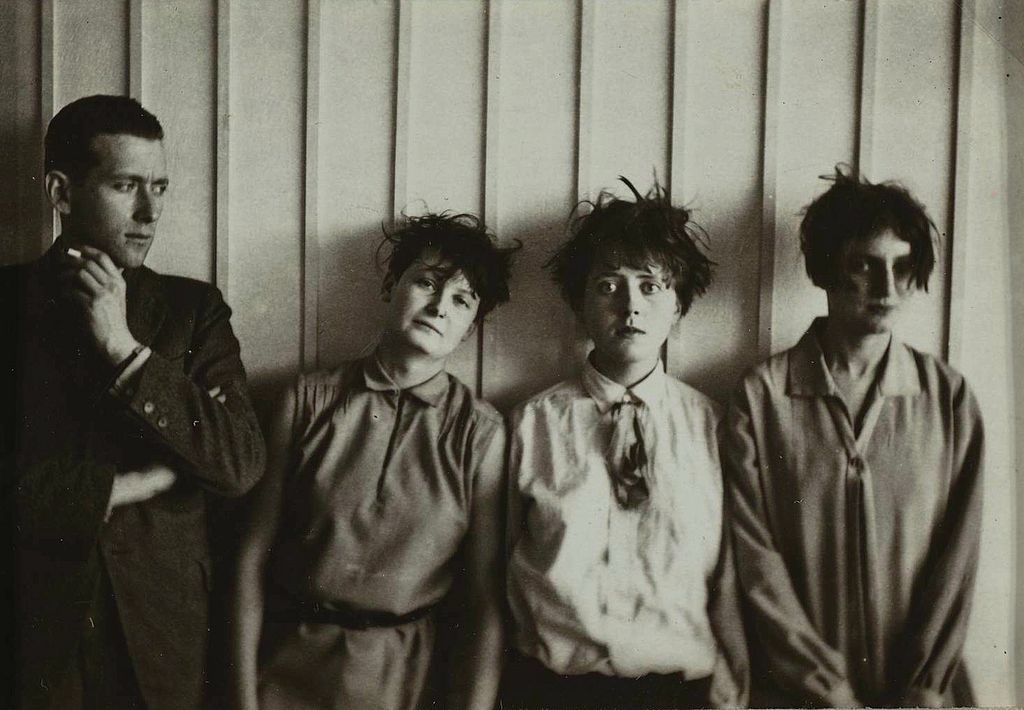
Bauhaus students, 1927*

The Bauhaus was one of the most influential movements in modern art, architecture, and design, and its brief yet dynamic history unfolded across three German cities: Weimar, Dessau, and Berlin.

*At the Bauhaus in 1927 or at a Raincoats gig upstairs at The Chippenham in London in 1979? You choose.

Bauhaus in Weimar

Weimar holds a special place in the history of modern design as the birthplace of the Bauhaus. Founded in 1919 by architect Walter Gropius, the Bauhaus began as an ambitious experiment in redefining art, architecture, and design education. It sought to merge fine art with craftsmanship, breaking down the traditional hierarchies between artist and artisan. During its formative years in Weimar, the Bauhaus laid the theoretical and artistic foundations that would later influence generations of architects, designers, and educators across the globe.

Housed in the former Grand-Ducal Saxon School of Arts and Crafts, the early Bauhaus attracted a range of pioneering artists, including Johannes Itten, Lyonel Feininger, Paul Klee, and Wassily Kandinsky. The curriculum combined workshops, theory, and experimentation, with an emphasis on unity between function and aesthetics. While the Weimar period was marked by creative innovation, it also faced political opposition from conservative forces who viewed the school as too radical. Ultimately, this tension led to the Bauhaus being forced out of Weimar in 1925, when it relocated to Dessau.
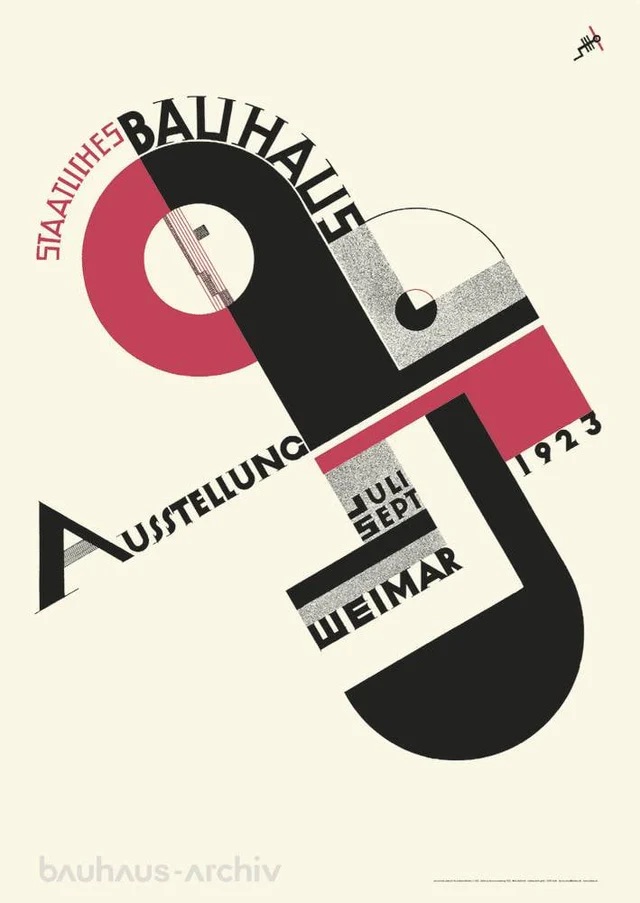
Weimar 1923

Today, the legacy of the Bauhaus remains deeply embedded in Weimar’s cultural identity. The original Bauhaus building on the campus of what is now the Bauhaus-Universität Weimar has been preserved and restored. In 1996, it was designated a UNESCO World Heritage Site, along with the Bauhaus buildings in Dessau. The university continues the school’s educational legacy, offering programs in architecture, design, media, and the arts, echoing the interdisciplinary spirit of the original Bauhaus.

In addition, the Bauhaus Museum Weimar, reopened in 2019 to mark the centenary of the school’s founding, showcases a huge collection of artifacts, furniture, documents, and artworks from the early Bauhaus period.

Whilst in Weimar, take a look at the Hotel Elephant and its Bauhaus legacy in the main square. The hotel became an informal gathering place for many Bauhaus artists and intellectuals. Though not designed by Gropius himself, the hotel’s modernist renovation in the 1930s reflected the aesthetic ideals championed by the Bauhaus, making it a symbolic extension of the movement’s presence in the city.
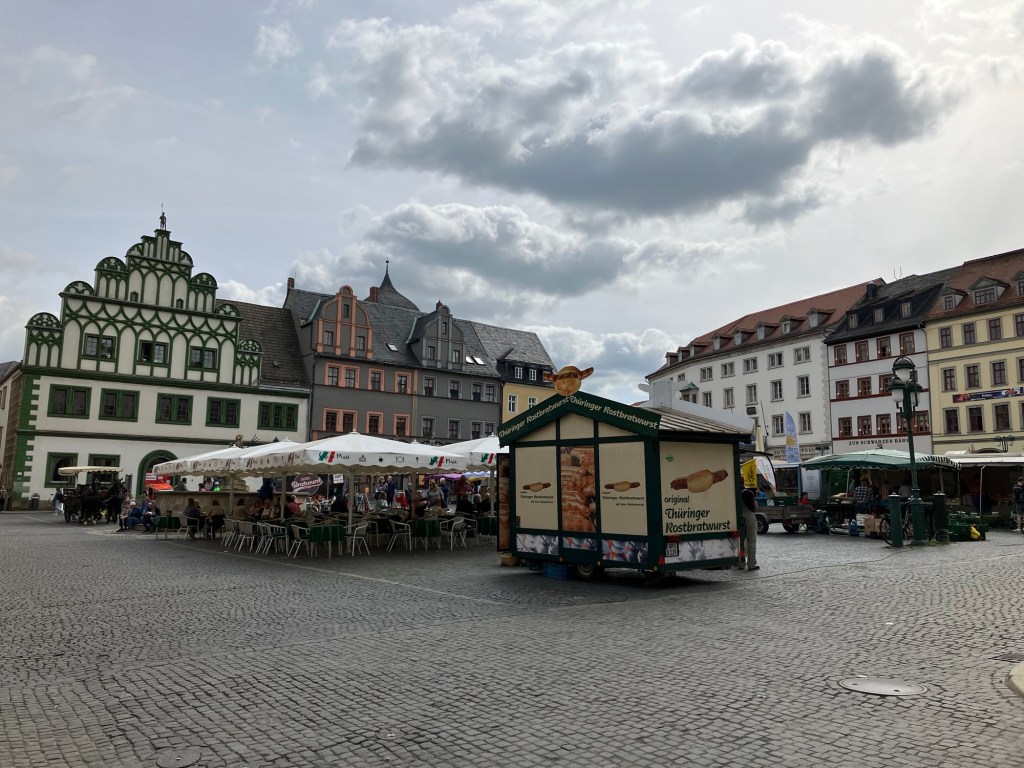
The main square in Weimar

The current incarnation of the Hotel Elephant combines modern luxury with a reverence for the city’s past. Originally established in the 17th century, the hotel has undergone several transformations, the most significant of which occurred in the early 20th century, aligning it with the radical vision of the Bauhaus. When the movement was founded by Walter Gropius in Weimar in 1919, the city became a nexus for revolutionary ideas in design and aesthetics. The Hotel Elephant, located just steps away from many of the cultural institutions that supported Bauhaus ideals, naturally became a meeting place for many of its leading figures.
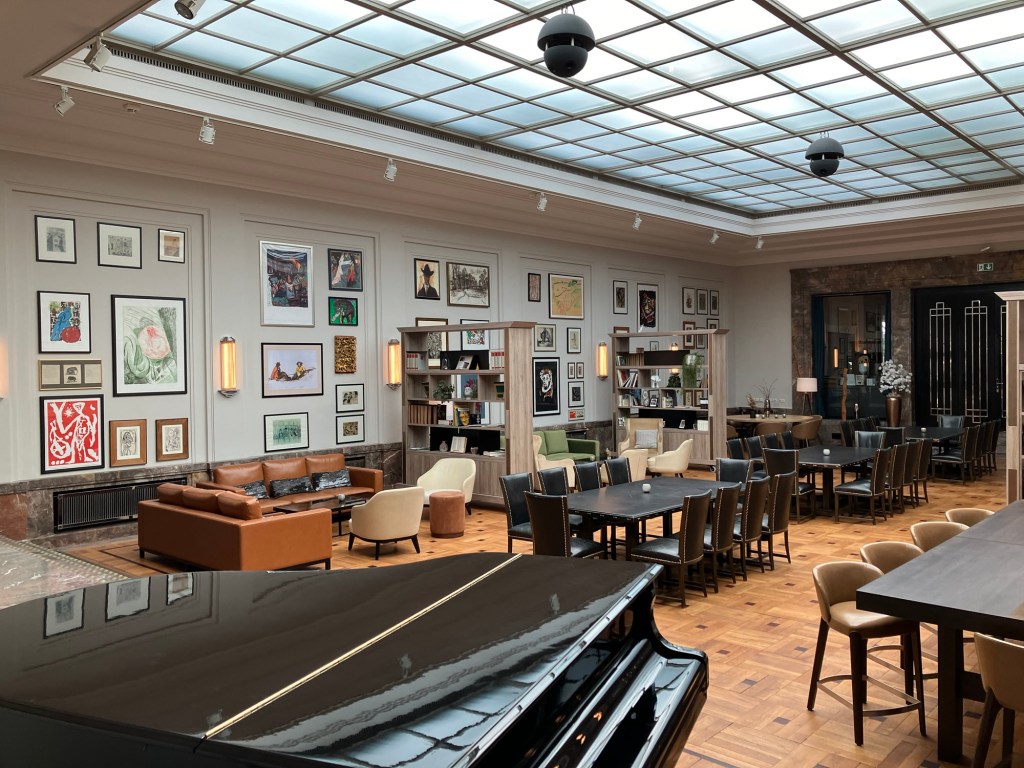
Elephant interior

What makes the Hotel Elephant’s connection to Bauhaus more than incidental is its embodiment of the movement’s principles: clarity of form, functionality, and the integration of art into everyday life. The hotel’s modernist redesign in 1938 reflected  Bauhaus-inspired sensibilities, emphasizing clean lines, geometric shapes, and a harmonious blend of materials.

Among its most famous guests was the playwright Bertolt Brecht, himself influenced by the intellectual currents of Bauhaus and modernist theory. The hotel also served as a gathering point for other avant-garde thinkers and artists who shaped the cultural fabric of the early 20th century.

The design of the ground floor of the hotel is a seamless combination of art and comfort. At its heart is the Lichtsaal, a light-filled lounge where velvet-upholstered armchairs, leather sofas, and polished parquet floors create an inviting, living-room atmosphere. The walls are adorned with a carefully curated art collection featuring works by early Modernists such as Lyonel Feininger, Max Beckmann, and Otto Dix, alongside contemporary pieces that reflect Weimar’s rich artistic legacy. Drawing inspiration from Goethe’s Theory of Colours, the interior palette fuses muted greys, deep blues, and emerald tones with Art Deco accents, evoking both intellectual depth and visual warmth.
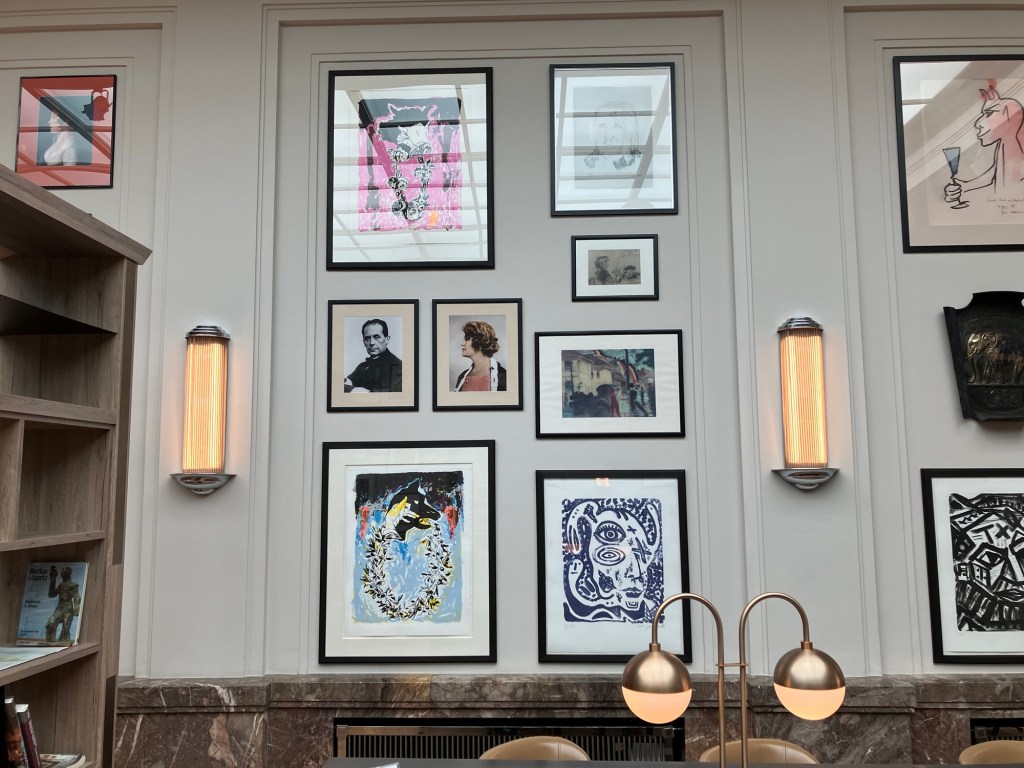
Elephant interior with photograph of Walter Gropius

The hotel is indeed a stylish tribute to the Bauhaus. 

Bauhaus in Dessau

In 1925, following political pressure in conservative Weimar, the Bauhaus relocated to the city of Dessau in Saxony, where it entered its most productive and internationally influential phase.

Contemporary Dessau is a modest-sized city with a population of just under 80,000. While it was heavily damaged during World War II, its postwar reconstruction included both modernist housing and socialist-era architecture. Today, the city is known primarily for its Bauhaus heritage, which attracts thousands of visitors and architecture students from around the world.

In Dessau, the Bauhaus found a more industrially supportive environment, aligning with the city’s aspirations to become a center of modern industry and innovation. Gropius designed the new Bauhaus building, completed in 1926, as a radical embodiment of the school’s ideals. It featured a striking glass curtain wall, asymmetrical layout, and open interiors that emphasized light, transparency, and functional design. The school operated here until 1932, when it came under increasing political pressure from the Nazi regime, leading to its move to Berlin and eventual closure in 1933.
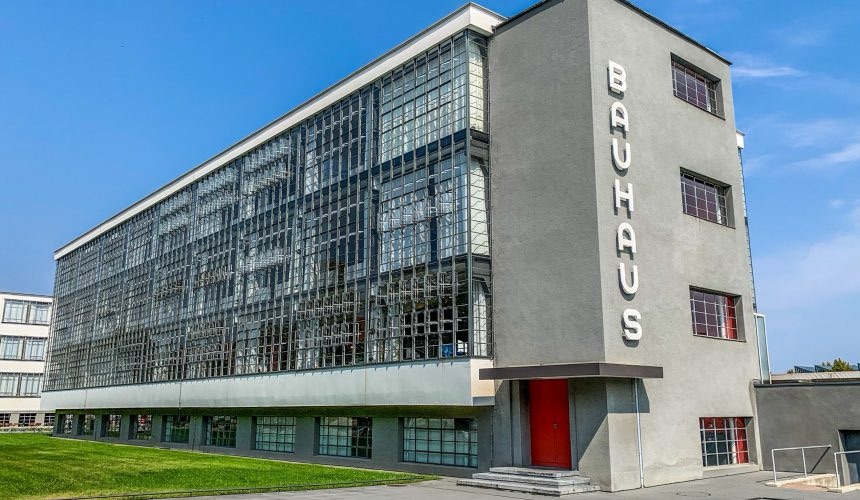
Dessau

During its time in Dessau, the Bauhaus school attracted some of the 20th century’s most important artists and designers. Among them were Paul Klee, Wassily Kandinsky, László Moholy-Nagy, and Josef Albers, who served as masters and developed experimental and interdisciplinary approaches to teaching art, architecture, typography, and product design. The Bauhaus became known for its revolutionary educational model and its efforts to integrate art with modern technology and everyday life.

In addition to the school building, Gropius designed a series of residences known as the Meisterhäuser (Masters’ Houses), built for the school’s leading faculty. Located near the school, these duplex and single-family homes exemplified Bauhaus architecture through their clean lines, flat roofs, geometric forms, and minimalist interiors. Each house was designed as a modular space that could accommodate both living and working needs, further embodying the school’s emphasis on functional design.
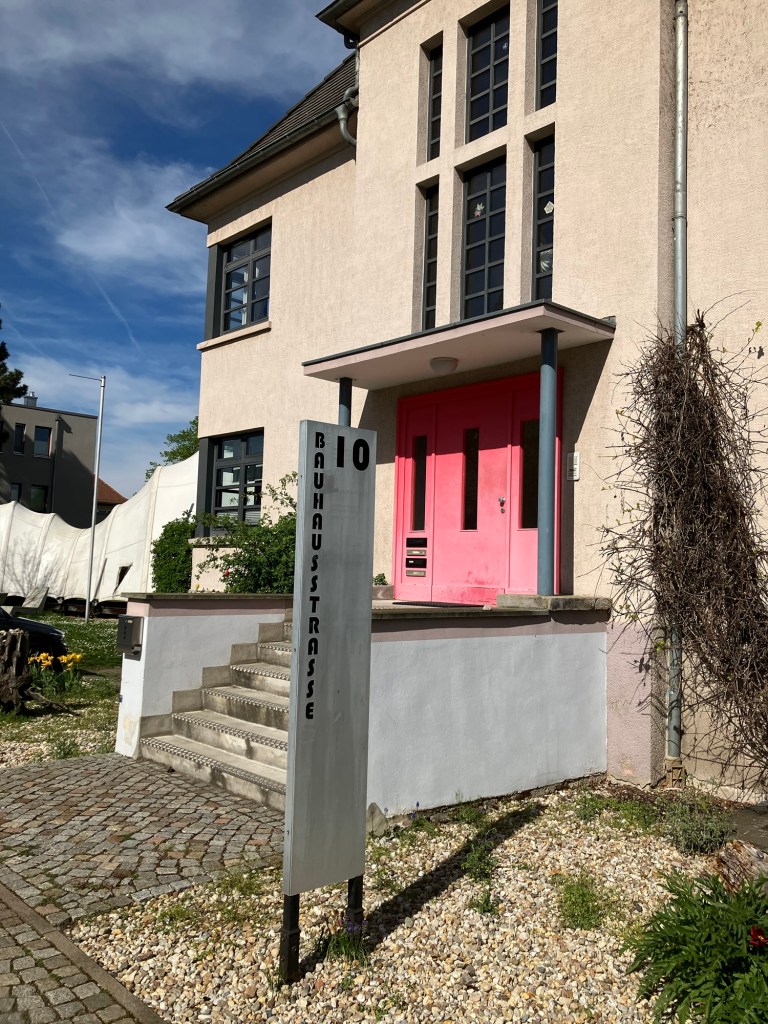
Bauhaus Straße

Despite war damage and postwar neglect, efforts to preserve and restore the Masters’ Houses began in the late 20th century. Some original buildings were reconstructed or rehabilitated using historic plans and photographs, while others, notably the Gropius and Moholy-Nagy houses, were reinterpreted as abstract volumes to reflect their destruction during WWII.

To better preserve and present the legacy of the movement, the Bauhaus Museum Dessau opened in 2019, coinciding with the Bauhaus centenary. Designed by the Spanish architecture firm addenda architects, the museum is a minimalist structure of steel and glass that reflects Bauhaus ideals while also serving as a contemporary cultural hub. The museum houses over 49,000 objects, making it one of the world’s most significant collections related to the Bauhaus. Exhibitions explore the school’s history, its pedagogical experiments, and its ongoing global influence on modern design and architecture.
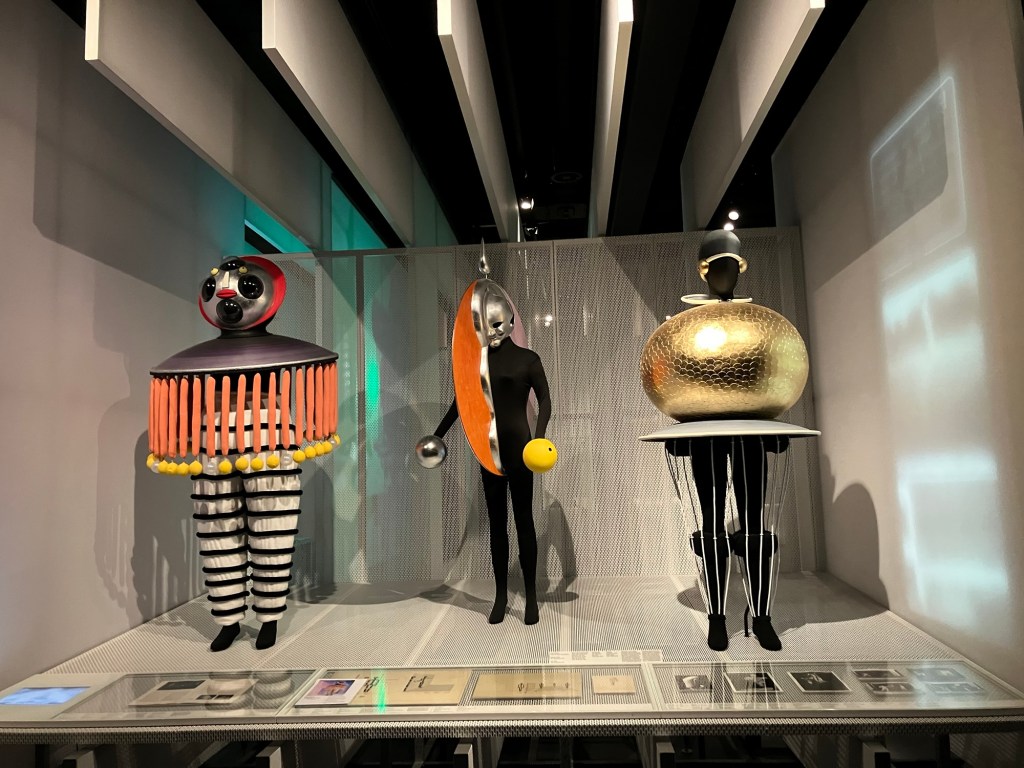
Triadic Ballet costumes by Oskar Schlemmer

Bauhaus in Berlin

The Bauhaus was forced to close in Dessau in 1932 due to increasing political pressure from the rising Nazi regime. The school moved to Berlin for what would become its final and most difficult phase.

The move to Berlin was spearheaded by architect Ludwig Mies van der Rohe, who had taken over as director of the school in Dessau in 1930. In Berlin, the Bauhaus no longer had public funding or official institutional support, so it reopened as a private school in a disused factory building in the Steglitz district. This final phase marked a shift toward a more architectural and less craft-based focus under Mies’s direction.

However, the school’s time in Berlin was short-lived. The Nazi regime viewed Bauhaus as a breeding ground for what it called “degenerate art” and a haven for leftist and internationalist ideas. In April 1933, only a few months after Hitler came to power, the Gestapo raided the Berlin school. In response to increasing harassment and pressure, Mies van der Rohe and the other faculty members voted to voluntarily dissolve the Bauhaus in July 1933.

Although the physical school ceased to exist, the Bauhaus movement continued internationally. Many of its key figures fled Nazi Germany and emigrated to countries such as the United States, the Soviet Union, and Palestine. 

The Bauhaus presence in Berlin today is in a state of transition. Whilst the main Bauhaus‑Archiv / Museum für Gestaltung is undergoing renovation and expansion, a temporary venue has been opened at Haus Hardenberg, located on Knesebeckstraße  in the Charlottenburg district.  This small, interim space serves as a pop‑up exhibition site, bauhaus‑shop, and event venue, highlighting collections related to design, architecture, and contemporary issues. 
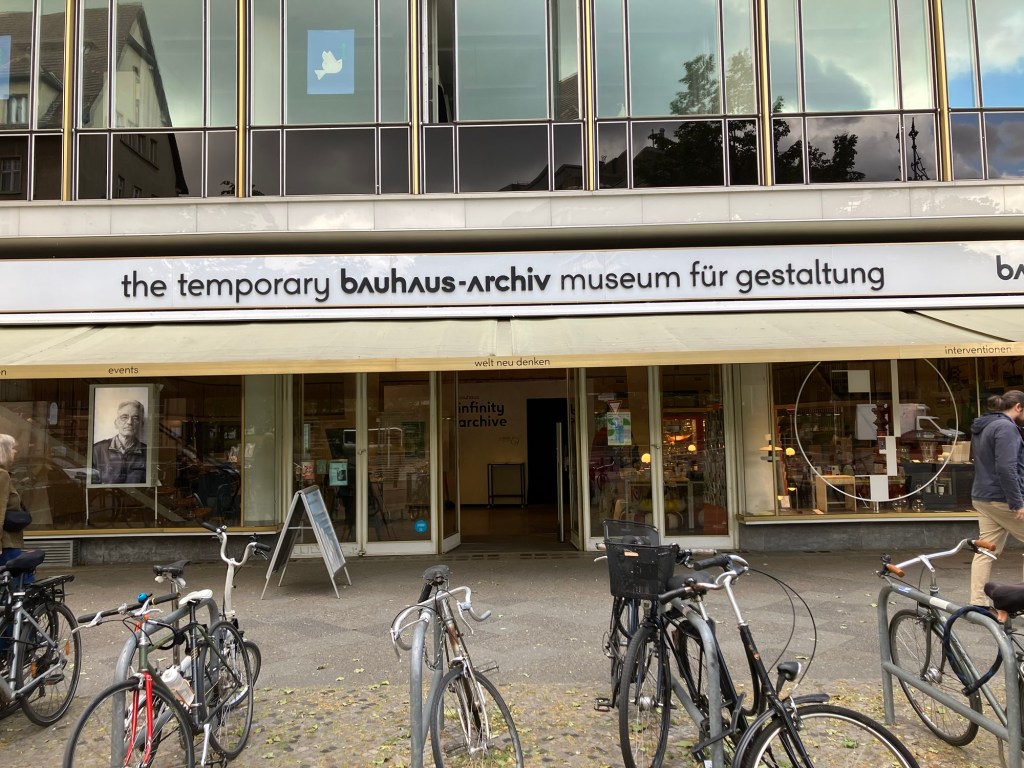
The temporary bauhaus-archiv in Berlin

After visiting the temporary bauhaus‑archiv we made our way down Hardenbergstraße, past the elegant facade of the Renaissance-Theater to the Zoologischer Garten station for lunch. Forget the regrettable Curry Wurst, a Dőner  Kebab beckoned. If the Bauhaus is one of the country’s major cultural achievements, the Dőner Kebab is undoubtably one its culinary icons. With over 1600 outlet’s citywide, Berlin is widely considered the birthplace of the modern Döner Kebab sandwich, thanks to Turkish immigrant Kadir Nurman, who began selling it in the 1970s at West Berlin’s Zoologischer Garten station.

The Döner Kebab has taken distinct forms in the UK and Germany, each reflecting the culinary habits, cultural histories, and migration patterns of their respective societies. While both serve as a popular form of fast food, their reputation and quality diverge significantly.

In the United Kingdom, the typical doner kebab is often seen as a late-night indulgence—greasy, heavily salted, and served from takeaway shops catering to post-pub crowds. The meat is frequently processed and reconstituted, shaved from a large cone of compressed lamb or beef, sometimes of uncertain provenance. It’s commonly served in pita bread with shredded lettuce, raw onions, and chili sauce, often dripping with fat and served with chips. For many in the UK, the doner is associated with hangovers rather than culinary satisfaction, and is frequently viewed as low-quality or unhealthy.
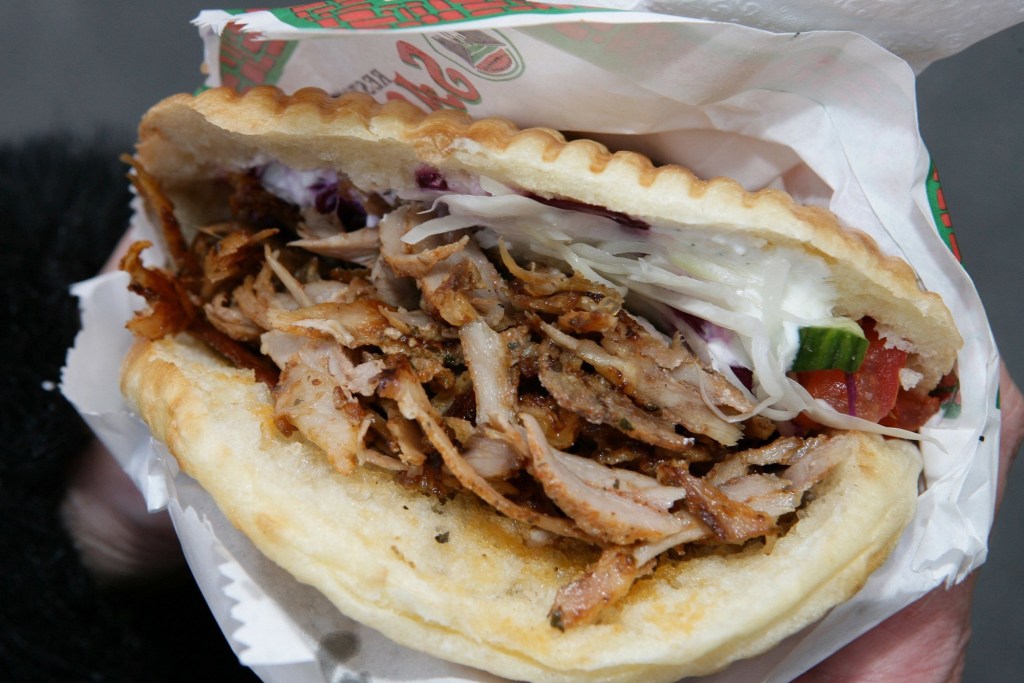
Grease is the word

By contrast, in Germany, particularly in Berlin, the Döner Kebab has developed into a national street food institution, often praised for its freshness, quality, and variety. Typically made with marinated slices of veal, chicken, or beef (rarely lamb), the German Döner includes crisp vegetables like cabbage, tomato, cucumber, and onion, along with homemade sauces—yogurt-based, garlic, herb, or spicy chili. It’s usually wrapped in fluffy Turkish flatbread or Dürüm (thin lavash) and prepared to order. The emphasis is on balance and freshness, and many shops offer vegetarian and vegan options with grilled halloumi, falafel, or seitan. In Germany, the Döner is not just a snack, but a respectable, affordable meal enjoyed across all demographics.

A far tastier option

We think that there are conceptual parallels between the Dőner Kebab in Germany and the Bauhaus. They both embody principles of modernity, functionality, and cultural synthesis, making them conceptually parallel in several striking ways.

The Bauhaus championed the idea that design should serve everyday needs. Its mantra, “form follows function,” emphasized simplicity, clarity, and usefulness. Similarly, the döner kebab—particularly as adapted in Germany—is a highly functional food. It’s designed for urban living: portable, efficient, and complete in one hand-held form. Like a Bauhaus object, it strips away unnecessary elements to focus on what works.

Both the Bauhaus and the German döner are also products of cultural fusion. Bauhaus design integrated ideas from multiple disciplines and cultures to create something universally modern. The döner kebab, created by Turkish immigrants and adapted for German tastes, is a hybrid of Middle Eastern tradition and European pragmatism—an edible symbol of cosmopolitanism.

Additionally, each reflects a commitment to mass accessibility. Bauhaus sought to democratize good design through industrial production; the döner is inexpensive and ubiquitous, serving everyone from students to workers. Both exist comfortably within the rhythms of modern, urban life.

Finally, their modular, repeatable nature underscores a shared design logic. Bauhaus structures were often modular and adaptable; the döner is constructed from standardized parts—bread, meat, salad, sauce—easily varied yet fundamentally consistent.

In essence, the German döner kebab and the Bauhaus share a conceptual foundation rooted in function, accessibility, modernism, and synthesis. One feeds the stomach, the other the senses—but both are crafted for the modern world.

Bauhaus was an essentially German creation and whilst the Dőner Kebab may have been greatly popularised and even conceived in German, it remains an essentially Turkish creation. 
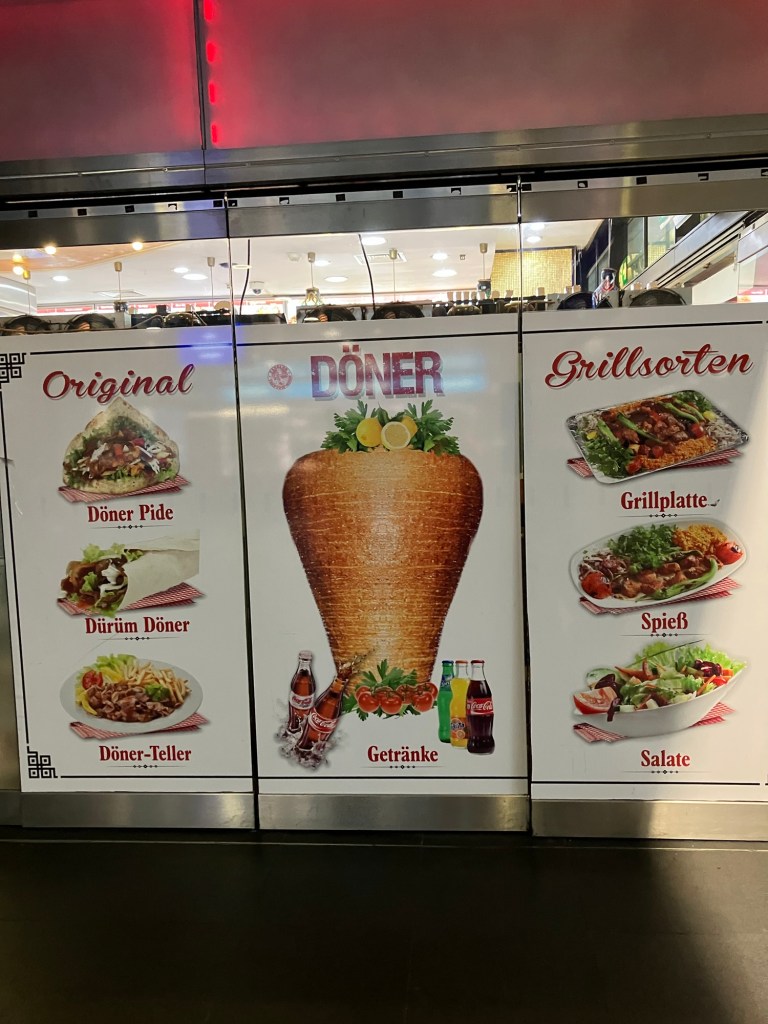
Whatever appeals

The nearest commercial food outlet to the Bauhaus campus in Dessau is the redoubtable ‘Enfes Dőner Kebab am Bauhaus’.
Gdánsk, Oskar and Lech

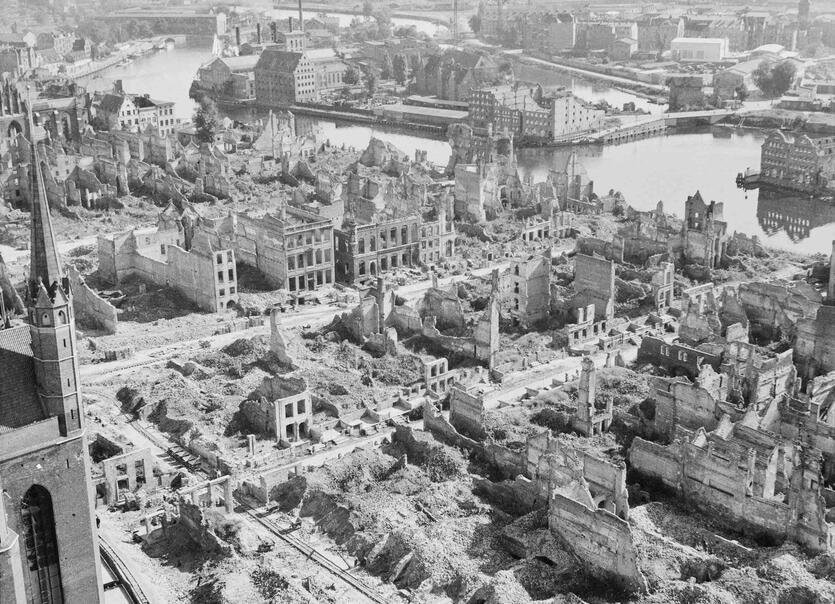
An old city, dating back to the 10th century, Gdańsk  suffered almost total destruction during WW2. The city’s subsequent reconstruction and most importantly, the crucial part it played in the Solidarity movement of the 1980’s means that today, Gdańsk is the third most visited city in Poland after Warsaw and Kraków and it is deservedly viewed by the rest of the country as an independent minded and resilient cultural hotspot.

The city we came to know starts after 1945. The destruction of Gdańsk during  WWII was devastating. The centre of Gdańsk was 95% destroyed, with extensive damage from bombing and shelling.

After the war, the city was rebuilt from the ground up, thanks to the efforts of several generations of Polish people. Reconstruction took more than 70 years and continues to this day. As with the old town in Warsaw (levelled in an act of wanton vindictiveness by the Nazi’s after the Warsaw uprising), the older parts of Gdańsk were rebuilt according to the way the city was before WW2. During the rebuilding, a variety of historical records were consulted to ensure that the city was reconstructed as faithfully as possible. Artisans and architects were brought in to recreate the Old Town in its historical form by using traditional methods and materials.

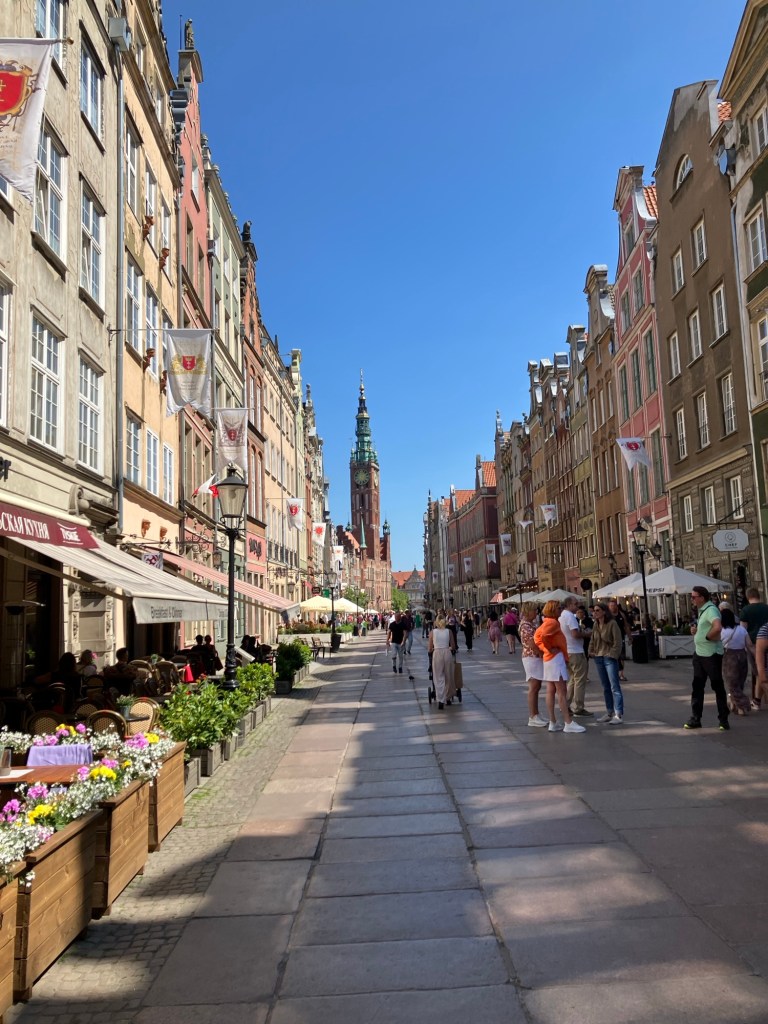
The Old Town today

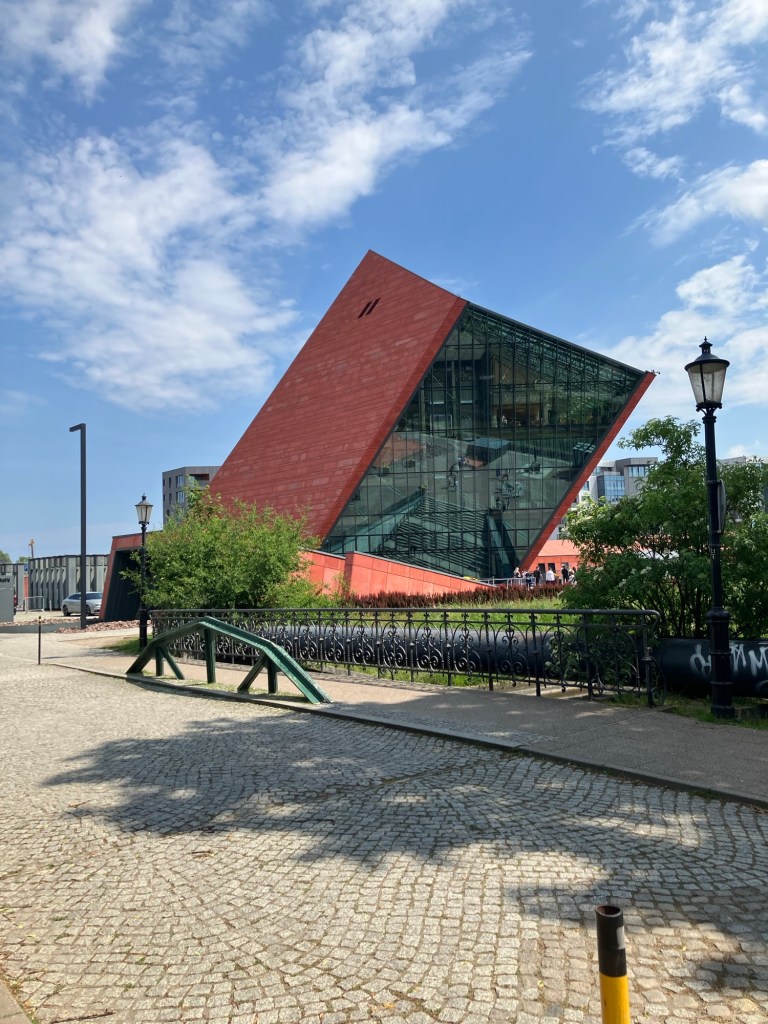
Today the Old Town is a UNESCO World Heritage site and it is one of Europe’s best historic centres. Whilst Gdańsk is very much a modern, forward thinking Polish city, the past is still a dark shadow. It is hard to overstate the sheer ruin brought on the country during WW2 and thereafter The most immediately destructive era, the years 1939 -1945 with the invasion of Poland by both Nazi and Soviet forces, the eventual rout of the former and the re-occupation of the country by the latter is brilliantly detailed within the city’s Museum of the Second World War (‘Muzeum II Wojny ŚwiatoweItj’) which opened in 2017, making it a relatively new addition to Gdańsk’s cultural landscape. 

The Museum of the Second World War

Visitors to the museum can expect to learn more about the events that led up to the war, as well as its impact on Poland and the rest of the world. Of particular note in our opinion, are the re- creation of a typically Polish family apartment before, during and after the Nazi occupation (and to follow, Soviet rule), with the rooms changing as the war and Nazi and Soviet occupations progressed. The exhibition is especially for children under the age of 12, taking them on a journey through time, exploring different moments and events during World War II including the recreation of a typical pre – war Polish schoolroom. The museum’s website at https://muzeum1939.pl/en describes this most important exhibit as follows:-

The first exhibit is a reconstruction of a Warsaw family’s apartment during three different periods: September 3rd, 1939 – a few days after the outbreak of World War II, March 8th, 1943 – during the German occupation, and May 8th, 1945 – on the day of Germany’s surrender. These interiors show the living conditions of a well-educated Polish family from Warsaw. The changing elements of the interior decor reflect the shifting political, social and economic situation of the occupied country during the fighting. The exhibition is designed to make visitors aware of the deteriorating living conditions from year to year, the difficulties with food supplies, the rules imposed by the occupants, as well as the methods of coping with these difficulties. The exhibition also focuses on showing the attitudes of family members, describing their involvement in anti-German activities and civil forms of resistance – including the secret underground education of children. An important thread in the story is also the fate of the Jewish population, exemplified by the fate of the family’s pre-war Jewish neighbours. The journey through the occupation years takes place with the Jankowski family of four. To create this history, typical elements taken from wartime biographies of Polish intellectuals were used.

Interior design of the Museum

The museum is located very near to the Polish Post Office which played a significant role during the beginning of World War II. On September 1, 1939, at the start of the German invasion of Poland, the Post Office in was attacked by German police and SS units. At the time, the Post Office was a Polish enclave in the predominantly German-populated Free City of Danzig (now Gdańsk). The Polish employees at the Post Office, numbering around 50, were members of the Polish Military Transit Depot and were considered a threat by the Germans. They defended the Post Office against the German attack. Despite being outnumbered and outgunned, the Polish defenders held out for nearly 15 hours.

The defenders of the Post Office finally surrendered after the Germans brought in heavier weapons and set the building on fire. Six people were killed during the battle, and the survivors were arrested and put on trial. Despite their status as combatants, they were sentenced to death for illegally using weapons. All but four of the sentences were later commuted to life imprisonment, and the remaining four were executed.

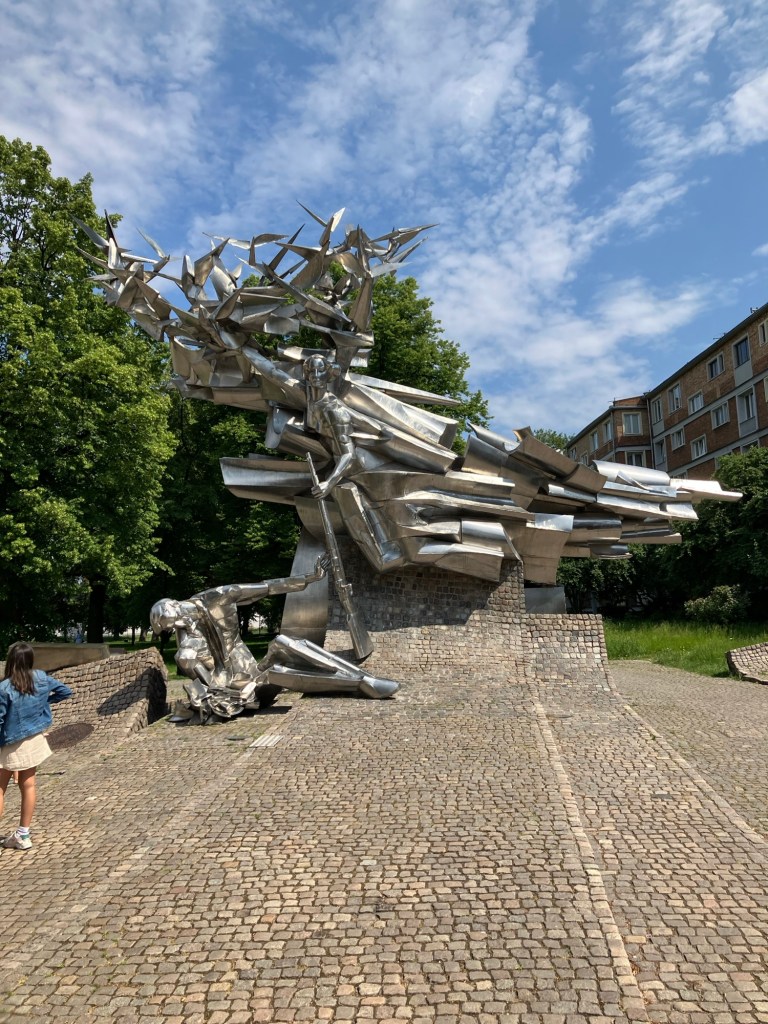
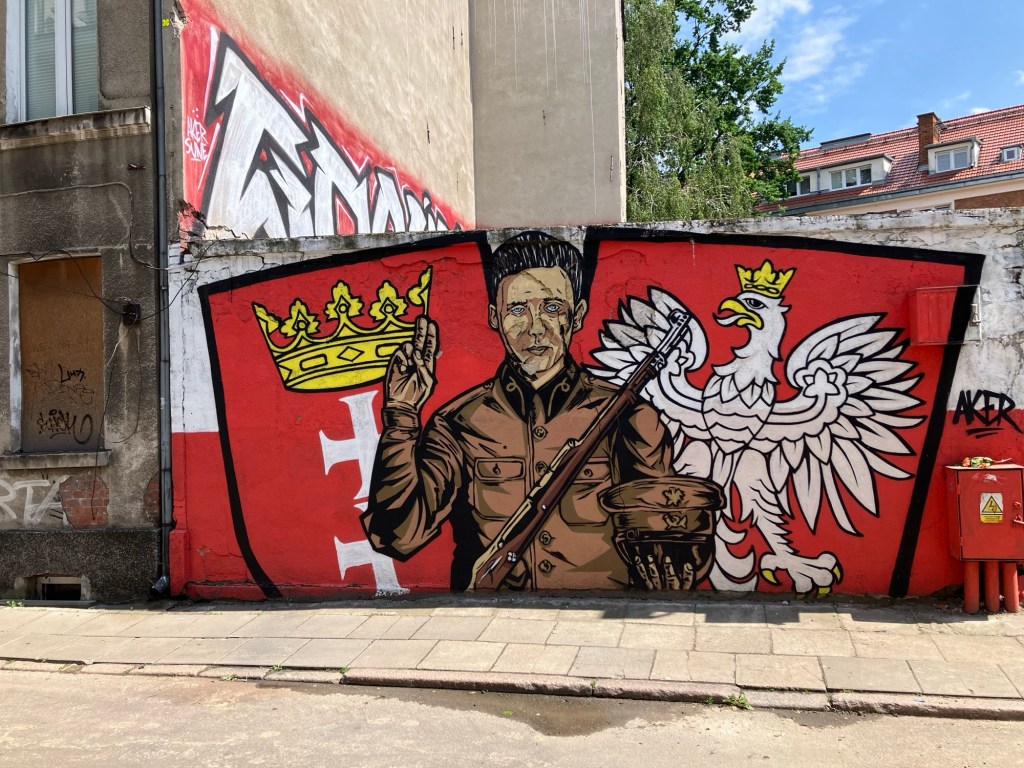
The defence of the Polish Post Office in Gdańsk has become a symbol of Polish resistance against the German invasion and the beginning of World War II. Today, a monument stands in front of the Post Office building to commemorate the heroic actions of its defenders as well as related graffiti art murals on near by walls.

The Post Office memorial
Related mural

The defence of the Post Office is featured in Chapter 18 of The Tin Drum by the German author, Günter Grass, a native of Gdánsk or rather Danzig as it was known when the city was annexed by Germany. His literary work, and in particular, The Tin Drum, the first part of his Danzig Trilogy (‘Cat and Mouse’ and ‘Dog Years’ were to follow) certainly brought the city and it’s post 1925 history to the world’s attention.

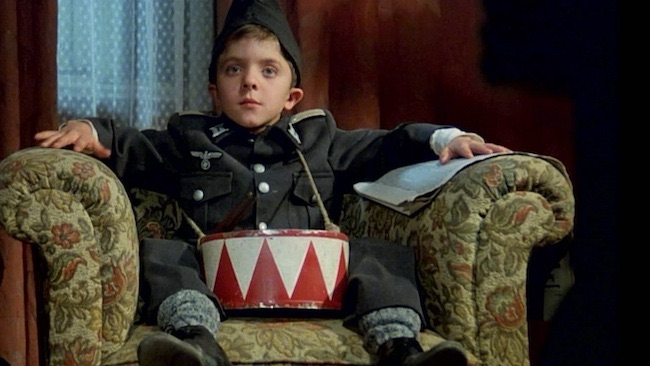
The Tin Drum is a story about a boy named Oskar Matzerath, who refuses to grow up and wills himself to remain a child. Born in the early 20th century in the city of Danzig (Gdańsk), Oskar is a witness to the rise of Nazism and the horrors of World War II. 

Oskar and his drum

The story begins with Oskar’s birth and his refusal to leave the womb until his mother promises him a tin drum. On his third birthday, he decides to stop growing and throws himself down the stairs, using his tin drum as a weapon against the chaos around him.

“I will not grow, I will not grow, I will not grow. I will stay in Danzig, I will stay with my tin drum, I will stay a child forever.”

‘I will stay a child forever’

As Oskar grows older, he remains physically a child but develops a sharp intellect and a unique perspective on the world. He becomes an observer of the hypocrisy and injustice around him, using his drumming and screaming as a form of protest, especially against the stupidity and ugliness of the Nazi’s and their supporters.

Throughout the novel, Oskar interacts with a range of characters, including his family, friends, and various figures in the city of Danzig. He witnesses the rise of the Nazi party, the increasing violence against outsiders, and the eventual destruction of his hometown.

In the end, Oskar ends up in a mental institution, where he recounts his life story. Through his narration, Grass offers a powerful critique of war and the impact it has on individuals and communities.

Original book cover art work

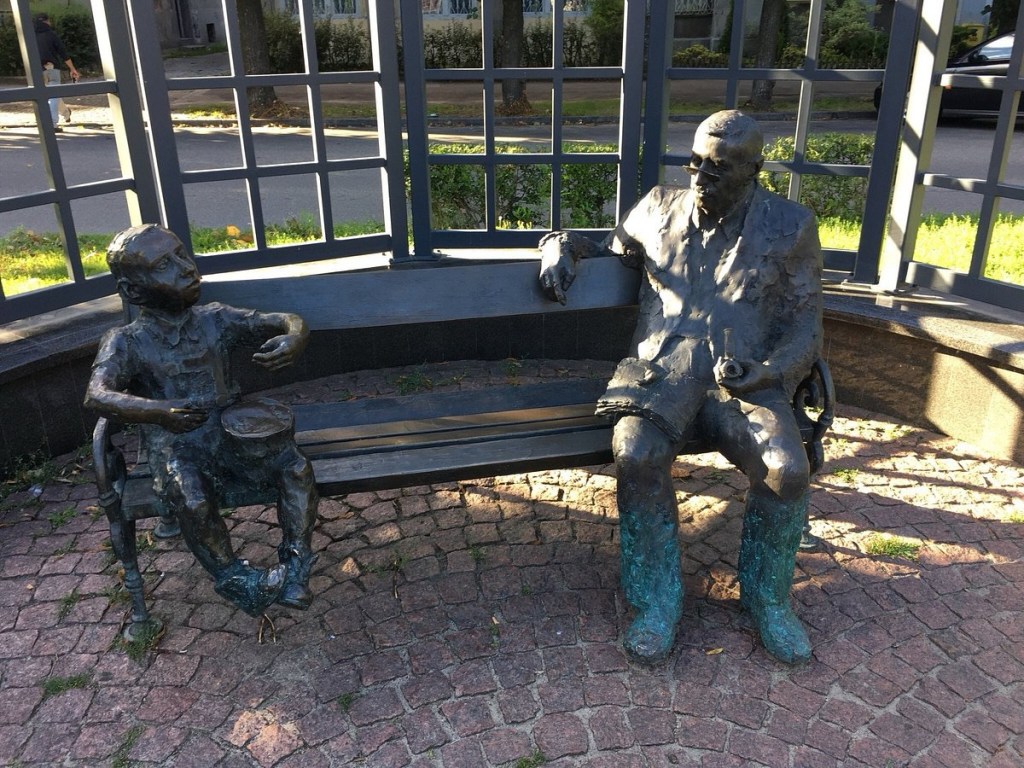
There  are several memorials and tributes to Günter Grass  in Gdansk  including an art Gdansk gallery dedicated to his work, a monument to Grass in the district where The Tin Drum was set and perhaps most famously, the Little Oskar statue, commemorating Grass’s most famously work and literary character. That  statue is part of a larger monument called “Oskar’s Bench”, ocated in plac Generała Józefa Wybickiego in Gdańsk. The statue depicts Gunter Grass sitting on a bench opposite a statue of Oskar. The two figures appear to be in conversation or alternatively, Grass is reading to Oskar from the book on his lap. The book has a snail crawling across it, a reference to another of Grass’s works, “From the Diary.”

Oskar and Gűnter

The novel remains the best known work by Günter Grass and it is one of the most celebrated works in the German language. 

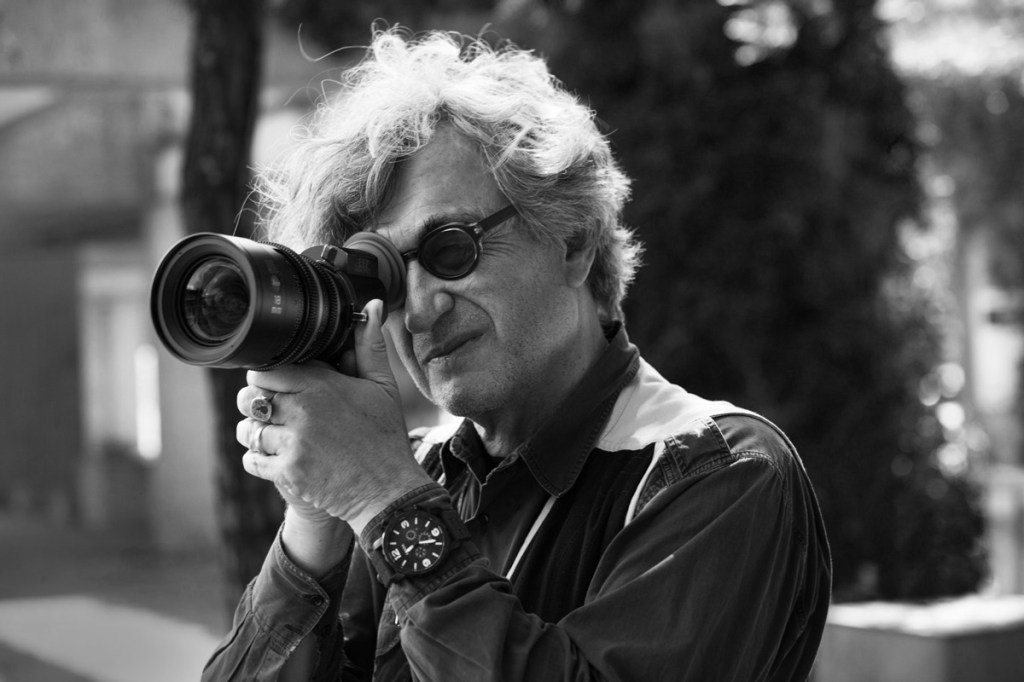
The film adaptation of the novel by acclaimed German director Wim Wenders, released in 1979, stays true to the novel’s plot and themes, featuring a remarkable performance by the actor David Bennent as Oskar. It was a critical success, winning the Palme d’Or at the 1979 Cannes Film Festival and the Academy Award for Best Foreign Language Film in 1980.

Wim Wenders

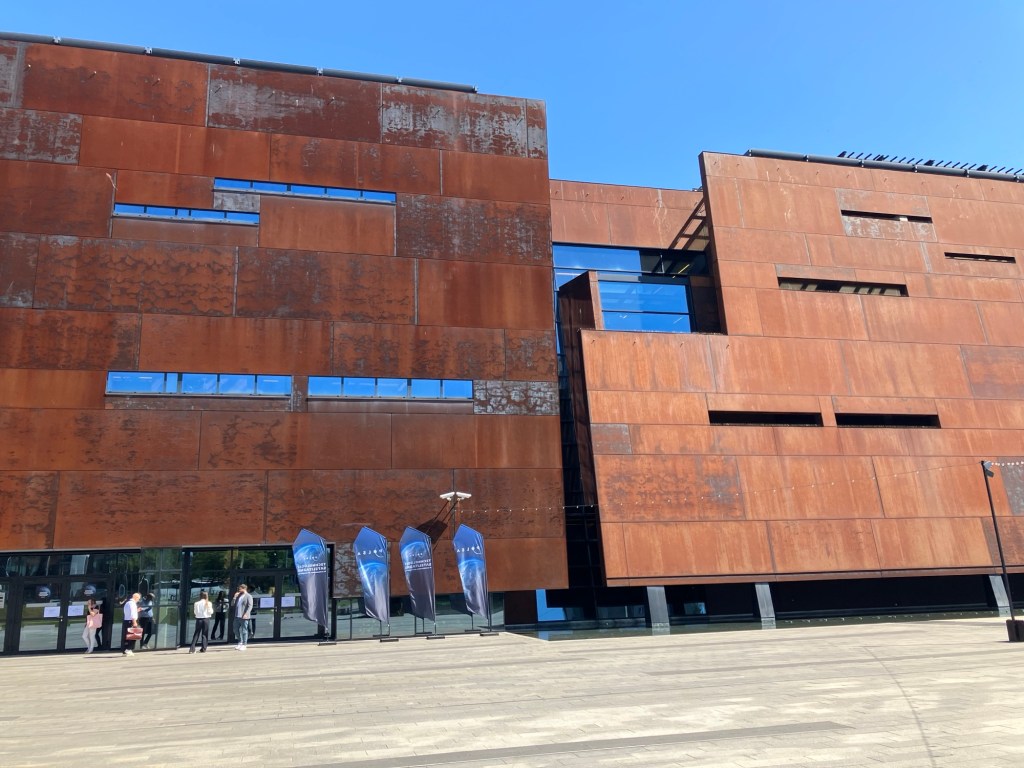
Gdańsk is home to another iconic museum which, like the Museum of the Second World War, documents remarkable events in the city and Poland’s recent history. The Museum in question is the Solidarity Museum, also known as the European Solidarity Centre. It is dedicated to the history of the Solidarity movement, a Polish trade union and civil resistance organisation that played a pivotal role in the country’s struggle for democracy and workers’ rights during the communist era.

The Solidarity Museum

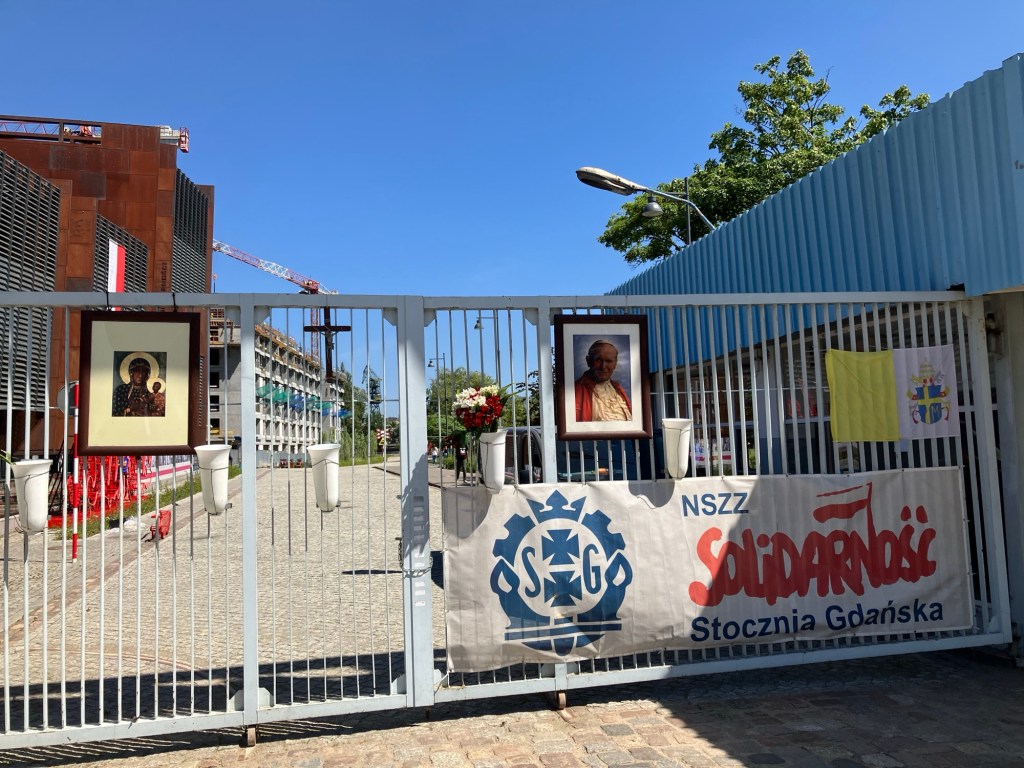
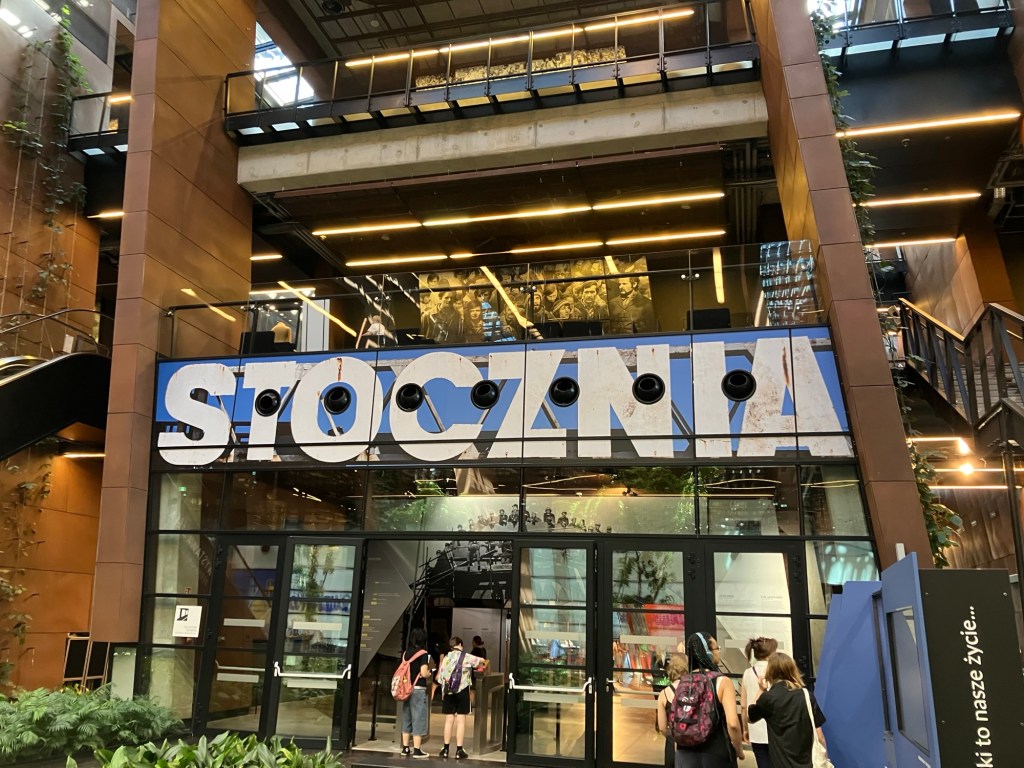
Situated in the northern part of the city, adjacent to the Gdańsk shipyard (‘ Stocznia Gdańska in Polish, formerly known as the Lenin Shipyard), the Museum opened in 2014. Its design, by Polish firm FORT Architects, was inspired by the hulls of ships built at the Gdańsk Shipyard, where the Solidarity (“Solidarność”) trade union movement was born in 1980. The movement was created when the Communist government of Poland signed an agreement allowing for the creation of independent trade unions. The charismatic Lech Wałęsa, a labor activist, was instrumental in the formation of Solidarity and became its chairman. The union quickly gained popularity and represented most of the Polish workforce, with a membership of about 10 million people.

The shipyard’s main entrance

Solidarity advocated for economic reforms, free elections, and the involvement of trade unions in decision-making processes. The union’s growing influence led to a series of controlled strikes in 1981, pressuring the government to negotiate. However, the Polish government, under pressure from the Soviet Union, eventually suppressed the union and imposed martial law.

Despite being forced underground, Solidarity continued to operate as an illegal organisation until 1989 when the government recognised its legality. In the 1989 national elections, Solidarity candidates won most of the contested seats in the assembly and formed a coalition government. The union played a significant role in the fall of communism in Poland and the transition to a free market economy.

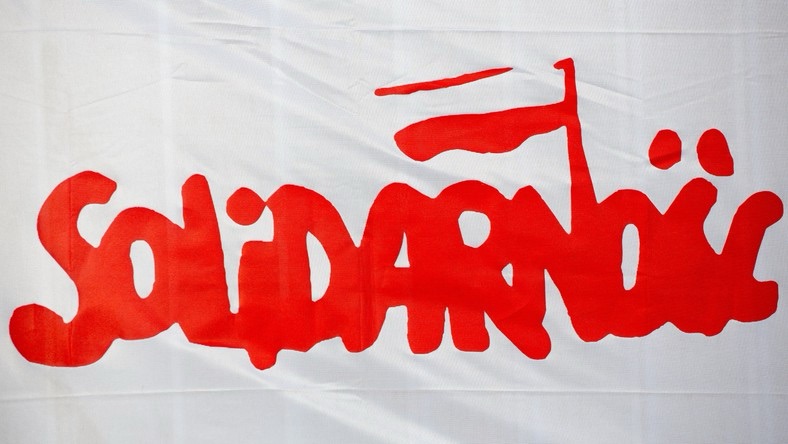
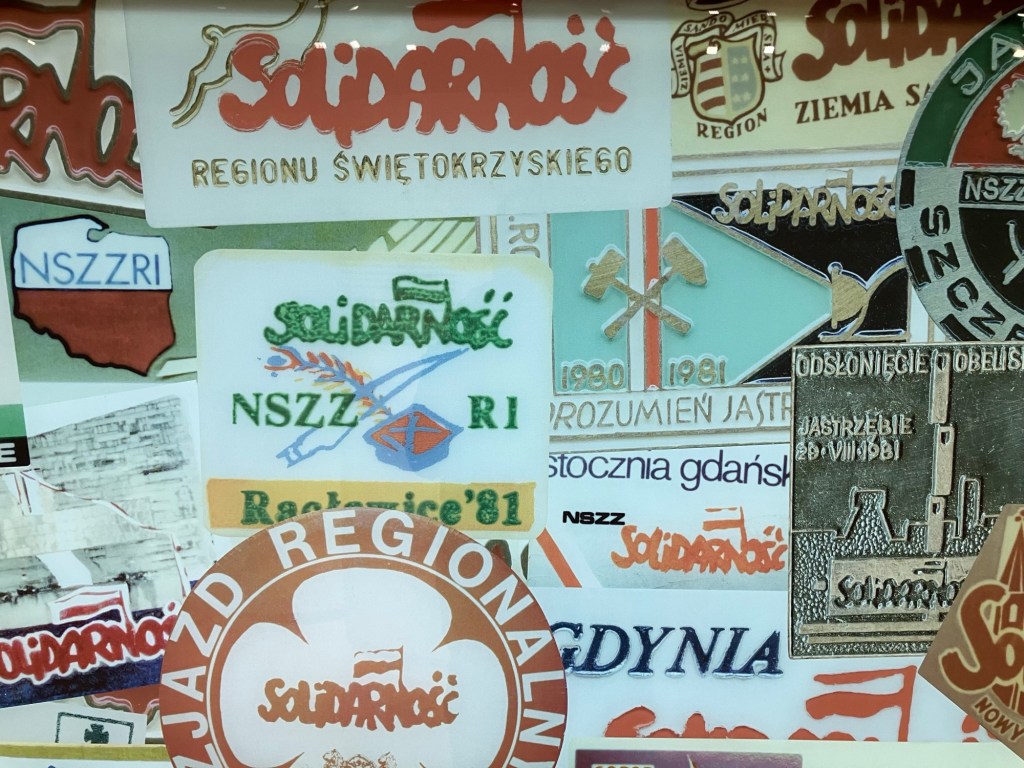
The movement’s distinctive logo

Lech Wałęsa’s leadership and determination were crucial in the formation and perseverance of Solidarity. He was awarded the Nobel Peace Prize in 1983 for his efforts and is considered a symbol of the struggle for freedom and democracy in Poland and throughout Eastern Europe.

Lech Wałęsa

Solidarity was the first independent labor union in a Soviet-bloc country and quickly grew into a broad, non-violent, anti-Communist social movement. It played a significant role in the fall of communism in Poland and beyond. 

The Solidarity movement is clearly documented and celebrated in the city’s Solidarity Museum, also known as the European Solidarity Centre.

Exhibits at the Museum include the original boards with the 21 demands of the Solidarity movement, which are included in UNESCO’s Memory of the World Register. Other exhibits feature dioramas and props that recreate the economic hardships of Poland in the 1980s, slideshows and film reels that document political uprisings and the imposition of martial law, and interactive displays that tell the stories of the individuals who shaped the movement.

The museum entrance

As the leader of the movement, Lech Walesa is obviously the most prominent figure in the Solidarity museum and the Museum’s exhibitions depict Walesa as a hero of the movement, highlighting his role in leading the strikes at the shipyard. which led to the formation of Solidarity. 

Inside the museum

After Poland became independent, Walesa continued to play a significant role in Polish politics. He served as the country’s first democratically elected president from 1990 to 1995, and he remains an important figure in Polish history and a symbol of the struggle for freedom and democracy.

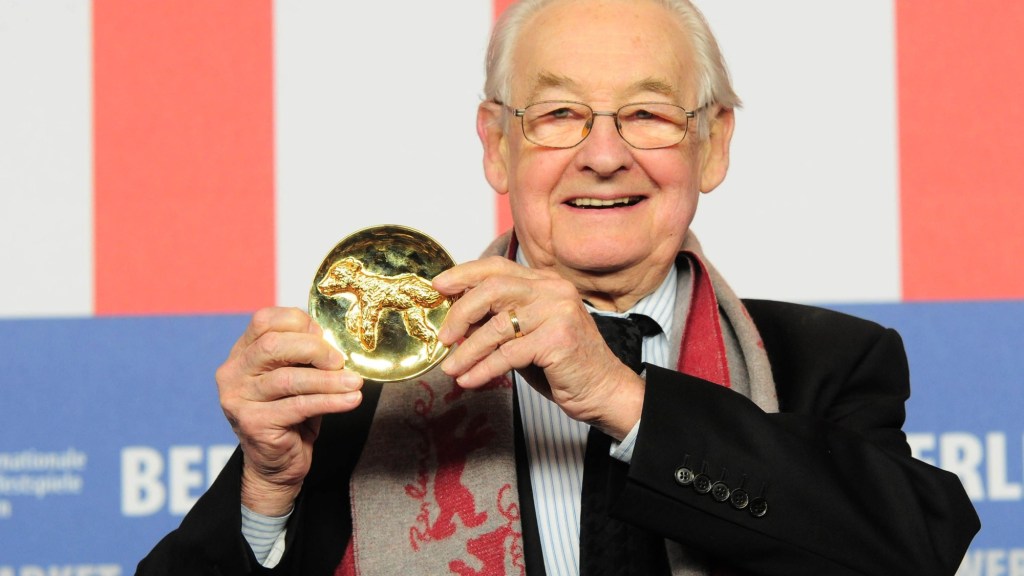
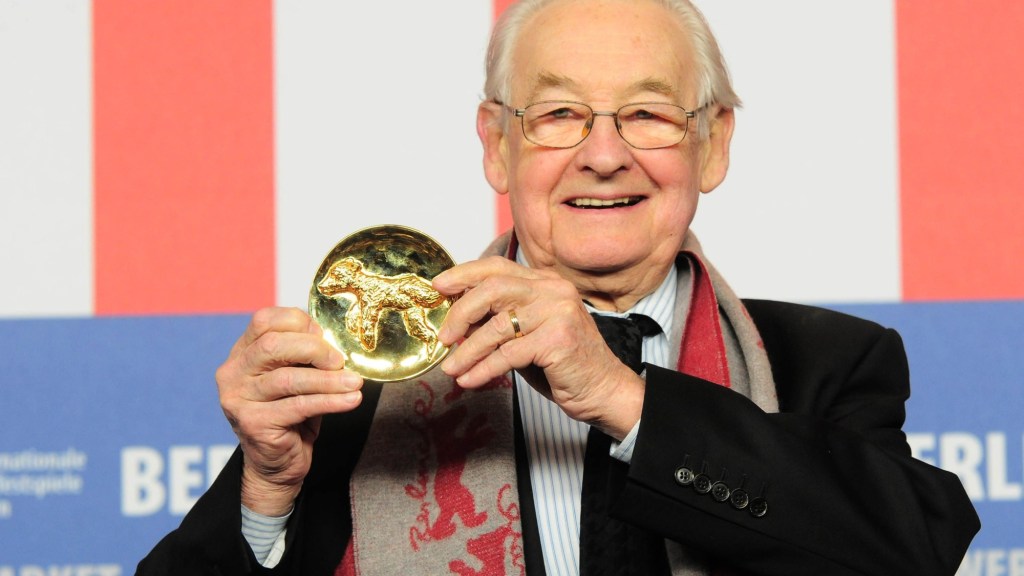
Another important figure in Poland was the Film Director, Andrzej Wajda. Often referred to as the “Father of Polish cinema” or the “Father of the Polish Film School” he directed a number of films that engaged with contemporary Polish history.  With his work internationally recognised and he won numerous plaudits on the world  stage including an Academy Award for lifetime achievement in 2014 (presented by Jane Fonda no less). 

Andrzej Wajda

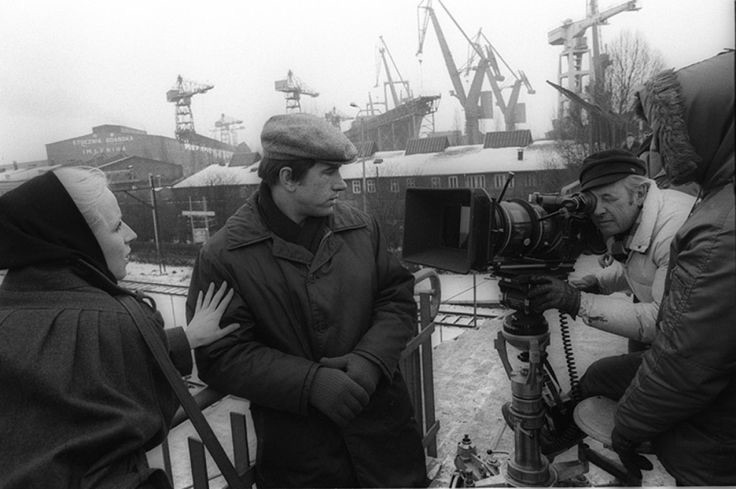
Andrzej Wajda made several films that dealt with the Solidarity movement, the most prominent of which is “Man of Iron” (1981). This film tells the story of a young Polish worker named Maciej Tomczyk, who becomes involved in the Solidarity movement and the struggle for workers’ rights in Poland in the early 1980s and it was made during a time of political upheaval in Poland. Its release coincided with the government’s crackdown on the Solidarity movement. Lech Walesa is featured prominently in the film.

Filming ‘Man of Iron’ in 1981

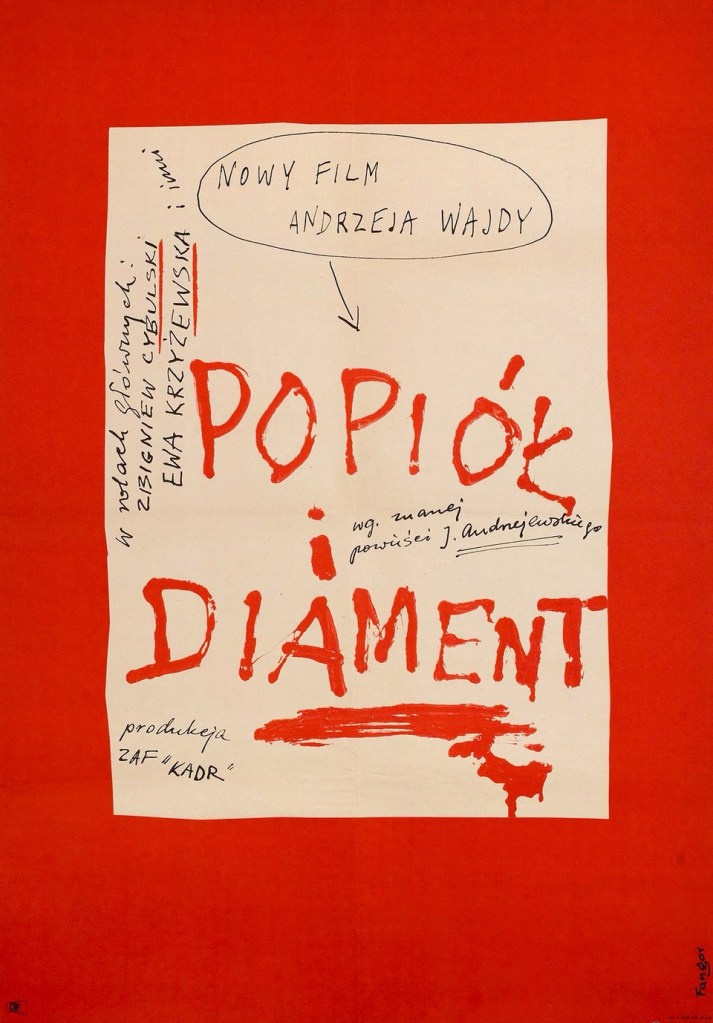
Wajda also made several films about World War II, including his famous “War Trilogy,” which consists of “A Generation” (1955), “Kanal” (1957), and “Ashes and Diamonds” (1958). These films are considered classics of Polish cinema and deal with different aspects of the war and its impact on Polish society.

Polish language poster for Ashes and Diamonds, Wajda’s masterpiece

In “A Generation,” Wajda explores the experiences of young people living under Nazi occupation in Warsaw, while “Kanal” follows a group of Polish resistance fighters as they try to escape the city through the sewers during the Warsaw Uprising. “Ashes and Diamonds,” meanwhile, takes place in the aftermath of the war and deals with the complex political situation in Poland as the country begins to rebuild.

Wim Wenders paid tribute to Andrzej Wajda at the European Film Awards (EFA) in 2016. Wenders spoke warmly  of Wajda’s contributions to cinema, highlighting the importance of truth, freedom, and solidarity in his work. Wajda had previously been awarded a lifetime achievement award by the EFA in 1990. Wenders was awarded the same recognition by the EFA in 2024. 

(The European Film Awards (EFA) is an annual awards ceremony of the European Film Academy which is dedicated to promoting the interests of the European film industry on the world stage).

‘’Gdansk is a city that has always been at the forefront of social and political change, and that is something that I have tried to capture in my films.” 

Andrzej Wajda

Japan, food and Bourdain

To some in the West, Japan can seem like a land of cliches, no more so than with preconcoeved notions of it’s food. 

Here are some of the more common misconceptions 

All Japanese food is sushi: While sushi is indeed a popular dish, Japanese cuisine is incredibly diverse and includes a wide range of dishes that have nothing to do with sushi, such as ramen, udon, soba, okonomiyaki, and more.

Japanese food is always healthy: While many Japanese dishes are indeed healthy, there are also plenty of indulgent and unhealthy dishes, like ramen with its high sodium content, or fried foods like tempura and katsu.

 All Japanese food is raw: While raw fish and seafood are popular ingredients in Japanese cuisine and sushi itself is much beloved in the country, the average Japanese person doesn’t eat sushi as often as one would think. In fact,  most Japanese people eat sushi about 2-3 times a month, although this can vary depending on personal preferences and the season and it is hardly a staple of the daily diet for most people.

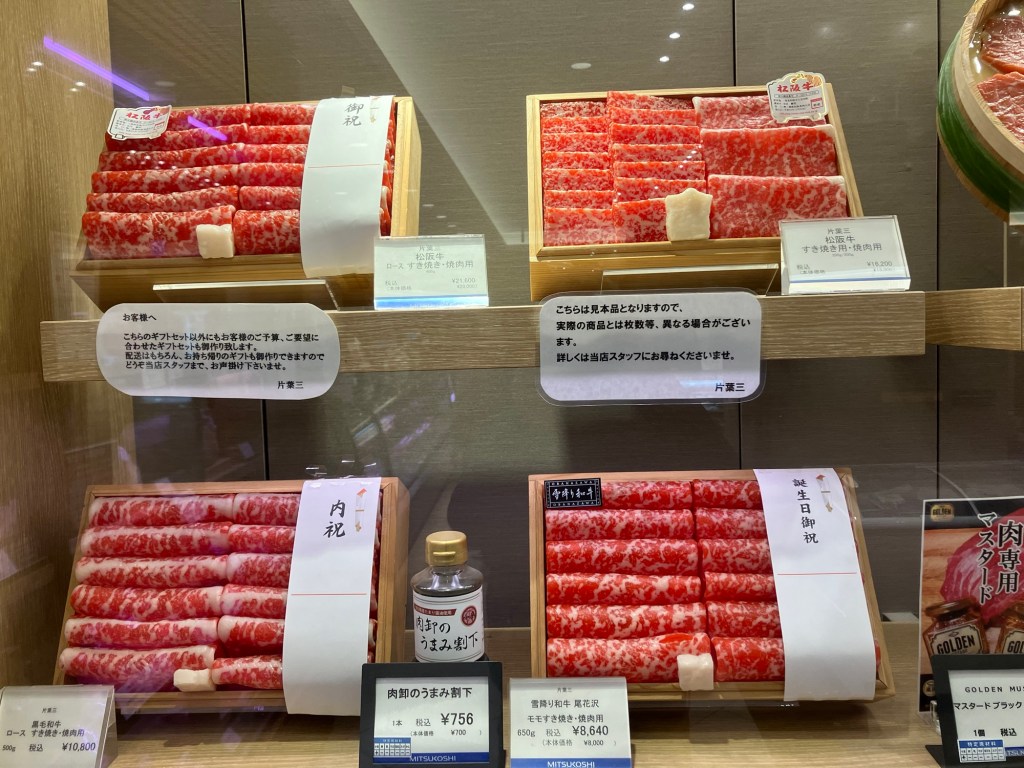
Westerners often perceive Japanese food, particularly high-end sushi and sashimi, to be expensive. This perception is fueled by the high prices found at upscale Japanese restaurants in Western countries, as well as media portrayals of luxurious Japanese dining experiences. Additionally, ingredients like fresh seafood and imported Japanese products can drive up the cost of Japanese cuisine outside of Japan.

Kobe beef

However, in reality, everyday Japanese food in Japan is not necessarily expensive. In fact, many dishes like ramen, yakitori, and udon can be quite affordable, especially at local, non-touristy eateries. Street food and local markets also offer budget-friendly options for those looking to sample a variety of Japanese flavors without breaking the bank.

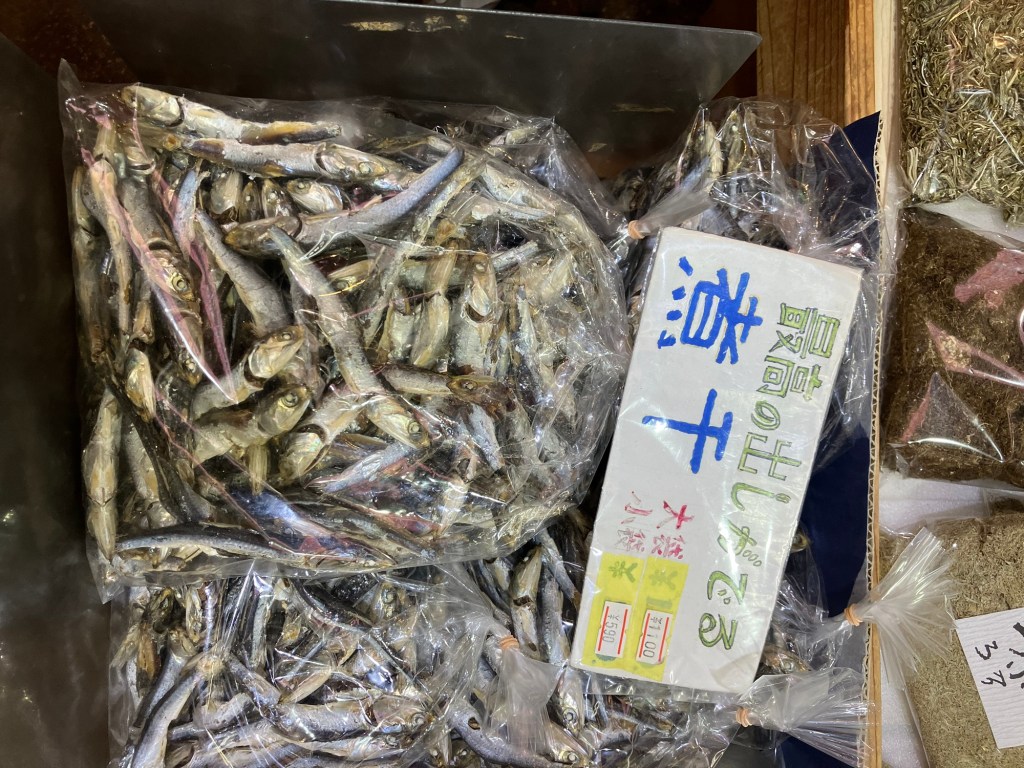
Market pickles

And do not forget convenience stores ( collectively ‘konbini’). Not only do they seem to sell everything you might need, they can also be a source of simple, tasty convenience food. 

The three main convenience stores in Japan are:

* 7-Eleven: The largest convenience store chain in Japan, with over 20,000 stores. It’s often referred to by its nickname “Seben.”

* FamilyMart: The second-largest convenience store chain (and our personal favourite), with around 16,000 stores. It’s commonly nicknamed “Famima.”

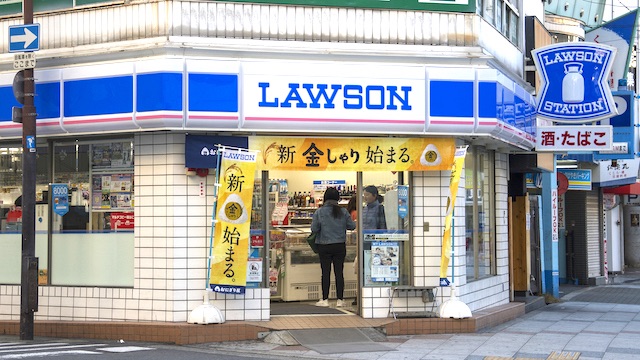
* Lawson: The third-largest convenience store chain, with around 14,000 stores. It’s usually called “Losson.” Idolised by the late chef/presenter Anthony Bourdain for their divine egg mayonnaise sandwiches.

Japanese convenience stores are known for their wide range of food items, including:

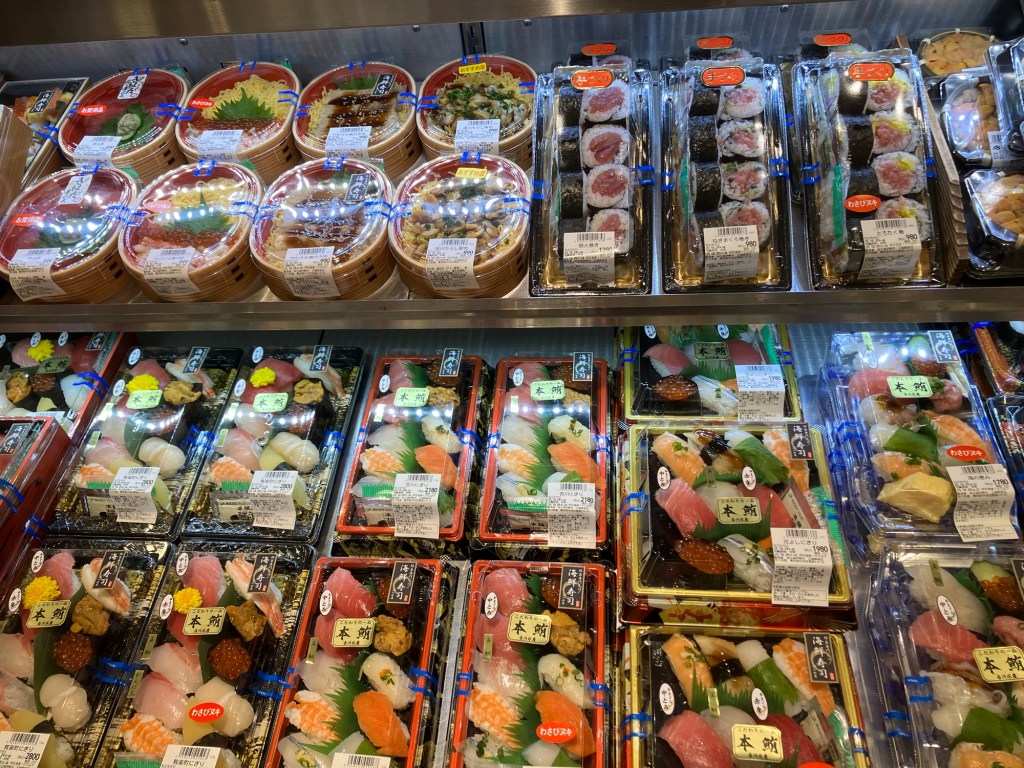
* Bento boxes: A variety of prepared meals, including sushi, noodles, and rice dishes. (Far better Bento boxes can be found in any decent department store food court or train station (‘Ekiben’).

Bento boxes

* Onigiri: Triangular-shaped rice balls wrapped in seaweed.

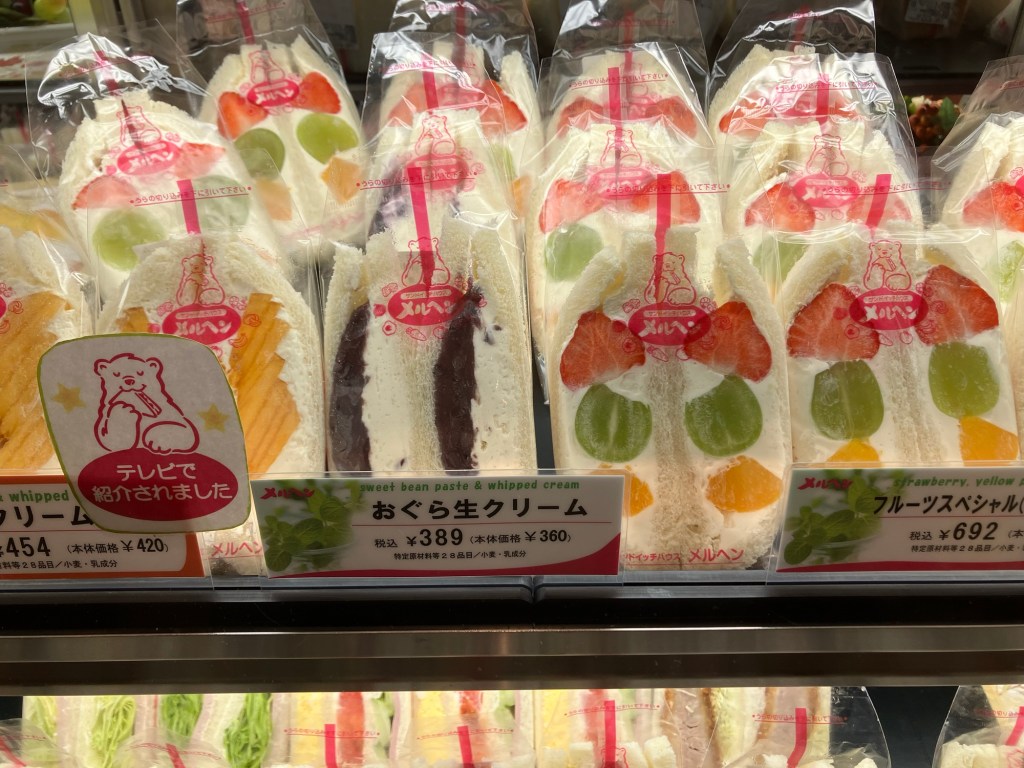
* Sandwiches: Western-style sandwiches with fillings such as egg salad, tuna, and ham. Lawson stores were idolised by the late chef/presenter Anthony Bourdain for their egg mayonnaise sandwiches (good) although we prefer the Family Store take on this simple take out which are even better in our opinion.

Classic egg mayonnaise sandwich and Onigiri

* Oden: A type of Japanese hot pot that includes ingredients such as daikon, tofu, and fish cakes.

* Snacks: Japanese and Western snacks, such as chips, crackers, and candy.

So whilst the perception of Japanese food as expensive persists in Western countries, it’s important to remember that this is only one aspect of a diverse and multifaceted culinary landscape. 

A good place to start is with typical daily meals. Whilst they may vary depending on the individual and the region, here’s a general overview of what an average Japanese person might eat in a day:

Breakfast: A traditional Japanese breakfast often includes steamed rice, miso soup*, grilled fish, pickled vegetables, and perhaps a piece of fruit.

*Miso soup is made from a stock called dashi, which is typically made from dried kelp (kombu) and dried fish flakes (katsuobushi). Miso paste, a fermented soybean paste, is added to the broth, lending its rich, savory flavor and cloudy appearance to the soup. In addition to the broth and miso paste, miso soup usually includes cubes of soft tofu and slices of green onion. Depending on regional and seasonal variations, other ingredients such as mushrooms, carrots, daikon radish, or clams can also be added to the soup.

Miso paste

Lunch: For lunch, a Japanese person might enjoy a bento box, which is a meal consisting of rice, vegetables, and protein (like fish or meat) arranged in a compartmentalized container. Another popular option is ramen or udon noodles.

Dinner: At dinner time, families might gather together to share a meal of various dishes, such as tempura, teriyaki, or sushi.

Let’s examine these three meals in more detail.

Tempura is a dish that consists of seafood, vegetables, or sometimes meat, lightly battered and deep-fried to create a crispy, golden-brown coating. Tempura is often served with a dipping sauce made from soy sauce, mirin, and sugar, and is sometimes accompanied by grated daikon radish or ginger.

Teriyaki is a cooking technique where food, typically chicken or other proteins like beef, pork, fish, or tofu, is grilled or broiled with a sweet and savory sauce. Teriyaki sauce is made from a mixture of soy sauce, mirin (a sweet rice wine), sugar, and sometimes sake or ginger. The food is usually marinated in the teriyaki sauce before cooking, then brushed with additional sauce while grilling or broiling to create a rich, sweet-salty flavor and a beautiful shine.

Sushi features vinegared rice (sushi-meshi) combined with various ingredients, such as raw fish, seafood, vegetables etc. The word “sushi” actually refers to the seasoned rice, rather than the raw fish that is often associated with it.

There are several types of sushi, including:

– Nigiri: A small, oblong mound of sushi rice topped with a slice of raw fish, seafood, or other ingredients.

– Maki: Rice and other ingredients rolled together inside a sheet of dried seaweed (nori) and sliced into bite-sized pieces.

– Sashimi: Sliced raw fish or seafood served without rice.

– Temaki: Similar to maki, but hand-rolled into a cone shape.

– Chirashi: Sushi rice topped with a variety of ingredients, similar to a rice bowl.

Sushi is typically served with soy sauce, wasabi, and pickled ginger.

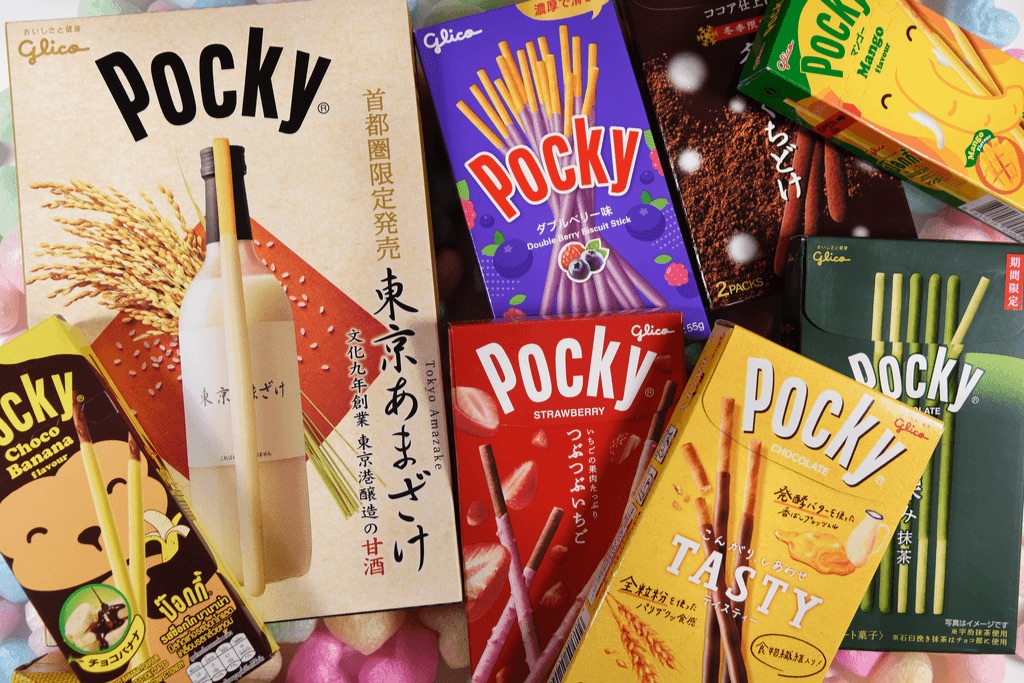
In between meals, Japanese people often enjoy snacks such as onigiri (rice balls) or pocky (chocolate-covered biscuit sticks).

Pocky sticks

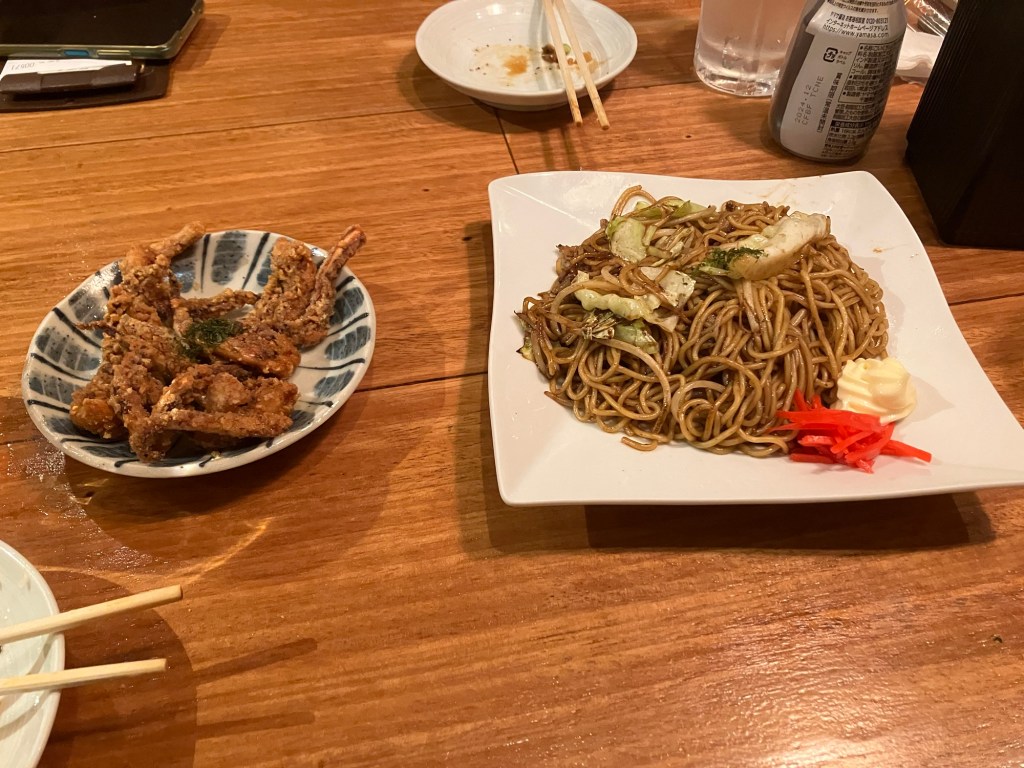
(Please note that if you have not made it back home in time to sample dinner, it is maybe because you and your friends/colleagues have been drinking and eating at an izakaya. An izakaya is a type of Japanese bar that is similar to a pub or tapas bar. It’s an informal place where people can go after work to have drinks and snacks.The food served at izakayas is designed to be shared and typically goes well with beer. The menu can include a variety of dishes, such as yakitori (typically grilled chicken meat, offal and skin) gyoza, sashimi and nakazuke (fermented cucumber) and noodles.

Yakitori
Nakazuke
Izakaya noodles

If you are ever in Japan, visiting an izakaya is a great way to experience the local culture and cuisine in a fun and relaxed setting.

Noodles are beloved in Japan and arguably second only to rice as a staple.

Dig in or rather slurp on!

Ramen: Thin, wheat-based noodles served in a savory broth that can be made from pork, chicken, fish, or vegetables. The broth is often flavored with soy sauce, miso, or salt, and is typically topped with sliced pork, soft-boiled egg, and green onions. Ramen is famous for its rich, complex flavors and regional variations.

Udon: Thick, chewy noodles made from wheat flour that can be served hot or cold. Udon noodles are usually served in a hot broth made from fish or meat stock, topped with ingredients like tempura, green onions, and slices of fried tofu. In the summer, chilled udon noodles are often served with a soy-based dipping sauce.

Soba: Thin, delicate noodles made from buckwheat flour that can be served hot or cold. Soba noodles are usually served with a dipping sauce made from soy sauce, mirin, and dashi, and are often garnished with sliced green onions and wasabi. In the winter, hot soba noodles are served in a clear broth.

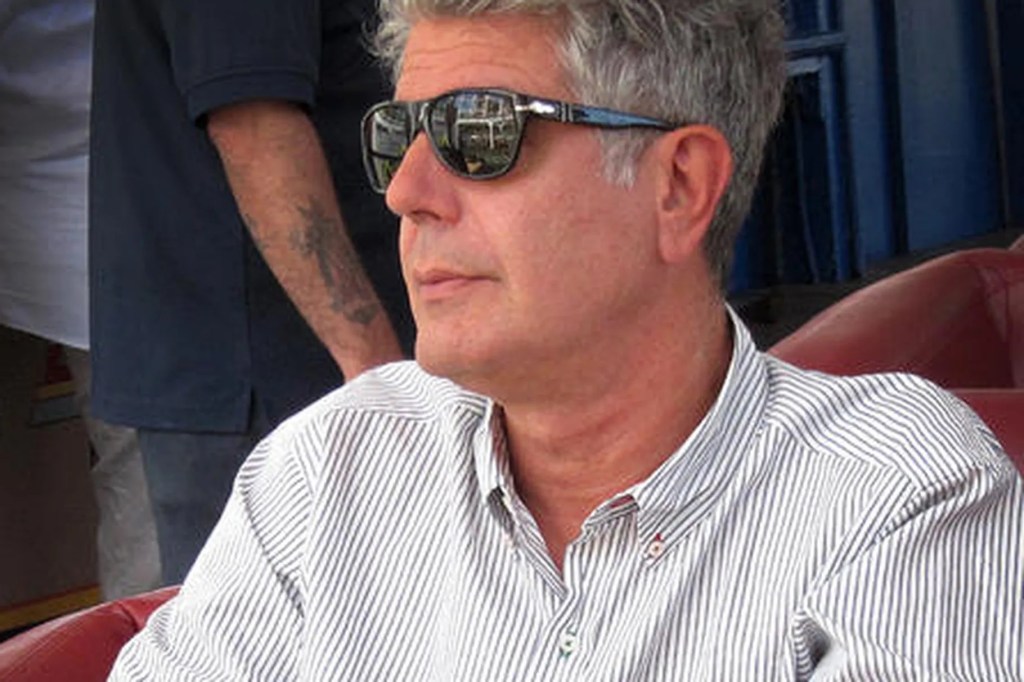
Whilst the 1985 film “Tampopo” directed by Juzo Itami introduced Western audiences to ramen and the passion for noodles in Japan, it was arguably the late TV presenter, chef and raconteur extraordinaire Anthony Bourdain whose shows include  ‘No Reservations’ and ‘Parts Unknown’ who really introduced a worldwide audience to the delights of Japanese cuisine. Bourdain was fascinated with the country and it’s food commenting:-

“I love Tokyo. If I had to eat only in one city for the rest of my life, Tokyo would be it. Most chefs I know would agree with me.”

“You can pick almost any restaurant in Japan and be almost sure you’ll get a great meal.”

Bourdain photo from The Travel Channel

Bourdain’s appreciation for Japanese cuisine was clear, and he enjoyed exploring the many different flavors and textures of the country’s street food and high-end restaurants alike.

In 2013  Bourdain introduced ‘Parts Unknown’ which  premiered on CNN. The concept behind the series was to take viewers on a journey around the world, exploring lesser-known destinations, their cultures, and their cuisines. The show was a departure from traditional travel and food shows, and it quickly gained a devoted following of fans who appreciated Bourdain’s honesty, humor, and willingness to challenge preconceived notions about different cultures. Japan and its food culture were celebrated in repeatedly in whole and part episodes of the series notably “Hokkaido” and “Masa’s Japan”. 

The “Hokkaido” episode of “Parts Unknown” aired in 2017, and it featured Bourdain exploring that northernmost island its culture and its food. This was a part of Japan valley visited by those in the West and so his show was as illuminating as it was entertaining 

The “Masa’s Japan” episode of Parts Unknown aired in 2016 and focused on Bourdain’s travels through Japan with legendary sushi chef Masayoshi “Masa” Takayama. During their journey, Bourdain and Masa explored the urban center of Kanazawa, Masa’s rural hometown of Nasushiobara, and the sushi restaurant in Tokyo where Masa began to learn his craft. The episode offered viewers a glimpse into Japan’s rich culinary history and culture, as well as the inspiring story of Masa’s journey from small-town boy to world-renowned chef. The episode reminded us of the 2011 documentary by David Gelb, “Jiro Dreams of Sushi” which follows the life and work of Jiro Ono, a master sushi chef who runs the renowned sushi restaurant Sukiyabashi Jiro in Tokyo. 

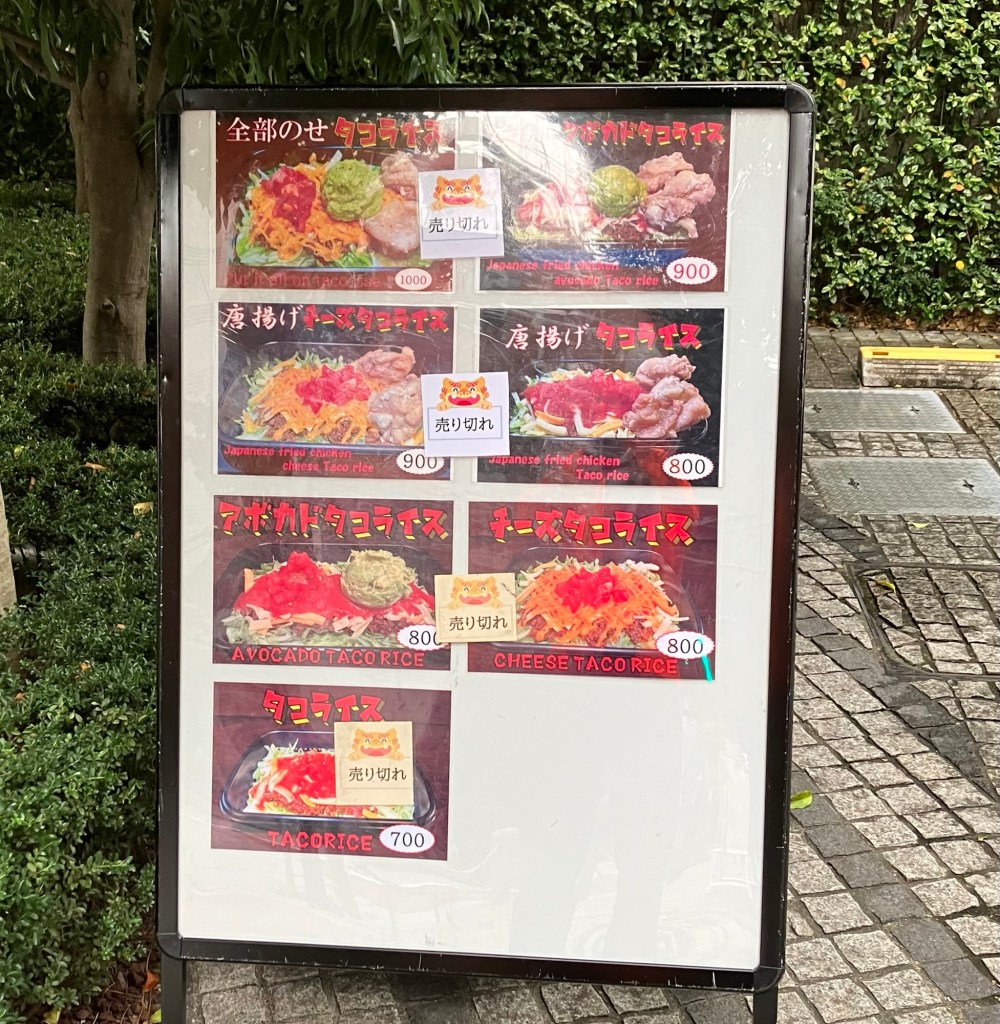
Bourdain also travelled and reported from the Japanese island of Okinawa. One particular speciality from that island caught his eye was taco rice aka Okinawa taco.

Okinawa taco

Taco rice, or “takoraisu” in Japanese, is a popular dish that originated in Okinawa, Japan. It’s a fusion of Mexican and Japanese cuisines, and it’s essentially a Tex-Mex taco served over a bed of steamed rice. 

Taco rice is made with seasoned ground beef, lettuce, cheese, tomatoes, and fresh salsa served on top of steamed rice. It was first created in 1984 by a Japanese restaurant owner who wanted to cater to the American military stationed in Okinawa. The dish became a hit not only among the American military but also among the locals.

Taco rice is now a beloved comfort food in Japan and has spread beyond Okinawa to other parts of the country.

Taco rice combos

And when it comes to street foods in Japan, these are our three favourites:-

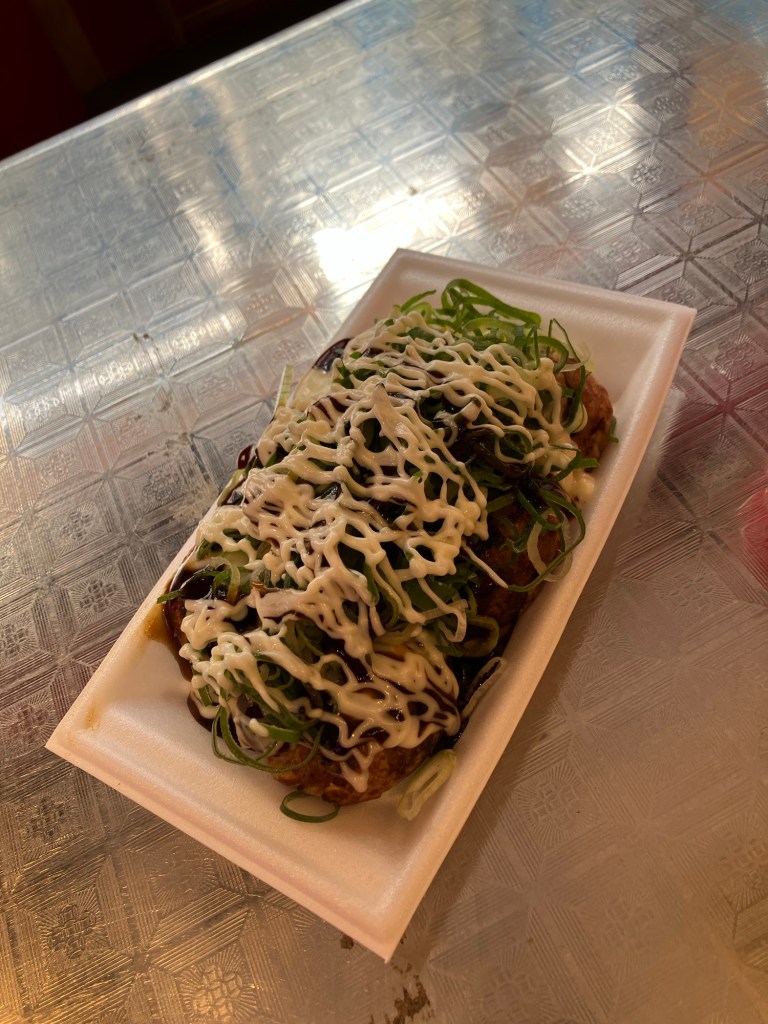
Takoyaki – fried batter balls filled with diced octopus and topped with takoyaki sauce, mayonnaise, and bonito flakes. Especially popular in Osaka.

Takoyaki in Osaka

Takoyaki sauce is a sweet and savory sauce that is made from a combination of ingredients such as Worcestershire sauce, mentsuyu (noodle soup base), ketchup, and sugar. 

Takoyaki

Okonomiyaki – a savory Japanese pancake that can be customized with a variety of ingredients, such as eggs, vegetables, seafood, and meat, and cooked on a hot griddle called a teppan.

There are several regional variations of okonomiyaki in Japan, with the most famous being the Osaka and Hiroshima styles. In Osaka, the ingredients are mixed into the batter and cooked together, while in Hiroshima, the ingredients are layered on top of a thin pancake.

Okonomiyaki is typically served with a sweet and savory sauce, mayonnaise, and bonito flakes.

Okonomiyaki

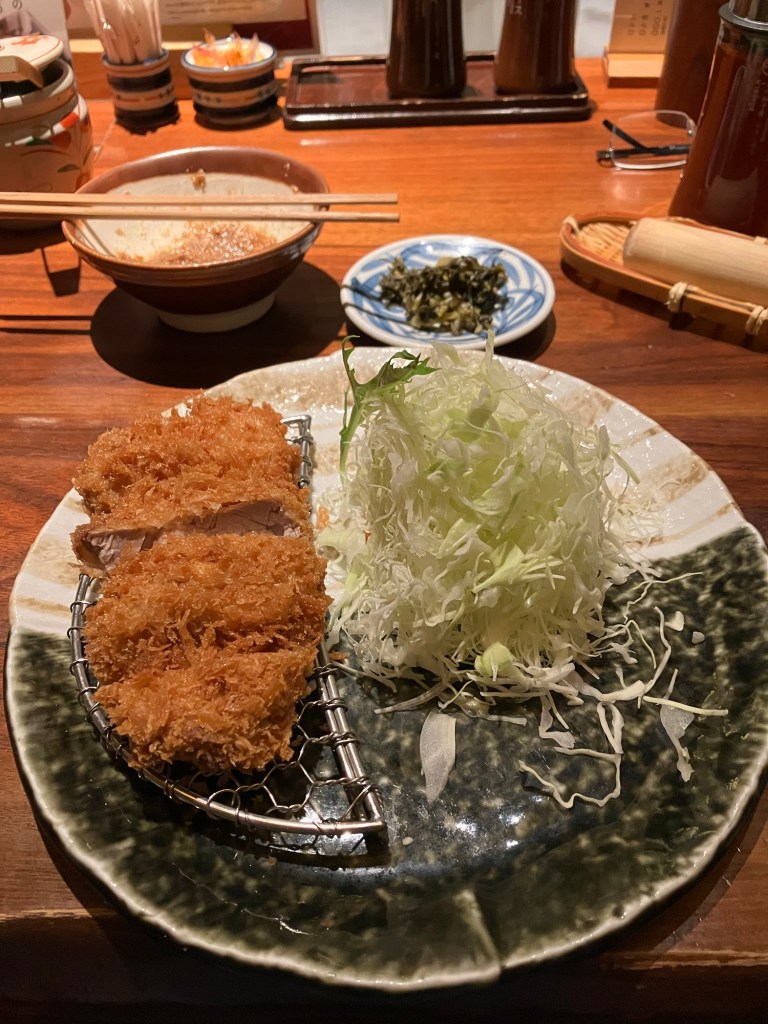
Menchi Katsu – popular throughout Japan and especially Tokyo’s Akasuka district. Menchi katsu is a Japanese ground meat cutlet that is coated in panko breadcrumbs and deep-fried until crispy and golden. It’s often served as a snack or as part of a bento box lunch. Typically served with shredded cabbage and a sweet and savoury dipping sauce.

Katsu

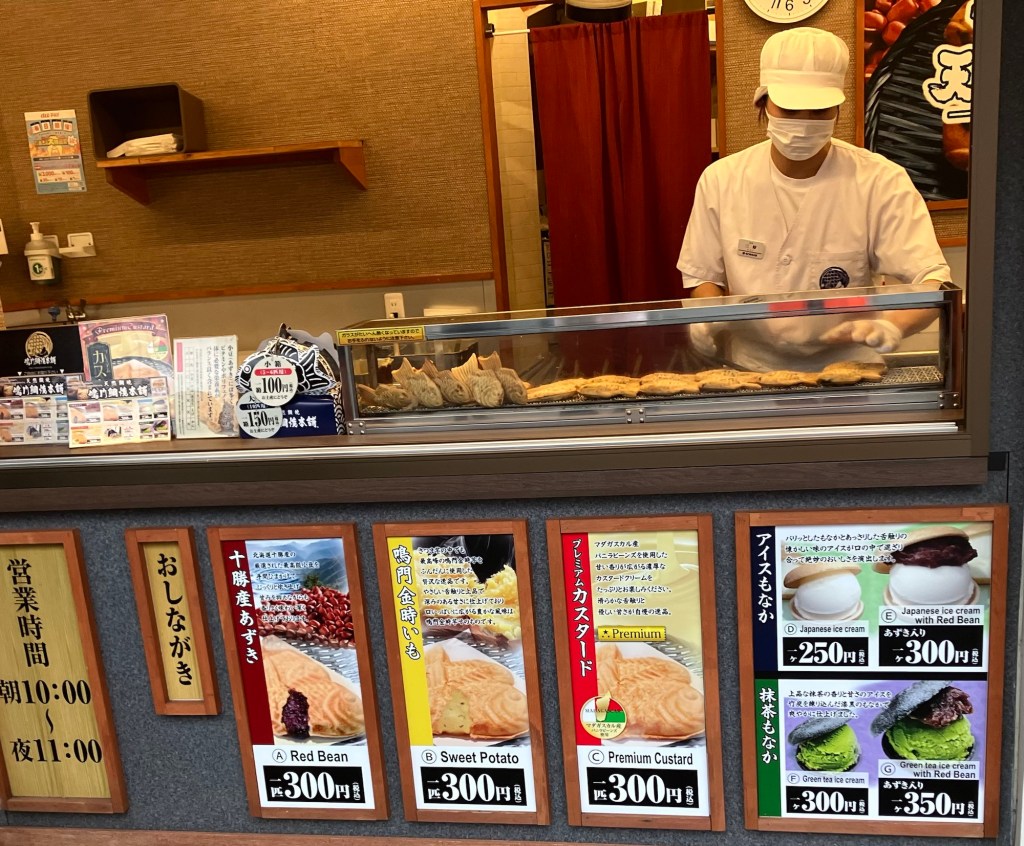
And for afters? Try Taiyaki, a fish-shaped pancake that is filled with sweet bean paste and is available anywhere and everywhere.

Taiyaki

“Meshiagare” – bon appétit!