
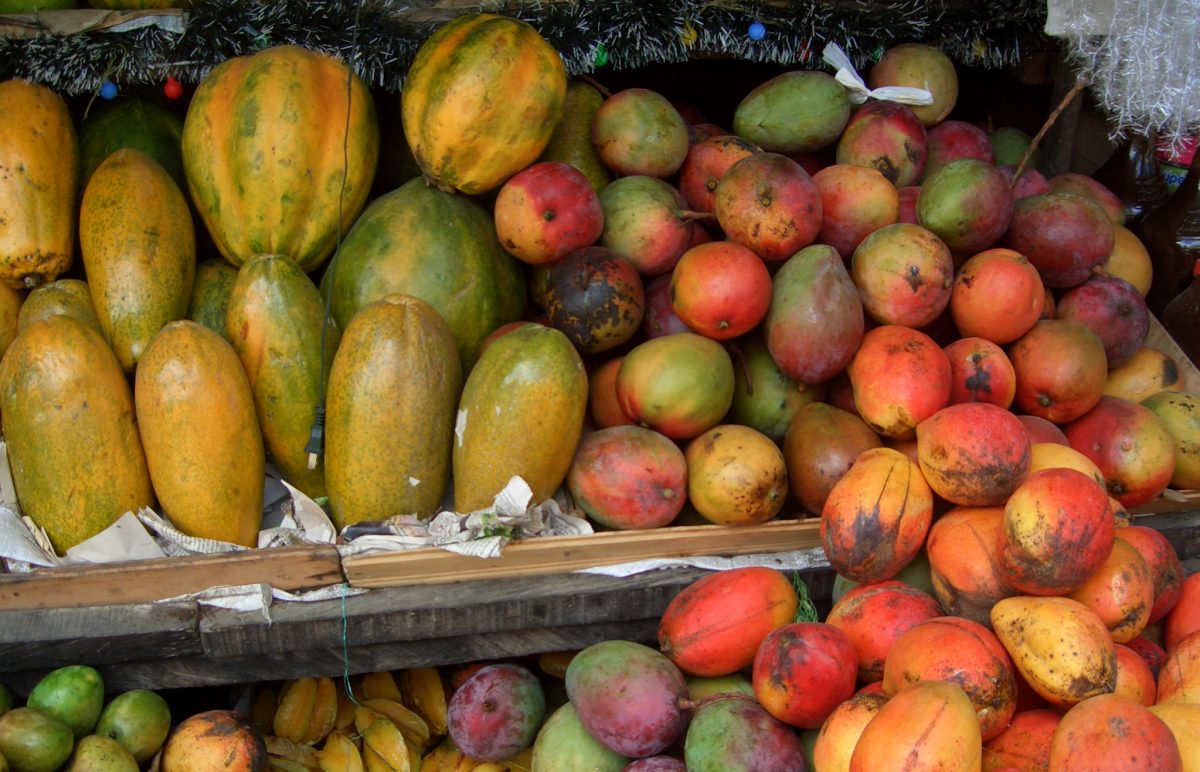
Penang is Malaysia’s most culturally significant state due to its history as a trading port, its ethnic diversity, and its preserved heritage. The capital, George Town developed in the late 18th century after the British established it. Because it was a major maritime hub connecting Asia and Europe, migrants from China, India, the Malay Peninsula, and the Middle East settled there, shaping a highly multicultural society.
Ethnically, Penang differs somewhat from Malaysia’s national demographic balance. The population consists mainly of ethnic Chinese (around 40–45%), Malays (around 40%), and Indians (about 10%), alongside smaller Eurasian and other communities. This mix helped create the distinctive Peranakan culture, which blends Chinese and Malay traditions.
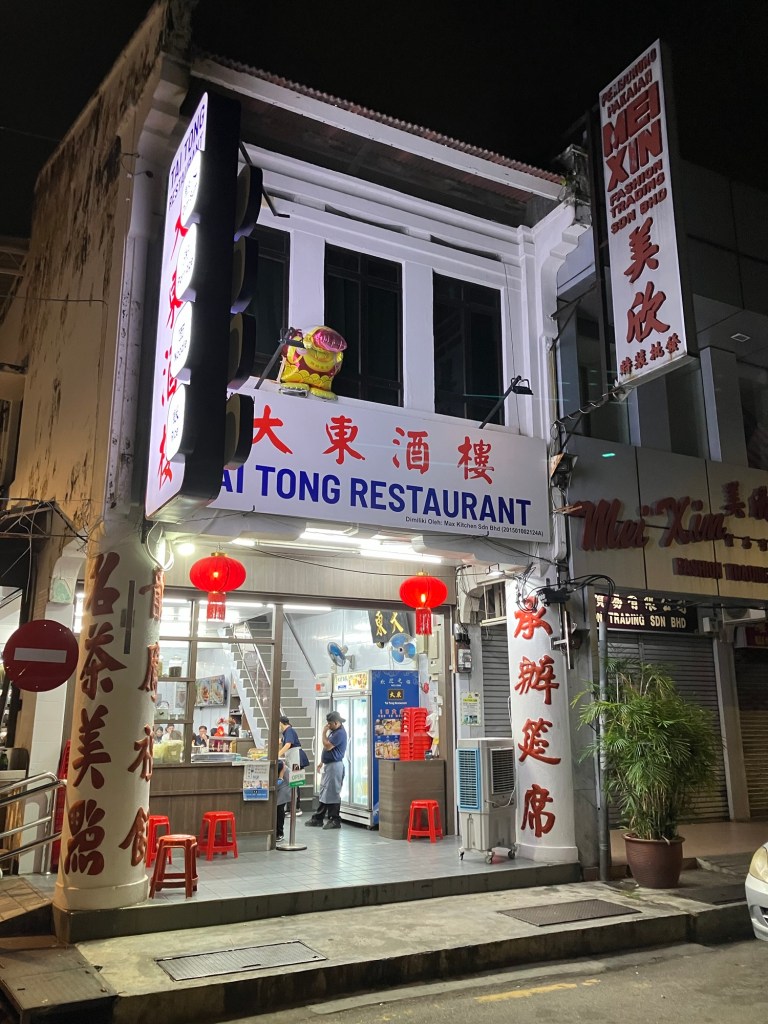
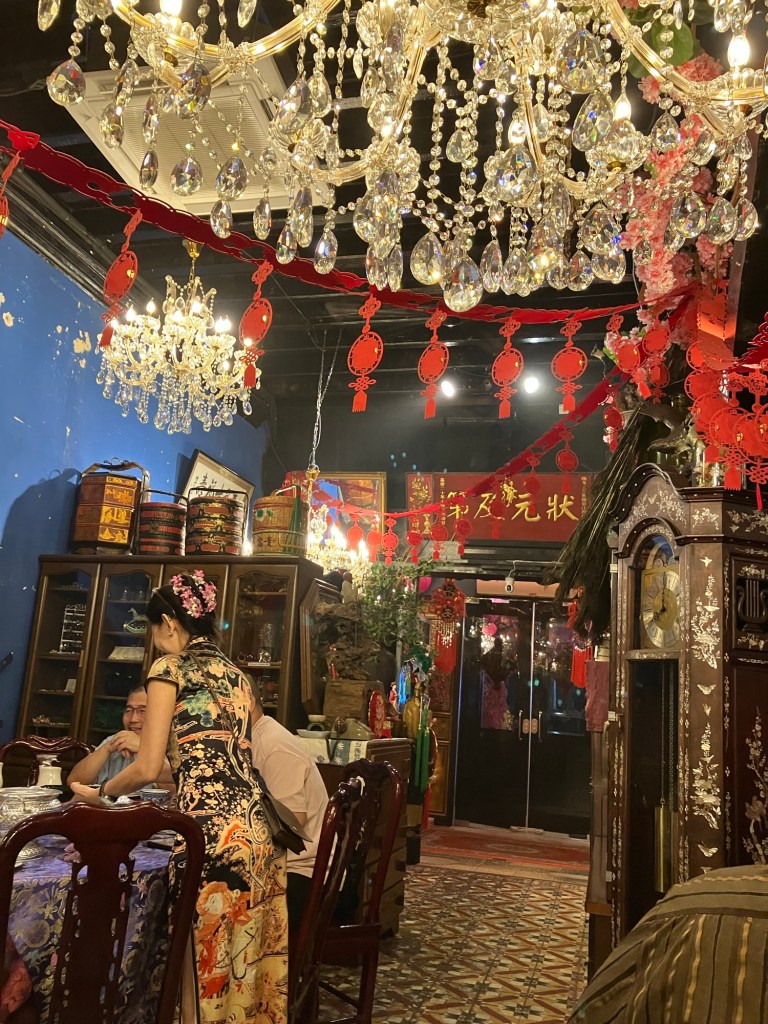
Chinese popular culture plays a major role in the cultural life of Penang, reflecting the large Chinese Malaysian community that has lived on the island since the 18th-century trading era. In the capital George Town, Chinese cultural traditions are visible in festivals, language, media, religion, and everyday entertainment.
Festivals are one of the most visible expressions. Celebrations such as Chinese New Year, the Mid‑Autumn Festival, and the Penang-based Nine Emperor Gods Festival involve temple rituals, street processions, food stalls, and community performances. These events combine traditional religious practices with modern popular entertainment such as concerts and stage shows.
Language and media also reinforce Chinese cultural influence. Mandarin and southern Chinese dialects such as Hokkien are widely spoken in Penang, and residents often consume pop music, television dramas, and films from China, Hong Kong, and Taiwan. This media circulation shapes local tastes in fashion, music, and youth culture.
Performing arts and community institutions are another key element. Clan associations and temples often sponsor opera performances, lion dances, and other cultural events that blend heritage with contemporary entertainment. These activities help maintain cultural identity while remaining part of Penang’s multicultural environment.
Overall, Chinese popular culture in Penang is both a preservation of heritage and a living, evolving influence that shapes the island’s festivals, entertainment, language, and public life.
This diversity produced a distinctive cultural blend seen in Penang’s architecture, religions, languages, and cuisine. George Town’s historic center—famous for temples, mosques, colonial buildings, and shophouses—was designated a UNESCO World Heritage Site in 2008 for its unique multicultural urban heritage.
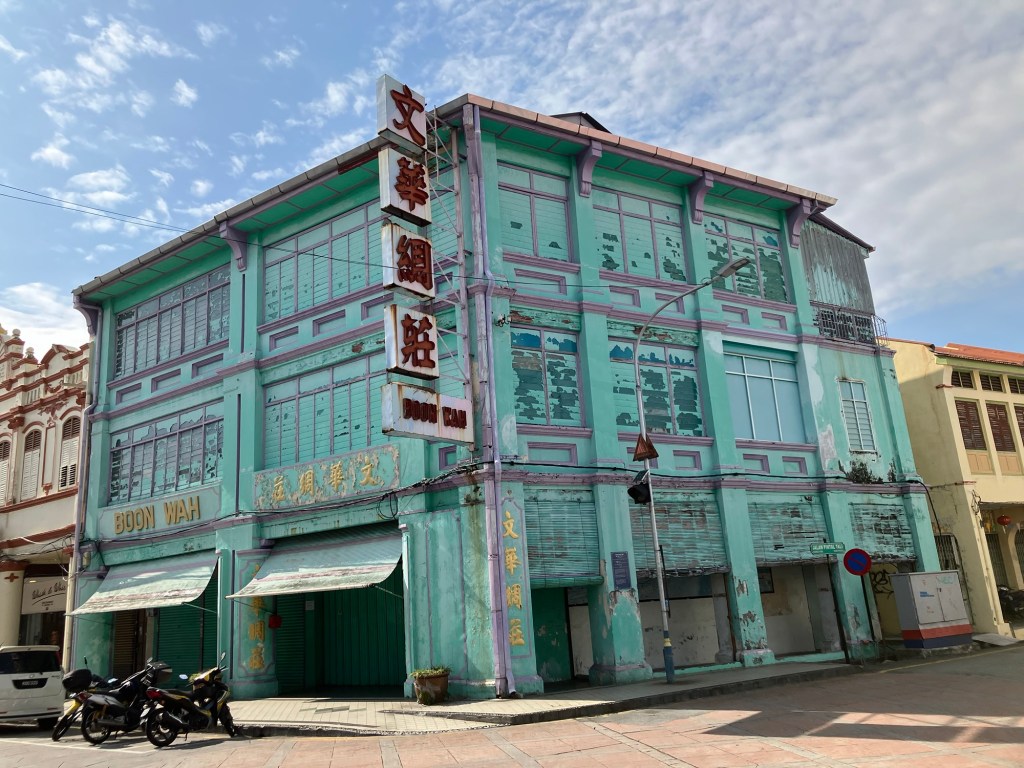
George Town, on Penang island, is renowned for its historic shophouses and diverse architectural landscape. These narrow, elongated buildings combine commercial spaces on the ground floor with residential quarters above, reflecting a practical yet elegant design. Influenced by Chinese, Malay, Indian, and European styles, many feature ornate facades, wooden shutters, and vibrant tiles. Beyond shophouses, the city showcases colonial-era buildings, mosques, temples, and clan houses that tell stories of its multicultural past. Carefully preserved and restored, these structures contribute to George Town’s UNESCO World Heritage status, making it a living museum where history, culture, and daily life coexist harmoniously.
The food culture of George Town is one of the main reasons the city is internationally famous. Located in Penang, George Town developed as a historic trading port where Malay, Chinese, Indian, and other migrant communities mixed their culinary traditions. This blending produced one of Southeast Asia’s most distinctive street-food cultures, making the city widely regarded as Malaysia’s food capital.
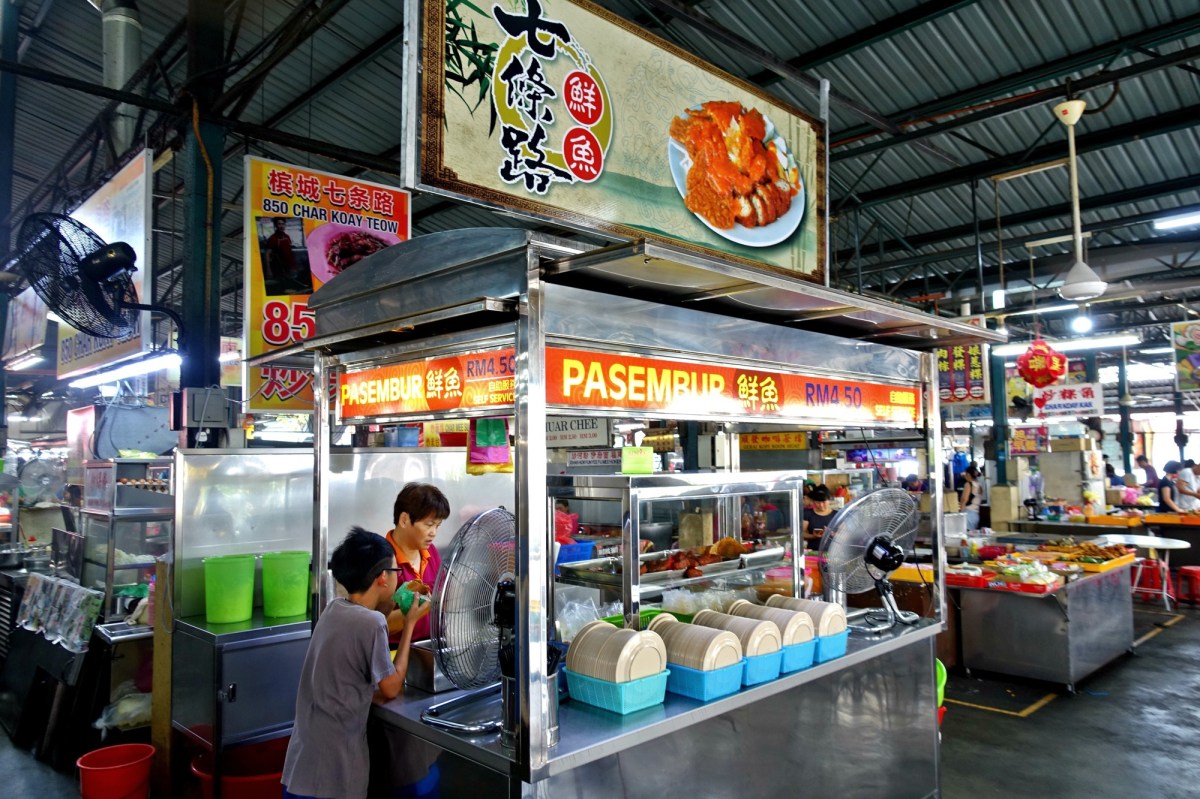
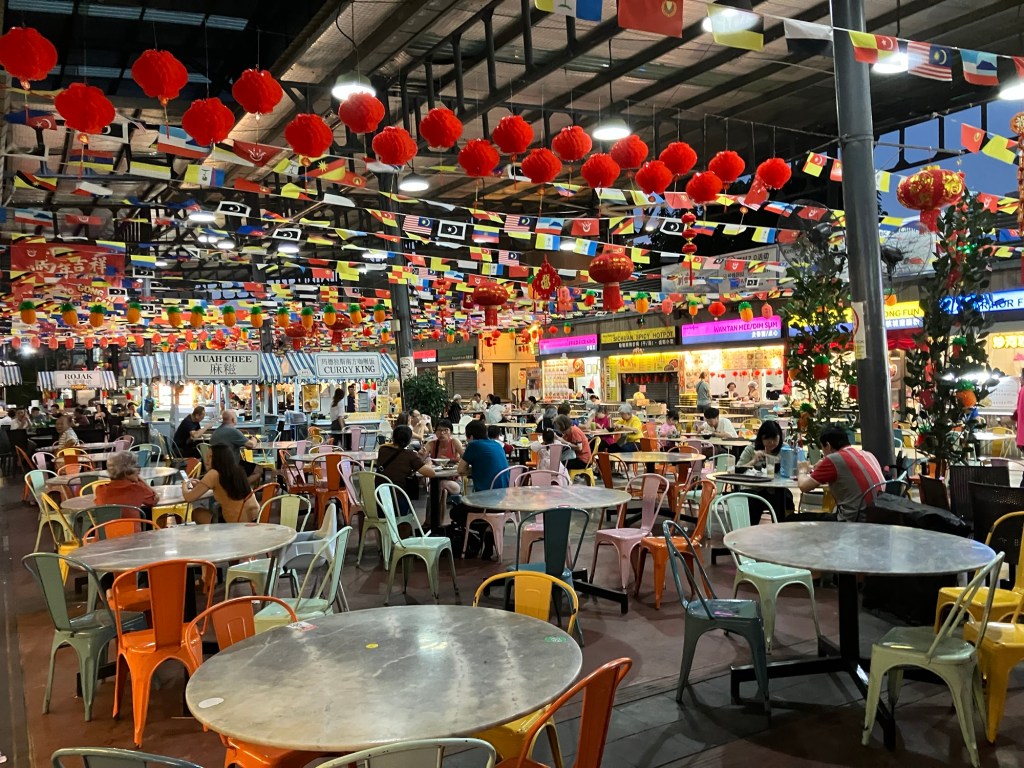
Street stalls and mobile food carts—locally called hawker stalls—are central to this reputation. Rather than formal restaurants, many of the most famous dishes are cooked by individual vendors working from small carts or roadside stalls, often specializing in a single recipe perfected over decades. These vendors typically operate in open-air food courts or along busy streets, especially in evening markets.
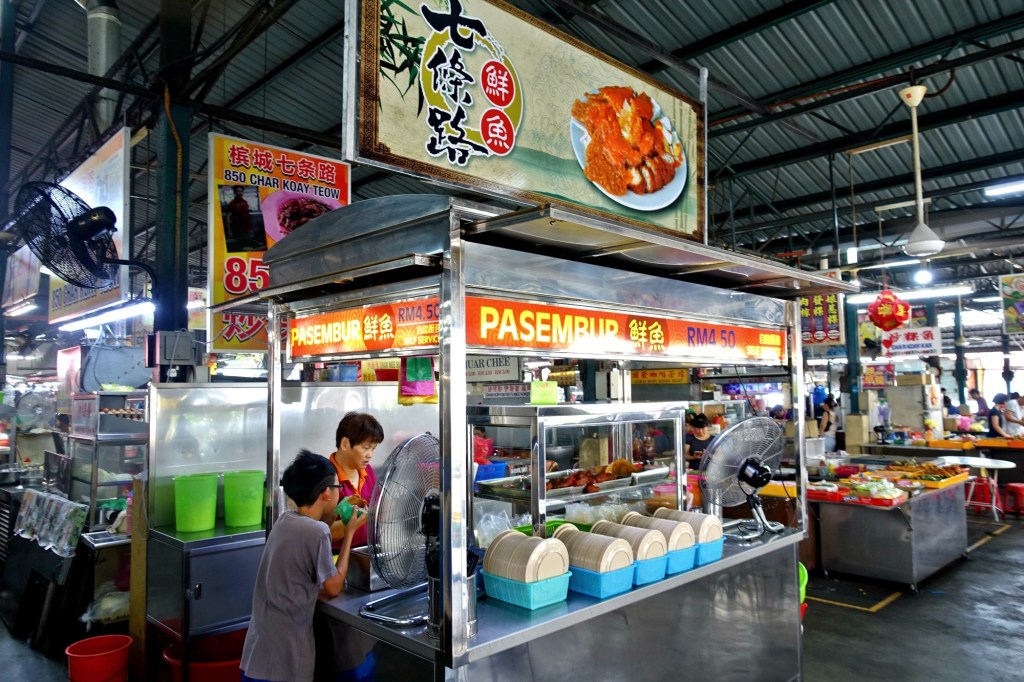
Signature dishes associated with George Town’s hawker culture include;
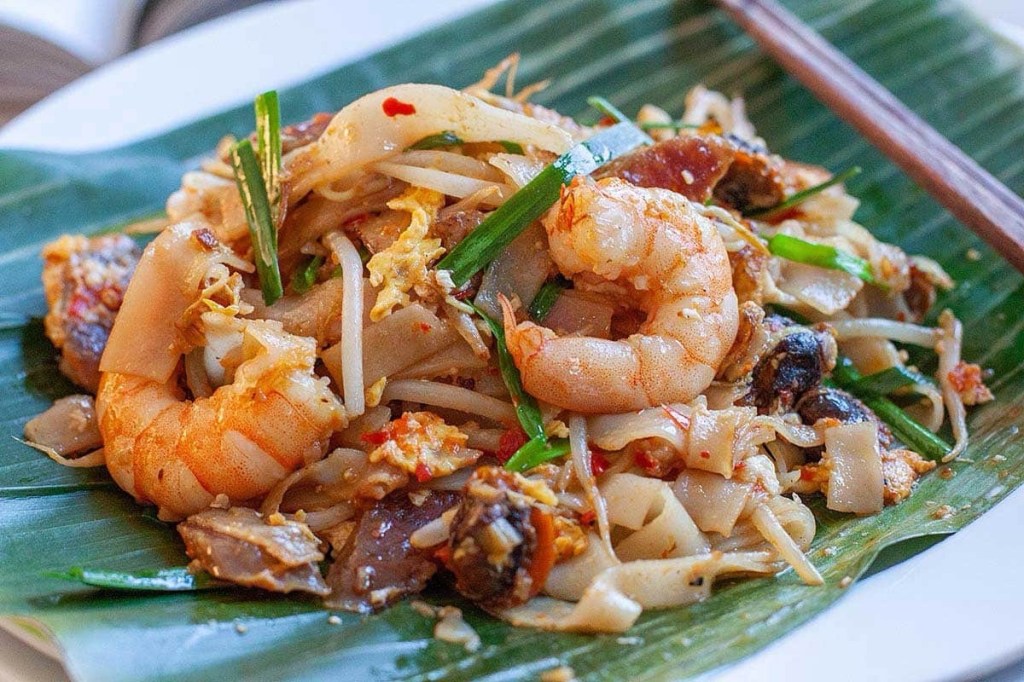
Char Kway Teow
A popular street-food noodle dish made by stir-frying flat rice noodles in a very hot wok with soy sauce, chilli, prawns, cockles, egg, Chinese sausage and bean sprouts. It is known for its smoky “wok hei” flavour and is one of Penang’s most iconic hawker dishes.
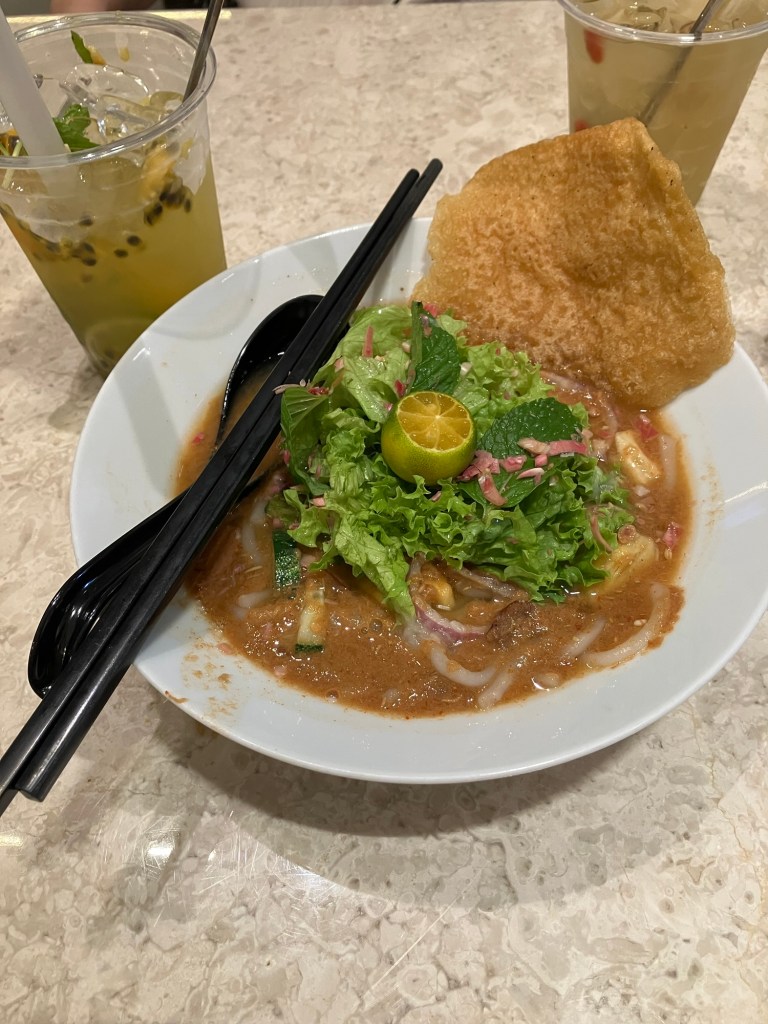
Assam Laksa
A tangy noodle soup based on tamarind (asam), giving it a sour, spicy broth. It usually contains shredded mackerel, rice noodles, herbs, cucumber, pineapple and mint, topped with shrimp paste for depth of flavour.
Nasi mandarin
A meal of steamed rice served with a selection of curries and side dishes such as fried chicken, fish, okra or squid. Originating with Indian Muslim traders in Penang, it is known for rich gravies poured over the rice.
Rojak
A sweet, spicy and savoury salad combining fruits and vegetables such as pineapple, cucumber, bean sprouts and tofu, tossed in a thick sauce made from shrimp paste, palm sugar, chilli and lime.
Nonya cuisine
A distinctive culinary tradition developed by the Peranakan community, blending Chinese cooking techniques with Malay ingredients such as coconut milk, lemongrass, galangal and chilli. The cuisine is known for complex flavours, aromatic spices and colourful dishes, and is a key part of Penang’s multicultural food heritage.
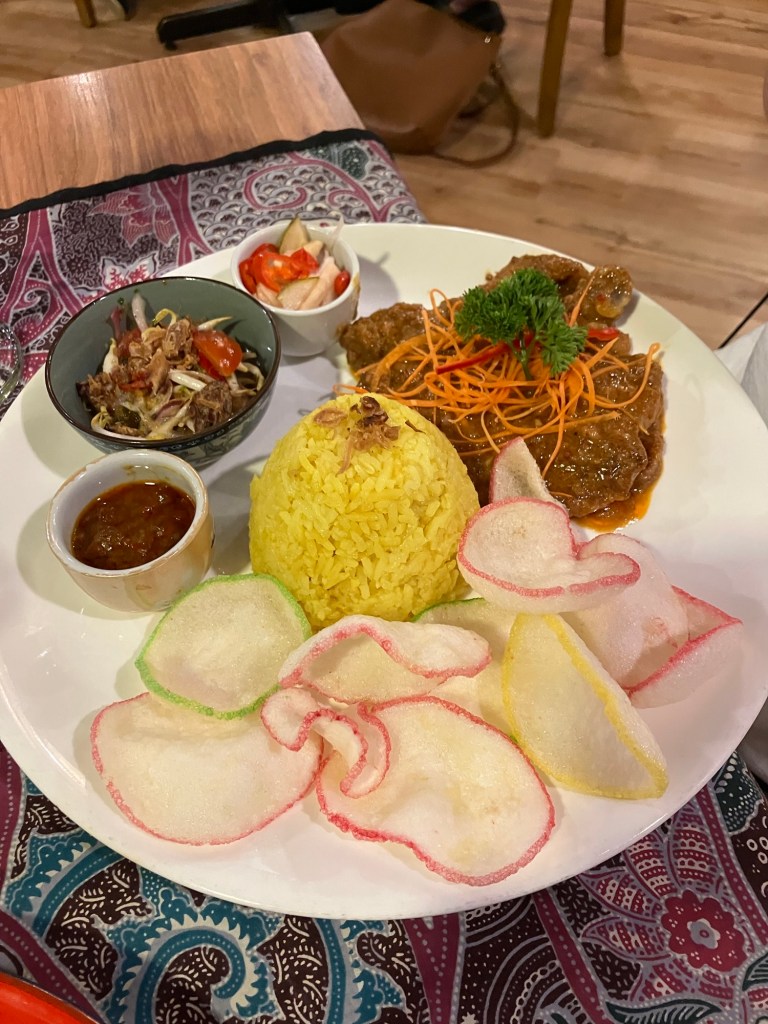
Ayam Pongteh – chicken stew braised with fermented soybean paste and potatoes
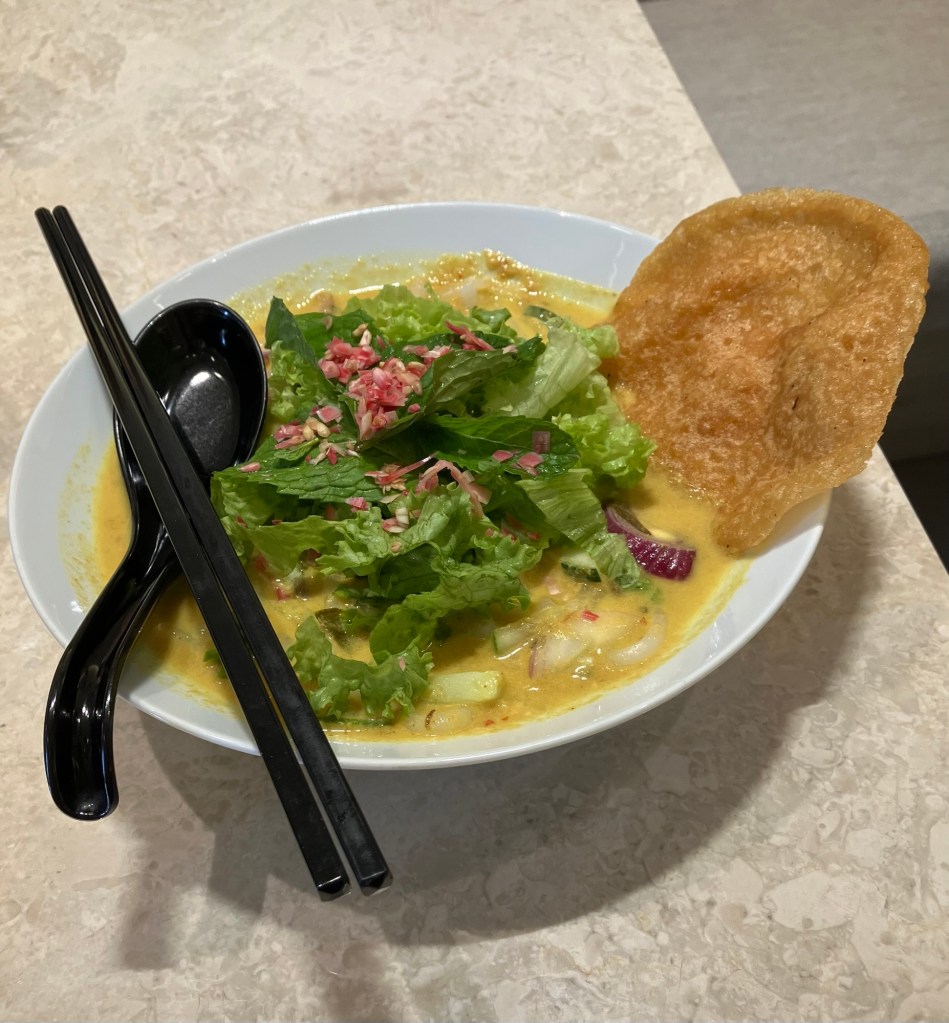
Laksa Lemak – a rich, spicy coconut noodle soup often associated with Penang.
Kueh Pie Tee – crispy pastry cups filled with a savory mix of vegetables and prawns
The famous blue rice in Nonya (Peranakan) cuisine is called Nasi Kerabu or, more specifically in Peranakan cooking, Nasi Ulam with blue pea rice. The striking blue color comes naturally from the petals of the butterfly pea flower, which are soaked to extract their pigment before cooking the rice.
The rice is most often served with herbs, sambal, and accompaniments like fish or chicken, giving it a fragrant, fresh, and slightly tangy flavor profile.
The importance of this food scene is cultural as well as economic. Food tourism has become a major attraction for visitors exploring the historic streets of George Town’s UNESCO World Heritage area
Sean Baker is an American independent filmmaker known for portraying marginalized communities with realism, empathy, and non-professional actors. His career began in the early 2000s with low-budget features such as Take Out (co-directed with Shih-Ching Tsou). These early works established Baker’s interest in everyday struggles and naturalistic storytelling.
He gained wider attention with Starlet which explored an unlikely friendship in California’s adult-film industry. Baker’s breakthrough came with Tangerine, a vibrant comedy-drama about two transgender sex workers in Los Angeles. Shot entirely on iPhones, the film was praised for its innovative production style and energetic depiction of urban life.
Baker achieved international acclaim with The Florida Project, drama about childhood and poverty near Disney World. The film was widely celebrated, and Willem Dafoe received an Academy Award nomination for Best Supporting Actor.
He continued exploring overlooked communities in Red Rocket, a darkly comic portrait of a washed-up adult film actor returning to his Texas hometown. Baker’s work reached a new peak with Anora, a Cannes-winning drama that further cemented his reputation as one of the most distinctive voices in contemporary independent cinema, blending social realism with humor and compassion.
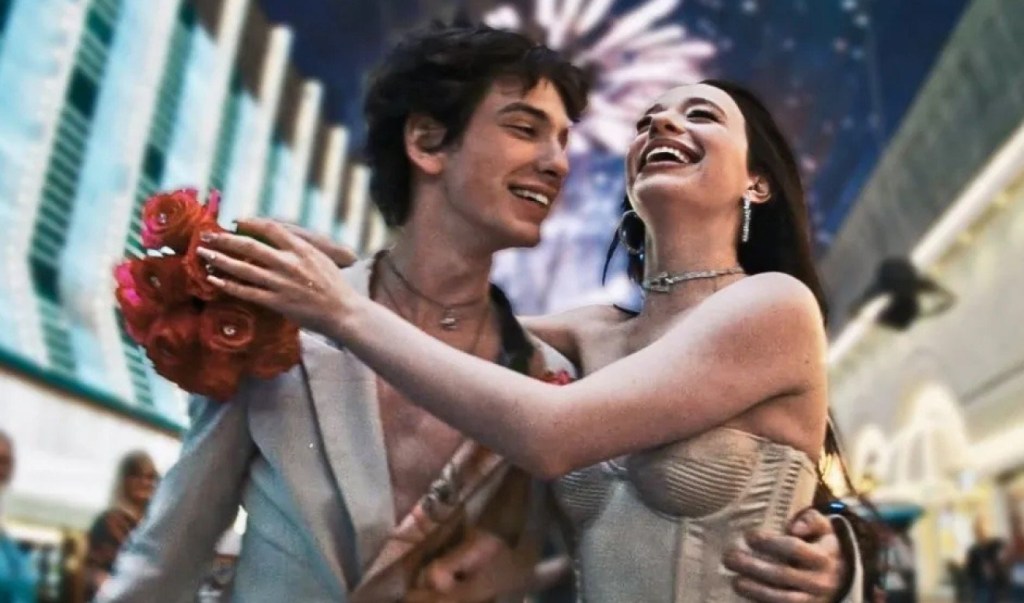
Sandiwara is a short drama written and directed by Sean Baker and starring Michelle Yeoh. Running about 10–11 minutes, the film follows five different Malaysian women—each played by Yeoh—who appear in a bustling night-market setting and deliver monologues reflecting different aspects of contemporary Malaysian life and identity. The characters include figures such as a critic, a hawker, a waitress, a vlogger and a singer, creating a mosaic of voices that highlight everyday culture, food traditions and personal stories. The project continues Baker’s minimalist filmmaking style: it was shot quickly on an iPhone and focuses on intimate, character-driven storytelling rather than elaborate production.
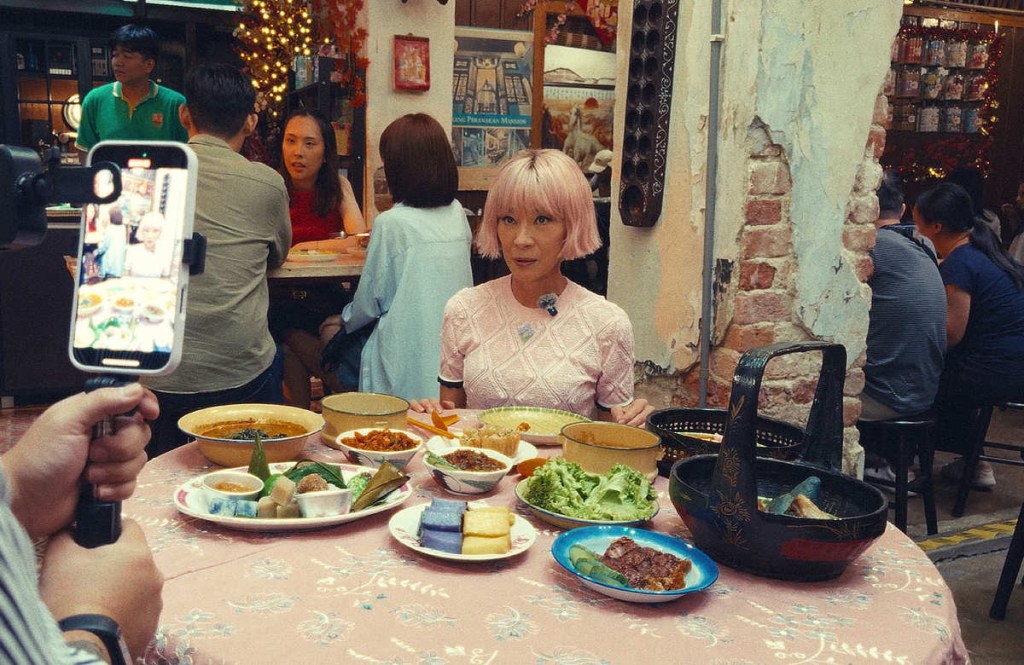
Penang was chosen largely for creative and collaborative reasons. The short was produced through the residency programme of the London fashion house Self-Portrait, founded by Penang-born designer Han Chong. The programme invites artists to create projects inspired by Chong’s hometown, and Baker used the opportunity to immerse himself in the island’s street life, cuisine and multicultural atmosphere.
The island was selected through this collaboration and for its rich cultural environment, which Baker described as allowing the team to “celebrate Malaysian culture in a big way.”
The film premiered at the Berlin International Film Festival before being released online in February 2026.
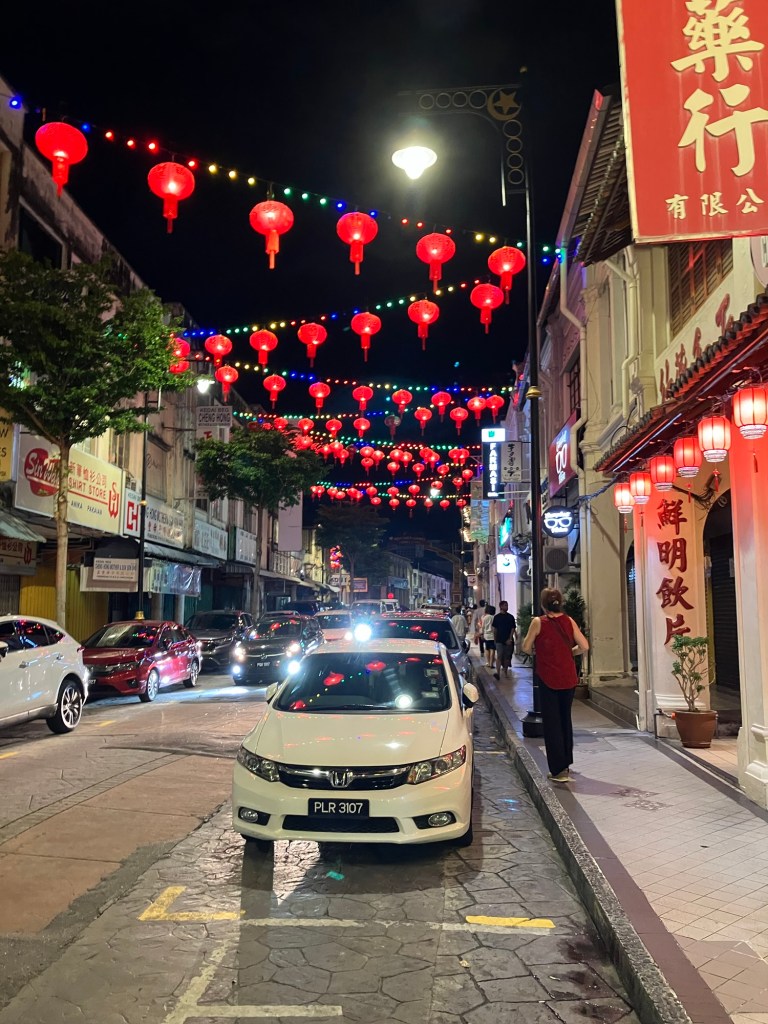
“Penang is an island covered with coconut palms and washed by a sea of the most exquisite blue. Georgetown, with its white houses and green shutters, lies along the shore, and behind it rise the wooded hills… It is a place in which it is very easy to idle away the days.” Somerset Maugham
“Penang is a most suitable place for living and leisure—the sea is blue, the hills are green, and the streets are clean and quiet.” Yu Dafu (a noted Chinese writer who travelled throughout Malaysia in the 1930’s). His impression is strikingly similar to Maugham’s and is focused on the calm beauty and livability.
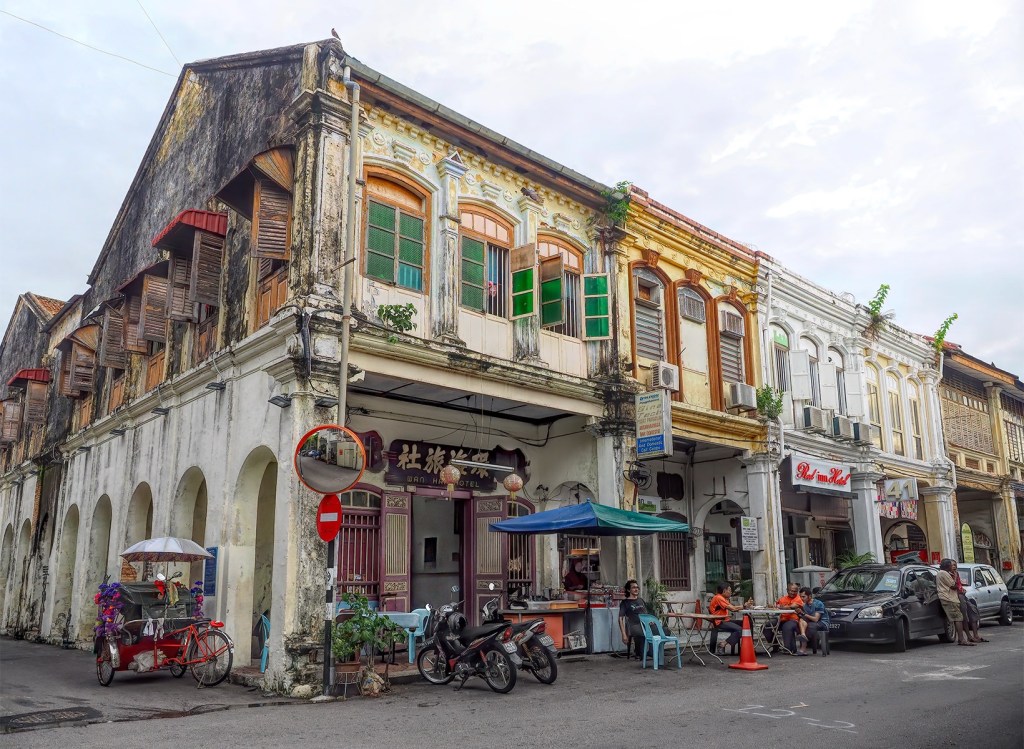
Although still a very liveable place, Penang island is now highly developed with hi-rise buildings in abundance, re-claimed land developments and traffic congestion which show that nothing remains the same for ever.

 FOOD, FILMS 'N' TINGS