
Rotterdam Blaak railway and metro station
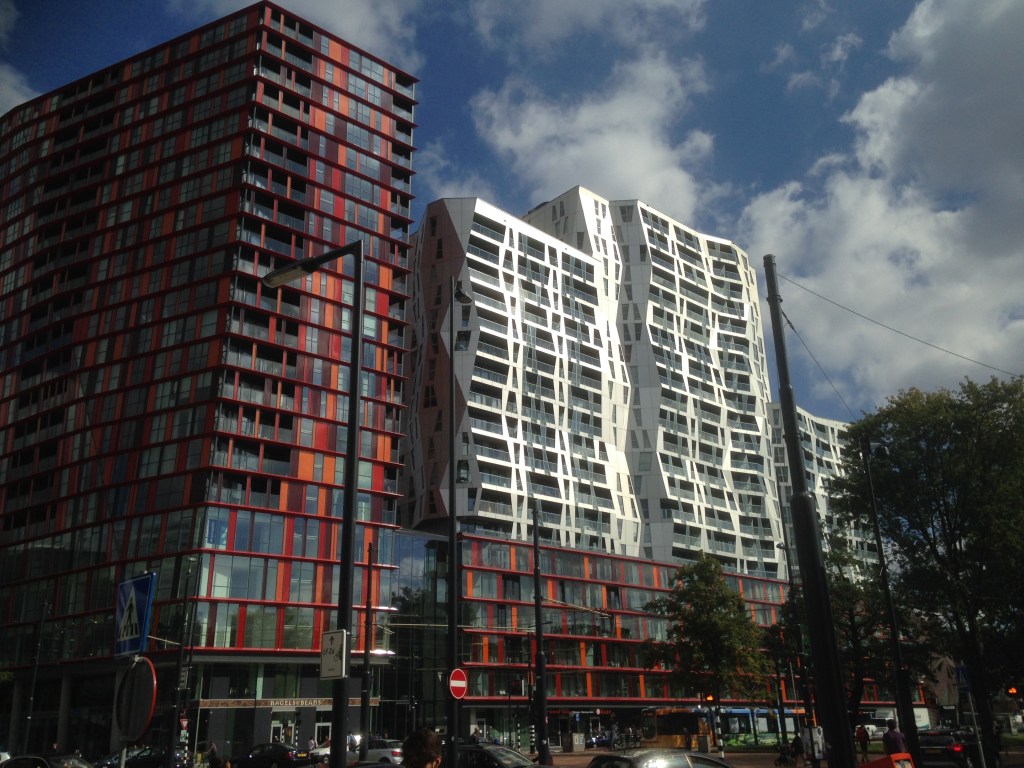
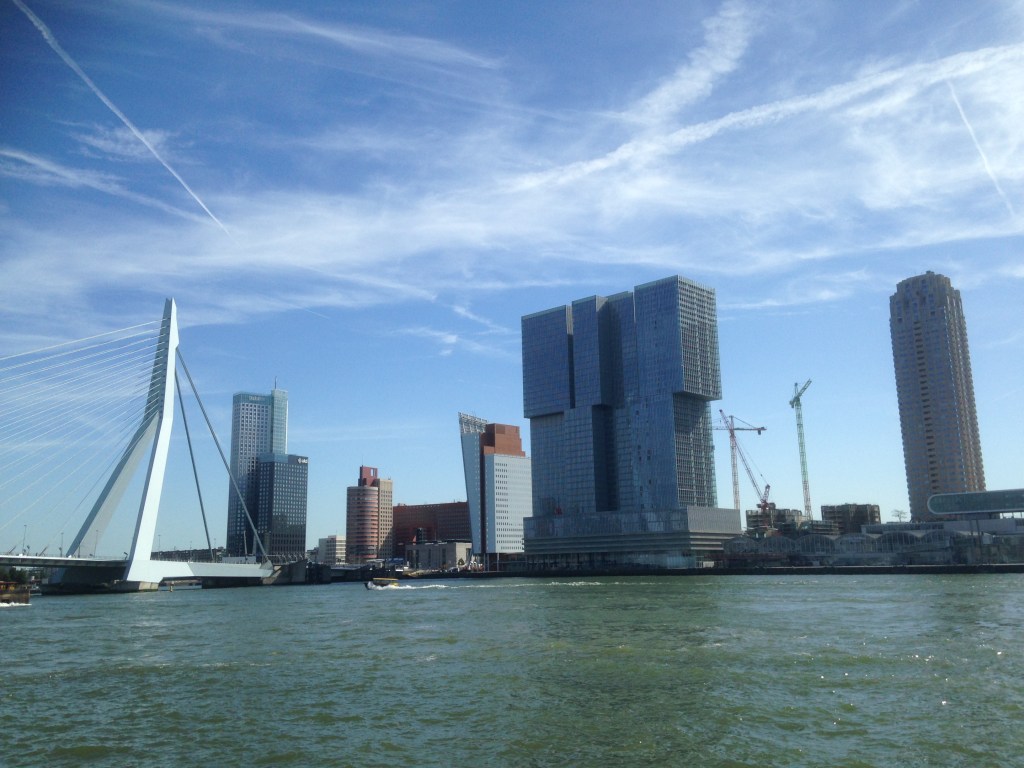
Rotterdam is the second city of the Netherlands and Europe’s biggest seaport. Like other European port cities such as Liverpool and Hamburg, Rotterdam was badly damaged by aerial bombing during the Second World War. Much of its old medieval centre was destroyed and unlike its big sister, Amsterdam, the city is very much a modern construct in its centre and in its awesome shipping zone.
Central
Seaport
Modern Dutch architecture is superb. Futuristic design greets you as you arrive at the city’s Centraal station. Known locally as the ‘kapsalonbak’, the station is named after the late night post ‘kapsalon’, a snack of meat kebab, chips, and melted cheese with them roof of the station apparently resembling the takeaway’s metal tray.

Centraal Station
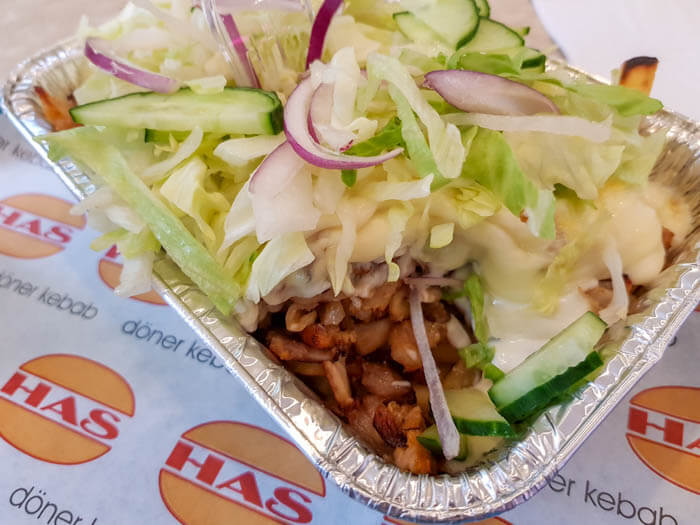
Kapsalonbak – hopefully with extra chilli sauce!
Not the best cuisine on offer in the city but after over indulgence at the local bar, it is just what the doctor ordered!
Genever, sometimes known as Dutch gin (although it tastes nothing like a ‘London dry’), is a malt grain-based spirit distilled in Holland or Belgium. Botanicals such as juniper are added resulting in a punchy, nutty drink with a pretty powerful kick. It is the origin of the phrase ‘Dutch courage’ after all.
Traditionally served in a tulip shaped glass, the spirit is either ‘old’ (‘oude’) or ‘young’ (jonge’). These terms do not refer to the ageing process itself but rather to the distillation procedure used in its manufacture. The distillation of the young genever results in a lighter, cheaper product with the ‘old’ better suited to slower imbibing. Young genever is the sort of drink you would have with a chaser of beer at the bar (known as a ‘kopstoot’ or ‘headbutt’) with your rowdy friends!
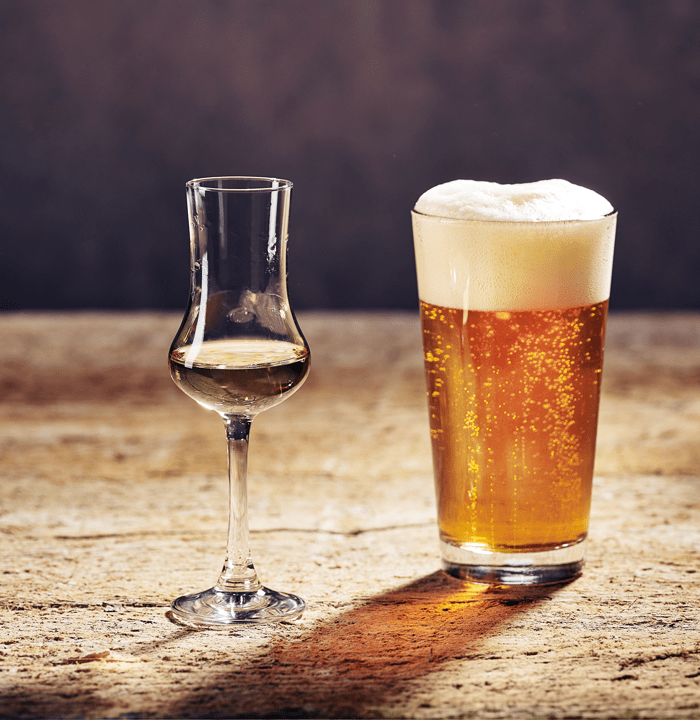
Kopstoot
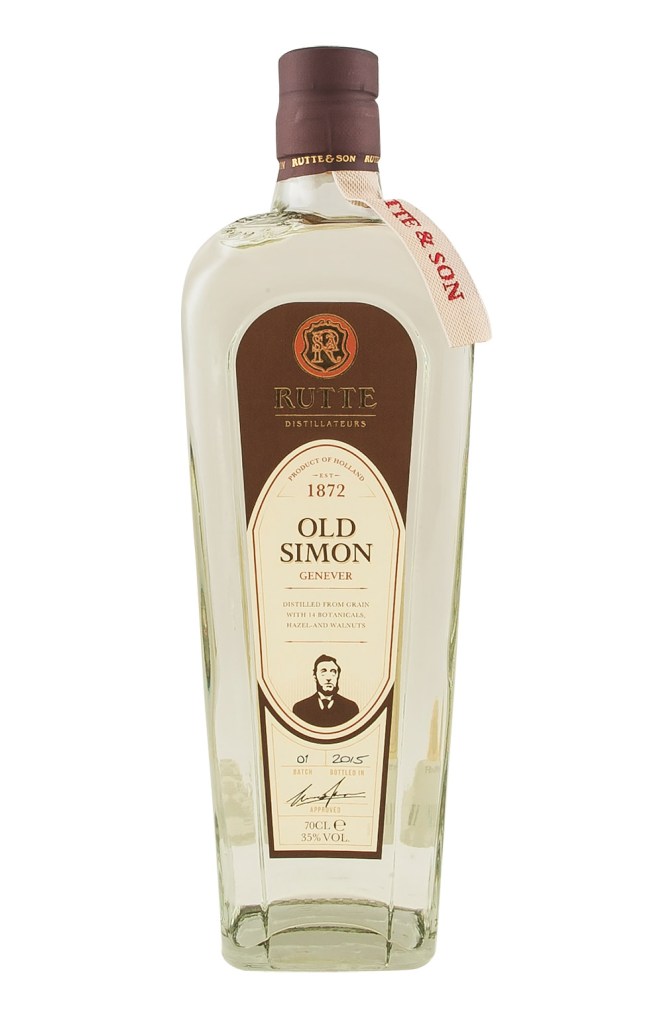
We think that an oude genever is best enjoyed when it is mixed into a cocktail such as a ‘Martinez’ with sweet vermouth, orange Curaçao or cherry liqueur, bitters, a twist of lemon and plenty of ice. We recommend ‘Oude Simon’, a genever made by the Rutte family distillers in Dordrecht, just outside of Rotterdam. The spirit is named after Simon Rutte who founded the distillery in the town some 150 years ago.
There are two especially beautiful modern constructs in Rotterdam, both designed by local architects MVRDV see https://www.mvrdv.nl/ These two buildings are the recent Depot Boijimans van Beuningen and the iconic Markthal.
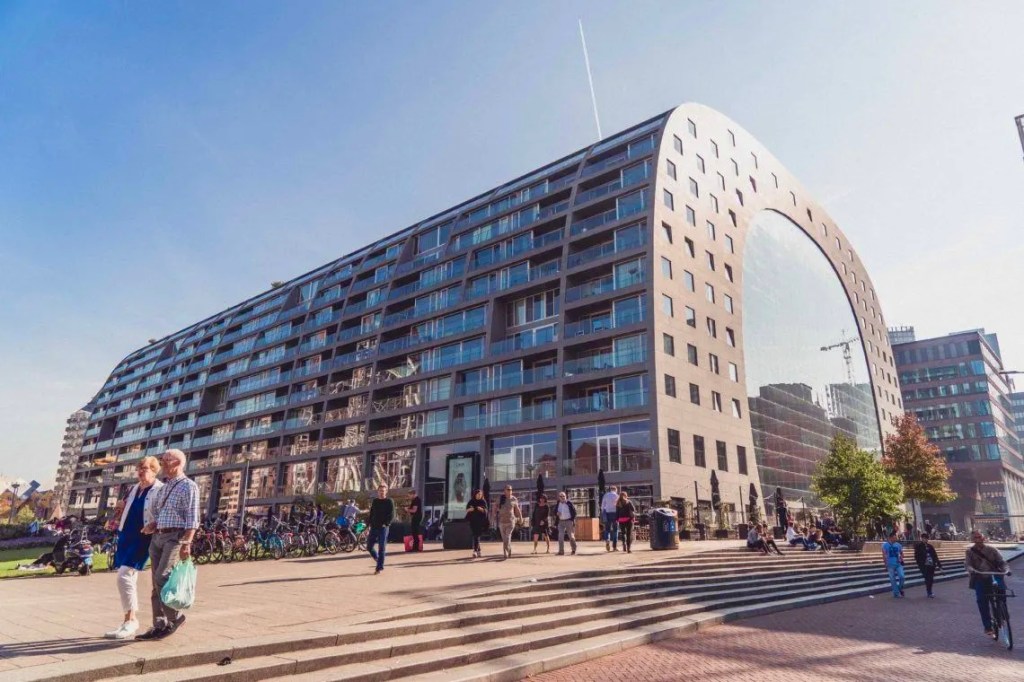
Markthal
Dominating a central Rotterdam space the size of Tiananmen Square, the Markthal (‘Market Hall’) is a giant ground floor court surrounded by restaurants and bars with apartments and offices on the upper levels. The building’s inner arch is covered in an 11, 000 sq metre mural called ‘The Horn of Plenty’ which depicts typical produce to be found in the food hall. The mural was produced by Dutch artists Arno Coenen and Iris Roskam.
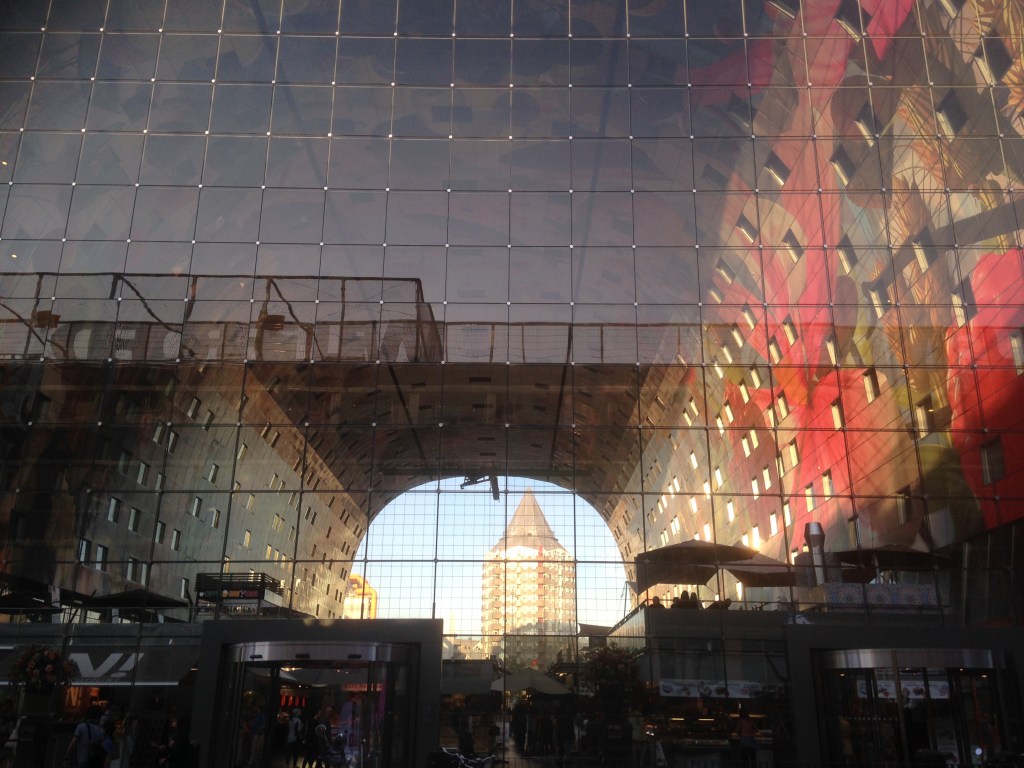
Through the central entrance
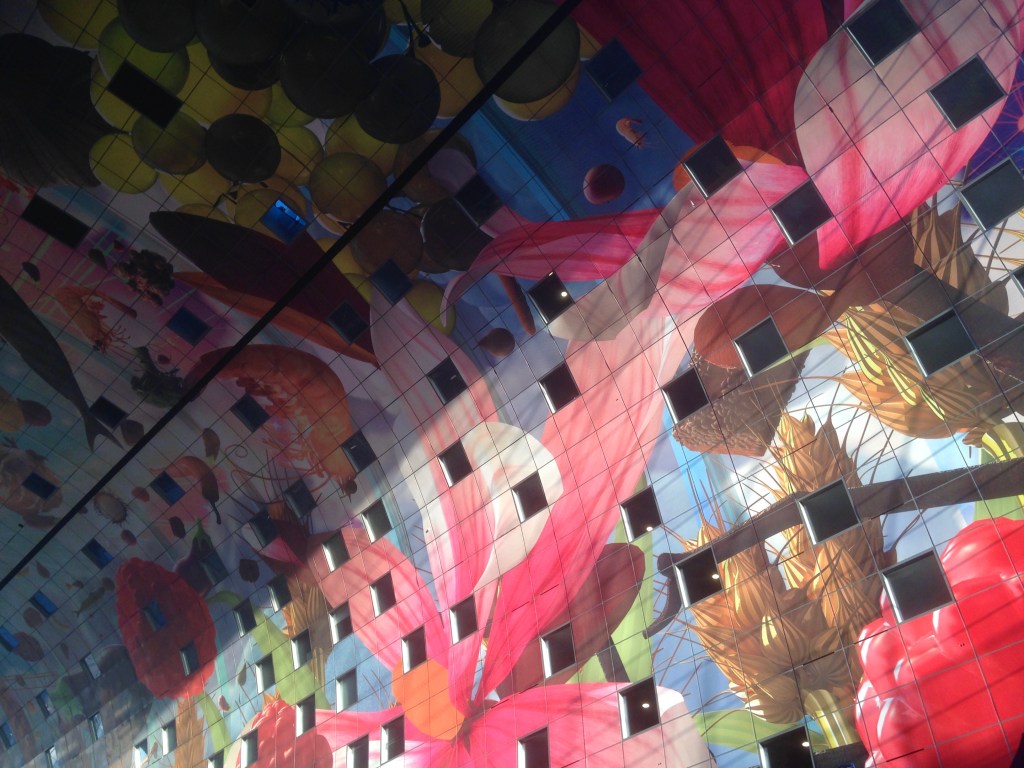
Interior mural

Interior mural
The second MVRDV building we would like to mention is the Depot Boijimans van Beuningen. The building is the world’s first publicly assessable arts storage facility. It is located next to the museum of the same name in the city’s Museumpark, an urban parkland area. Visitors to the Depot will find more than 150,000 art works housed together arranged in different storage compartments. Information on the preservation and management of this huge and diverse collection is freely available to visitors. Usually these works would be hidden from view in storage in the bowels of the museum metaphorically ‘gathering dust’.
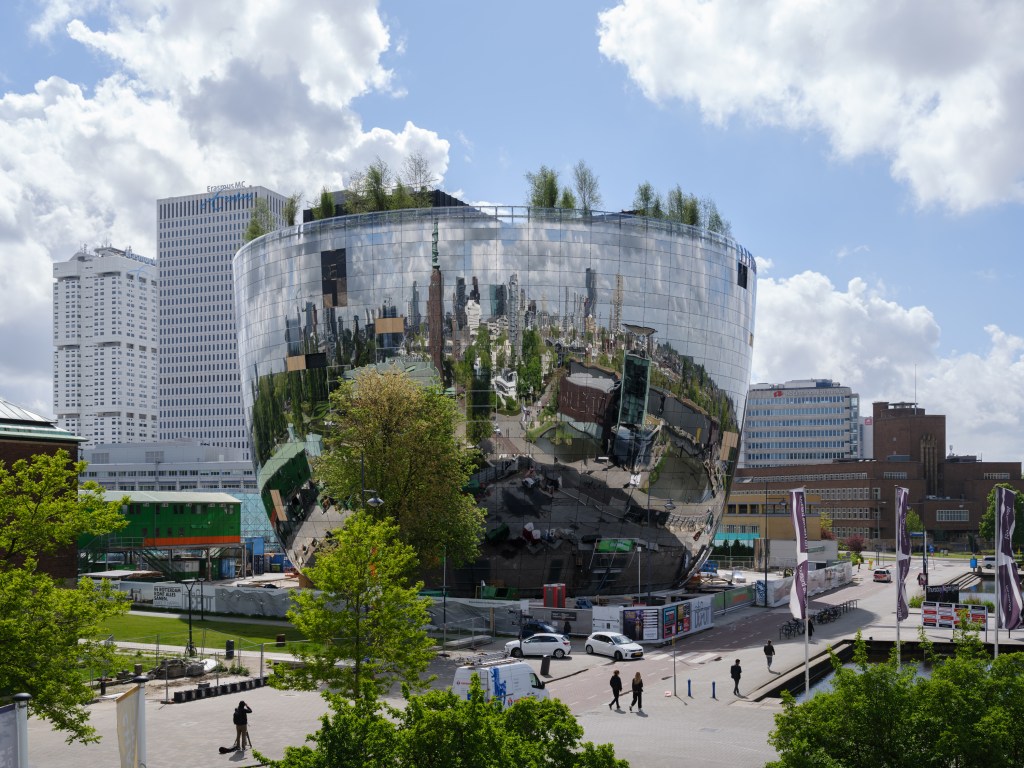
Depot Boijimans van Beuningen
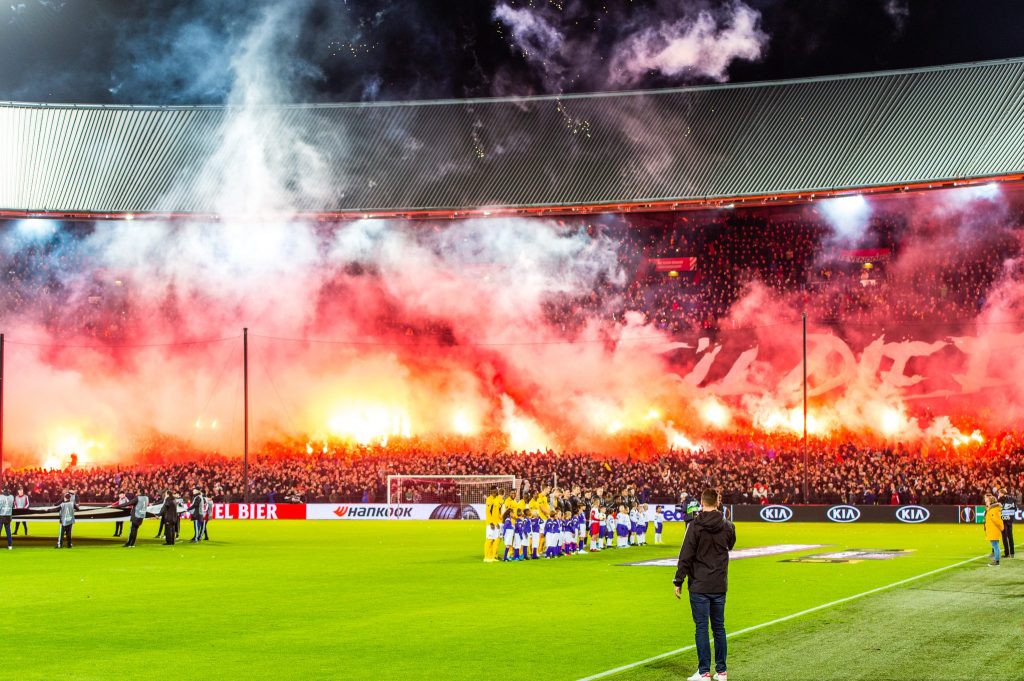
A great port city should have a great football club. Liverpool has two and Hamburg’s best loved team are FC St. Pauli. Rotterdam has the legendary Feynoord, arch rivals to Amsterdam’s Ajax.
Feynoord fans are known for their pyrotechinics
Next time you visit the Netherlands, make sure you visit Rotterdam.

 FOOD, FILMS 'N' TINGS