
Burnley, a town in the county of Lancashire in the North West of England is not the sort of place that you would regularly find in the Financial Times newspaper. Usually the ‘FT’ reserves its comments to the wealthier parts of England, usually in the South of the country and usually in London. Nevertheless it was pleasure that we came across a fascinating article in a recent ‘FT Weekend’ on Burnley and the town’s reputation as the biggest market in the UK for the French liqueur, Bénédictine. The article is behind a ‘paywall’ and so are unable to link to it here. Nevertheless, we were fascinated to learn that this Northern industrial town was of so much importance to the French producers of this drink.

The French company has an international market for its product in France, the UK, USA and, of course, Singapore where it is a constituent of the famous ‘Singapore Sling’ cocktail.
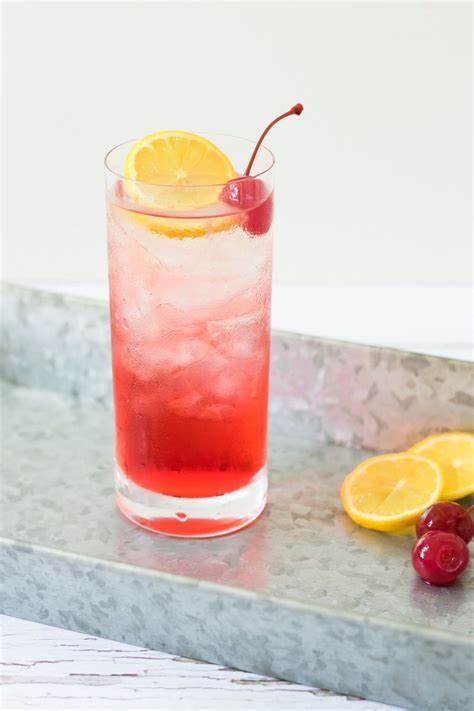
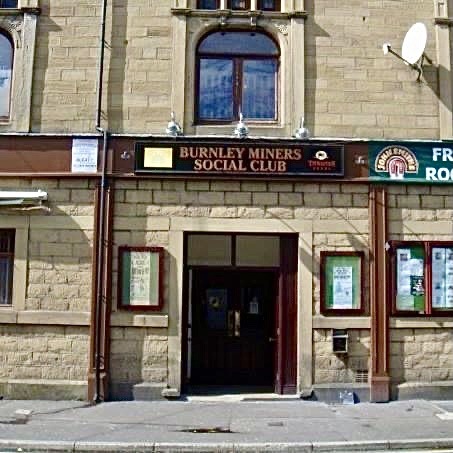
When the war finally ended, the soldiers of the East Lancashire Regiment brought their taste for the drink back to England and two towns such as Burnley where it is immensely popular usually in the form of a ‘Bene and (h)ot’, Bénédictine mixed with hot water and a slice of lemon. So popular is the drink that the Burnley Miners Club in the town apparently orders around 1000 bottles a year when most bars might order one or two in that time (unless they serve a lot of Singapore Slings of course!).
The venerable old football club, Burnley FC (who play at the delightfully named ‘Turf Moor’ ground) serves ‘Bene and ot’ to its match day fans making it (probably) the only League club where supporters are real enthusiasts for the French liqueur.
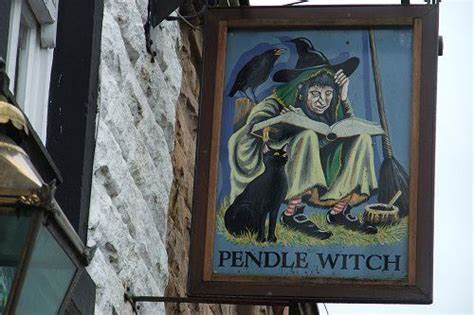
Burnley is also the home to several breweries, our favourite being Moorehouse who are based in the town. They have been brewing for 150 years. They produce a superb range of core, craft and small range beers some of whose names (Blond Witch, White Witch, Straw Dog, Black Cat, Pendle Witches Brew) refer to the legends and tales of the nearby Pendle Hill.

Pendle Hill is an eerie and haunting old hunting ground of mystery and infamy.
The Moorhouse website quotes the following lines about ‘Mystical Pendle’:-
‘When the mist rolls in, as it often does, the hill is enveloped in a veil of secrecy and intrigue. It is this atmosphere and eerie presence that still lingers on and can be felt across the moorland and woodland alike. Especially when the mist lingers, or in the dead of night, that this land of rich myths and legends comes to life.‘
Pendle is known as one of the most haunted parts of Britain and it is forever associated with the Witch Trials of 1612 and the execution by hanging of 10 local women accused of the craft.

The names of Moorhouse’s Blond Witch, White Witch and Pendle Witches Brew beers clearly refer to those infamous trials but the names of two of their other core ales, Straw Dog and Black Cat are worth a further explanation.
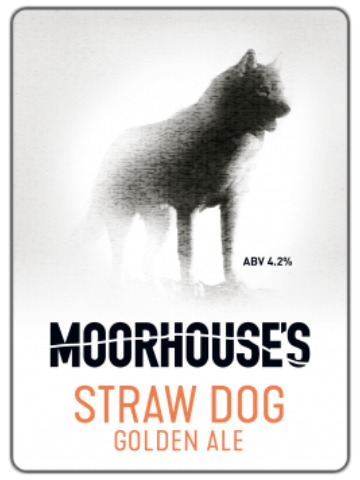
Straw Dog is the name the brewery gave to a quality golden ale referring (as their website explains) to the locally infamous Demdike, the colloquial name of of one of the alleged witches, Elizabeth Southerns, ‘who gave her soul to a devilish hound, which would carry out her devilish deeds’.

Our personal favourite, the dark mild Black Cat with its luscious overtones of chocolate and mocha, is quite low in alcoholic content, 3.4 ABV (a shock to any Belgians reading this!). It is therefore ideal as a ‘session beer’ i.e. one to enjoy in quantity with your friends over a long winter’s evening without slurring your words as a result! As for its name, once again the Moorhouse’s website explains the connection with the Pendle Witches by noting ‘still guarding Malkin Tower, the Black Cat patrols the ruins, warding off insolent travellers to protect its master’s estate’. Malkin Tower was the home of Elizabeth Southerns aka ‘Demdike’.
The following is an interesting link on Malkin Tower :-
The name Malkin itself is derived from ‘Grimalkin’, an archaic term for a cat. Cats themselves were thought to be the Witches familiar.
‘I come, Grimalkin’ says the First Witch in Macbeth.

Madam Malkin was the name of a witch in the Harry Potter books.

Above, the 16th century St Mary’s Church at Newchurch in Pendle where the tombstone known as the Witches’ Grave and the “Eye of God” are to be found. One of the accused at the Trials was alleged to have desecrated graves in this churchyard to collect skulls and teeth.

 FOOD, FILMS 'N' TINGS