
Chorlton is a suburb of the Northern English city of Manchester. The district has become increasingly identified with left leaning young professional couples and their families. It is also home to one of Manchester’s biggest gay communities.
Rightly or wrongly, Chorlton is regarded as a bohemian enclave with its independent bars and restaurants, vegan supermarket (the workers co-operative ‘Unicorn’) and unusual boutiques.
The suburb is a great place to eat and drink and whilst we could fill several columns on the local culinary scene, we will be more specific by concentrating solely on some of the Indian food (especially vegetarian) to be found in the locale.
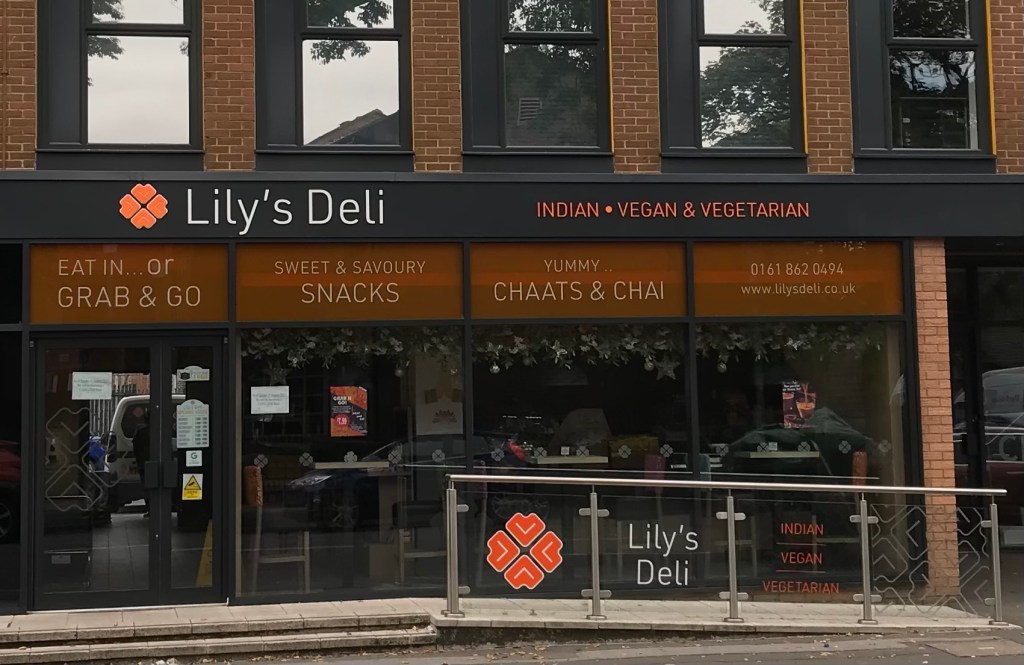
Lily’s deli on Manchester Road in Chorlton is an outlet of the award winning Lily’s Vegetarian Indian restaurant in Ashton-under-Lyne, a town which is just to the east of Manchester. The Chorlton deli is the first of two outlets in the city, the other being in the very trendy inner area of Ancoats.
Lily’s stocks an impressive range of Indian groceries and spices as well and spicy snacks such as dal vada, chakli, bonda, battered chillis and their famous ‘atomic bombs’, potato’s coated in batter injected with a fiery masala. Not for the faint hearted!
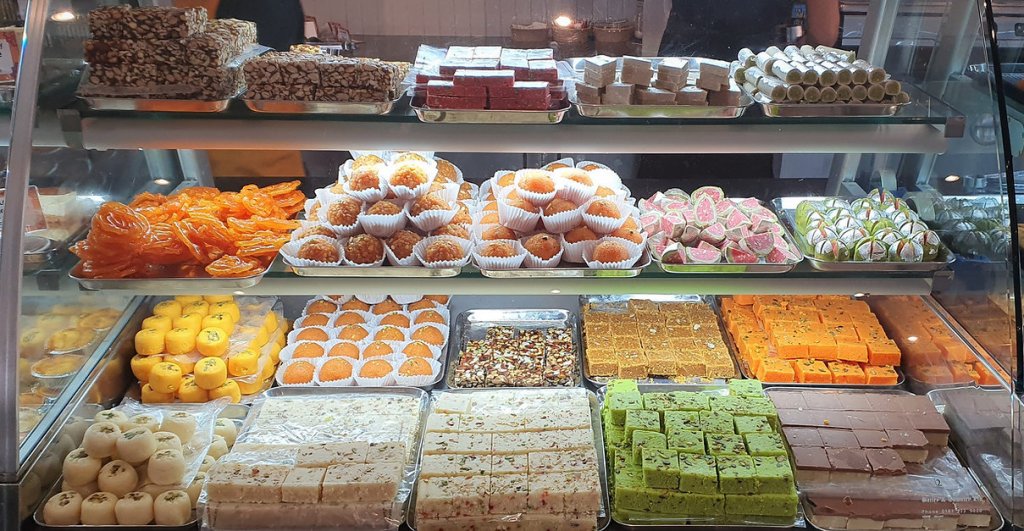
They also make and sell Indian cakes and their barfi flavoured with figs or dates is our favourite.
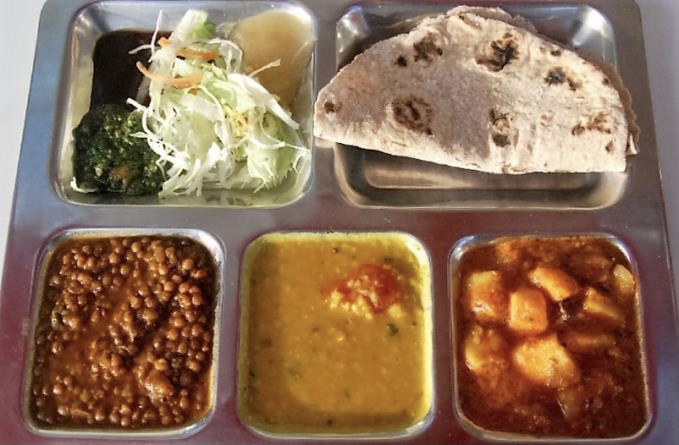
A short walk from Lily’s deli is the Chappati Café which serves great value thalis on Indian trays with the menu changing daily. Recommended.
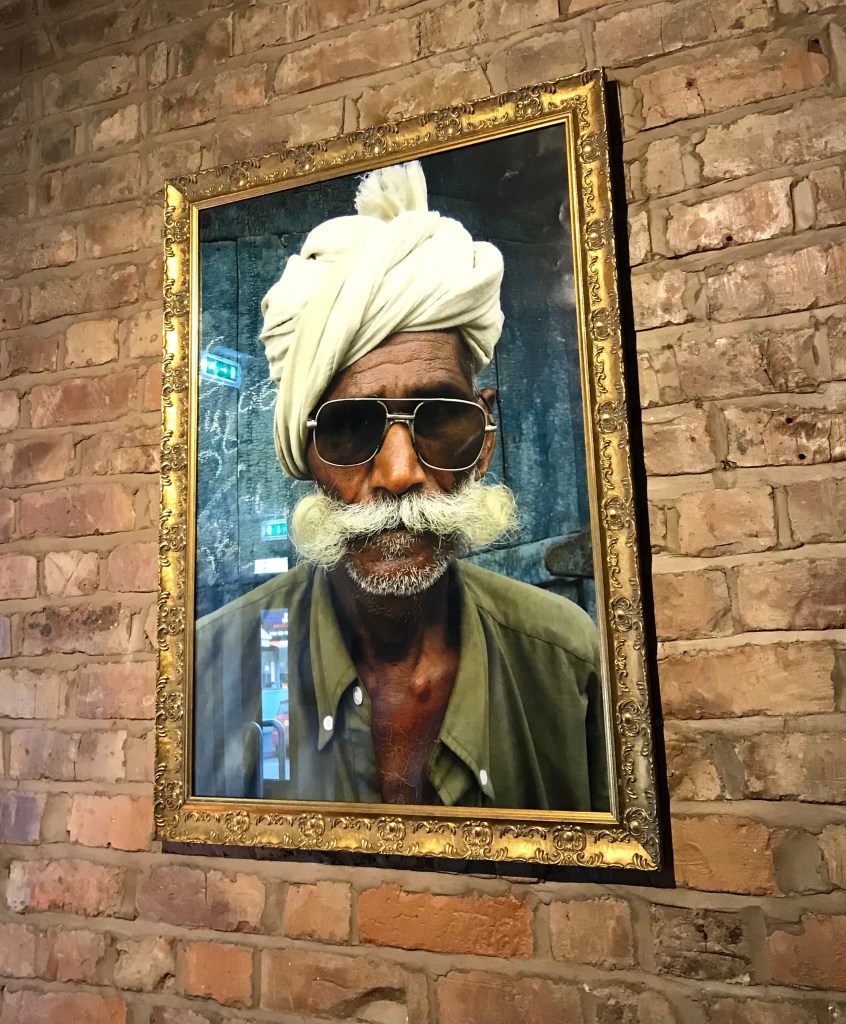
A further short walk from the Chappati Café is the small but beautifully decorated restaurant called Roti. The restaurant has the only Indo/Scots menu in Manchester. As well as Indian street food favourites, Roti also serves its own version of the Scottish staple ‘mince and tatties’ (spiced meat in chole potatoes), haggis pakora and even scotch egg (boiled egg wrapped in pork seasoned with chaat masala). Although the restaurant serves a full selection of alcoholic and non-alcoholic drinks, we were surprised to see that Irn Bru, Scotland’s best loved soda, was missing from the list!
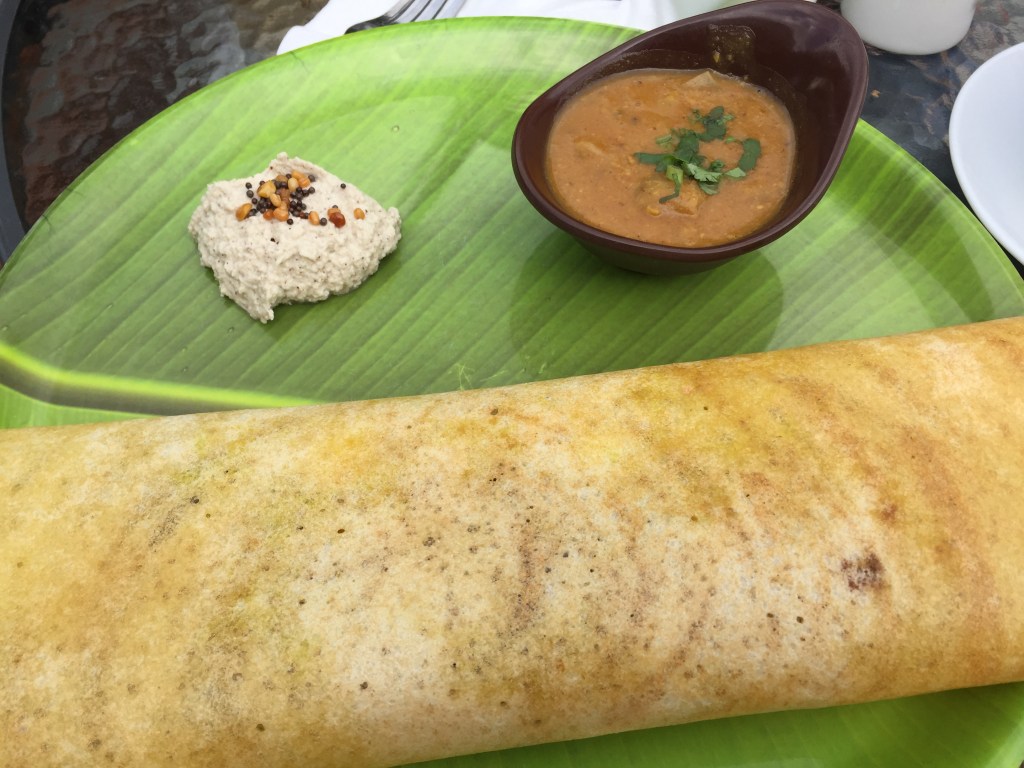
Further away from Roti and opposite the vast Southern Cemetery (of which, more below) is Amma’s Canteen. The restaurant serves fresh, home cooked style Southern Indian dishes including their much loved Dosa, a thin ‘pancake’ made from a batter of fermented rice and lentils stuffed with spicy goodness.
As noted above, the vast Southern Cemetery lies across the way from Amma’s Canteen. It is the second largest cemetery in Europe and the final resting place of important local figures such as the legendary Manchester United manager, Sir Matt Busby and the iconic Tony Wilson, the co-creator of the influential music label Factory Records. Wilson did more than almost anyone in putting the city’s popular culture on the map. Even a decade and a half after his death in 2007, he is still having a positive effect on the city in our opinion.
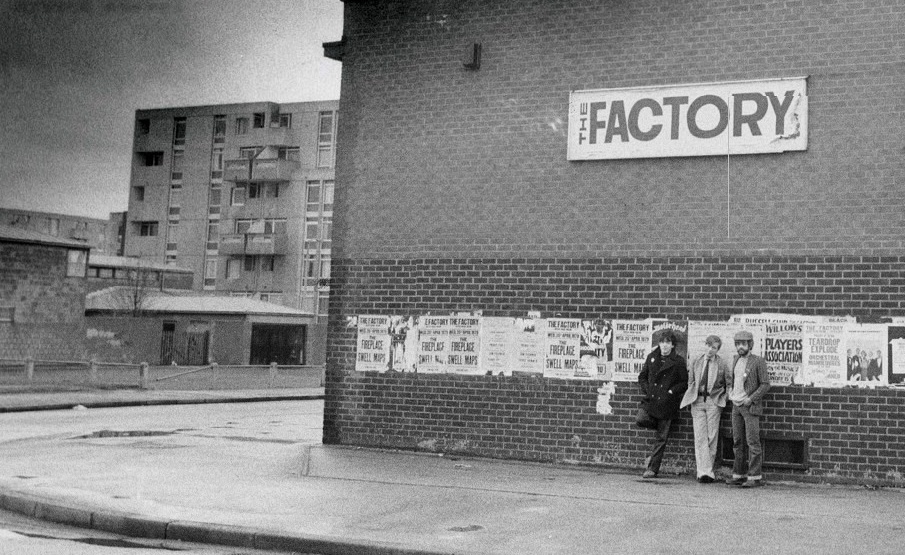
Anyone who is familiar with the recent history of Manchester, the city’s rise from the grim post industrial decay of the 1970s into the modern, vibrant environment it is today, will be aware of the part Wilson played in invigorating the popular culture of the world’s first modern city.

Designer Peter Saville who worked closely with Wilson commented ‘Tony created a new understanding of Manchester; the resonance of Factory goes way beyond the music. Young people often dream of going to another place to achieve their goals. Tony provided the catalyst and context for Mancunians to do that without having to go anywhere’.
In a small nation, too often in thrall to its capital, Wilson more than anyone else in his generation, emphasised the fact that great art and culture was not the sole preserve of London but was very much alive elsewhere in the country and in the North in particular.
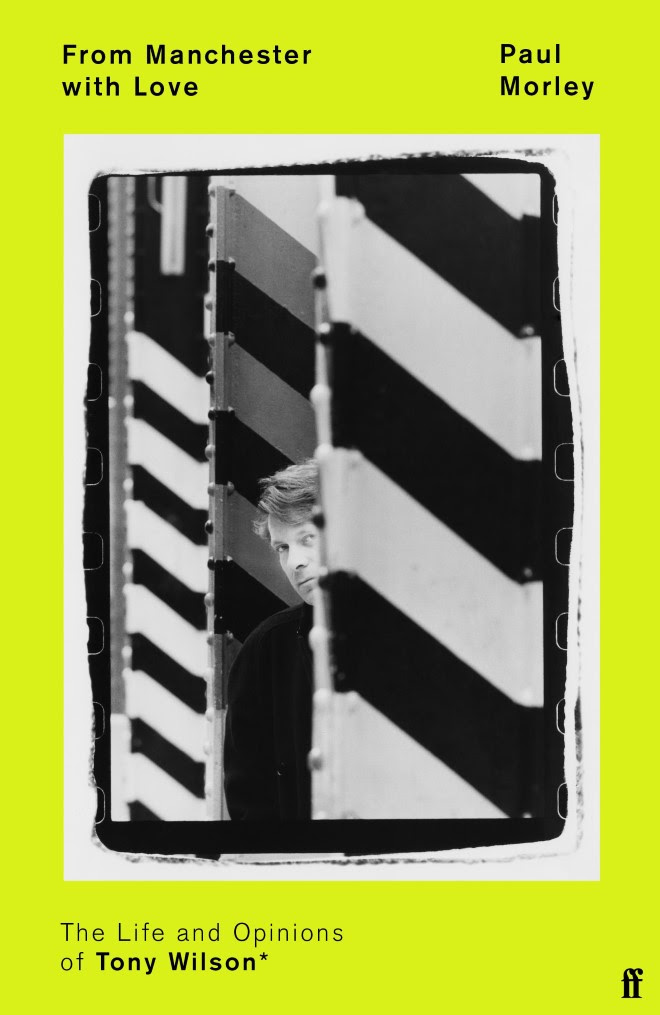
Writer Paul Morley, himself born in the city, analysed Wilson’s life and legacy in incredible detail in his book ‘From Manchester with love’.
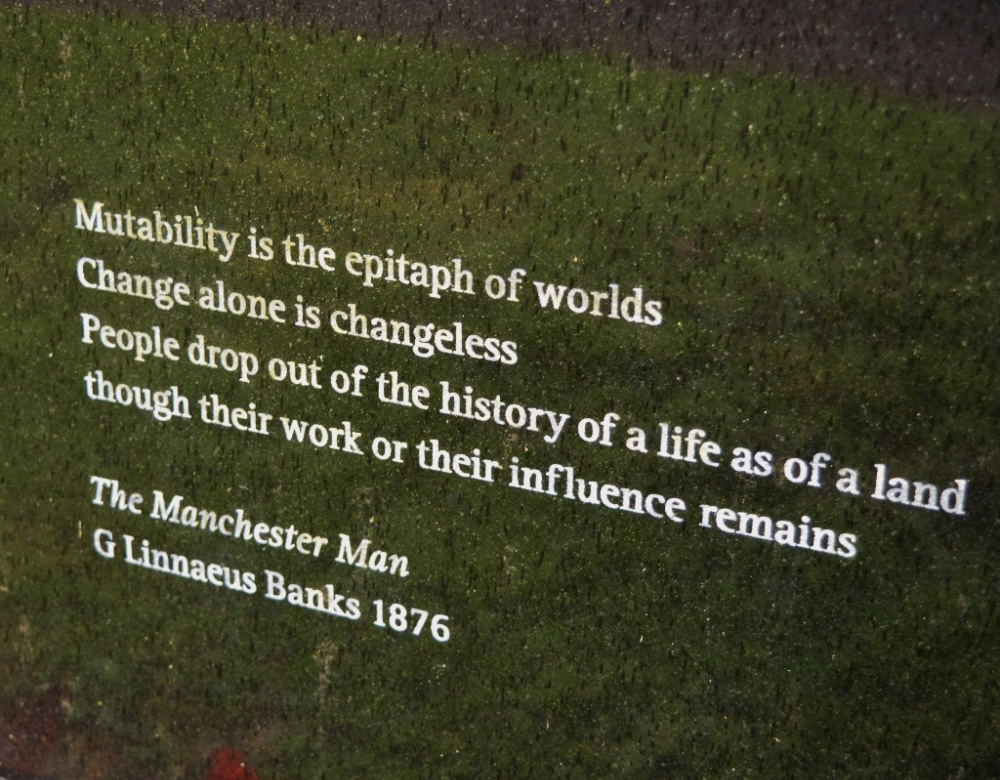
Saville designed Wilson’s black granite headstone with architect Ben Kelly . The headstone sits in repose amongst the crosses and columns of its neighbours in the Southern Cemetery.
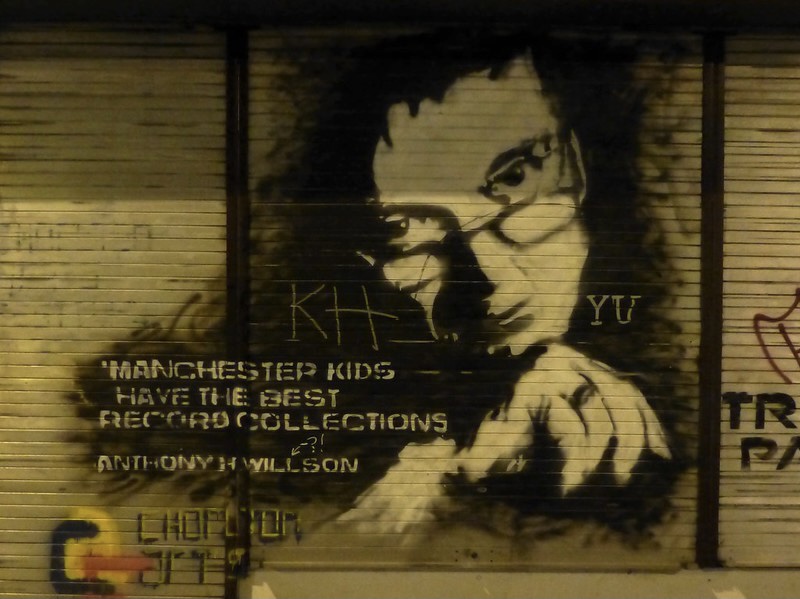
Several examples of graffiti art featuring Tony Wilson have cropped up in the city including the following in Chorlton with its quote from the man himself (although sadly, ‘Wilson’ was incorrectly spelt in this instance).
Across the road from the Wilson mural is a stencil of the iconic Quentin Crisp by celebrated artist Stewy (www.stewy.uk).
The openly gay Quentin Crisp was a writer, humorist and actor who was famously played by the late actor John Hurt in the 1975 autobiography which was broadcast on national TV in the UK to great acclaim under the title ‘The Naked Civil Servant’.
Crisp has only a somewhat tenuous link with Chorlton, the suburb being the place where he died in 1999 after staying with a friend there. He was cremated at the Southern Cemetery.

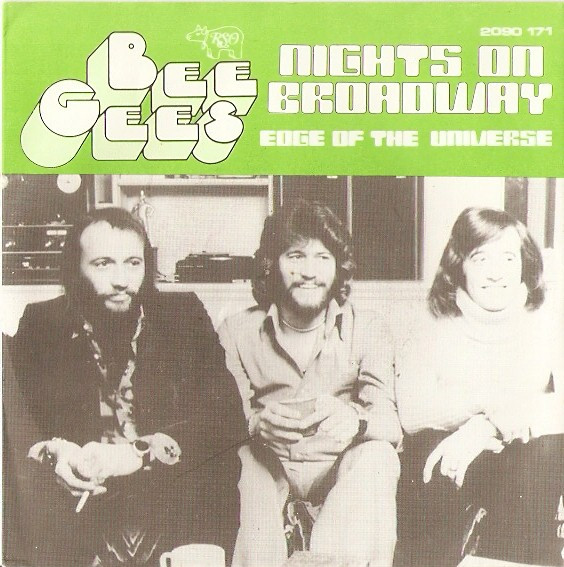
Stewy’s stencil of Quentin Crisp is on the corner of Keppel Road in Chorlton. Keppel Road was where the Gibb brothers (better known as the Bee Gees) once lived and where they first practiced their harmonies together.
The brothers would, of course, go on to immense success globally. They were especially popular in the US and their mainstream take on disco music sold by the millions.
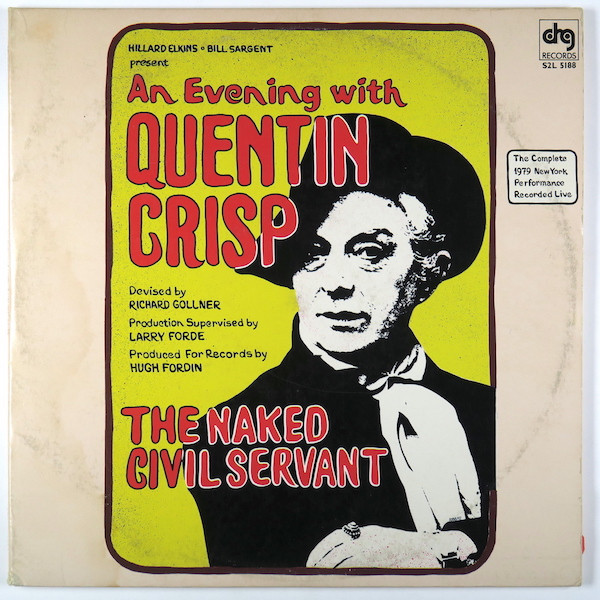
Crisp was also a success in the US and in New York in particular. The city was where his Broadway show ‘An evening with Quentin Crisp’ was staged to great acclaim.
Stewy also created a stencil artwork of Tony Wilson in the city as well as one of the ‘Bard of Salford’ (Salford being the city across the river from Manchester) John Copper Clarke, to whom Wilson gave his first break on TV.

We’ll leave John Cooper Clarke with the last word.

 FOOD, FILMS 'N' TINGS