Growing @ Field 28 is a family run organic farm and food store located near the village of Daresbury in Cheshire in the North West of England.
Using a combination of pesticide free vegetables grown on the surrounding fields and high quality baby leaf and micro greens grown indoors, Growing @ Field 28 is a most welcome addition to the local field scene. It is a part of the distinct move by farmers away from mass produced food.
As well as supplying restaurents with high quality produce there is also a food store at their site selling fruit and vegetables, eggs, bread and cakes and more!
A short distance away is the village of Daresbury itself. The village, as well as being a delightful place to visit in its own right, also has an historical association with Lewis Carroll of ‘Alice in Wonderland’ fame. That association is clearly noted throughout the village.
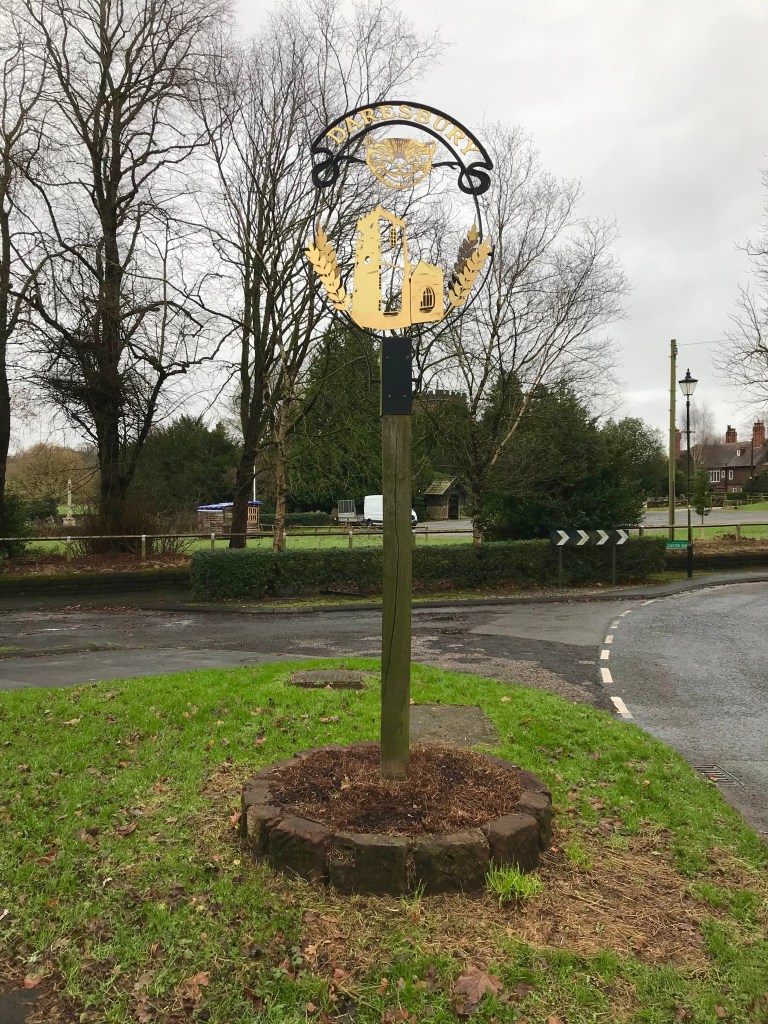
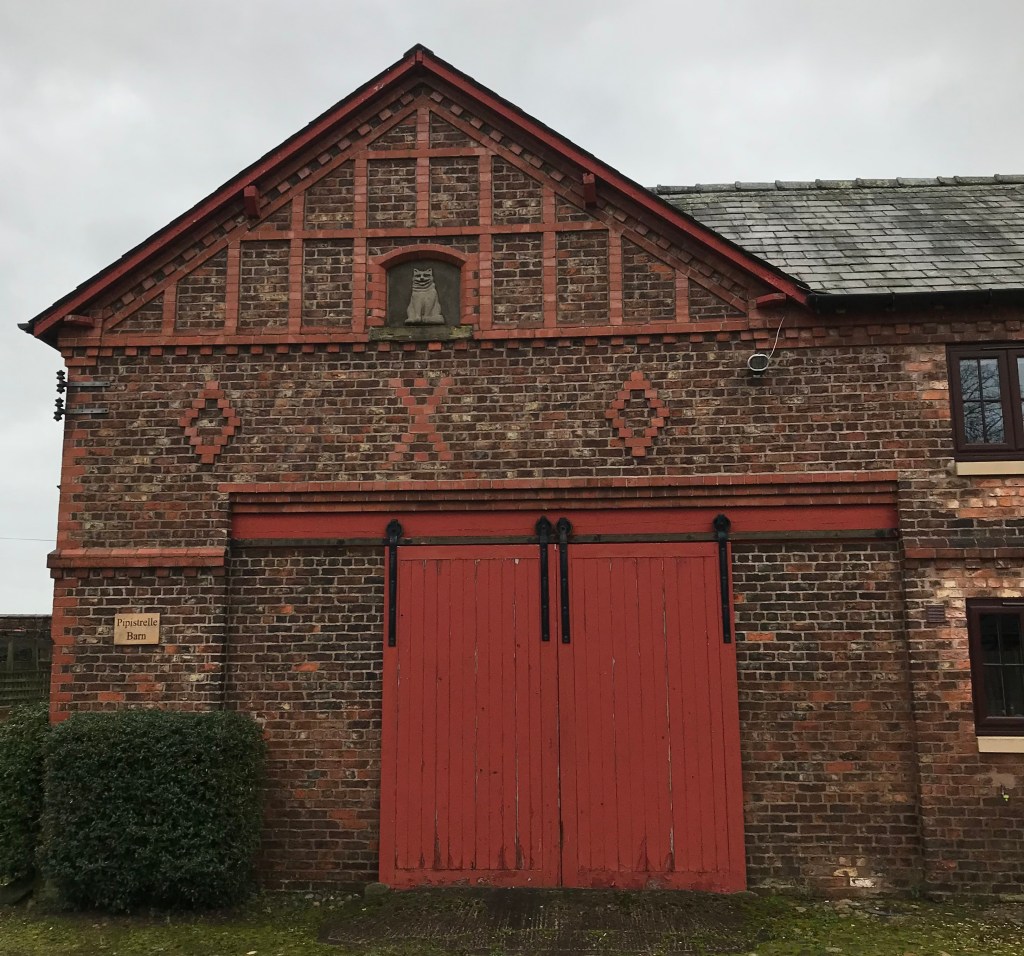
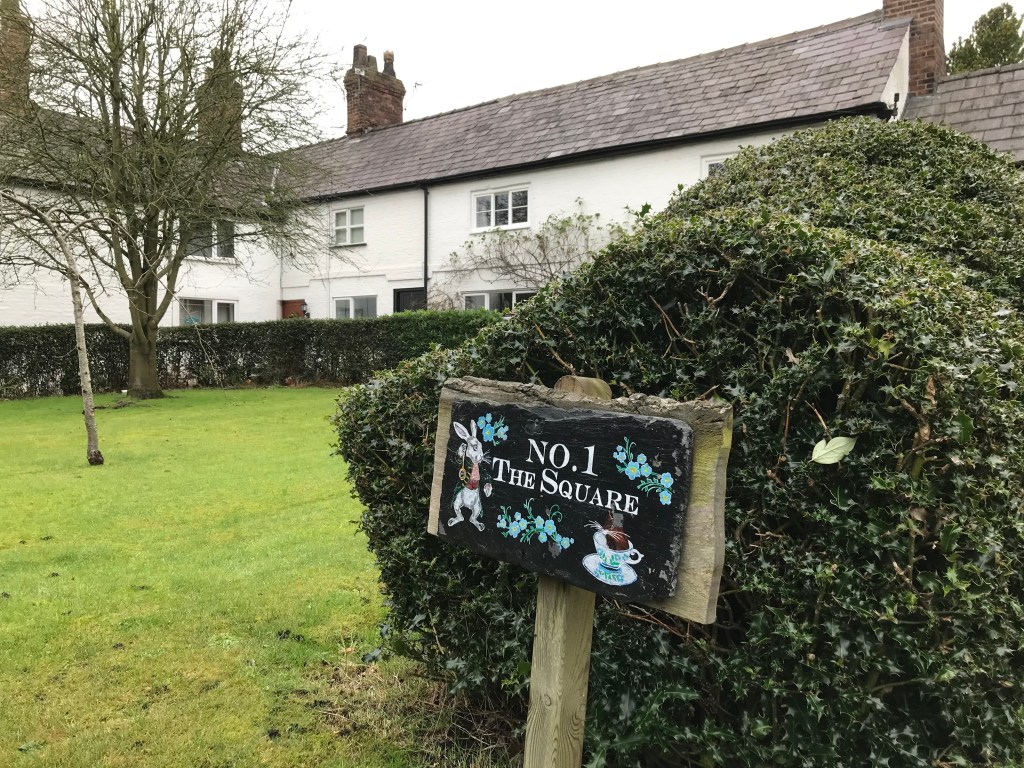
The Cheshire Cat greets you as you enter the village. We are in Cheshire after all!Here he is againThe March Hare and a cup of tea
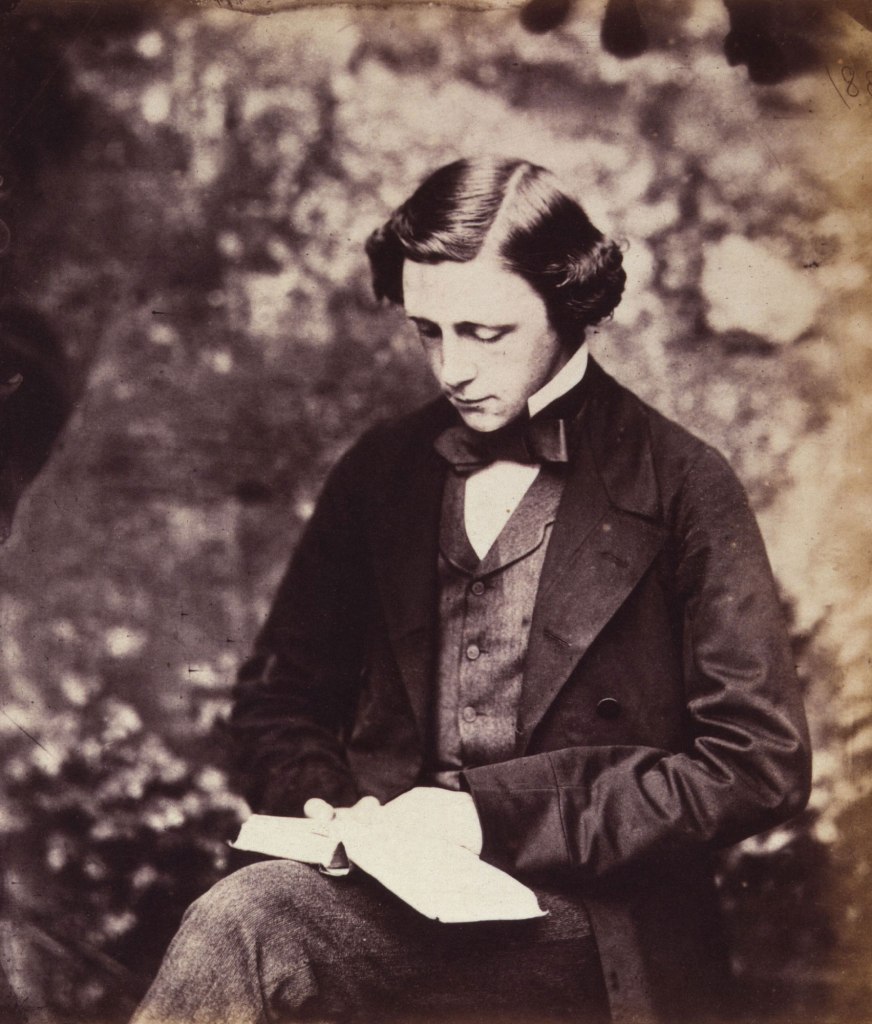
Lewis Carroll was the pen name of Charles Lutwidge Dodgson, the third son of the Reverend Charles Dodgson, the vicar of All Saints, Daresbury from 1827 – 1843.
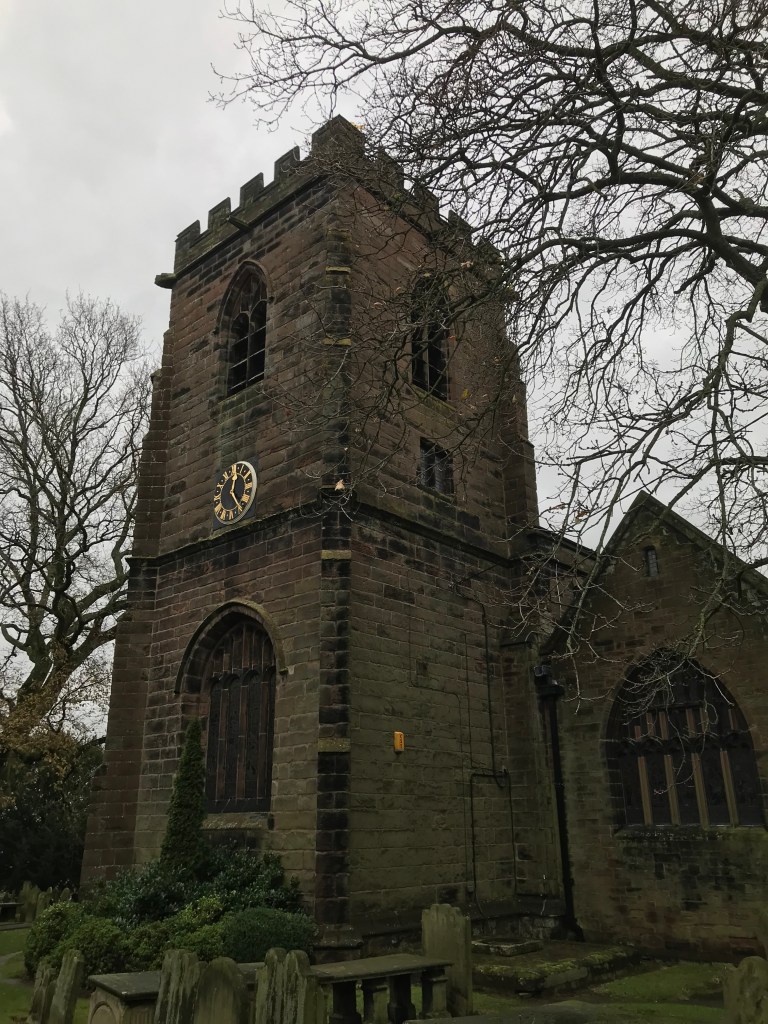
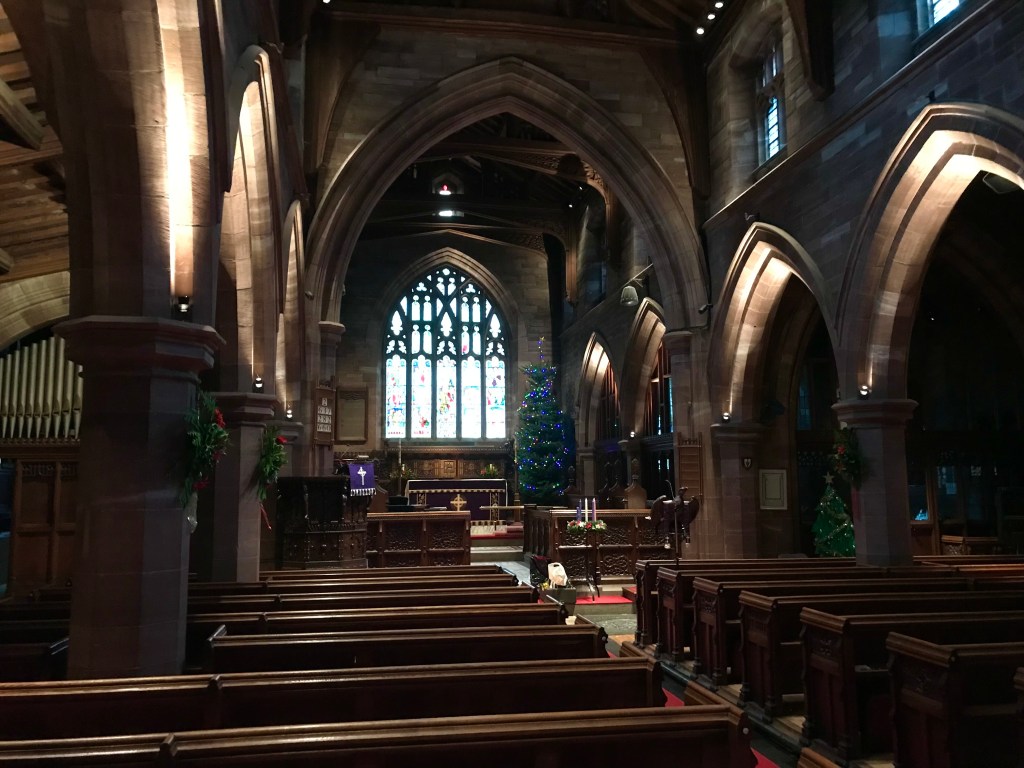
All Saints church
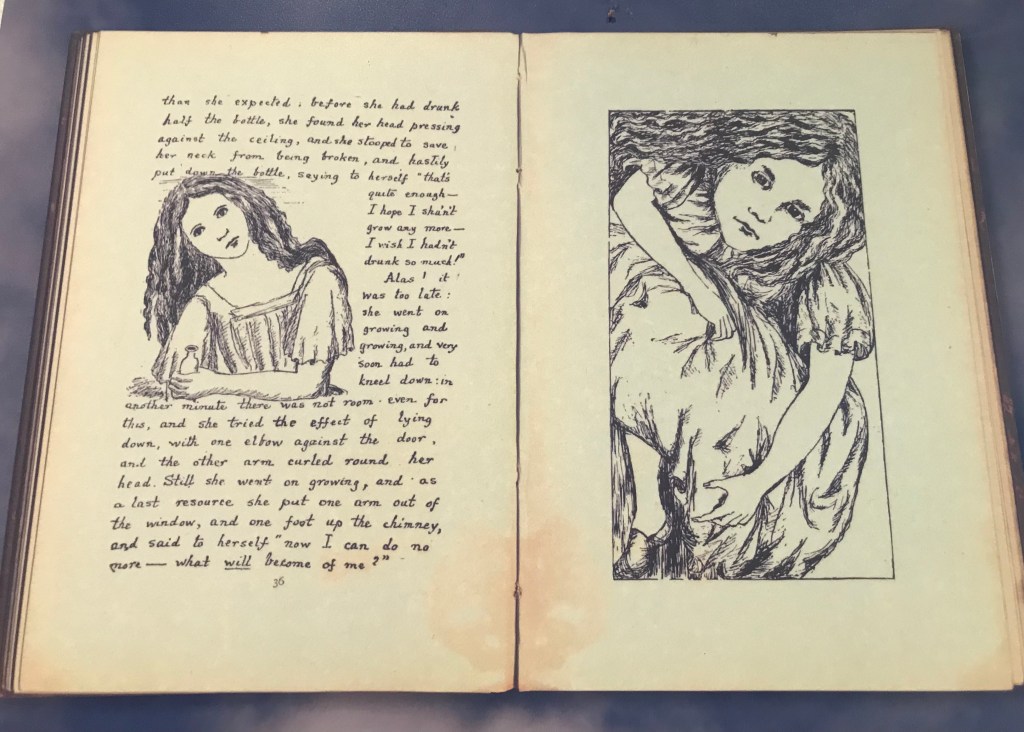
The church is the site of the Lewis Carroll centre. The centre, which attacts visitors from all around the world, is free to visit. It has lots of information on the author and the characters he created.
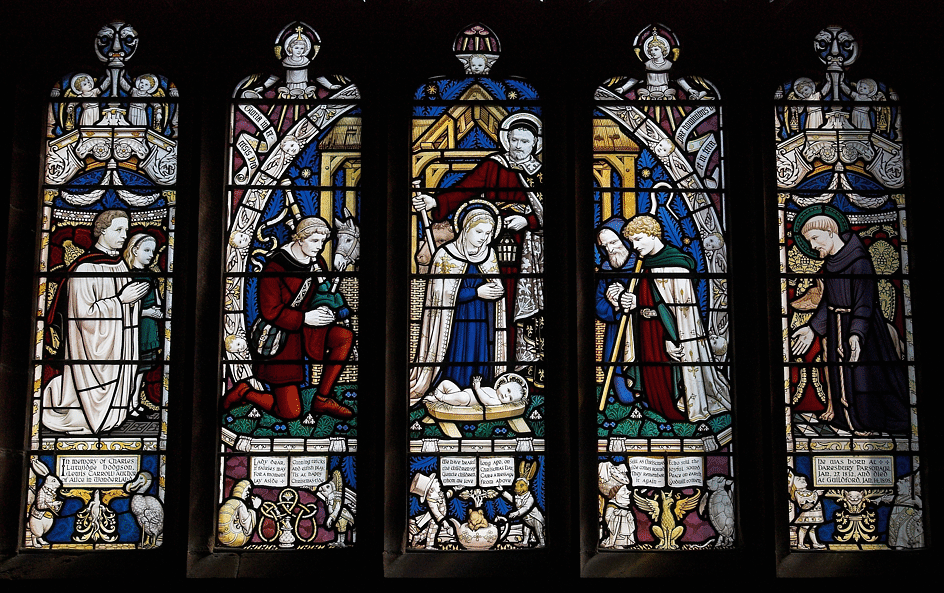
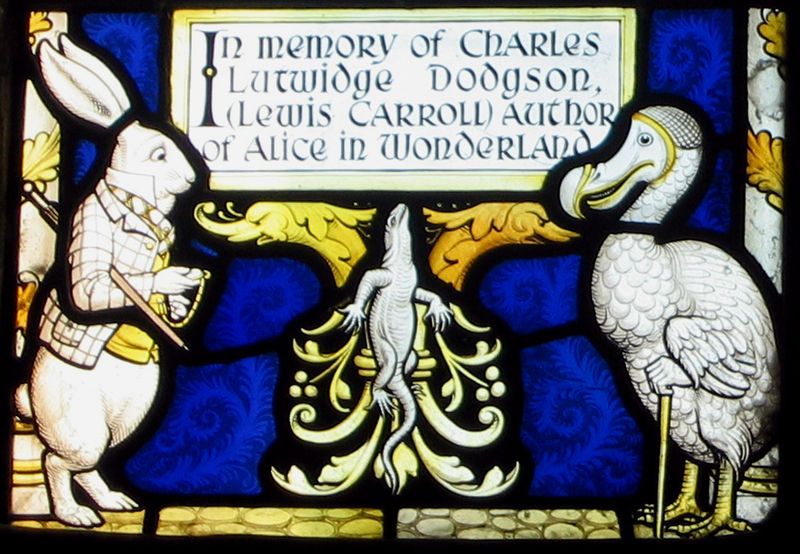
Stained glass windows in the chapel reference the novel.
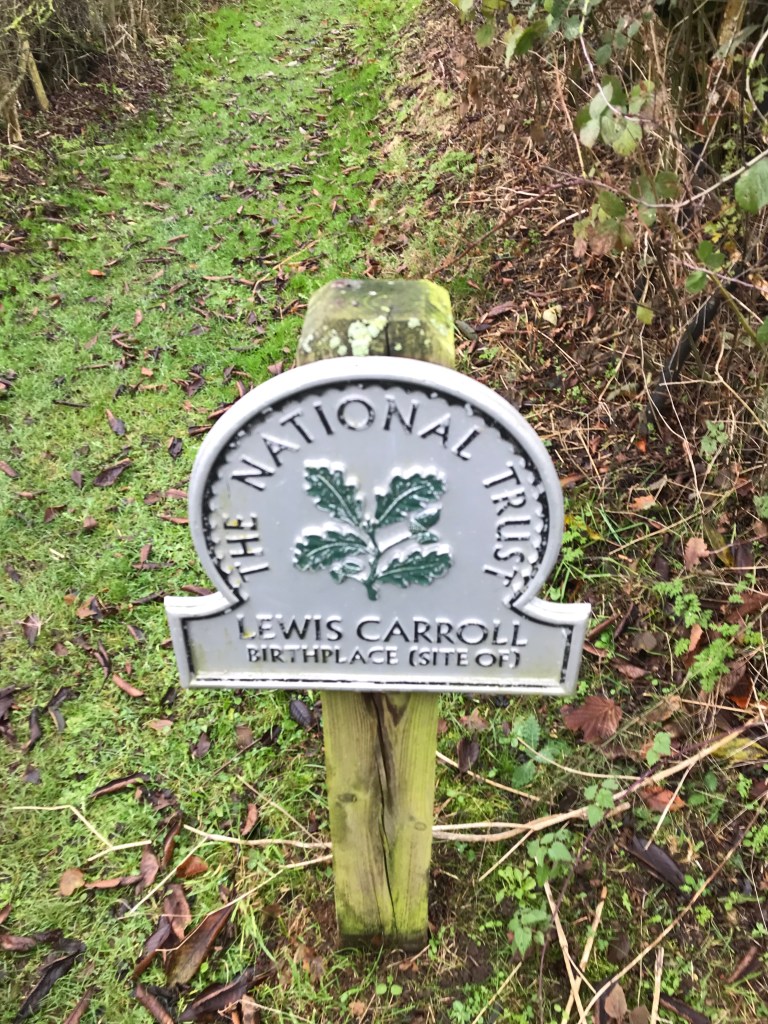
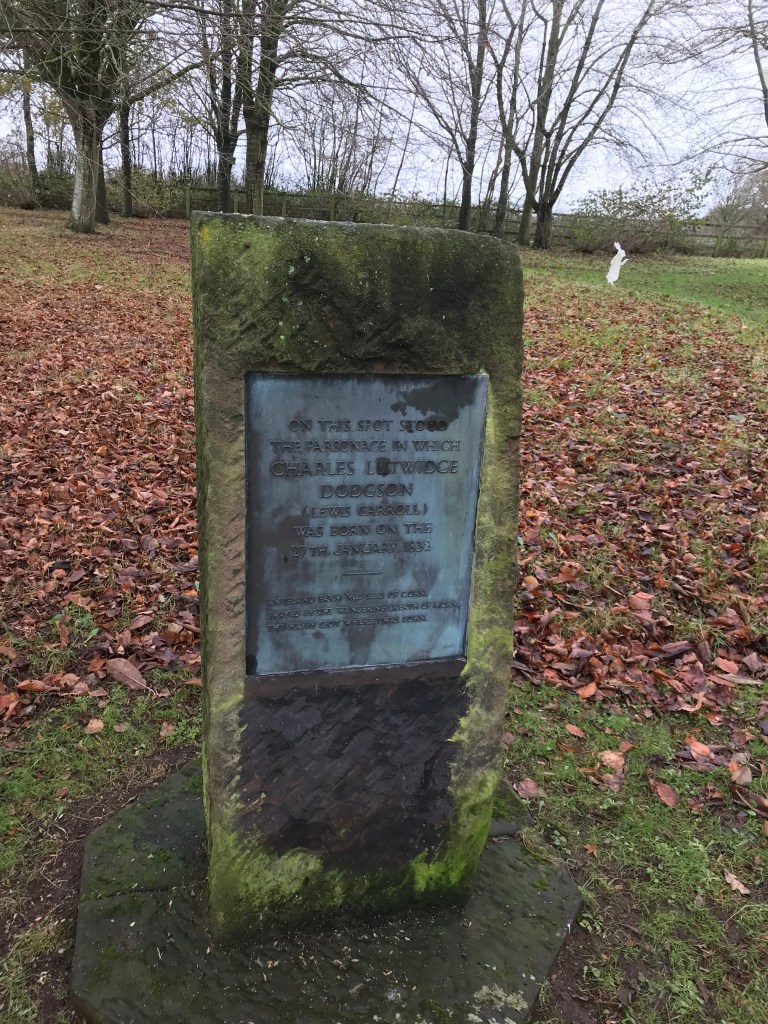
Lewis Carroll was born at the parsonage about 1.5 miles from the village.
The site is clearly marked and to reach it, simply follow the various white rabbit signs.
At the site of the parsonage
Sadly, the parsonage burnt down a number of years ago although its main entrance and outline are clearly marked in wrought iron. The foundations are visible and a sculpture of a dormouse sits where the Well once stood.
Lewis Carroll lived at the parsonage until he was 11 and then moved with his family to North Yorkshire.
An island farm mid seas of corn,
Swayed by the wandering breath of morn,
The happy spot where I was born

- Lewis Carroll
Malton is an attractive market town some 18 miles north east of York. An ancient place, the first established building in the town dates from the 1st century AD.
The town is located in the beautiful North Yorkshire countryside. It is the undisputed culinary champion of the region. With its superlative range of local food and drink producers, a monthly food market and an annual food festival, the town is a gastronome’s delight.
Malton’s rise to prominence as a great place for food and drink started in 2009 with the ‘We love Malton’ initiative, a concerted campaign to raise awareness of the town for the benefit of both locals and visitors. We have seen similar initiatives work in places like Altrincham (in South Manchester) where an old and somewhat run down market area is now a splendid combination of craft and produce vendors, a food hall, an independent cinema and several wonderful bars and restaurants.
Areas that are in decline can reinvent themselves into destinations to visit rather than to avoid as Altrincham has proved.
Malton is indeed a destination to visit. We visited the town on the day the monthly food market was taking place and we had a great time chatting to the stall holders and buying as much produce as we could carry home.
Market stalls
There are plenty of great food and drink shops in Malton.
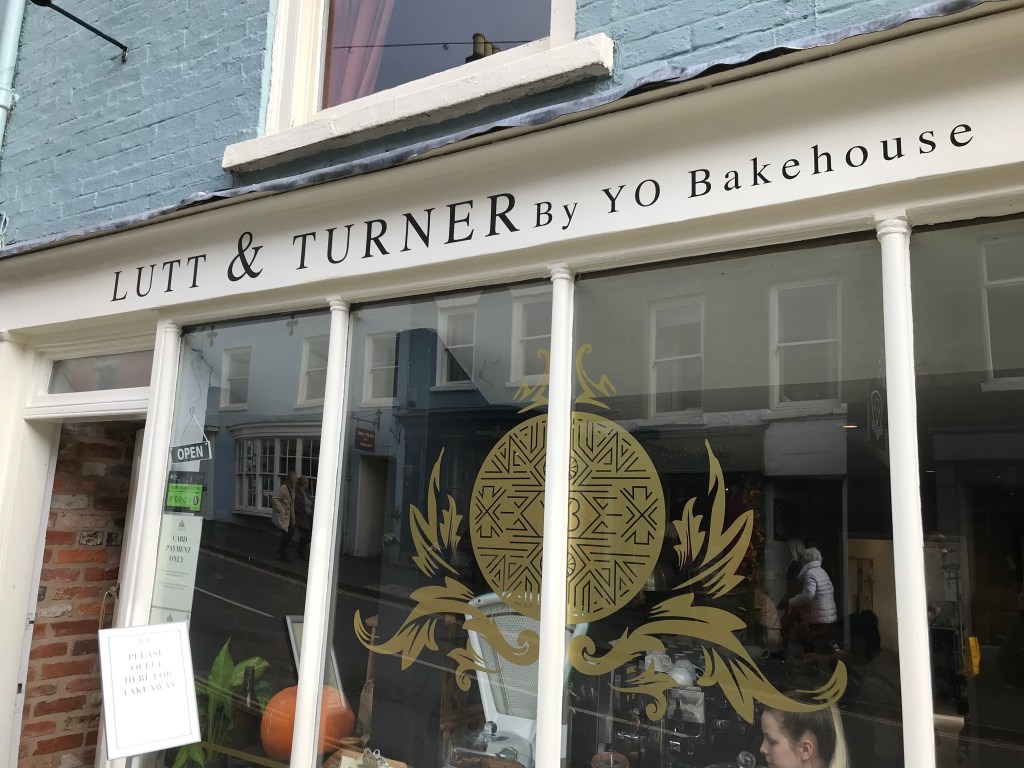
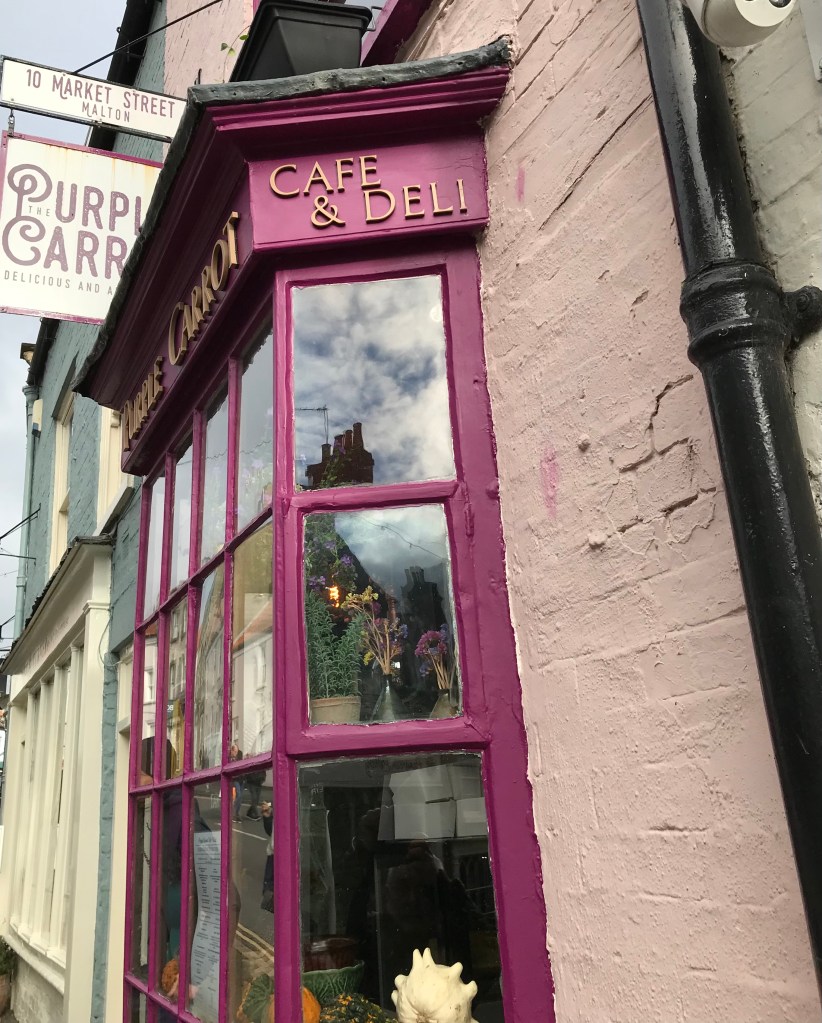
Yo Bakehouse and the Purple Carrot
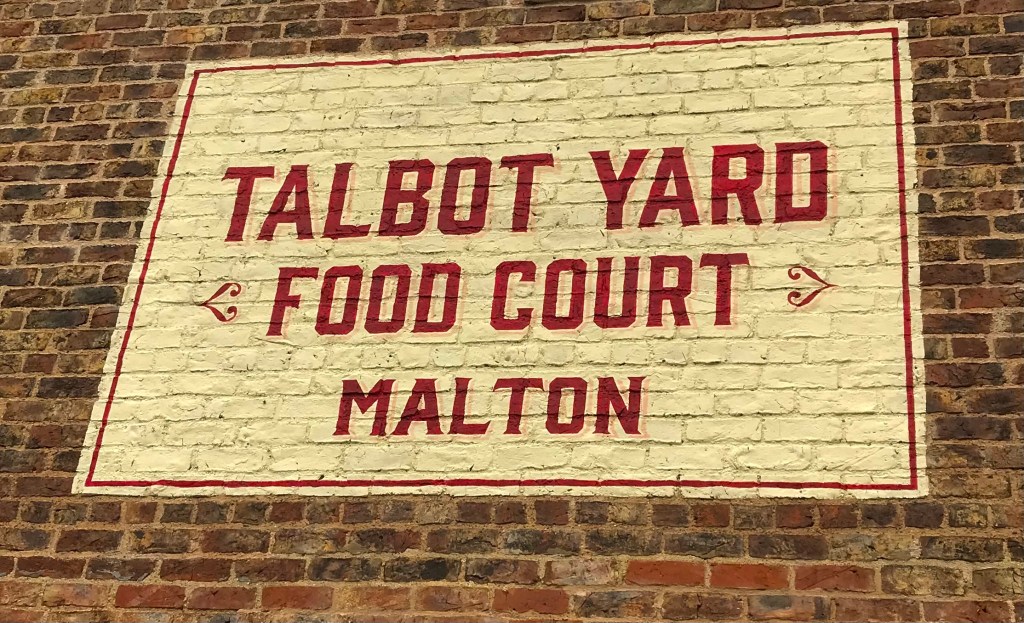
Talbot Yard Food Court near the market place is a group of six independent food and drink producers gathered together in the restored courtyard of an old coaching inn.
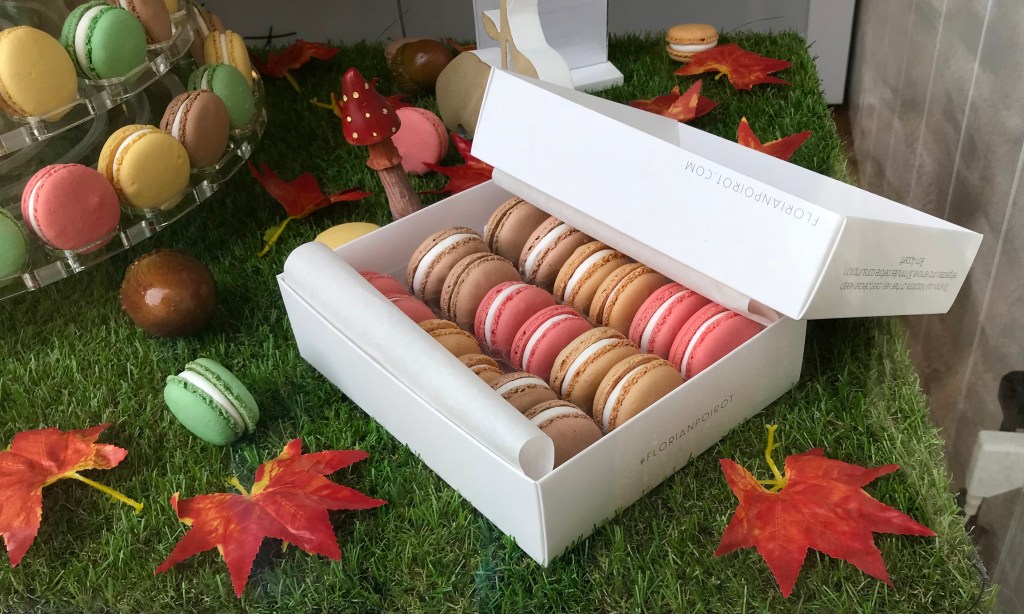
Of particular interest are the macarons of Master Patisser Florian Poiret. Rightly popular, a queue of eager customers had already formed outside his shop early in the morning of our visit.
Macarons
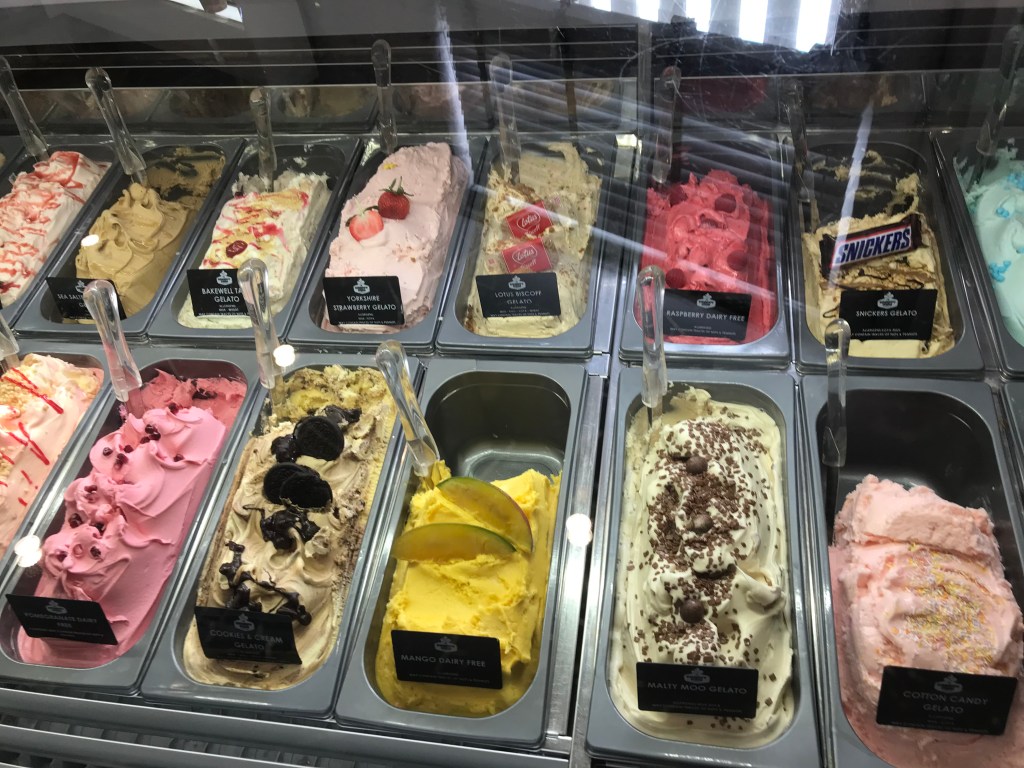
The hand made ice cream at Groovy Moo in the yard was especially well received!
Amazing ice cream
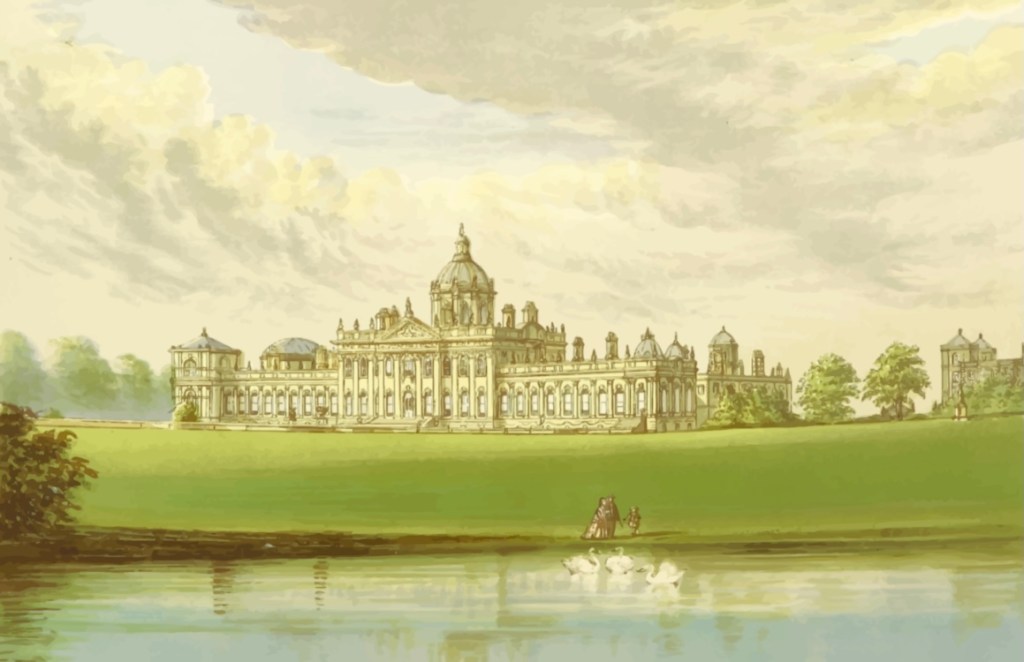
If you are visiting the area, Malton is fairly close to historic York and it can easily be visited on a day trip. Castle Howard is also nearby. Fans of Bridgerton will recognise the Castle’s facade as the fictional Clyvedon House in that series. Older fans will recognise Castle Howard as the fictional home of the Marchmain family in the 1981 adaptation of Evelyn Waugh’s Brideshead Revisited. Notwithstanding the worldwide success of Bridgerton, Castle Howard will always be associated with the Waugh novel in the minds of many.
Castle Howard
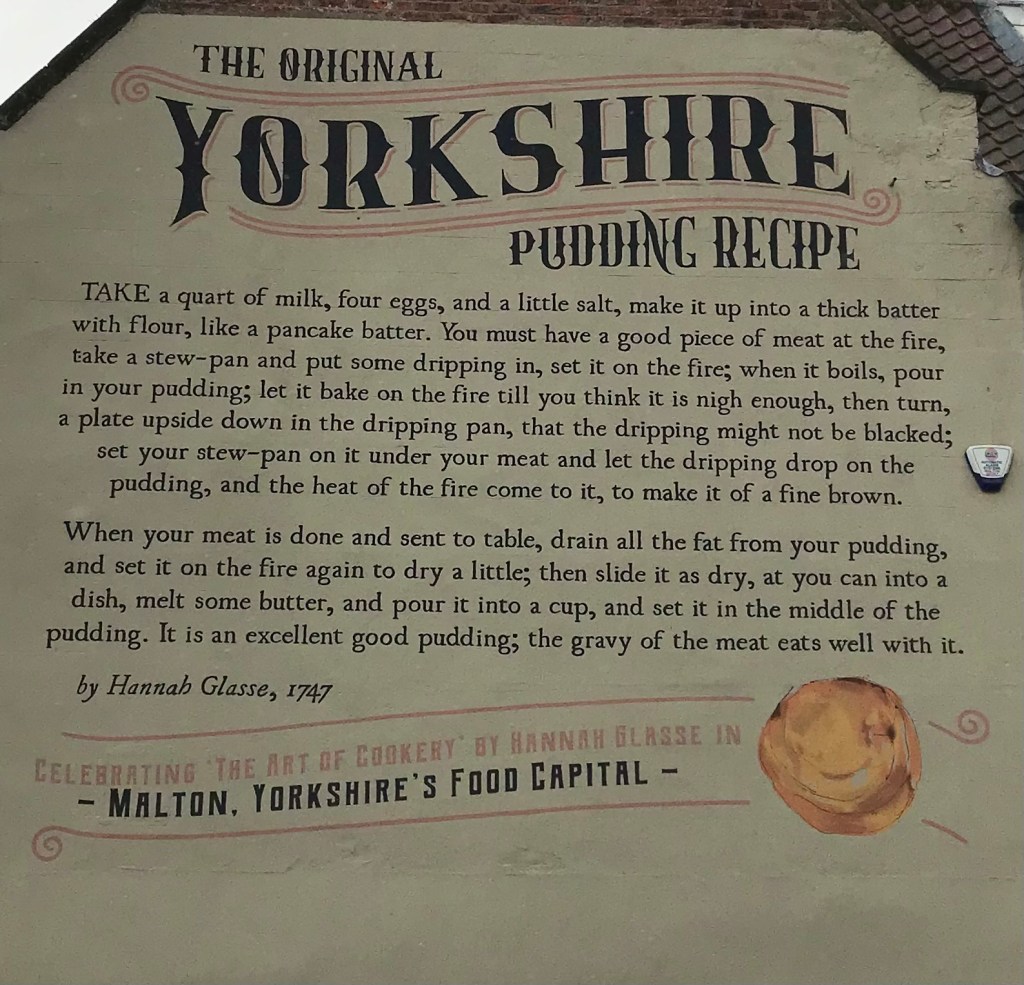
But as the article is about a Yorkshire town we thought it more appropriate to leave you with a recipe for Yorkshire Puddings.
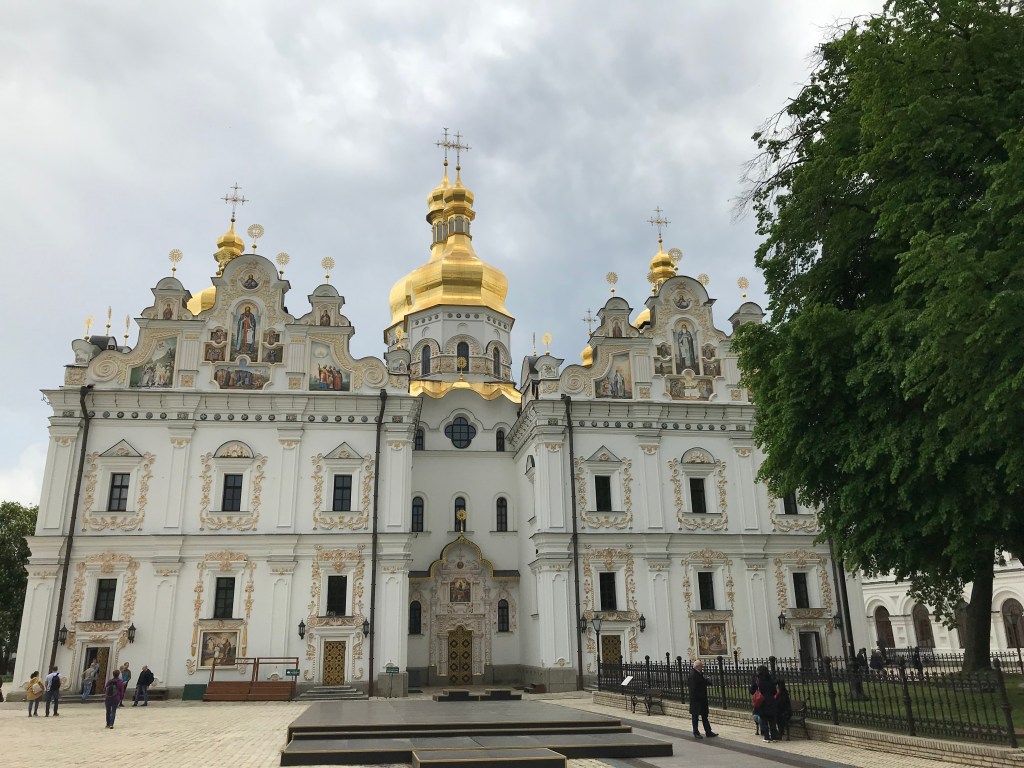
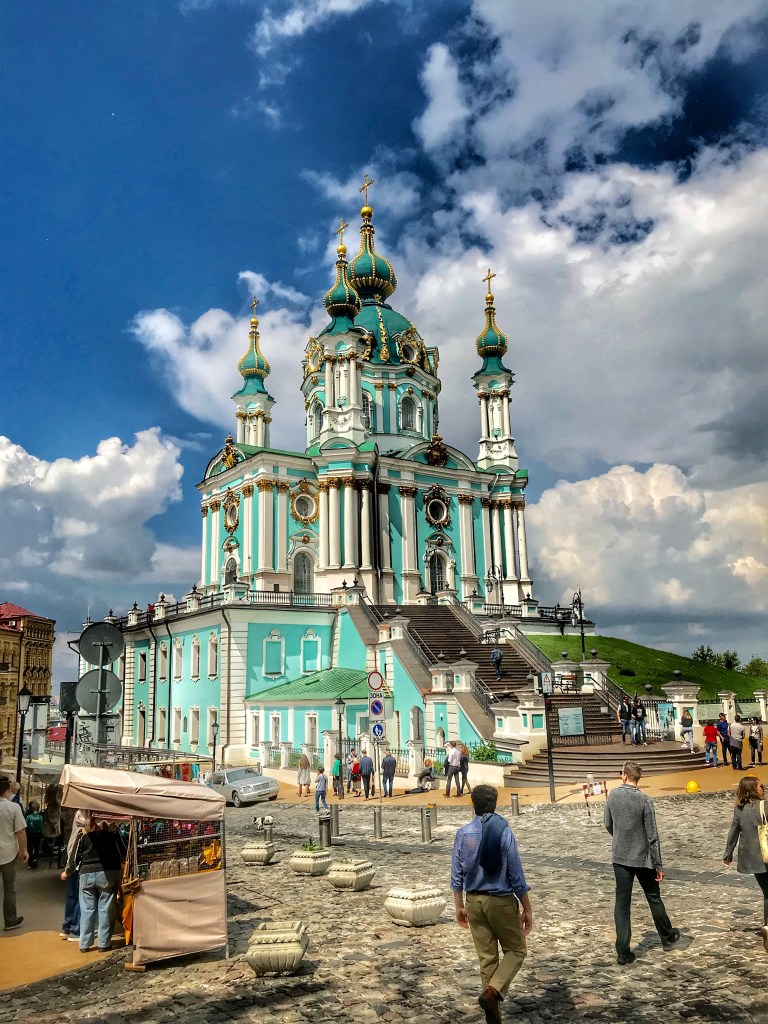
Kiev (or Kyiv as it is more correctly spelt) is the capital of Ukraine. The city is a wonderful destination, one of golden spires, beautiful squares, great food and friendly people and then, when you least expect it, brutalist architecture from the Soviet era.
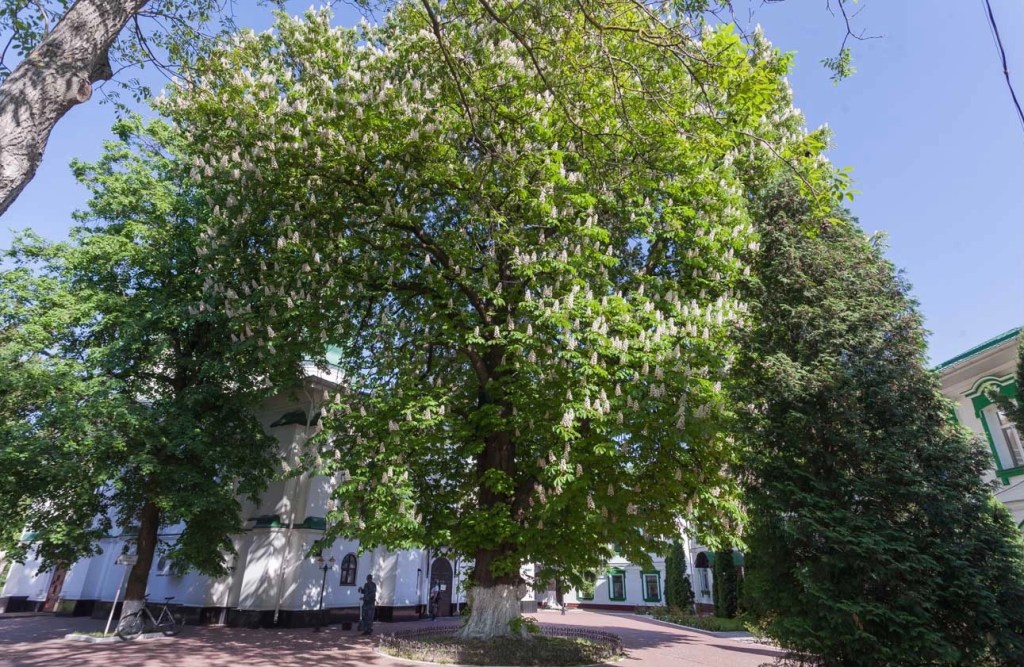
The unofficial symbol of the city is the horse chestnut tree which grows throughout.
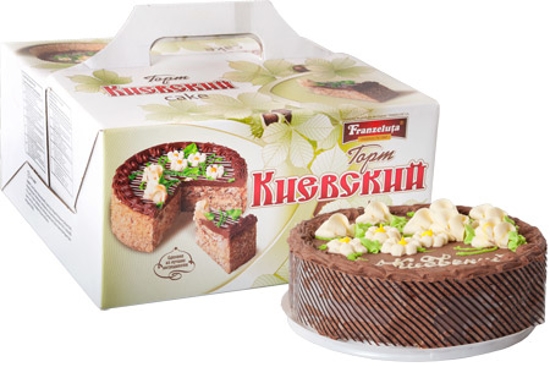
The Kyiv cake, a dessert which contains nut, cream and chocolate is another popular symbol of the city. First made at the (former) Karl Marx Confectionary Factory in the city in 1956, the cake has become hugely popular throughout Ukraine. The top of the cake is a depiction in icing of the leaf of the horse chestnut tree in honour of the city.
Wherever we went in Kiev, there was always time for coffee and great food.
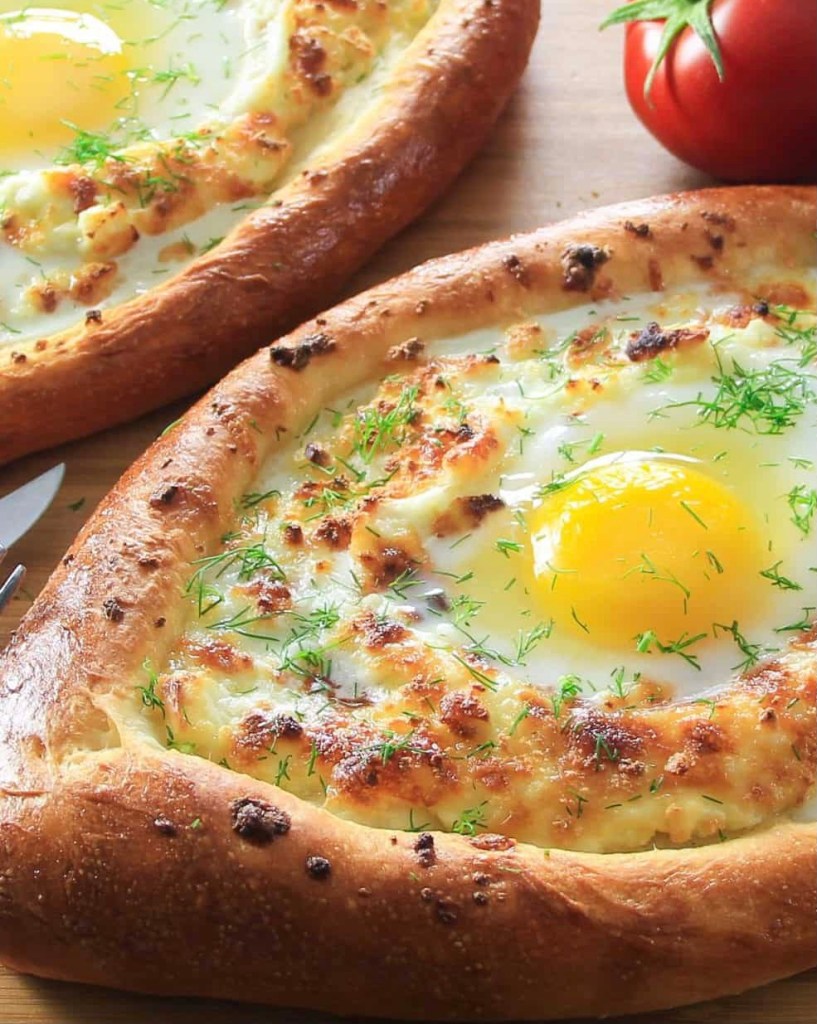
In particular, food from nearby Georgia has become deservedly popular in the city and it is one of the best cuisines we have come across. From Khachapuri (bread, cheese, eggs combined together) to Khinkali (meat filled dumplings), Georgian food is one of those cuisines which always satisfies.
Khachapuri
Khinkali should be eaten like this:-
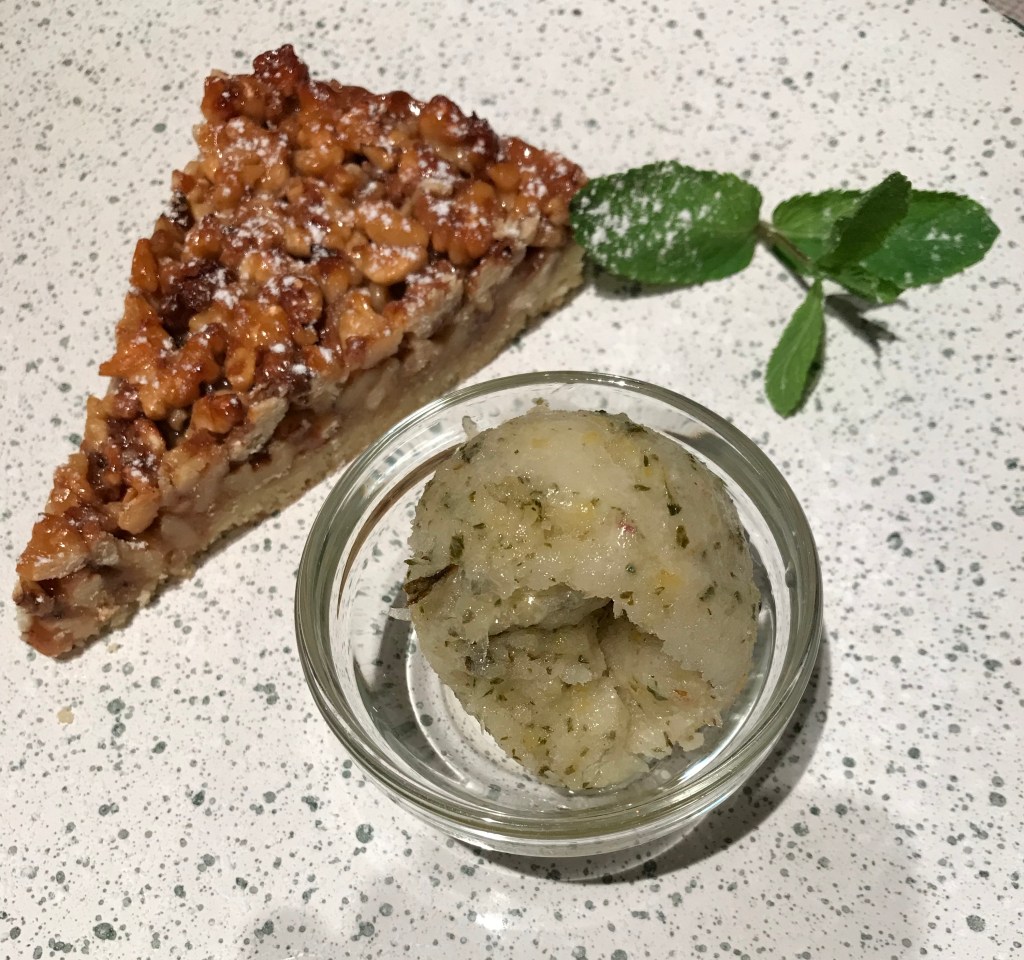
Desserts are also a big part of Georgian culture and a slab of the popular Gozinaki (walnuts and honey – a bit like like a less cloying nougat) came out on top.
Gozinaki
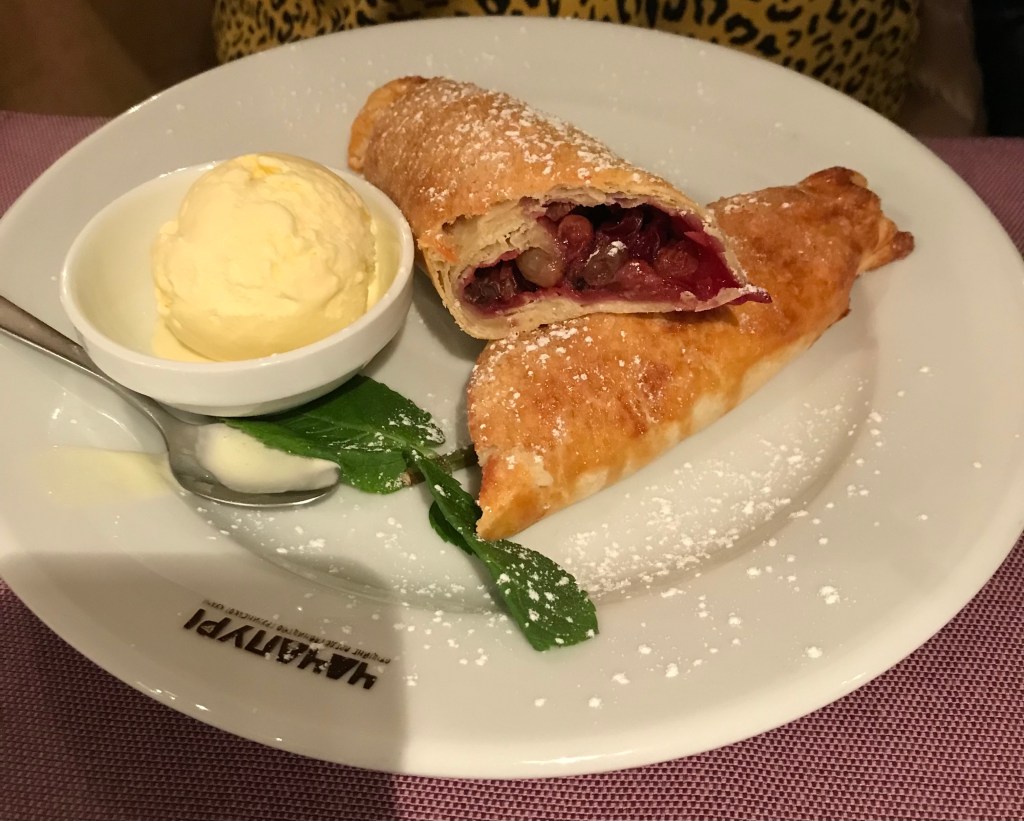
Cherry pie and ice cream came a close second.
Cherry pie
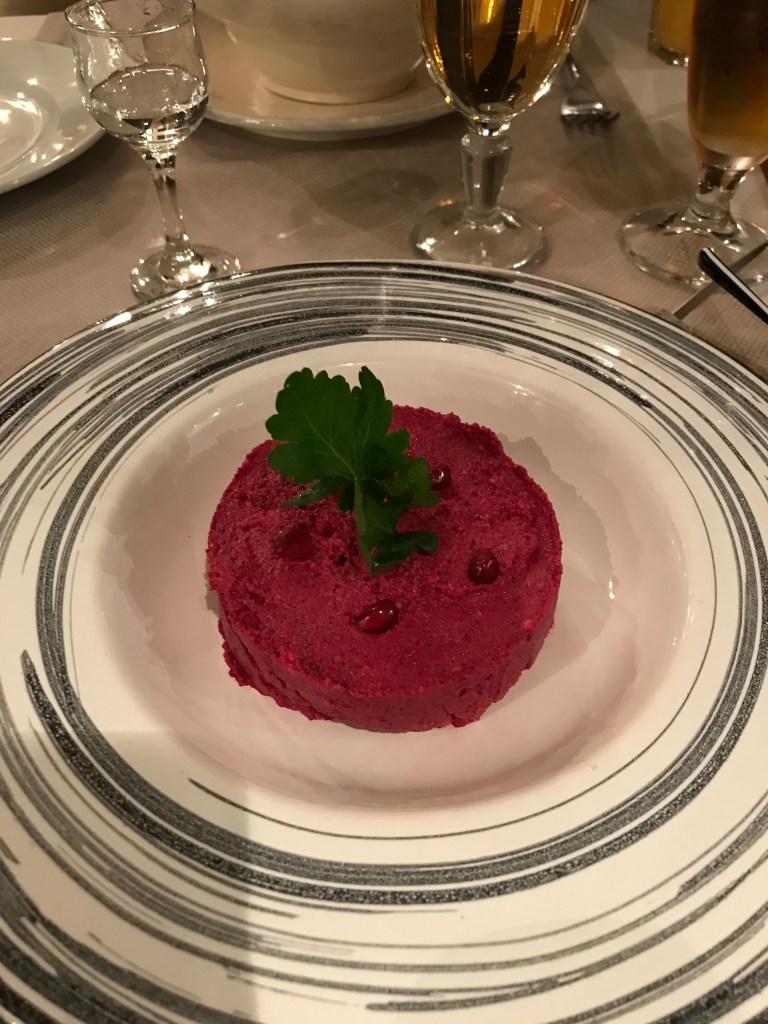
Each time we ate at a Georgian restaurant in the city, we were offered a complimentary starter of Pkhali, a vegetable dish of a pâté like consistency which can be made from various bases although the core ingredients will remain more or less the same. Our favourite version of the dish was based on beetroot combined with walnut, garlic, herbs and spices. If you don’t want beetroot, the dish can be prepared with carrot instead. Similarly, if you don’t like carrot, you can use spinach as the base and so on.
The Pkhali was washed down with a small glass of vodka (which was either fiery Georgian vodka distilled on the premises or a smoother commercially made Ukrainian vodka). As we ate, the house cat, a small friendly tabby, brushed past reminding us of the two other cats we had seen that day. One of those cats was represented by the handsome bronze statue of the legendary Persian, Pantusha, another symbol of the city of whom more below. The other cat was a small statue of the fearsome vodka swilling and cigar smoking beast of ‘The Master and Margarita’, the giant black cat Behemoth. The book was written by Kiev born Mikhail Bulgakov and it is one of the greatest works of Russian literature (although there is is an argument that the book is a work of Ukrainian fiction https://www.theguardian.com/stage/theatreblog/2008/dec/11/mikhail-bulgakov-ukraine-russia).
Nasty Behemoth
Whatever the argument, Kiev boasts a wonderful Bulgakov museum, a statue of the man and a small statue of the gigantic Behemoth of course.
Pantusha
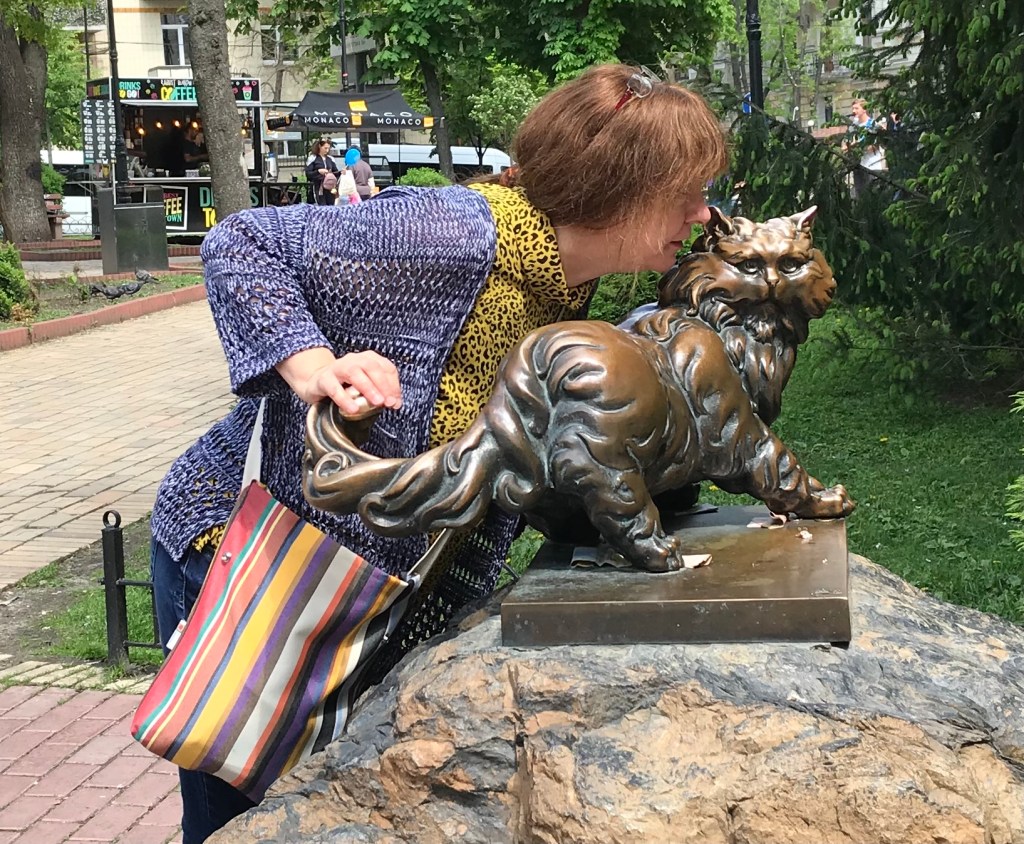
The other statue of a cat in the city is that of the beloved Pantusha, a Persian sculpted in bronze which sits on its own pedestal near the Golden Gate monument (the monument being a representation of the 11th century ‘Great Gate of Kiev’ as referenced by the composer Mussorgsky). Now a cherished symbol of the city, Pantusha lived in a popular Italian restaurant near the Golden Gate monument. Loved by all the staff and diners, he was very much a part of the eating house. Unfortunately, the restaurant burnt down following an electrical fault and the wonderful Persian did not survive the fire. In his honour, patrons and staff commissioned a statue of him. The statue stands in front of the rebuilt restaurant. It has become something of a ritual amongst locals to make a wish in the cat’s ears and rub his back for good luck. As we sat with a coffee outside the restaurant, locals of all ages greeted Pantusha with a pat and a quiet word.
You will not get a nice comment from Behemoth of course and we certainly would not recommend a quiet word in his ears! If you are familiar with the book, you will know what we mean.
However, we will leave the last word to him.
“Is that vodka?” Margarita asked weakly. The cat jumped up in his seat with indignation. “I beg pardon, my queen,” he rasped, “Would I ever allow myself to offer vodka to a lady? This is pure alcohol!” *
* presumably the same fiery vodka we mentioned above?
Macclesfield is a market town in East Cheshire in the North West of England. It is not too far away from Manchester. The town has a real character to it and it is surrounded by gorgeous countryside with the Peak District NationalPark nearby. The town is also a key film location for the popular Peaky Blinders television series.
The North West has undergone something of a culinary renascence in the past few years. There is an increased emphasis on quality local produce with a talented group of local chefs creating great food from across the world.
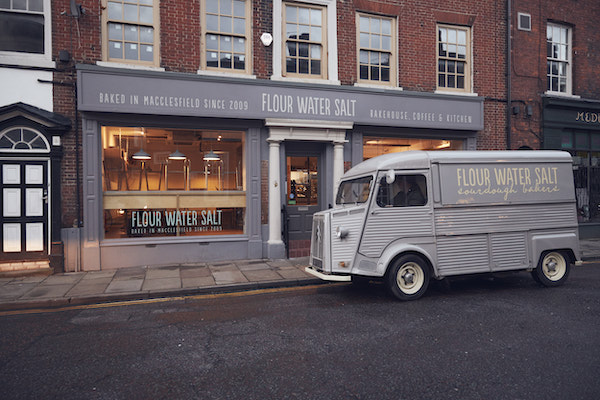
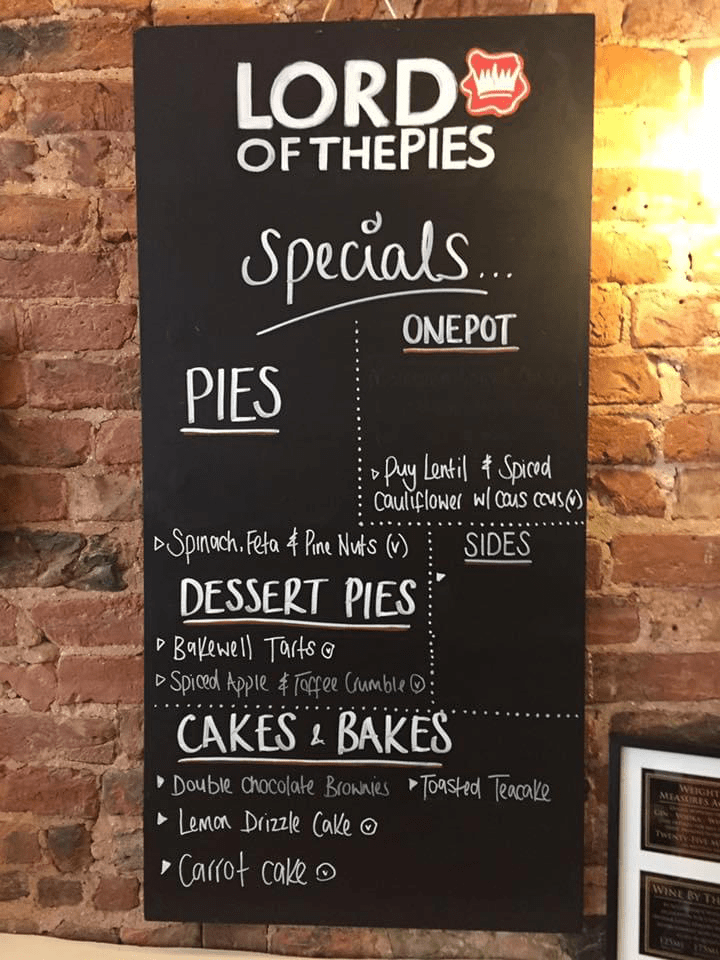
Macclesfield is a part of this change and we especially like the bread and pastries at Flour Water Salt and the iconic Lord of the Pies.
A particular local favourite of ours is the monthly Treacle Market which is held in the centre of town. It is a lively mix of food stalls, crafts and antiques.
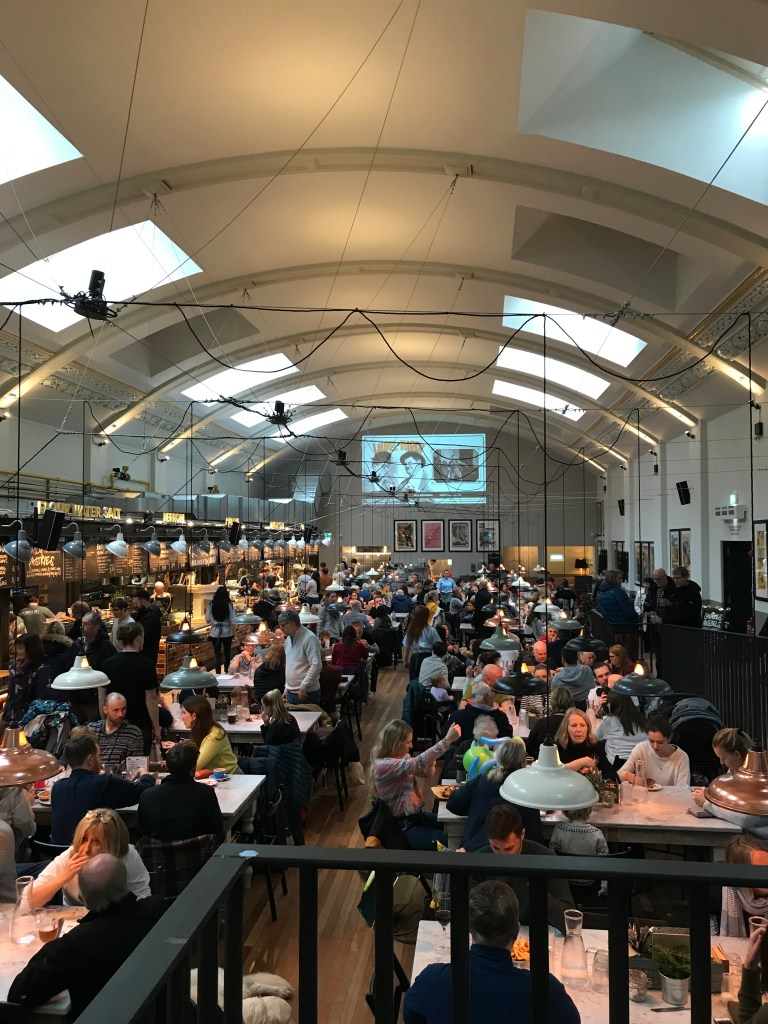
Nearby is the food hall at the Picturedrome, a beautifully restored former cinema dating back to 1911 which is now an atmospheric food hall
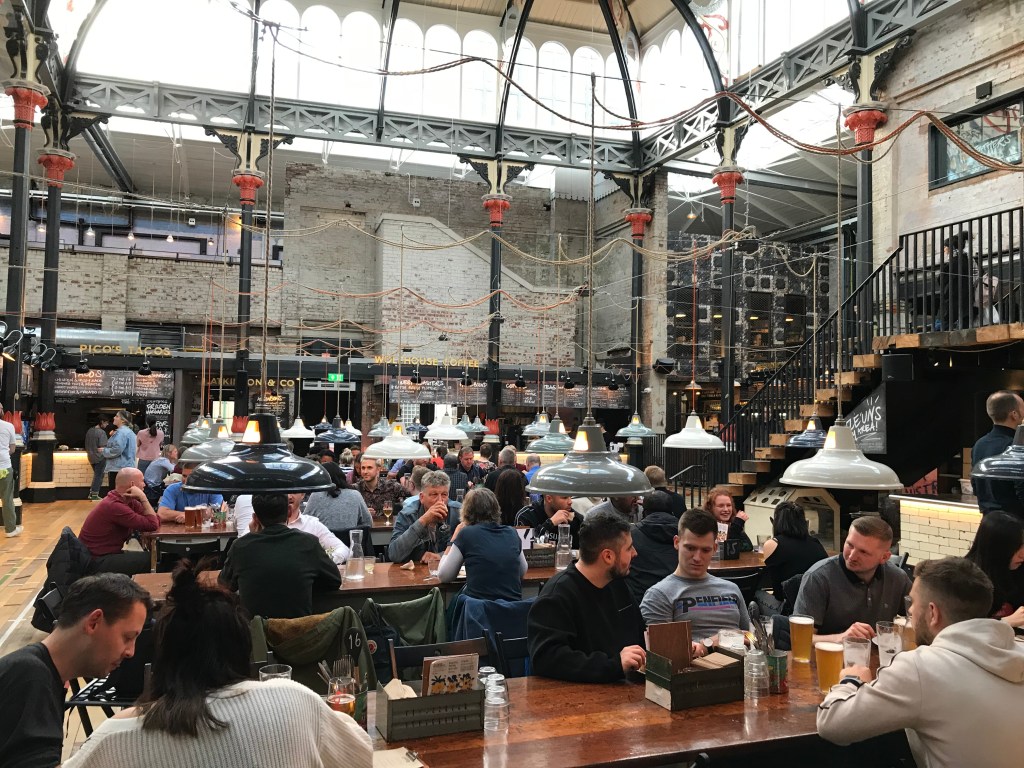
The Picturedrome is a sister to two Manchester food halls, Altrincham Market House in the south of the city and the more central Mackie Mayor.
Altrincham Market House
The Mackie Mayor
The Mackie Mayor is a few doors down from the the iconic music venue, the Band on the Wall. Anyone who is anyone will have played at the Band on the Wall at some time or other including of course, local legends Joy Division, one of the most influential groups to have ever come from England.
(This video has over 23 million views on You Tube)
We never saw the group play as Joy Division but we did see them perform under their old name ‘Warsaw’ which they changed shortly thereafter so as to avoid confusion with a similarly named band.
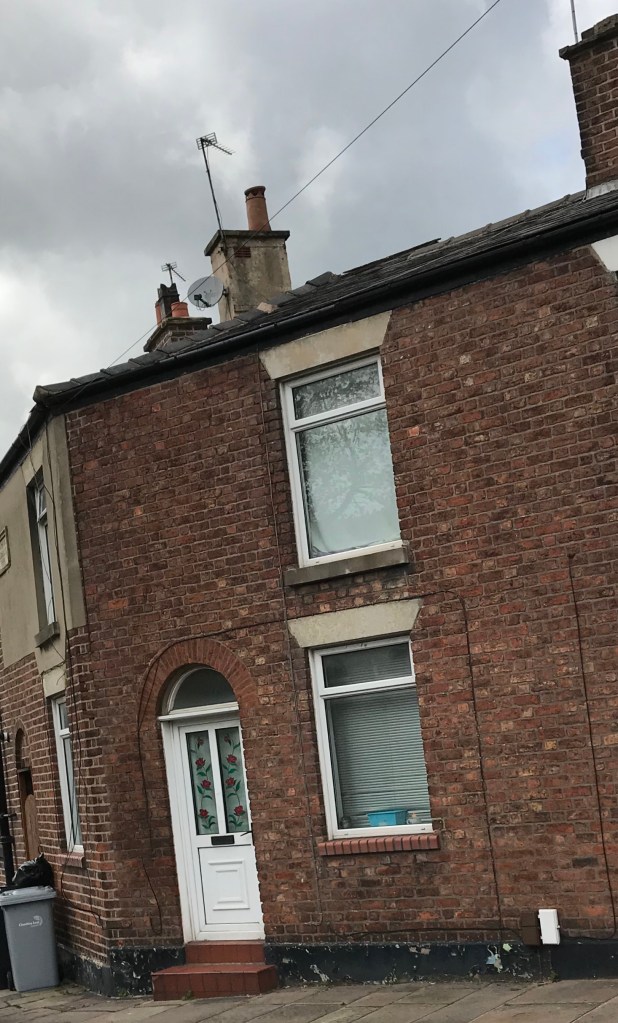
Joy Division have a particular link with Macclesfield, the town where their singer, Ian Curtis grew up in (he was born in nearby Manchester). The town is also sadly the place where he passed away. The house where he lived until he died in 1980 is still there. It is a short walk from the town centre.
Joy Division drummer Drummer Steven Morris was born in the town and lives nearby.
After his death, Curtis’ band mates and keyboardist Gillian Gilbert formed New Order and the rest, as they say, is history.
Like ourselves, Curtis was a fan of reggae.
In her memoir ‘Touching from a distance’ Curtis’ widow Deborah notes:-
“Ian always had an interest in reggae music; Bob Marley and Toots and the Maytals already figured in his diverse record collection. Moving into that area of Manchester (i.e. south) gave Ian the opportunity to throw himself into the local culture. He began to spend much of his time in a record shop in Moss Side shopping centre, listening to different reggae bands”.
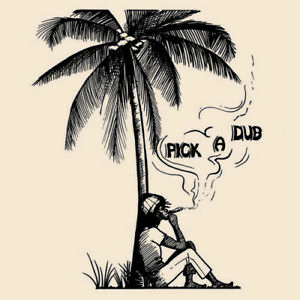
Curtis was a big fan of recordings by the Jamaican producer Keith Hudson (whose 1974 album ‘Pick a Dub’ is much loved by us) with his favourite being the latter’s 1975 number ‘Turn the heater on’ (England was much colder than Jamaica. Hudson was resident in London at the time after all!).
‘Turn the heater on’ was later recorded by New Order as a tribute to Ian Curtis. It was broadcast on DJ John Peel’s show in 1982. At the time, Peel was one of the very few national DJ’s to play reggae on the airwaves.
The first artist to be recorded by Keith Hudson was the veteran Dennis Alcapone back in 1969. Alcapone recorded a football tribute ‘World Cup Football’ in 1981 to exalt the Brazilian national squad and to call for more black players in the England football side to make a better team as a result. (The rhythm Alcapone toasts over on this track is the classic ‘Rope in’ by Cornell Campbell. See also ‘Fattie Boom Boom’ by the late Ranking Dread).
New Order also recorded their own officially sanctioned football song for the 1990 World Cup, ‘World In Motion’
As well as undoubtably being the best official football song from England, ‘World In Motion’ is notable for the rap by the beloved Liverpool/England player John Barnes.
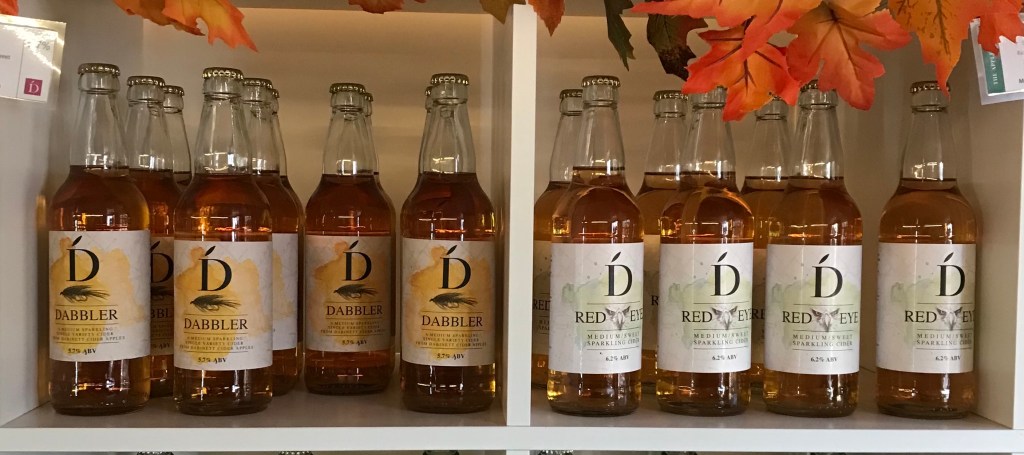
Dunham Massey is a civil parish just outside of the city of Manchester. The parish is a mix of ancient farmland and small settlements such as Dunham Town which despite the name is a village. The area is notable for the quality of its local produce such as the ciders produced by the excellent Dunham Press whose apple crops come from their own 200 year old orchards. They are the only cider producer in the North of England that we know of.
As well as their own ciders and apple juices, their shop (which is just across the way from their press) stocks guests ciders from across the UK (and even the USA) and beers from their neighbours, the Dunham Massey Brewing Co. – a local craft brewer of quality. Farm shops in the area stock an extensive range of local produce.
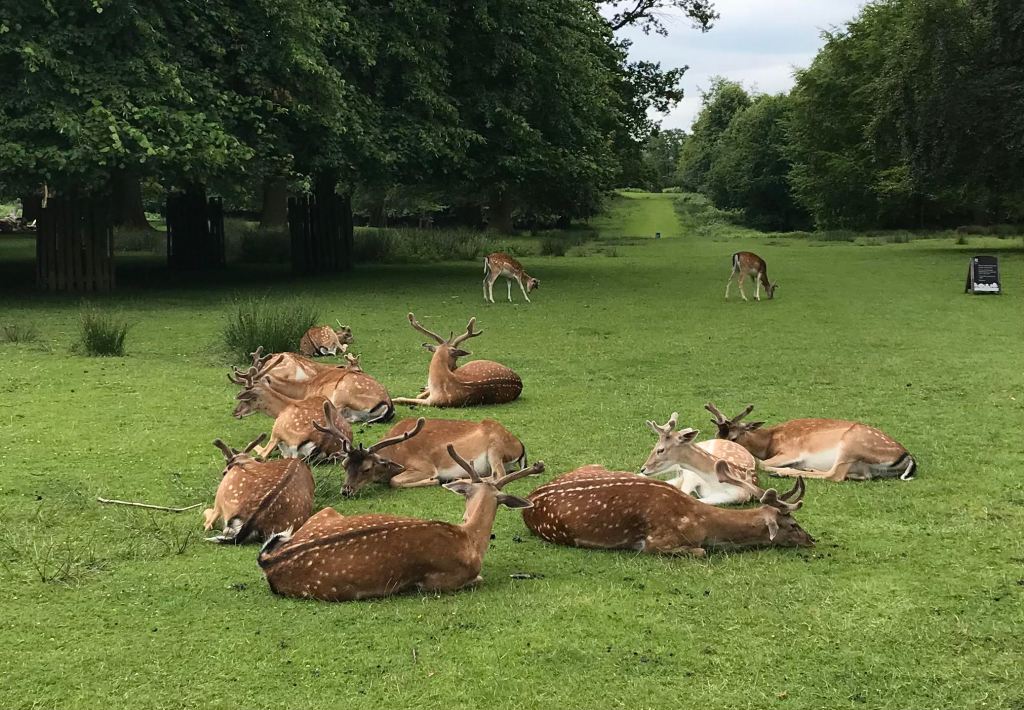
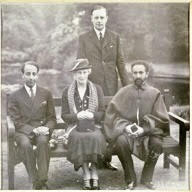
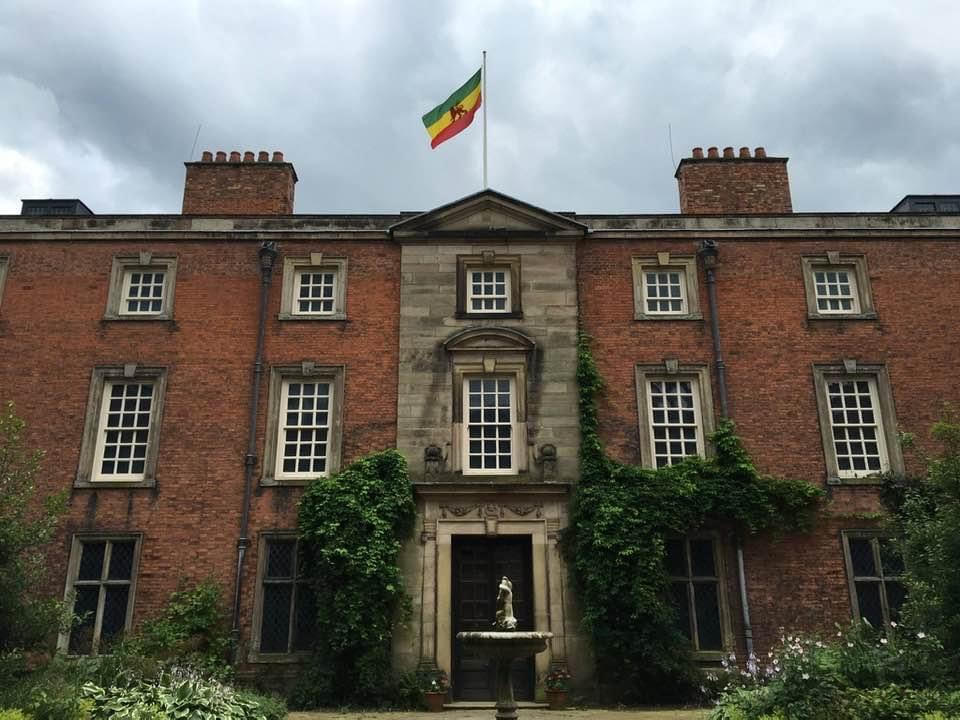
The main attraction in the locale is the nearby Georgian house and its attendant deer park. Both are extremely popular places to visit. The park itself with its ancient enclosed wall, trails and grazing deer is a particular favourite with everyone who goes there. Even royalty have visited including Emperor Haile Selassie of Ethiopia. Selassie visited the estate at Dunham Massey at the special invitation of his friend, the 10th Earl of Dunham, Roger Grey. The Emperor stayed at the house for four days in 1938.
Haile Selassie at Dunham Massey in 1938.
Roger Grey was a member of the local branch of the League of Nations which had been formed in 1920. The League, a kind of precursor to the United Nations, was the first worldwide intergovernmental body and its principal mission was to preserve and enable peaceful coexistence between nations. The League had strongly condemned Italy’s invasion of Ethiopia in 1936. The invasion had prompted Selassie to flee to England where he lived in exile until 1941.
Grey and the Emperor became firm friends and in honour of his guest, the Earl not only flew the Ethiopian flag from the main house during the Emperor’s visit but on each anniversary of the latter’s birthday, the 23rd of July each year. This practice continued until Grey’s death in 1976 but it was revived last year when once again the Ethiopian flag (with the Lion of Judah at its centre) flew from the main house. The flag is now flown annually on each anniversary of the Emperor’s birthday.
We visited the park that day and noticed the flag flying from the centre of the house. A group of Rastafarians were gathered nearby.
The Rastafarian religion was developed in Jamaica in the 1930s from the interpretation of a prophecy by local activist Marcus Garvey. Rastafarians ascribe divinity to Haile Selassie who many regard as God incarnate.
Today Rastafari is an established religious and social movement in Jamaica as well as other countries with a significant Jamaican diaspora such as the UK, USA and Canada. There is a Rastafarian community in nearby Manchester.
The diet of strict Rastafarians is vegetarian or vegan. A vegetarian diet was adapted by the Rastafarians from indentured Indian labours (known locally as ‘East Indians’).
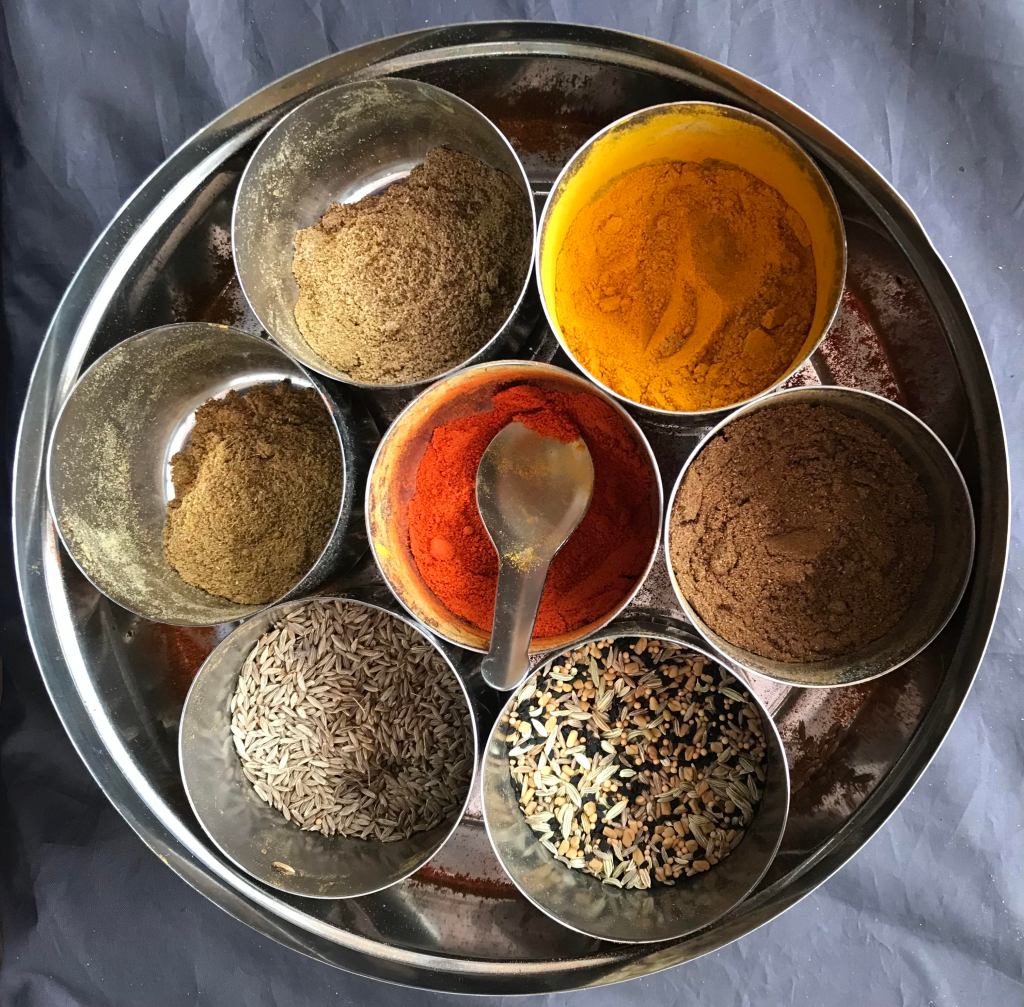
The founder of Rastafarianism, Leonard Howell, was apparently influenced by the food ate by those indentured Indians and that is how a vegetarian diet became a part of the religion (and it is fair to say that Indian spices and recipes have undoubtably influenced the food culture of Jamaica as whole).
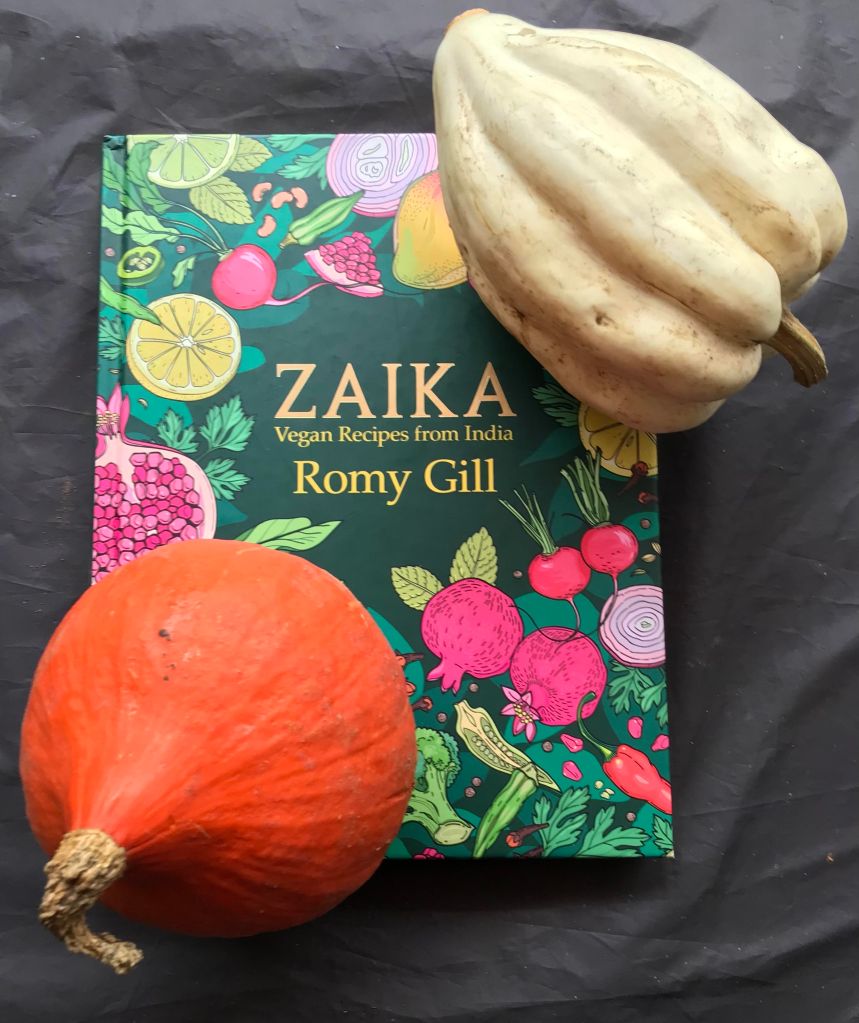
The Vegetarian Society of the United Kingdom has its HQ a short walk from Dunham Massey. The Society has a cookery school and holds regular classes from tutors across a range of international cuisines. We particularly recommend the Indian food cookery classes taught by Lajina Leal.








 FOOD, FILMS 'N' TINGS