Wigan in Chester; Urbanites go to the movies

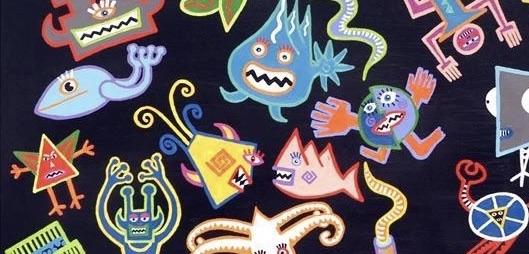
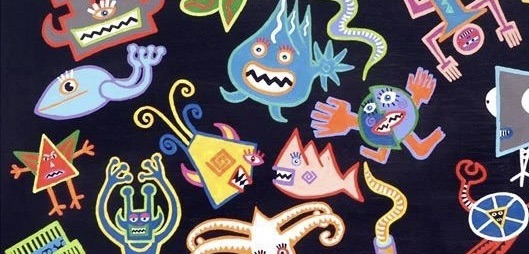
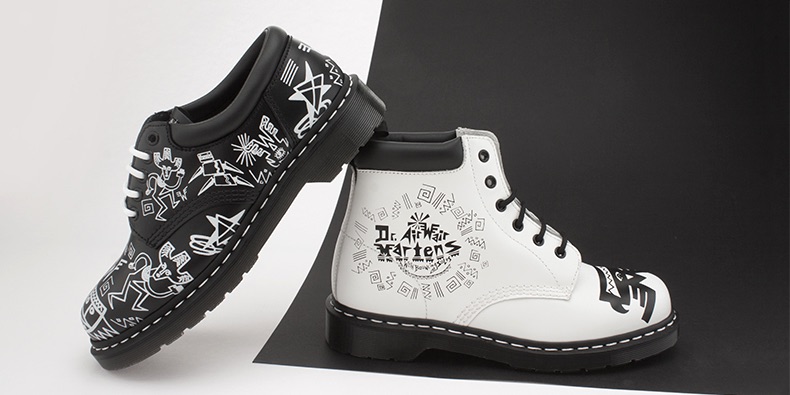
Mark Wigan is a UK-based artist and illustrator based in Chester in the North of England. He is internationally known for his interdisciplinary approach to his work, crossing fine art, illustration, and urban art into a visually stunning whole. He creates paintings, drawings, signed limited edition giclee prints, screen prints, and limited edition T-shirts. His immense creative output also includes set design for theatre and television, music videos and animations and a highly successful collaboration with Dr. Martens footwear.
Wigan was born in the North of England and he grew up in that area. He studied at Hull School of Art and Design 1979 to 1982 then moved to London where his vivid designs soon found favour in the music, fashion and art scenes.
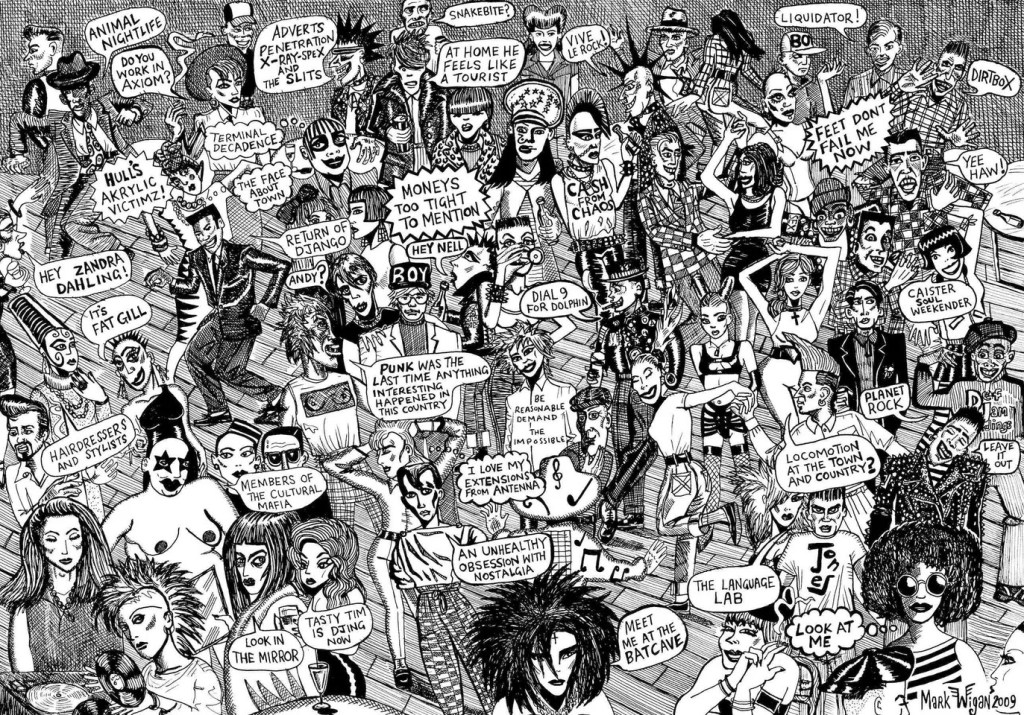
Wigan’s artwork is a true reflection of his unique and eclectic experiences. Heavily influenced by underground movements, Wigan took inspiration from distinct but allied cultures such as pop art, punk, graffiti art, skate culture and the evolving hip hop scene.

New York was the centre and often the birthplace of many of these sub cultures and it is not surprising that in 1986 Wigan visited the city and met with Andy Warhol and contemporary artists Jean Michel Basquiat and Keith Haring. Haring’s work in particular, whilst distinct from Wigan’s, shares the same boldness, vivid colours and stylised figures of the latter’s work.
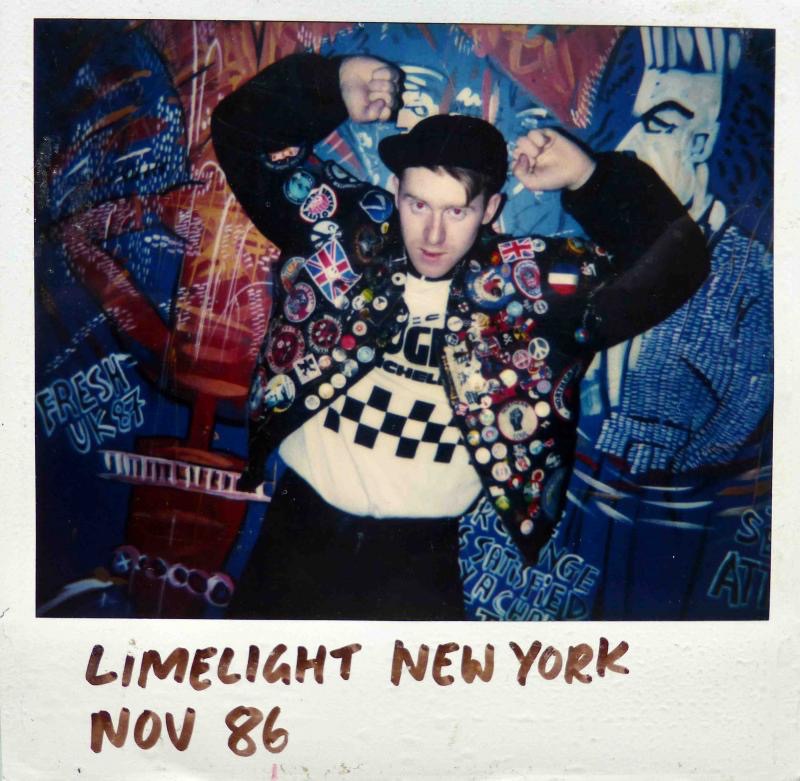
Andy Warhol asked Wigan to paint the murals on the wall of the Limelight club in New York in 1986

Wigan is as much known for his flyers and promotional materials for clubs and music events, album artwork and streetwear designs for fashion brands as for his commissioned art and paintings in exhibitions in galleries across the world.

Wigan designed artwork for Manchester techno musician ‘a guy called Gerald’

Commenting on which are the most notable examples of his work is quite hard as his artistic output is so extensive. However, a particular favourite of ours were the murals he was commissioned to create on the wall and ceiling of the Scala cinema in King’s Cross, London. As visitors to the cinema during its heydays in the 1980’s, Wigan’s painted figures on the walls and ceiling often looked like members of the cinema’s underground audience whilst film titles scrawled across the walls announced the films they loved (‘Repo Man’ springs to mind). ‘Urbanites go to the movies’ as Wigan commented on one of the walls. The Scala was the perfect place for Wigan’s work, the cinema being truly one-of-a-kind. Wildly ‘alternative’, and deeply eclectic in its programming, it’s impact on London’s art scene and beyond is still felt to this day.
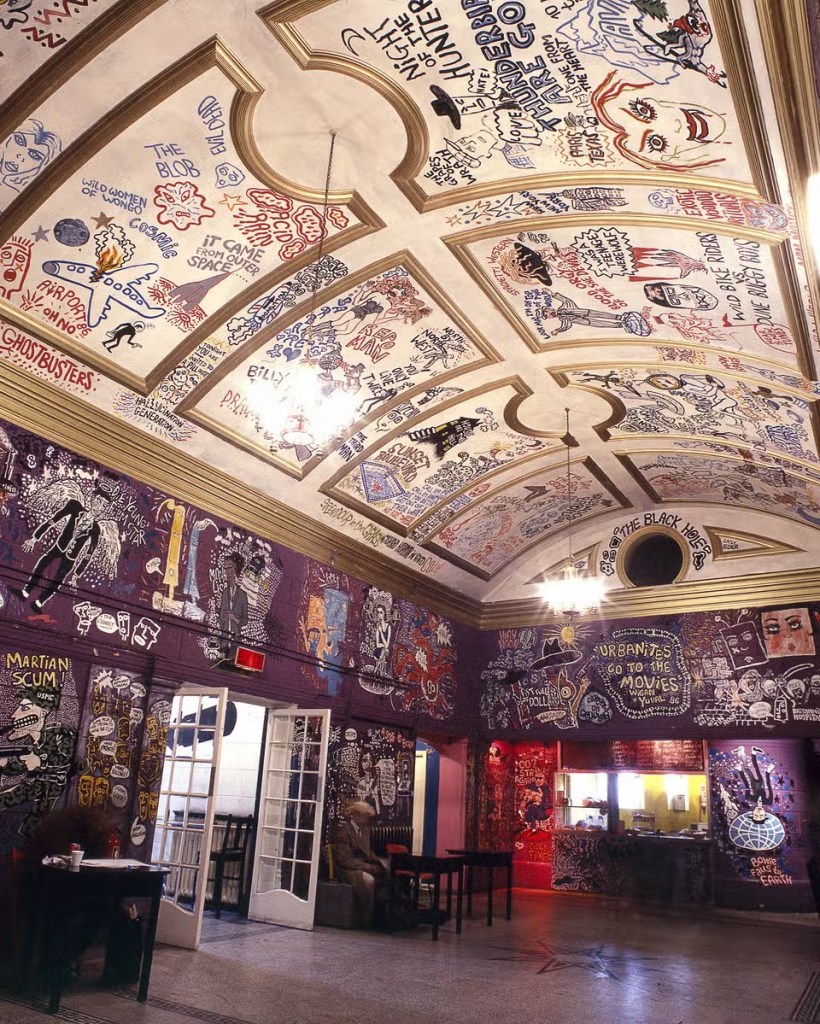
Wigan designed Scala cinema murals

Now back in North West England, Wigan has gained a significant following on social media and has held several pop-up art shows in Chester including at the ōh Design Foundation in their gallery in the heart of the city.
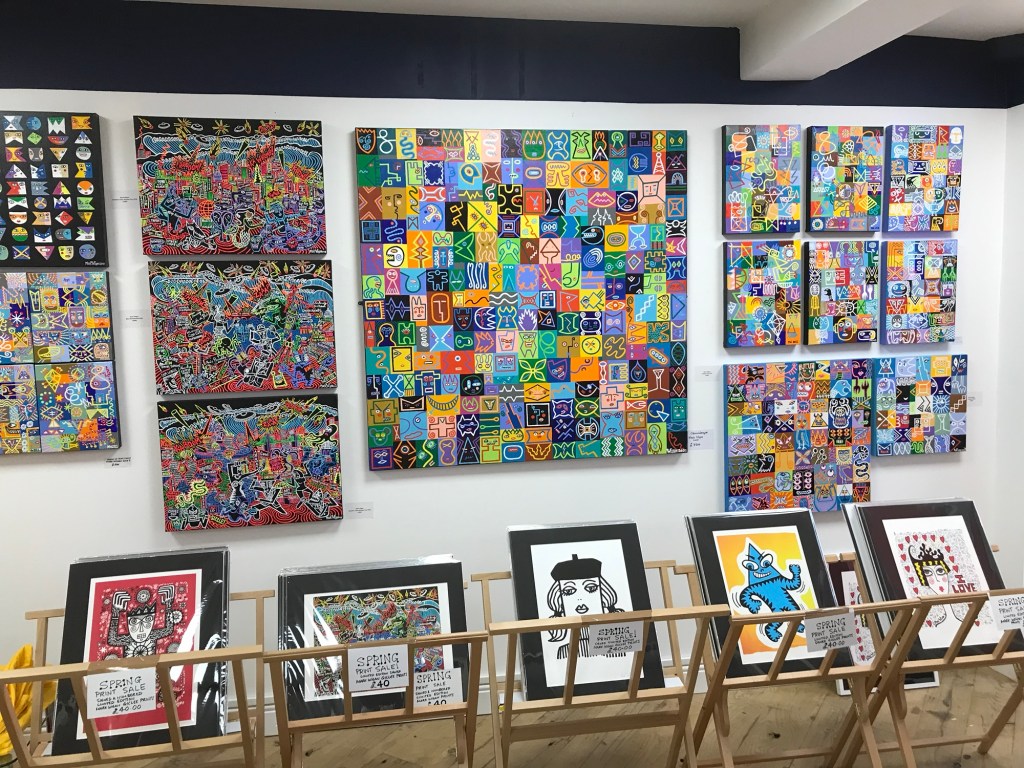
Wigan’s art on display in the gallery

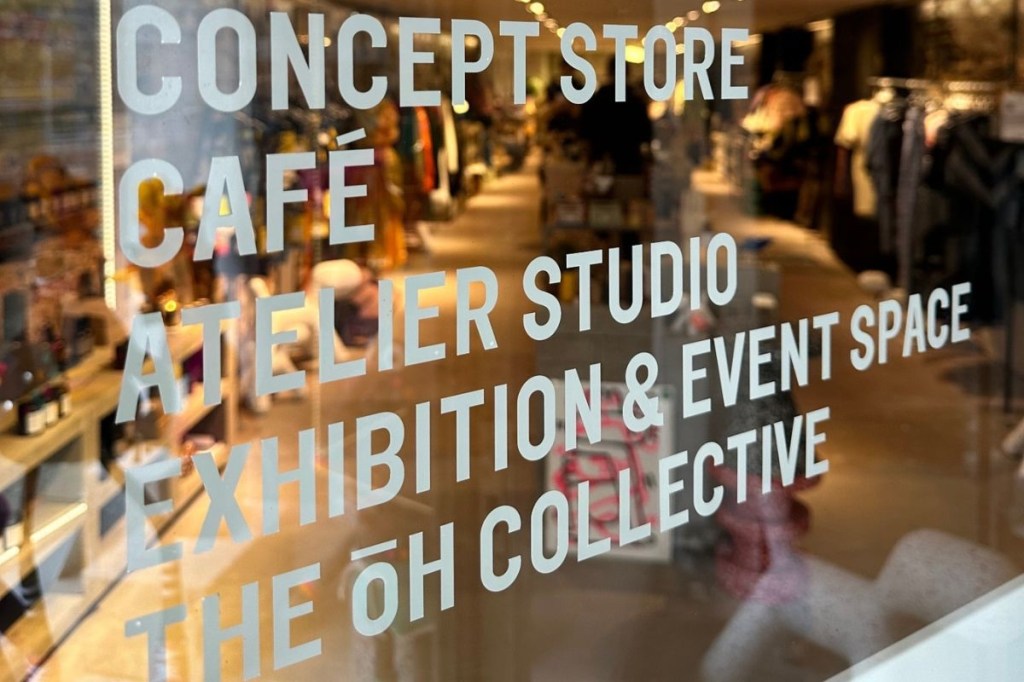
The ōH Design Foundation is a social enterprise based in Chester. The Foundation is all about supporting the creative industries in the city and acting as a hub and ‘pop up’ store for local creative work and as a launching pad for artists, designers, and entrepreneurs to showcase their creations. By providing a forum for local designers, the Foundation should help to stem the movement of local artistic talent away from the city to more established creative hubs such as Liverpool, Manchester and London. The city is certainly a more affordable space than the latter.
The ōH Design Foundation’s initiative to support local talent is mirrored in the city’s new Market Hall which opened in November 2023. Although there has been a central market in Chester for some 800 years, the old market was somewhat jaded and in a serious need of revamping. The new Market Hall is located in the heart of Chester, at Exchange Square off Northgate Street. It is a vital part of the Northgate development, a major regeneration project that is transforming the heart of the city. It is a multi-million pound scheme that includes the new Market Hall (with its emphasis on a cinema, restaurants, and shops).
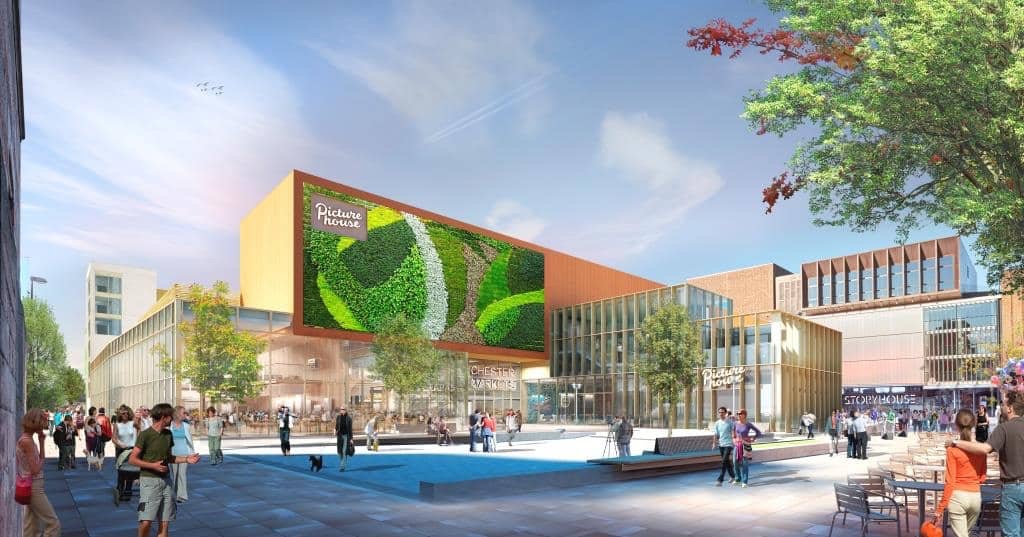
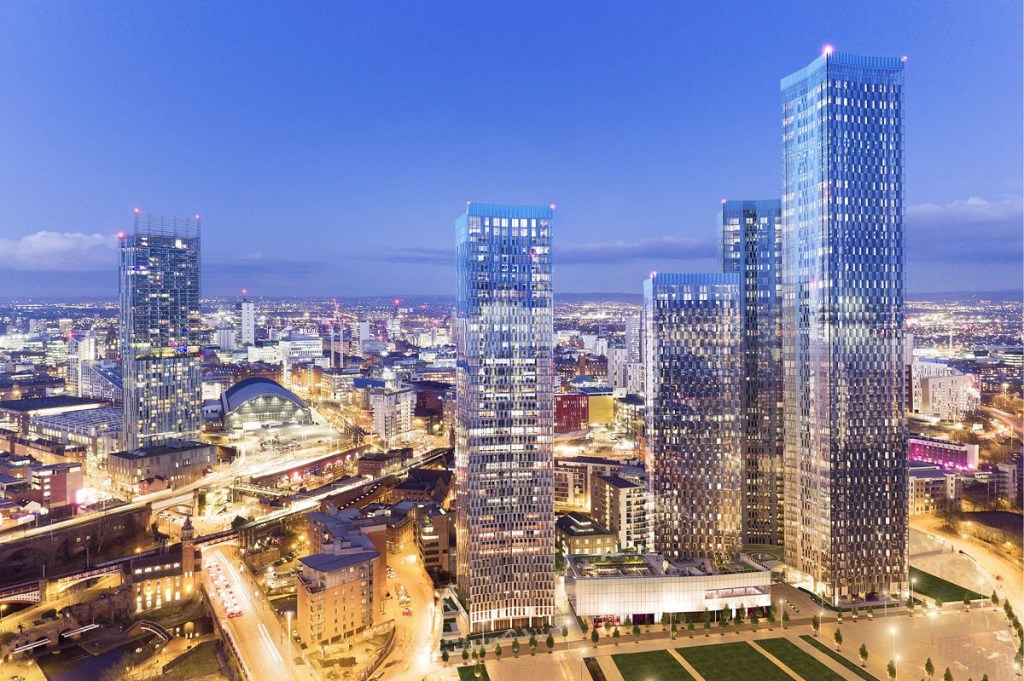
Exchange Square development envisioned

The ōH Design Foundation’s initiative to support local talent is mirrored in the city’s new Market Hall which opened in November 2023. Although there has been a central market in Chester for some 800 years, the old market was somewhat jaded and in a serious need of revamping. The new Market Hall is located in the heart of Chester, at Exchange Square off Northgate Street. It is a vital part of the Northgate development, a major regeneration project that is transforming the heart of the city. It is a multi-million pound scheme that includes the new Market Hall (with its emphasis on a cinema, restaurants, and shops). The heart of the new Market Hall is it’s food court, a central area of casual seating and food stalls serving an eclectic variety of different foods in an informal, sociable setting. Great food!
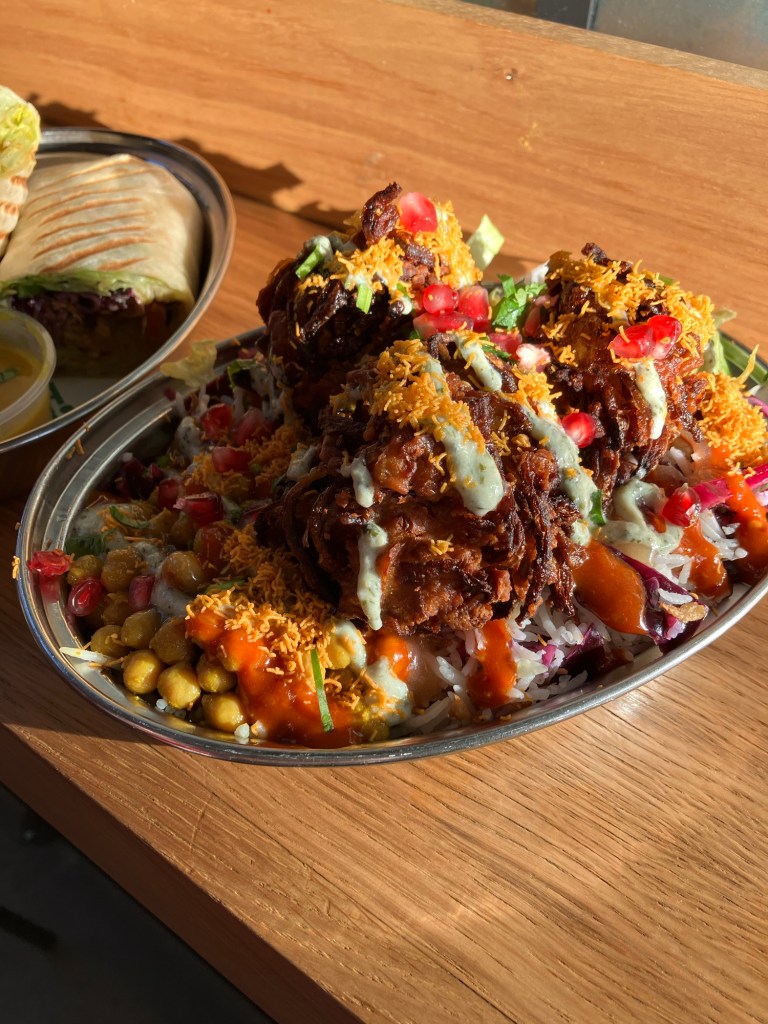
Great food at the new Market Hall!

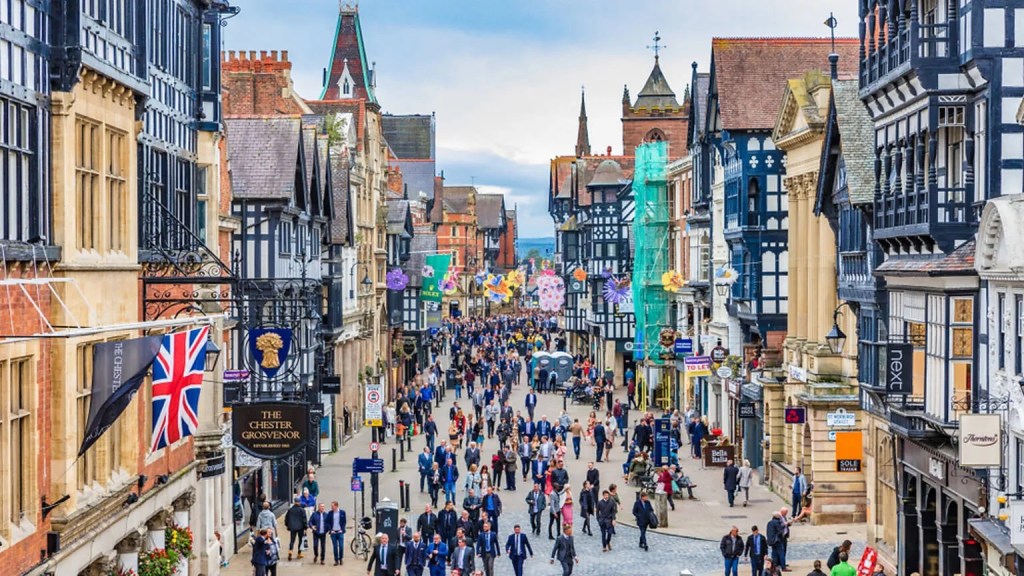
Chester, is an ancient city whose origins date back to the Roman era. The city grew in size and stature over the century’s as it flourished as a trading center and a port, and by the time of the Industrial Revolution (which started in nearby Manchester, the world’s first modern city), the city’s economy shifted towards industry and manufacturing, and the city’s population grew rapidly. As with most of the North of England, whilst mass industrialisation and the startling economic growth it brought is at an end, the city has continued to evolve, becoming an ever more popular tourist destination and a vibrant cultural center.
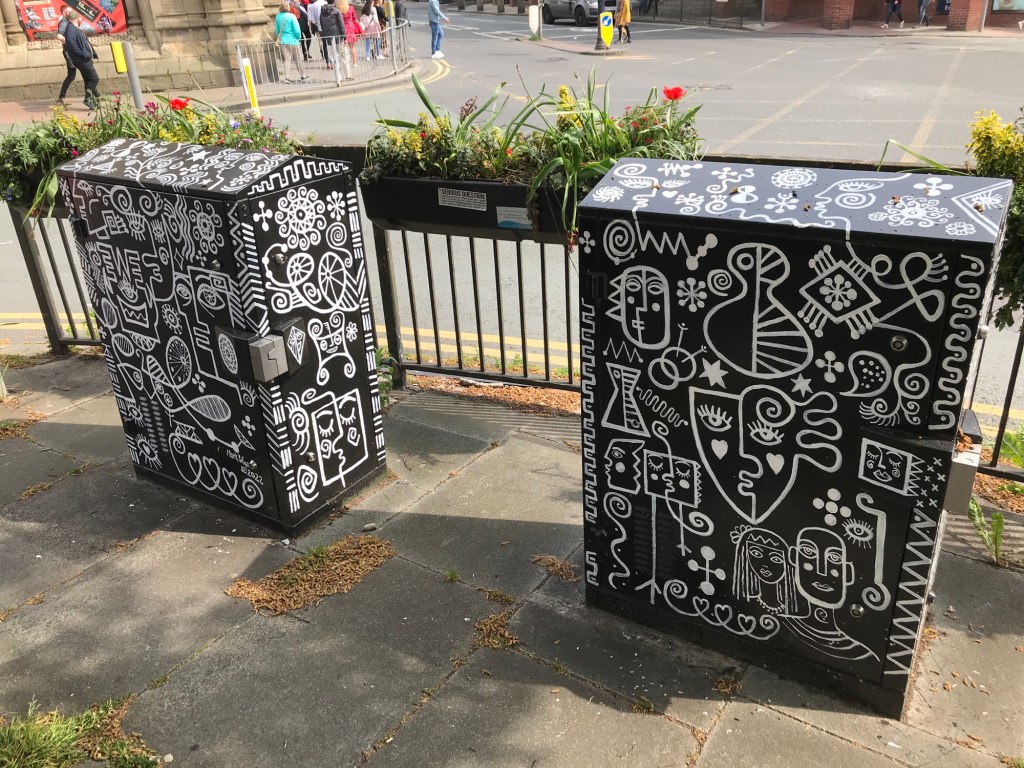
Mark Wigan adapted telephone boxes in the city centre

Liverpool. Art and Mowgli

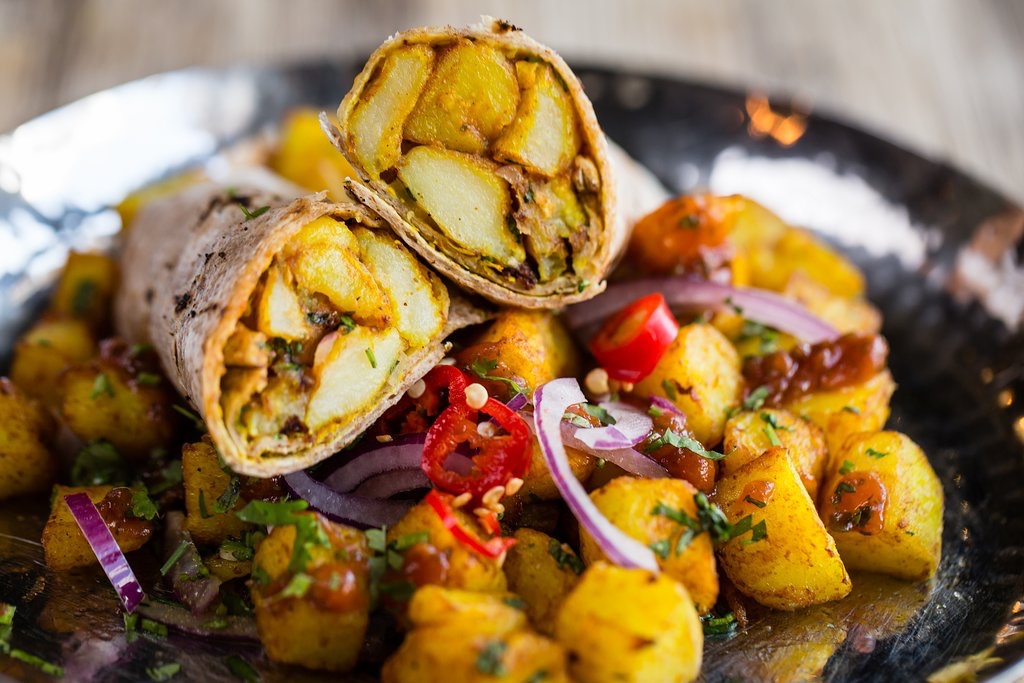
Chip butty at Mowgli

The city of Liverpool lies at the mouth of the Mersey river as it empties into Liverpool Bay, the Irish Sea and the Atlantic.

Liverpool was once known as the ‘second city of the British Empire’ because of it’s massive port, huge merchant fleet and the sheer volume of international trade that flowed in and out of the Mersey.

The names of docks in the city, of which there were 43, often had monarchal themes or the names of historical figures and events such as Victoria, Albert, Nelson, Waterloo and Trafalgar. These names resonate with a sense of privilege and entitlement, of glories past and of times lost which ultimately lie somewhat at odds with the city’s independent streak and its cosmopolitan and inclusive nature. Despite setbacks, the city has a clear sense of itself despite the contempt and neglect of successive establishment governments in London. ‘Managed decline’ was Goverment policy for the city in the 1980’s.

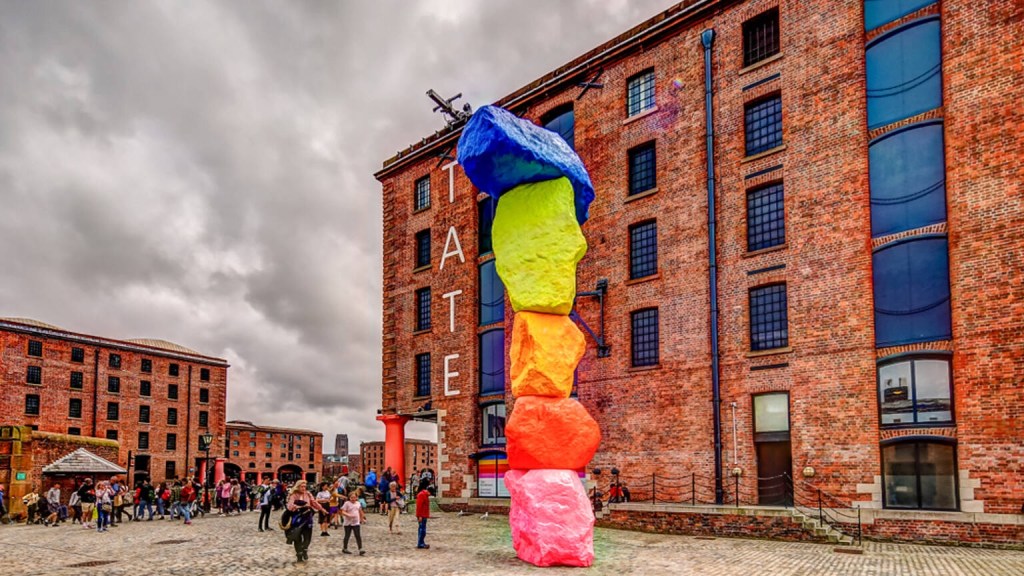
Tate Museum at the Albert Dock, Liverpool

The Tate Gallery Liverpool in the city’s restored Albert Dock was opened in 1988 by the Prince of Wales (now King Charles III) as the northern outpost of the Tate Gallery in London. Funding for the Tate Gallery came from the industrialist Henry Tate in 1889. Tate had made a considerable fortune from the refining of sugar in Liverpool derived from cane grown in the Caribbean. Slavery had been abolished by the time Tate came into sugar refining but the product was made using raw cane originally from former space plantations. After abolition of the slave trade in the UK in 1807, indentured (bonded) labourers from India and China cut the cane along with the descendants of slaves. Although Tate was neither a slave-owner or slave-trader, the business of sugar refining cannot be separated from the history of plantation slavery and the bonded labour which followed it’s abolition

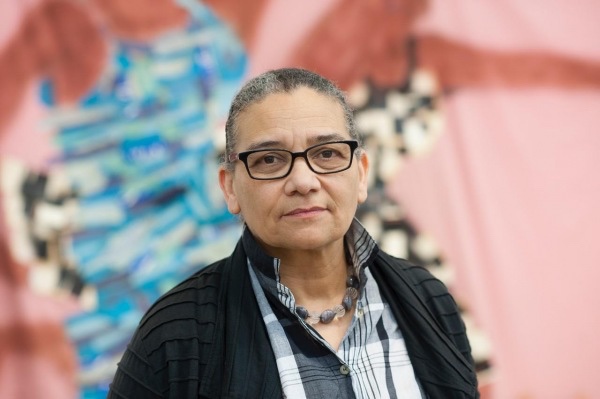
Lubaina Himid

The artist Lubaina Himid (https://www.royalacademy.org.uk/art-artists/name/lubaina-himid-ra-elect), although based further to the north of the City in Preston (she is a professor of Contemporary Art at the University of Lancashire), is nevertheless closely linked with Liverpool. Himid, born in Zanzibar which was then a colony of the United Kingdom where she was brought up. She left at an early age and was brought up in the UK where she ultimately graduated from the prestigious Royal College of Art.

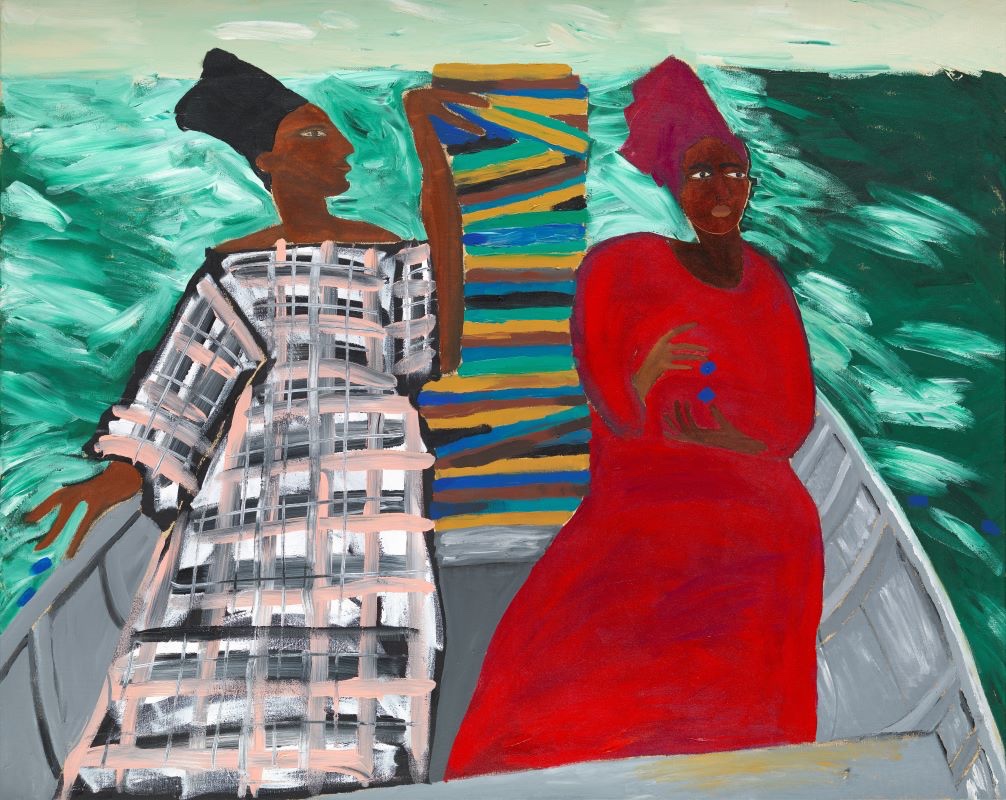
Between the Two my Heart is Balanced

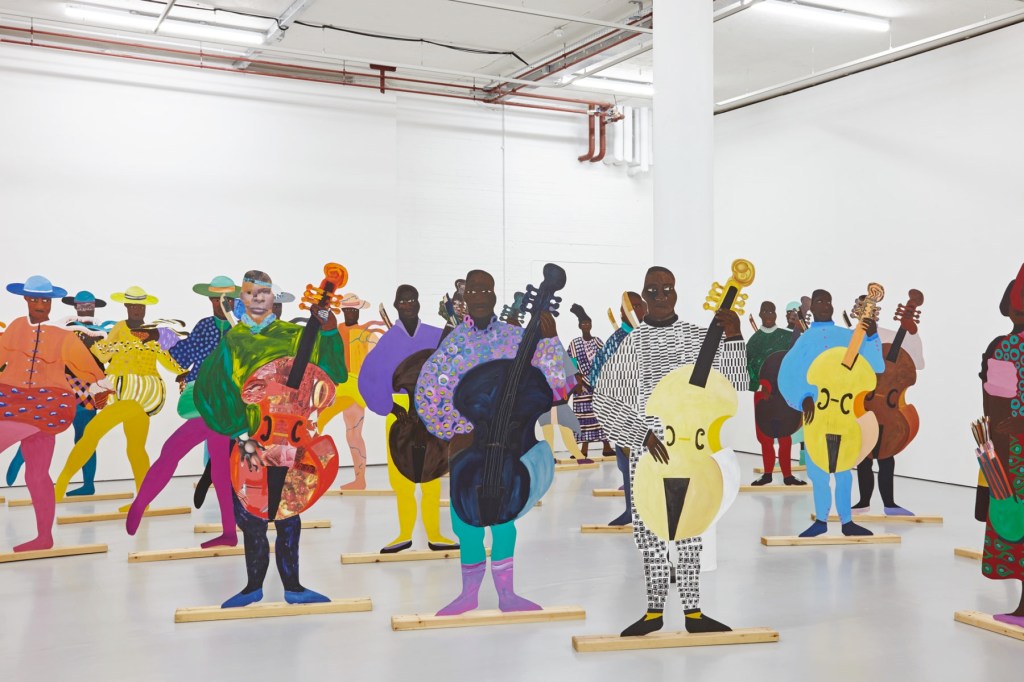
A widely admired and established artist she has exhibited widely in Liverpool, (she is currently exhibiting at the city’s Biennial – ‘Between the Two my Heart is Balanced’) most notably at the International Museum of Slavery in 2017 when she gifted the museum an installation of 20 figures entitled ‘Naming the Money’. According to the Museum the installation ‘addresses how Europe’s wealthy classes spent their money and flaunted their power in the 18th and 19th centuries, by using enslaved African men and women. The highly individual sculptural figures, each with their own profession and life story, demonstrate how enslavement was disguised and glamorised’.

Naming the Money

Reviewing Naming the Money art critic Luisa Buck noted: “Himid’s work has long been concerned with black creativity, history and identity and this animated throng represents the Africans who were brought to Europe as slave servants. There are drummers, dog trainers, dancers, potters, cobblers, gardeners and players of the viola da gamba, all decked out in vivid versions of 17th century costume. Labels on their backs identify each individual, giving both their original African names and occupations as well those imposed by their new European owners, and these poignant texts also form part of an evocative soundtrack, interspersed with snatches of Cuban, Irish, Jewish and African music.”

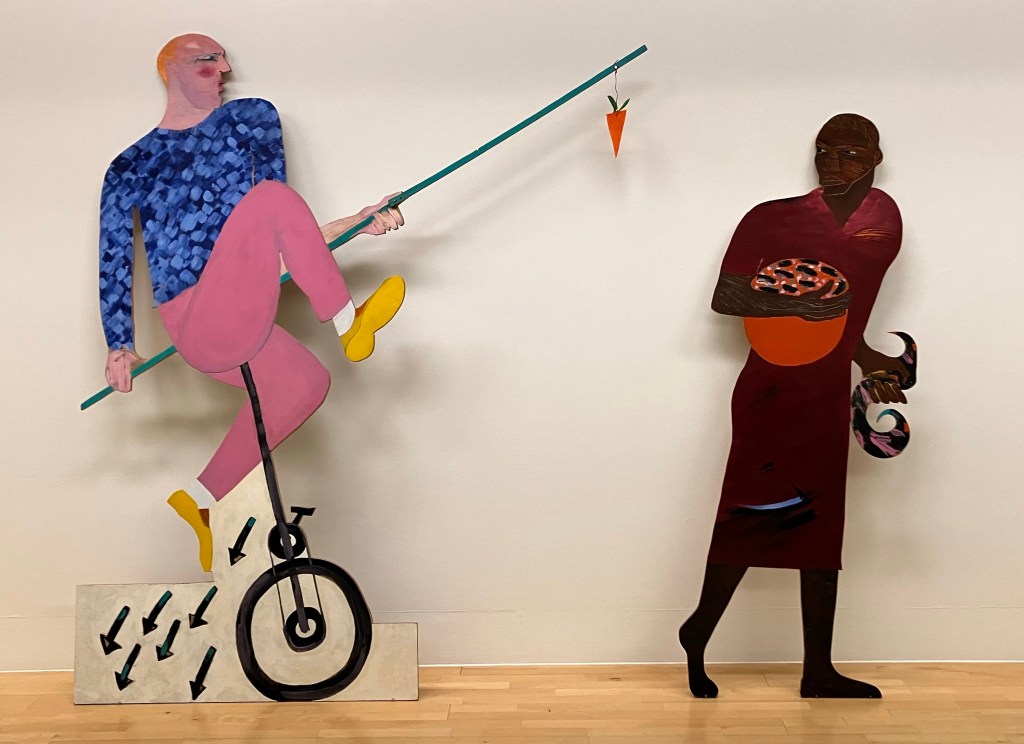
Himid has also exhibited at the Tate Gallery Liverpool where her installation ‘The Carrot Piece’ from 1985 is on permanent display.

The Carrot Piece

As one can see, the white male figure is pursuing the black female figure and is trying to tempt her with a carrot on a stick, the latter device being a metaphor for the use of a combination of reward and punishment to induce a desired behaviour. Capture and surrender. The piece is political and Himid commented that the work was made at a time art galleries ‘needed to be seen’ to be including black people into their exhibitions but did so in a patronising and controlling manner. She commented ‘we as black women understood how we were being patronised … to be cajoled and distracted by silly games and pointless offers. We understood, but we knew what sustained us… and what we really needed to make a positive cultural contribution: self-belief, inherited wisdom, education and love.’

Himid was appointed an MBE (a ‘Member of the British Empire’) by the late Queen Elizabeth II in 2010 ‘for services to black women’s art’. In 2017 she won the prestigious Turner Prize winner, the first black woman to do so. She was promoted to a CBE (‘Commander of the British Empire) in 2018 for services to art.

Maryam Wahid

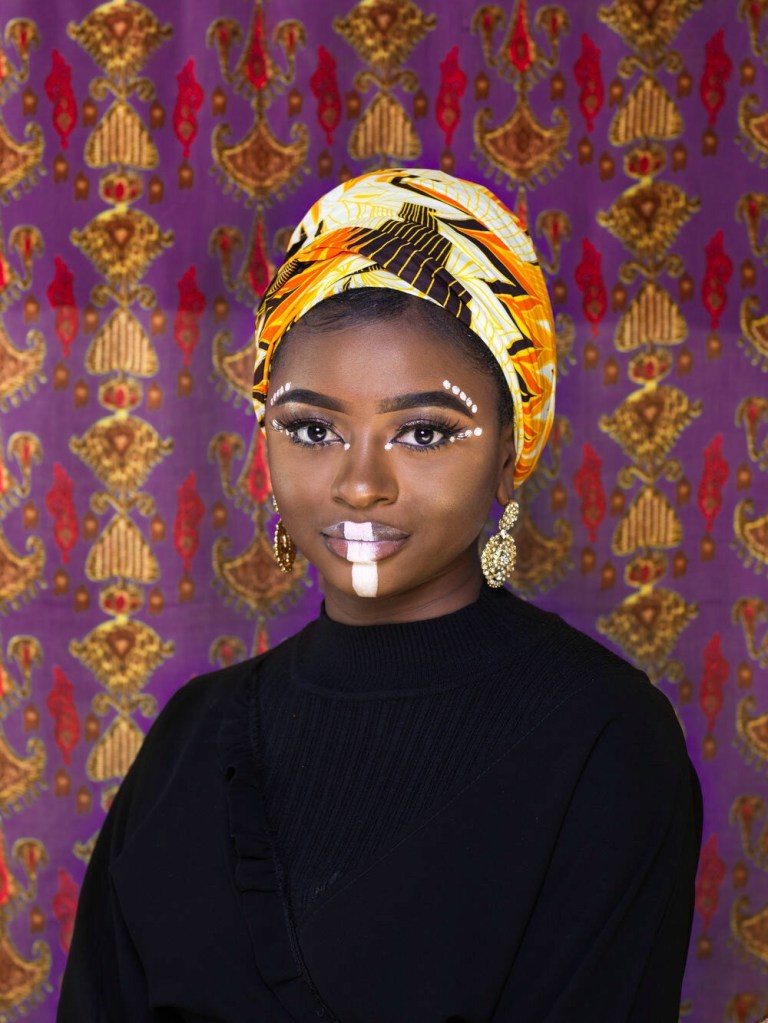
As well as being Lubaina Himid’s home, Preston is currently the venue for the UK’s biggest outdoor photography festival with the works of several international photographers displayed in parks and on walls across the city. Included in the exhibition is a series of photographs by Birmingham based artist Maryam Wahid (https://www.maryamwahid.com) being stunning images from her project ‘The Hijab’, photographic portraits of women in Britain wearing and adopting the garment to their own style.

The Hijab by Maryam Wahid

The hijab is a covering for the hair and neck, often a head scarf worn by some Moslem woman as a mark of modesty. It is a most misunderstood garment which some countries in the West, such as France, Sweden and Austria have placed restrictions on.

The Hijab by Maryam Wahid

Whilst modest attire by both men and women is a matter of Islamic law, the wearing of the hijab is not a required convention, it is not one of the *Five Pillars of the Faith. Whether or not a woman wears a hijab is more likely a matter of personal choice, at least in the West, despite the misplaced efforts of some governments to restrict and demonise it’s use in day to day dress.

*The Five Pillars are the core beliefs and practices of Islam:

• Profession of Faith (shahada). The belief that “There is no god but God, and Muhammad is the Messenger of God” is central to Islam. …

• Prayer (salat). …

• Alms (zakat). …

• Fasting (sawm). …

• Pilgrimage (hajj)

Wahid’s photographic project explores the different and highly individual ways the hijab is worn by Muslim women in the UK in a startling series of portraits, two of which are reproduced above.

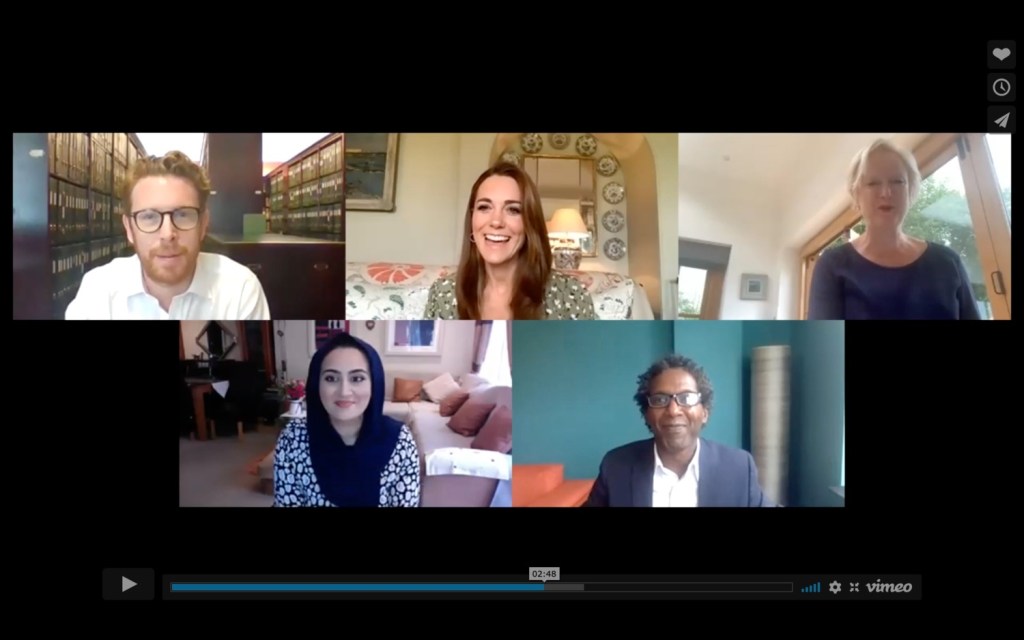
Maryam Wahid with HRH

In 2020 Wahid was invited by Her Royal Highness The Duchess of Cambridge to judge the photography competition Hold Still 2020 for the National Portrait Gallery in London.

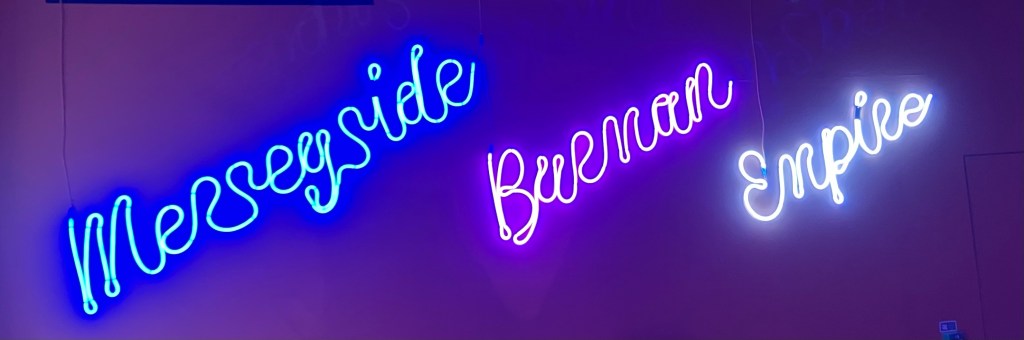
Merseyside Burman Empire

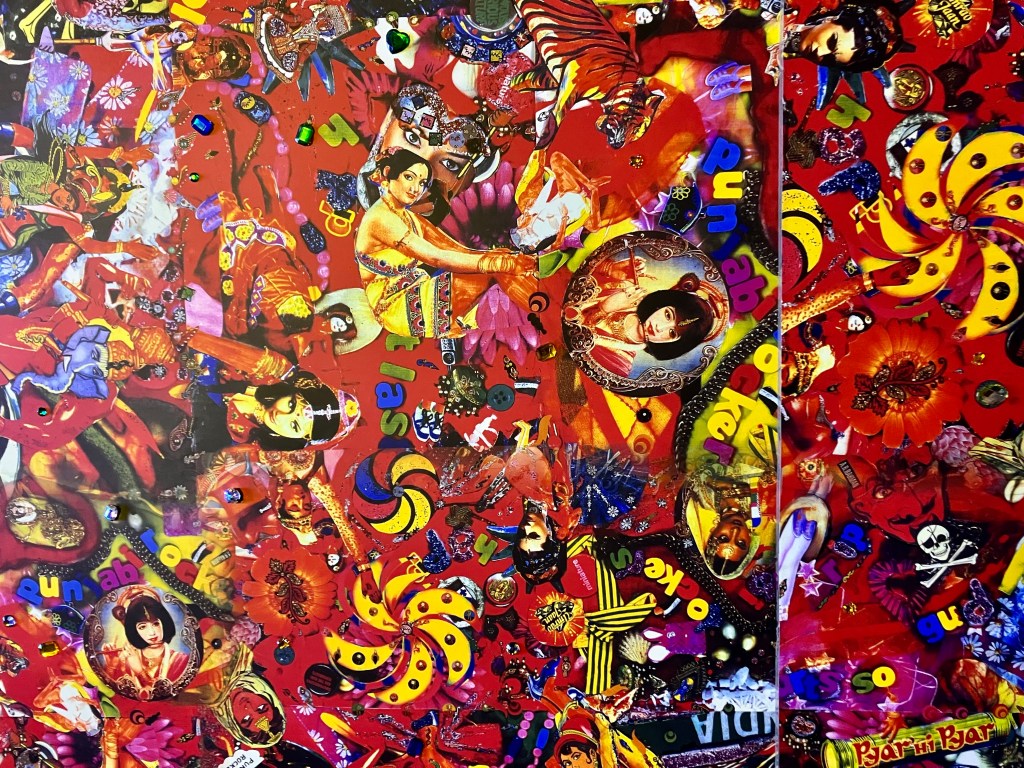
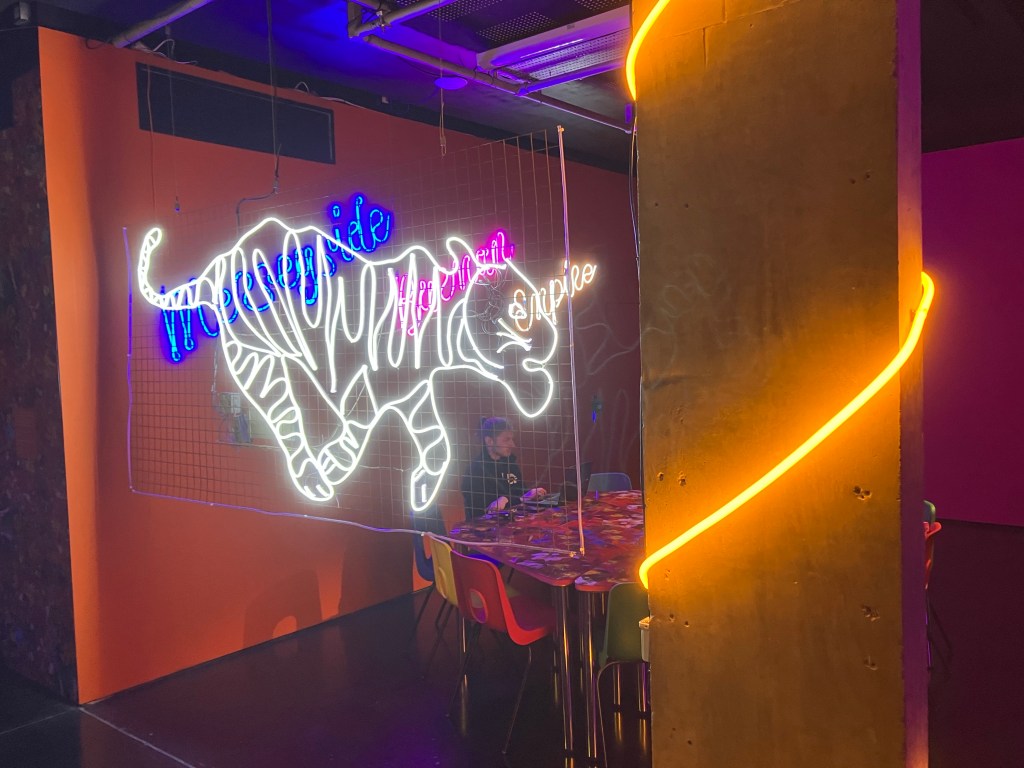
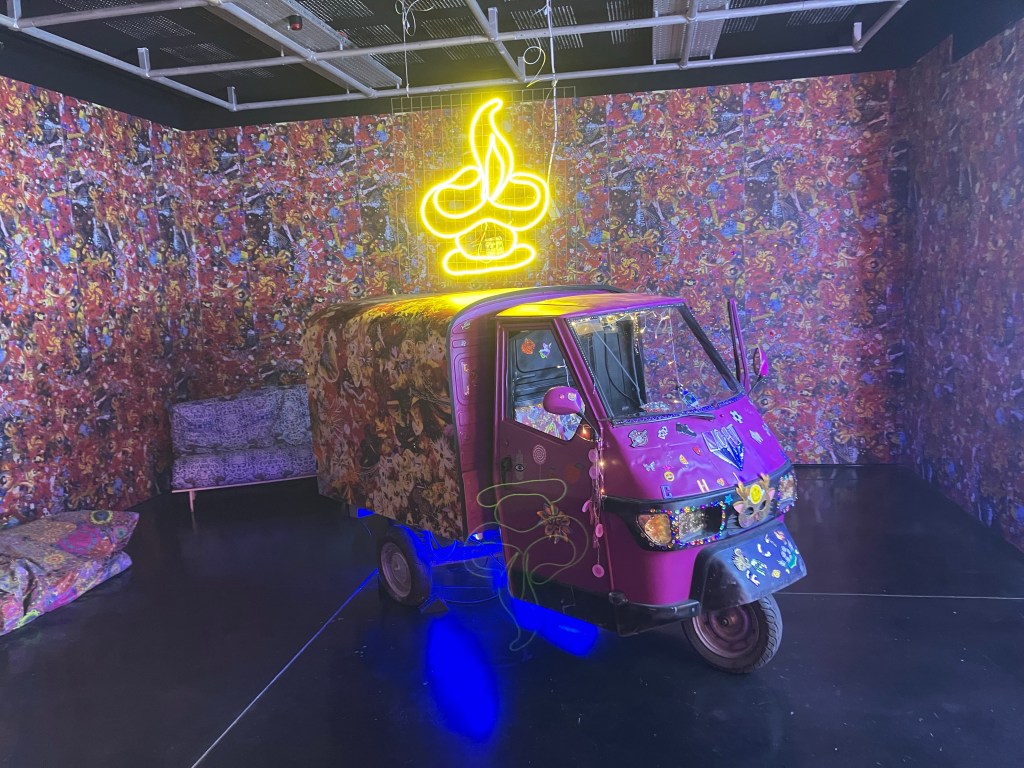
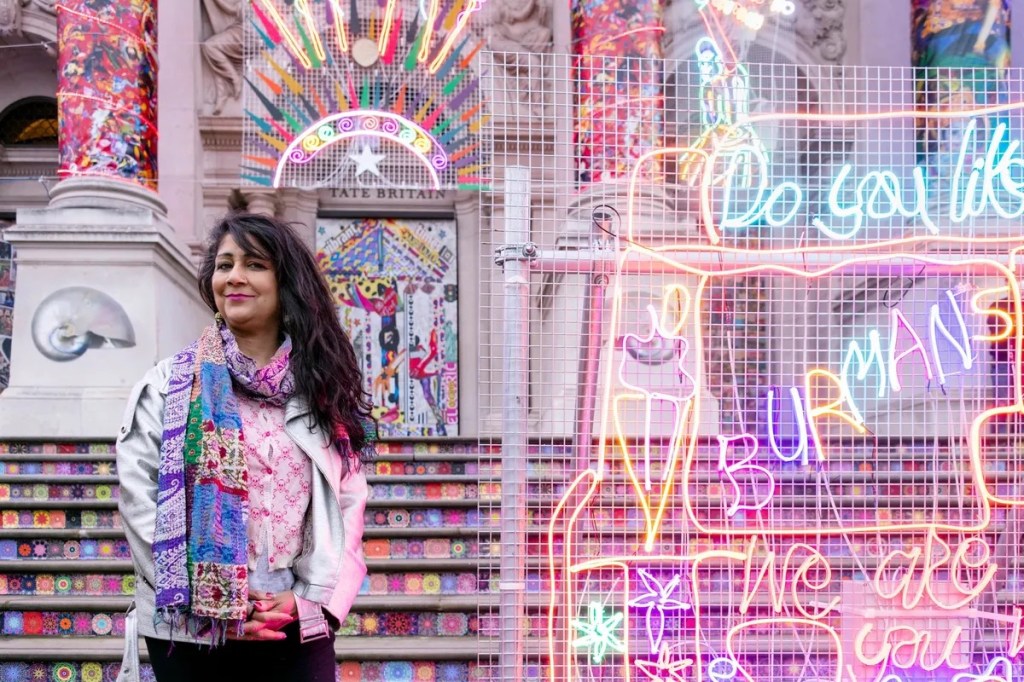
Back to Liverpool and FACT (https://www.fact.co.uk), a multi media arts venue near the city centre. FACT is currently exhibiting exciting new work by Chila Kumari Singh Burman (http://www.chila-kumari-burman.co.uk) entitled ‘Merseyside Burman Empire’. The ‘Empire’ is an imaginary living room covered in wallpaper decorated with stylised images of Indian women, Hindu deities, plastic jewellery. The installation also features several neon designs including a giant tiger. The centrepiece of the space is an ultra colourful tuk tuk.

Wallpaper design
Neon Tiger
Tuk Tuk

Burman is very much a local artist as she was born in the docker’s suburb of Bootle to Punjabi- Hindu parents. She combines images from Indian and Western pop cultures and was recently appointed an MBE for her services to visual arts.

Chila Kumari Burman

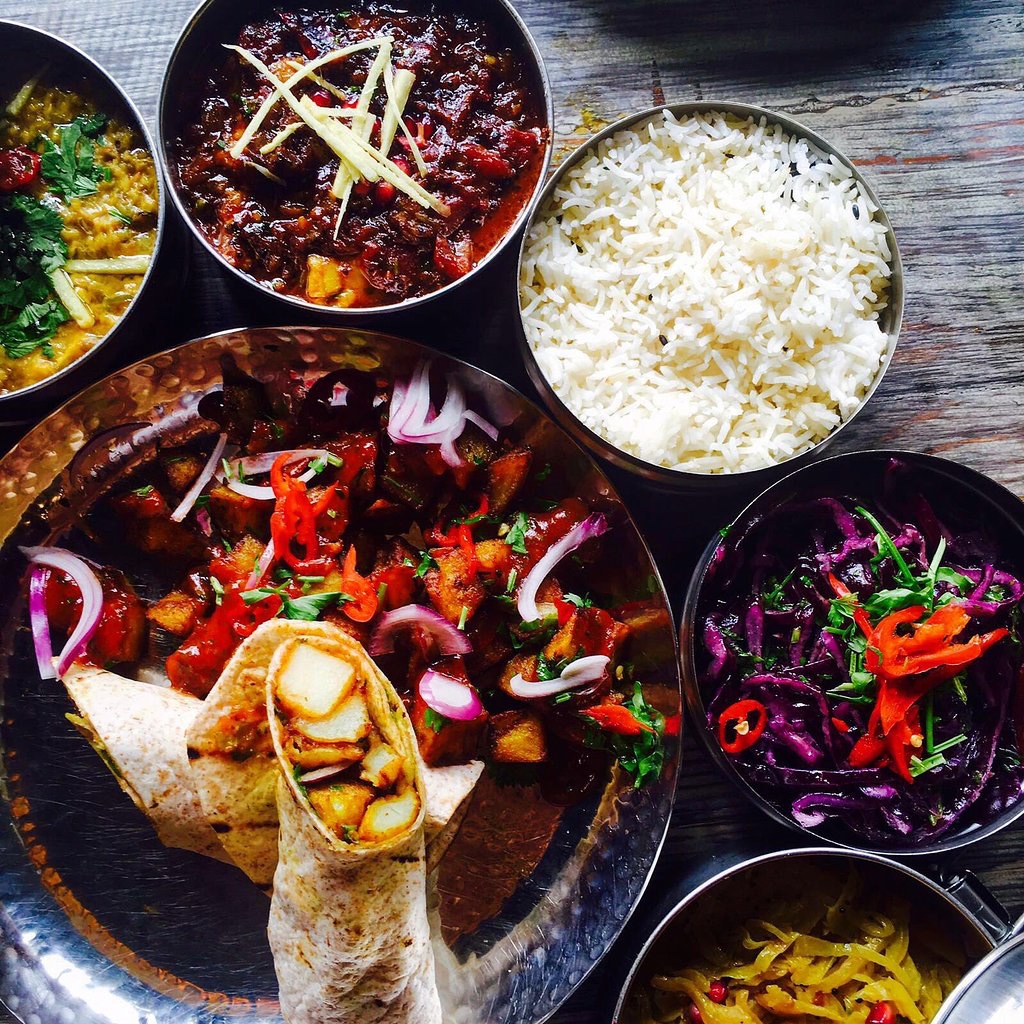
Another woman with SE Asian forbears who is making a definable mark on the culture of the UK is Nisha Katona, A former Law graduate of Liverpool John Moores University, a Barrister for 20 years, a restauranteur, food writer, TV presenter and entrepreneur, Katona is a virtually unstoppable force in the re popularisation of Indian food in the UK. Traditionally, whilst the food served in British Indian restaurants was (and still is) massively popular, the food would often bear little relation to the food cooked in Indian homes – or from street vendors who will often specialise in creating one perfect dish. As anyone who has visited India will tell you,the best food in the country is served at home or on the street and Katona was determined to revolutionise the Indian food scene in the UK with ‘tiffins full of intense bright flavours’.

Nisha Katona

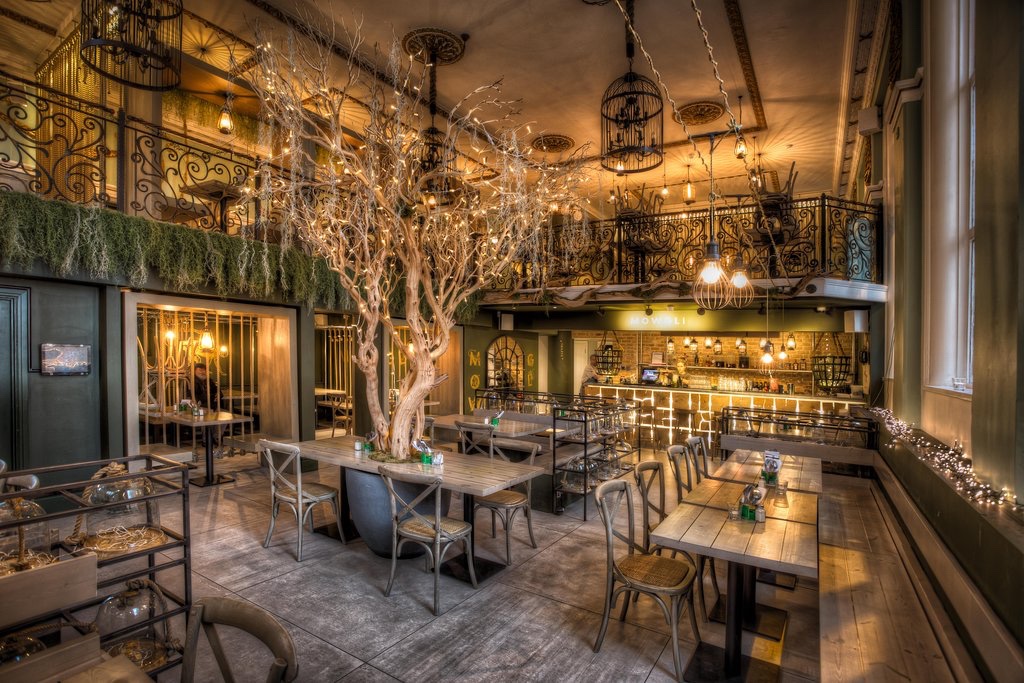
Originally from the town of Ormskirk just outside Liverpool, Katona opened her first restaurant in the city in 2014 under the now much loved brand name, ‘Mowgli’ with its distinctive logo of an Indian monkey. The food at a Mowgli restaurant is always fresh, nicely spiced and beautifully presented making the restaurant a firm favourite with couples and families. Each venue is individually designed by Katona herself and is subtlety different in appearance from other Mowgli restaurants. New branches are opening slowly and carefully throughout the UK. Nevertheless, it is Liverpool that is closest to Katona’s heart. She has been quoted as saying that she owes her success to the city.

Mowgli, Liverpool

Everyone loves the food and atmosphere at Mowgli!

‘Intense bright flavours’

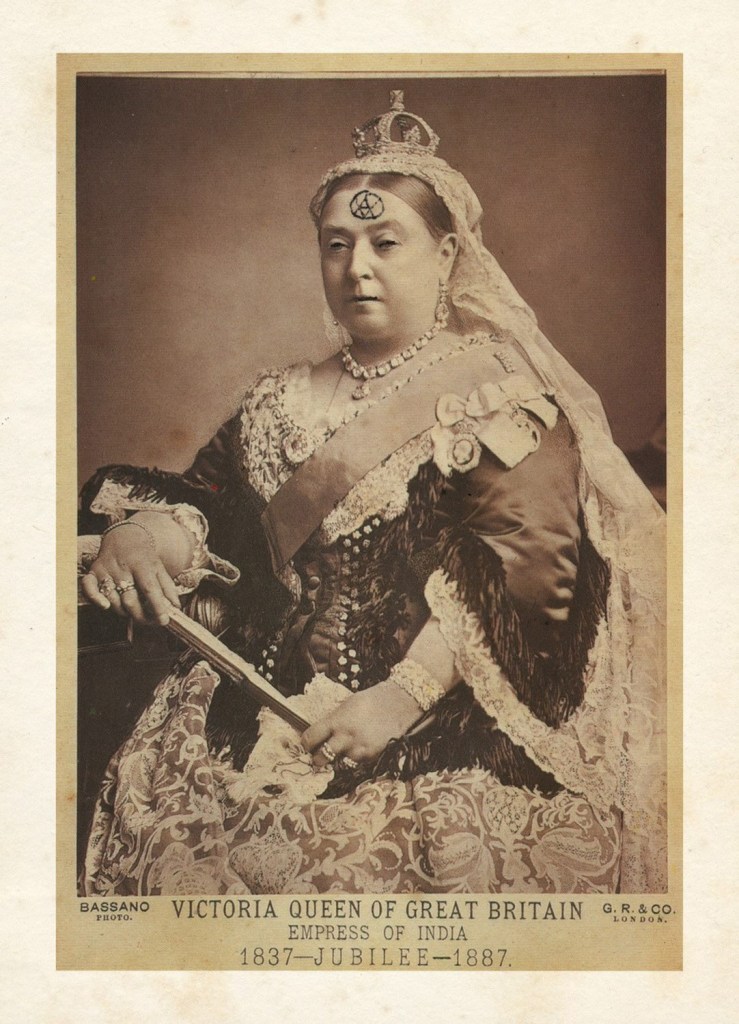
Finally, we are genuinely sorry to hear of the death of Jamie Reid, artist, Situationist and revolutionary thinker in Liverpool this week. Reid is perhaps best known for his work with the Sex Pistols in the 1970’s and for co-opting monarchal images into politically satirical situations.

Dear old Queen Vic as anarchist Empress of India by Jamie Reid

‘Now we rise and we are everywhere’.

Manchester, icons and thali

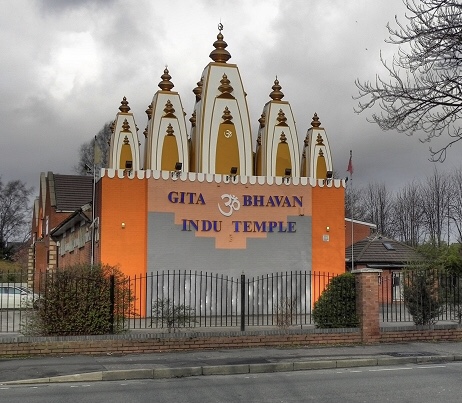
Gita Bhavan Hindu Temple in Chorlton

Chorlton is a suburb of the Northern English city of Manchester. The district has become increasingly identified with left leaning young professional couples and their families. It is also home to one of Manchester’s biggest gay communities. 
Rightly or wrongly, Chorlton is regarded as a bohemian enclave with its independent bars and restaurants, vegan supermarket (the workers co-operative ‘Unicorn’) and unusual boutiques.

The suburb is a great place to eat and drink and whilst we could fill several columns on the local culinary scene, we will be more specific by concentrating solely on some of the Indian food (especially vegetarian) to be found in the locale.

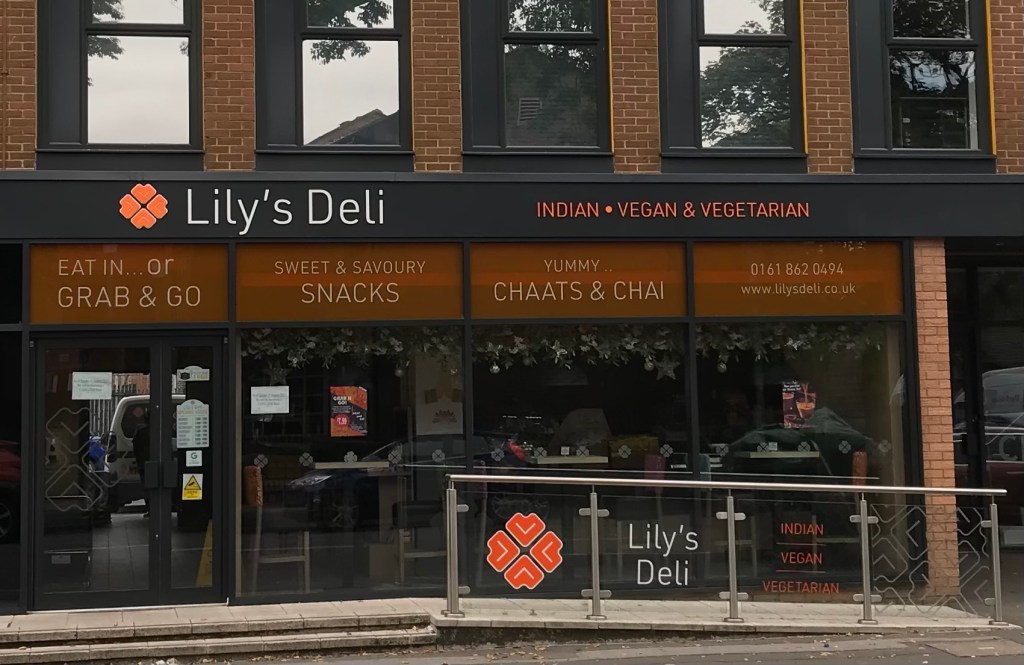
Lily’s in Chorlton

Lily’s deli on Manchester Road in Chorlton is an outlet of the award winning Lily’s Vegetarian Indian restaurant in Ashton-under-Lyne, a town which is just to the east of Manchester. The Chorlton deli is the first of two outlets in the city, the other being in the very trendy inner area of Ancoats.
Lily’s stocks an impressive range of Indian groceries and spices as well and spicy snacks such as dal vada, chakli, bonda, battered chillis and their famous ‘atomic bombs’, potato’s coated in batter injected with a fiery masala. Not for the faint hearted!

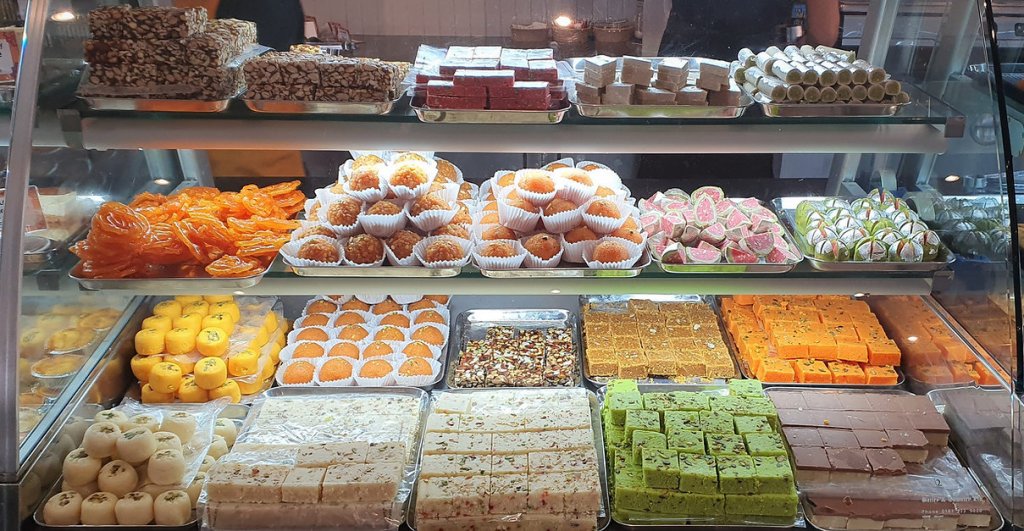
They also make and sell Indian cakes and their barfi flavoured with figs or dates is our favourite.

Barfi and much more at Lily’s

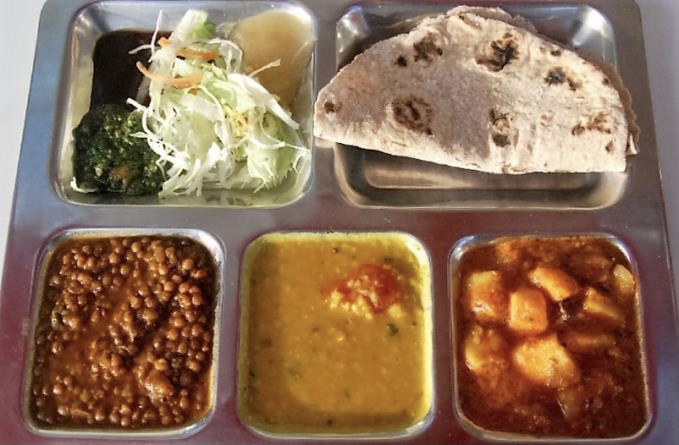
A short walk from Lily’s deli is the Chappati Café which serves great value thalis on Indian trays with the menu changing daily. Recommended.

Thali at Chappati Café

A further short walk from the Chappati Café is the small but beautifully decorated restaurant called Roti. The restaurant has the only Indo/Scots menu in Manchester. As well as Indian street food favourites, Roti also serves its own version of the Scottish staple ‘mince and tatties’ (spiced meat in chole potatoes), haggis pakora and even scotch egg (boiled egg wrapped in pork seasoned with chaat masala). Although the restaurant serves a full selection of alcoholic and non-alcoholic drinks, we were surprised to see that Irn Bru, Scotland’s best loved soda, was missing from the list!

Roti interior

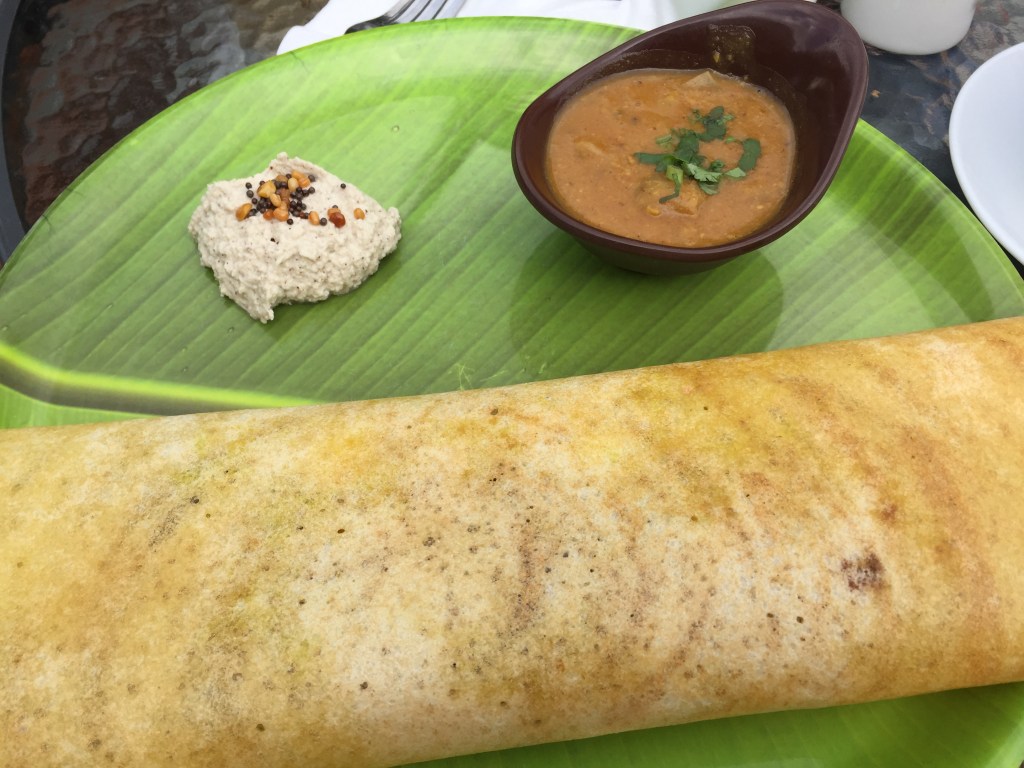
Further away from Roti and opposite the vast Southern Cemetery (of which, more below) is Amma’s Canteen. The restaurant serves fresh, home cooked style Southern Indian dishes including their much loved Dosa, a thin ‘pancake’ made from a batter of fermented rice and lentils stuffed with spicy goodness.

Masala Dosa at Amma’s Canteen

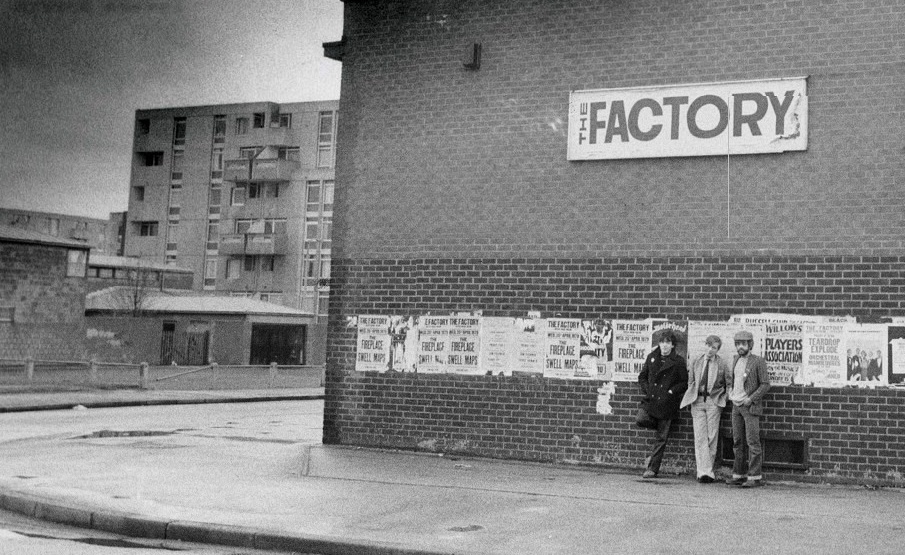
As noted above, the vast Southern Cemetery lies across the way from Amma’s Canteen. It is the second largest cemetery in Europe and the final resting place of important local figures such as the legendary Manchester United manager, Sir Matt Busby and the iconic Tony Wilson, the co-creator of the influential music label Factory Records. Wilson did more than almost anyone in putting the city’s popular culture on the map. Even a decade and a half after his death in 2007, he is still having a positive effect on the city in our opinion. 

Wilson (centre) in a suitably grim Manchester backdrop in the 1970’s

Anyone who is familiar with the recent history of Manchester, the city’s rise from the grim post industrial decay of the 1970s into the modern, vibrant environment it is today, will be aware of the part Wilson played in invigorating the popular culture of the world’s first modern city.

Radical and still changing

Designer Peter Saville who worked closely with Wilson commented ‘Tony created a new understanding of Manchester; the resonance of Factory goes way beyond the music. Young people often dream of going to another place to achieve their goals. Tony provided the catalyst and context for Mancunians to do that without having to go anywhere’.

In a small nation, too often in thrall to its capital, Wilson more than anyone else in his generation, emphasised the fact that great art and culture was not the sole preserve of London but was very much alive elsewhere in the country and in the North in particular.

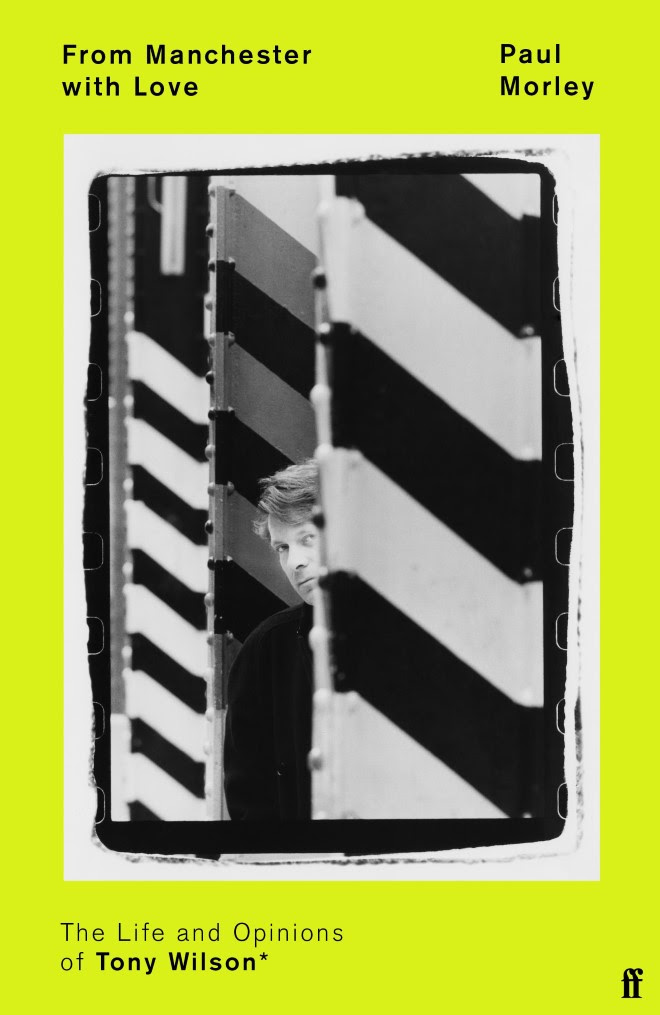
Writer Paul Morley, himself born in the city, analysed Wilson’s life and legacy in incredible detail in his book ‘From Manchester with love’.

Lengthy but illuminating

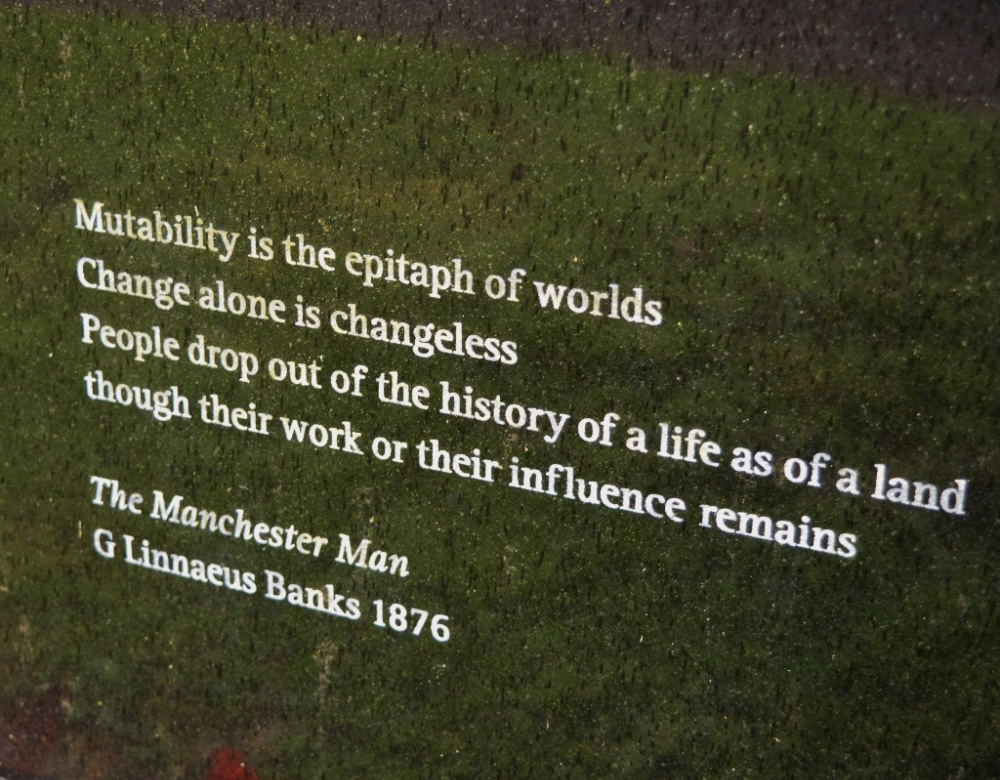
Saville designed Wilson’s black granite headstone with architect Ben Kelly . The headstone sits in repose amongst the crosses and columns of its neighbours in the Southern Cemetery.

Inscription on Wilson’s headstone

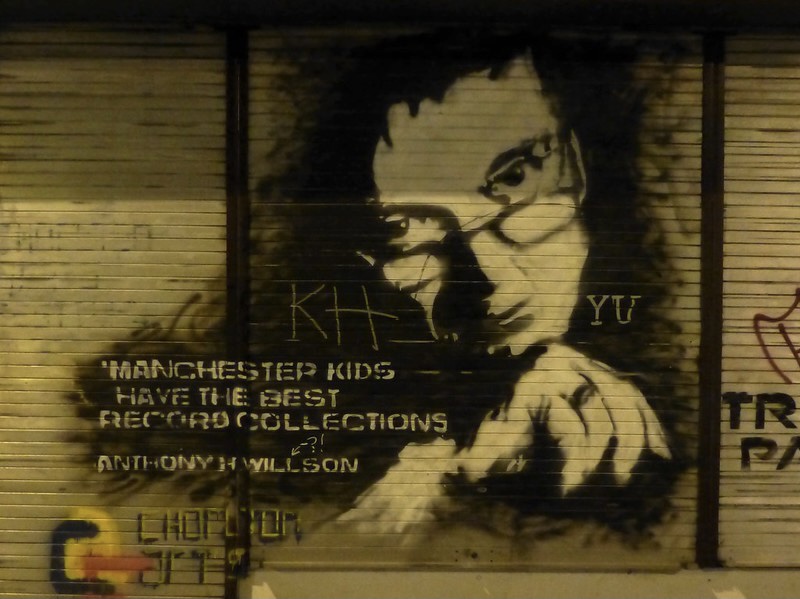
Several examples of graffiti art featuring Tony Wilson have cropped up in the city including the following in Chorlton with its quote from the man himself (although sadly, ‘Wilson’ was incorrectly spelt in this instance).

So it goes

Across the road from the Wilson mural is a stencil of the iconic Quentin Crisp by celebrated artist Stewy (www.stewy.uk).

The openly gay Quentin Crisp was a writer, humorist and actor who was famously played by the late actor John Hurt in the 1975 autobiography which was broadcast on national TV in the UK to great acclaim under the title ‘The Naked Civil Servant’. 

Crisp has only a somewhat tenuous link with Chorlton, the suburb being the place where he died in 1999 after staying with a friend there. He was cremated at the Southern Cemetery.

The Naked Civil Servant himself

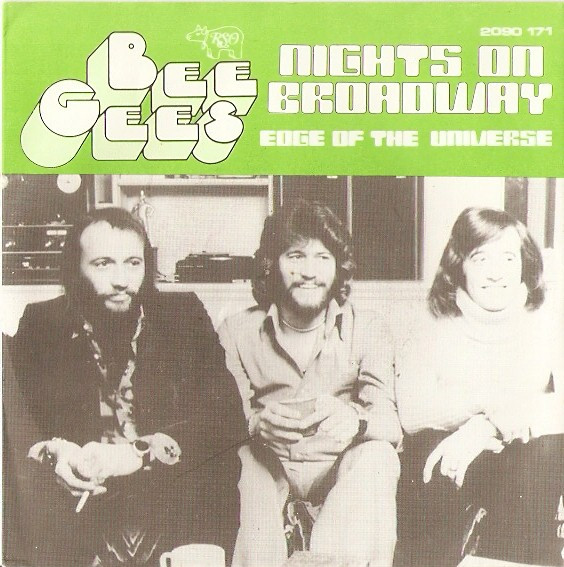
Stewy’s stencil of Quentin Crisp is on the corner of Keppel Road in Chorlton. Keppel Road was where the Gibb brothers (better known as the Bee Gees) once lived and where they first practiced their harmonies together.

The brothers would, of course, go on to immense success globally. They were especially popular in the US and their mainstream take on disco music sold by the millions.

The brothers Gibb

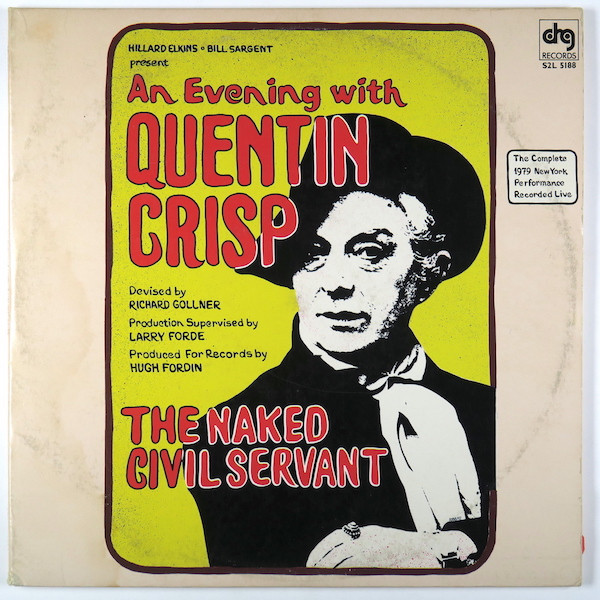
Crisp was also a success in the US and in New York in particular. The city was where his Broadway show ‘An evening with Quentin Crisp’ was staged to great acclaim.

Soundtrack to the show.

Stewy also created a stencil artwork of Tony Wilson in the city as well as one of the ‘Bard of Salford’ (Salford being the city across the river from Manchester) John Copper Clarke, to whom Wilson gave his first break on TV. 

The bard himself

We’ll leave John Cooper Clarke with the last word.

Kung Fu International