
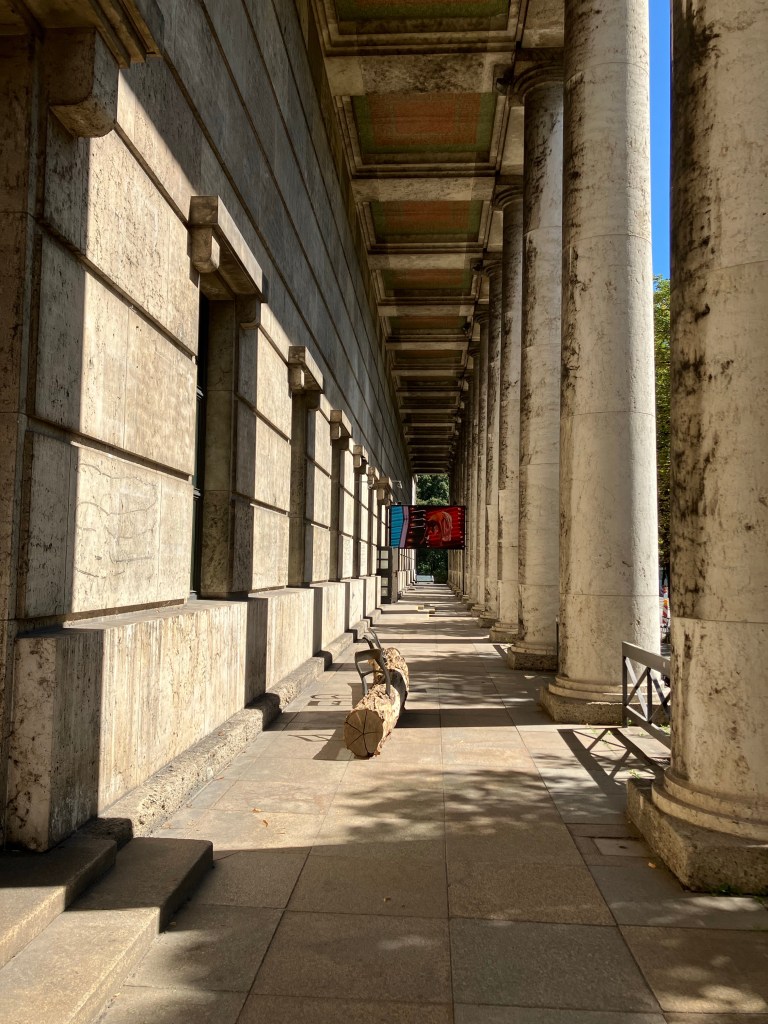
The Haus der Kunst (‘House of Art’) is a contemporary art museum located on the corner of an intersection where Von-der-Tan Straße becomes Prinzregentenstraße in the city of Munich. Whilst the museum exhibits art of the present, the museum building itself dates from 1937 being originally built under the Nazi’s to house work that regime considered true ‘German Art’. Hubert Wim, a pro-Nazi artist explained at the time that the latter exhibition was about the “representation of the perfect beauty of a race steeled in battle and sport, inspired not by antiquity or classicism but by the pulsing life of our present-day events”.
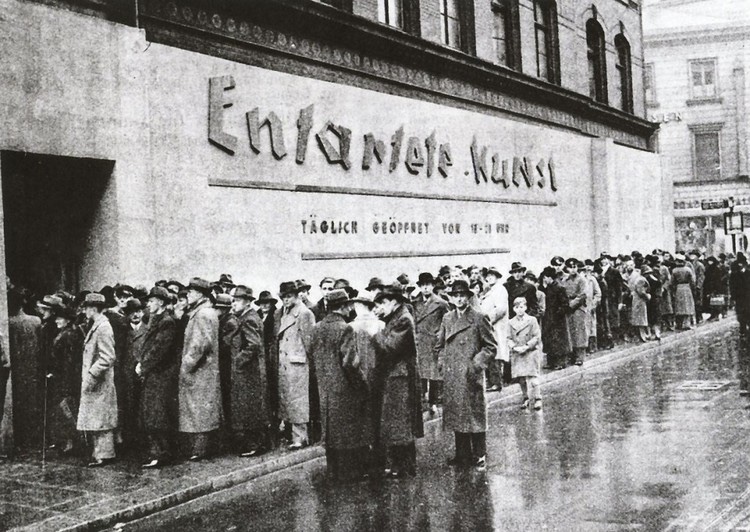
In reality the Exhibition staged the kind of pompous, sterile rubbish beloved of fascists everywhere. Meanwhile across town at the Institute of Archeology in the nearby Hofgarden, the Nazi’s staged a counter presentation of work the regime hated, work which they felt evinced the ‘moral decay’ of the Weimar era. That exhibition was of ‘Entartete Kunst’ (‘Degenerate Art’) and it featured work drawn from the modernist spheres of Dada and Surrealism. The Exhibition’s raison d’être was the mockery and denigration of the avant-garde by linking it’s concepts with an alleged Jewish-Bolshevik plot to undermine the ‘wholesome family values’ of the Nazi state.
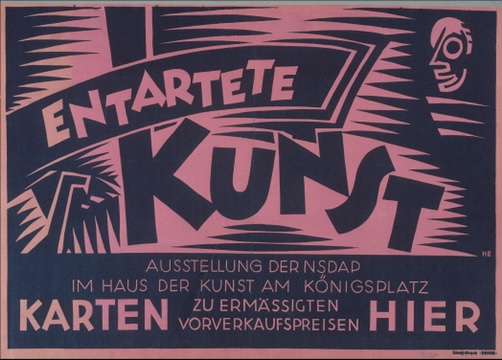
The exhibits at that exhibition were a small portion of the 16,000 art works seized at the time which the State deemed ‘degenerate’. Many of these works were then sold by the State overseas for “hard“ cash“ whilst some 5000 were burned in Berlin, mirroring the ritual destruction of thousands of literary works in book burnings across Germany a few years previously.
Paintings by artists of the calibre of Otto Dix, Marc Chagall, Wassily Kandinsky, Paul Klee, Emil Nolde, George Grosz went on show at the exhibition. The works were deliberately hung askew on the walls with adjacent graffiti mocking the artists and the subject matter of the paintings. The idea was to rubbish the art by presenting the paintings as morally and artistically worthless.
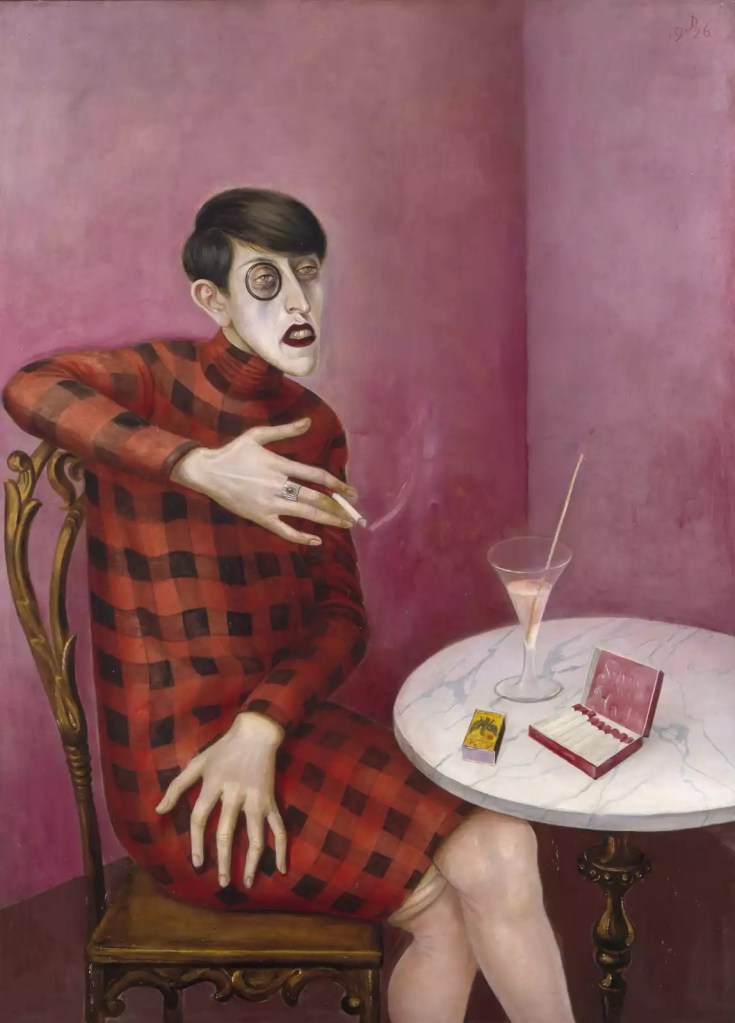
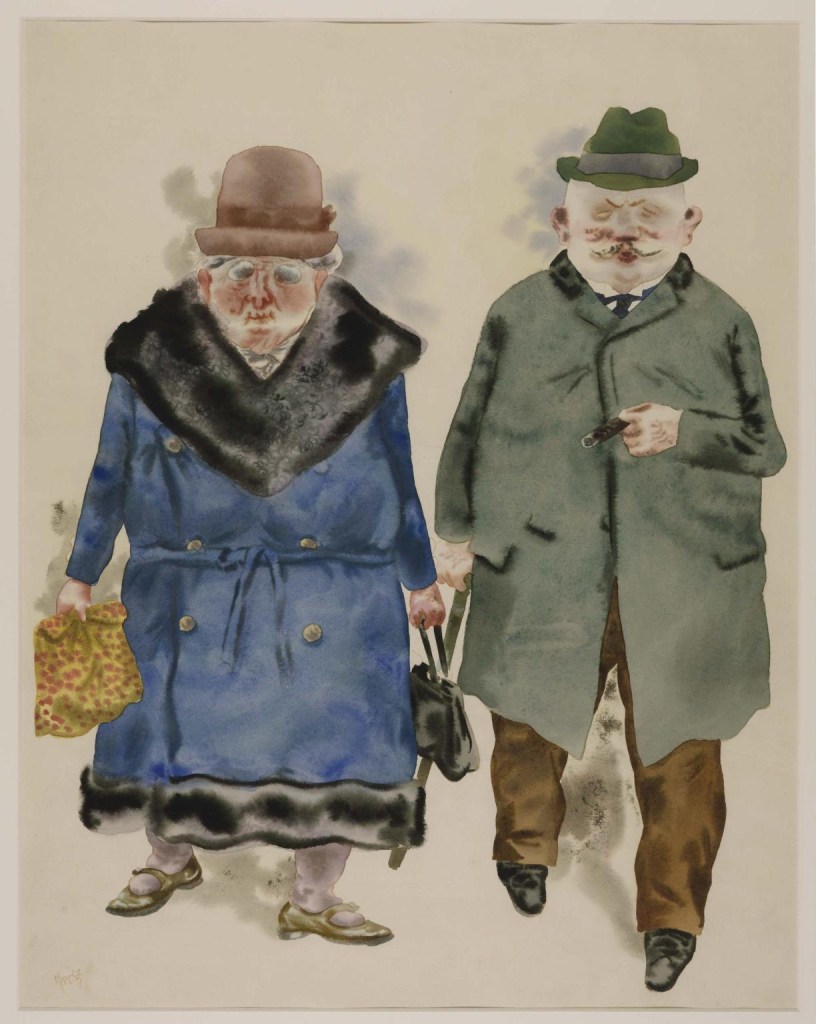
Unsurprisingly, given the quality of the artists whose work was on involuntary display, the Exhibition of Degenerate Art attracted significant crowds of visitors whilst across town the dismal counter event of the Nazi approved Great German Art Exhibition drew a far smaller crowd
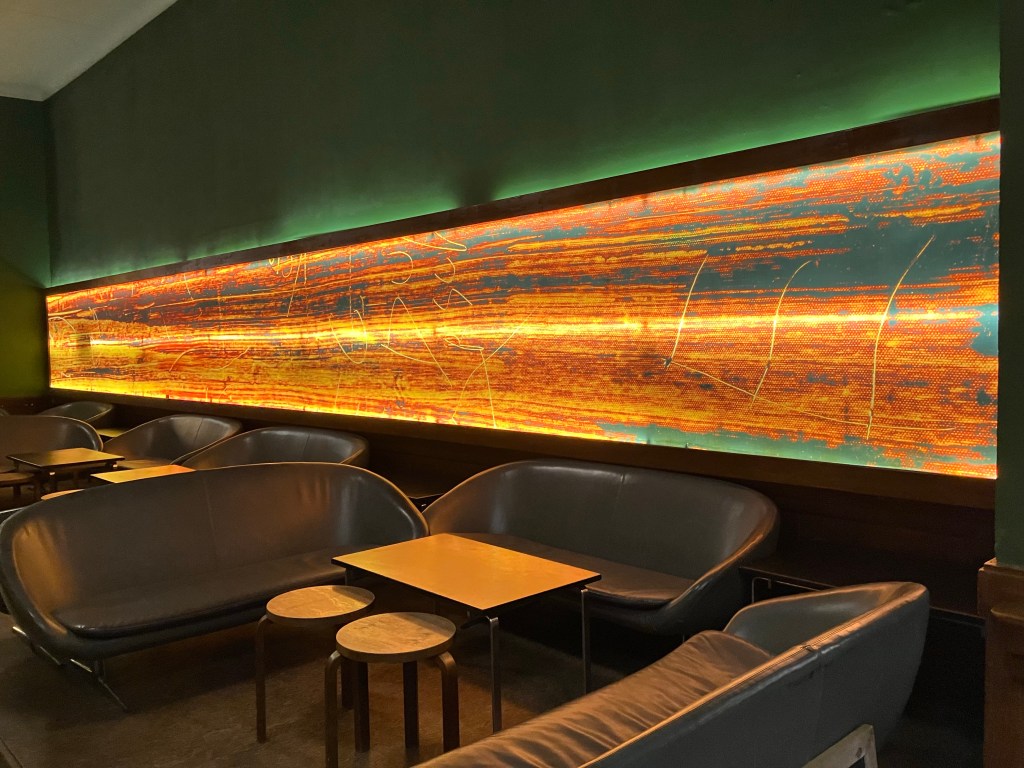
Today, the Haus der Kunst looms somewhat forlorn and sullen on the Prinzregentenstraße in the centre of the city where it stands as a space for contemporary modern art, the exact opposite of it’s original function. In its interior it’s cool, spectral rooms and corridors eventually end up at the surprisingly elegant and atmospheric Golden Bar. The murals in the Golden Bar date from 1937 and it’s centrepiece chandelier came from the Hotel Savoy in Zurich.
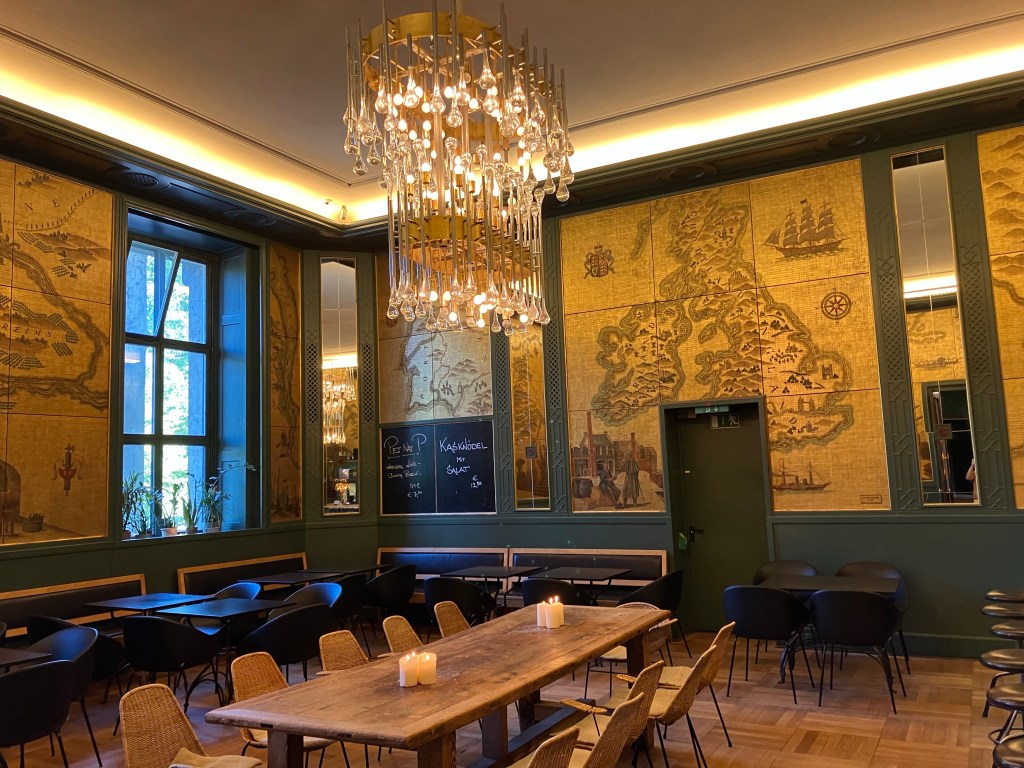
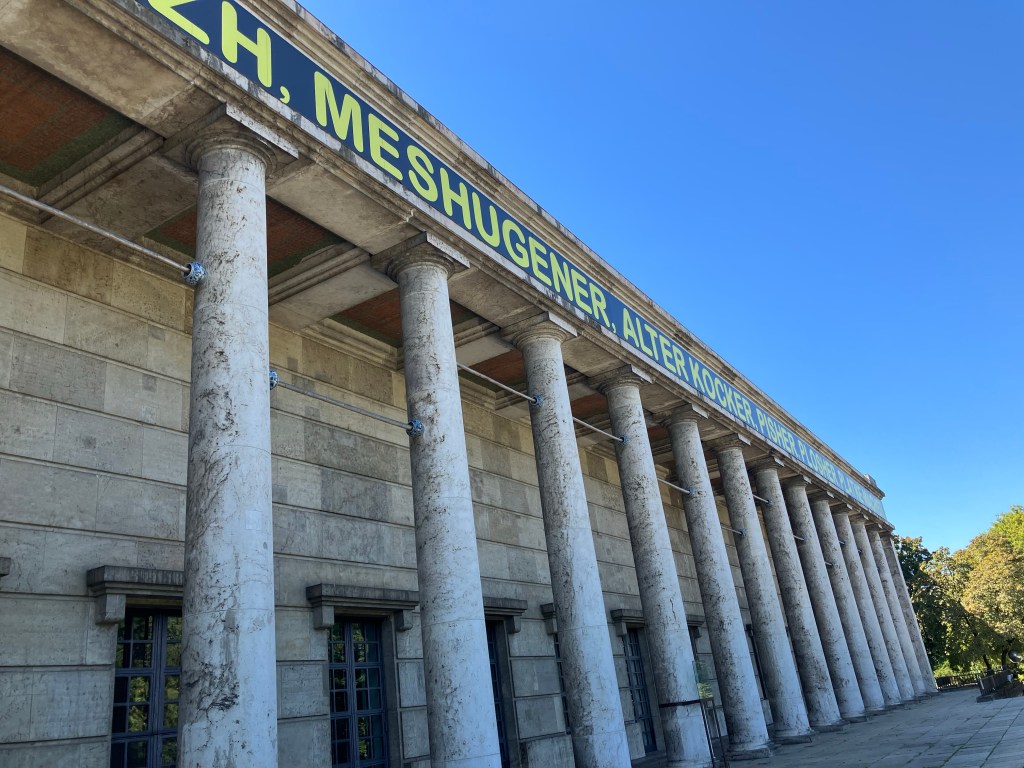
Beautifully renovated in 2010, the Golden Bar opens out on to a terrace whose columns are crowned with a lengthy banner of Yiddish slang, Meshugener, Alter Kocker, Pisher, Plosher….The banner is an art work named ‘The Joys of Yiddish’ by the American artist, Mel Bochner and it is now a permanent fixture, having originally been exhibited in 2013 and then reinstalled in 2021. The banner’s text is rendered in yellow letters on a black background, the same colours used for the ‘Star of David’ patches and armbands worn to identify and denigrate Jewish citizens.
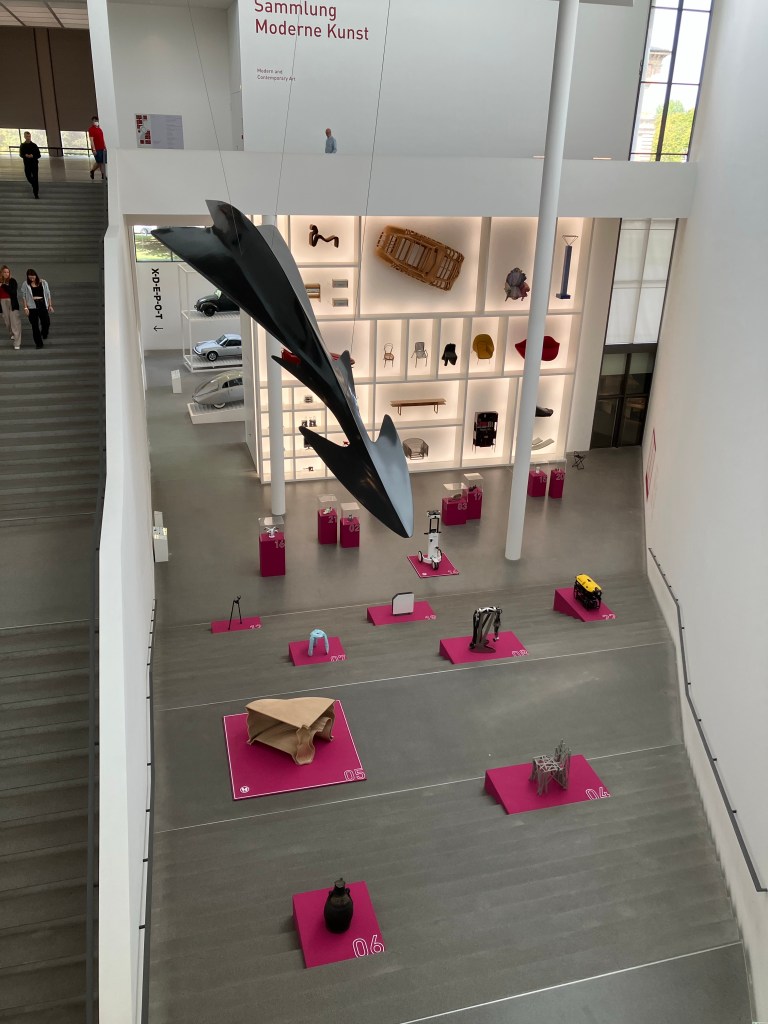
Modern Art survives in splendour in Munich and of the city’s many galleries a special mention should be made of the Pinakothek der Moderne, one of Europe’s largest collections of contemporary design, architectural and artistic installations.
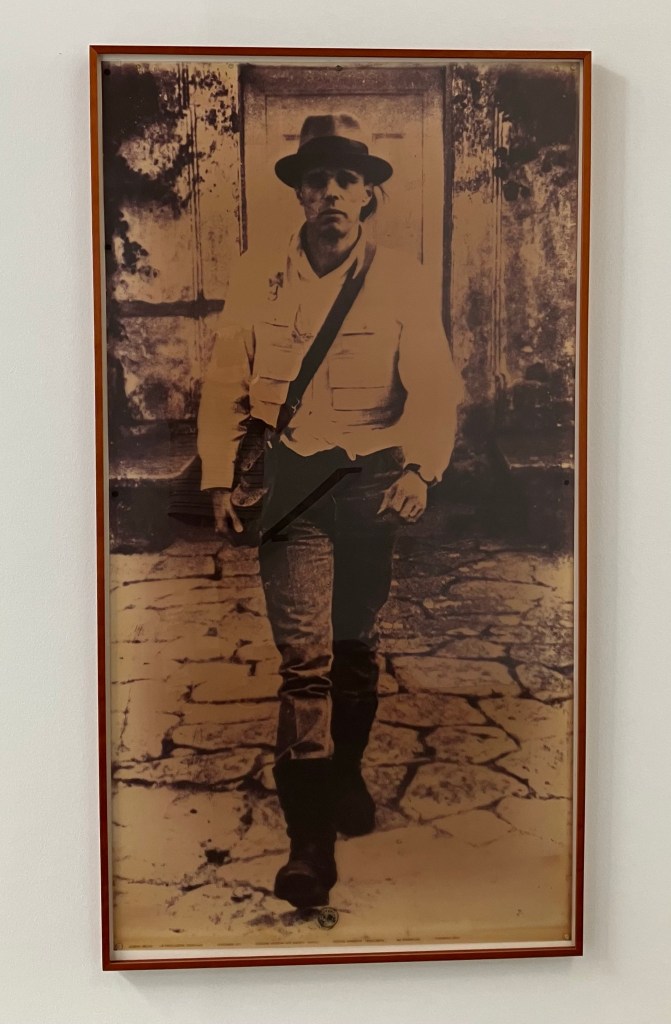
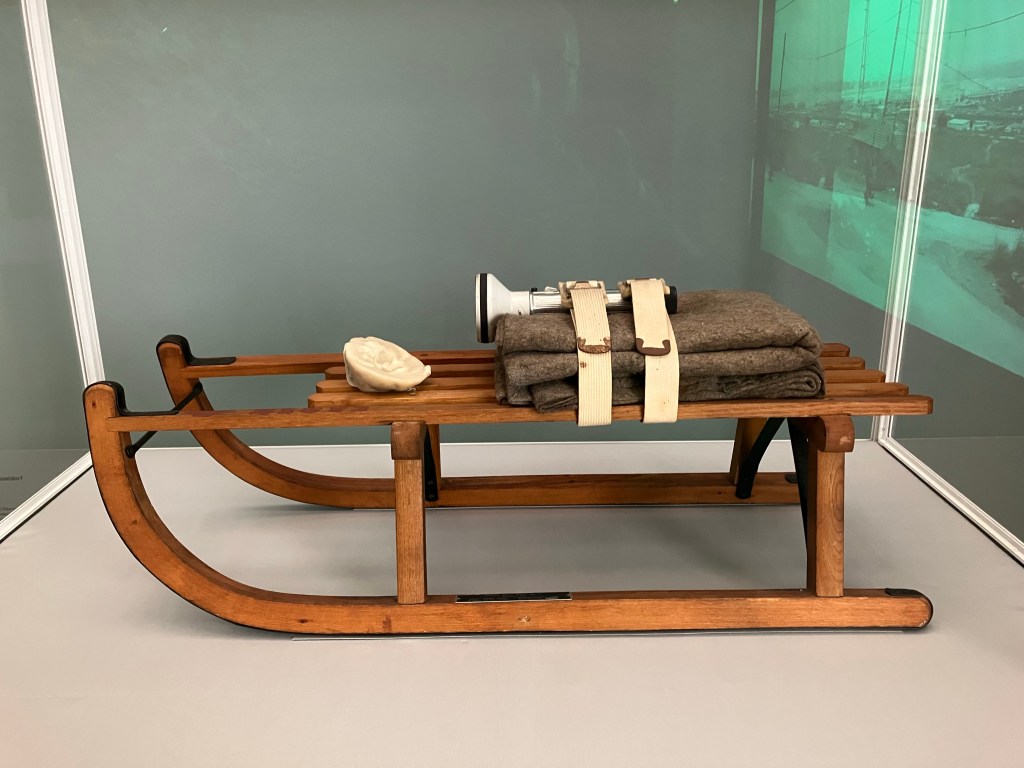
The museum exhibits include a favourite of ours ‘Sledge’ by the artist Joseph Beuys as well as a reproduction of the iconic image of that artist titled ‘La rivoluzione siamo Noi’ (The Revolution is Us) produced for an exhibition in Naples 1971 featuring Beuys striding towards the camera in his trade mark fedora and fishing vest.
According to Beuys, his art was shaped by his experience as a Luftwaffe pilot during WW2 when the plane he was flying was attacked and shot down and he crashed into a Crimean landscape peopled by nomadic Tartars who saved him from freezing by wrapping his body in a heat retaining mix of felt and fat before taking him to safety on a sledge pulled by dogs. A wonderful story indeed and one upon which Beuys built his mythology. Nevertheless, as influential on Beuys though it may well have been, the story is probably little more than fiction.
‘Patti Smith 1’, a large scale painting by the Swiss born artist Franz Gertsch also hangs at the Pinakothek der Moderne. The work is the first in a series of five paintings of the American poet/musician by Gertsch dating from 1977. Four of the five paintings in the series were created by Gertsch from a poetry reading Smith gave at Galerie Veith Turske in Cologne in 1977 on the anniversary of the death of Arthur Rimbaud. An illicit recording was made of the performance and later released on a cassette tape. An article Smith wrote for ‘Hit Parader’ magazine about her visit to the city at the time can be found here http://www.up-to-date.com/bowie/heroes/smith.html.

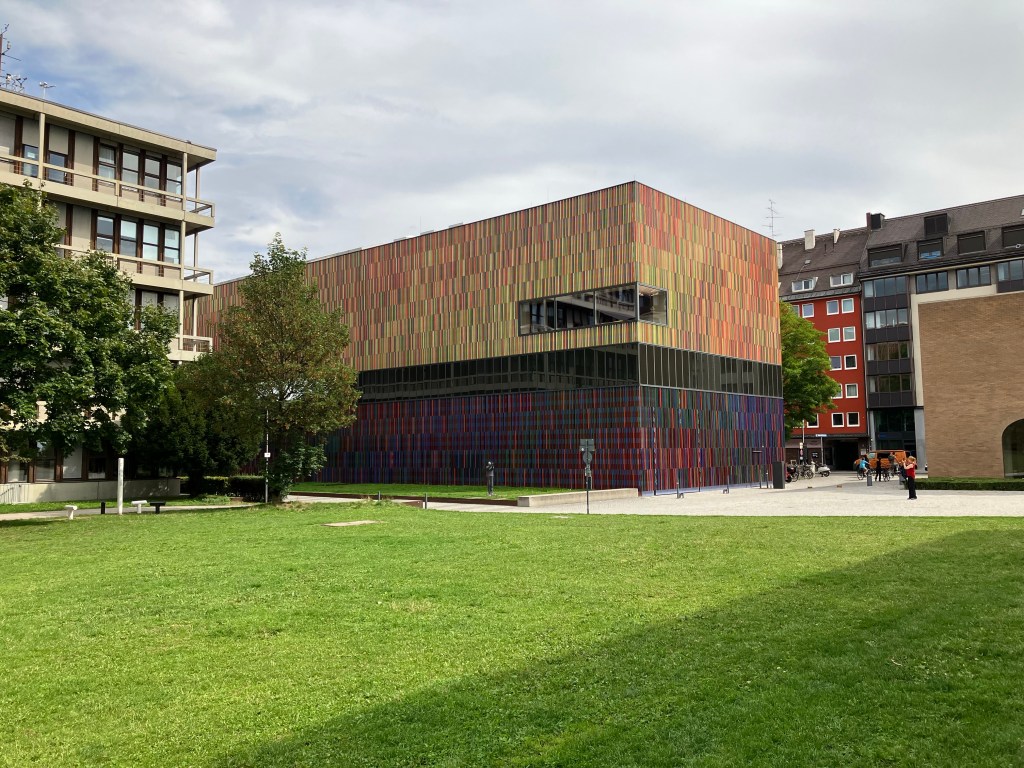
Around the corner from the Pinakothek der Moderne is another modern art gallery, Museum Brandhorst with it’s distinctive ceramic exterior.
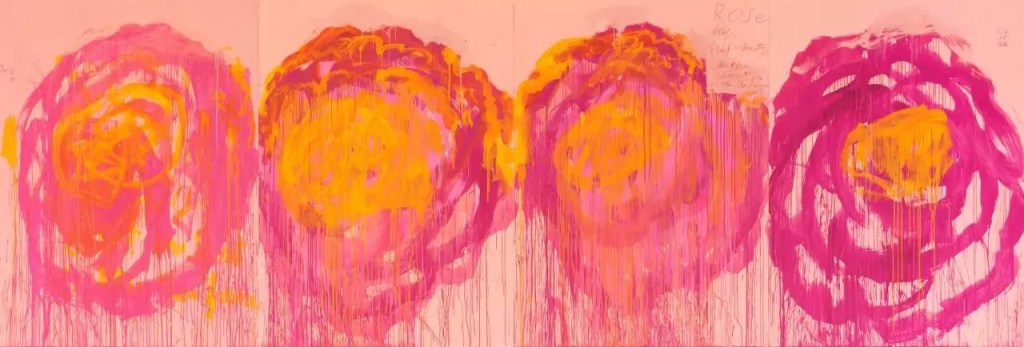
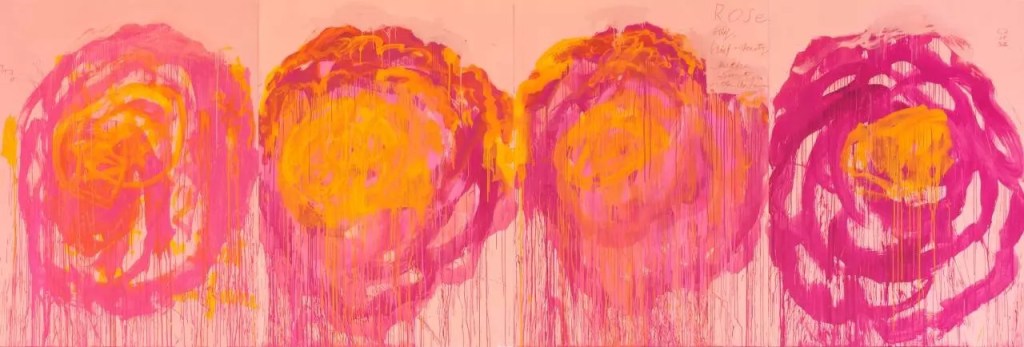
The museum has a permanent exhibition of the work of the late American artist, Cy Twombly, one of the largest collections of work by the artist in the world. In fact, the entire first floor of the museum is dedicated to his work. This is not so surprising as Twombly had a special relationship with Munich, a city where he exhibited frequently and of which he was exceptionally fond.
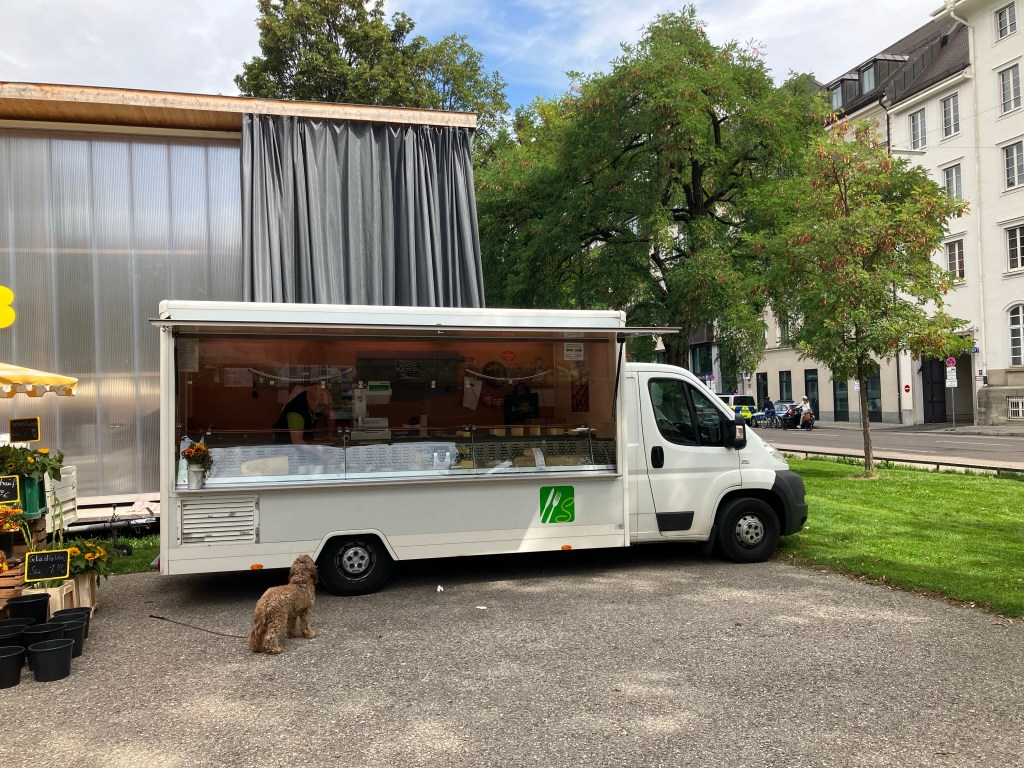
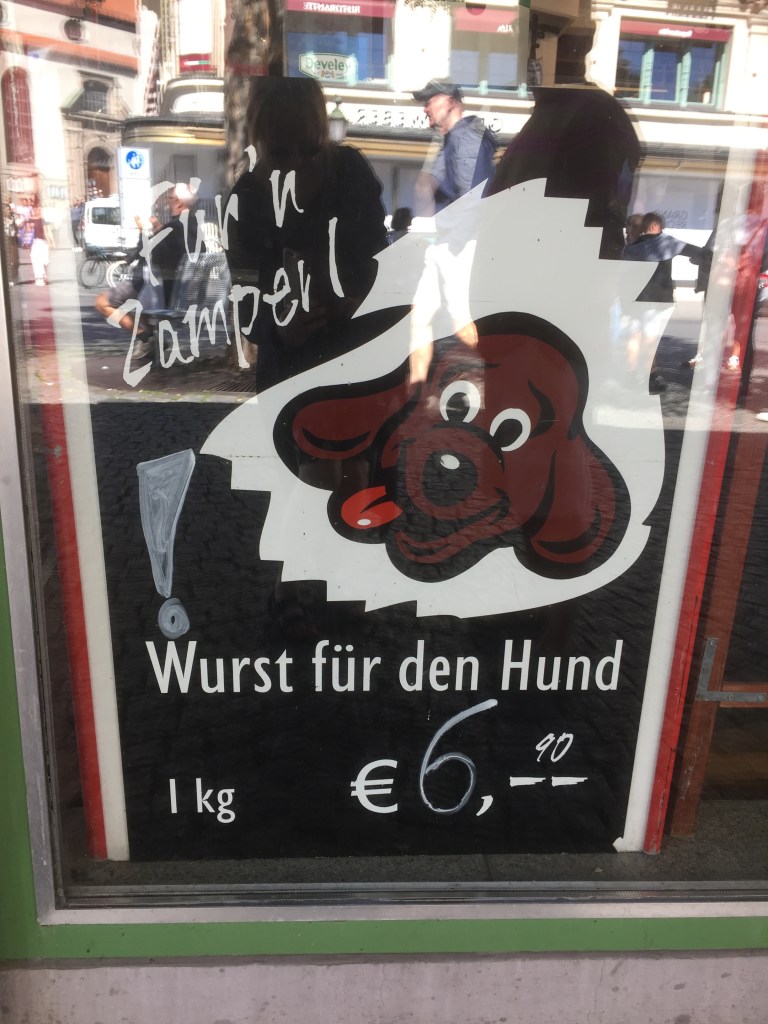
Behind the Brandhorst and back to the grounds of the Pinakothek der Moderne we found a welcome collection of food trucks and a hopeful dog at a cheese stall.
The dog should have made it’s way to the Viktualienmarkt a daily food market in the center of Munich near the St Peter’s church! Dating from the early 1800’s the market has over a 100 food and craft stalls as well as the city’s most central beer garden.
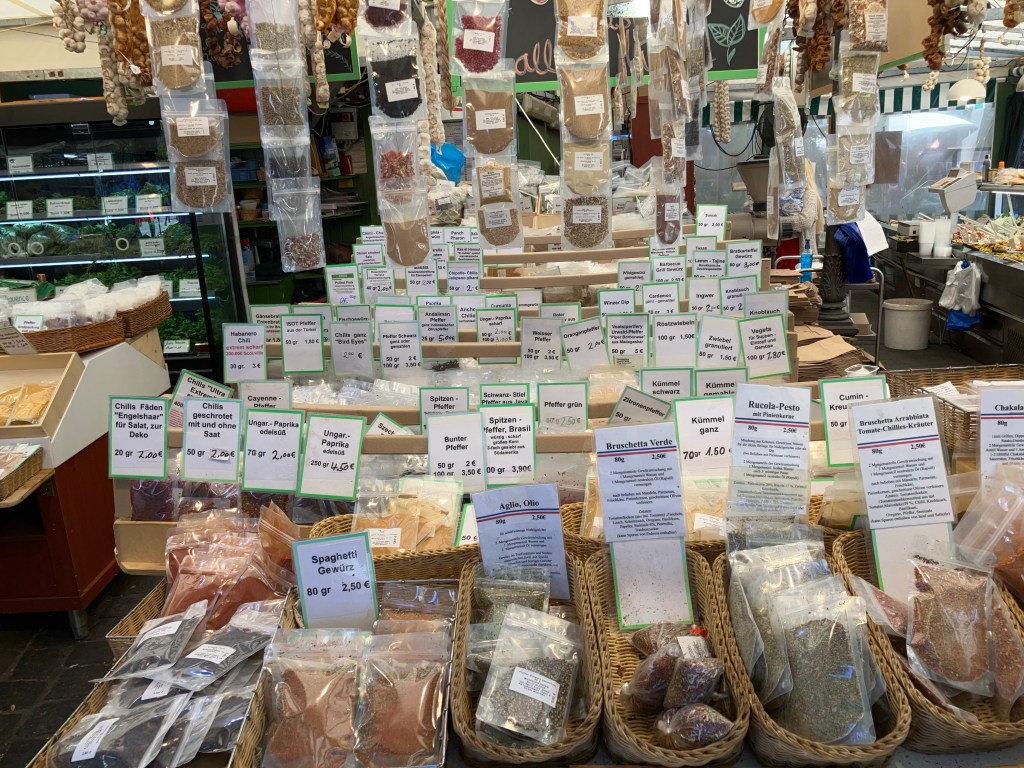
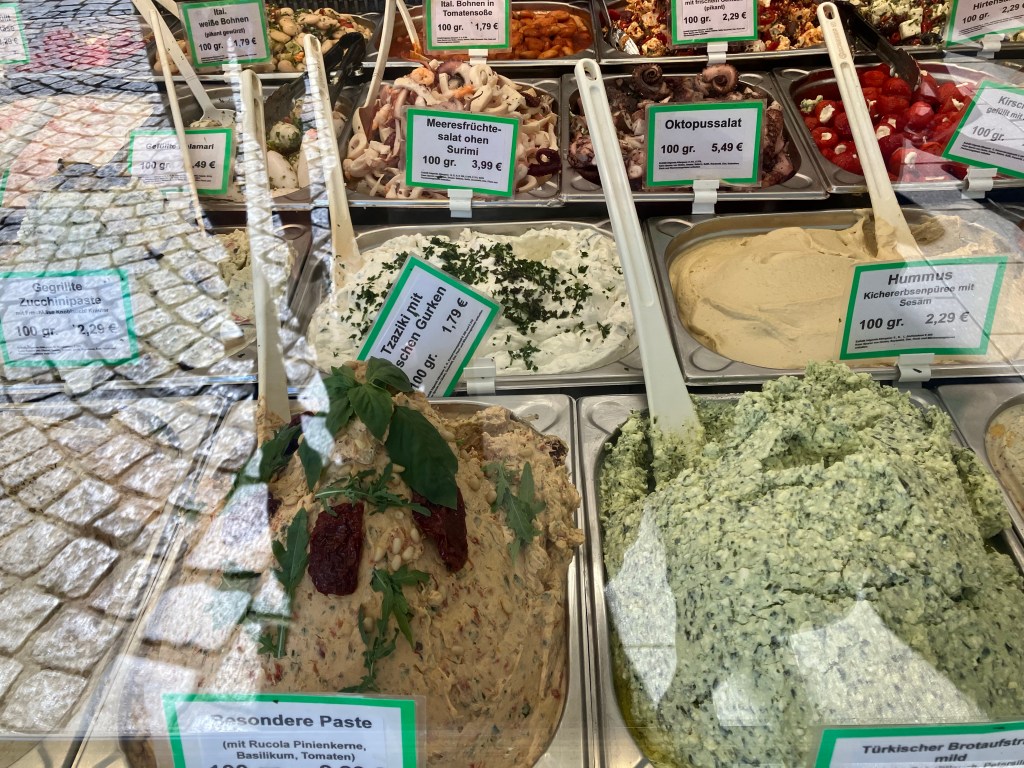

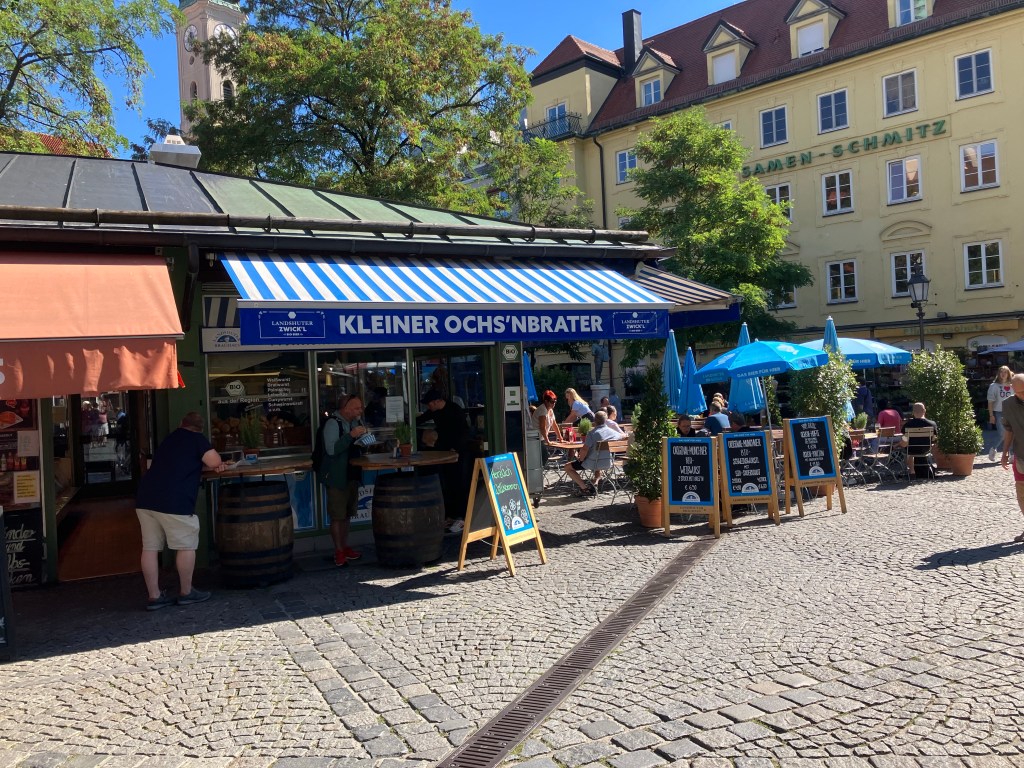
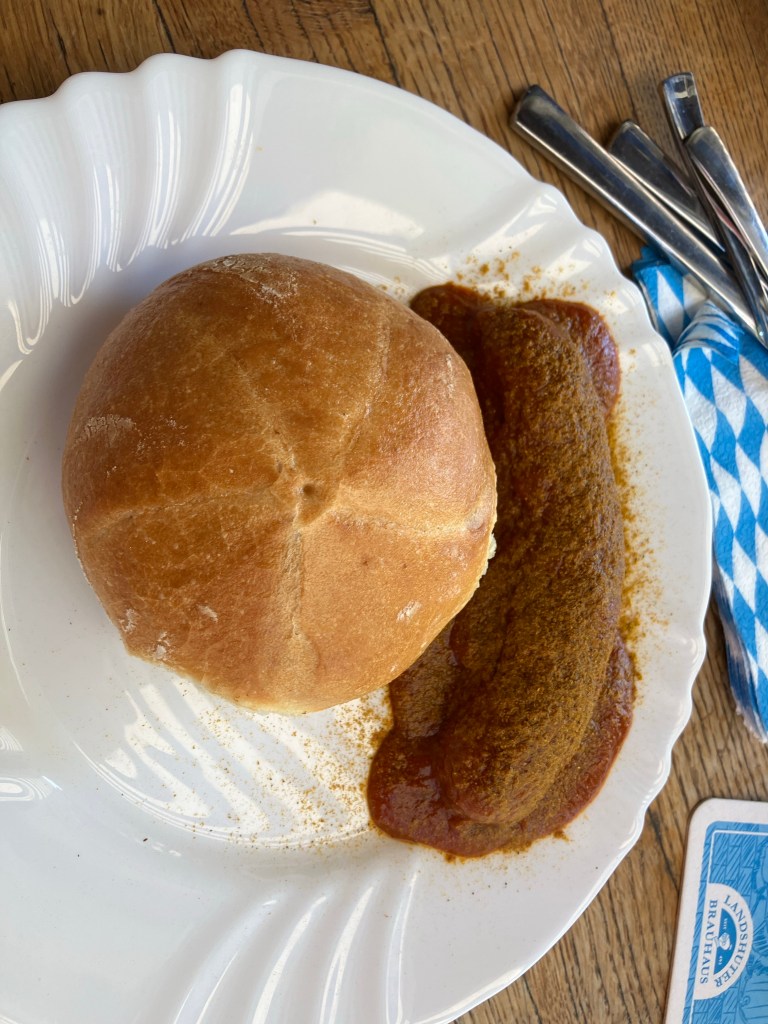
There is also a smaller beer garden at the ever popular Kleine Ochs’nbrater with its organic sausages, pretzels, fried potatoes, cabbage and, of course, wheat beer from the local Landshut brewery. Much as we loved the food, beer and busy ambience at this café, we felt that overall, the curry wurst in Berlin is generally better than the same dish in Munich.
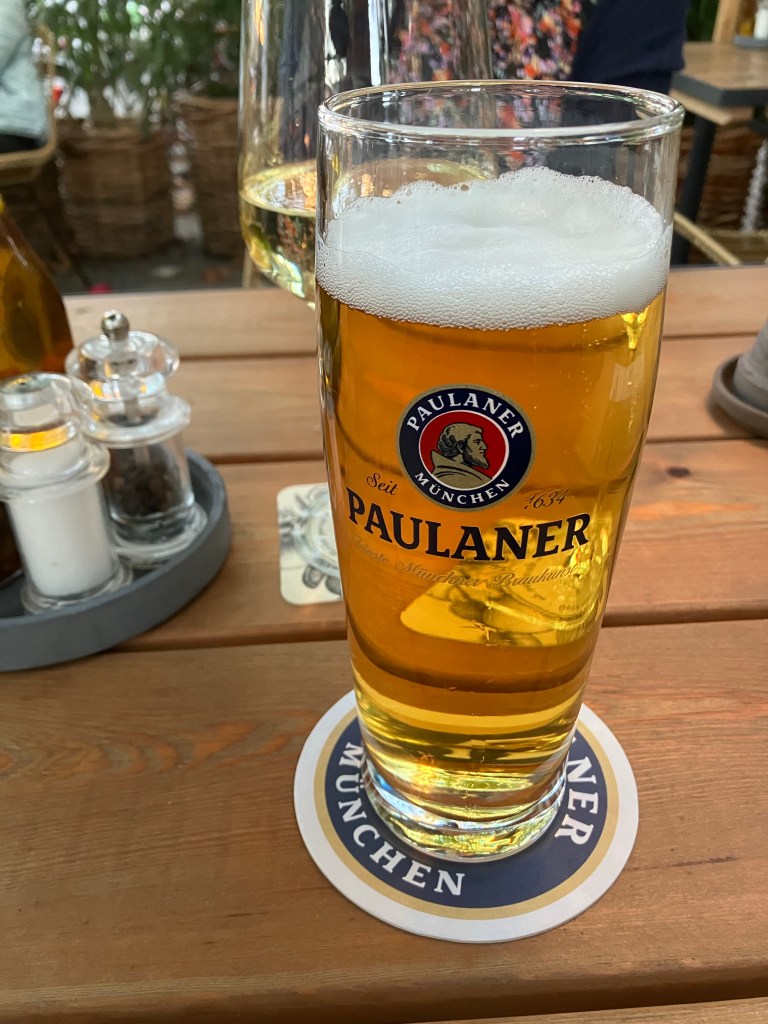
….but if beer is your drink of choice, you have come to the right place. Munich is indeed a beer drinkers paradise with some of the best breweries in the world within its environs. Our favourite ‘staple’ is the Paulaner Münchner Hell, a classic light beer dating from a brewery first established in 1684.
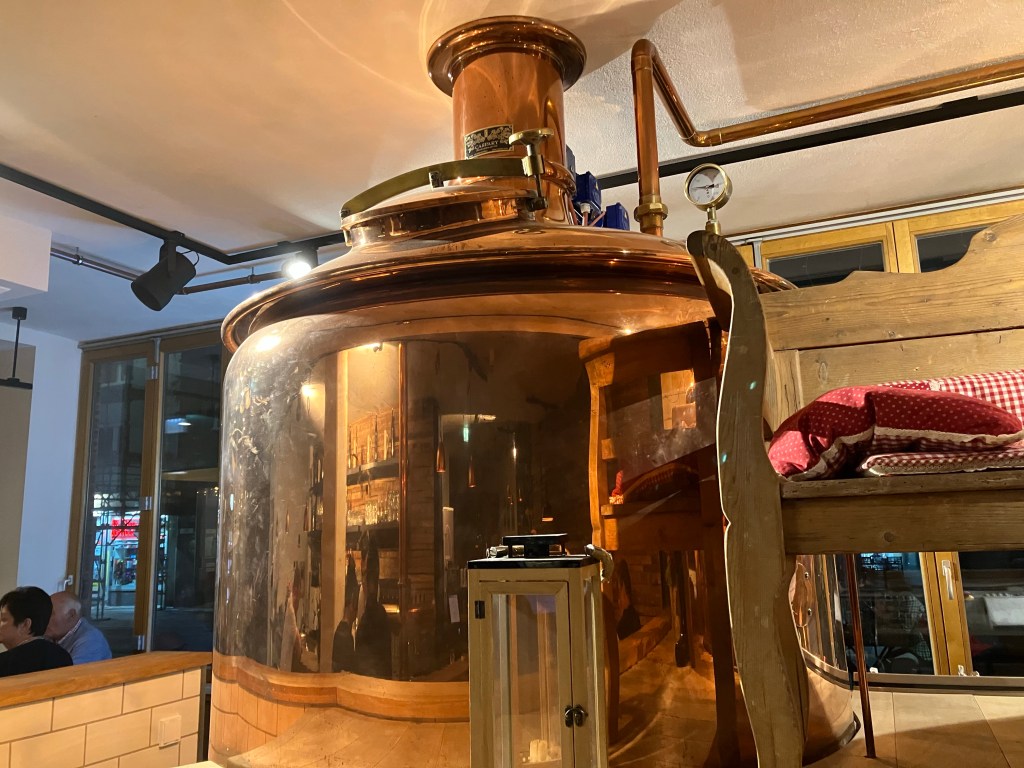
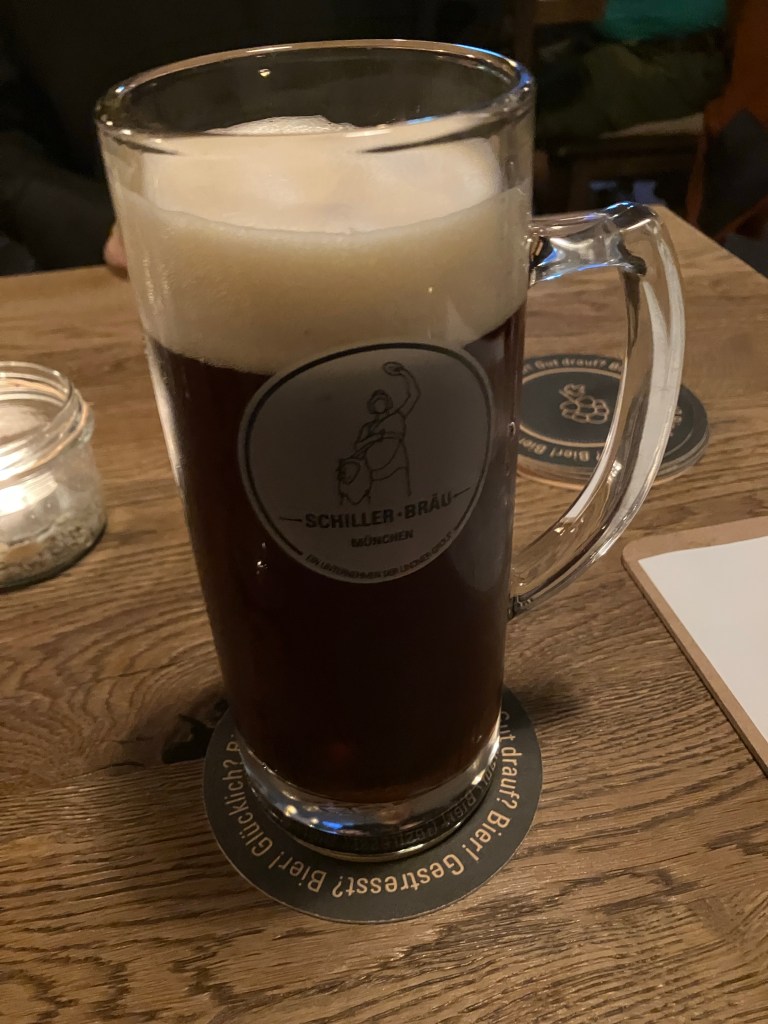
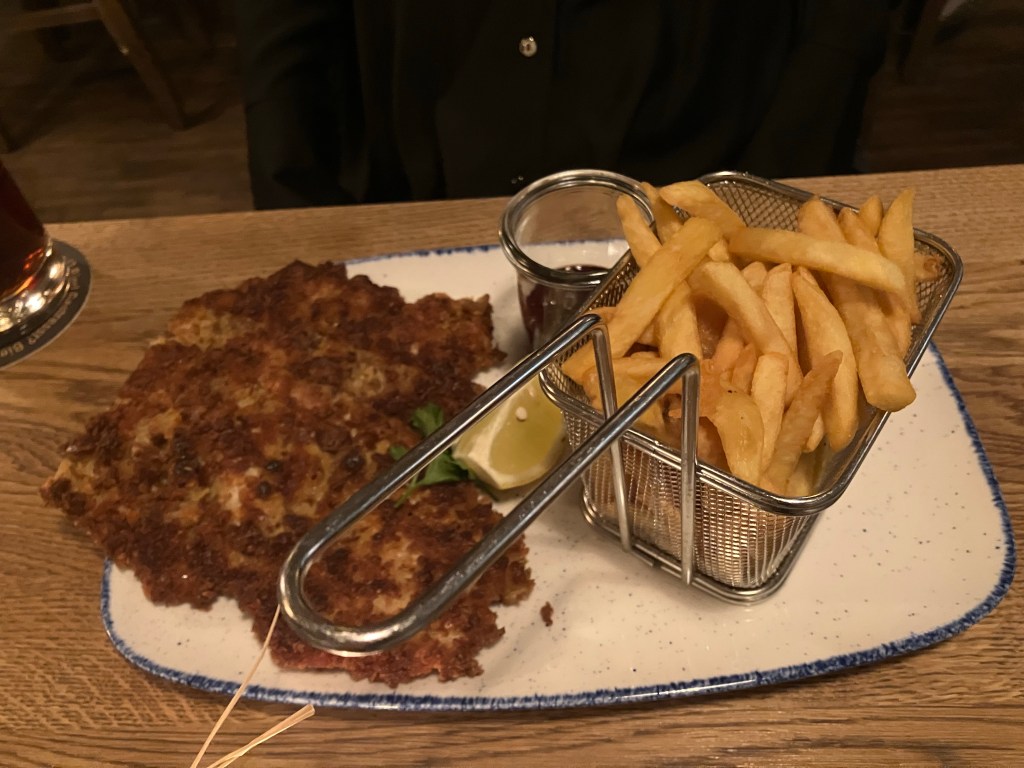
Modern craft breweries are also making their mark on the Munich beer scene with the Schiller brewery particularly noteworthy. The brewery is housed on their premises on the Scillerstraße which is near city’s main railway station. Their copper mash and brewing tuns are housed at the front of their premises whilst their beer is served with very traditional local food in the restaurant behind. Their beers range from light and dark brews to a classic wheat beer. Food includes sour vinegar dumplings, schnitzels, pork and potatoes.

Finally, we will let another poet , T.S.Eliot, an influence on both Patti Smith and whose poem ‘The Waste Land’ was of particular interest to Cy Twombly. Elliot mentions two Munich locations in the extract from the poem below.
“April is the cruellest month, breeding
Lilacs out of the dead land, mixing
Memory and desire
Summer surprised us, coming over the Starnbergersee
With a shower of rain; we stopped in the colonnade,
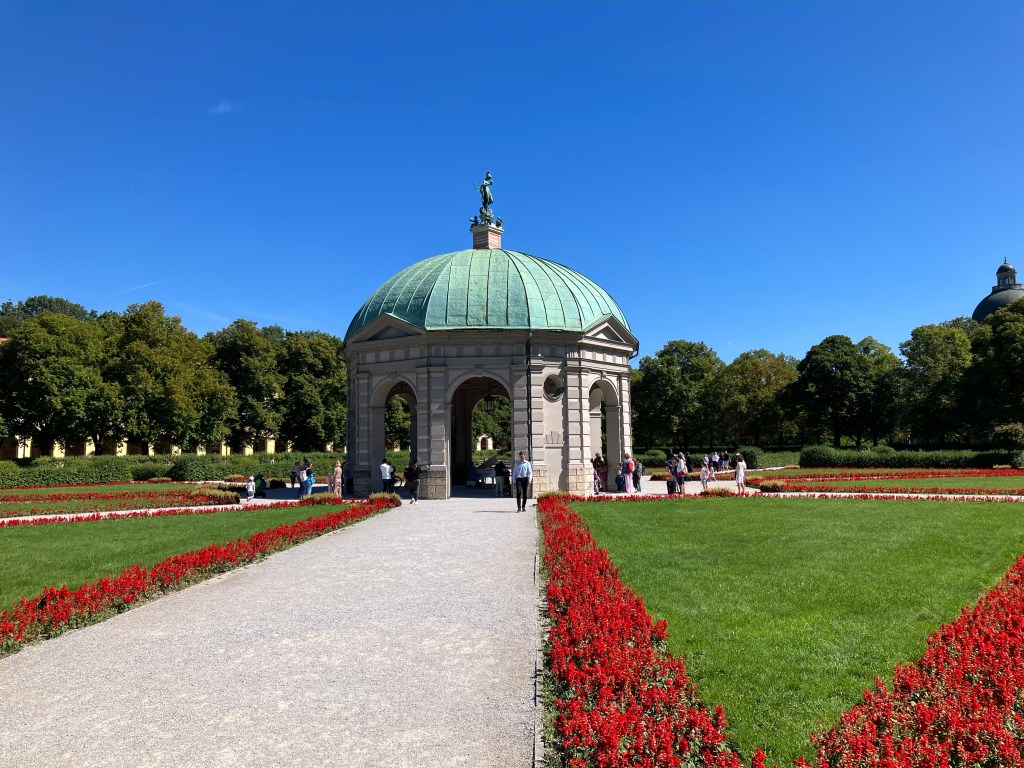
And went on in sunlight, into the Hofgarten,
And drank coffee, and talked for an hour. “
T. S. Elliot, “The Waste Land,” 1922

 FOOD, FILMS 'N' TINGS