Manchester, icons and thali

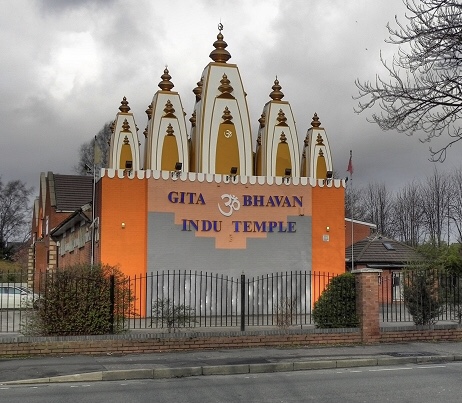
Gita Bhavan Hindu Temple in Chorlton

Chorlton is a suburb of the Northern English city of Manchester. The district has become increasingly identified with left leaning young professional couples and their families. It is also home to one of Manchester’s biggest gay communities. 

Rightly or wrongly, Chorlton is regarded as a bohemian enclave with its independent bars and restaurants, vegan supermarket (the workers co-operative ‘Unicorn’) and unusual boutiques.

The suburb is a great place to eat and drink and whilst we could fill several columns on the local culinary scene, we will be more specific by concentrating solely on some of the Indian food (especially vegetarian) to be found in the locale.
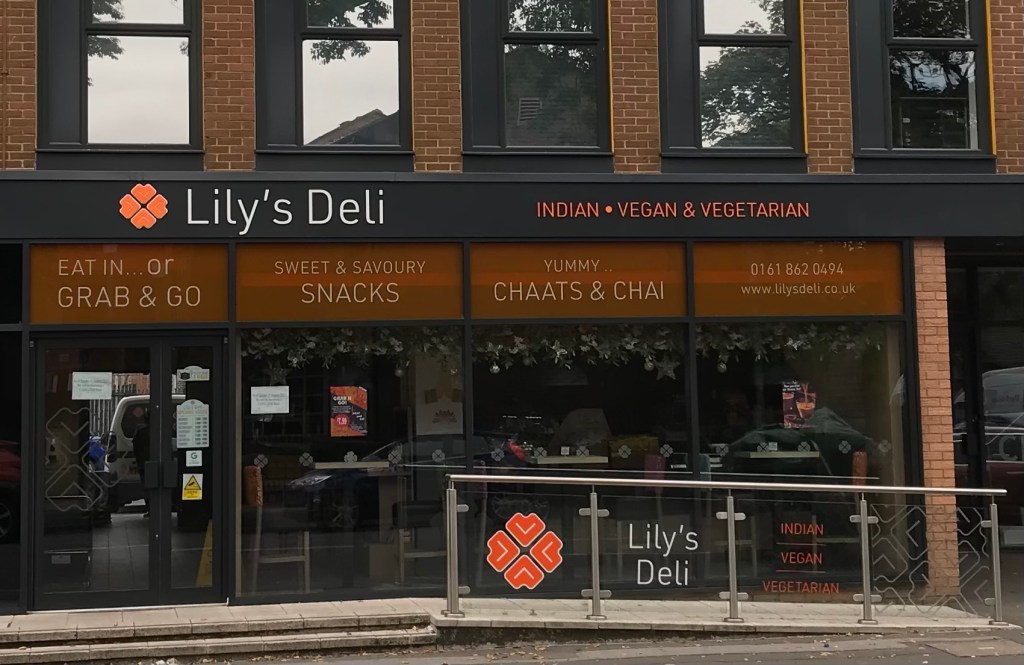
Lily’s in Chorlton

Lily’s deli on Manchester Road in Chorlton is an outlet of the award winning Lily’s Vegetarian Indian restaurant in Ashton-under-Lyne, a town which is just to the east of Manchester. The Chorlton deli is the first of two outlets in the city, the other being in the very trendy inner area of Ancoats.

Lily’s stocks an impressive range of Indian groceries and spices as well and spicy snacks such as dal vada, chakli, bonda, battered chillis and their famous ‘atomic bombs’, potato’s coated in batter injected with a fiery masala. Not for the faint hearted!

They also make and sell Indian cakes and their barfi flavoured with figs or dates is our favourite.
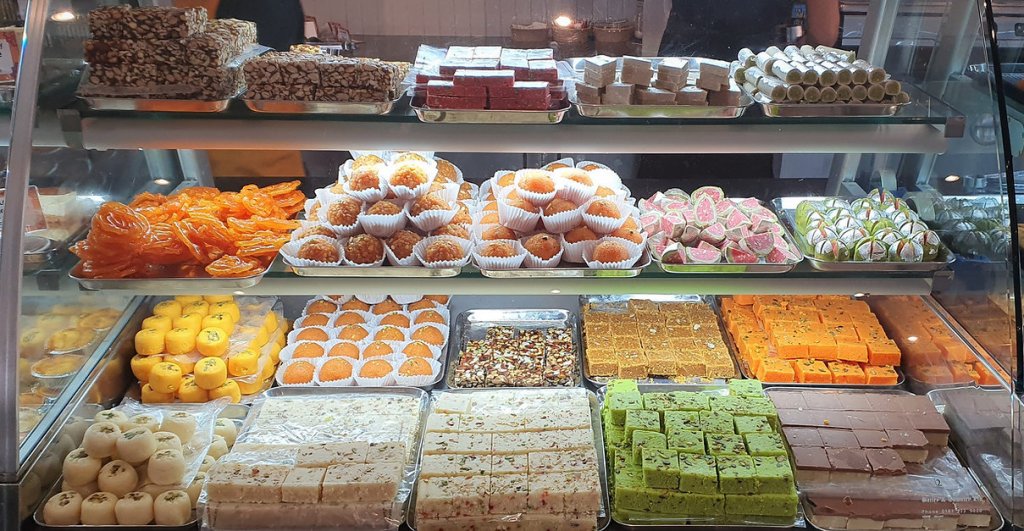
Barfi and much more at Lily’s

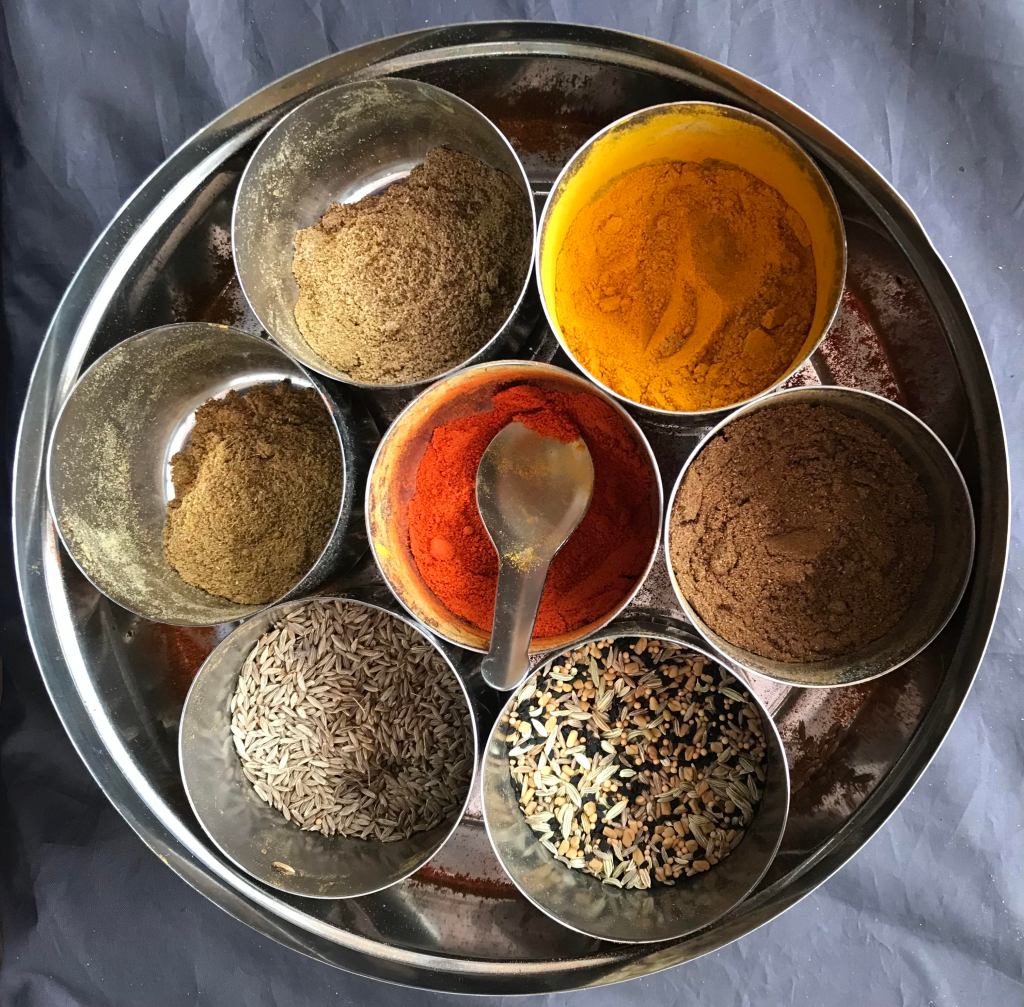
A short walk from Lily’s deli is the Chappati Café which serves great value thalis on Indian trays with the menu changing daily. Recommended.
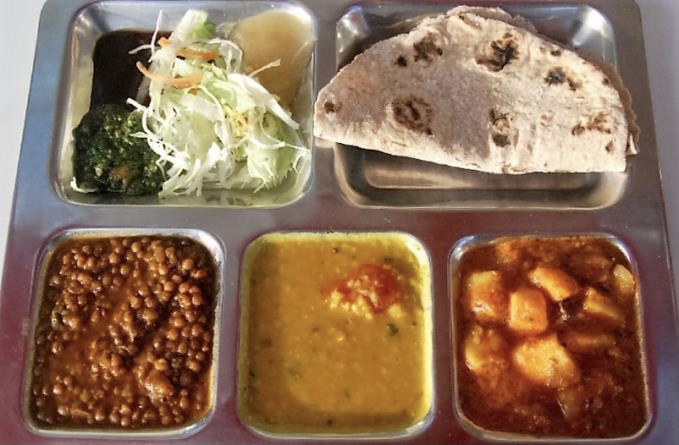
Thali at Chappati Café

A further short walk from the Chappati Café is the small but beautifully decorated restaurant called Roti. The restaurant has the only Indo/Scots menu in Manchester. As well as Indian street food favourites, Roti also serves its own version of the Scottish staple ‘mince and tatties’ (spiced meat in chole potatoes), haggis pakora and even scotch egg (boiled egg wrapped in pork seasoned with chaat masala). Although the restaurant serves a full selection of alcoholic and non-alcoholic drinks, we were surprised to see that Irn Bru, Scotland’s best loved soda, was missing from the list!
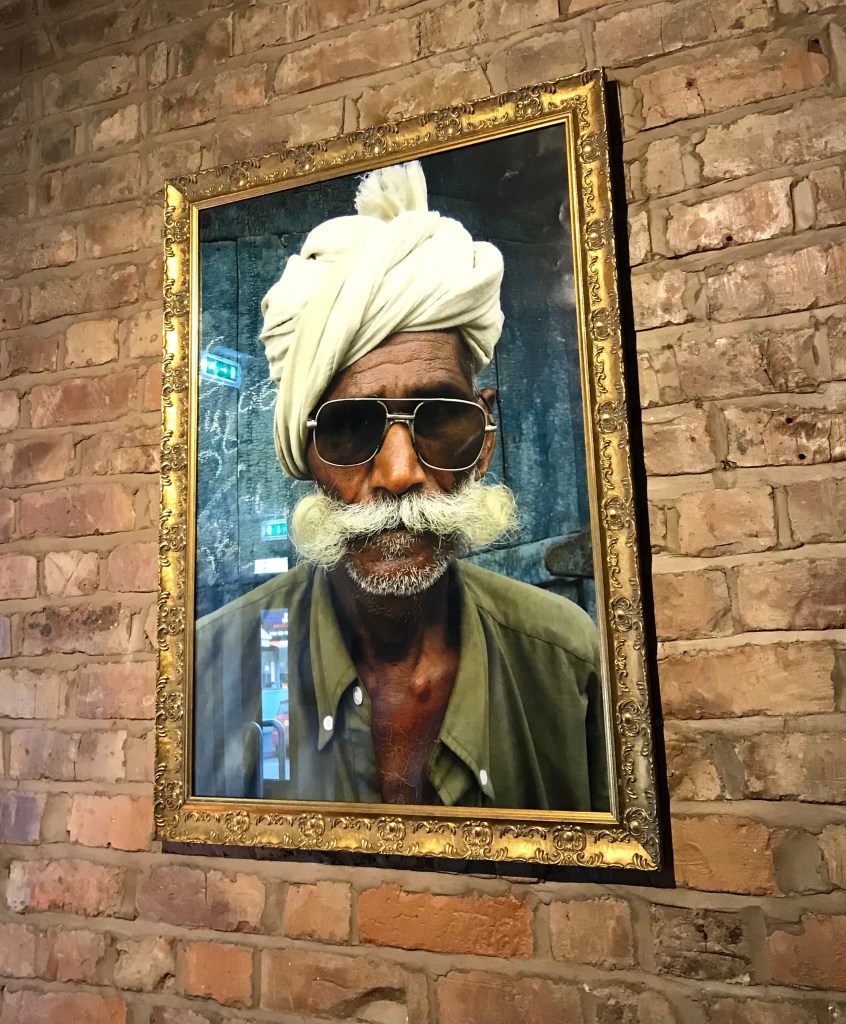
Roti interior

Further away from Roti and opposite the vast Southern Cemetery (of which, more below) is Amma’s Canteen. The restaurant serves fresh, home cooked style Southern Indian dishes including their much loved Dosa, a thin ‘pancake’ made from a batter of fermented rice and lentils stuffed with spicy goodness.
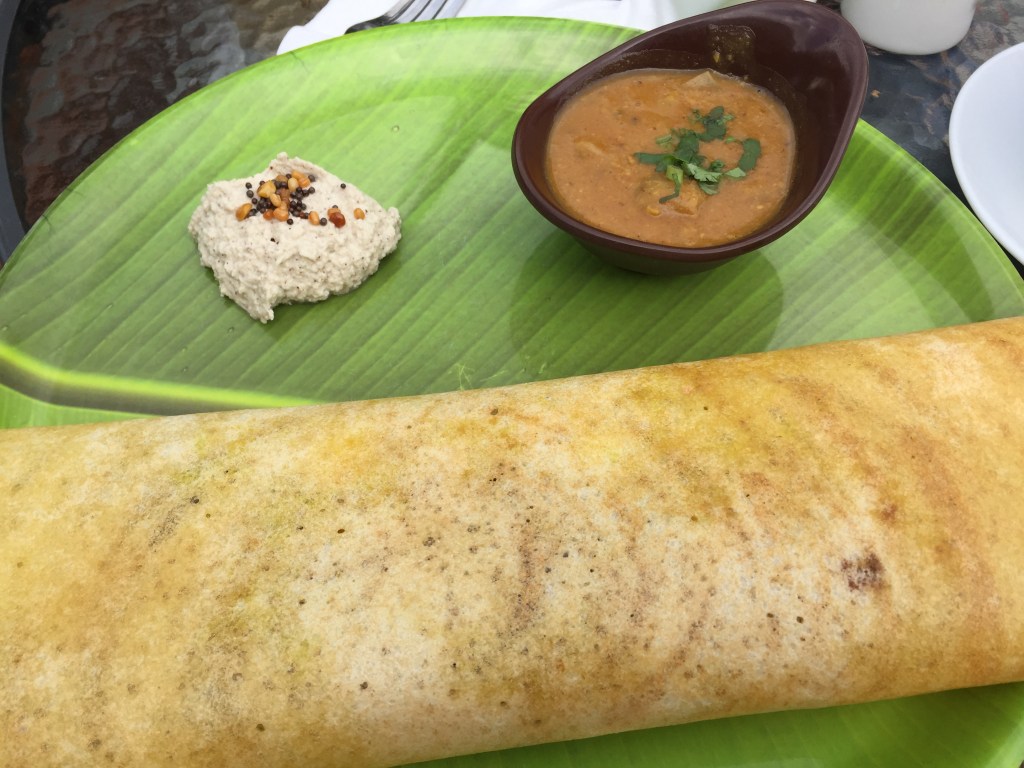
Masala Dosa at Amma’s Canteen

As noted above, the vast Southern Cemetery lies across the way from Amma’s Canteen. It is the second largest cemetery in Europe and the final resting place of important local figures such as the legendary Manchester United manager, Sir Matt Busby and the iconic Tony Wilson, the co-creator of the influential music label Factory Records. Wilson did more than almost anyone in putting the city’s popular culture on the map. Even a decade and a half after his death in 2007, he is still having a positive effect on the city in our opinion. 
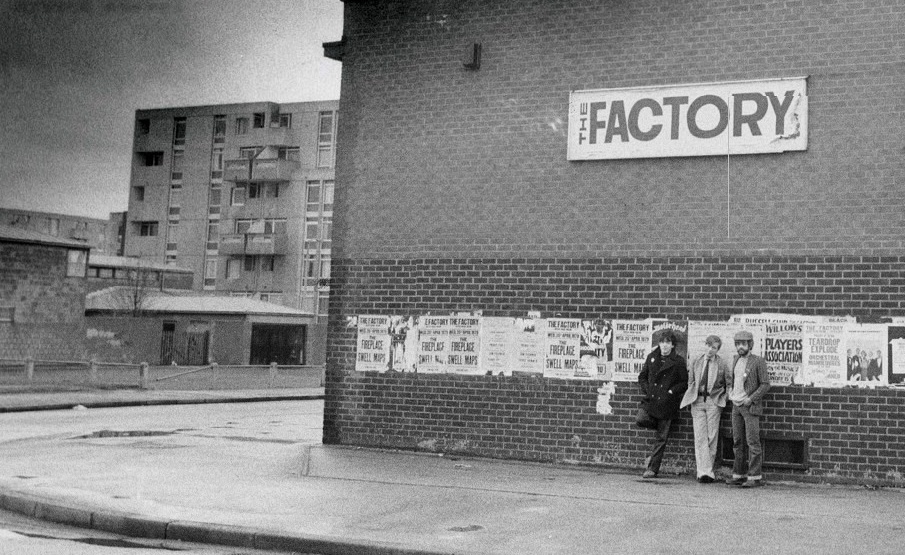
Wilson (centre) in a suitably grim Manchester backdrop in the 1970’s

Anyone who is familiar with the recent history of Manchester, the city’s rise from the grim post industrial decay of the 1970s into the modern, vibrant environment it is today, will be aware of the part Wilson played in invigorating the popular culture of the world’s first modern city.

Radical and still changing

Designer Peter Saville who worked closely with Wilson commented ‘Tony created a new understanding of Manchester; the resonance of Factory goes way beyond the music. Young people often dream of going to another place to achieve their goals. Tony provided the catalyst and context for Mancunians to do that without having to go anywhere’.

In a small nation, too often in thrall to its capital, Wilson more than anyone else in his generation, emphasised the fact that great art and culture was not the sole preserve of London but was very much alive elsewhere in the country and in the North in particular.

Writer Paul Morley, himself born in the city, analysed Wilson’s life and legacy in incredible detail in his book ‘From Manchester with love’.
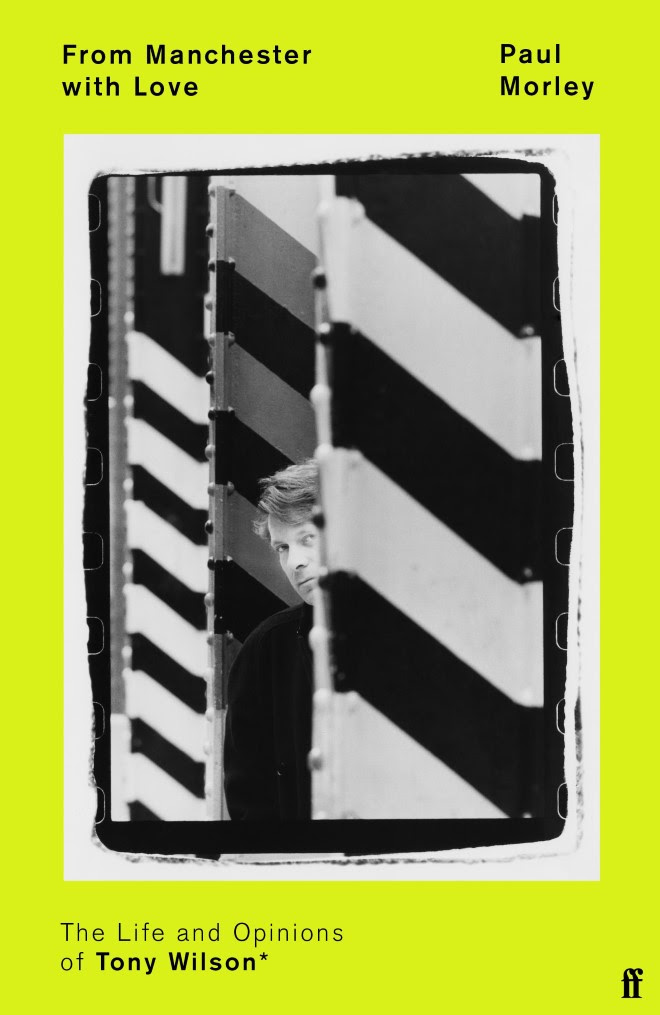
Lengthy but illuminating

Saville designed Wilson’s black granite headstone with architect Ben Kelly . The headstone sits in repose amongst the crosses and columns of its neighbours in the Southern Cemetery.
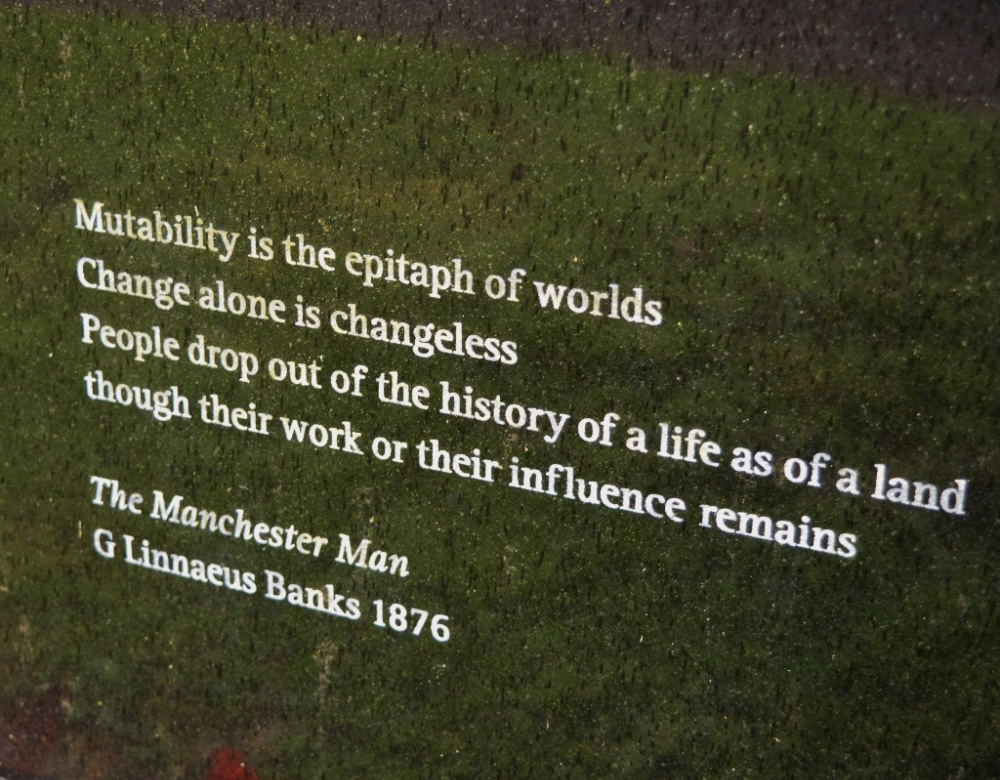
Inscription on Wilson’s headstone

Several examples of graffiti art featuring Tony Wilson have cropped up in the city including the following in Chorlton with its quote from the man himself (although sadly, ‘Wilson’ was incorrectly spelt in this instance).
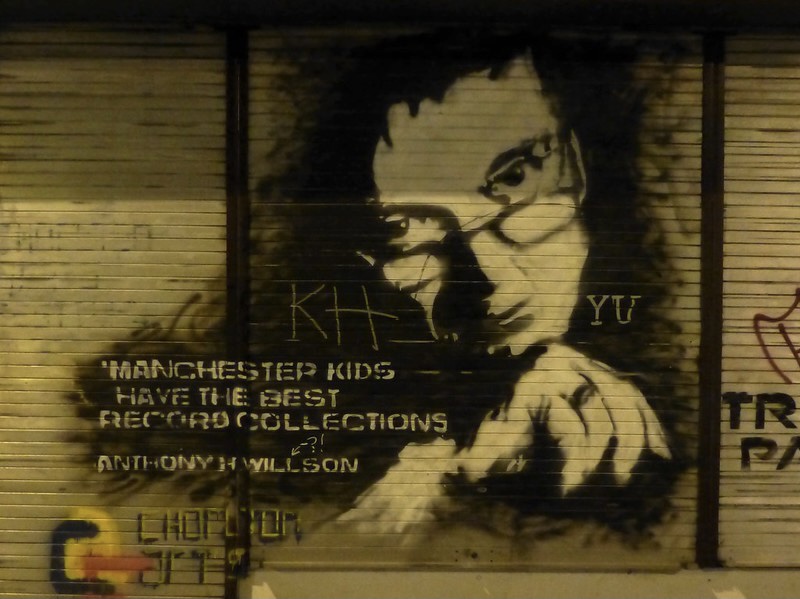
So it goes

Across the road from the Wilson mural is a stencil of the iconic Quentin Crisp by celebrated artist Stewy (www.stewy.uk).

The openly gay Quentin Crisp was a writer, humorist and actor who was famously played by the late actor John Hurt in the 1975 autobiography which was broadcast on national TV in the UK to great acclaim under the title ‘The Naked Civil Servant’. 

Crisp has only a somewhat tenuous link with Chorlton, the suburb being the place where he died in 1999 after staying with a friend there. He was cremated at the Southern Cemetery.

The Naked Civil Servant himself

Stewy’s stencil of Quentin Crisp is on the corner of Keppel Road in Chorlton. Keppel Road was where the Gibb brothers (better known as the Bee Gees) once lived and where they first practiced their harmonies together.

The brothers would, of course, go on to immense success globally. They were especially popular in the US and their mainstream take on disco music sold by the millions.
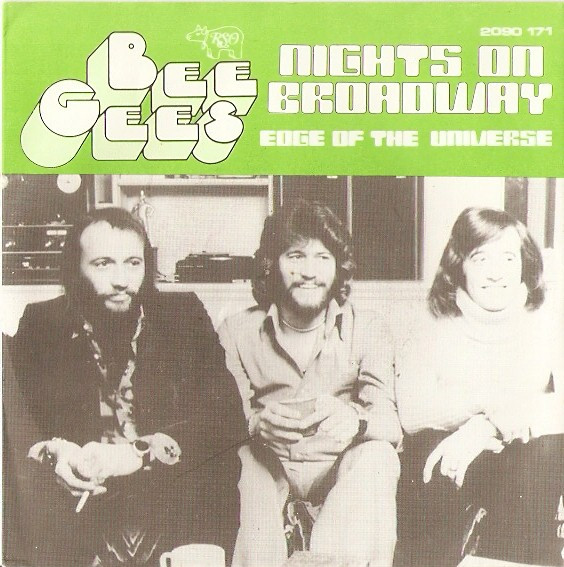
The brothers Gibb

Crisp was also a success in the US and in New York in particular. The city was where his Broadway show ‘An evening with Quentin Crisp’ was staged to great acclaim.
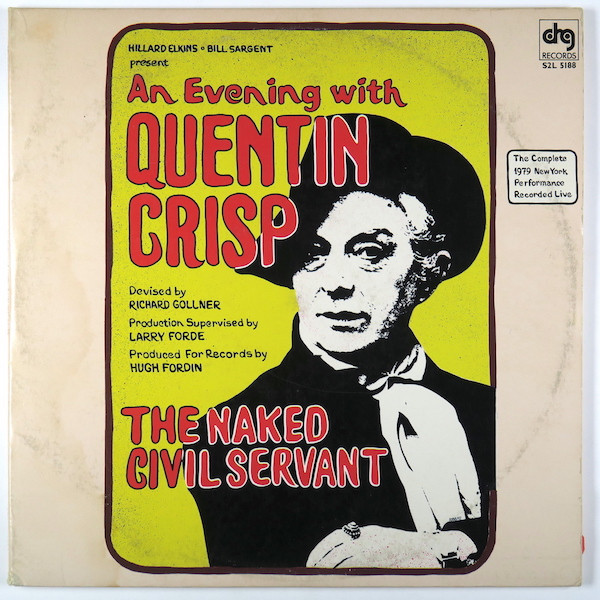
Soundtrack to the show.

Stewy also created a stencil artwork of Tony Wilson in the city as well as one of the ‘Bard of Salford’ (Salford being the city across the river from Manchester) John Copper Clarke, to whom Wilson gave his first break on TV. 

The bard himself

We’ll leave John Cooper Clarke with the last word.

Kung Fu International

The Cheshire Cat goes organic

Growing @ Field 28 is a family run organic farm and food store located near the village of Daresbury in Cheshire in the North West of England.

Using a combination of pesticide free vegetables grown on the surrounding fields and high quality baby leaf and micro greens grown indoors, Growing @ Field 28 is a most welcome addition to the local field scene. It is a part of the distinct move by farmers away from mass produced food.

As well as supplying restaurents with high quality produce there is also a food store at their site selling fruit and vegetables, eggs, bread and cakes and more!

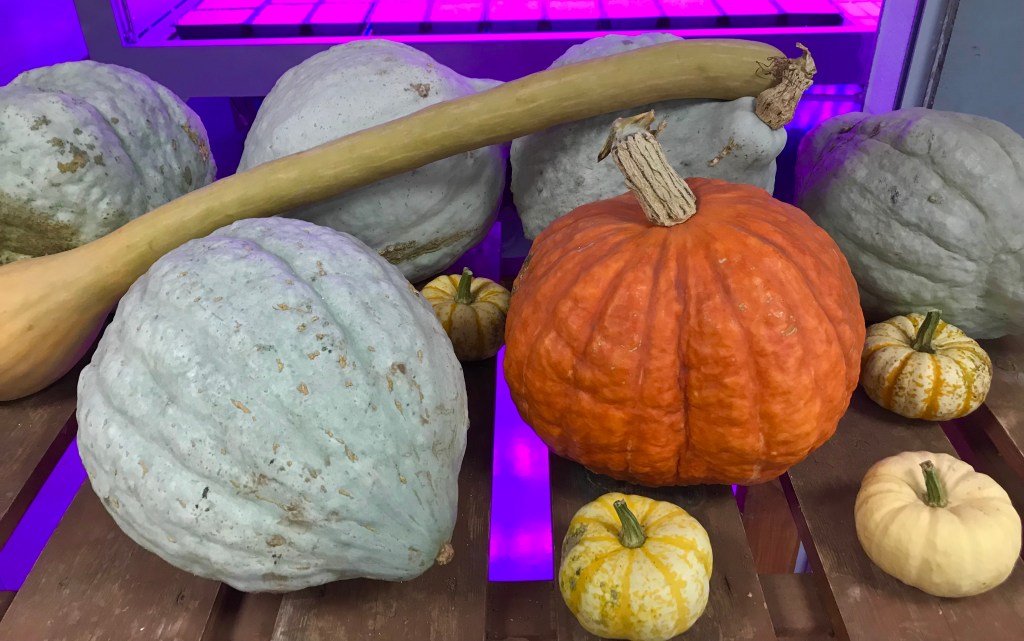
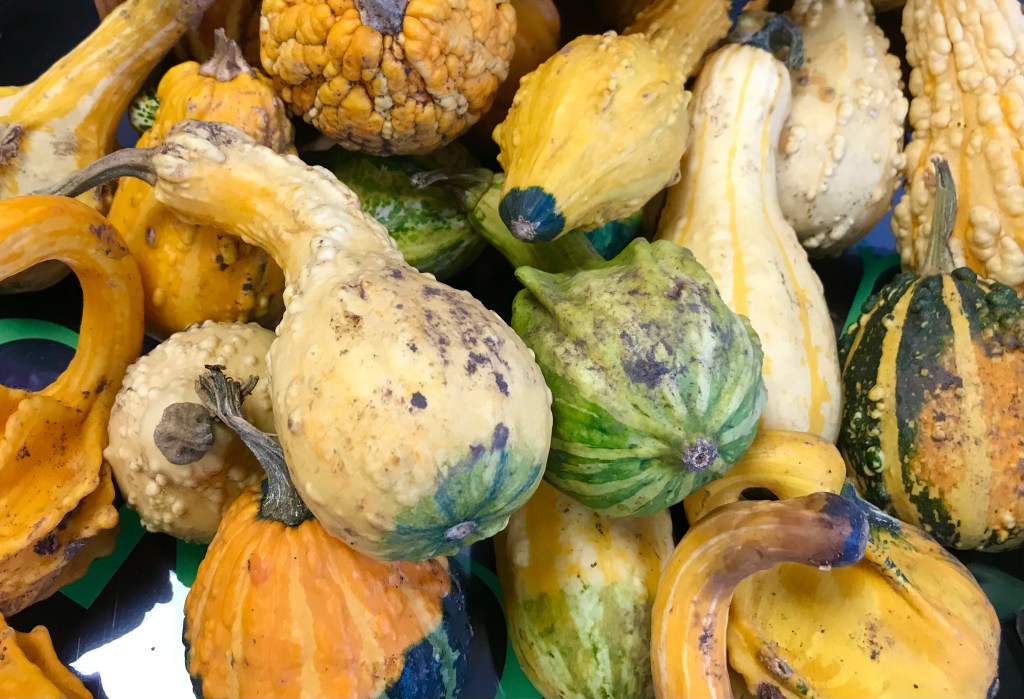
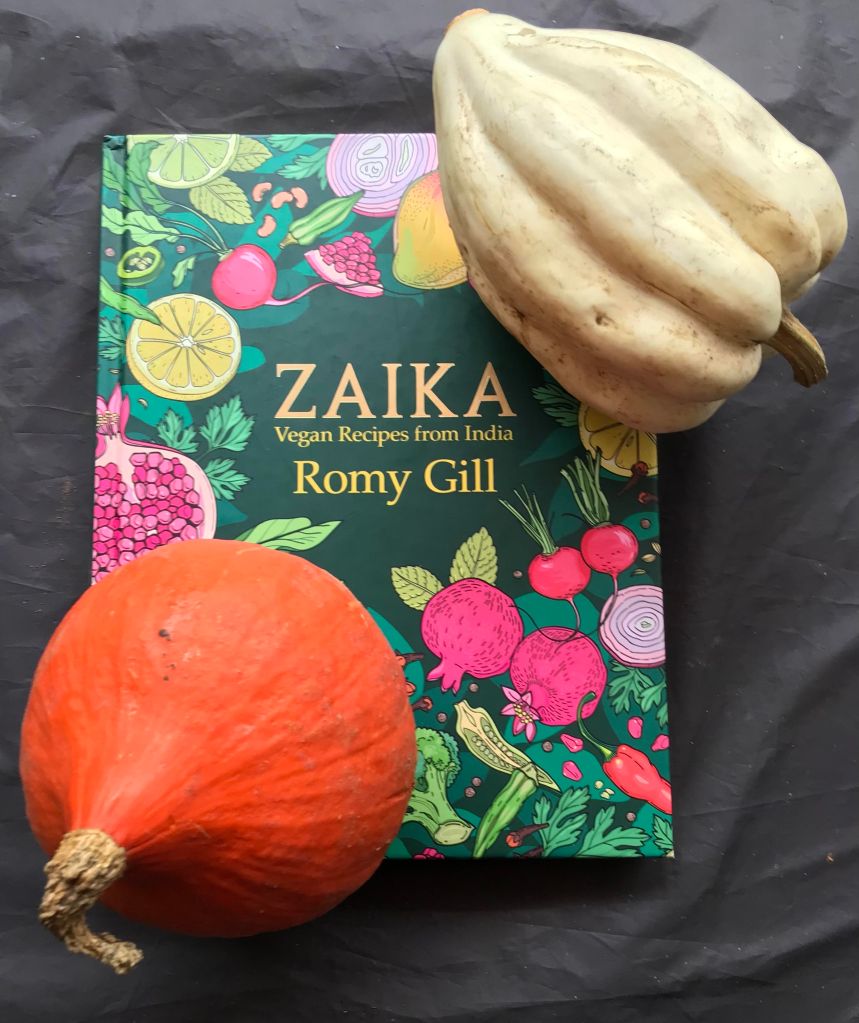
Squashes of all types

Growing @ Field 28 is well worth a visit. Their website is at https://www.field28.com.

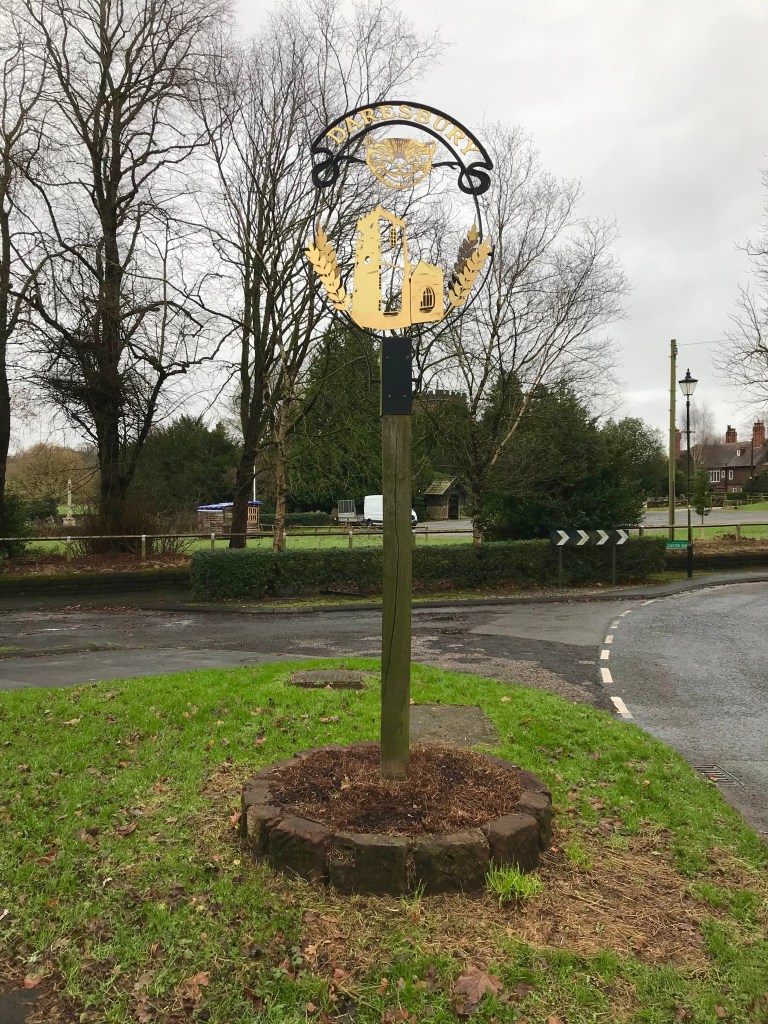
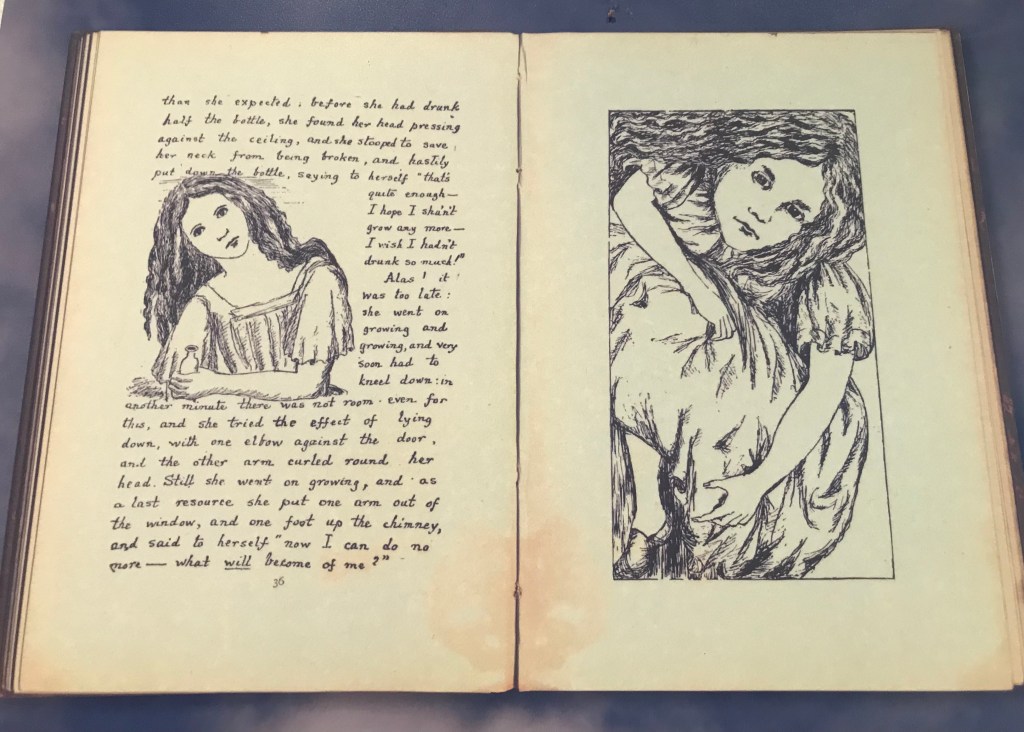
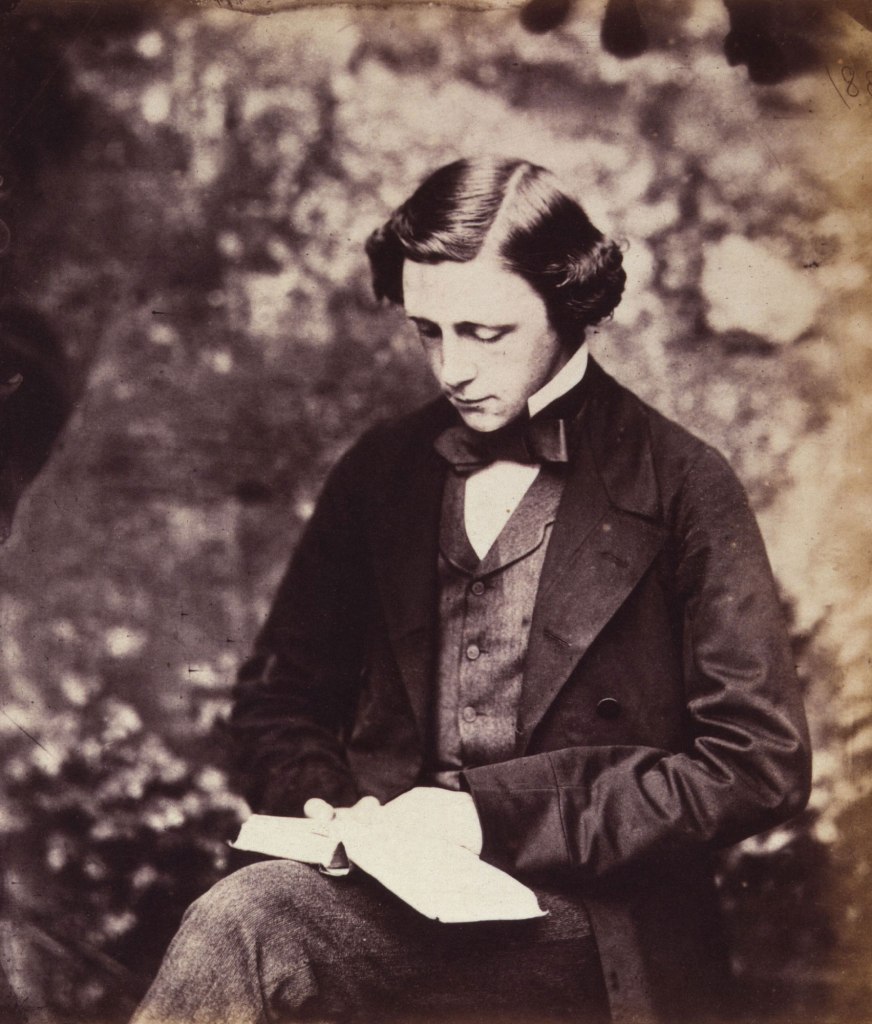
A short distance away is the village of Daresbury itself. The village, as well as being a delightful place to visit in its own right, also has an historical association with Lewis Carroll of ‘Alice in Wonderland’ fame. That association is clearly noted throughout the village.

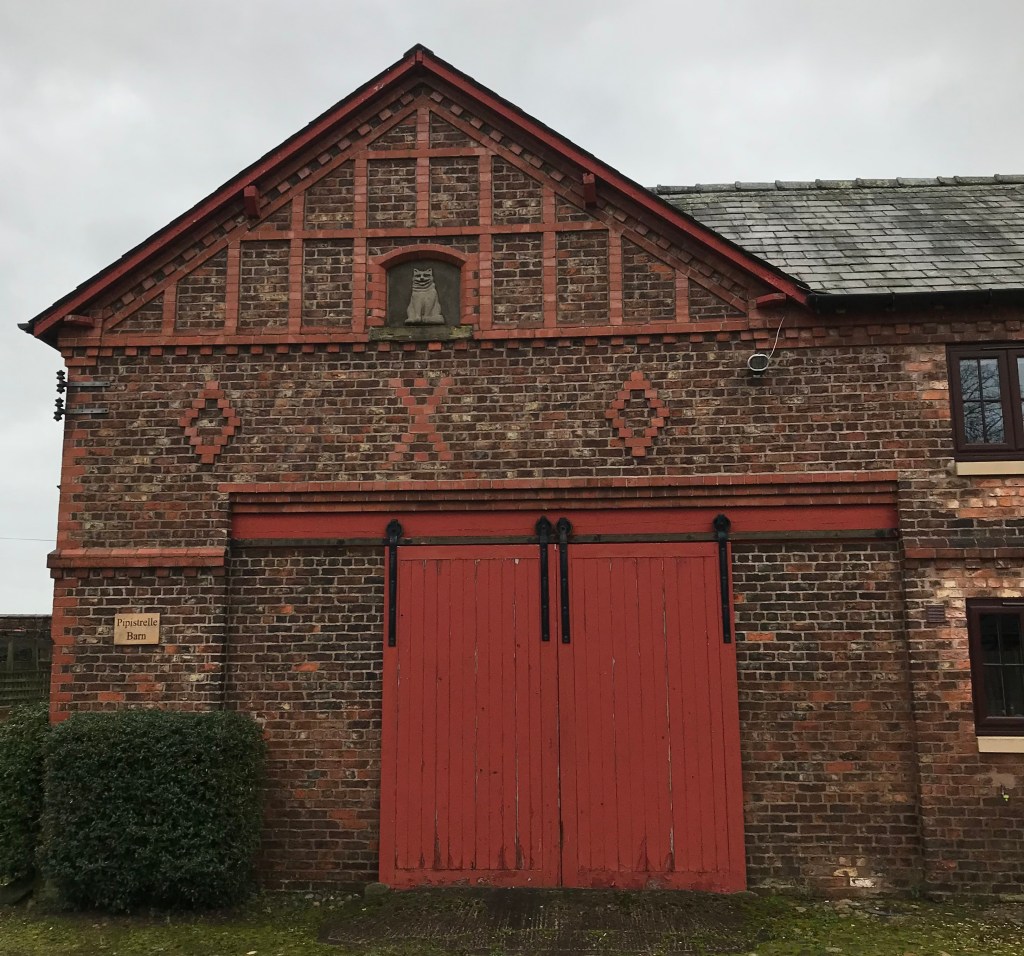
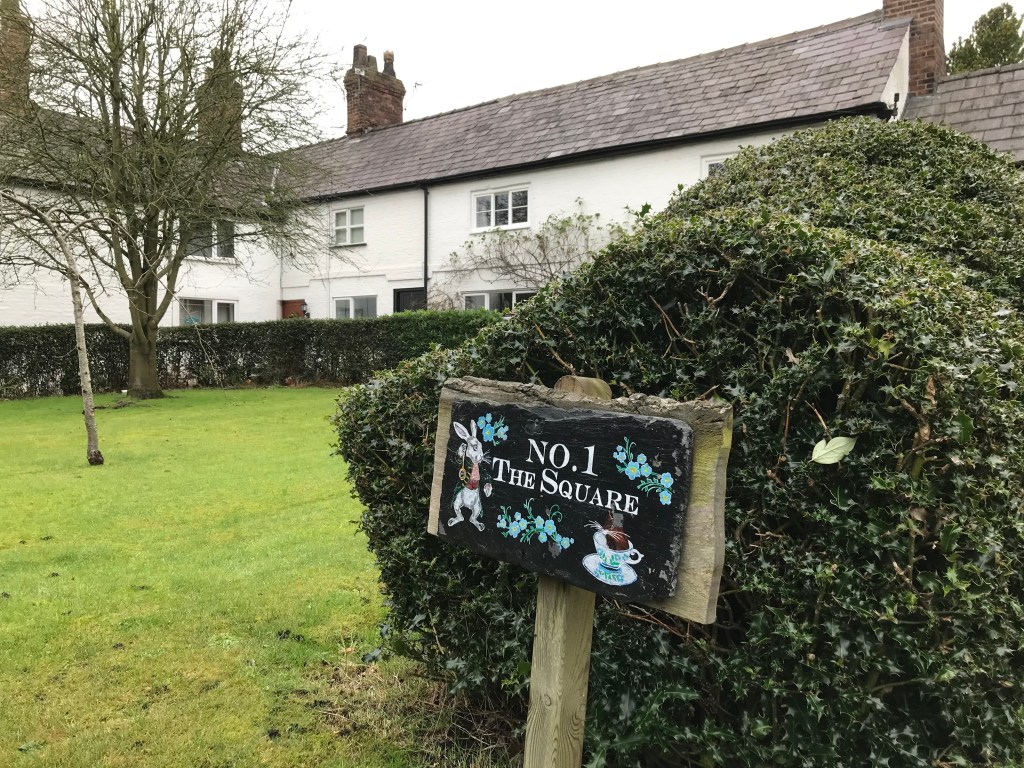
The Cheshire Cat greets you as you enter the village. We are in Cheshire after all!
Here he is again
The March Hare and a cup of tea

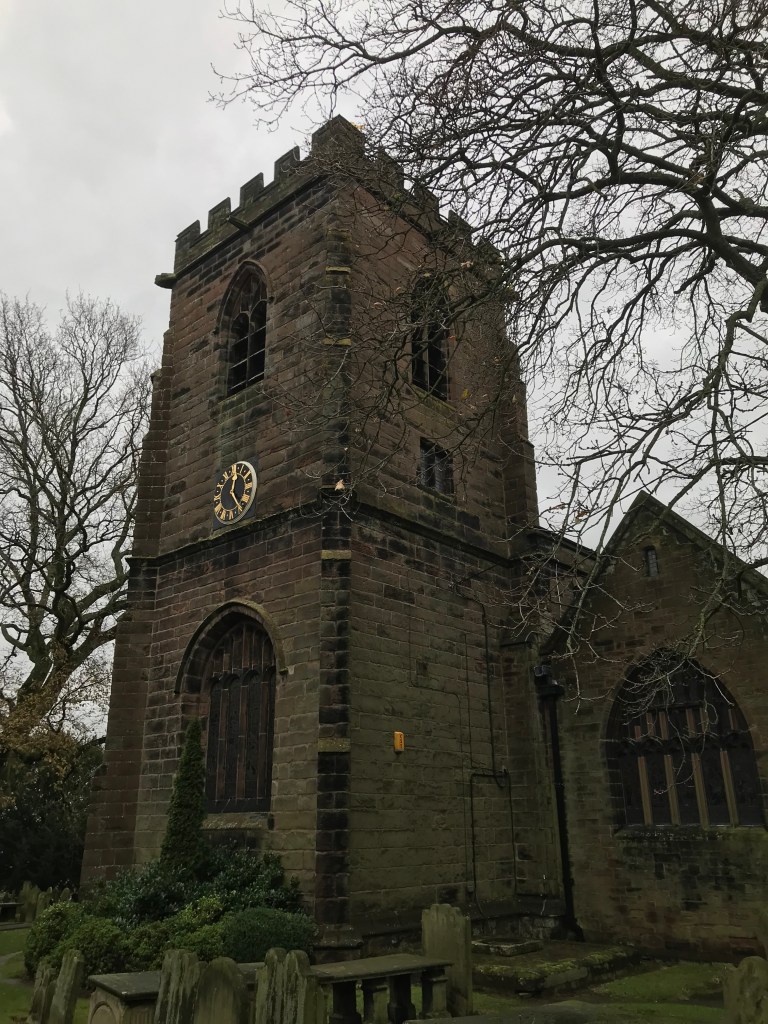
Lewis Carroll was the pen name of Charles Lutwidge Dodgson, the third son of the Reverend Charles Dodgson, the vicar of All Saints, Daresbury from 1827 – 1843.

All Saints church

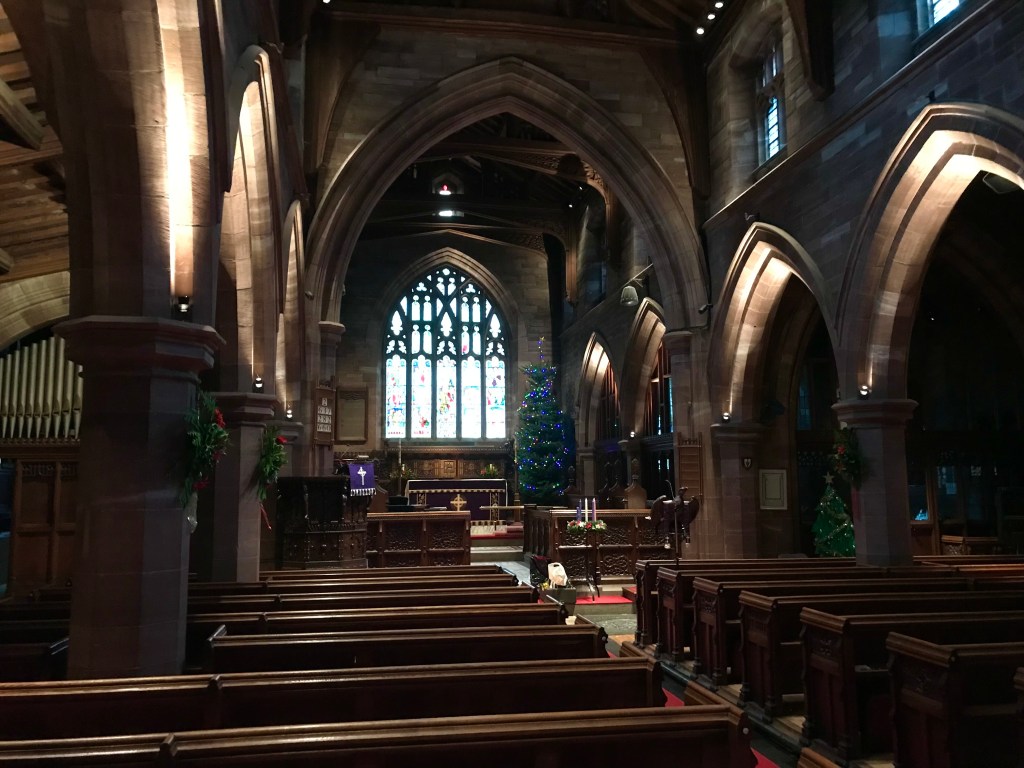
The church is the site of the Lewis Carroll centre. The centre, which attacts visitors from all around the world, is free to visit. It has lots of information on the author and the characters he created.

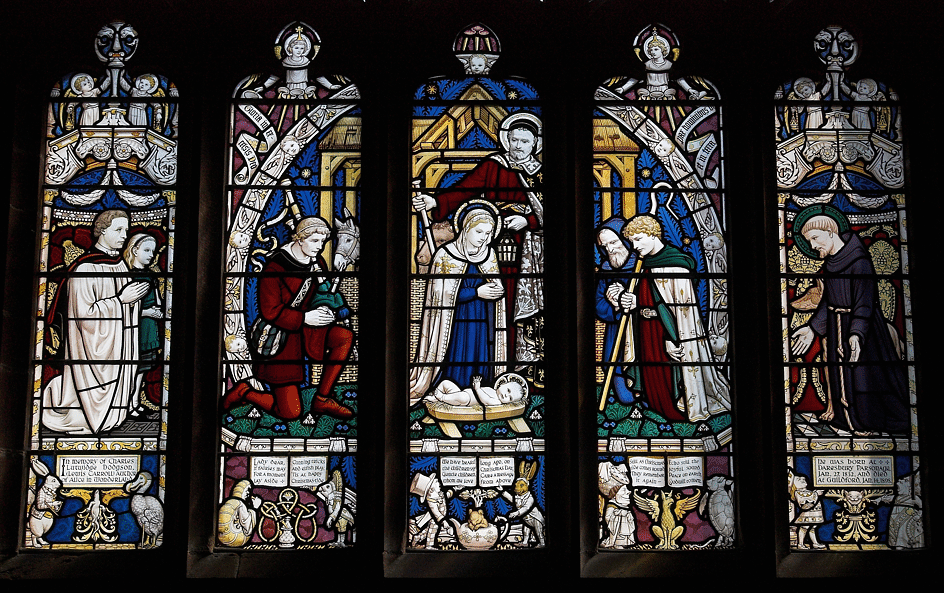
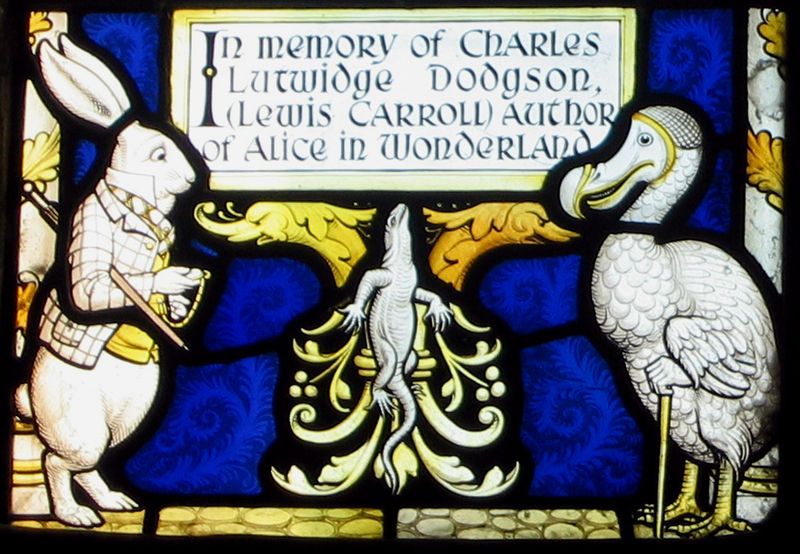
Stained glass windows in the chapel reference the novel.

The White Rabbit

For more details on the centre see http://www.lewiscarrollcentre.org.uk .

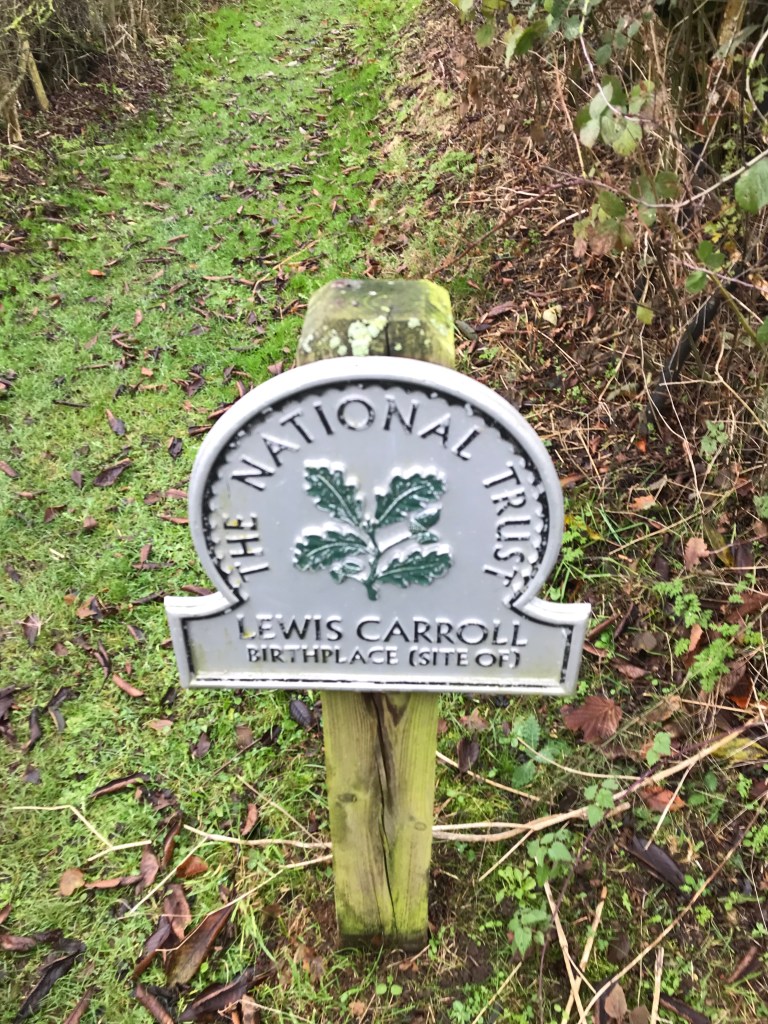
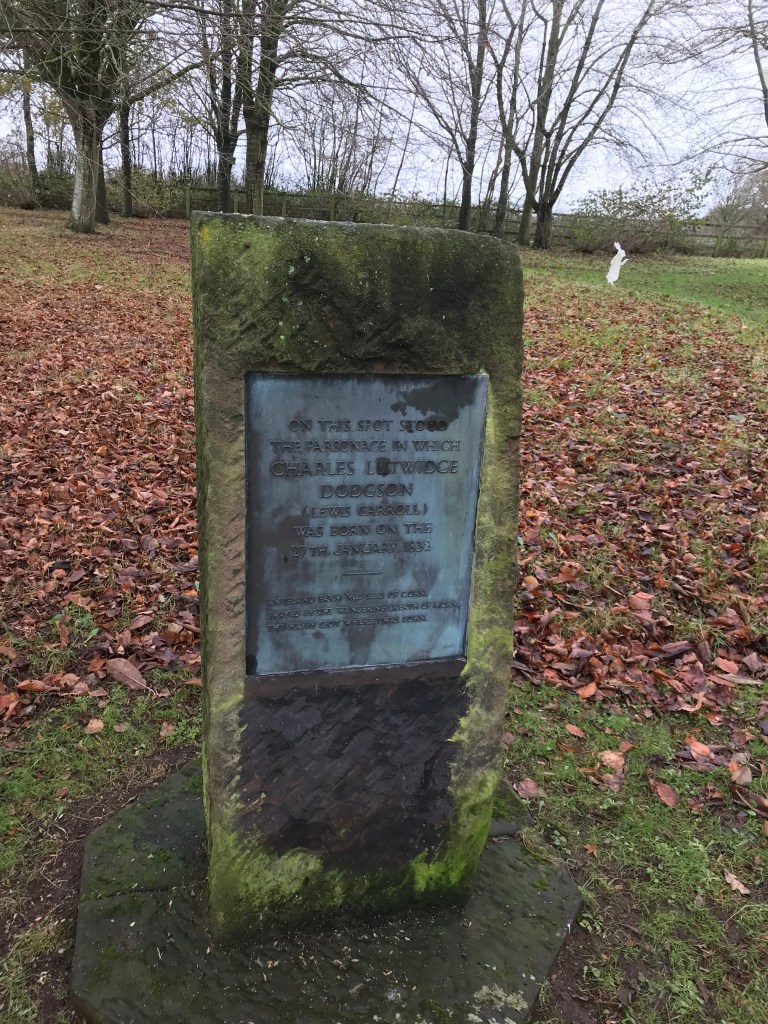
Lewis Carroll was born at the parsonage about 1.5 miles from the village.

The site is clearly marked and to reach it, simply follow the various white rabbit signs.

At the site of the parsonage

Sadly, the parsonage burnt down a number of years ago although its main entrance and outline are clearly marked in wrought iron. The foundations are visible and a sculpture of a dormouse sits where the Well once stood.

Lewis Carroll lived at the parsonage until he was 11 and then moved with his family to North Yorkshire.

An island farm mid seas of corn,
Swayed by the wandering breath of morn,
The happy spot where I was born

- Lewis Carroll

Cider and Selassie

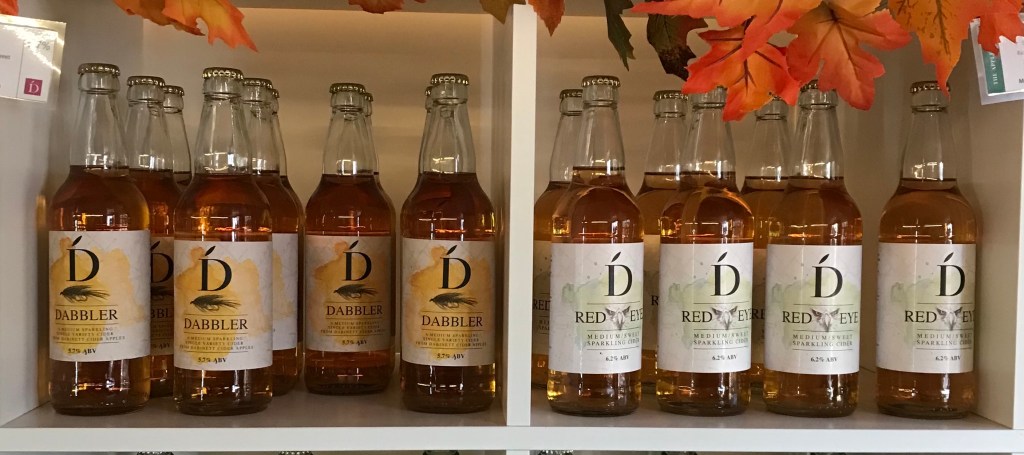
Dunham Massey is a civil parish just outside of the city of Manchester. The parish is a mix of ancient farmland and small settlements such as Dunham Town which despite the name is a village. The area is notable for the quality of its local produce such as the ciders produced by the excellent Dunham Press whose apple crops come from their own 200 year old orchards. They are the only cider producer in the North of England that we know of.

As well as their own ciders and apple juices, their shop (which is just across the way from their press) stocks guests ciders from across the UK (and even the USA) and beers from their neighbours, the Dunham Massey Brewing Co. – a local craft brewer of quality. Farm shops in the area stock an extensive range of local produce.

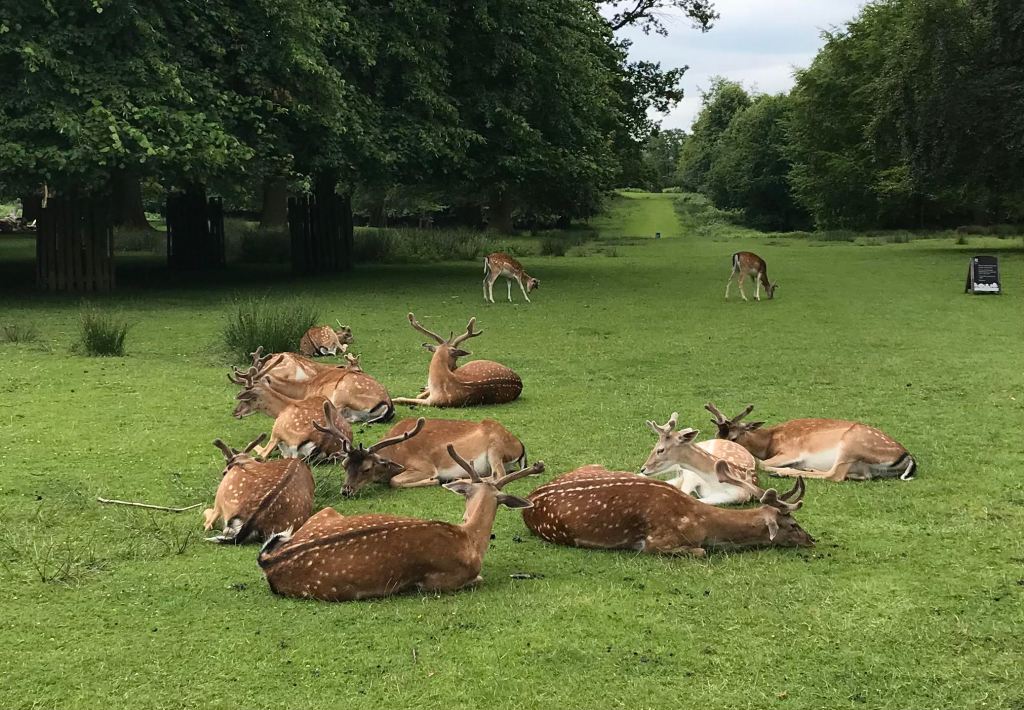
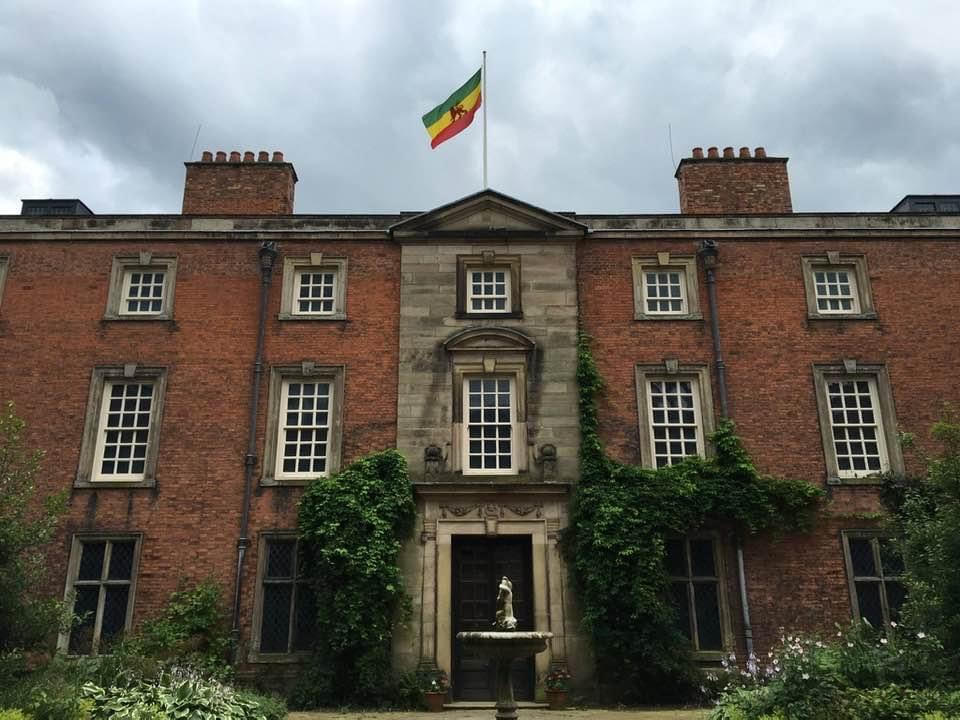
The main attraction in the locale is the nearby Georgian house and its attendant deer park. Both are extremely popular places to visit. The park itself with its ancient enclosed wall, trails and grazing deer is a particular favourite with everyone who goes there. Even royalty have visited including Emperor Haile Selassie of Ethiopia. Selassie visited the estate at Dunham Massey at the special invitation of his friend, the 10th Earl of Dunham, Roger Grey. The Emperor stayed at the house for four days in 1938.

Haile Selassie at Dunham Massey in 1938.

Roger Grey was a member of the local branch of the League of Nations which had been formed in 1920. The League, a kind of precursor to the United Nations, was the first worldwide intergovernmental body and its principal mission was to preserve and enable peaceful coexistence between nations. The League had strongly condemned Italy’s invasion of Ethiopia in 1936. The invasion had prompted Selassie to flee to England where he lived in exile until 1941.

Grey and the Emperor became firm friends and in honour of his guest, the Earl not only flew the Ethiopian flag from the main house during the Emperor’s visit but on each anniversary of the latter’s birthday, the 23rd of July each year. This practice continued until Grey’s death in 1976 but it was revived last year when once again the Ethiopian flag (with the Lion of Judah at its centre) flew from the main house. The flag is now flown annually on each anniversary of the Emperor’s birthday.

We visited the park that day and noticed the flag flying from the centre of the house. A group of Rastafarians were gathered nearby.

The Rastafarian religion was developed in Jamaica in the 1930s from the interpretation of a prophecy by local activist Marcus Garvey. Rastafarians ascribe divinity to Haile Selassie who many regard as God incarnate.

Today Rastafari is an established religious and social movement in Jamaica as well as other countries with a significant Jamaican diaspora such as the UK, USA and Canada. There is a Rastafarian community in nearby Manchester.

The diet of strict Rastafarians is vegetarian or vegan.  A vegetarian diet was adapted by the Rastafarians from indentured Indian labours (known locally as ‘East Indians’).

The founder of Rastafarianism, Leonard Howell, was apparently influenced by the food ate by those indentured Indians and that is how a vegetarian diet became a part of the religion (and it is fair to say that Indian spices and recipes have undoubtably influenced the food culture of Jamaica as whole).

The Vegetarian Society of the United Kingdom has its HQ a short walk from Dunham Massey. The Society has a cookery school and holds regular classes from tutors across a range of international cuisines. We particularly recommend the Indian food cookery classes taught by Lajina Leal.

‘Ital is vital’ as they say!