Bauhaus and Kebabs

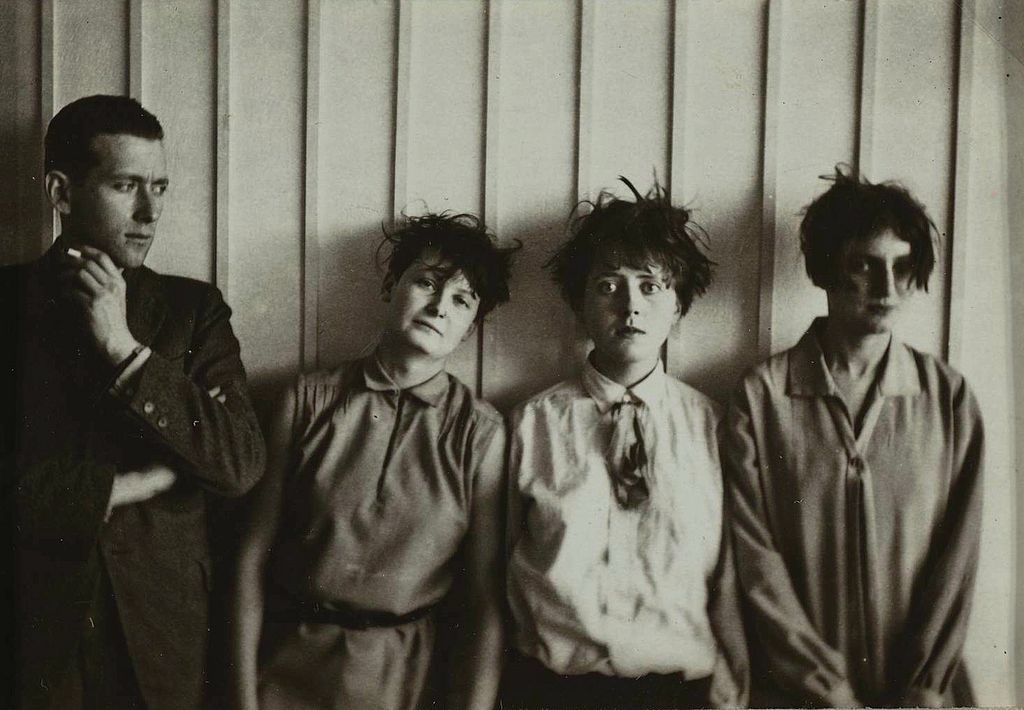
Bauhaus students, 1927*

The Bauhaus was one of the most influential movements in modern art, architecture, and design, and its brief yet dynamic history unfolded across three German cities: Weimar, Dessau, and Berlin.

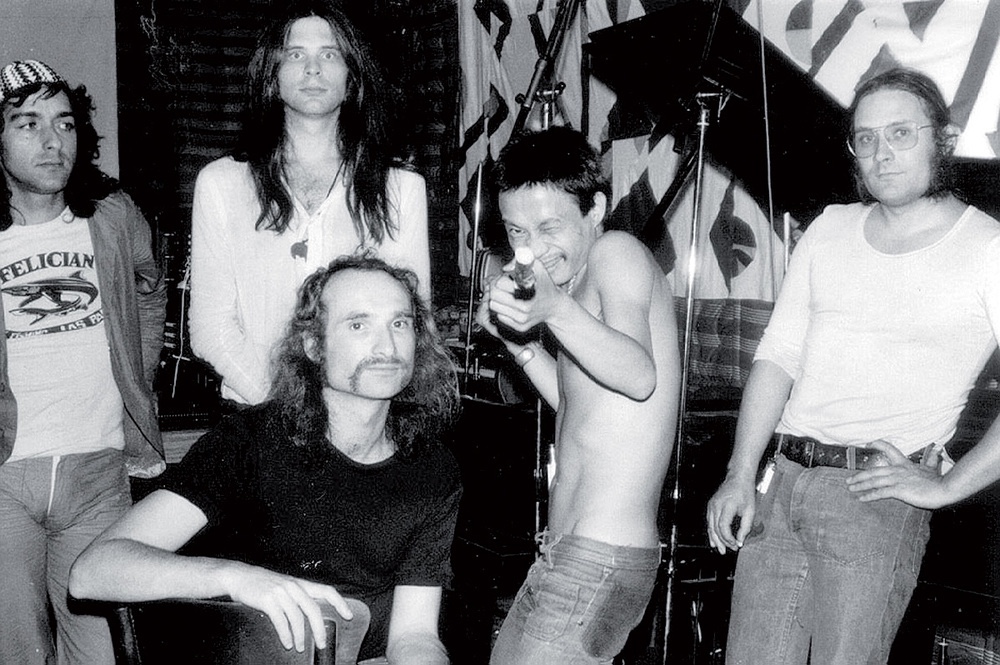
*At the Bauhaus in 1927 or at a Raincoats gig upstairs at The Chippenham in London in 1979? You choose.

Bauhaus in Weimar

Weimar holds a special place in the history of modern design as the birthplace of the Bauhaus. Founded in 1919 by architect Walter Gropius, the Bauhaus began as an ambitious experiment in redefining art, architecture, and design education. It sought to merge fine art with craftsmanship, breaking down the traditional hierarchies between artist and artisan. During its formative years in Weimar, the Bauhaus laid the theoretical and artistic foundations that would later influence generations of architects, designers, and educators across the globe.

Housed in the former Grand-Ducal Saxon School of Arts and Crafts, the early Bauhaus attracted a range of pioneering artists, including Johannes Itten, Lyonel Feininger, Paul Klee, and Wassily Kandinsky. The curriculum combined workshops, theory, and experimentation, with an emphasis on unity between function and aesthetics. While the Weimar period was marked by creative innovation, it also faced political opposition from conservative forces who viewed the school as too radical. Ultimately, this tension led to the Bauhaus being forced out of Weimar in 1925, when it relocated to Dessau.
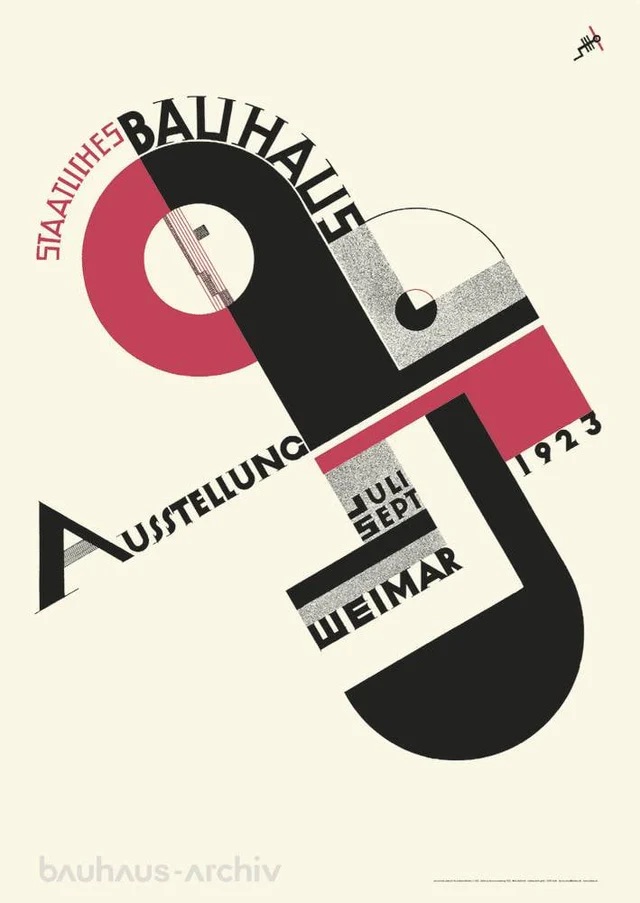
Weimar 1923

Today, the legacy of the Bauhaus remains deeply embedded in Weimar’s cultural identity. The original Bauhaus building on the campus of what is now the Bauhaus-Universität Weimar has been preserved and restored. In 1996, it was designated a UNESCO World Heritage Site, along with the Bauhaus buildings in Dessau. The university continues the school’s educational legacy, offering programs in architecture, design, media, and the arts, echoing the interdisciplinary spirit of the original Bauhaus.

In addition, the Bauhaus Museum Weimar, reopened in 2019 to mark the centenary of the school’s founding, showcases a huge collection of artifacts, furniture, documents, and artworks from the early Bauhaus period.

Whilst in Weimar, take a look at the Hotel Elephant and its Bauhaus legacy in the main square. The hotel became an informal gathering place for many Bauhaus artists and intellectuals. Though not designed by Gropius himself, the hotel’s modernist renovation in the 1930s reflected the aesthetic ideals championed by the Bauhaus, making it a symbolic extension of the movement’s presence in the city.
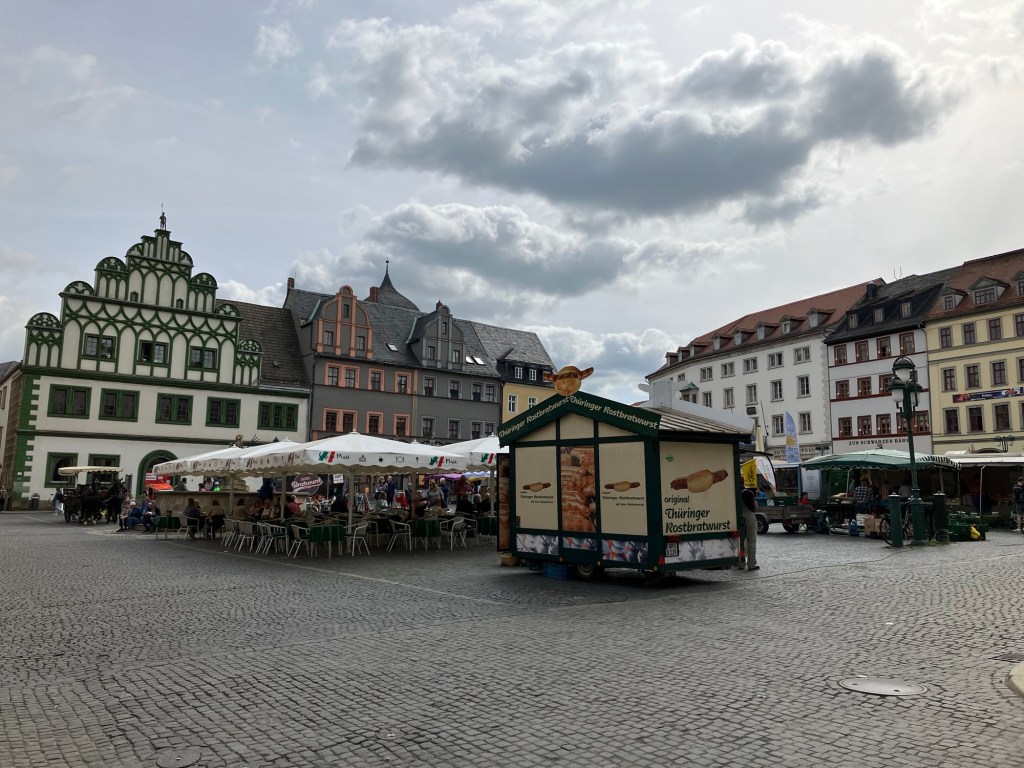
The main square in Weimar

The current incarnation of the Hotel Elephant combines modern luxury with a reverence for the city’s past. Originally established in the 17th century, the hotel has undergone several transformations, the most significant of which occurred in the early 20th century, aligning it with the radical vision of the Bauhaus. When the movement was founded by Walter Gropius in Weimar in 1919, the city became a nexus for revolutionary ideas in design and aesthetics. The Hotel Elephant, located just steps away from many of the cultural institutions that supported Bauhaus ideals, naturally became a meeting place for many of its leading figures.
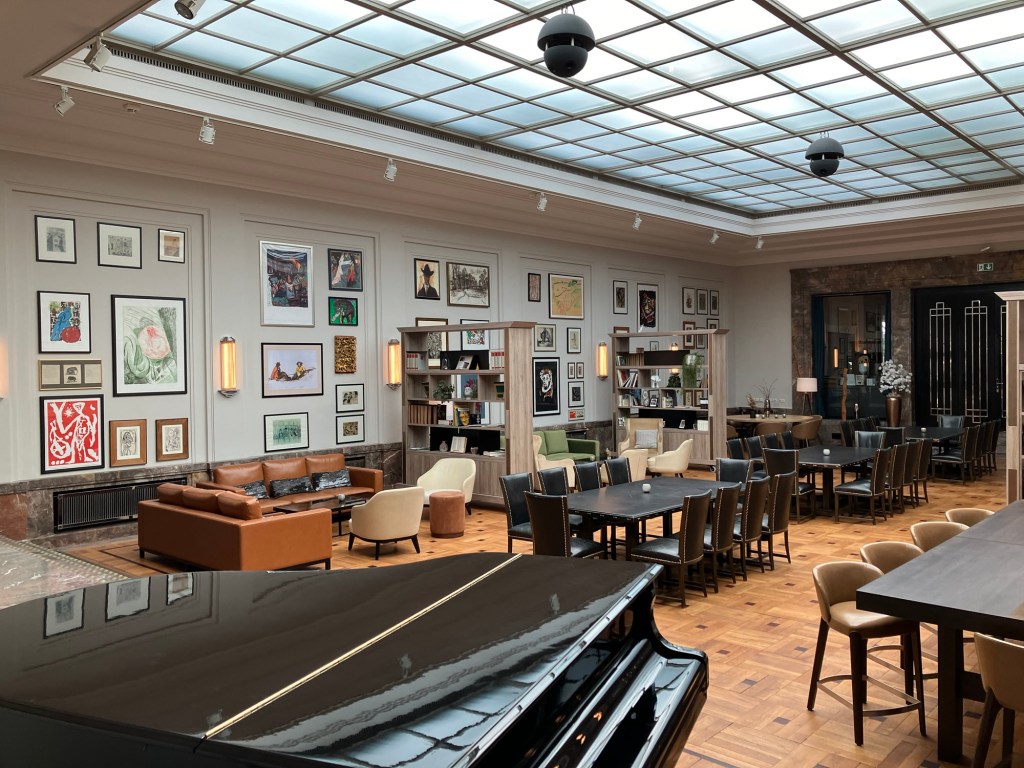
Elephant interior

What makes the Hotel Elephant’s connection to Bauhaus more than incidental is its embodiment of the movement’s principles: clarity of form, functionality, and the integration of art into everyday life. The hotel’s modernist redesign in 1938 reflected  Bauhaus-inspired sensibilities, emphasizing clean lines, geometric shapes, and a harmonious blend of materials.

Among its most famous guests was the playwright Bertolt Brecht, himself influenced by the intellectual currents of Bauhaus and modernist theory. The hotel also served as a gathering point for other avant-garde thinkers and artists who shaped the cultural fabric of the early 20th century.

The design of the ground floor of the hotel is a seamless combination of art and comfort. At its heart is the Lichtsaal, a light-filled lounge where velvet-upholstered armchairs, leather sofas, and polished parquet floors create an inviting, living-room atmosphere. The walls are adorned with a carefully curated art collection featuring works by early Modernists such as Lyonel Feininger, Max Beckmann, and Otto Dix, alongside contemporary pieces that reflect Weimar’s rich artistic legacy. Drawing inspiration from Goethe’s Theory of Colours, the interior palette fuses muted greys, deep blues, and emerald tones with Art Deco accents, evoking both intellectual depth and visual warmth.
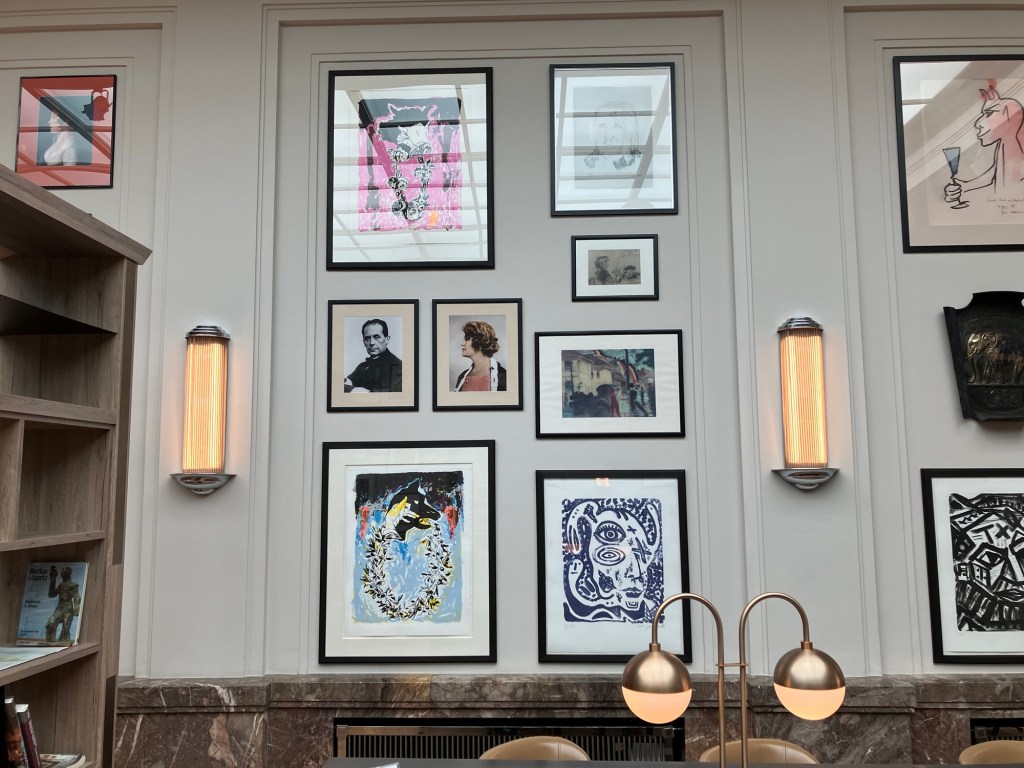
Elephant interior with photograph of Walter Gropius

The hotel is indeed a stylish tribute to the Bauhaus. 

Bauhaus in Dessau

In 1925, following political pressure in conservative Weimar, the Bauhaus relocated to the city of Dessau in Saxony, where it entered its most productive and internationally influential phase.

Contemporary Dessau is a modest-sized city with a population of just under 80,000. While it was heavily damaged during World War II, its postwar reconstruction included both modernist housing and socialist-era architecture. Today, the city is known primarily for its Bauhaus heritage, which attracts thousands of visitors and architecture students from around the world.

In Dessau, the Bauhaus found a more industrially supportive environment, aligning with the city’s aspirations to become a center of modern industry and innovation. Gropius designed the new Bauhaus building, completed in 1926, as a radical embodiment of the school’s ideals. It featured a striking glass curtain wall, asymmetrical layout, and open interiors that emphasized light, transparency, and functional design. The school operated here until 1932, when it came under increasing political pressure from the Nazi regime, leading to its move to Berlin and eventual closure in 1933.
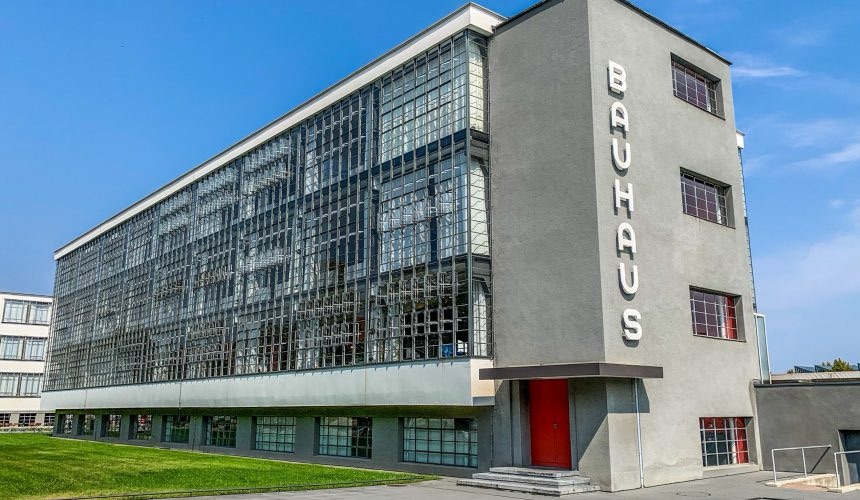
Dessau

During its time in Dessau, the Bauhaus school attracted some of the 20th century’s most important artists and designers. Among them were Paul Klee, Wassily Kandinsky, László Moholy-Nagy, and Josef Albers, who served as masters and developed experimental and interdisciplinary approaches to teaching art, architecture, typography, and product design. The Bauhaus became known for its revolutionary educational model and its efforts to integrate art with modern technology and everyday life.

In addition to the school building, Gropius designed a series of residences known as the Meisterhäuser (Masters’ Houses), built for the school’s leading faculty. Located near the school, these duplex and single-family homes exemplified Bauhaus architecture through their clean lines, flat roofs, geometric forms, and minimalist interiors. Each house was designed as a modular space that could accommodate both living and working needs, further embodying the school’s emphasis on functional design.
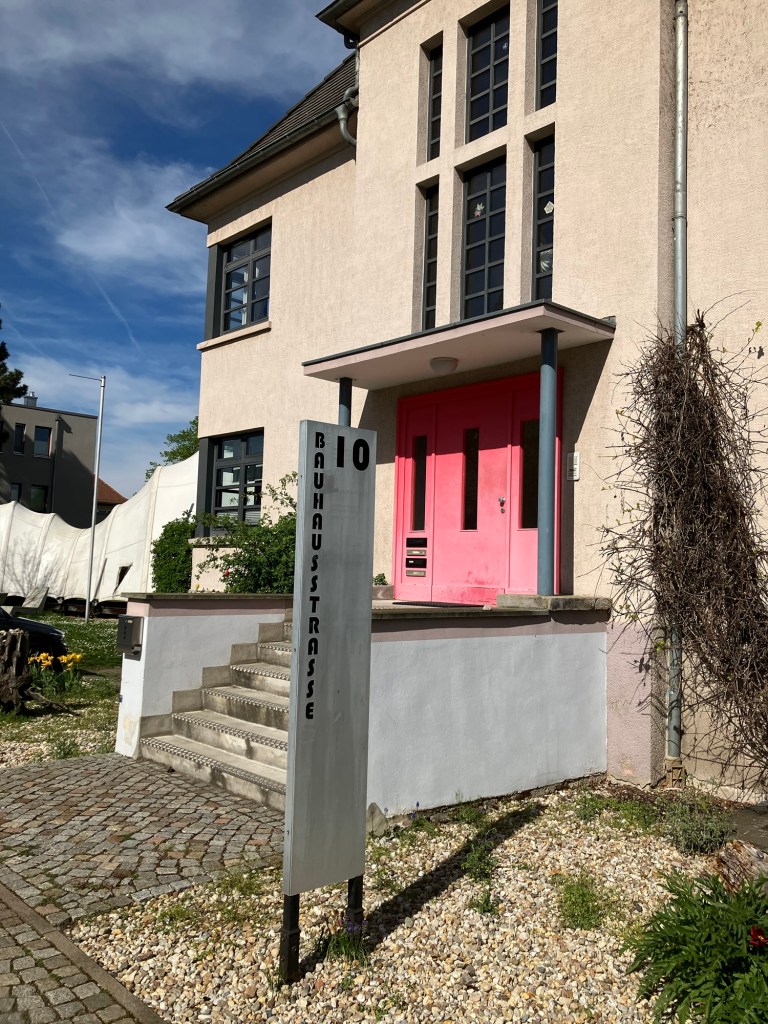
Bauhaus Straße

Despite war damage and postwar neglect, efforts to preserve and restore the Masters’ Houses began in the late 20th century. Some original buildings were reconstructed or rehabilitated using historic plans and photographs, while others, notably the Gropius and Moholy-Nagy houses, were reinterpreted as abstract volumes to reflect their destruction during WWII.

To better preserve and present the legacy of the movement, the Bauhaus Museum Dessau opened in 2019, coinciding with the Bauhaus centenary. Designed by the Spanish architecture firm addenda architects, the museum is a minimalist structure of steel and glass that reflects Bauhaus ideals while also serving as a contemporary cultural hub. The museum houses over 49,000 objects, making it one of the world’s most significant collections related to the Bauhaus. Exhibitions explore the school’s history, its pedagogical experiments, and its ongoing global influence on modern design and architecture.
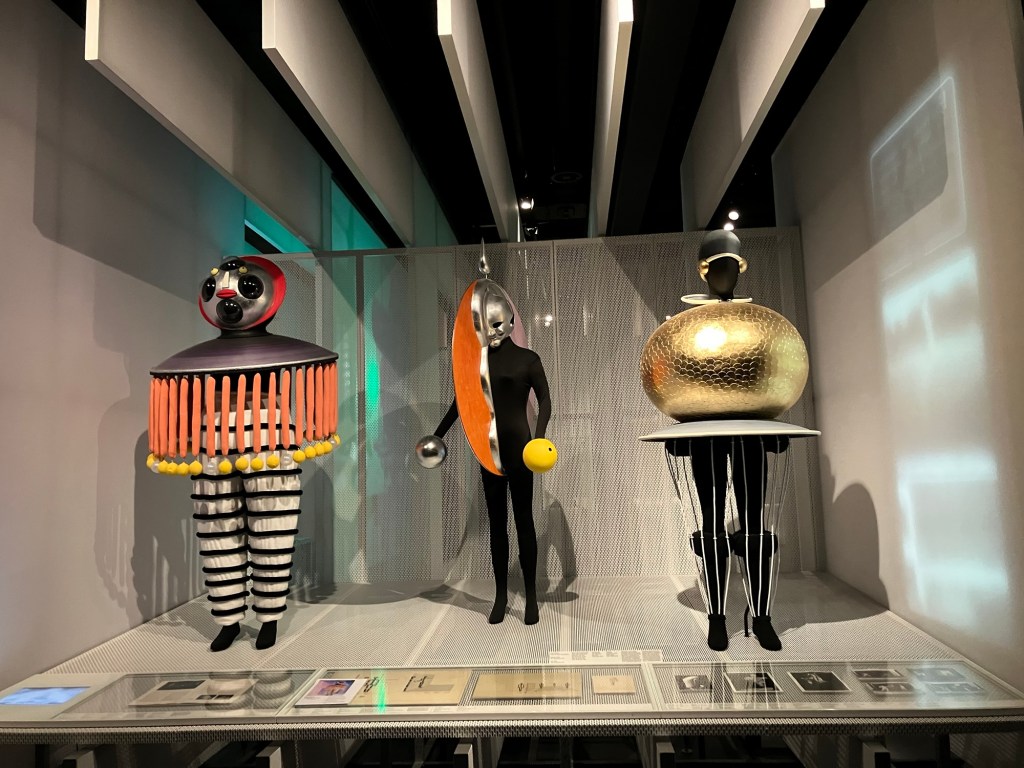
Triadic Ballet costumes by Oskar Schlemmer

Bauhaus in Berlin

The Bauhaus was forced to close in Dessau in 1932 due to increasing political pressure from the rising Nazi regime. The school moved to Berlin for what would become its final and most difficult phase.

The move to Berlin was spearheaded by architect Ludwig Mies van der Rohe, who had taken over as director of the school in Dessau in 1930. In Berlin, the Bauhaus no longer had public funding or official institutional support, so it reopened as a private school in a disused factory building in the Steglitz district. This final phase marked a shift toward a more architectural and less craft-based focus under Mies’s direction.

However, the school’s time in Berlin was short-lived. The Nazi regime viewed Bauhaus as a breeding ground for what it called “degenerate art” and a haven for leftist and internationalist ideas. In April 1933, only a few months after Hitler came to power, the Gestapo raided the Berlin school. In response to increasing harassment and pressure, Mies van der Rohe and the other faculty members voted to voluntarily dissolve the Bauhaus in July 1933.

Although the physical school ceased to exist, the Bauhaus movement continued internationally. Many of its key figures fled Nazi Germany and emigrated to countries such as the United States, the Soviet Union, and Palestine. 

The Bauhaus presence in Berlin today is in a state of transition. Whilst the main Bauhaus‑Archiv / Museum für Gestaltung is undergoing renovation and expansion, a temporary venue has been opened at Haus Hardenberg, located on Knesebeckstraße  in the Charlottenburg district.  This small, interim space serves as a pop‑up exhibition site, bauhaus‑shop, and event venue, highlighting collections related to design, architecture, and contemporary issues. 
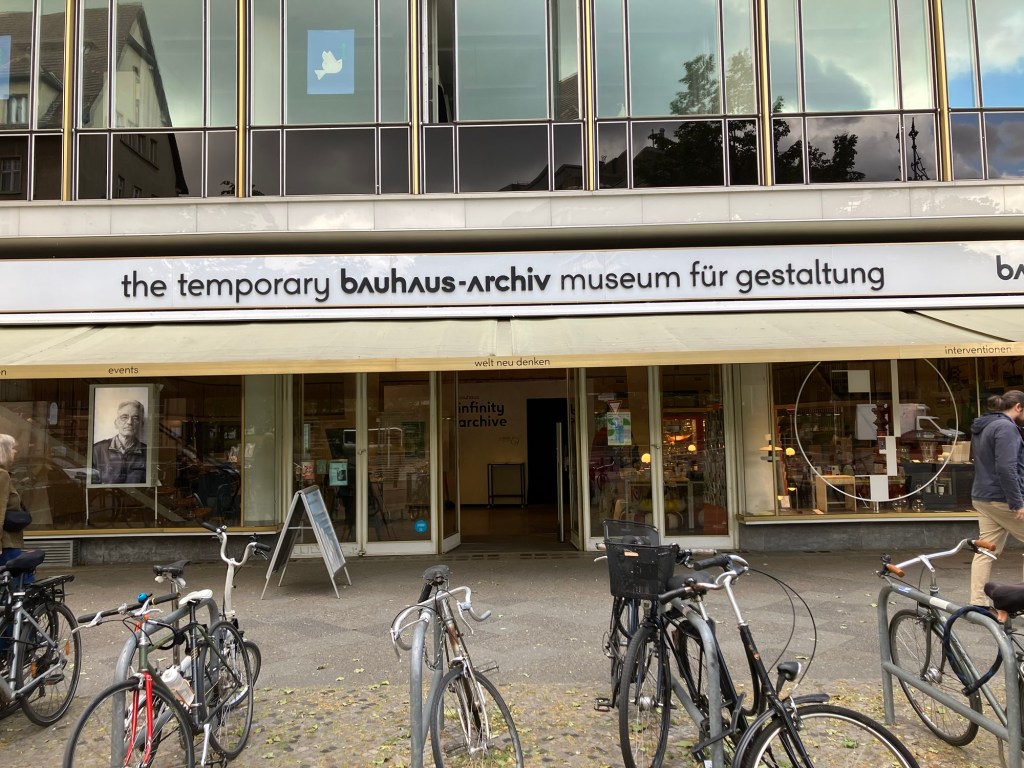
The temporary bauhaus-archiv in Berlin

After visiting the temporary bauhaus‑archiv we made our way down Hardenbergstraße, past the elegant facade of the Renaissance-Theater to the Zoologischer Garten station for lunch. Forget the regrettable Curry Wurst, a Dőner  Kebab beckoned. If the Bauhaus is one of the country’s major cultural achievements, the Dőner Kebab is undoubtably one its culinary icons. With over 1600 outlet’s citywide, Berlin is widely considered the birthplace of the modern Döner Kebab sandwich, thanks to Turkish immigrant Kadir Nurman, who began selling it in the 1970s at West Berlin’s Zoologischer Garten station.

The Döner Kebab has taken distinct forms in the UK and Germany, each reflecting the culinary habits, cultural histories, and migration patterns of their respective societies. While both serve as a popular form of fast food, their reputation and quality diverge significantly.

In the United Kingdom, the typical doner kebab is often seen as a late-night indulgence—greasy, heavily salted, and served from takeaway shops catering to post-pub crowds. The meat is frequently processed and reconstituted, shaved from a large cone of compressed lamb or beef, sometimes of uncertain provenance. It’s commonly served in pita bread with shredded lettuce, raw onions, and chili sauce, often dripping with fat and served with chips. For many in the UK, the doner is associated with hangovers rather than culinary satisfaction, and is frequently viewed as low-quality or unhealthy.
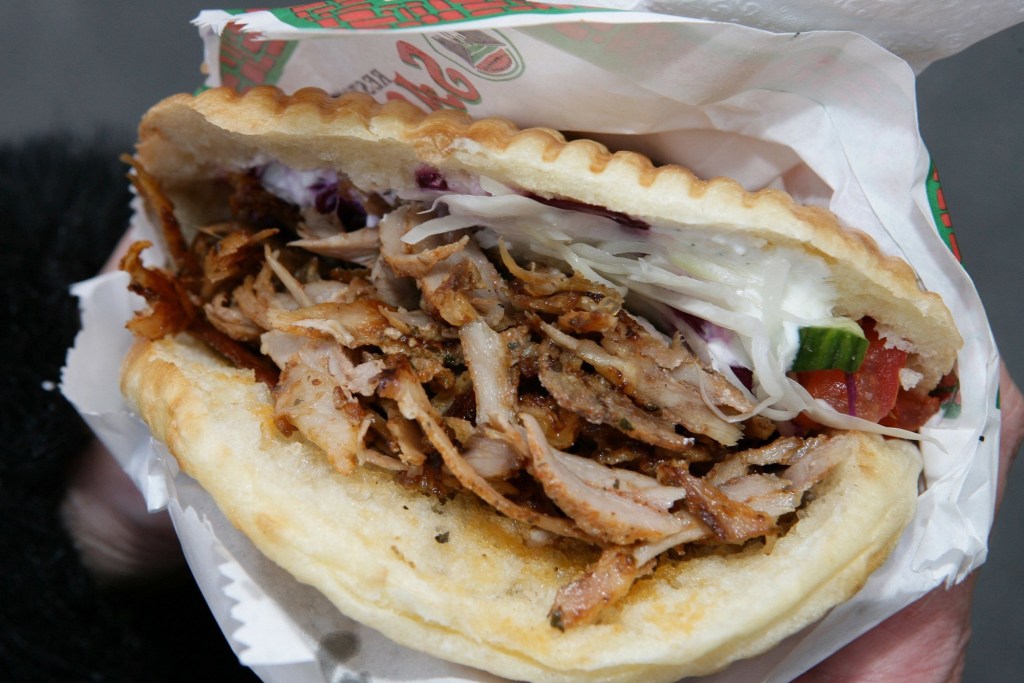
Grease is the word

By contrast, in Germany, particularly in Berlin, the Döner Kebab has developed into a national street food institution, often praised for its freshness, quality, and variety. Typically made with marinated slices of veal, chicken, or beef (rarely lamb), the German Döner includes crisp vegetables like cabbage, tomato, cucumber, and onion, along with homemade sauces—yogurt-based, garlic, herb, or spicy chili. It’s usually wrapped in fluffy Turkish flatbread or Dürüm (thin lavash) and prepared to order. The emphasis is on balance and freshness, and many shops offer vegetarian and vegan options with grilled halloumi, falafel, or seitan. In Germany, the Döner is not just a snack, but a respectable, affordable meal enjoyed across all demographics.

A far tastier option

We think that there are conceptual parallels between the Dőner Kebab in Germany and the Bauhaus. They both embody principles of modernity, functionality, and cultural synthesis, making them conceptually parallel in several striking ways.

The Bauhaus championed the idea that design should serve everyday needs. Its mantra, “form follows function,” emphasized simplicity, clarity, and usefulness. Similarly, the döner kebab—particularly as adapted in Germany—is a highly functional food. It’s designed for urban living: portable, efficient, and complete in one hand-held form. Like a Bauhaus object, it strips away unnecessary elements to focus on what works.

Both the Bauhaus and the German döner are also products of cultural fusion. Bauhaus design integrated ideas from multiple disciplines and cultures to create something universally modern. The döner kebab, created by Turkish immigrants and adapted for German tastes, is a hybrid of Middle Eastern tradition and European pragmatism—an edible symbol of cosmopolitanism.

Additionally, each reflects a commitment to mass accessibility. Bauhaus sought to democratize good design through industrial production; the döner is inexpensive and ubiquitous, serving everyone from students to workers. Both exist comfortably within the rhythms of modern, urban life.

Finally, their modular, repeatable nature underscores a shared design logic. Bauhaus structures were often modular and adaptable; the döner is constructed from standardized parts—bread, meat, salad, sauce—easily varied yet fundamentally consistent.

In essence, the German döner kebab and the Bauhaus share a conceptual foundation rooted in function, accessibility, modernism, and synthesis. One feeds the stomach, the other the senses—but both are crafted for the modern world.

Bauhaus was an essentially German creation and whilst the Dőner Kebab may have been greatly popularised and even conceived in German, it remains an essentially Turkish creation. 
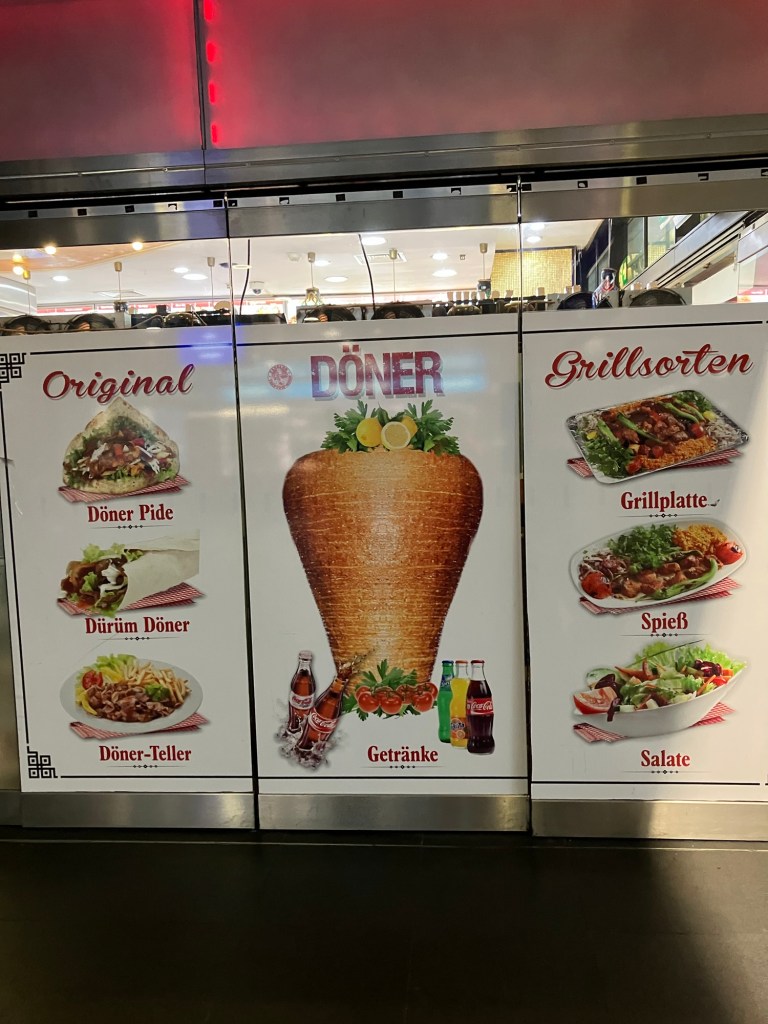
Whatever appeals

The nearest commercial food outlet to the Bauhaus campus in Dessau is the redoubtable ‘Enfes Dőner Kebab am Bauhaus’.
Japan, food and Bourdain

To some in the West, Japan can seem like a land of cliches, no more so than with preconcoeved notions of it’s food. 

Here are some of the more common misconceptions 

All Japanese food is sushi: While sushi is indeed a popular dish, Japanese cuisine is incredibly diverse and includes a wide range of dishes that have nothing to do with sushi, such as ramen, udon, soba, okonomiyaki, and more.

Japanese food is always healthy: While many Japanese dishes are indeed healthy, there are also plenty of indulgent and unhealthy dishes, like ramen with its high sodium content, or fried foods like tempura and katsu.

 All Japanese food is raw: While raw fish and seafood are popular ingredients in Japanese cuisine and sushi itself is much beloved in the country, the average Japanese person doesn’t eat sushi as often as one would think. In fact,  most Japanese people eat sushi about 2-3 times a month, although this can vary depending on personal preferences and the season and it is hardly a staple of the daily diet for most people.

Westerners often perceive Japanese food, particularly high-end sushi and sashimi, to be expensive. This perception is fueled by the high prices found at upscale Japanese restaurants in Western countries, as well as media portrayals of luxurious Japanese dining experiences. Additionally, ingredients like fresh seafood and imported Japanese products can drive up the cost of Japanese cuisine outside of Japan.

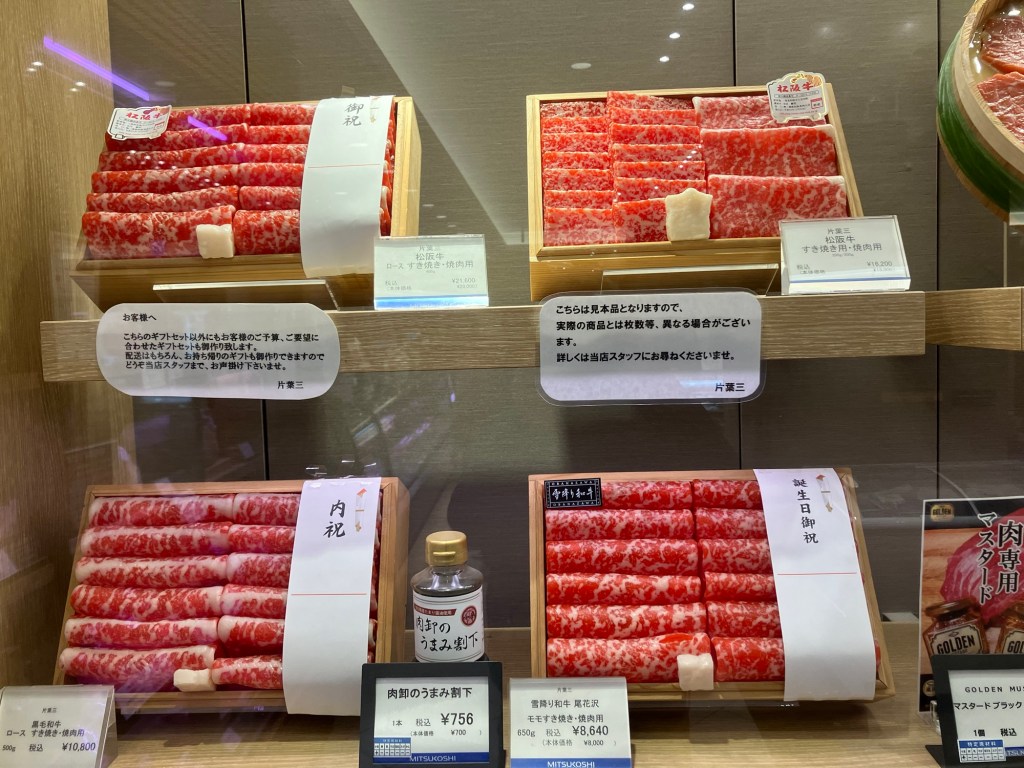
Kobe beef

However, in reality, everyday Japanese food in Japan is not necessarily expensive. In fact, many dishes like ramen, yakitori, and udon can be quite affordable, especially at local, non-touristy eateries. Street food and local markets also offer budget-friendly options for those looking to sample a variety of Japanese flavors without breaking the bank.

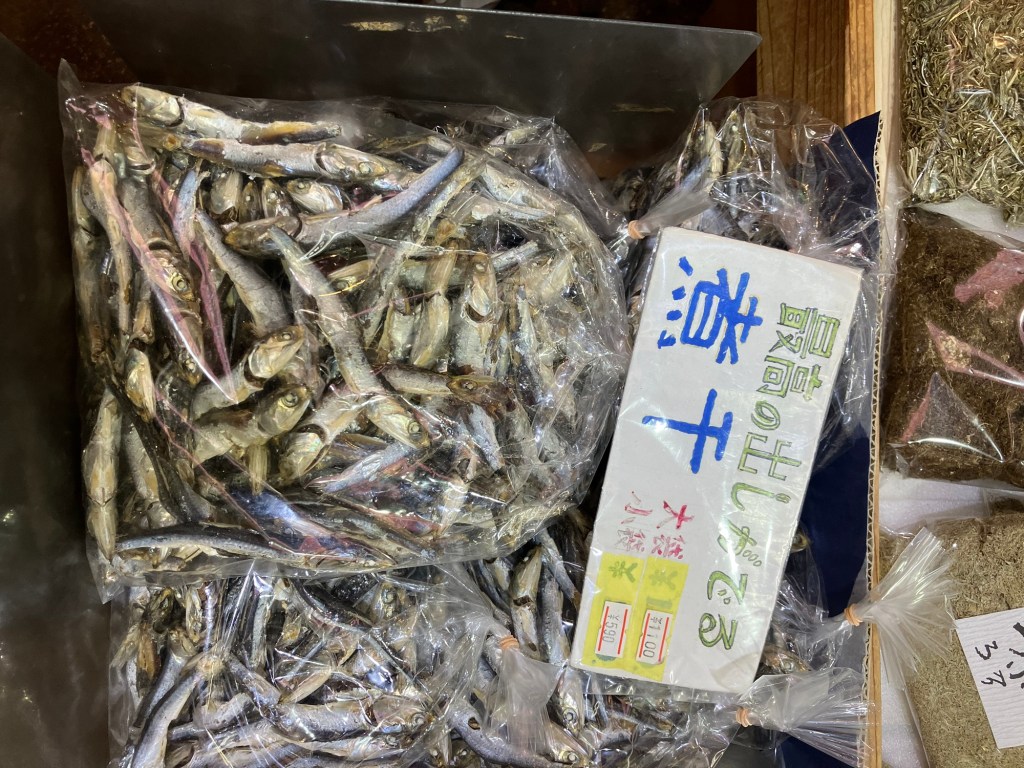
Market pickles

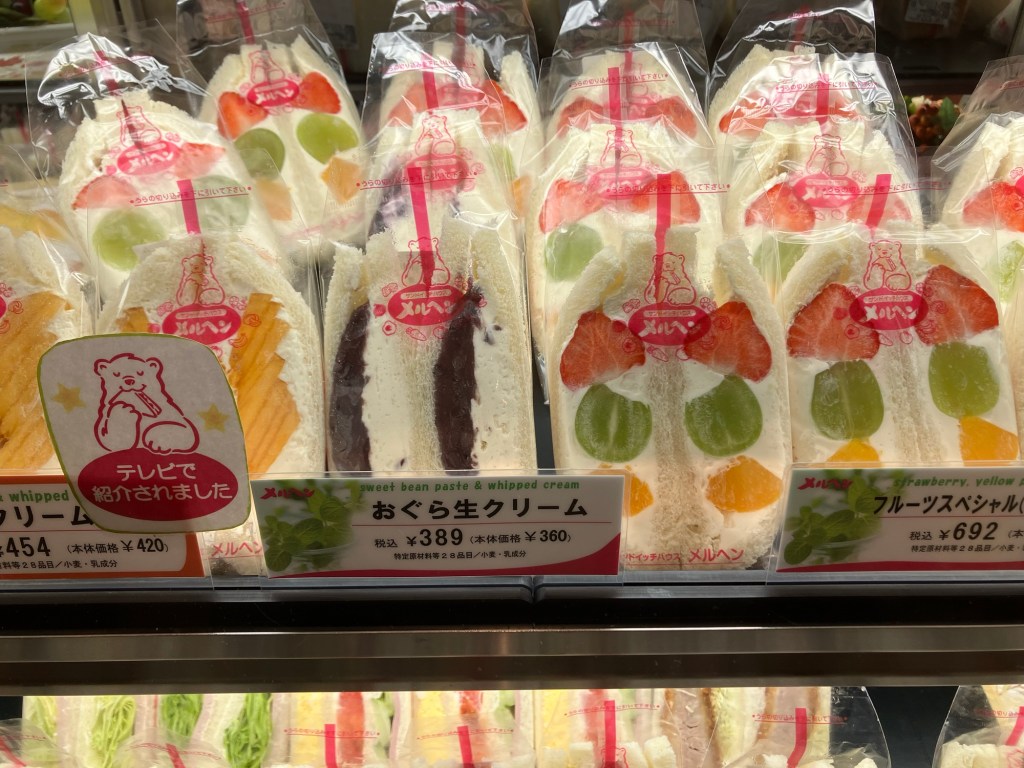
And do not forget convenience stores ( collectively ‘konbini’). Not only do they seem to sell everything you might need, they can also be a source of simple, tasty convenience food. 

The three main convenience stores in Japan are:

* 7-Eleven: The largest convenience store chain in Japan, with over 20,000 stores. It’s often referred to by its nickname “Seben.”

* FamilyMart: The second-largest convenience store chain (and our personal favourite), with around 16,000 stores. It’s commonly nicknamed “Famima.”

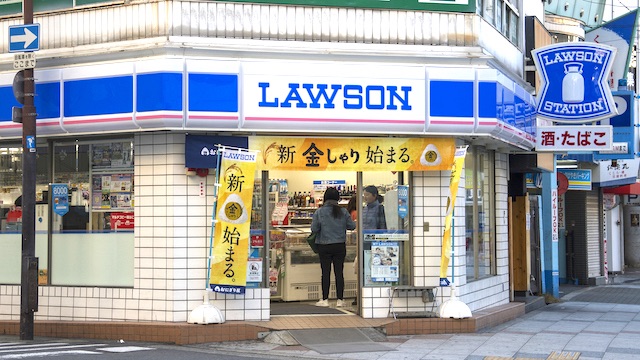
* Lawson: The third-largest convenience store chain, with around 14,000 stores. It’s usually called “Losson.” Idolised by the late chef/presenter Anthony Bourdain for their divine egg mayonnaise sandwiches.

Japanese convenience stores are known for their wide range of food items, including:

* Bento boxes: A variety of prepared meals, including sushi, noodles, and rice dishes. (Far better Bento boxes can be found in any decent department store food court or train station (‘Ekiben’).

Bento boxes

* Onigiri: Triangular-shaped rice balls wrapped in seaweed.

* Sandwiches: Western-style sandwiches with fillings such as egg salad, tuna, and ham. Lawson stores were idolised by the late chef/presenter Anthony Bourdain for their egg mayonnaise sandwiches (good) although we prefer the Family Store take on this simple take out which are even better in our opinion.

Classic egg mayonnaise sandwich and Onigiri

* Oden: A type of Japanese hot pot that includes ingredients such as daikon, tofu, and fish cakes.

* Snacks: Japanese and Western snacks, such as chips, crackers, and candy.

So whilst the perception of Japanese food as expensive persists in Western countries, it’s important to remember that this is only one aspect of a diverse and multifaceted culinary landscape. 

A good place to start is with typical daily meals. Whilst they may vary depending on the individual and the region, here’s a general overview of what an average Japanese person might eat in a day:

Breakfast: A traditional Japanese breakfast often includes steamed rice, miso soup*, grilled fish, pickled vegetables, and perhaps a piece of fruit.

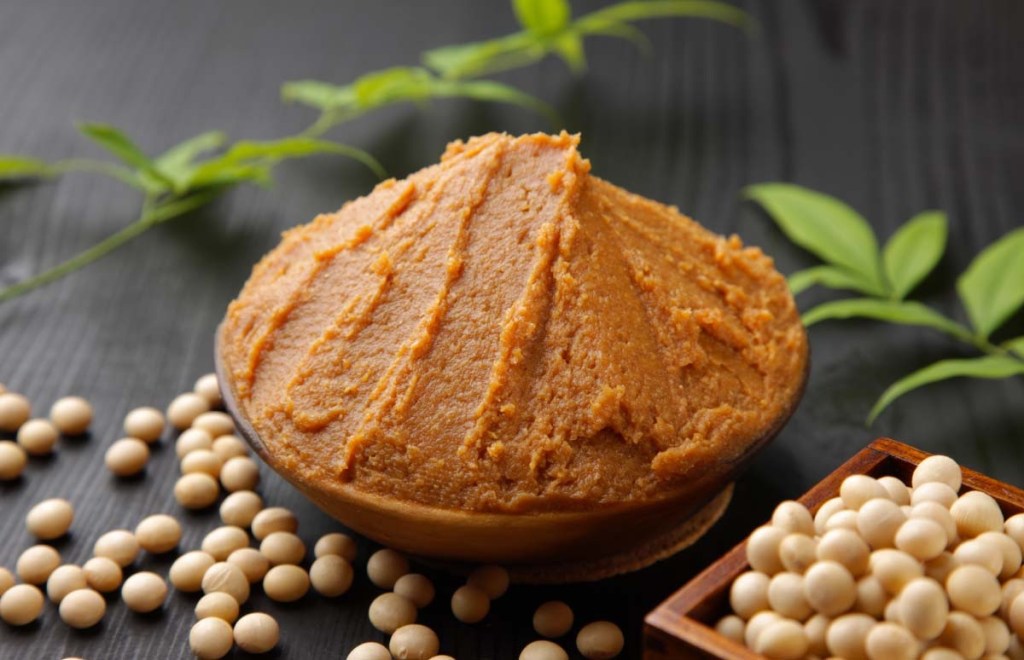
*Miso soup is made from a stock called dashi, which is typically made from dried kelp (kombu) and dried fish flakes (katsuobushi). Miso paste, a fermented soybean paste, is added to the broth, lending its rich, savory flavor and cloudy appearance to the soup. In addition to the broth and miso paste, miso soup usually includes cubes of soft tofu and slices of green onion. Depending on regional and seasonal variations, other ingredients such as mushrooms, carrots, daikon radish, or clams can also be added to the soup.

Miso paste

Lunch: For lunch, a Japanese person might enjoy a bento box, which is a meal consisting of rice, vegetables, and protein (like fish or meat) arranged in a compartmentalized container. Another popular option is ramen or udon noodles.

Dinner: At dinner time, families might gather together to share a meal of various dishes, such as tempura, teriyaki, or sushi.

Let’s examine these three meals in more detail.

Tempura is a dish that consists of seafood, vegetables, or sometimes meat, lightly battered and deep-fried to create a crispy, golden-brown coating. Tempura is often served with a dipping sauce made from soy sauce, mirin, and sugar, and is sometimes accompanied by grated daikon radish or ginger.

Teriyaki is a cooking technique where food, typically chicken or other proteins like beef, pork, fish, or tofu, is grilled or broiled with a sweet and savory sauce. Teriyaki sauce is made from a mixture of soy sauce, mirin (a sweet rice wine), sugar, and sometimes sake or ginger. The food is usually marinated in the teriyaki sauce before cooking, then brushed with additional sauce while grilling or broiling to create a rich, sweet-salty flavor and a beautiful shine.

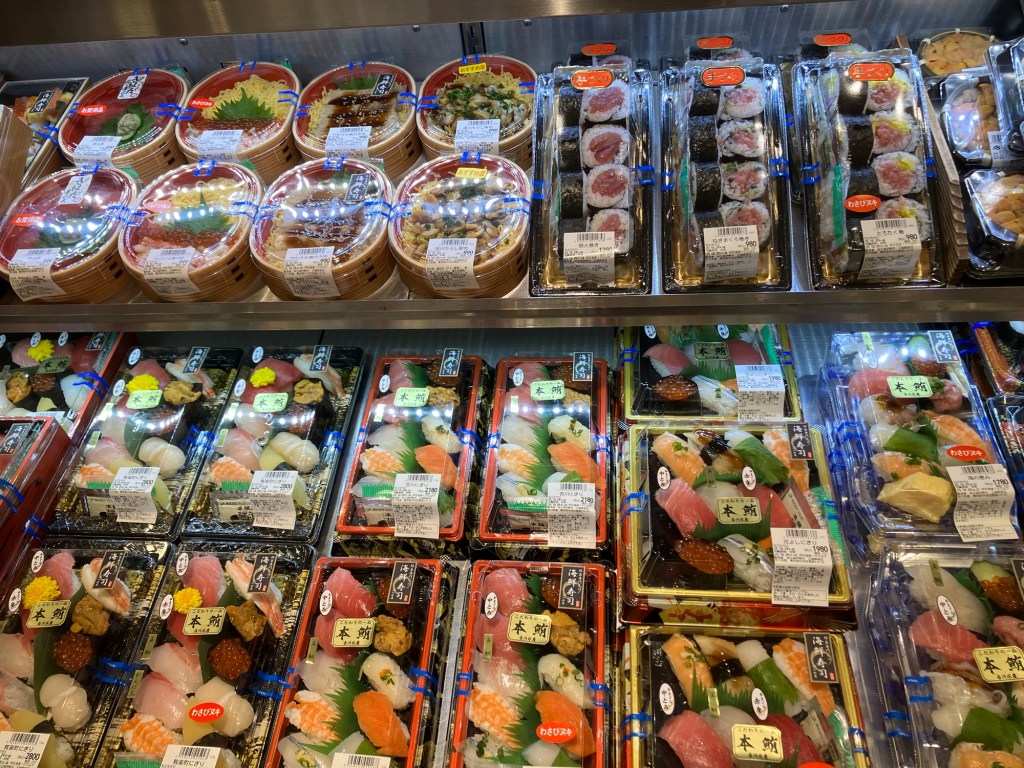
Sushi features vinegared rice (sushi-meshi) combined with various ingredients, such as raw fish, seafood, vegetables etc. The word “sushi” actually refers to the seasoned rice, rather than the raw fish that is often associated with it.

There are several types of sushi, including:

– Nigiri: A small, oblong mound of sushi rice topped with a slice of raw fish, seafood, or other ingredients.

– Maki: Rice and other ingredients rolled together inside a sheet of dried seaweed (nori) and sliced into bite-sized pieces.

– Sashimi: Sliced raw fish or seafood served without rice.

– Temaki: Similar to maki, but hand-rolled into a cone shape.

– Chirashi: Sushi rice topped with a variety of ingredients, similar to a rice bowl.

Sushi is typically served with soy sauce, wasabi, and pickled ginger.

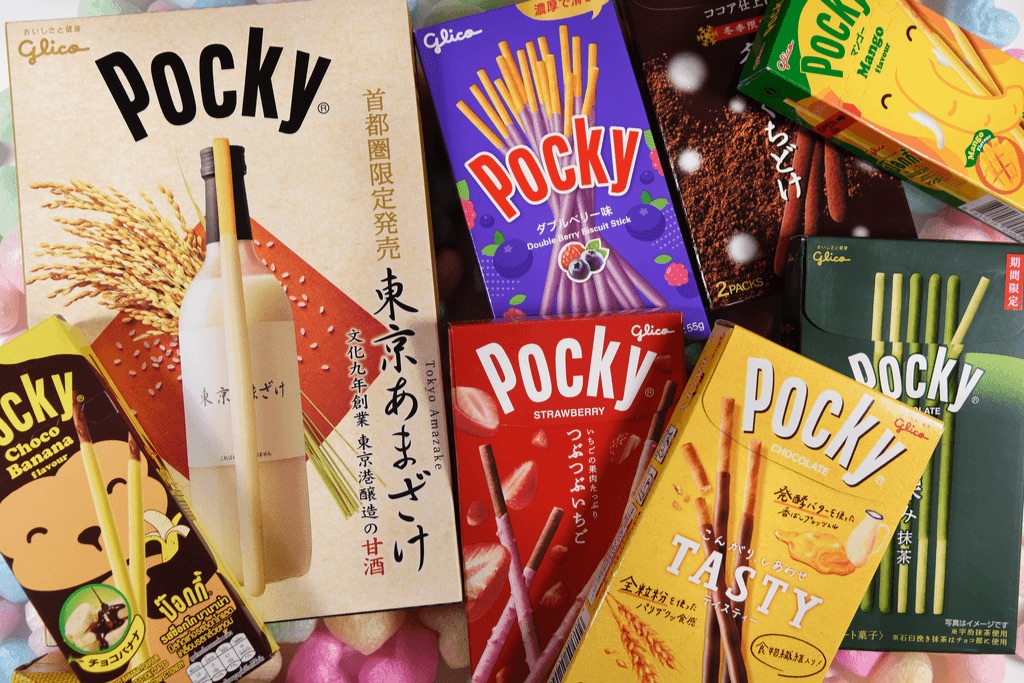
In between meals, Japanese people often enjoy snacks such as onigiri (rice balls) or pocky (chocolate-covered biscuit sticks).

Pocky sticks

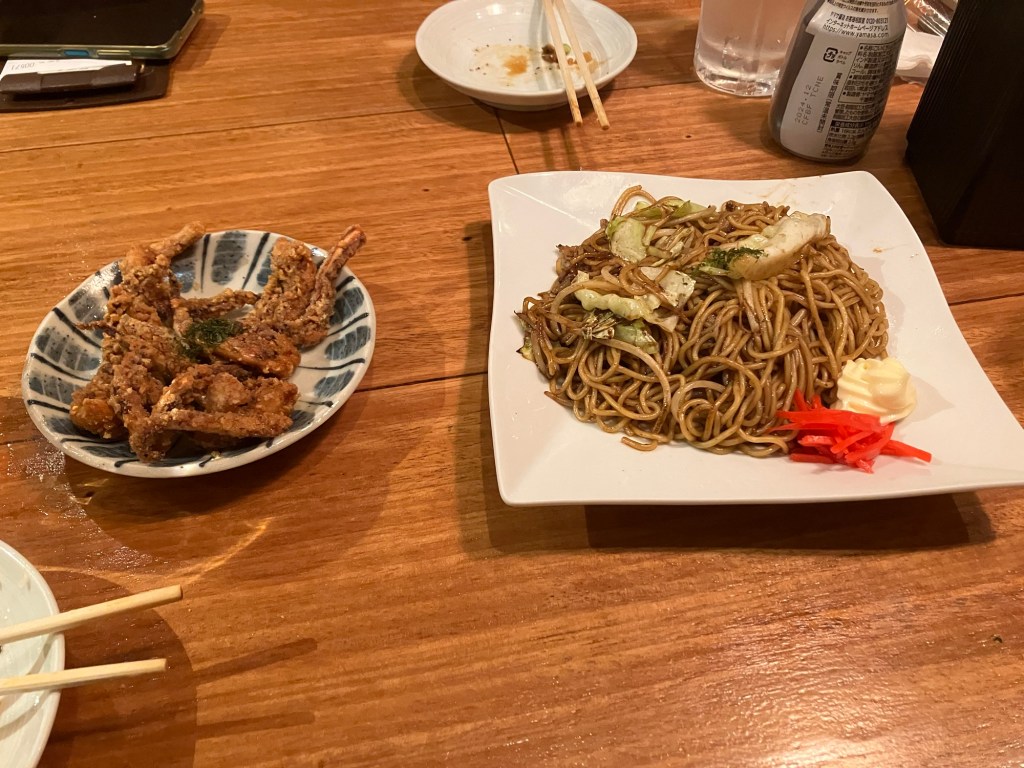
(Please note that if you have not made it back home in time to sample dinner, it is maybe because you and your friends/colleagues have been drinking and eating at an izakaya. An izakaya is a type of Japanese bar that is similar to a pub or tapas bar. It’s an informal place where people can go after work to have drinks and snacks.The food served at izakayas is designed to be shared and typically goes well with beer. The menu can include a variety of dishes, such as yakitori (typically grilled chicken meat, offal and skin) gyoza, sashimi and nakazuke (fermented cucumber) and noodles.

Yakitori
Nakazuke
Izakaya noodles

If you are ever in Japan, visiting an izakaya is a great way to experience the local culture and cuisine in a fun and relaxed setting.

Noodles are beloved in Japan and arguably second only to rice as a staple.

Dig in or rather slurp on!

Ramen: Thin, wheat-based noodles served in a savory broth that can be made from pork, chicken, fish, or vegetables. The broth is often flavored with soy sauce, miso, or salt, and is typically topped with sliced pork, soft-boiled egg, and green onions. Ramen is famous for its rich, complex flavors and regional variations.

Udon: Thick, chewy noodles made from wheat flour that can be served hot or cold. Udon noodles are usually served in a hot broth made from fish or meat stock, topped with ingredients like tempura, green onions, and slices of fried tofu. In the summer, chilled udon noodles are often served with a soy-based dipping sauce.

Soba: Thin, delicate noodles made from buckwheat flour that can be served hot or cold. Soba noodles are usually served with a dipping sauce made from soy sauce, mirin, and dashi, and are often garnished with sliced green onions and wasabi. In the winter, hot soba noodles are served in a clear broth.

Whilst the 1985 film “Tampopo” directed by Juzo Itami introduced Western audiences to ramen and the passion for noodles in Japan, it was arguably the late TV presenter, chef and raconteur extraordinaire Anthony Bourdain whose shows include  ‘No Reservations’ and ‘Parts Unknown’ who really introduced a worldwide audience to the delights of Japanese cuisine. Bourdain was fascinated with the country and it’s food commenting:-

“I love Tokyo. If I had to eat only in one city for the rest of my life, Tokyo would be it. Most chefs I know would agree with me.”

“You can pick almost any restaurant in Japan and be almost sure you’ll get a great meal.”

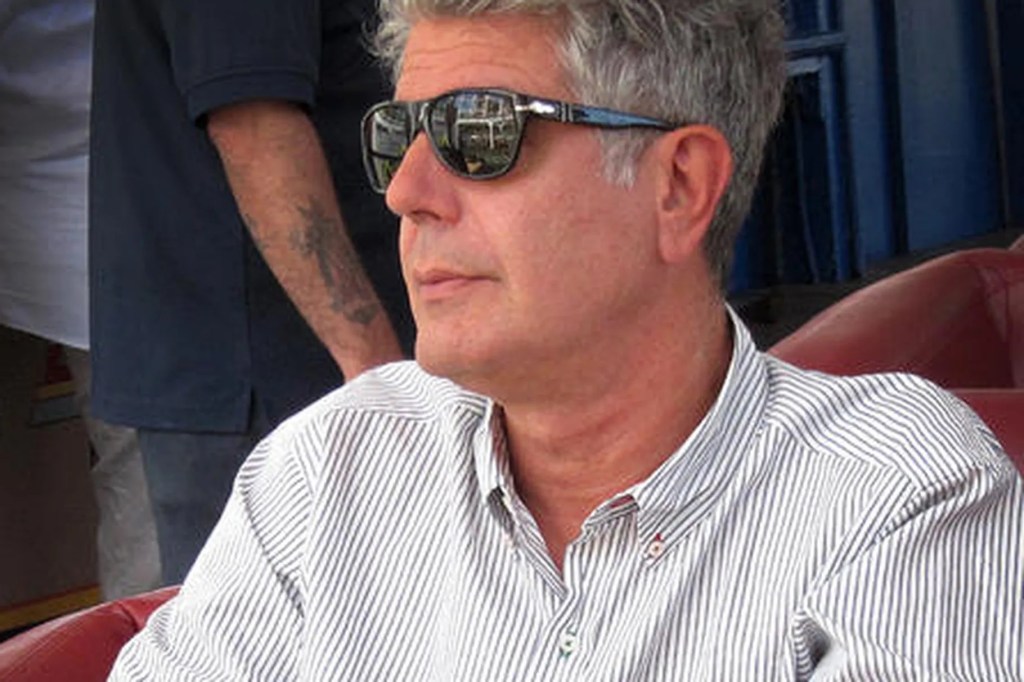
Bourdain photo from The Travel Channel

Bourdain’s appreciation for Japanese cuisine was clear, and he enjoyed exploring the many different flavors and textures of the country’s street food and high-end restaurants alike.

In 2013  Bourdain introduced ‘Parts Unknown’ which  premiered on CNN. The concept behind the series was to take viewers on a journey around the world, exploring lesser-known destinations, their cultures, and their cuisines. The show was a departure from traditional travel and food shows, and it quickly gained a devoted following of fans who appreciated Bourdain’s honesty, humor, and willingness to challenge preconceived notions about different cultures. Japan and its food culture were celebrated in repeatedly in whole and part episodes of the series notably “Hokkaido” and “Masa’s Japan”. 

The “Hokkaido” episode of “Parts Unknown” aired in 2017, and it featured Bourdain exploring that northernmost island its culture and its food. This was a part of Japan valley visited by those in the West and so his show was as illuminating as it was entertaining 

The “Masa’s Japan” episode of Parts Unknown aired in 2016 and focused on Bourdain’s travels through Japan with legendary sushi chef Masayoshi “Masa” Takayama. During their journey, Bourdain and Masa explored the urban center of Kanazawa, Masa’s rural hometown of Nasushiobara, and the sushi restaurant in Tokyo where Masa began to learn his craft. The episode offered viewers a glimpse into Japan’s rich culinary history and culture, as well as the inspiring story of Masa’s journey from small-town boy to world-renowned chef. The episode reminded us of the 2011 documentary by David Gelb, “Jiro Dreams of Sushi” which follows the life and work of Jiro Ono, a master sushi chef who runs the renowned sushi restaurant Sukiyabashi Jiro in Tokyo. 

Bourdain also travelled and reported from the Japanese island of Okinawa. One particular speciality from that island caught his eye was taco rice aka Okinawa taco.

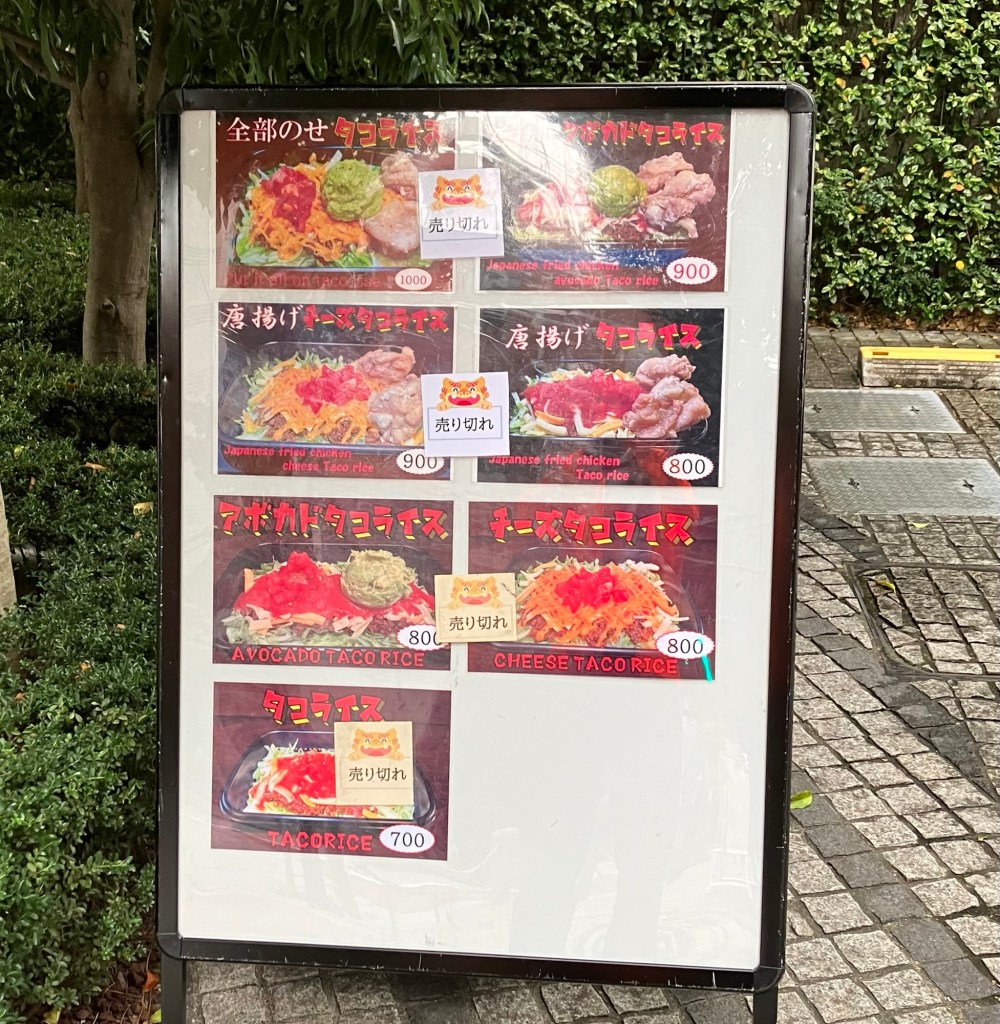
Okinawa taco

Taco rice, or “takoraisu” in Japanese, is a popular dish that originated in Okinawa, Japan. It’s a fusion of Mexican and Japanese cuisines, and it’s essentially a Tex-Mex taco served over a bed of steamed rice. 

Taco rice is made with seasoned ground beef, lettuce, cheese, tomatoes, and fresh salsa served on top of steamed rice. It was first created in 1984 by a Japanese restaurant owner who wanted to cater to the American military stationed in Okinawa. The dish became a hit not only among the American military but also among the locals.

Taco rice is now a beloved comfort food in Japan and has spread beyond Okinawa to other parts of the country.

Taco rice combos

And when it comes to street foods in Japan, these are our three favourites:-

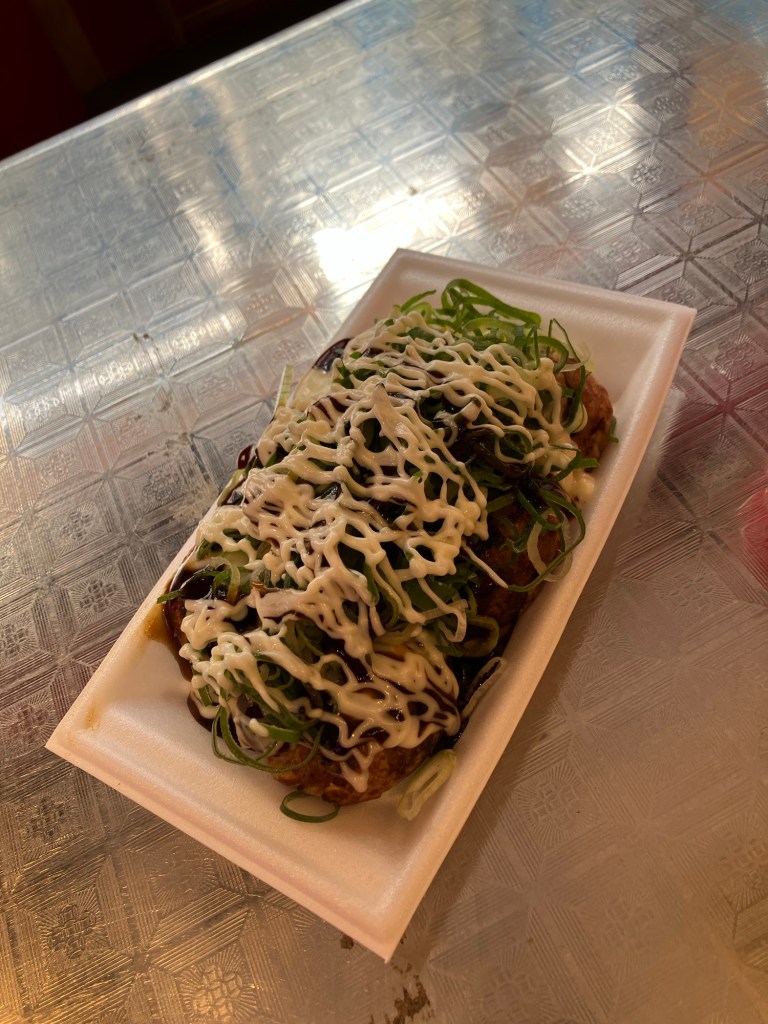
Takoyaki – fried batter balls filled with diced octopus and topped with takoyaki sauce, mayonnaise, and bonito flakes. Especially popular in Osaka.

Takoyaki in Osaka

Takoyaki sauce is a sweet and savory sauce that is made from a combination of ingredients such as Worcestershire sauce, mentsuyu (noodle soup base), ketchup, and sugar. 

Takoyaki

Okonomiyaki – a savory Japanese pancake that can be customized with a variety of ingredients, such as eggs, vegetables, seafood, and meat, and cooked on a hot griddle called a teppan.

There are several regional variations of okonomiyaki in Japan, with the most famous being the Osaka and Hiroshima styles. In Osaka, the ingredients are mixed into the batter and cooked together, while in Hiroshima, the ingredients are layered on top of a thin pancake.

Okonomiyaki is typically served with a sweet and savory sauce, mayonnaise, and bonito flakes.

Okonomiyaki

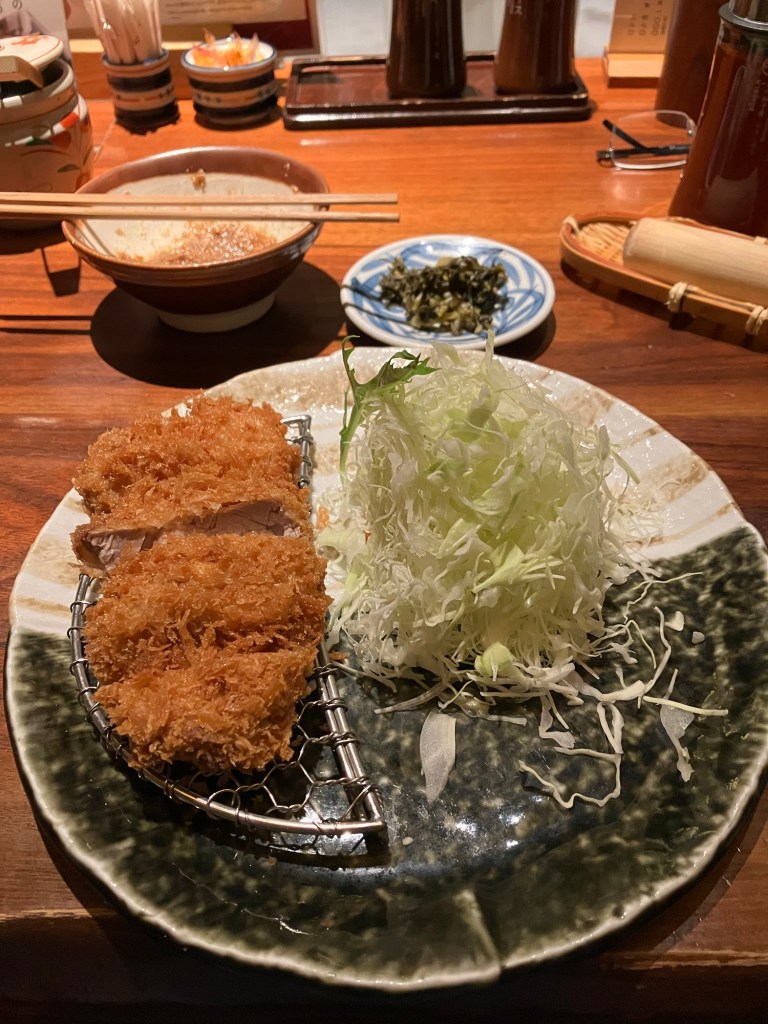
Menchi Katsu – popular throughout Japan and especially Tokyo’s Akasuka district. Menchi katsu is a Japanese ground meat cutlet that is coated in panko breadcrumbs and deep-fried until crispy and golden. It’s often served as a snack or as part of a bento box lunch. Typically served with shredded cabbage and a sweet and savoury dipping sauce.

Katsu

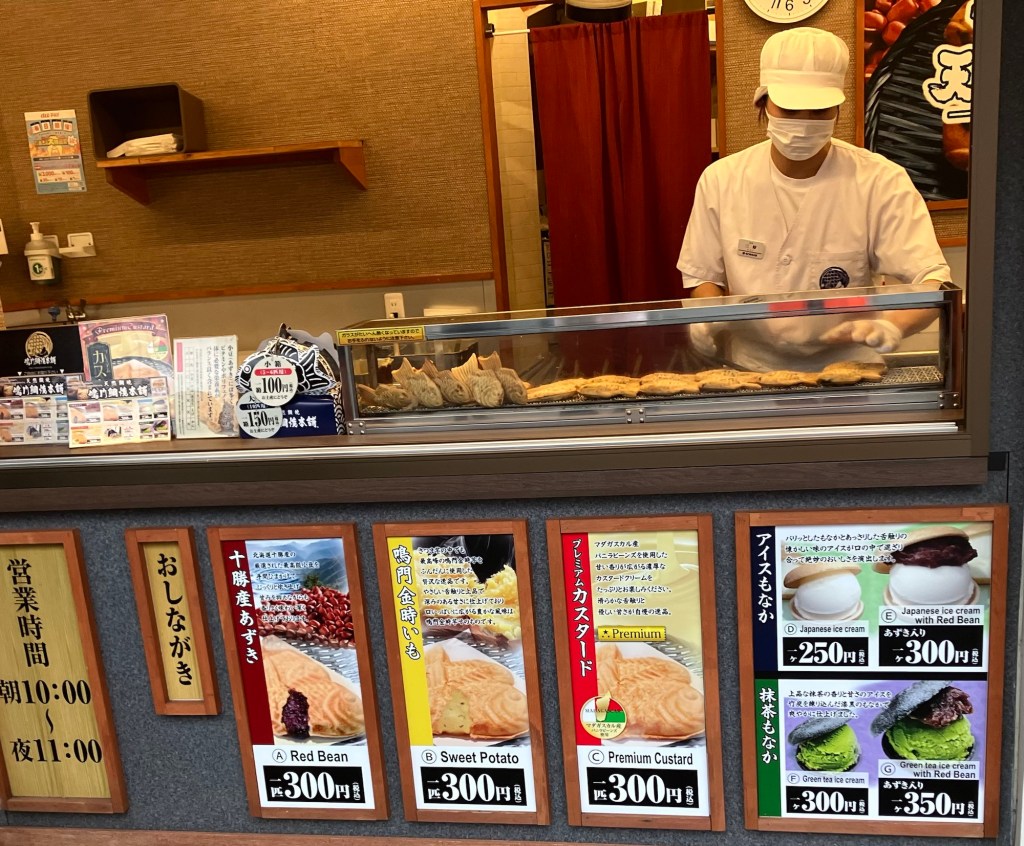
And for afters? Try Taiyaki, a fish-shaped pancake that is filled with sweet bean paste and is available anywhere and everywhere.

Taiyaki

“Meshiagare” – bon appétit!

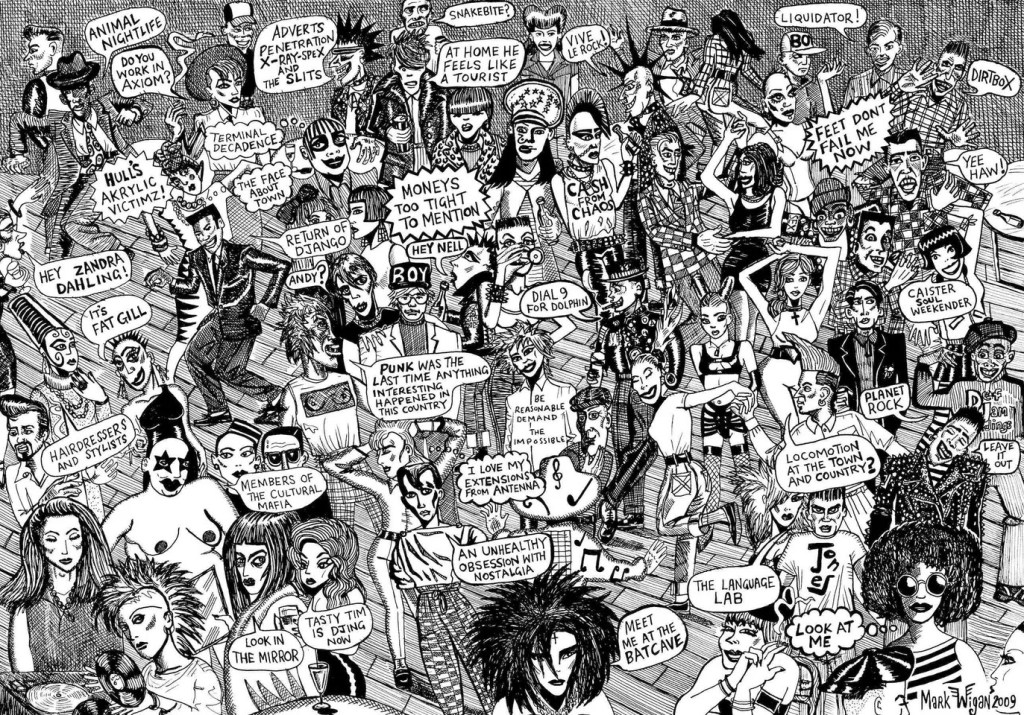
Wigan in Chester; Urbanites go to the movies

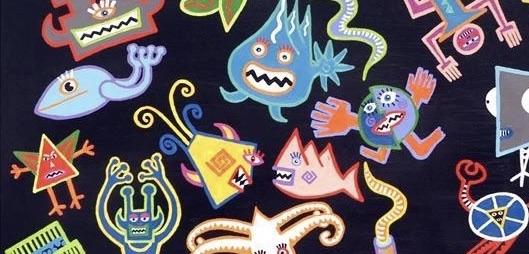
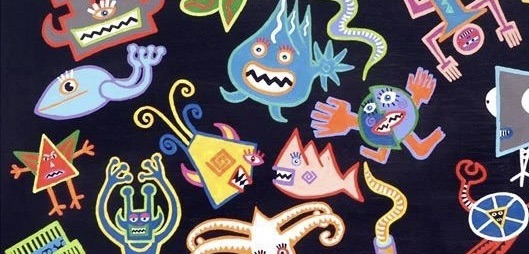
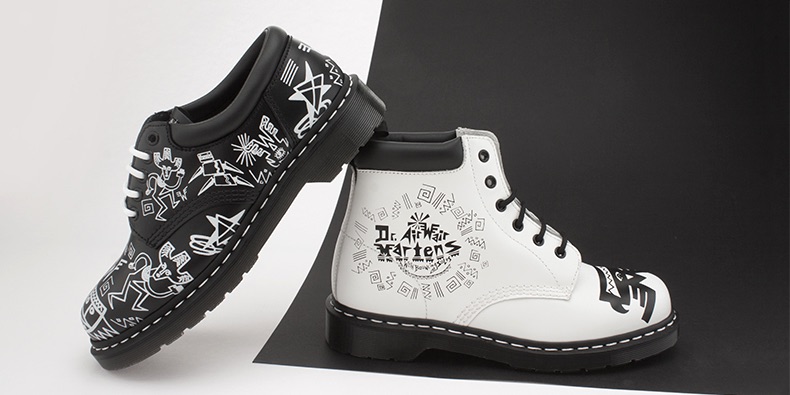
Mark Wigan is a UK-based artist and illustrator based in Chester in the North of England. He is internationally known for his interdisciplinary approach to his work, crossing fine art, illustration, and urban art into a visually stunning whole. He creates paintings, drawings, signed limited edition giclee prints, screen prints, and limited edition T-shirts. His immense creative output also includes set design for theatre and television, music videos and animations and a highly successful collaboration with Dr. Martens footwear.

Wigan was born in the North of England and he grew up in that area. He studied at Hull School of Art and Design 1979 to 1982 then moved to London where his vivid designs soon found favour in the music, fashion and art scenes.

Wigan’s artwork is a true reflection of his unique and eclectic experiences. Heavily influenced by underground movements, Wigan took inspiration from distinct but allied cultures such as pop art, punk, graffiti art, skate culture and the evolving hip hop scene.

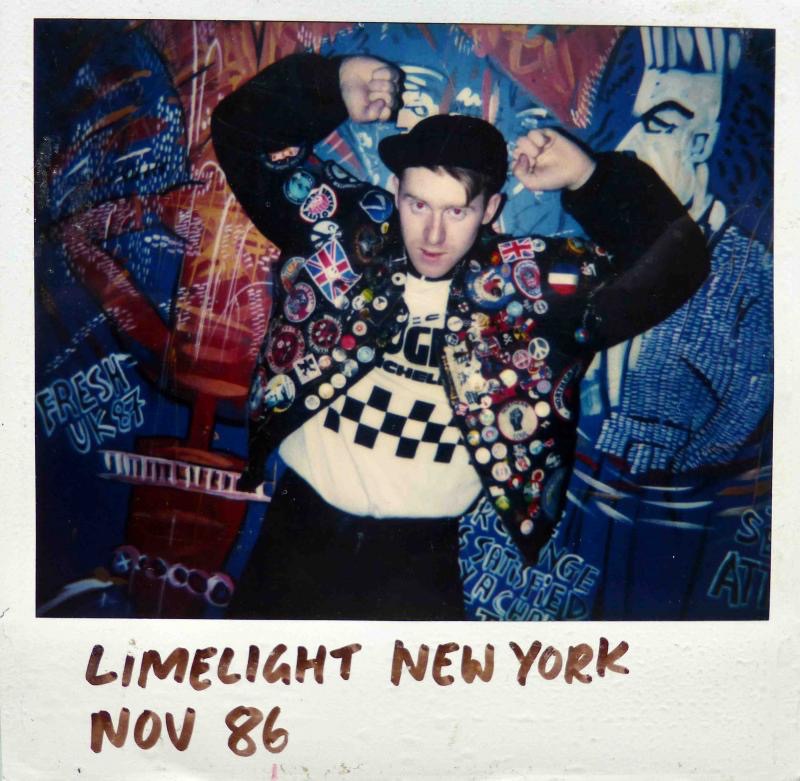
New York was the centre and often the birthplace of many of these sub cultures and it is not surprising that in 1986 Wigan visited the city and met with Andy Warhol and contemporary artists Jean Michel Basquiat and Keith Haring. Haring’s work in particular, whilst distinct from Wigan’s, shares the same boldness, vivid colours and stylised figures of the latter’s work.

Andy Warhol asked Wigan to paint the murals on the wall of the Limelight club in New York in 1986

Wigan is as much known for his flyers and promotional materials for clubs and music events, album artwork and streetwear designs for fashion brands as for his commissioned art and paintings in exhibitions in galleries across the world.

Wigan designed artwork for Manchester techno musician ‘a guy called Gerald’

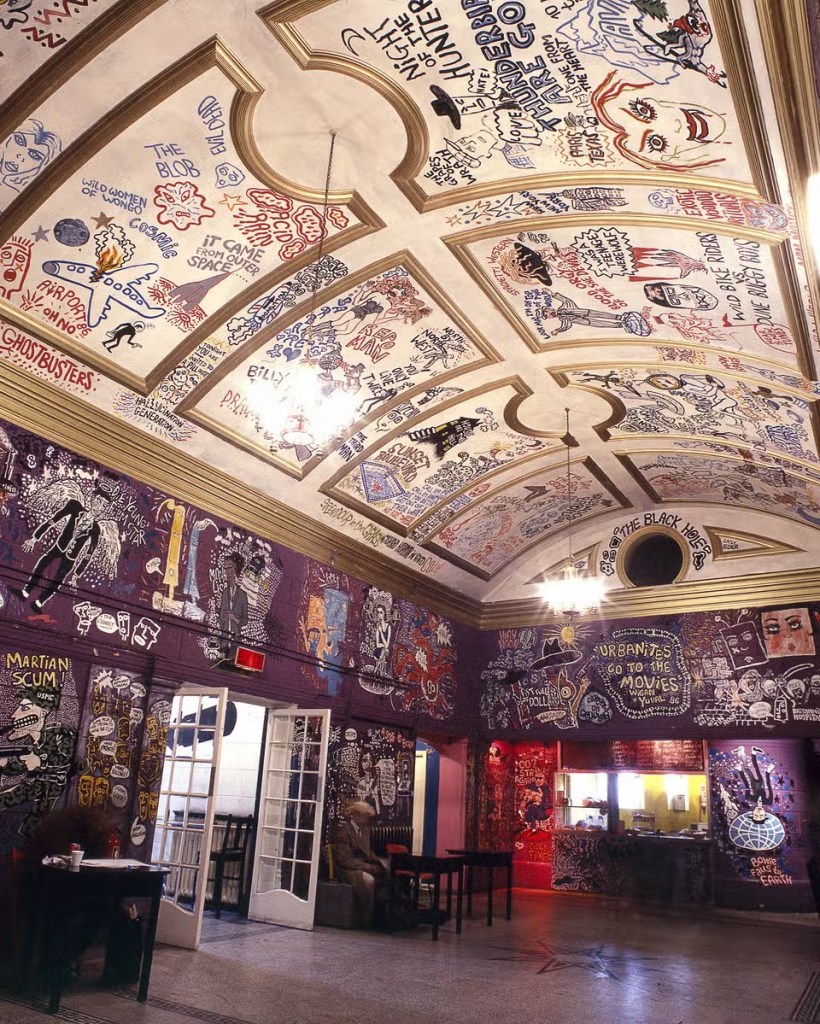
Commenting on which are the most notable examples of his work is quite hard as his artistic output is so extensive. However, a particular favourite of ours were the murals he was commissioned to create on the wall and ceiling of the Scala cinema in King’s Cross, London. As visitors to the cinema during its heydays in the 1980’s, Wigan’s painted figures on the walls and ceiling often looked like members of the cinema’s underground audience whilst film titles scrawled across the walls announced the films they loved (‘Repo Man’ springs to mind). ‘Urbanites go to the movies’ as Wigan commented on one of the walls. The Scala was the perfect place for Wigan’s work, the cinema being truly one-of-a-kind. Wildly ‘alternative’, and deeply eclectic in its programming, it’s impact on London’s art scene and beyond is still felt to this day.

Wigan designed Scala cinema murals

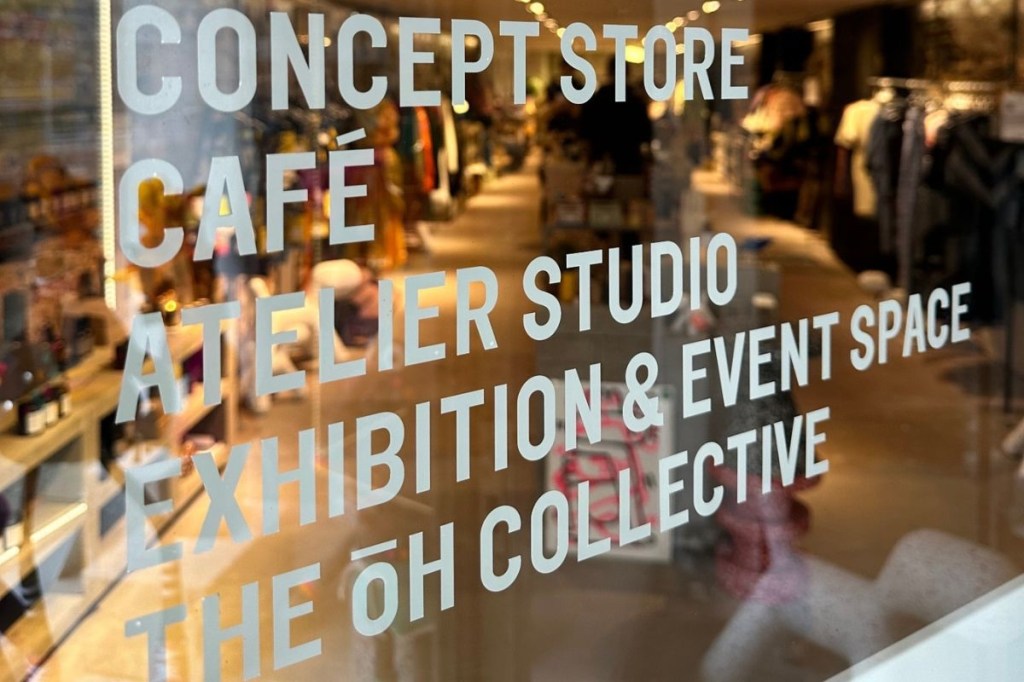
Now back in North West England, Wigan has gained a significant following on social media and has held several pop-up art shows in Chester including at the ōh Design Foundation in their gallery in the heart of the city.

Wigan’s art on display in the gallery

The ōH Design Foundation is a social enterprise based in Chester. The Foundation is all about supporting the creative industries in the city and acting as a hub and ‘pop up’ store for local creative work and as a launching pad for artists, designers, and entrepreneurs to showcase their creations. By providing a forum for local designers, the Foundation should help to stem the movement of local artistic talent away from the city to more established creative hubs such as Liverpool, Manchester and London. The city is certainly a more affordable space than the latter.

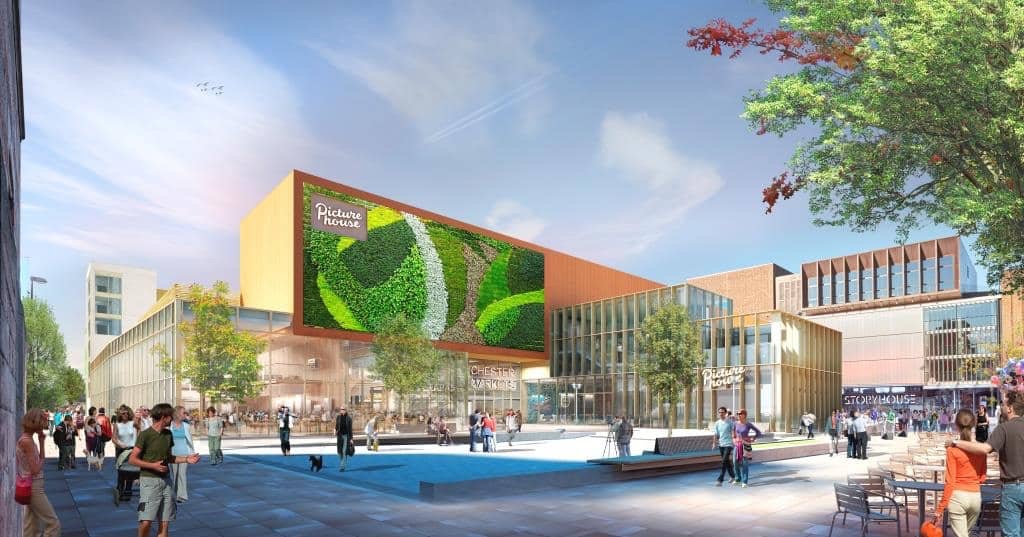
The ōH Design Foundation’s initiative to support local talent is mirrored in the city’s new Market Hall which opened in November 2023. Although there has been a central market in Chester for some 800 years, the old market was somewhat jaded and in a serious need of revamping. The new Market Hall is located in the heart of Chester, at Exchange Square off Northgate Street. It is a vital part of the Northgate development, a major regeneration project that is transforming the heart of the city. It is a multi-million pound scheme that includes the new Market Hall (with its emphasis on a cinema, restaurants, and shops).

Exchange Square development envisioned

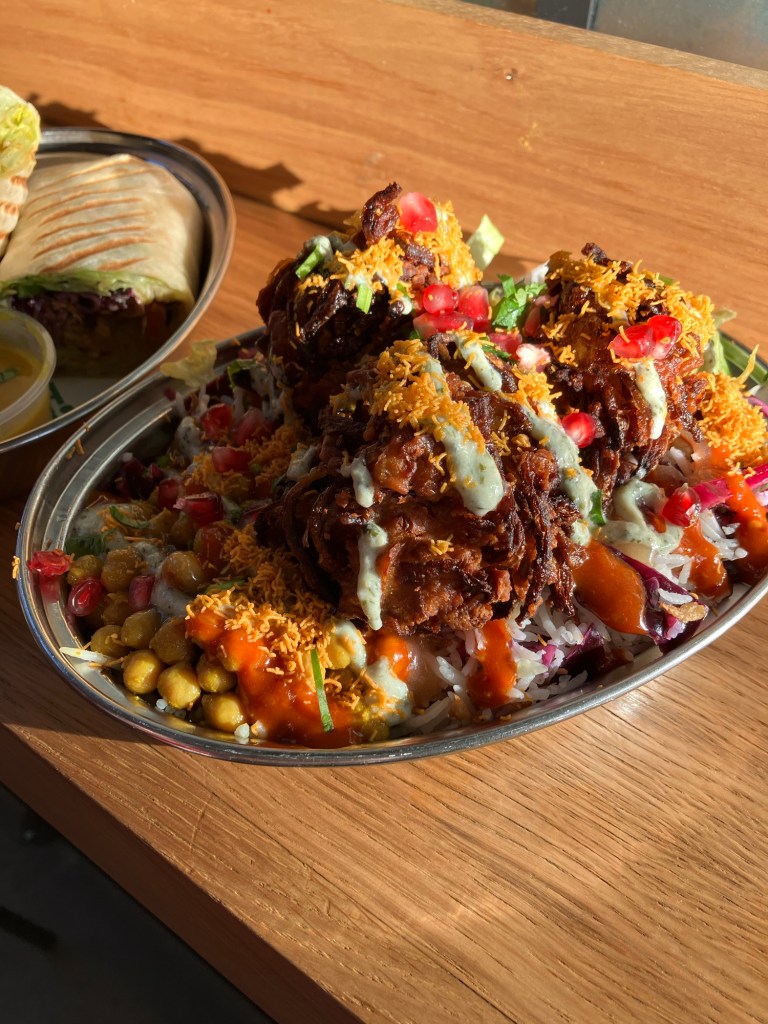
The ōH Design Foundation’s initiative to support local talent is mirrored in the city’s new Market Hall which opened in November 2023. Although there has been a central market in Chester for some 800 years, the old market was somewhat jaded and in a serious need of revamping. The new Market Hall is located in the heart of Chester, at Exchange Square off Northgate Street. It is a vital part of the Northgate development, a major regeneration project that is transforming the heart of the city. It is a multi-million pound scheme that includes the new Market Hall (with its emphasis on a cinema, restaurants, and shops). The heart of the new Market Hall is it’s food court, a central area of casual seating and food stalls serving an eclectic variety of different foods in an informal, sociable setting. Great food!

Great food at the new Market Hall!

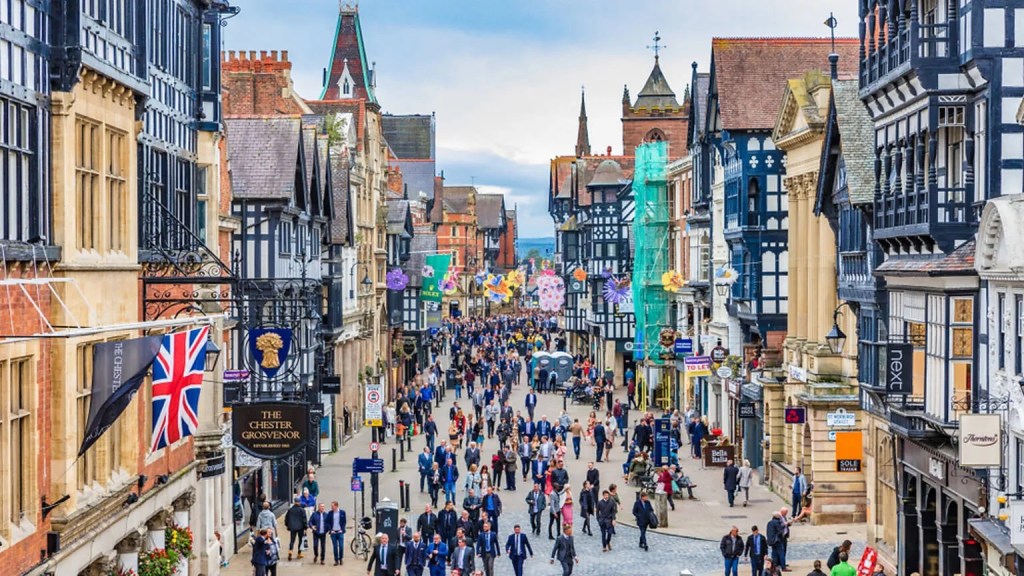
Chester, is an ancient city whose origins date back to the Roman era. The city grew in size and stature over the century’s as it flourished as a trading center and a port, and by the time of the Industrial Revolution (which started in nearby Manchester, the world’s first modern city), the city’s economy shifted towards industry and manufacturing, and the city’s population grew rapidly. As with most of the North of England, whilst mass industrialisation and the startling economic growth it brought is at an end, the city has continued to evolve, becoming an ever more popular tourist destination and a vibrant cultural center.

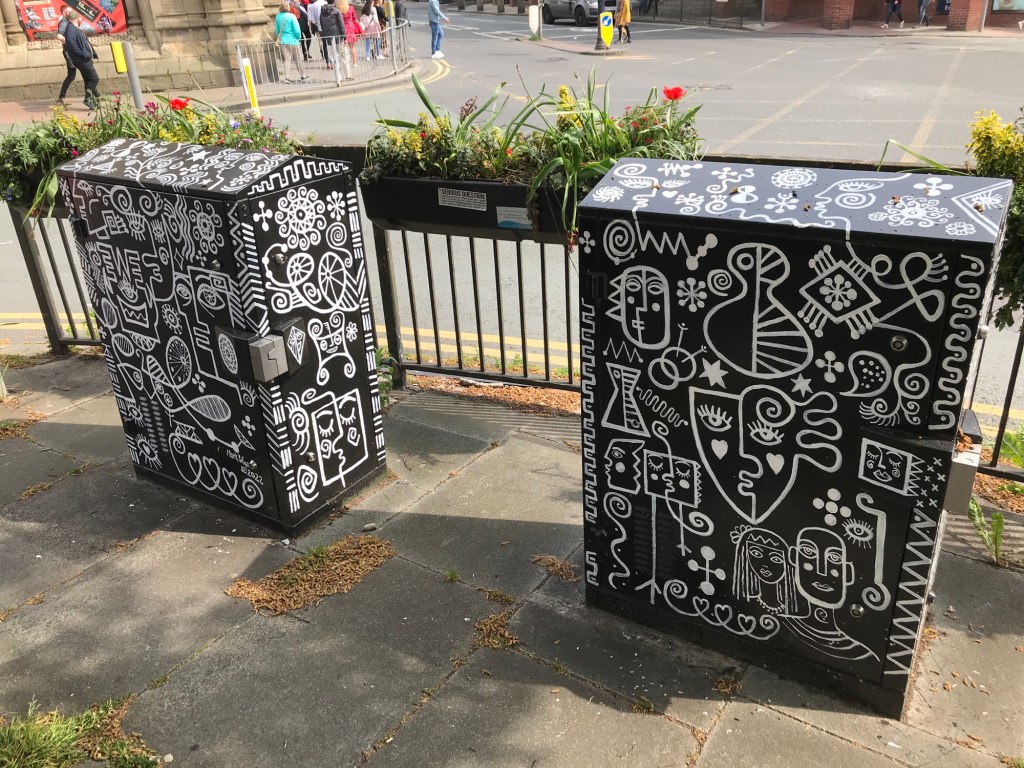
Mark Wigan adapted telephone boxes in the city centre

Manchester, Hong Kong and Jamaica

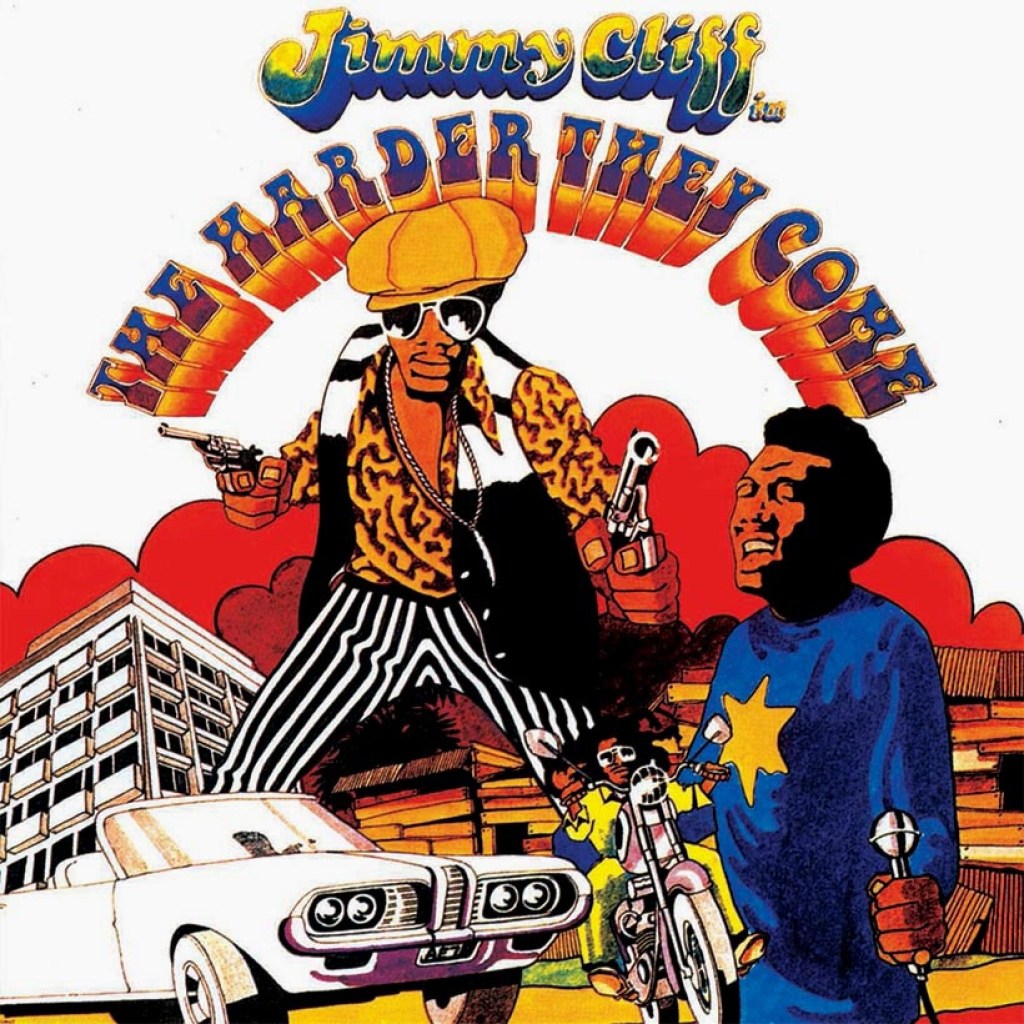
The soundtrack of this seminal Jamaican film was produced by Leslie Kong

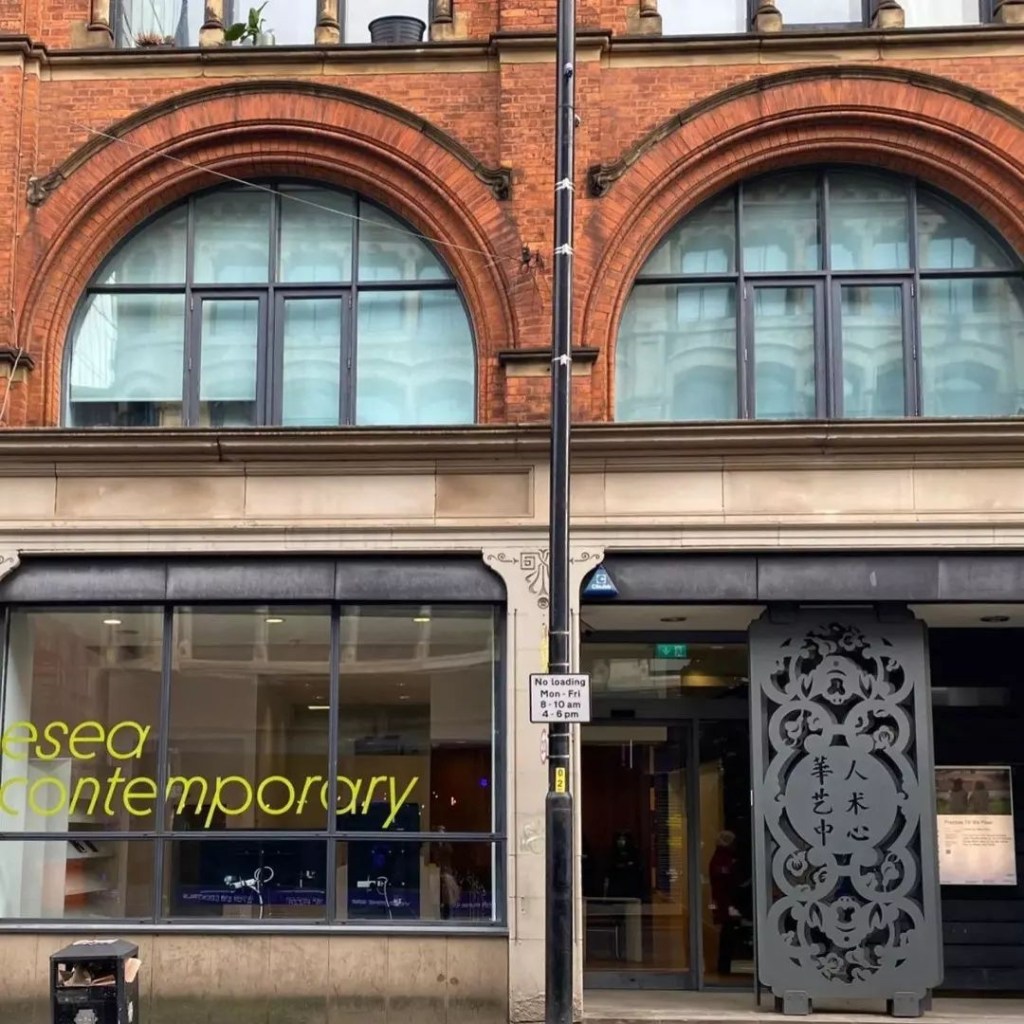
ESEA Contemporary is an art gallery in Manchester in the North of England that specializes in presenting and platforming artists and art practices that are informed by East and Southeast Asian (ESEA) cultural backgrounds. It is located in an award-winning building in the Northern Quarter part of the city and it is home to a diverse range of exhibitions, events, and educational programs that explore the unique perspectives and experiences of ESEA artists. ESEA Contemporary was previously known as the Centre for Chinese Contemporary Art, but it underwent a major rebranding in 2022 to better reflect the diverse range of cultures and identities represented by the artists it works with.

ESEA Contemporary Chinese Arts

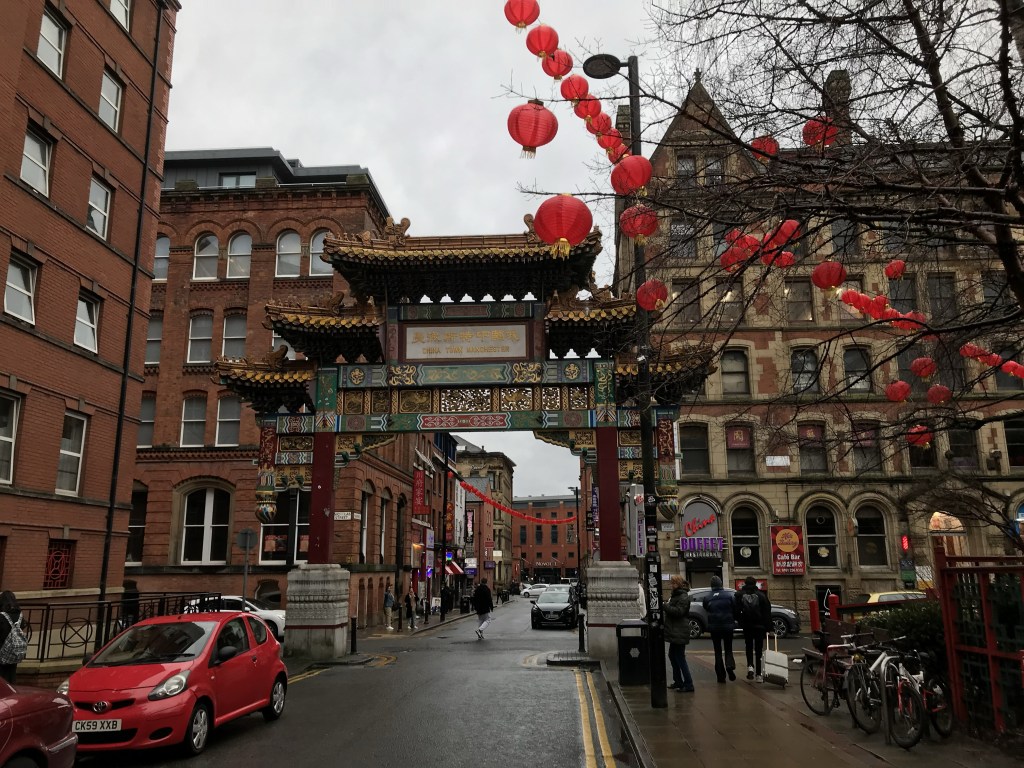
Manchester has a significant Chinese community, and it has been a hub for Chinese immigration to the UK for many years. The city’s Chinatown is one of the largest in Europe, and is home to many restaurants, shops, and cultural institutions. The Chinese community in Manchester is very diverse, with people from different regions of China and different generations, and they have made a significant contribution to the city’s culture and economy. There are also several Chinese community organizations and cultural events, such as the annual Chinese New Year celebrations, which help to promote Chinese culture and traditions in the city.

Chinatown in Manchester under the grey skies

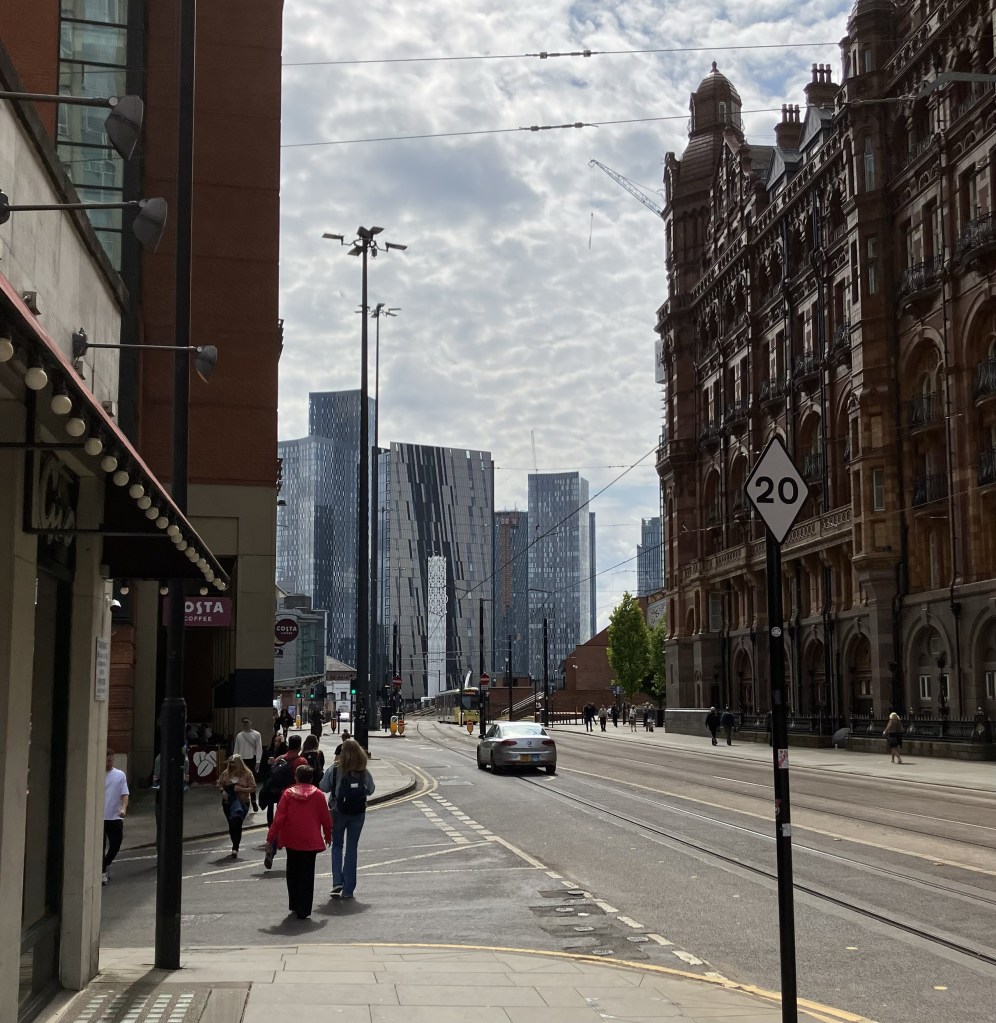
In addition, there has been significant Chinese investment in Manchester in recent years. China has been looking to expand its investment in the UK, and Manchester has been one of the key targets for investment. One of the largest investments has been in real estate development, with Chinese firms investing in luxury apartments, office buildings, and mixed-use developments in the city. Chinese companies have also invested in infrastructure projects, such as transportation and renewable energy, in the Manchester area. There has also been investment in the education sector, with Chinese companies supporting local universities and colleges.

A growing skyline

There had also been a significant influx of people from Hong Kong settling in Manchester in recent years. In fact, Manchester is now considered one of the top destinations for Hong Kong migrants in the UK. The UK government has also created a new visa scheme specifically for Hong Kong residents which has made it easier for them to move to the UK, including Manchester and other parts of the North West such as Liverpool, bringing their culture and art with them and enriching their adopted homeland accordingly.

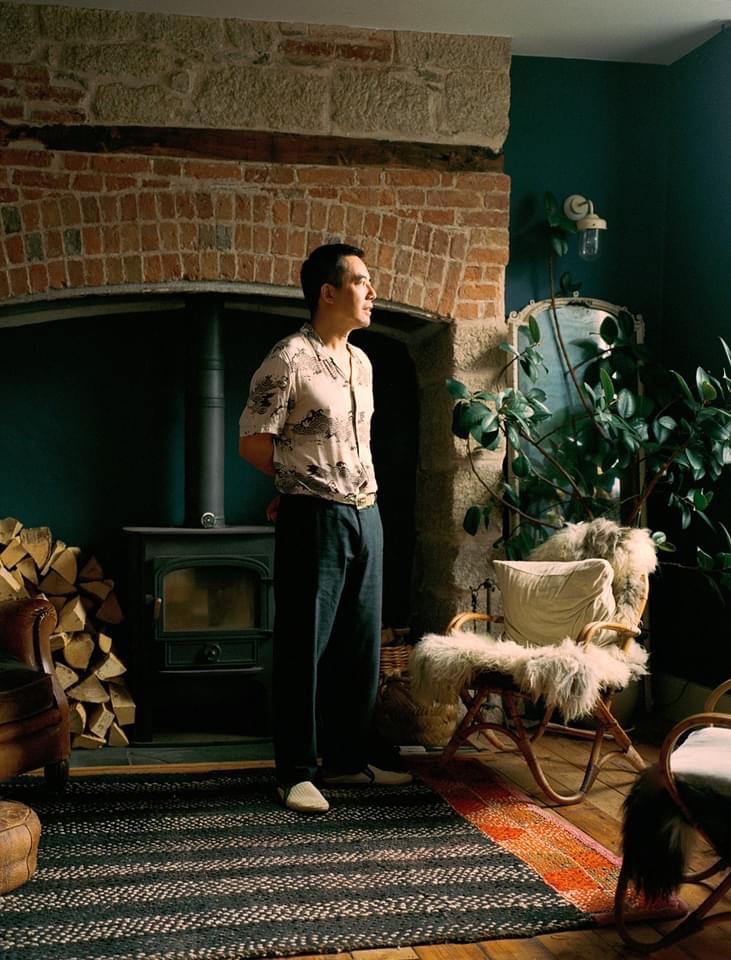
Artist Dinu Li

Dinu Li is an artist who was born in Hong Kong and who currently lives and works in Cornwall, UK. He graduated with a degree in photography from Liverpool John Moores University in 2001. Li’s work often explores the intersection of personal and cultural histories, and he works across a range of media, including moving image, photography, installation, and performance. He is particularly interested in how history and memory are constructed and how they can be reinterpreted through art. His work has been exhibited internationally, and he has had significant artistic recognition for his work.

Li is currently exhibiting at ESEA (‘A Phantom’s Vibe’).

The exhibition’s guide pamphlet provides the following background information:-

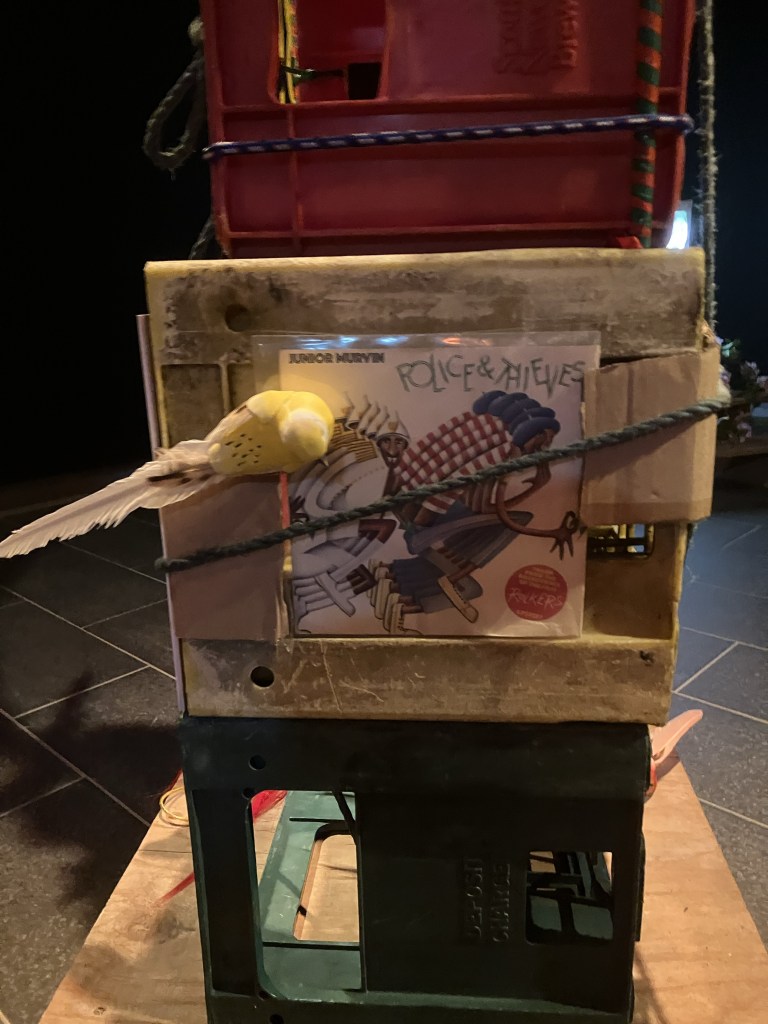
Li’s work in the exhibition, combines autobiographical allegories with a tapestry of cultural influences. Visitors are taken from the night markets of Hong Kong to the blues parties of Hulme* and Moss Side* via Jamaican recording studios, owned by the descendants of Chinese indentured labourers**. The reggae classic ‘Always Together’ *** runs through the heart of the exhibition, where music becomes a medium for cultures to meet, mix, and become hybrid.

Dinu Li, Reggae
and Hong Kong
Dinu Li, Reggae
and Hong Kong
Dinu Li, Reggae
and Hong Kong

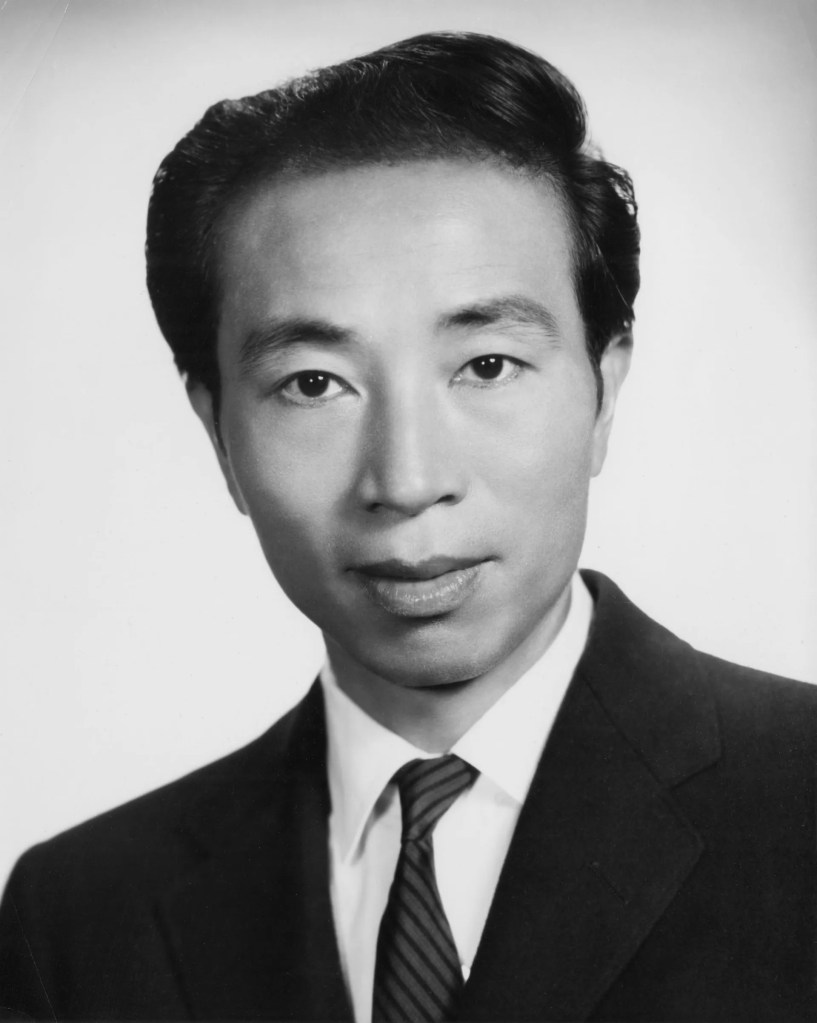
As a child wandering through the working – class districts of Hong Kong, Li overheard ‘ Always Together’*** by Stephen Cheng mistaking it for a Chinese folk classic. Years later, this song, unexpectedly, repaired, like a phantom at one of the inner–city blues parties**** Li frequented during his 1980s, Manchester youth, and decades after that, the song once again re-emerged on YouTube. The song soundtracks Dinu Li’s exhibition.

Stephen Cheng

It wasn’t until much later that Li learned that the song was actually recorded in Jamaica in 1967, in one of the small number of Chinese recording studios*****, some of which helped shape the sounds of key artists such as Dennis Brown and Augustus Pablo. Through his work tracing the history of early reggae, Li’s exhibition,’ A Phantom’s Vibe’, serves as a means of unearthing, the underrepresented history of the Chinese in Jamaica, subverting mainstream cultural hegemony.

*Hulme and Moss Side are districts of Manchester where many members of the city‘s Afro-Caribbean community live.

** Chinese people first started coming to Jamaica around 1850 when they arrived on the island mostly as indentured labourers, brought by the British from China to work on the sugar plantations to replace the unpaid labour of the island’s black population following the end of slavery. Indentured labour is a form of debt bondage whereby the labourer ‘agrees’ to work for no pay for a number of years to pay off the cost incurred in their migration to the Caribbean.

*** ‘Always Together’ is a reggae record recorded in 1967 in Jamaica, by the Chinese singer Stephen Cheng (misspelled as ‘Chang’ when the record was released). The song is unusual because although the title is in English, the song itself is sung in Chinese with the lyrics originating from “Alishan Girl,” a Taiwanese folk song, which dates back to the 1940s. The track was put together by Stephen Cheng and the Jamaican musician and producer Byron Lee (himself of a Jamaican Chinese background) when Cheng visited the island from his home in New York.

**** after hours parties often playing reggae in peoples homes or basements etc.

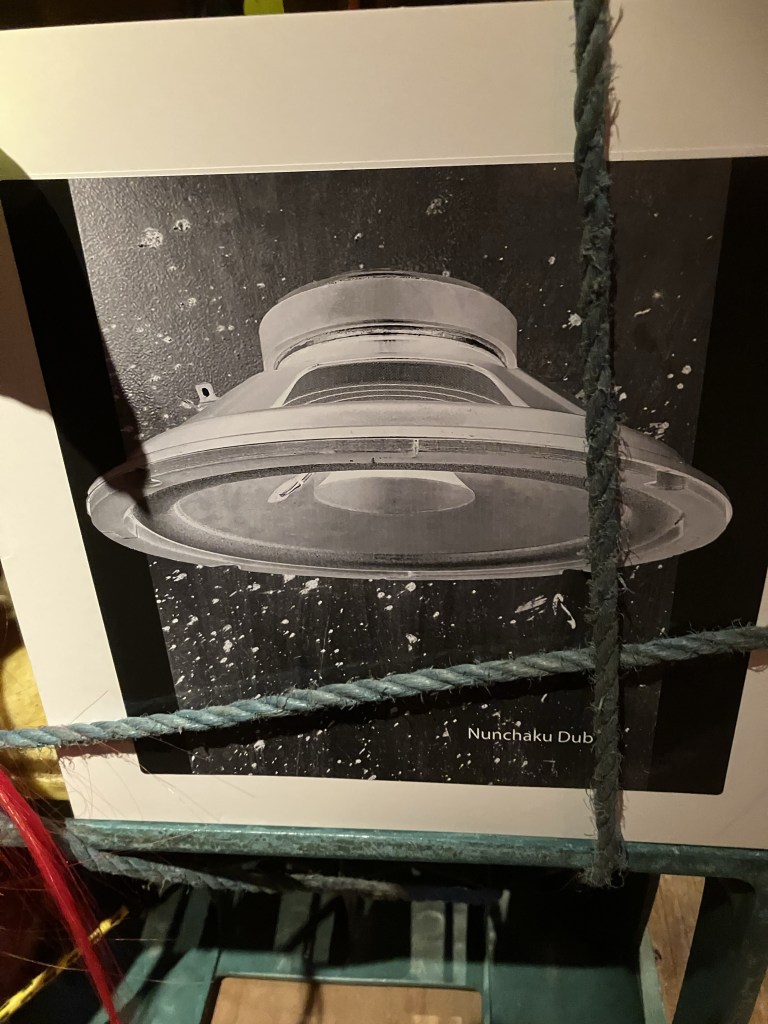
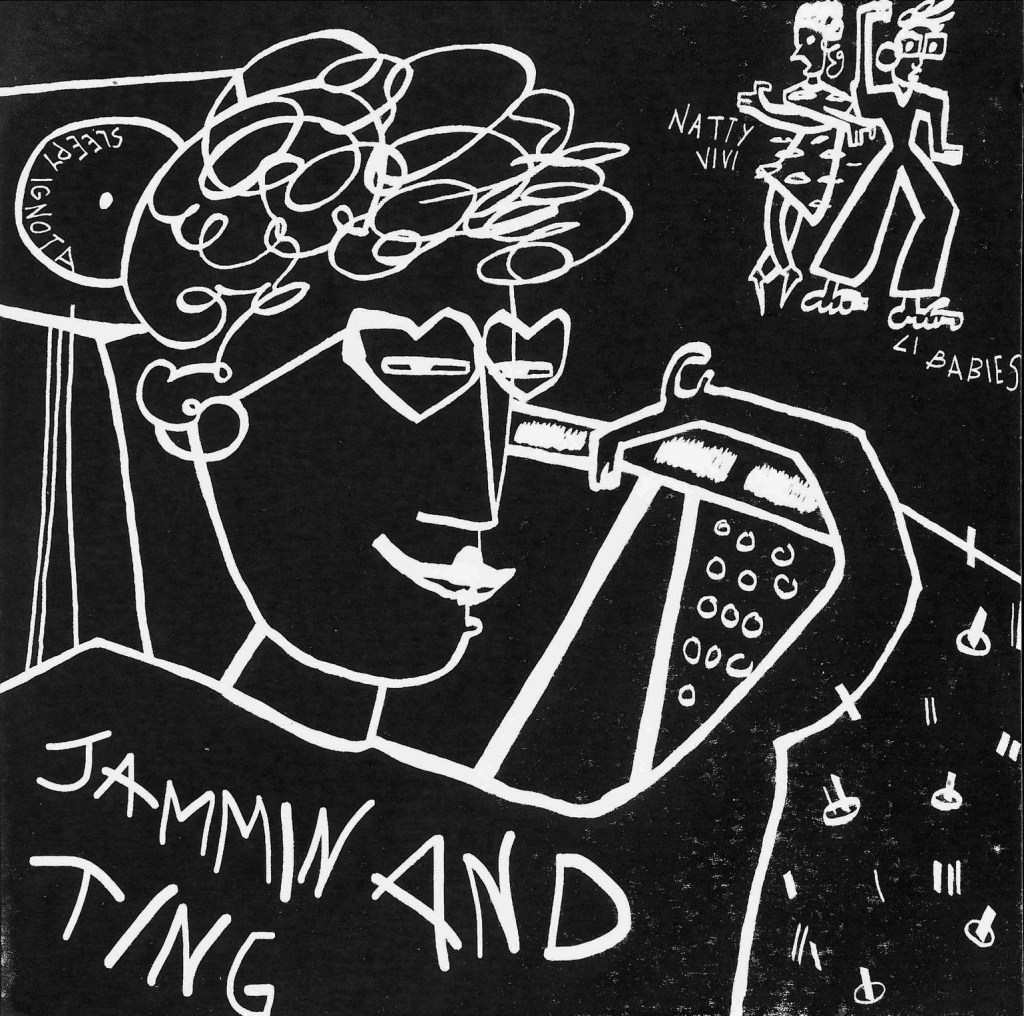
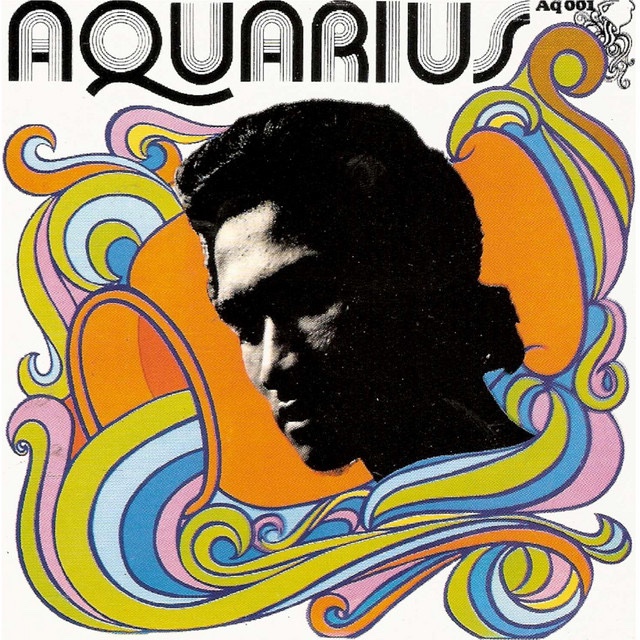
***** several Jamaicans with Chinese roots played a key part in the development of the island’s beloved popular music, reggae and it’s older sister, rock steady. They established some of the first record shops and studios on the island, providing a platform for emerging reggae artists to record and distribute their music. Jamaicans of Chinese origin in the music industry included Vincent and Patricia Chin who created the influential VP Records, Leslie Kong of Beverley’s Records (the producer of the legendary soundtrack to ‘The Harder They Come’), Herman Chin-Loy of Aquarius records (who produced what was arguably the first dub album, ‘Aquarius Dub’ in 1974) and the Hookim brothers who owned Channel One studios where they created the radical ‘rockers’ sound which dominated the Jamaican music scene in the late 1970’s.

The Hookim brothers at Channel One produced this rockers classic in 1976
Herman Chin-Loy created arguably the first ever Dub album in 1974

The installation highlights how the music and culture of reggae have been adapted and reinterpreted in Hong Kong, and how they have provided a means for people to express their identity and resistance in the face of colonialism.

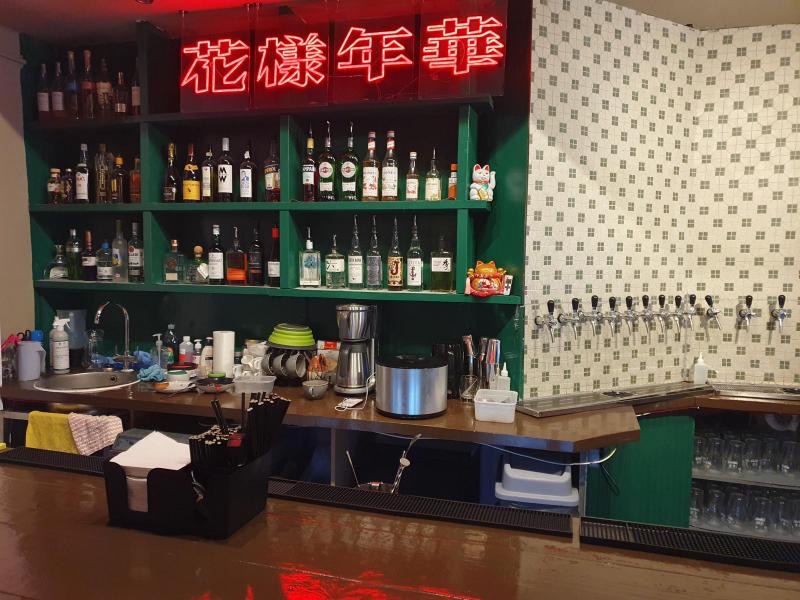
Harcourt bar in South Manchester

The Harcourt bar in southern Manchester is named after Harcourt Road in Hong Kong. This road is in turn named after Sir Cecil Harcourt, who was a British colonial administrator in Hong Kong in the early 20th century. The bar is inspired by Hong Kong culture and cuisine, and the menu features authentic Hong Kong street food. It has picked up justifiably rave reviews.

The bar was created and opened by a married couple from Hong Kong, Priscilla So and Brian Hung. They were inspired by their experience working in the craft beer industry, as well as their love of Hong Kong culture. The bar is designed to be a modern take on a traditional Hong Kong-style pub, with a focus on craft beer and Hong Kong-inspired food. The bar offers a variety of Hong Kong-style dishes, including bars snacks prawn toast and smashed cucumber as well as a wide selection of craft beers.

Before opening the bar, Brian took up a position as a barrel ageing manager for the independent Manchester based Cloudwater brewery. The bar wisely stocks, a range of award winning Cloudwater beers (see https://cloudwaterbrew.co).

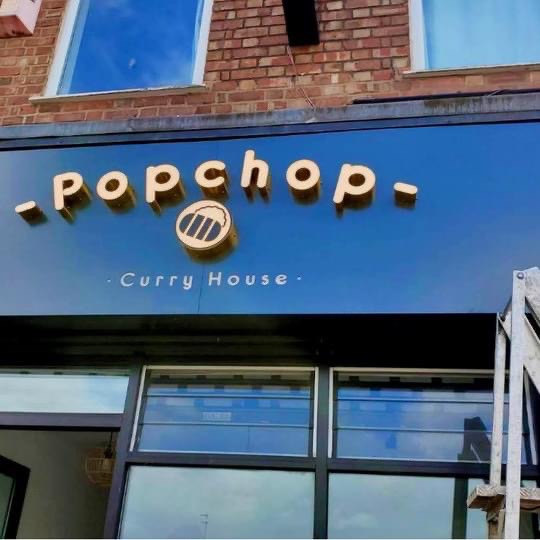
Popchop in East Manchester

The influence of emigres from Hong Kong on Manchester’s food scene continues apace with the likes of Popchop Curry House in the east of the city. Popchop serves up Hong Kong style curried meats and rice to a fanatical clientele. The owner came to Manchester from Hong Kong a couple of years ago, His recipes are based on his father’s renowned restaurant Sun King Yuen in the Wan Chai district of Hong Kong which is which is famous for its curry dishes.

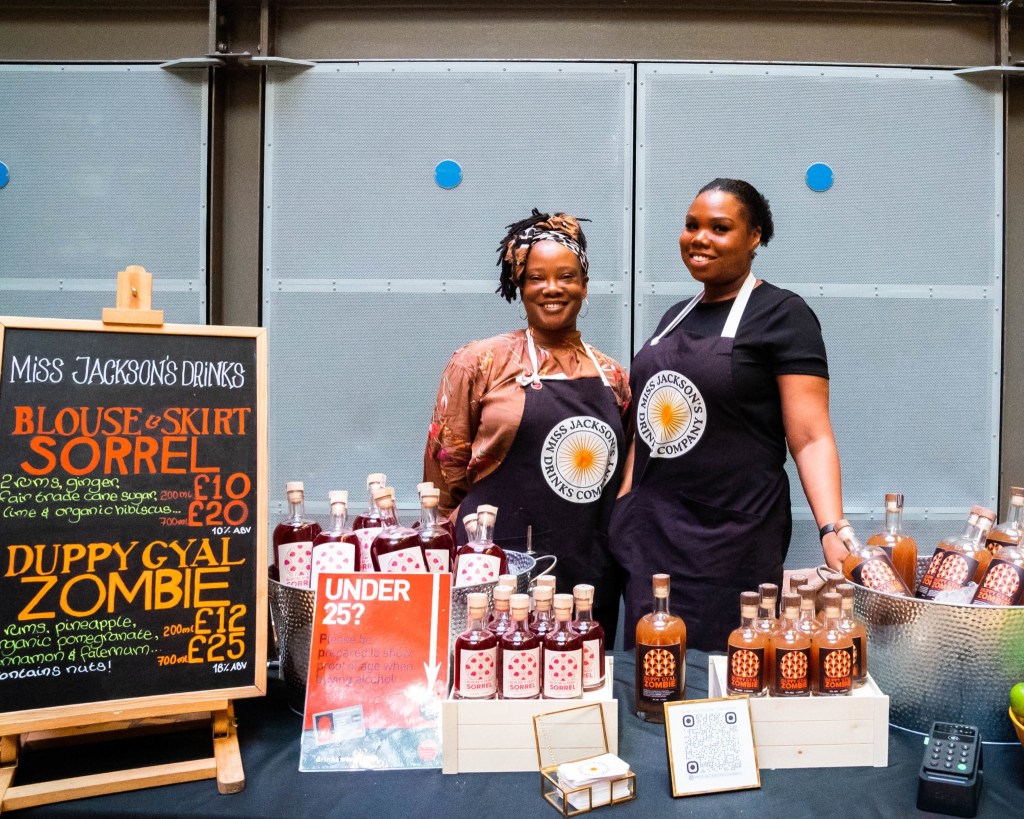
And turning to the Caribbean influence on food culture in the city we must mention Miss Jackson’s Drinks Company, a relatively new venture based in Manchester which was set up by two sisters.

‘Miss Jackson’s Drinks’

Their website at https://www.missjacksonsdrinks.com comments:

‘The story starts with us, two Jackson sisters from South Manchester. Inspired by our Caribbean heritage, we sustainably source the bright flavours of Jamaica and shake them down with premium spirits’

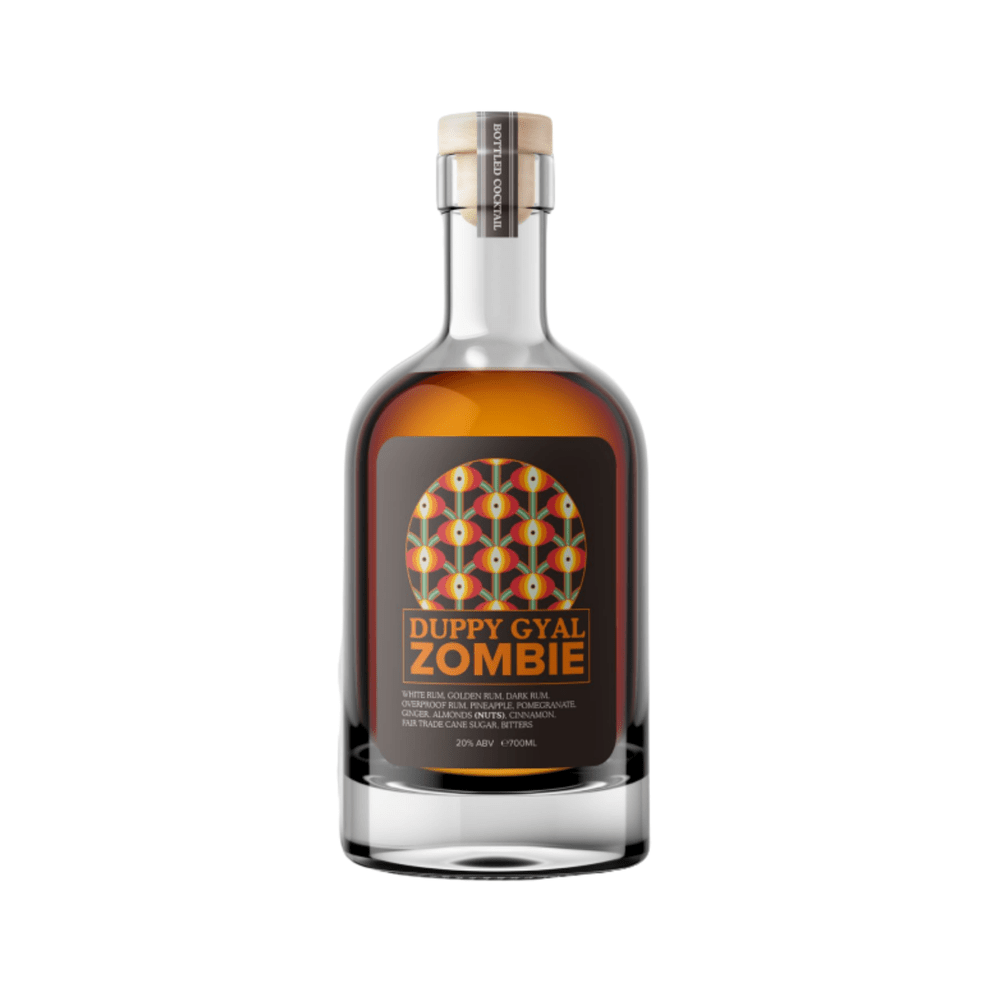
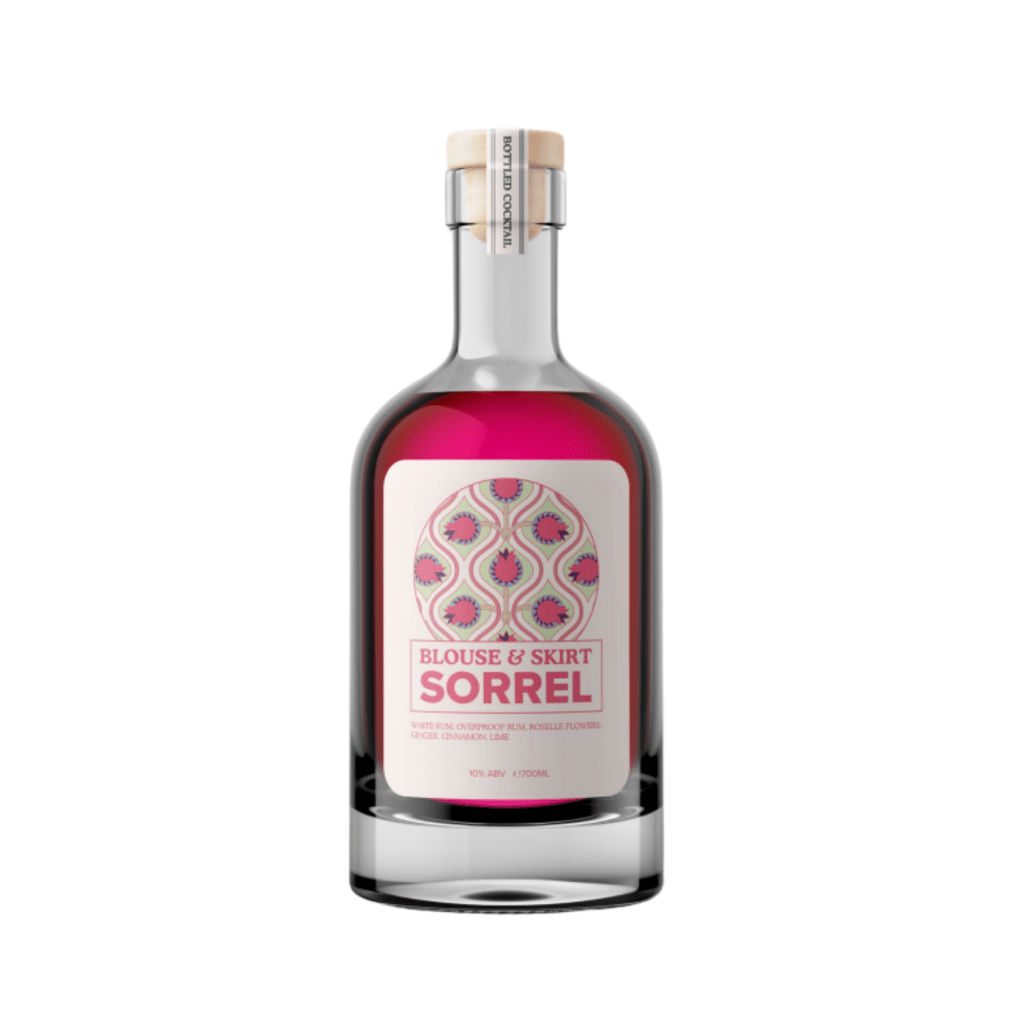
The sisters have created and marketed two liqueurs to date, Duppy Gyal Zombie and our favourite, Blouse and Skirt Sorrel.

Duppy Gyal Zombie

Duppy Gyal Zombie is a combination of different rums with limes, pomegranate juice, pineapple and bitters.

Blouse & Skirt Sorrel

Blouse and Skirt Sorrel is a combination of different rums, ginger, lime juice, cane sugar and of course, Sorrel. In Jamaica, ‘Sorrel’ are the dried flowers used to make a type of sweet hibiscus tea commonly made from the Roselle flower which is popular throughout the Caribbean and West Africa where the ‘red tea’ made from the flowers originates.

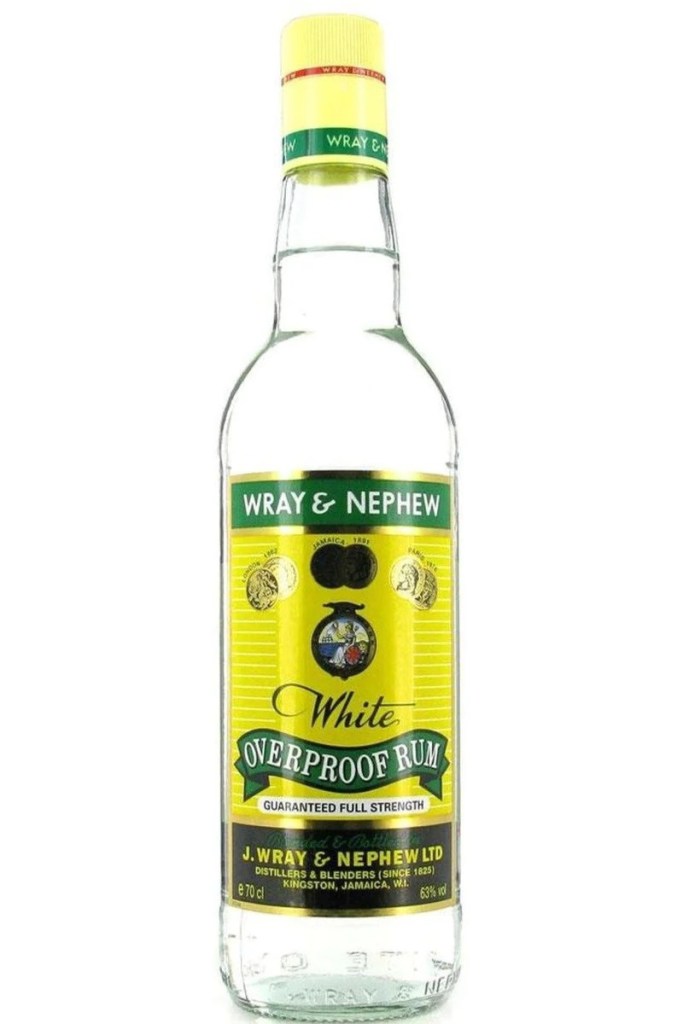
Overproof Jamaican rum

‘Take her to Jamaica where the rum come from

The rum come from, the rum come from

Take her to Jamaica where the rum come from

And you can have some fun’

Köln, Kölsch and Cola

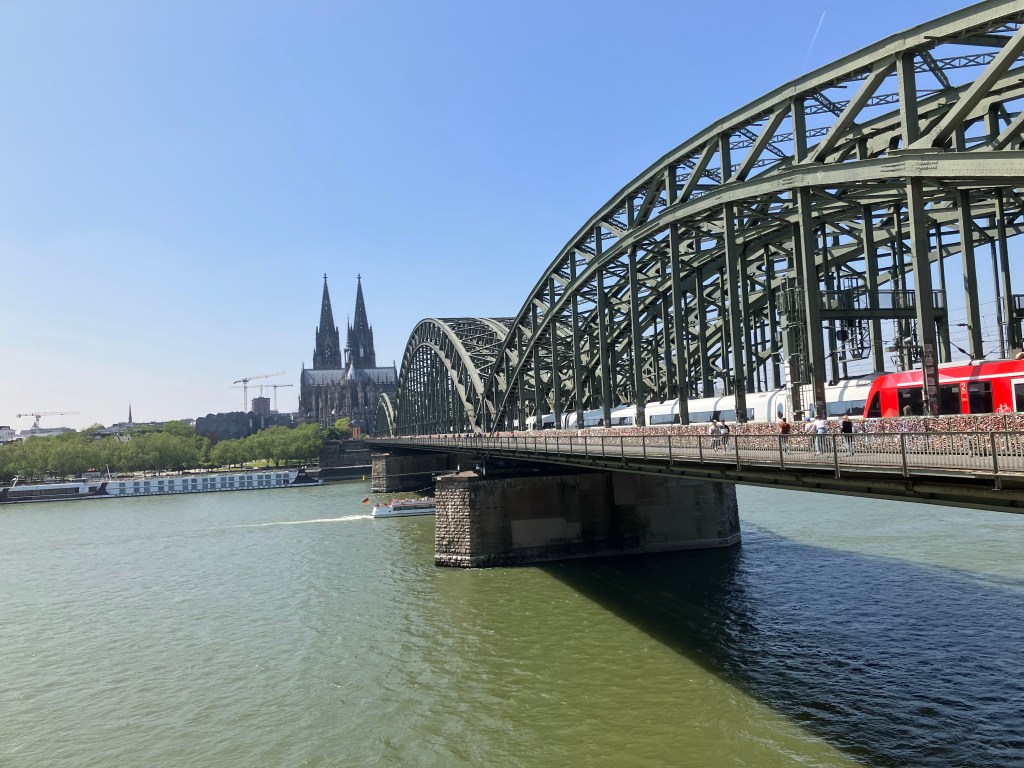
Cathedral and Hohenzollern bridge

Köln (aka ‘Cologne’) is the fourth largest city in Germany. Devastated by the extensive bombing campaigns of Allied aircraft during WW2, the city is essentially one of concrete, steel and glass and some what ‘thrown up’ in nature. So great was the bombing devastation that is some way past the interchange at Barbarossa Platz (where the southbound U Bahn to nearby Bonn rises to the surface), before you are amongst the older suburbs of turn of the century housing. Köln is, not a pretty city and there is, a fair amount of homelessness (even in the airport) and urban grime. Like Berlin or Hamburg, there is nothing neat or ‘twee’ about the place. Nevertheless, the city is friendly, cultural and full of character and it reminds us in a way of Manchester in the North of England.

Eigelstein Torburg in Köln

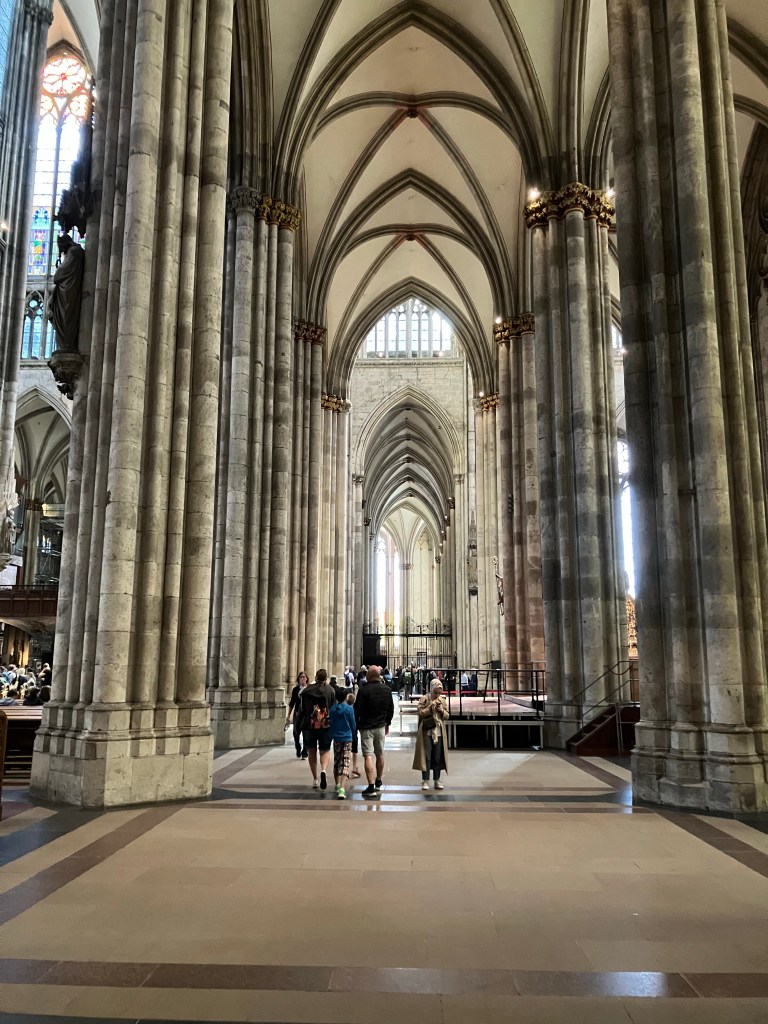
Three key city landmarks spring to mind. Most important amongst them is the Cathedral, the Kölner Dom, it’s outline of blackened sandstone visible from miles around. It is the largest Gothic church in Northern Europe and is Germany’s most visited landmark.

Dom

Second in importance in our opinion is the Hohenzollern bridge with its three distinctive arches. It runs east of the main train station and crosses the Rhine. It is used by both pedestrians and trains and with the exception of the walls of hideous ‘love padlocks’ which line the railway fences along the bridge, it is an otherwise pleasant way to walk across the Rhine to the other side.

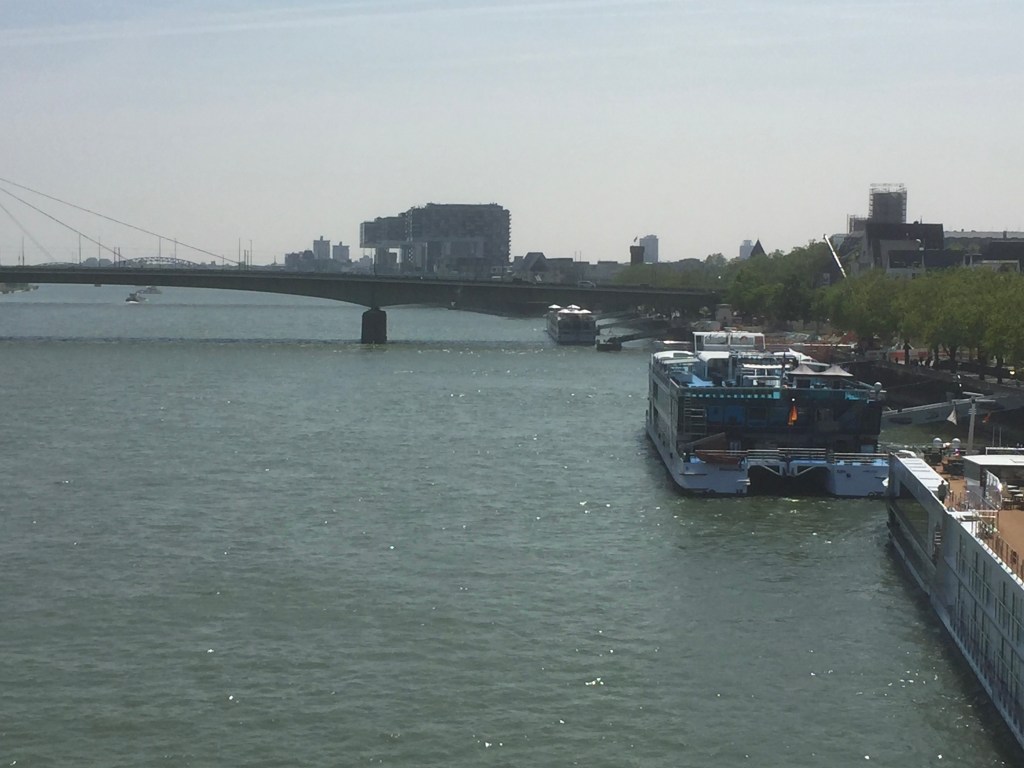
Rhine view from the bridge

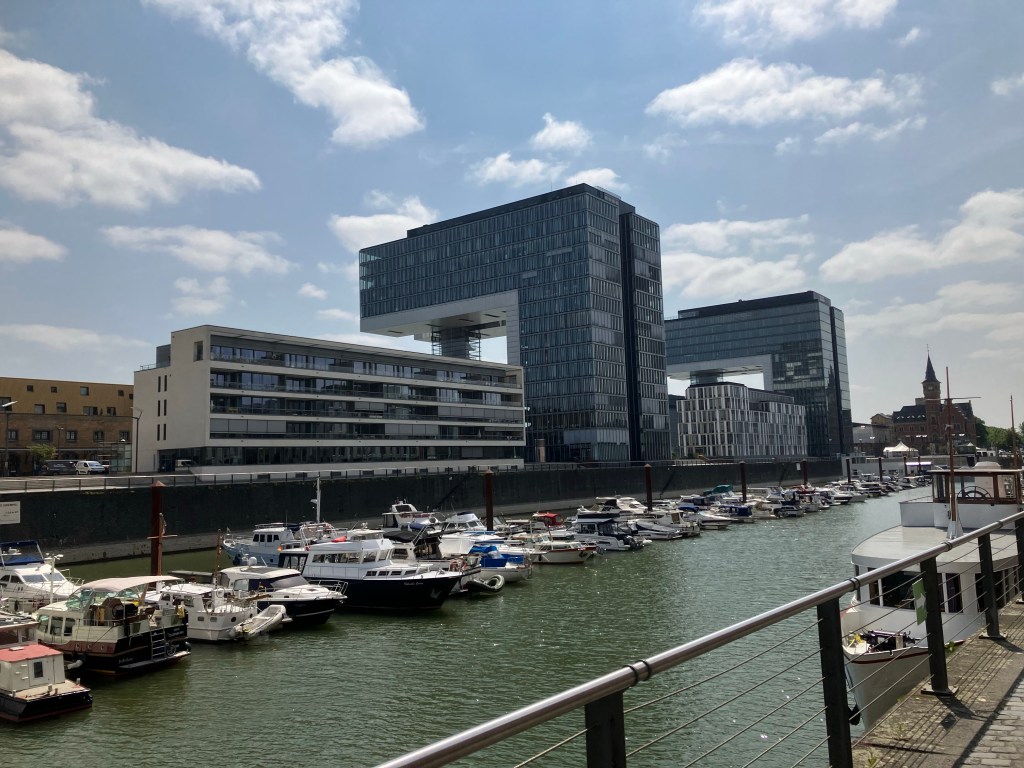
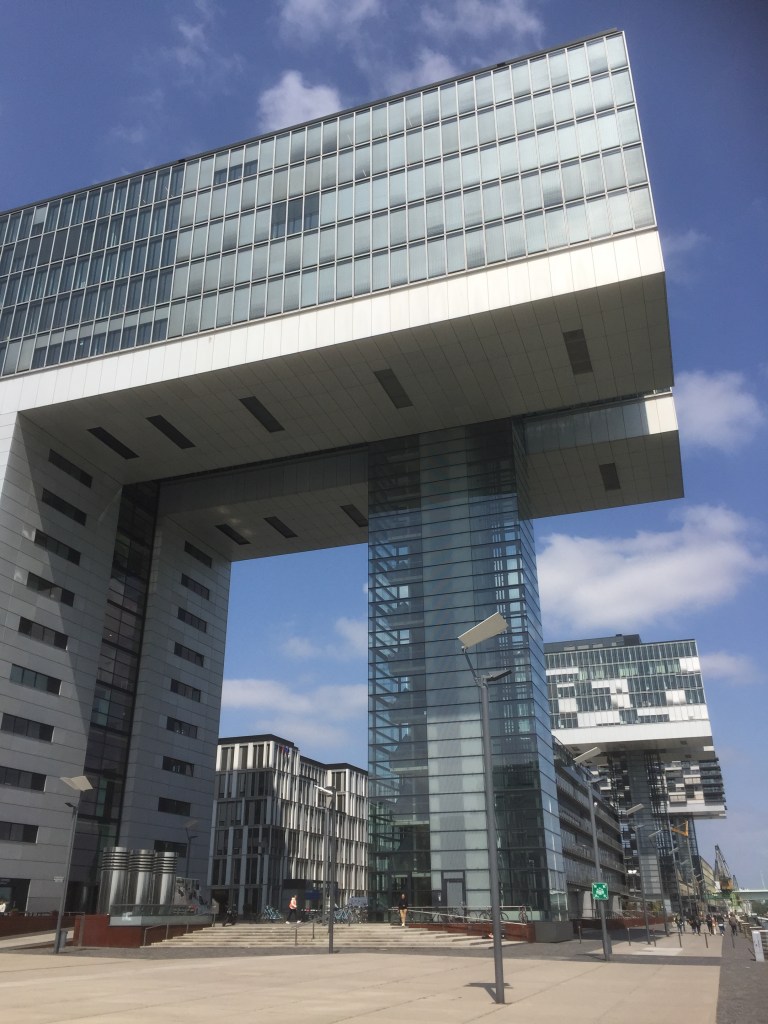
Clearly visible from the bridge are another city landmark, the three Kranhaus buildings of the Rhineauhafen urban regeneration area. The area was once a commercial harbour for loading and unloading goods from Rhine barges. Now the area’s most eye catching buildings, the three ‘Kranhaus’ loom over the river as if they were modern day harbour cranes of glass and steel.

Kranhaus
Kranhaus

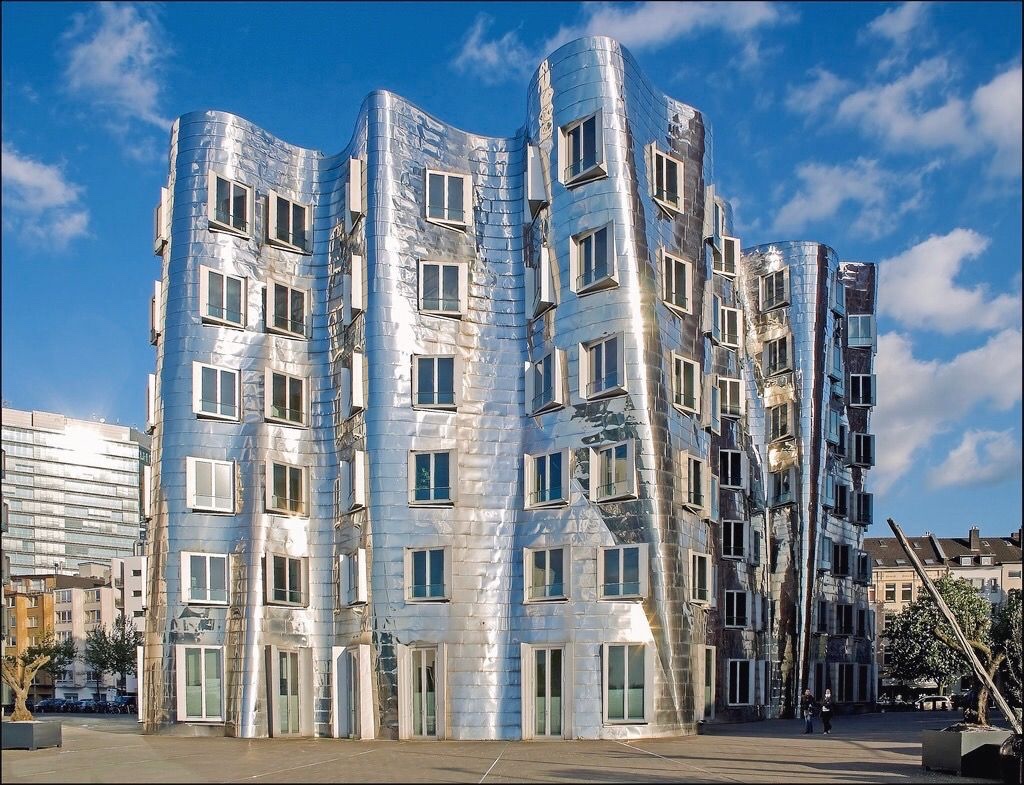
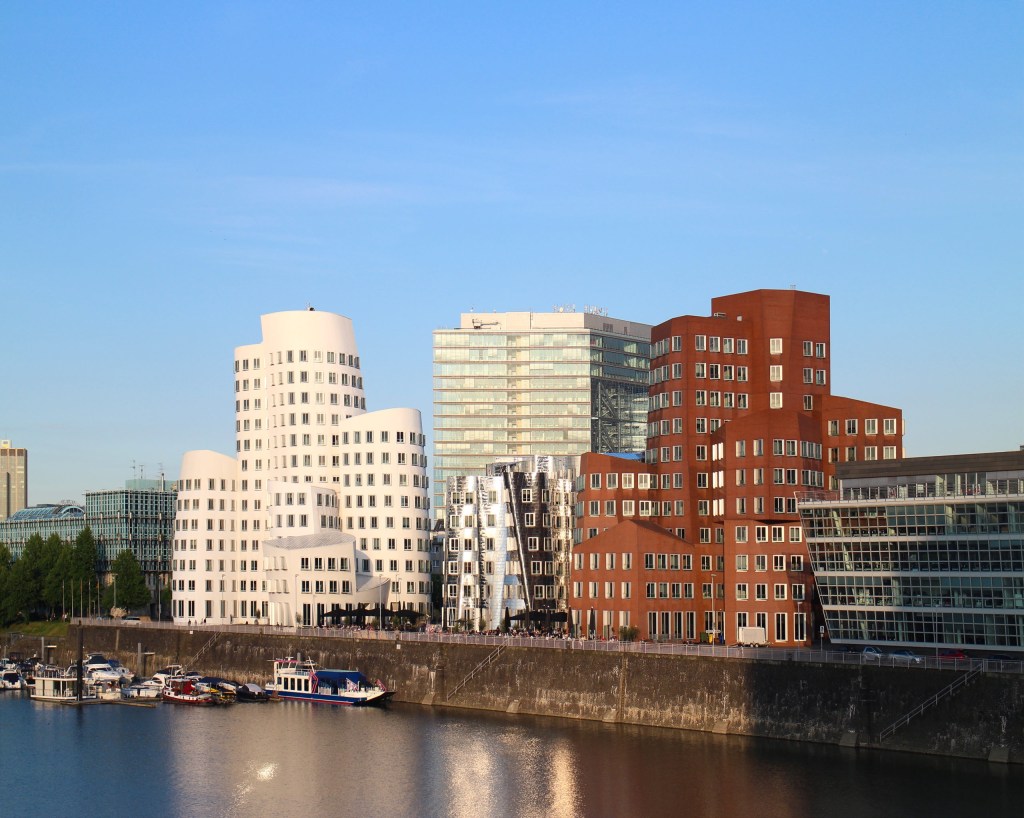
Rhineauhafen is a commercial and aesthetic success in our opinion as is the revitalised MedienHafen district of nearby Düsseldorf, another former harbour area now a media industry district distinguished and enlightened by impressive architecture including Frank Gehry’s Neuer Zollhof buildings

Neuer Zollhof
Neuer Zollhof

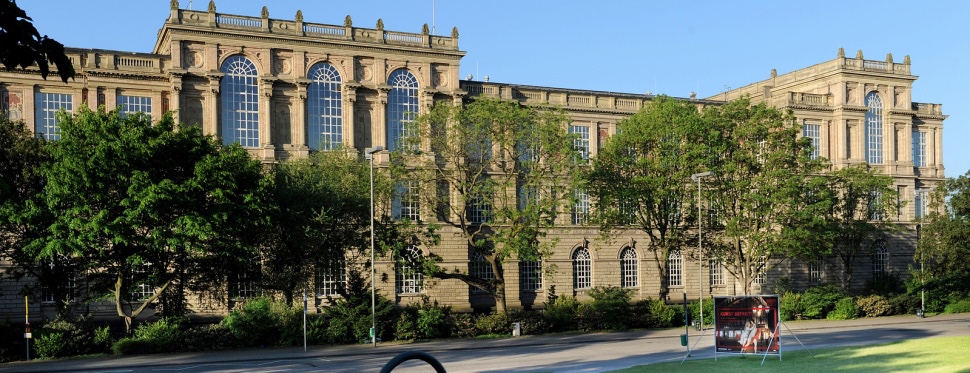
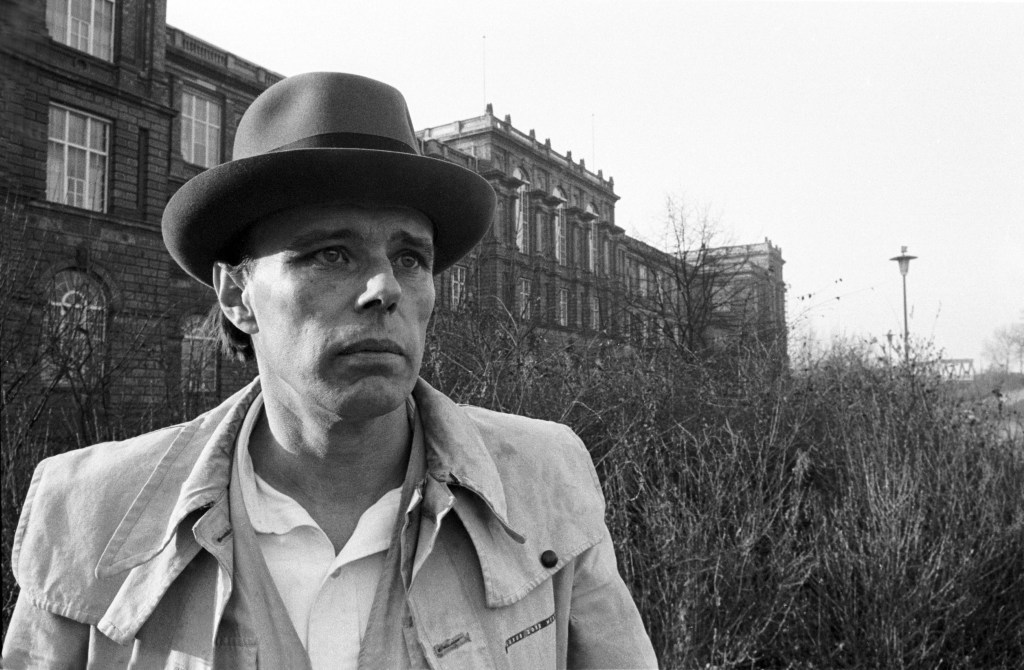
Düsseldorf is forever associated with the artist Joseph Beuys who was the professor of monumental sculpture at the city’s art college, the Kunstakademie. The artist Paul Klee had also taught at the Academy.

Kunstakademie, Düsseldorf
Joseph Beuys outside the Kunstakademie. ‘Wer nicht denken will, fliegt raus’.
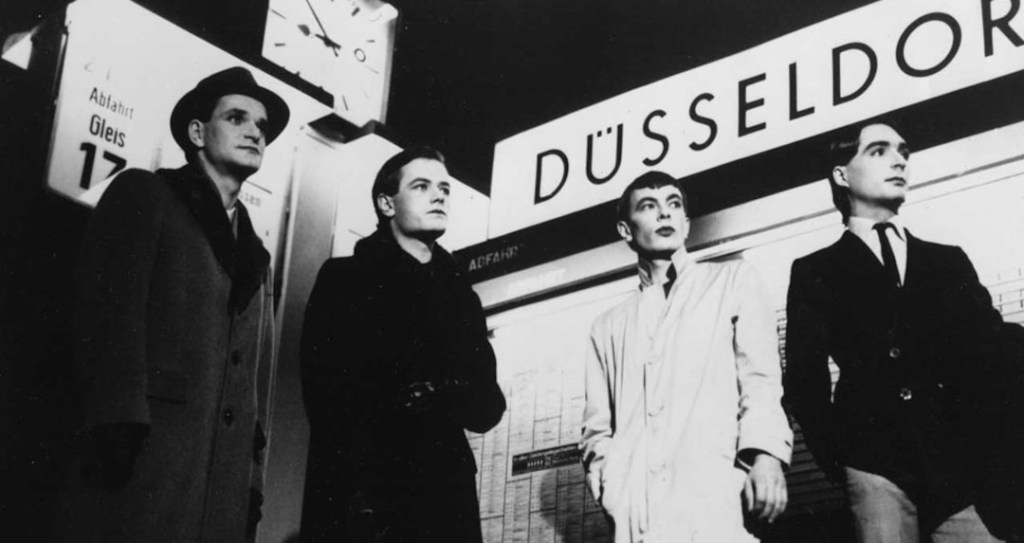
Kõln and Düsseldorf between them produced two of Germany‘s most innovative and influential music groups, Can from Köln and Kraftwerk from Düsseldorf. You cannot underestimate the influence the music of these two groups had on popular Western musical culture from Rock to Techno, from Hip Hop to Electronica. If you add Donna Summer (who was identified with the Munich scene) to the work of Can and Kraftwerk you more or less have the blueprint for the electronic dance music of the UK and USA which was to evolve in the 80s and 90s

Can
Kraftwerk

Kraftwerk even extended their influence to London’s ‘Ebony Steel Band’. They who covered Kraftwerk songs in their 2021 album ‘Pan Machine’. The album’s name is a pun on Kraftwerk’s 1978 album ‘Man Machine’, a ‘Pan’ being the nickname of the oil drums played in a Steel Band.
Man Machine
Pan Machine

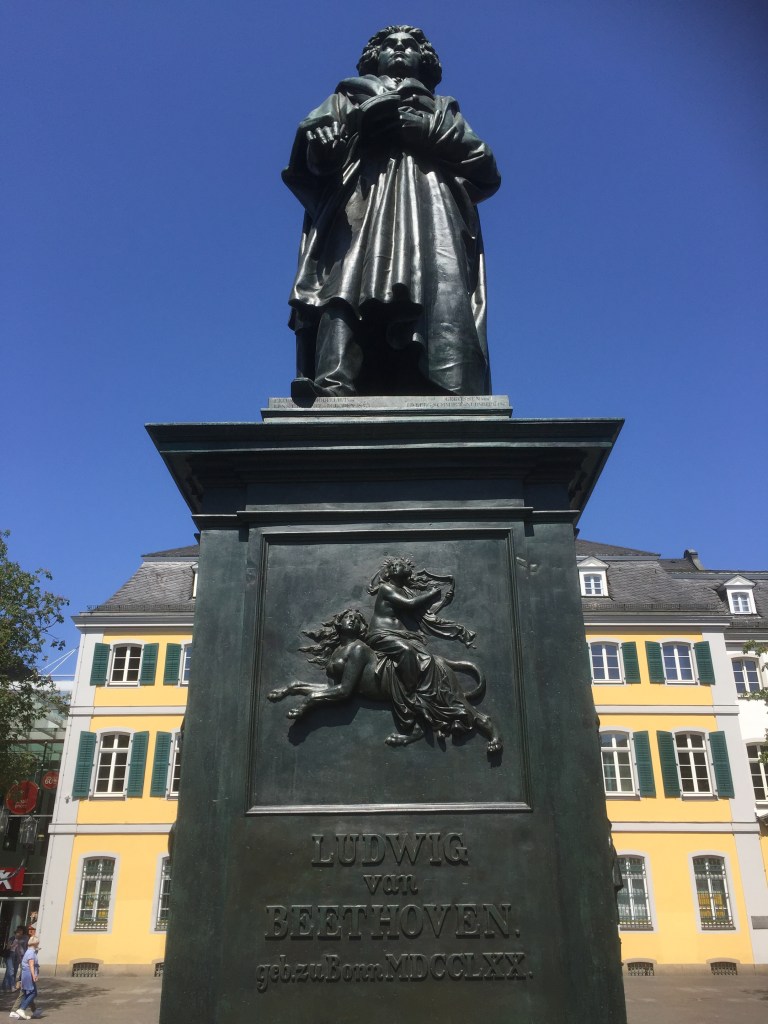
As for classical music, the nearby city of Bonn (easily reached from Köln by U- Bahn) is the birthplace of Beethoven. His family home, the Beethoven House, is the most popular attraction in the city for visitors.

Ludwig Van at home in Bonn

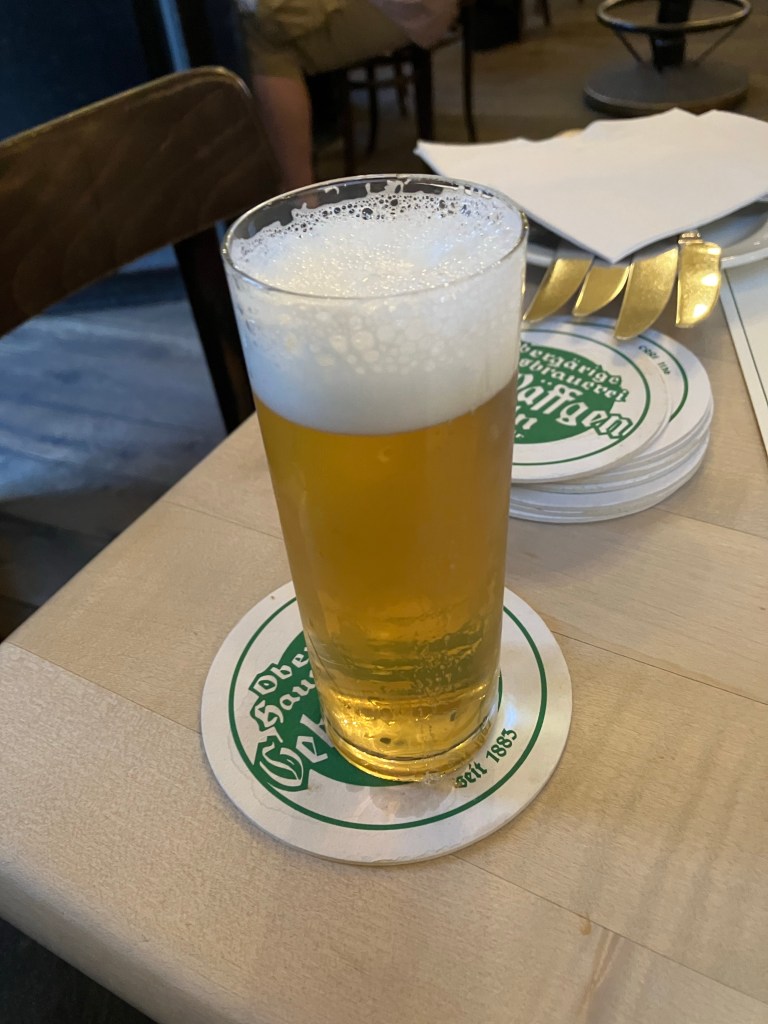
Köln is especially well known for two popular drinks, the first is a soda (‘afri cola’) and the second is the local style of beer known as ‘Kölsch’.

Kölsch

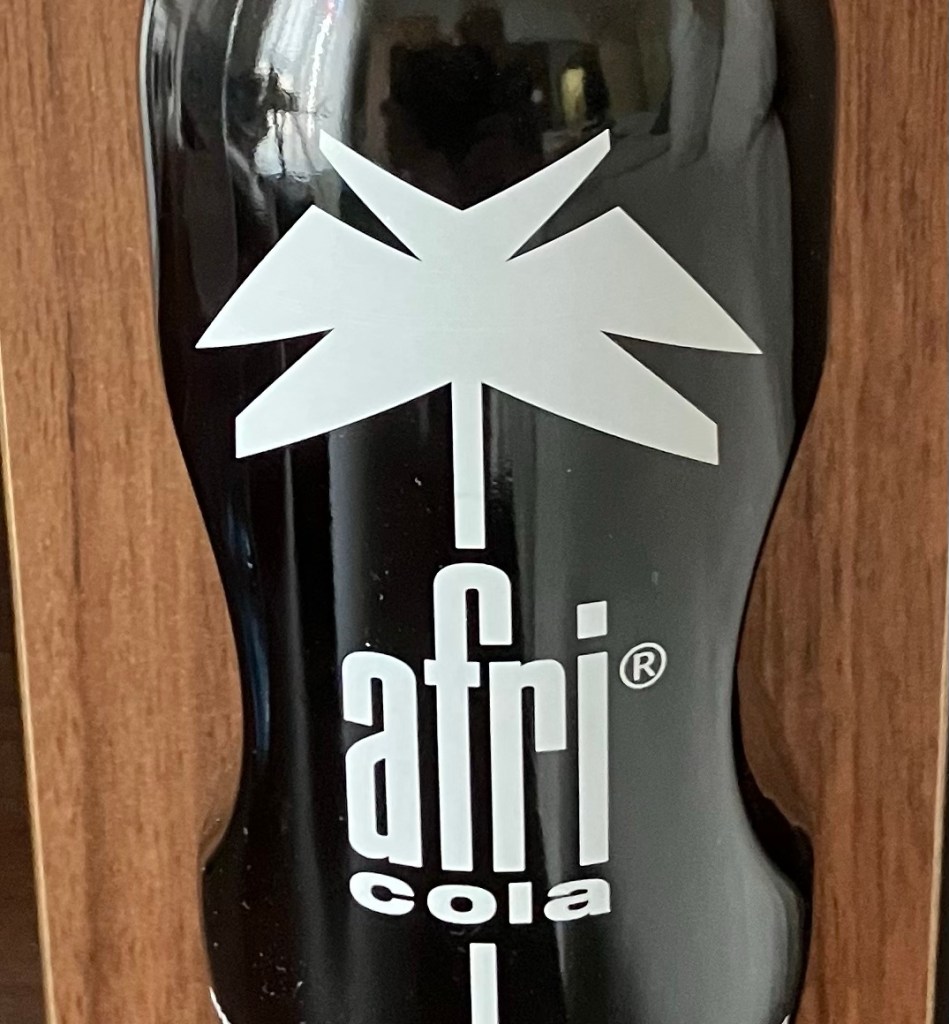
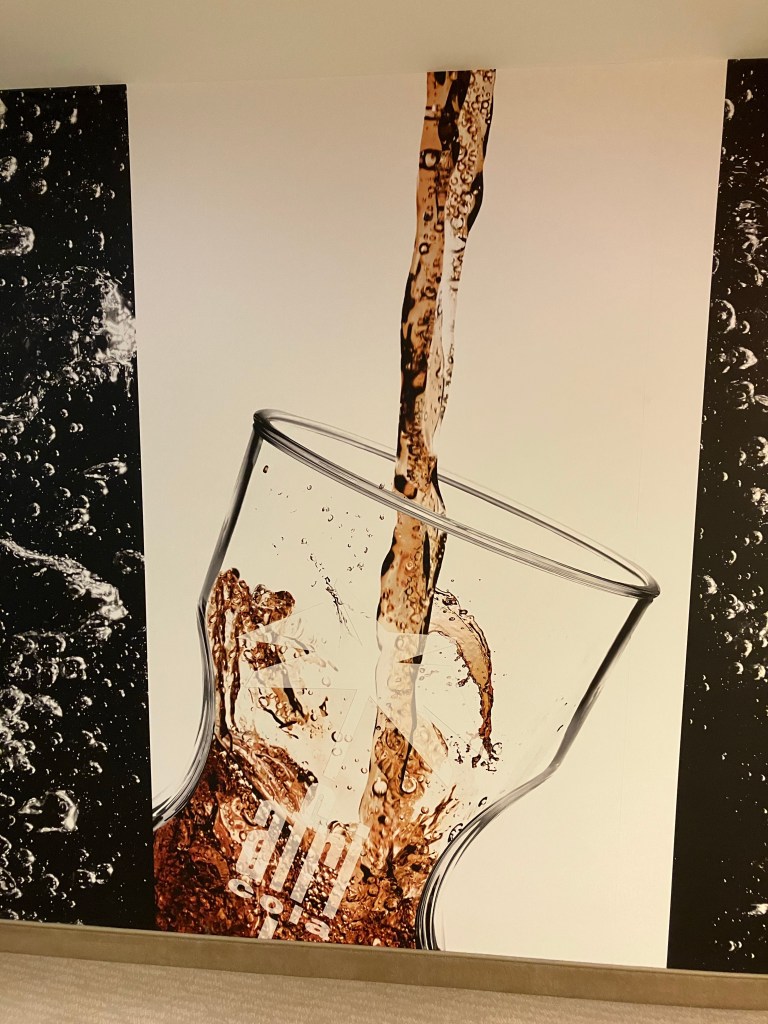
Afri cola is a very high caffeine (250m/L to Coca Cola’s 32 m/L), ‘old fashioned’ tasting local soda, first manufactured in Köln in 1931. The birthplace of the drink can be found in the grounds of the Courtyard by Marriot hotel on Dagobertstraße, north of the main train station. The original stoneware tanks used in the production process of the drink‘s syrups are housed in the hotel’s reception area, afri cola graphics adorn the walls.

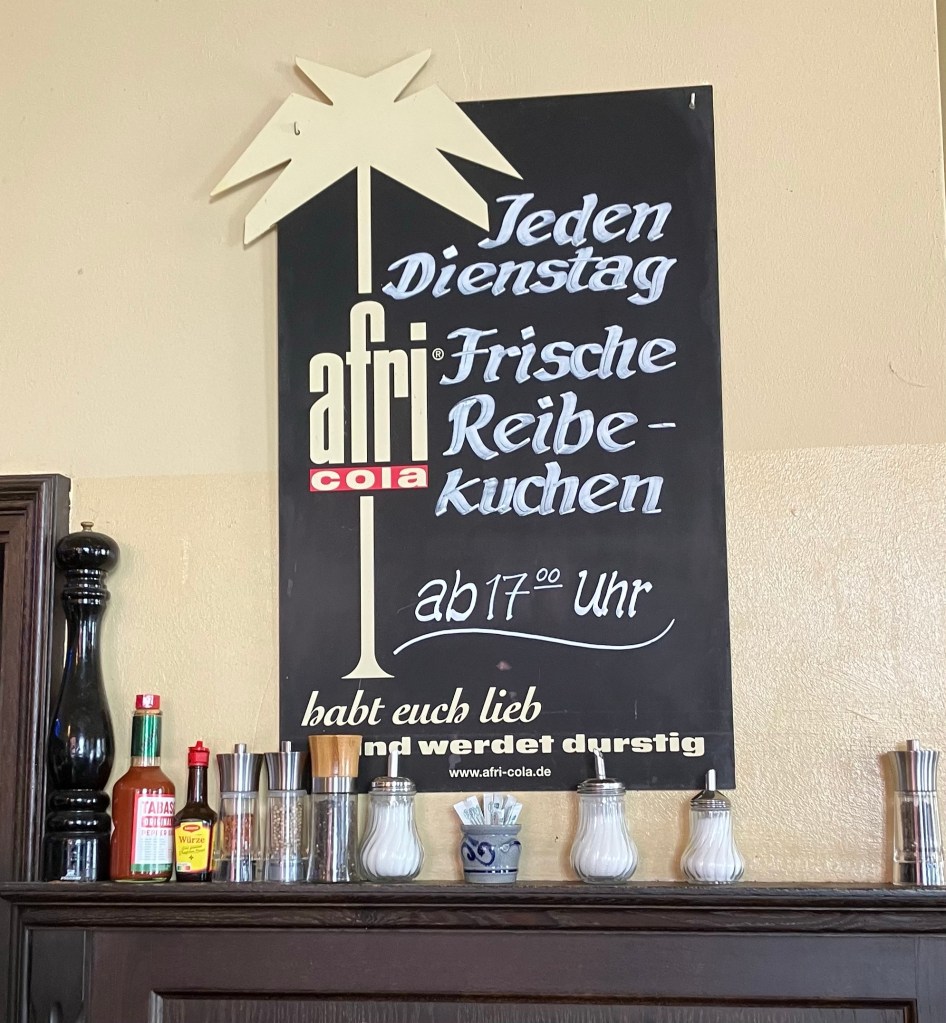
The distinctive branding
Hotel mural

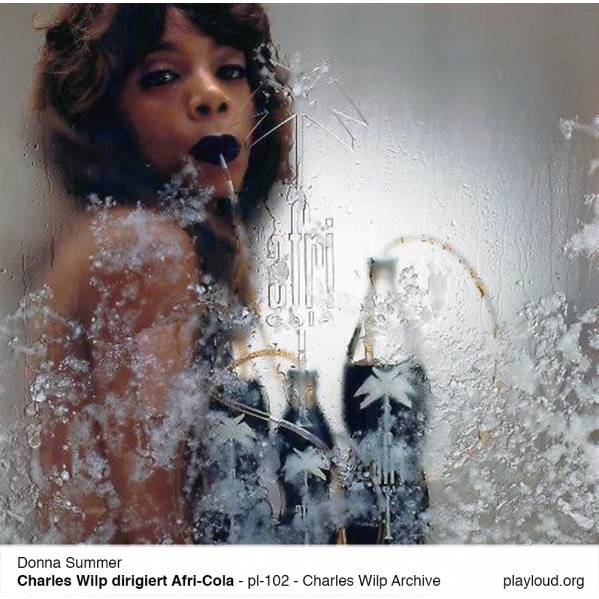
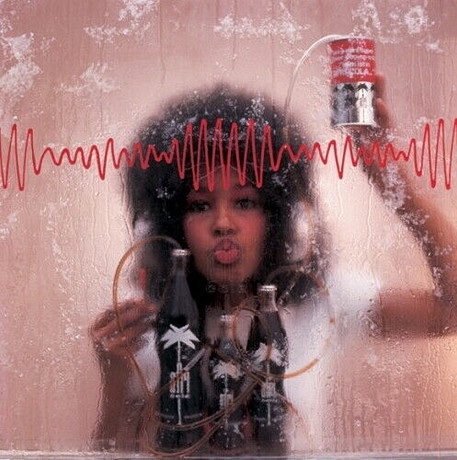
The drink’s popularity peaked in the 60’s when the brand was advertised on German TV via a ‘risqué’ TV commercial by Ad Director Charles Wilp whose 1968 creation for the brand featured super stars of the day Donna Summer, Marianne Faithfull, Amanda Lear, and Marsha Hunt as well as a leather clad biker and a moustachioed Vietnam era US soldier with the commercial set to a discordant sound track.

A young Donna Summer
The iconic Marsha Hunt

https://youtu.be/RW-_8okYW5I – follow the link to the 1968 advert, well worth watching.

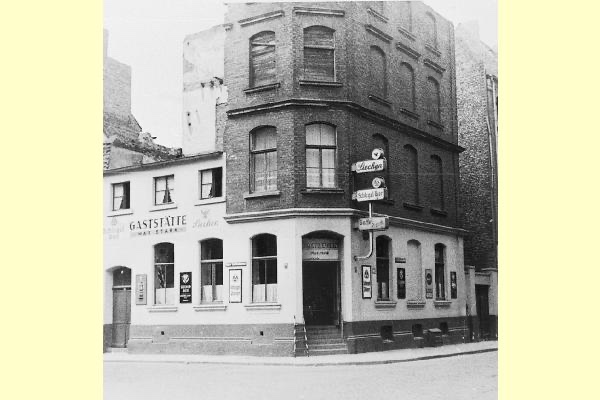
Although it had been hugely successful, the drink was more or less discontinued by the 1990’s. Foreign competition from the likes of Coca-Cola, a change in the recipe and a reduction in the caffeine content all contributed to the brands’s demise. However, the drink was revived thereafter with its original, taste, high caffeine content and logo resurrected. The drink is readily available all over the city including at an atmospheric bar/restaurant, the Gaststätte Max Stark on Unter Kahlenhausen, near the cola’s original source on Dagobertstraße.

afri cola in the Max Stark

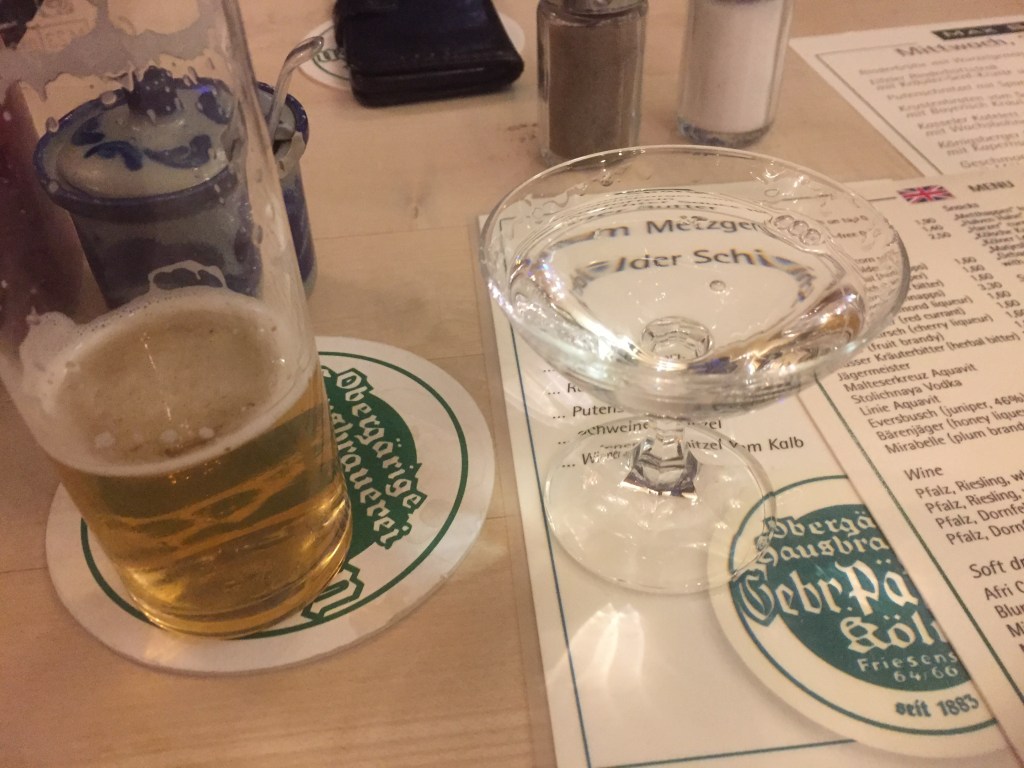
The Max Stark is also a great place to drink a glass of the city’s unique beer, Kölsch. a light, fine tasting drink. The term Kölsch is a protected designation of origin in the EU and it can only be used for a specific type of beer made within 50km of Köln and which has been brewed to a defined standard.

The Max Stark back in the day

Kölsch is served in a tall, thin glass known as a ‘stange’ in small 200mm measures. The glasses keep the beer cold and help it to retain a frothy head.

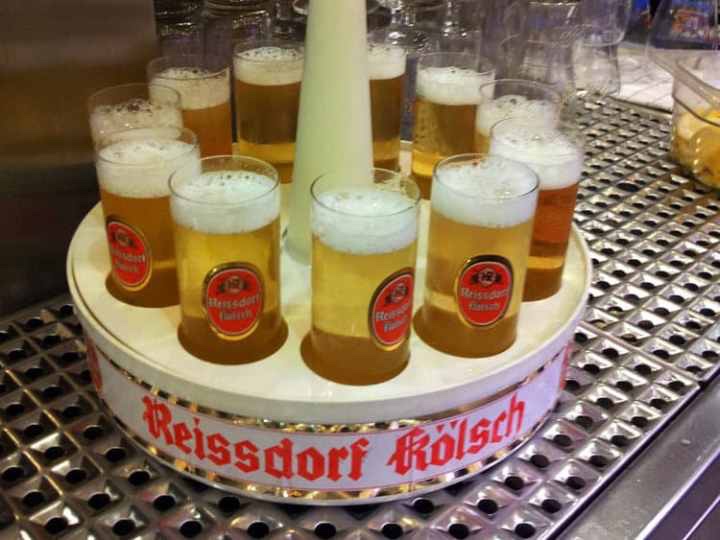
Kölsch is traditionally served by rather ‘stern’ waiter known as a ‘kobe’ who circles the bar handing patrons glasses of Kölsch from a circular tray known as a ‘kranz’ . Each time a customer takes a beer the waiter marks a piece of card with the tally. As is the custom with the Brazilian currasqueria, the kobe will continue serving until the customer places a beer mat over the glass indicating that they have had enough.

Kölsch, stange and kranz

Inside, the bar is cool and dark. Older regulars line the tables to the left as you walk inside. To the right is the main restaurant area with it’s fulsome plates of German food and, of course, Kölsch.

Fill ‘er up!

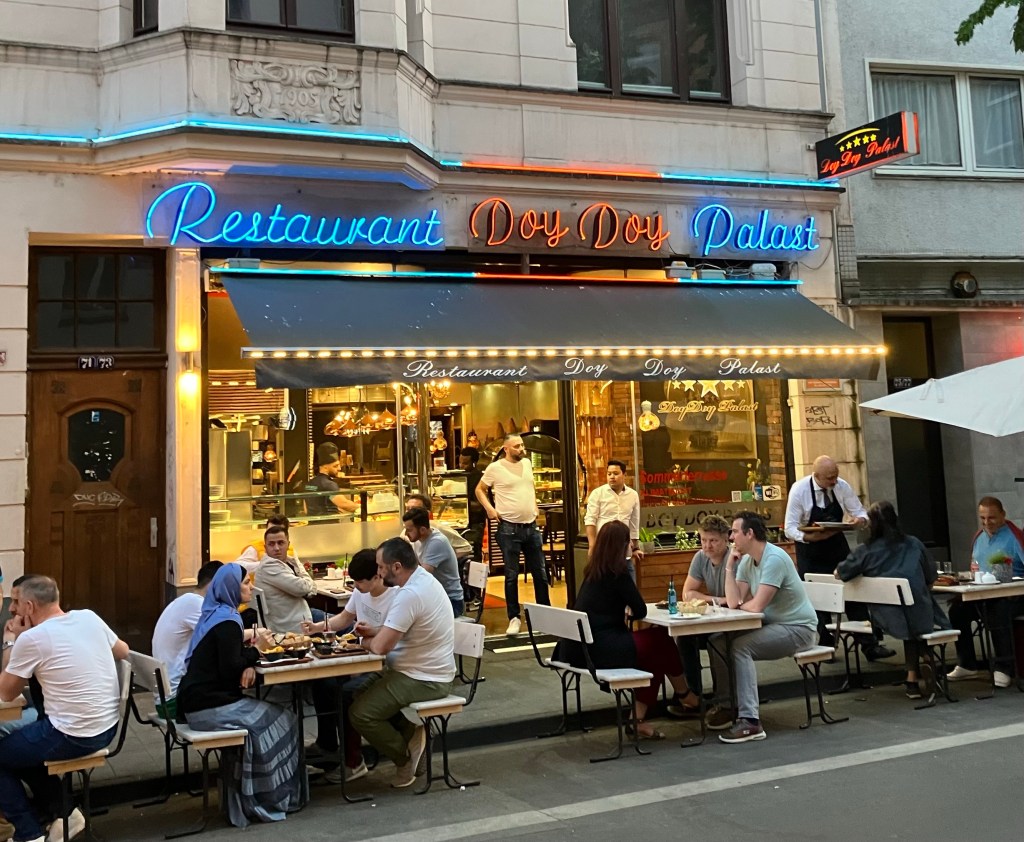
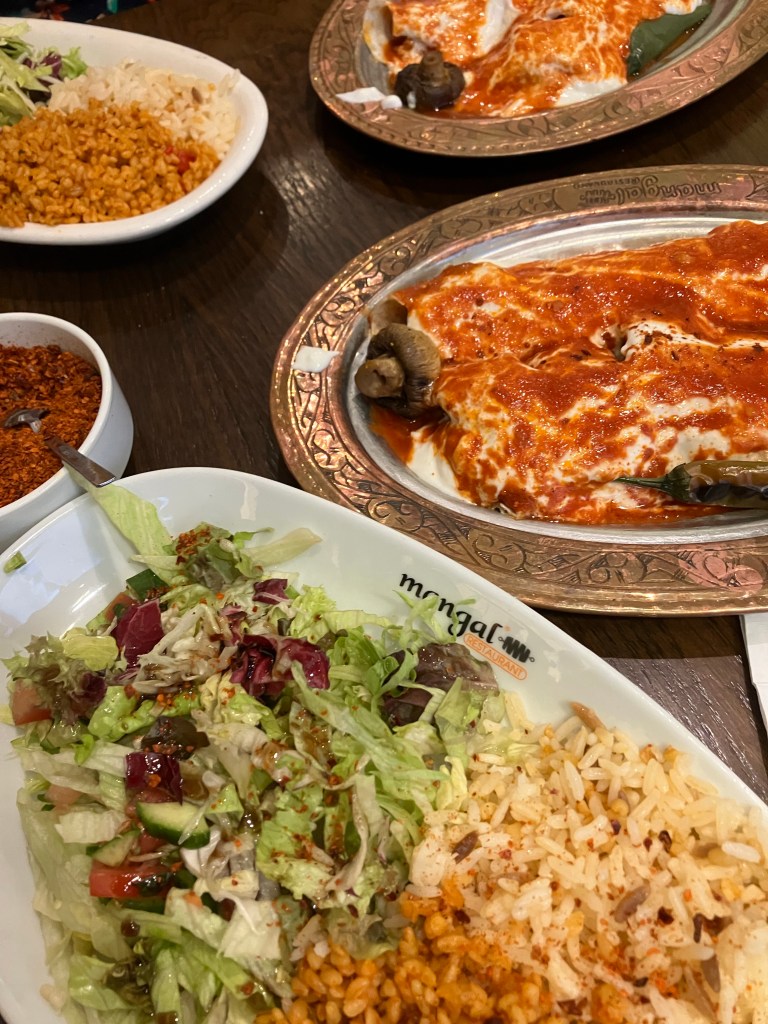
Nevertheless, in our opinion it is Turkish food that reigns supreme in the city.

Prost!