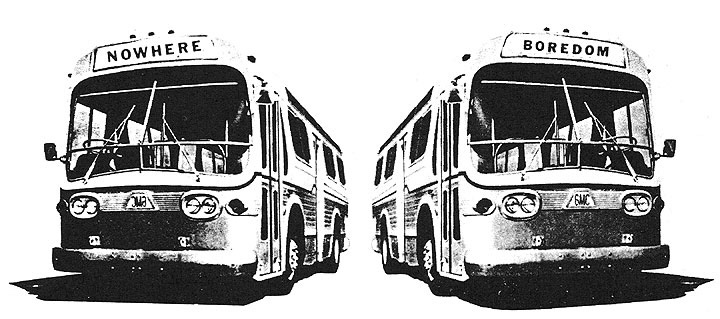
High Peak to the World’s End

The village of Tintwhistle lies in the High Peak district in the county of Derbyshire in Northern England. The High Peak area is the more elevated section of the Dark Peak which is made of moorland and bogs. It’s limestone foundation is covered in sandstone and shale. In winter, with heavy rainfall and snow, the soil is almost always saturated with water and ice.

The countryside around the village is attractive but not a little wild and the fairly bucolic pastures soon give way to the moors themselves.
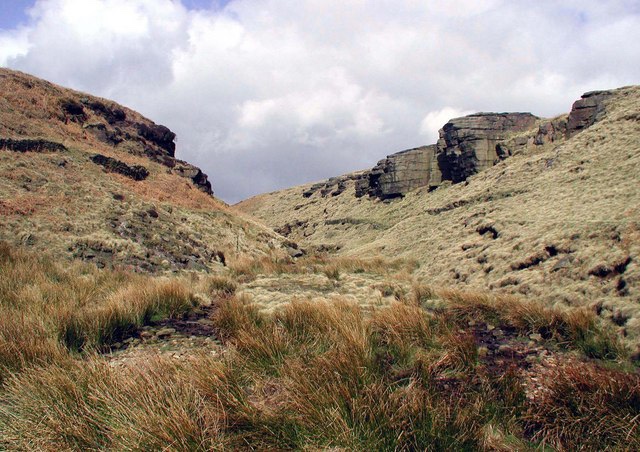
The most notable former resident of the village is the fashion designer and activist Vivienne Westwood. Westwood grew up in a row of stone cottages known as Millbrook located just outside the village on the main Manchester road. The village of Hollingsworth lies to the West, the town of Glossop to the South.

Westwood was born Vivienne Isabel Swire in Glossop. Her father was a storekeeper, her mother worked in the local cotton mill. The Millbrook cottages and the surrounding countryside was her playground. She went on to become the arguably best fashion designer (and certainly the most innovative) the UK has ever produced.
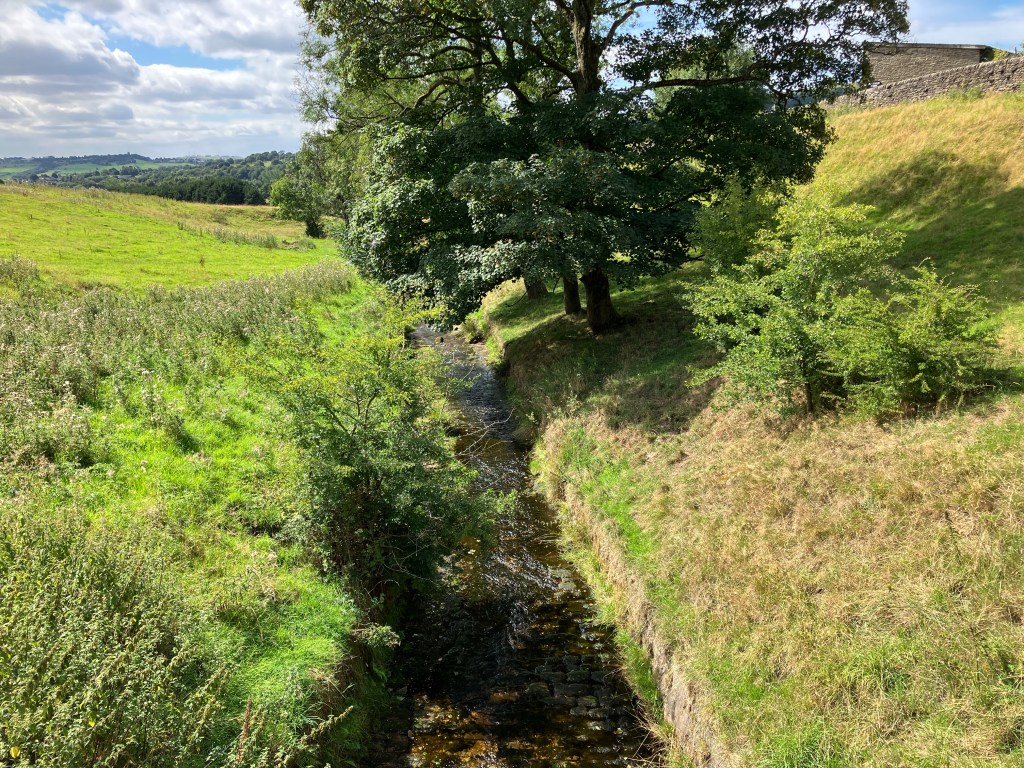
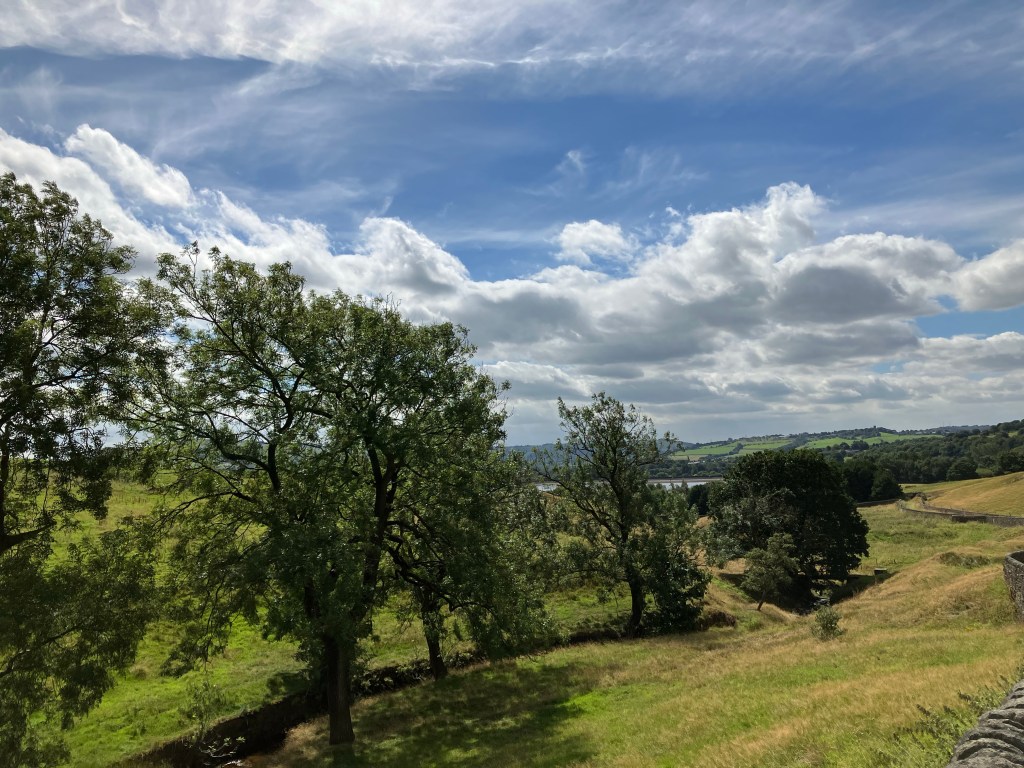
“Millbrook Cottages were at the bottom of an old quarry and from the earliest age my mother lifted me over our back wall to play in a dell where bluebells grew. As I grew up I was free to wander in a countryside which was beautiful and intimate until you got to the moors. After that it was wild and a little frightening”.

Although the city of Manchester (with its music clubs and art galleries) was not too far away, the Pennine area Westwood grew up in would have seemed culturally remote in the monochrome 1950’s.

“I lived in a part of the country that had grown up in the Industrial Revolution. I didn’t know about art galleries until I was 17. I’d never seen an art book, never been to the theatre.”
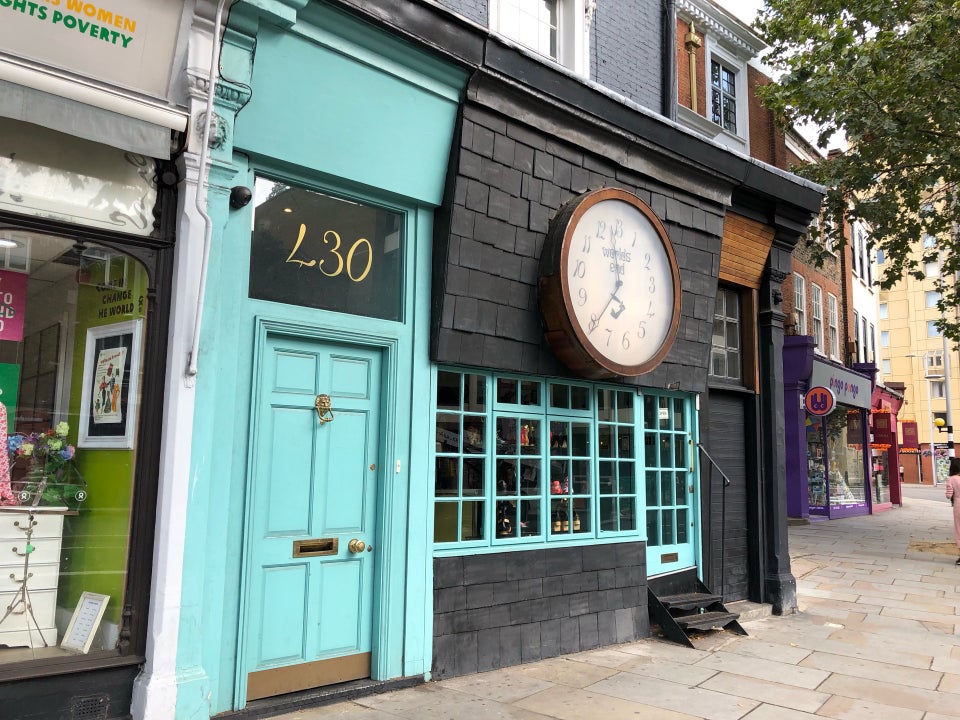
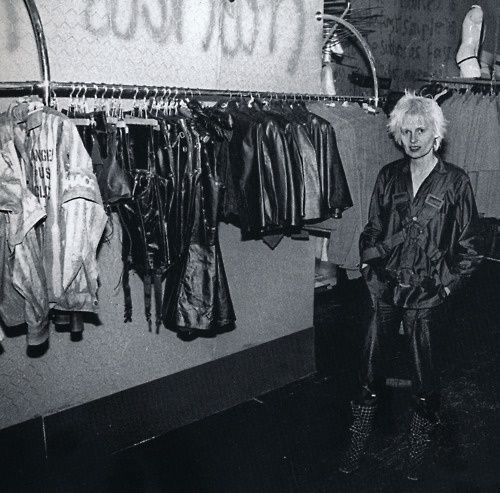
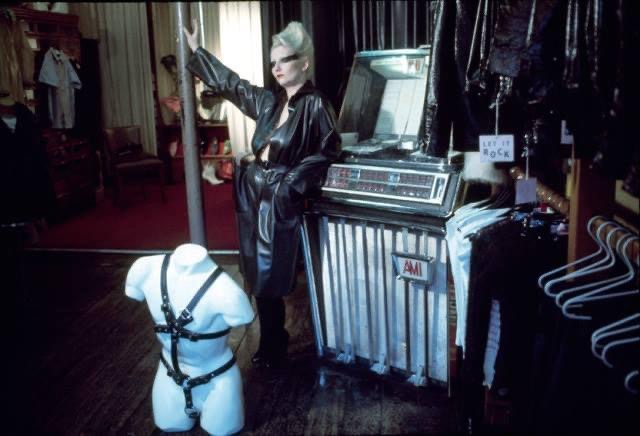
Westwood moved with her parents to London when she was 17 and she has lived in the city ever since. It is London, or rather her shop premises at 430 Kings Road, Chelsea that is for ever associated with her daring designs. From its rock’n’roll, fetish wear and punk roots in the 1970’s, the shop that was initially known as ‘Let it Rock’. It them became ‘Too Fast To Live, Too Young to Die’, then ‘Sex’, then ‘Seditionaries’ and finally ‘Worlds End’ as it is still known today. (World’s End is the name given to this eastern part of the district of Chelsea in London where the shop lies). With the changes of name, the designs and very nature of Westwood’s creations would abruptly change.
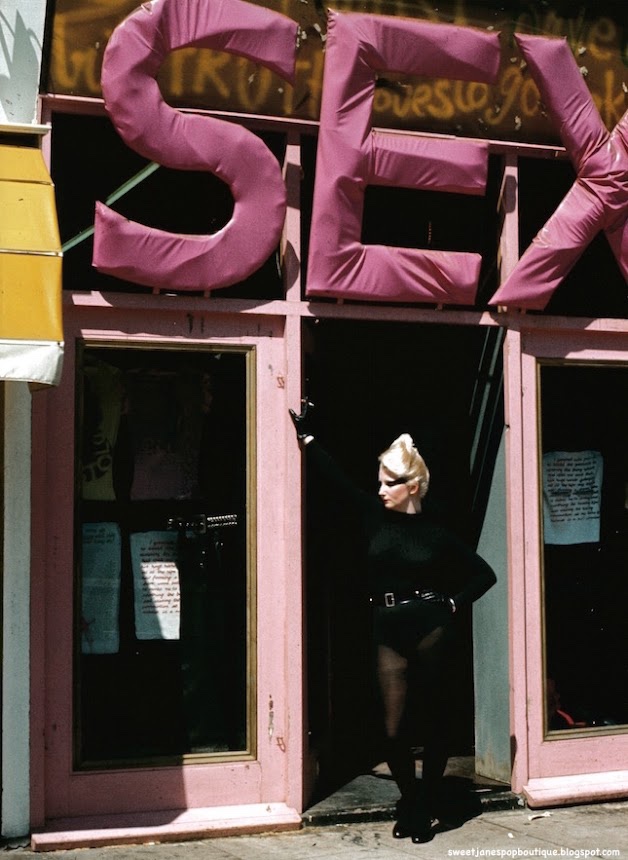
SEX at 430 Kings Road, Chelsea
Vivienne Westwood in Seditionaries 1977
Worlds End storefront with the 13 hour clock face

In this year of the Queen’s Platinum Jubilee and her recent death, it is worth looking back at Westwood’s attitude to the Monarchy.

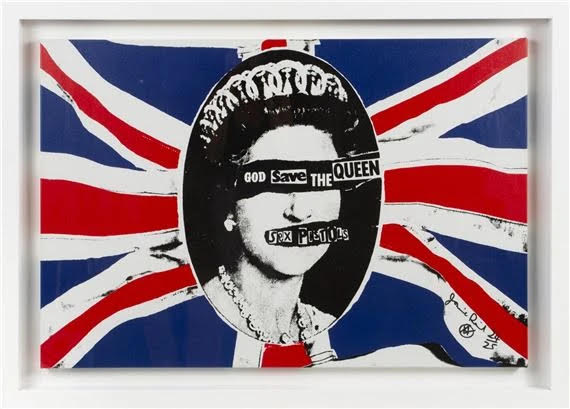
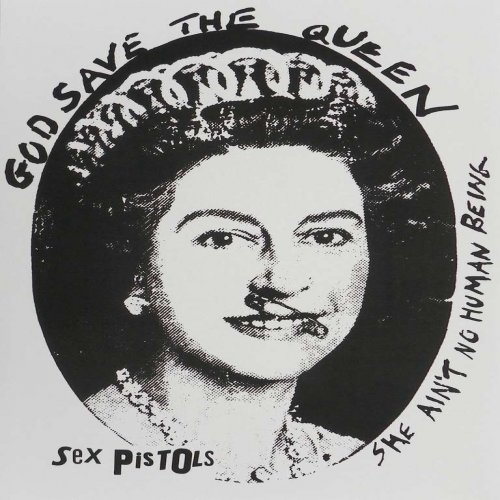
Initially, you could be forgiven for taking the view that Westwood was an out and out Republican. One of her initial designs featured a screen print of the famous Cecil Beaton portrait of the Monarch with a safety pin through her lips.
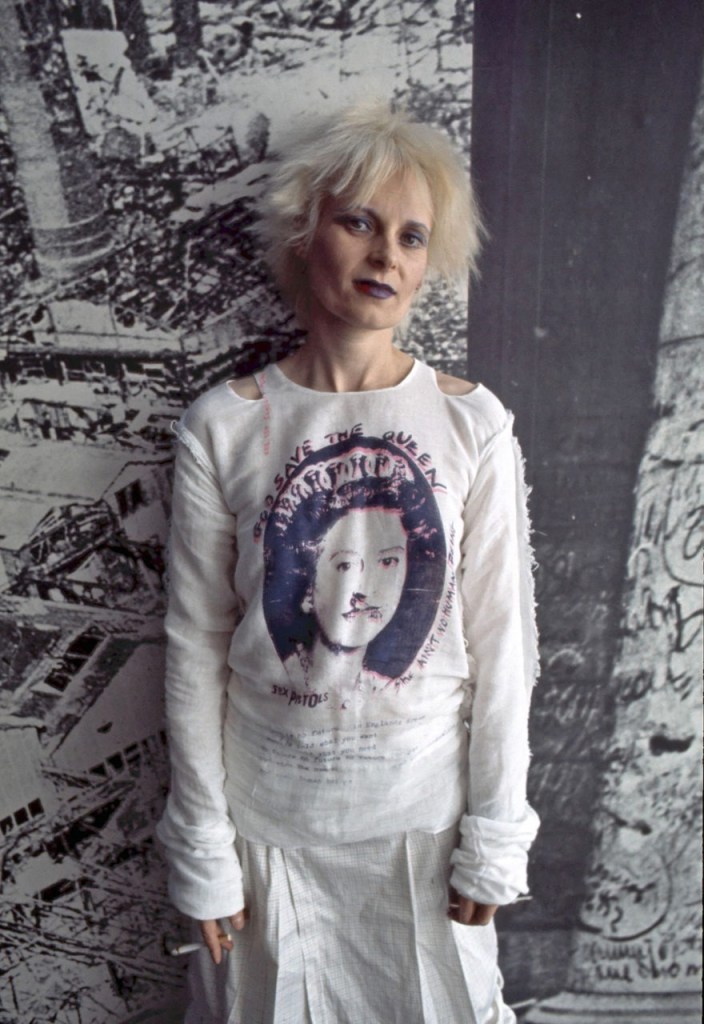
Her shop at 430 Kings Road helped clothe the Sex Pistols who stormed the UK music charts with their ultra controversial hit single ‘God save the Queen’ at the time of the latter’s Silver Jubilee in 1977.
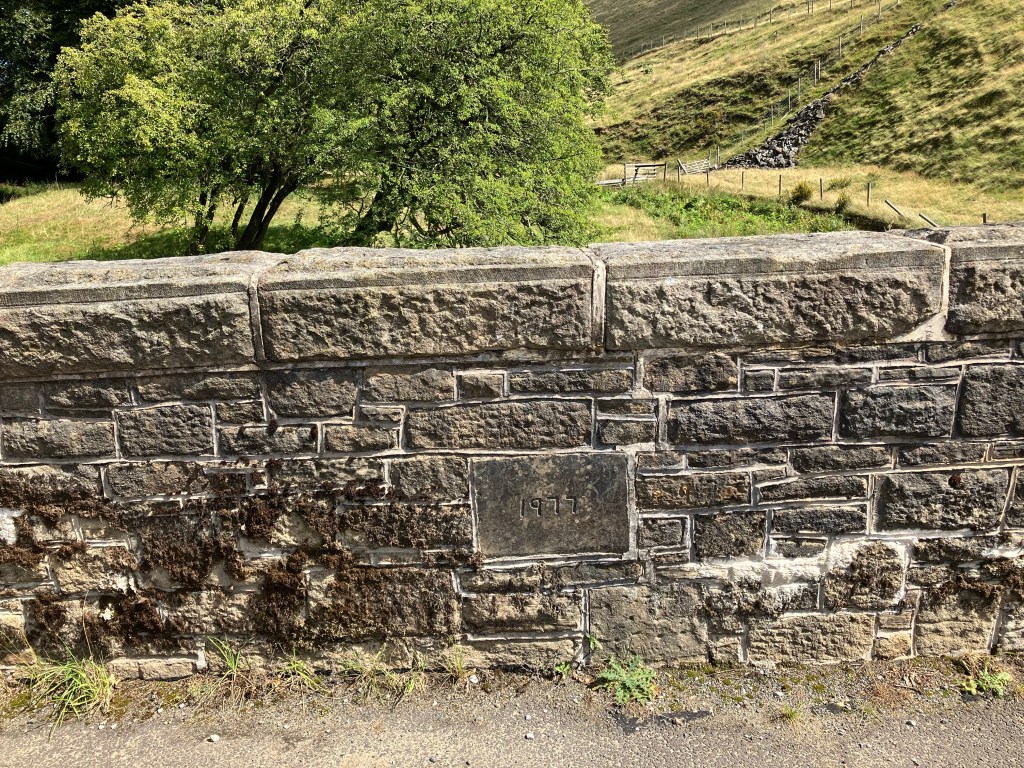
Bridge at Tintwistle built in 1977

Westwood herself was arrested and detained on the day of the Jubilee celebrations in 1977 following a very infamous boat trip with the Sex Pistols and various luminaries on board. The group belted out their songs as they sailed along the Thames until they passed the Houses of Parliament when their boat was detailed by a flotilla of police officers who promptly arrested all and sundry, including Westwood.
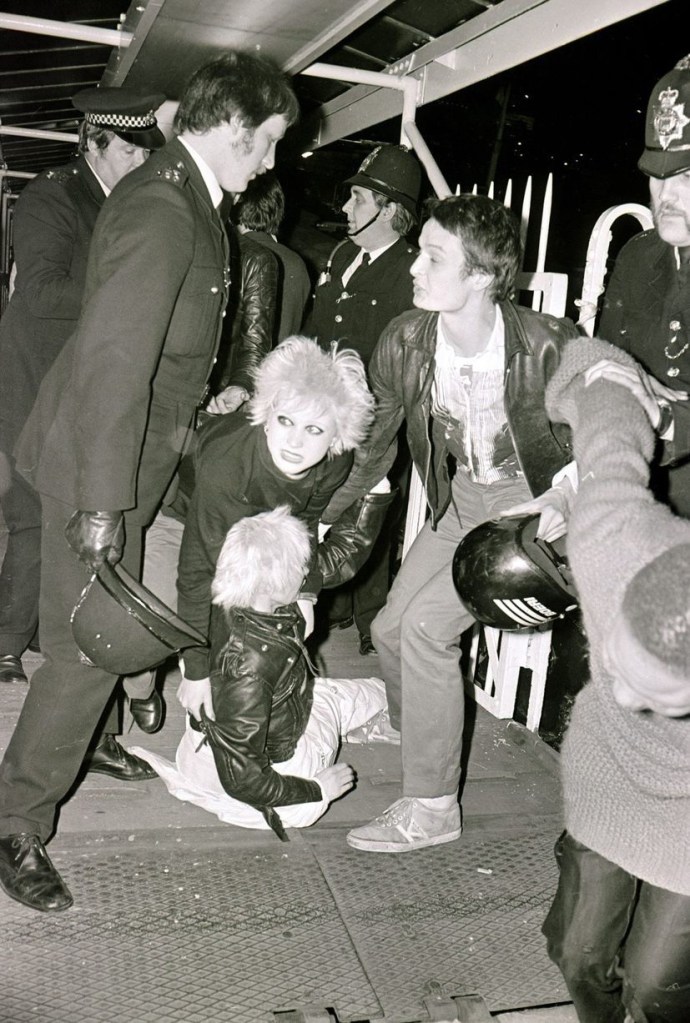
Nevertheless, Westwood is very much a monarchist who holds the Queen and the Hereditary monarchy in high regard.

“ The Queen performs a national service. She holds the country together. She is a figurehead of international diplomacy. We all owe her our gratitude’’.
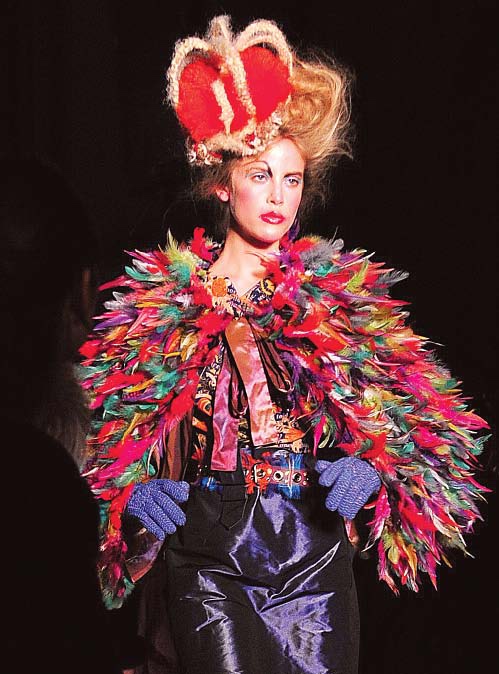
‘’I think that it is important that our Royal family is hereditary, the family members learn diplomacy by osmosis and develop a sense of duty to our country and the world.’’
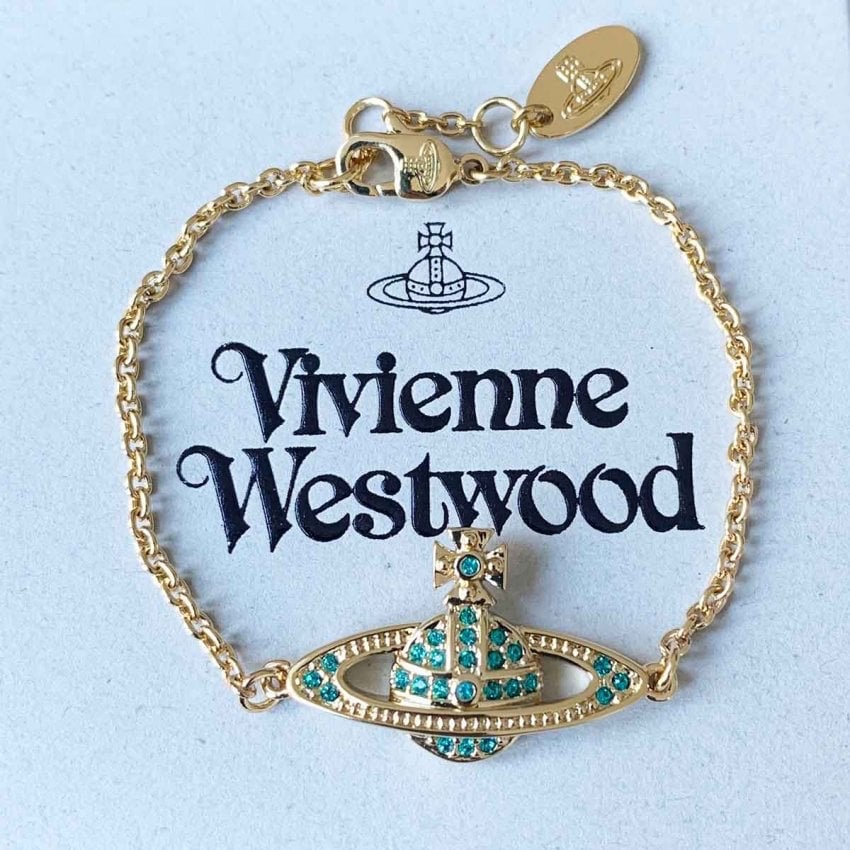
Westwood is very much an Anglophile and monarchist in her designs and she has often use royal images and traditional materials ranging from a Harris Tweed collection to worsted’s, tartan kilts and bondage jackets and to the choice of an Orb logo for her business logo.
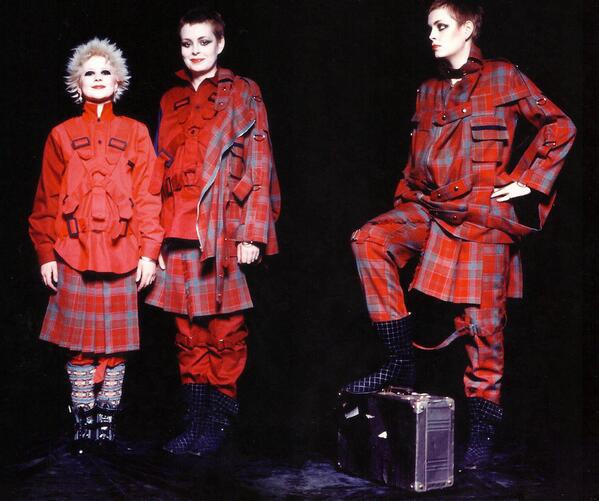
Her notorious 70’s rubber clothing was stitched and assembled by obscure fetish wear manufacturers in the North of England who had been making garments in the material for their specialist customers for many years.
Westwood was born in Glossop, a town just South of her home in Tintwistle. Glossop is where she went to school. There was talk a few years ago about building a museum in the the town dedicated to her life and work but the idea was apparently rejected. A local graffiti artist, Deggy, recently created his own mural in the town in honour of Westwood.

Glossop is a handsome town with loads of character and it is certainly worth a visit in its own right. Our favourite place is The Globe pub on the High Street
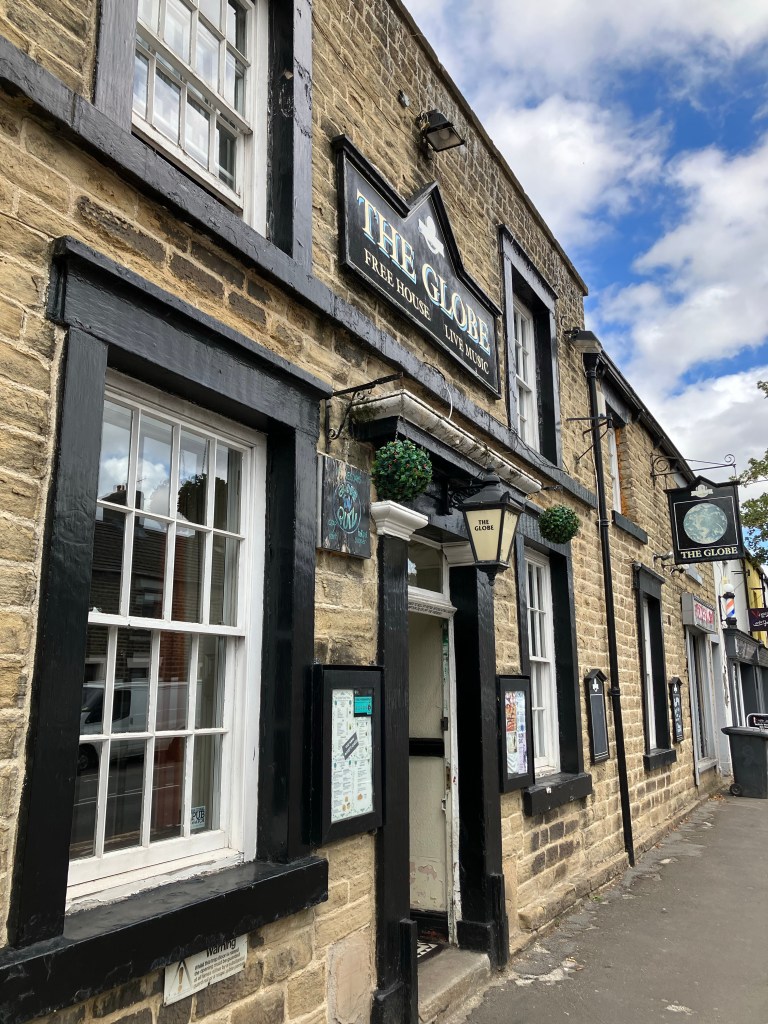
The pub is a well known music venue and it serves an exclusive Vegan menu of super cheap and very tasty bar classics. Recommended.
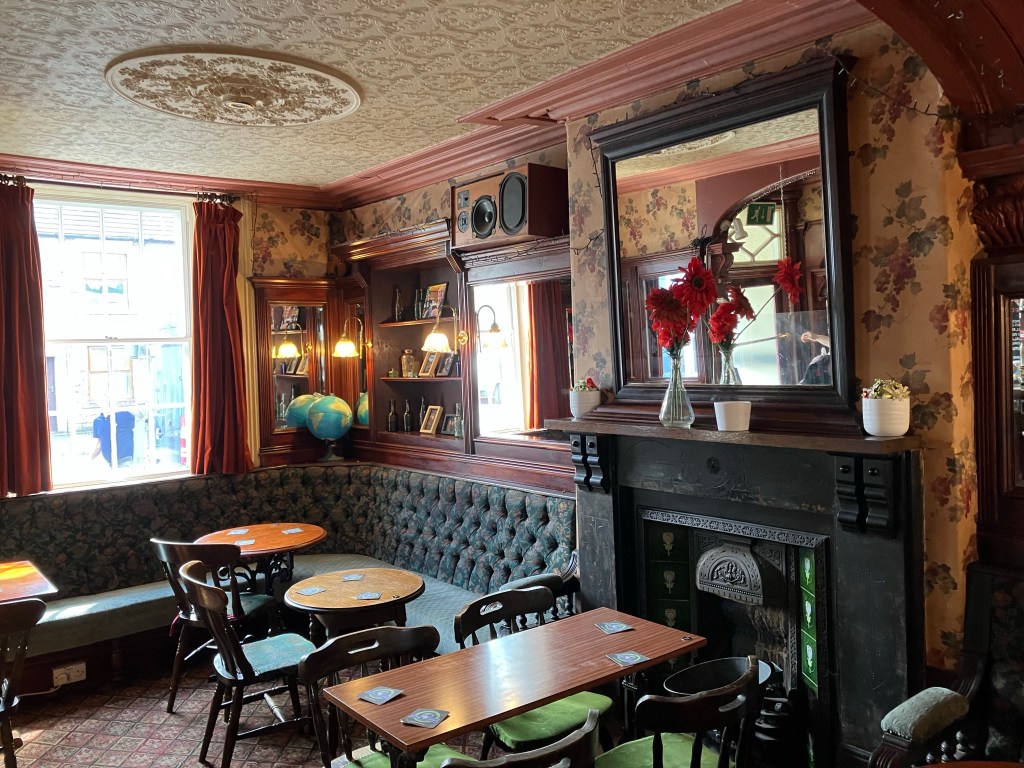
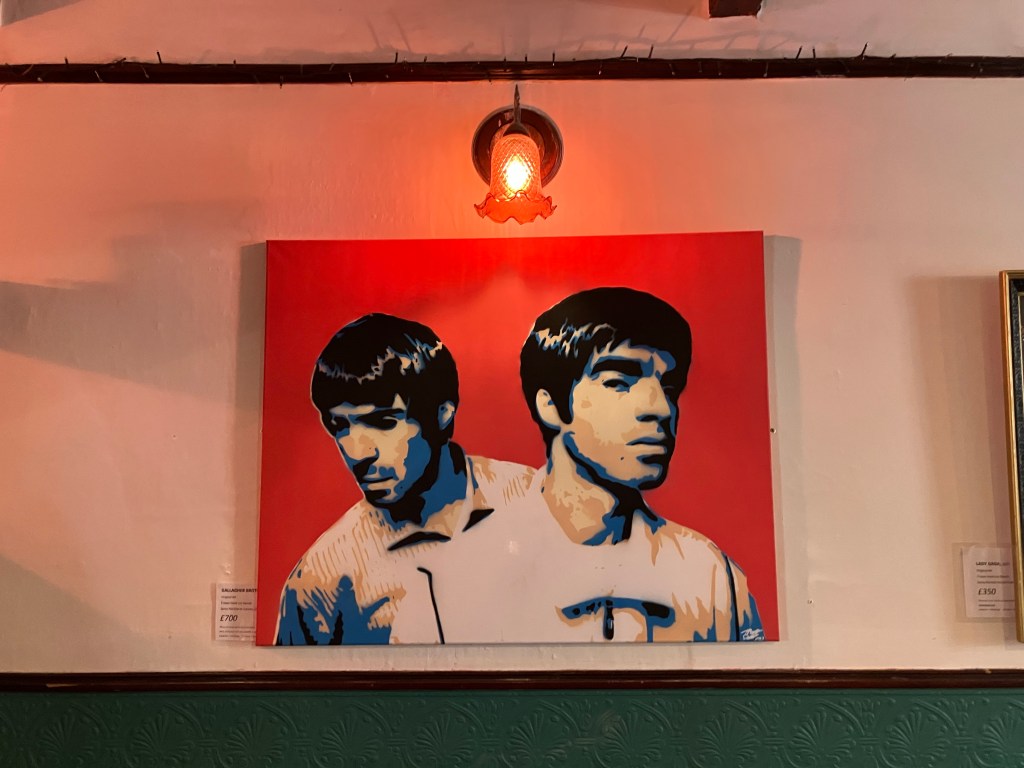
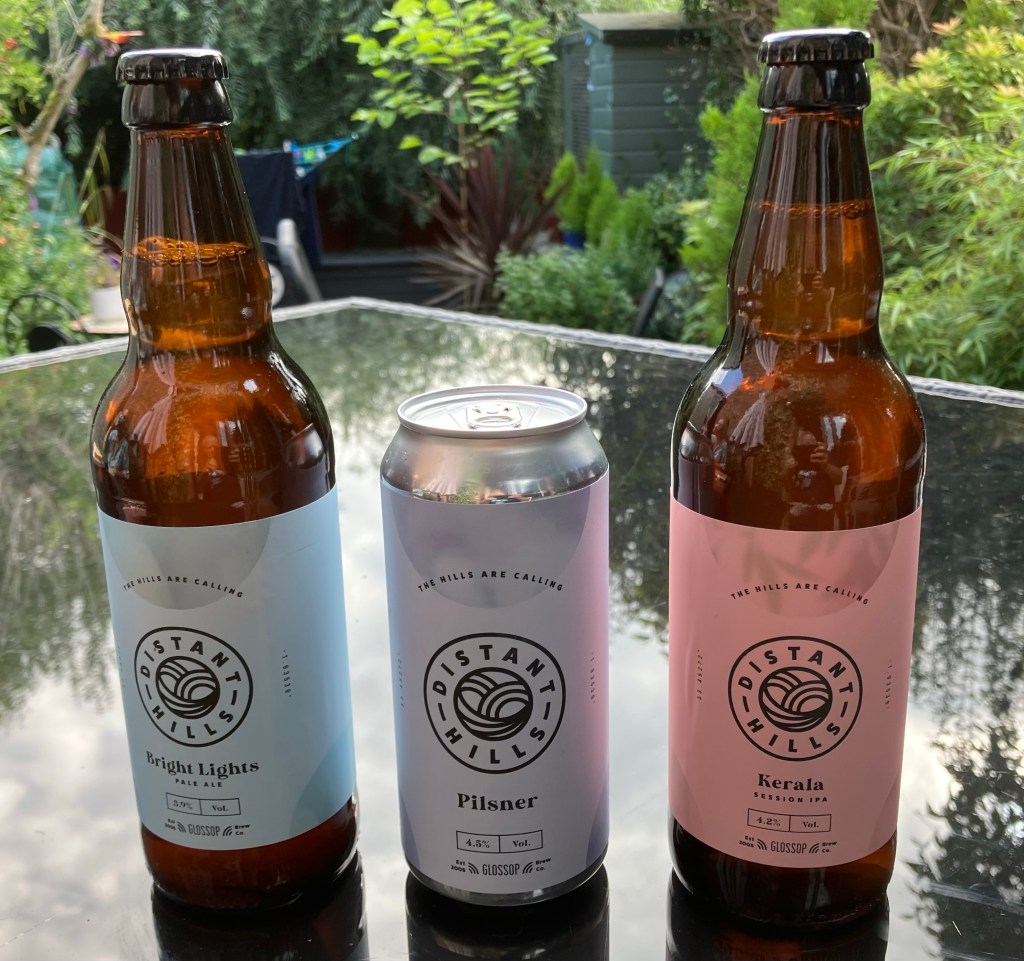
When it comes to beer, the local Distant Hills brewery and tap room is also a good bet.
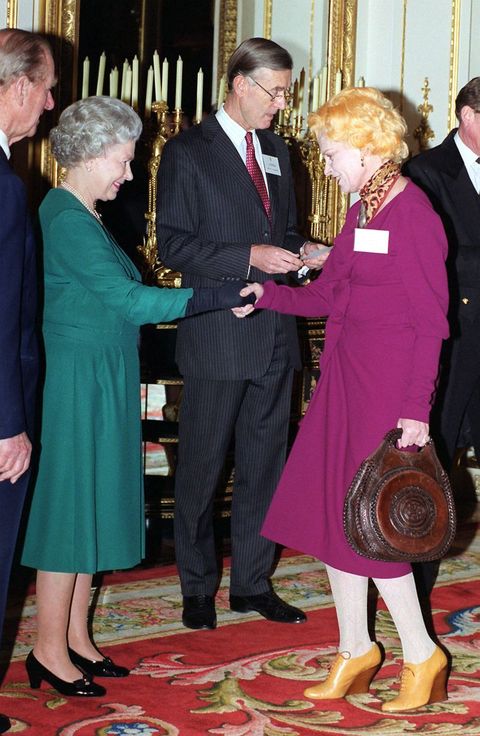
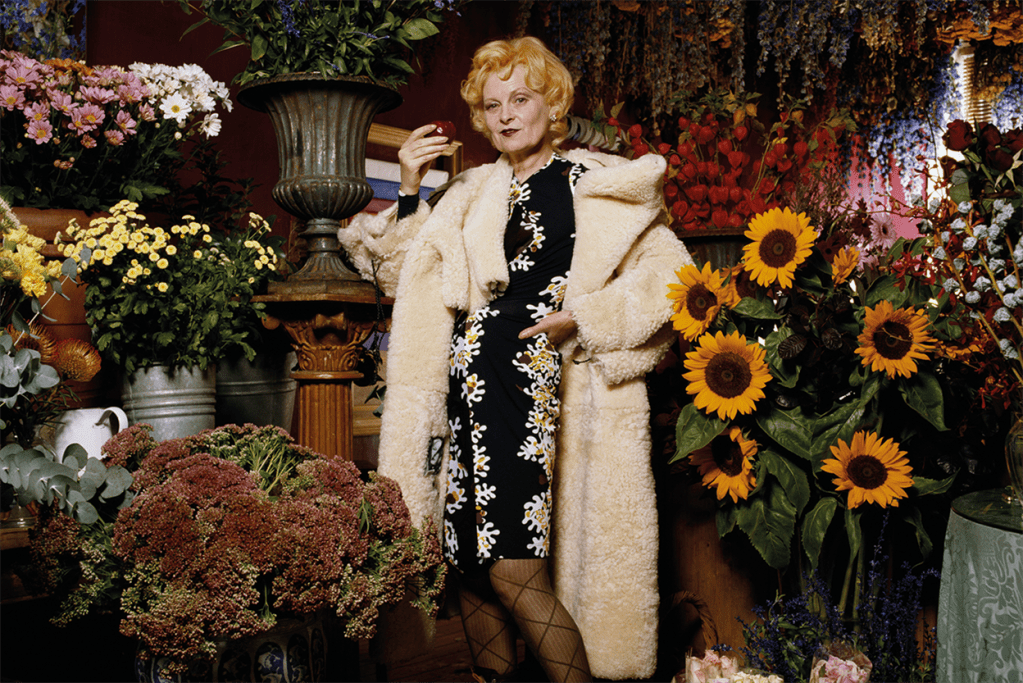
In 1992 Westwood received an OBE from Queen Elizabeth II. The Queen made her a Dame in 2006.
Black Sabbath, Brum and Balti

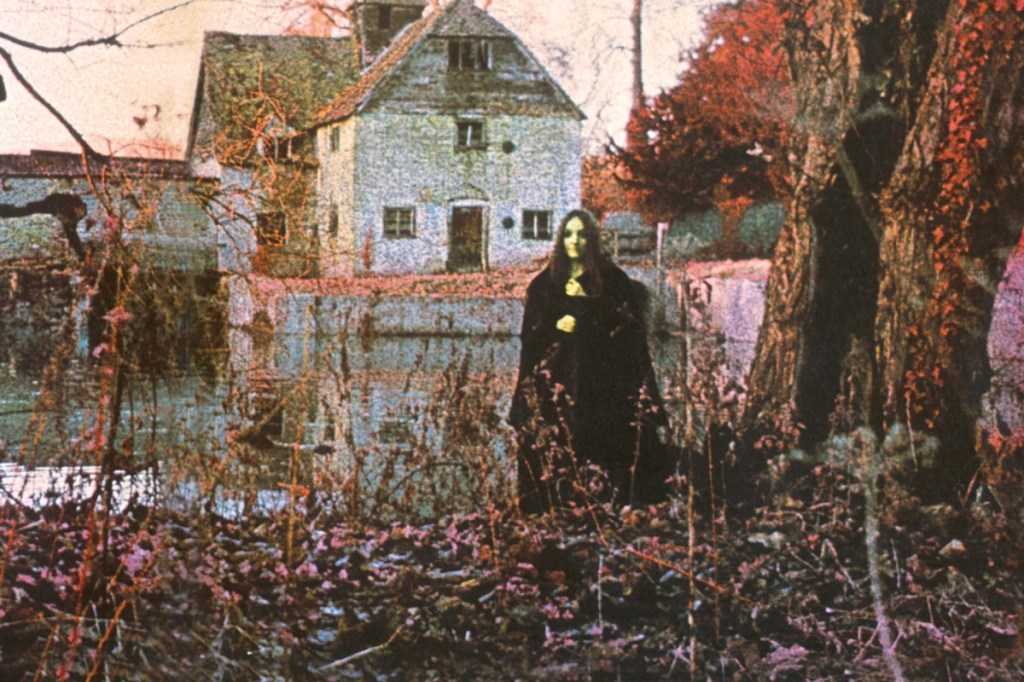
Black Sabbath

Birmingham (colloquially ‘Brum’) is the second largest city in the UK. It is famous for its industry and cultural heritage. It was the early childhood home of author J.R.R. Tolkien .

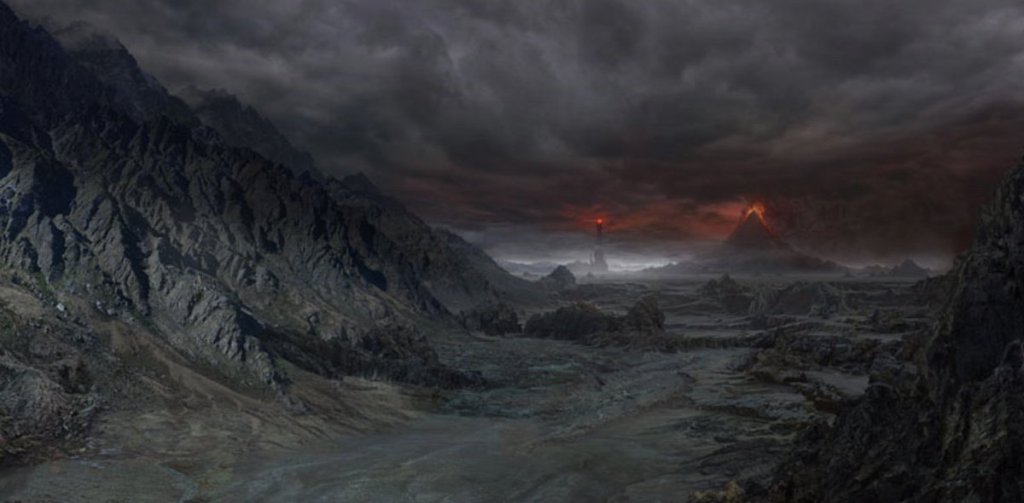
In the fictional world created by Tolkien in the epic Lord of the Rings , Mordor was the name given to the fictional land of darkness, fire and smoke of the evil Sauron.

“Fire glowed amid the smoke. Mount Doom was burning, and a great reek rising. Then at last his gaze was held: wall upon wall, battlement upon battlement, black, immeasurably strong, mountain of iron, gate of steel, tower of adamant, he saw it: Barad-dûr, Fortress of Sauron. All hope left him’’.

Mordor

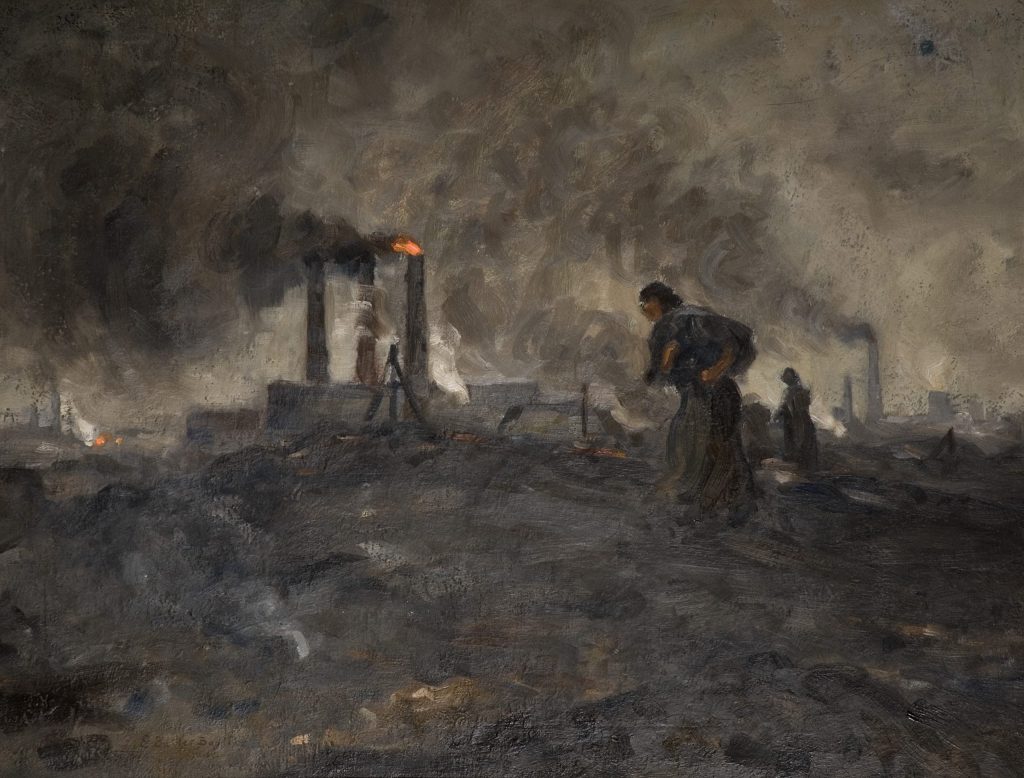
An influence on Tolkien and the fictional Mordor was the ‘Black Country’, an area of the West Midlands around the city of Birmingham  named from the smoke and pollution from the thousands of foundries, forges and iron works in the area.

The Black Country

When I was a kid, you’d come up this hill, and all of that’ – and he gestures to the valley in front of us – ‘was on fire. The foundries and the forges and the ironworks. The potteries. The whole place glowed – sheets of sparks, 50 foot high. The fires never went out. It looked like hell. That’s what your Lord of the Rings is about. Tolkien was from round here. He was writing about how the industrial revolution turned the Midlands from Hobbiton to Mordor.’ (Journalist and broadcaster Caitlin Moran recalls her father’s comment in her memoir ‘How to build a girl’).

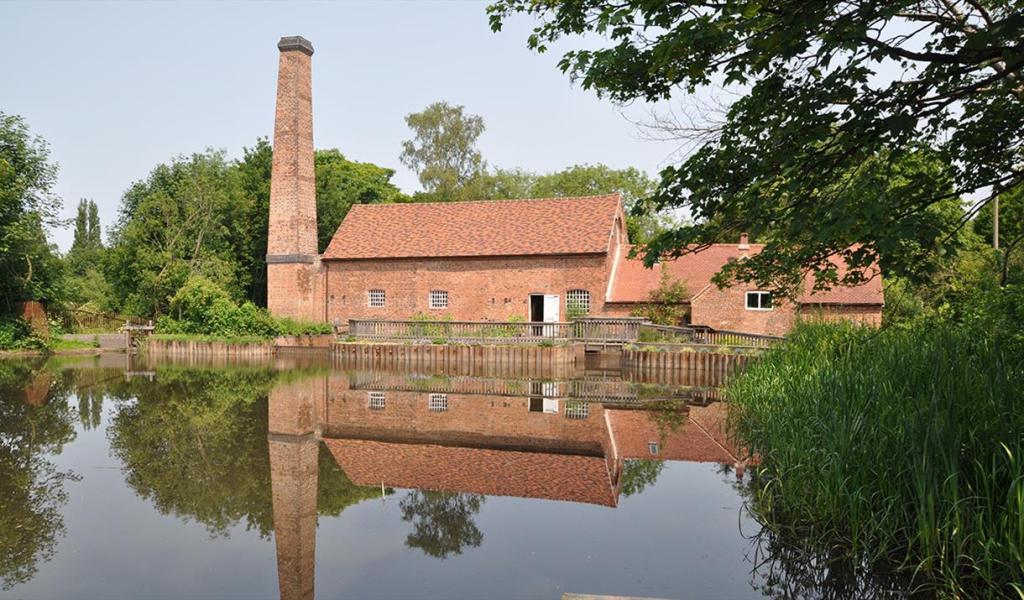
Tolkien’s early childhood home was in the Worcestershire countryside, just south of Birmingham in the village of Sarehole. The idyllic village is said to be the model for ‘The Shire’, the home of his Hobbits. The 250 year old water mill in the village was the basis Tolkien used for’the great mill’ in The Hobbit. Tolkien also based the bad-tempered miller in The Lord of the Rings on the actual miller at the Sarehole mill. The mill can still be visited today.

The Mill at Sarehole

 A Few miles to the North West of Sarehole (itself now a part of the Birmingham conurbation) lay the real Mordor, the smoke and din of the Black Country. Unsurprisingly, given it’s industrial heritage, Birmingham is the undisputed home of heavy metal music, and there is no better example of heavy metal than Black Sabbath.

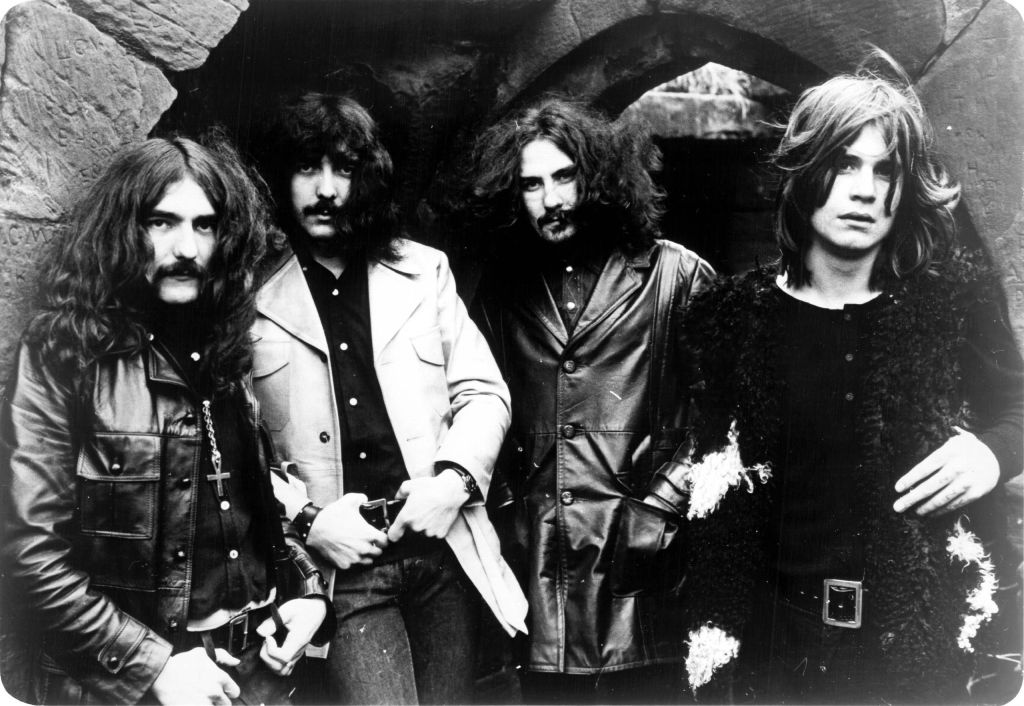
Four famous Brummies

Black Sabbath were formed in Birmingham in 1968 by four local lads (‘Brummies’). The band is the true pioneer of the genre known as ‘heavy metal’ music, a far darker and deeper sound than the then prevailing blues rock with it’s psychedelic and pastoral overtones and more than a hint of ‘the Shires’ about it. There was certainly nothing pastoral about the music created by Sabbath’s band members, Geezer Butler (bass), singer Ozzie Osbourne, Bill Ward (drums) and guitarist Tony Iommi. The music the band created was the sound of the factory floor and the pounding of the iron foundry best exemplified by the buzz and drone of Iommi’s unique guitar work. The fact that the tips of two of his fingers were missing from an industrial accident at the foundry where he worked only contributed to the band’s sound as he developed his unique style in spite of injuries that would have finished the career of most guitarists.

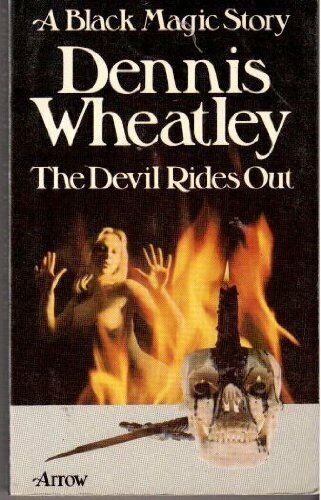
The band’s lyrics often touched on themes of war, doom and black magic although there was nothing of the satanist about any of the band members. Taking their name from. 1963 Boris Karloff move the band were more influenced by the graphic novels of writer Dennis Wheatley than black magic itself. Wheatley’s occult based fiction was doing the rounds in cheap paperbacks at the time and his books were a particular favourite of the band’s main lyricist, Geezer Butler.

The Devil rides out

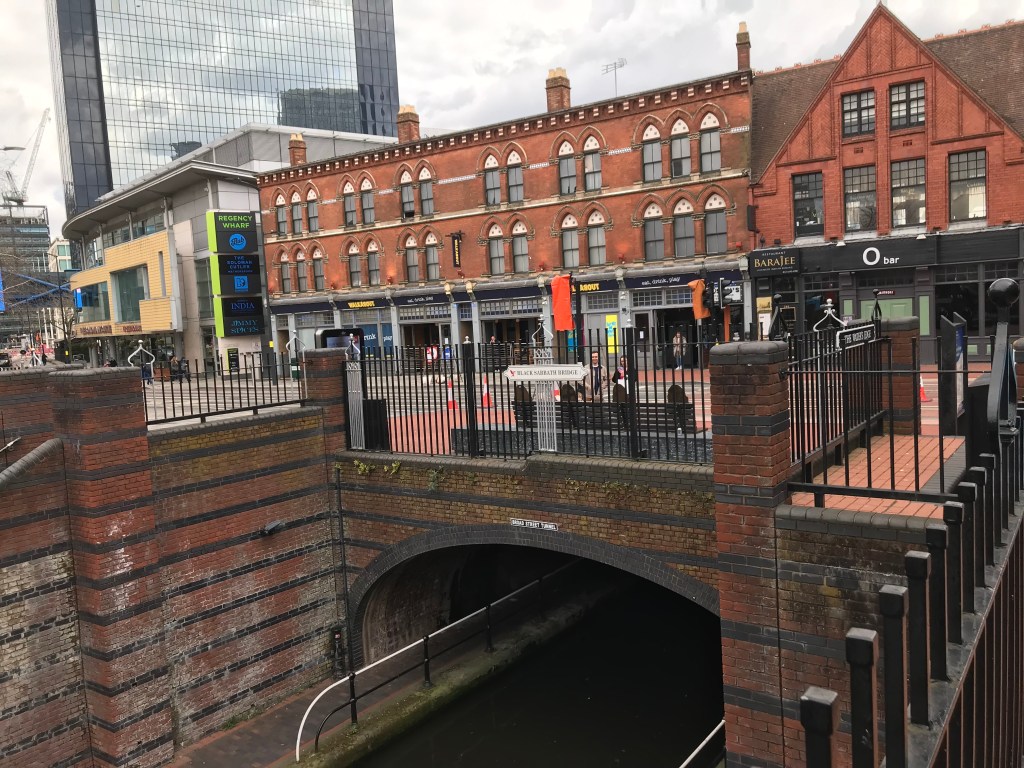
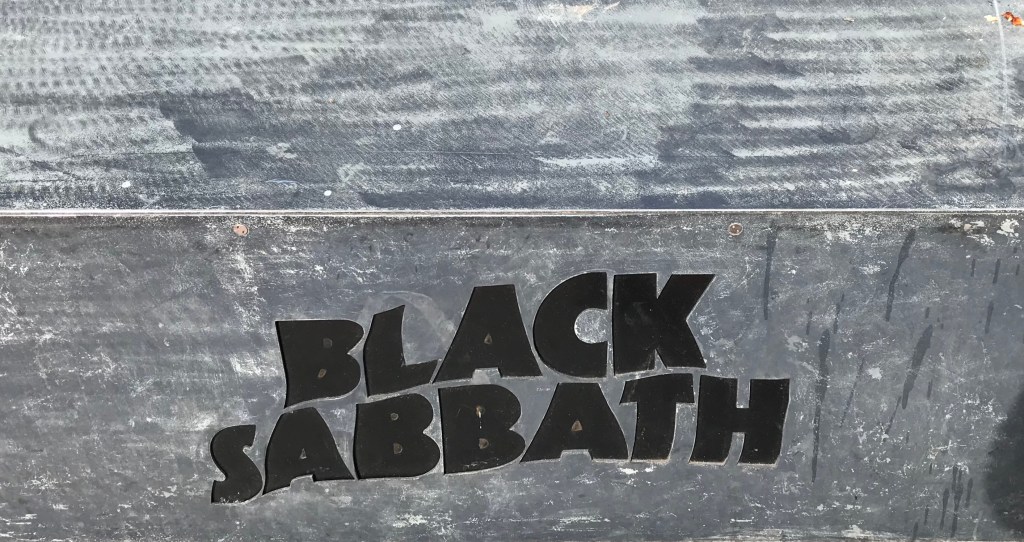
In the city centre, Birmingham has commemorated the band with a memorial celebrating 50 years. It is not a city to shout aloud about itself or its heroes and the quiet modesty of the Black Sabbath memorial signage and bench are typically understated examples of the way the city announces itself and the achievements of its sons and daughters.

Black Sabbah bridge

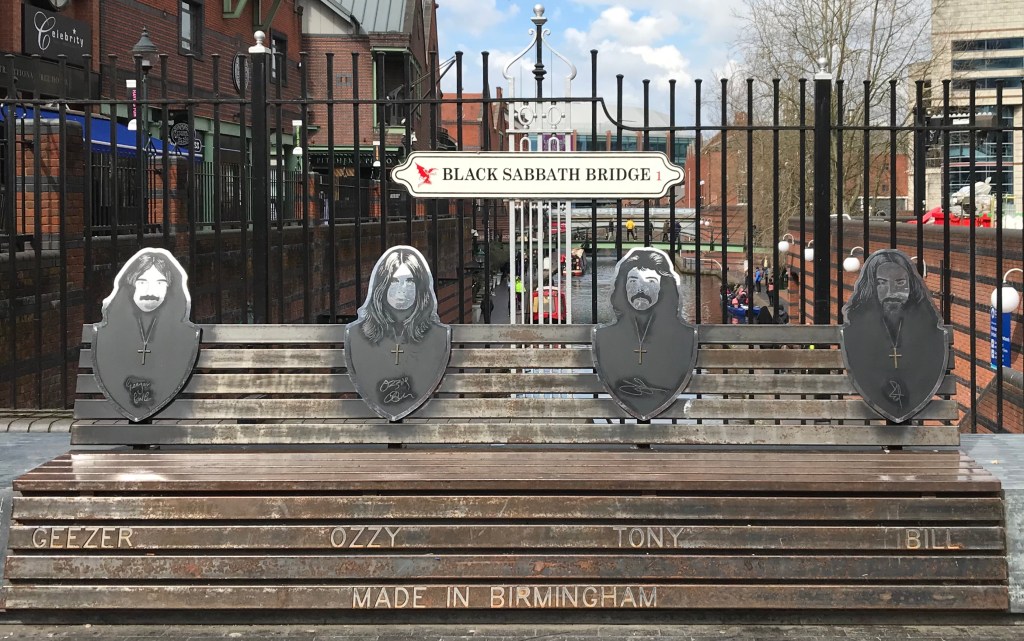
Created by Egyptian Artist Tarek Abdelkawi from an idea by Mohammed Osama, the bench was forged in Birmingham and has images of the four original band members. It is inscribed ‘Geezer Ozzy Tony Bill  Made in Birmingham’.

Black Sabbath bench

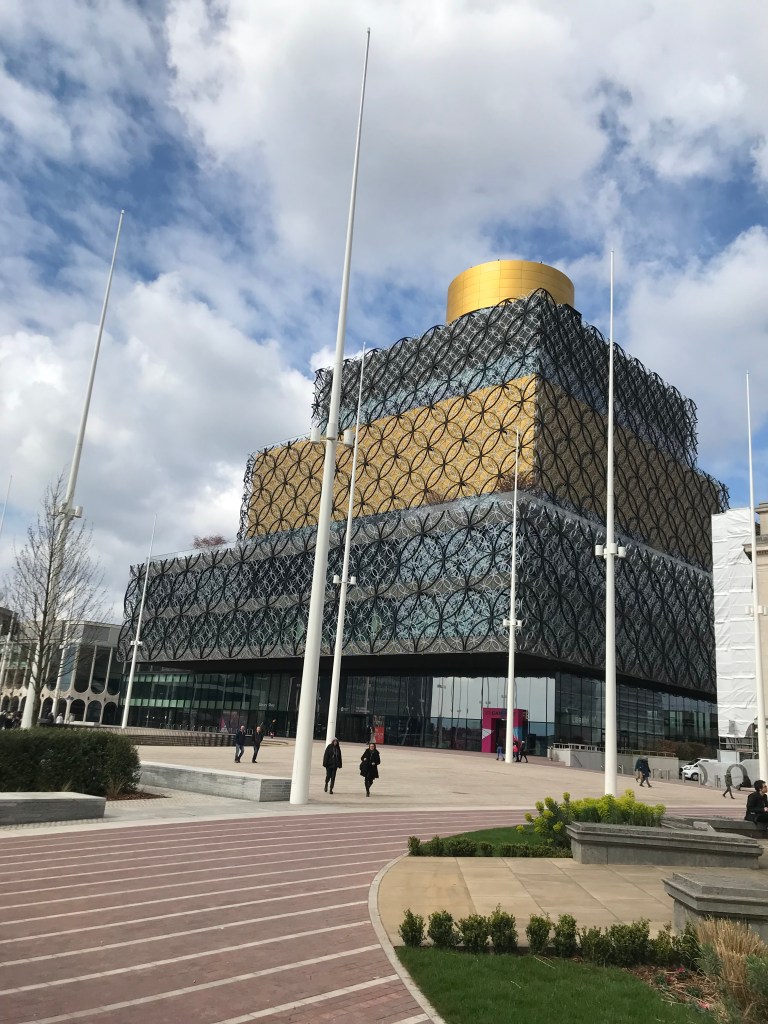
The bridge and bench can be found where Broad Street crosses the canal in the city centre a short walk away from the city’s stunning public library. The library was designed by a Dutch architect, Francine Houben of Mecanoo, Delft (and if you love great design, the Dutch are way ahead in our opinion),

Birmingham public library

The library was formally opening on 3 September 2013 by Nobel Prize winner Malala Yousafza, who as a schoolgirl survived an attempted assasination by the Taliban. She lives in Birmingham, ‘her second home’ although her birthplace of Swat, Pakistan is the place she holds dearest. She is a fan of Justin Bieber apparently although we forgive her if she is not enamoured of her adopted city’s real heroes, Black Sabbath. 

Malala at the opening of the Public Library

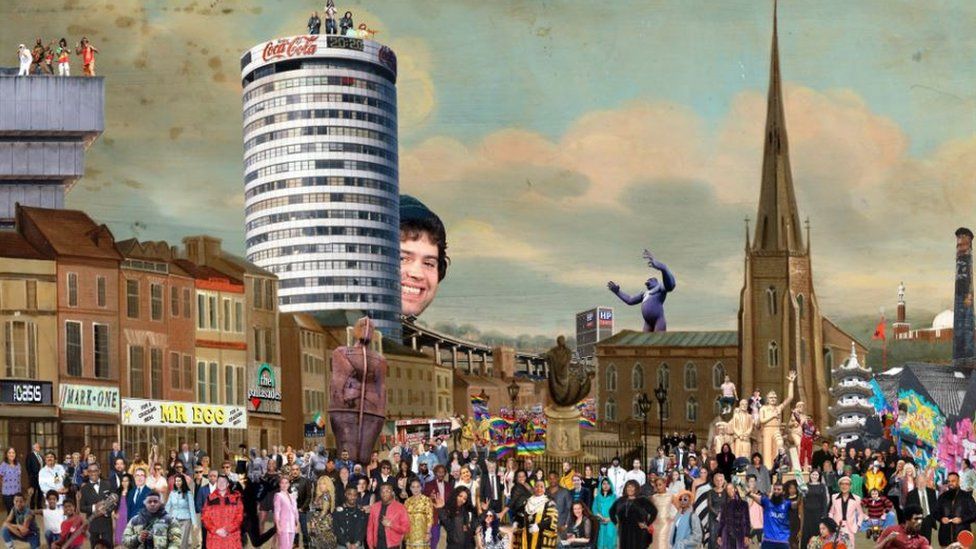
Nevertheless, the world of satirical art recently brought both Malala and the four musicians together in a work entitled ‘Benny’s Babbies’*

*Benny was the name of a character in the old TV soap opera ‘Crossroads’ which was based around the Birmingham area. The term ‘Babbies’ is local Birmingham slang for ‘Baby’s’ being a reference to the local celebrities in the picture.

Benny’s Babbies. Benny himself smiles behind the Rotunda

The artwork is by the legendary ‘Coldwar Steve’, a locally born artist whose satirical work is nationally admired. He is a former probation officer who began making photomontage art on the bus to his job. “Birmingham is unparalleled in the sheer diversity of its contributions to British culture” he said of the artwork. Malala is pictured in green with other local celebrities including the former Mayor, Yvonne Mosquito.

Local celebrities

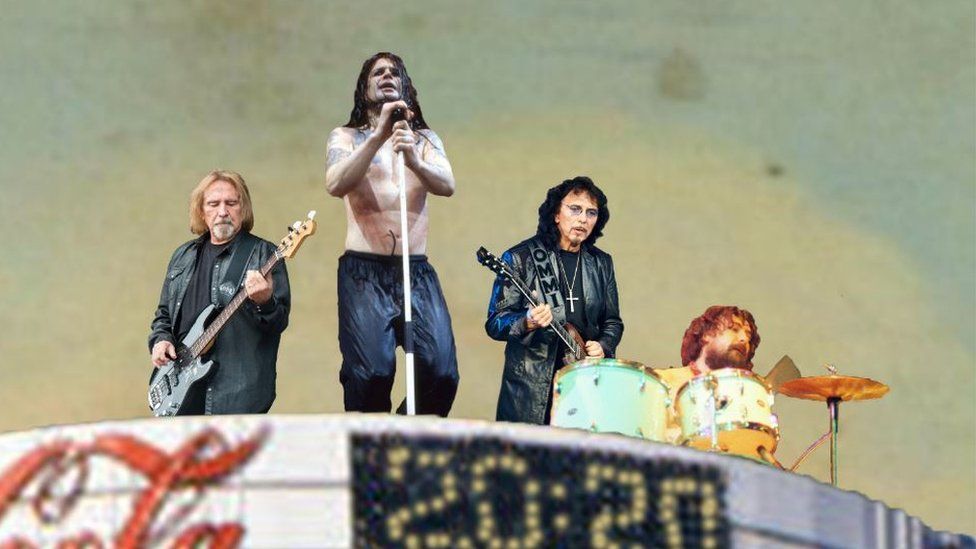
Black Sabbath can be seen performing from the top of another local landmark, the Rotunda building.

On the roof of the Rotunda

If Black Sabbath are synonymous with heavy metal music, the ‘balti’ has become synonymous with the city’s food. A ‘balti’  is a highly spiced ‘curry’ served in a double handled steel dish known as a ‘balti bowl’ (or karahi in Pakistan). The best bowls are ‘blackened’, seasoned over time like a great wok.

Balti

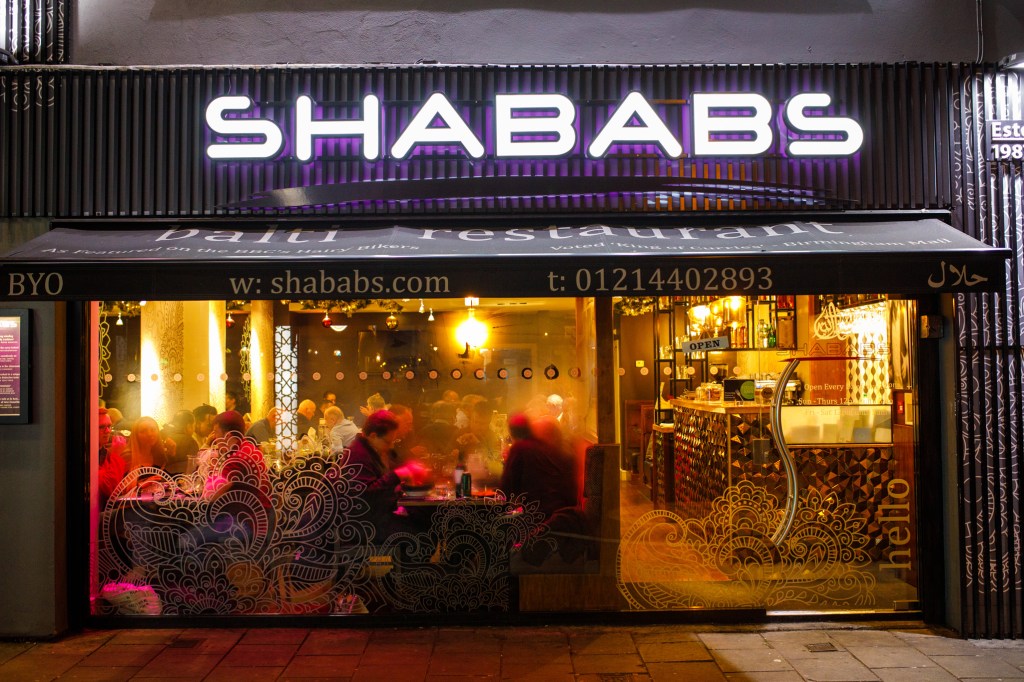
Balti dishes are served in many restaurants in the United Kingdom. The precise origins of the balti style of cooking are uncertain. Some believe the style to have been invented in Birmingham, while others believe it originated in the northern Pakistani region of Baltistan in Kashmir from where it spread to Britain. Wherever it’s origin, a balti dish is best had in Birmingham in our opinion and the ‘balti triangle’, an area of many restaurants just south of the city centre, is a must if you like your food spicy. We like Shababs on Ladypool Road in particular.

Shababs

A short drive south of Shababs is Moseley Bog, a nature reserve and a childhood playground of Tolkien’s. The bog inspired the ‘old forest’ in both The Hobbit and The Lord of Rings.

Moseley Bog

Tolkien acted as an early reference for Sabbath’s ‘The Wizard’ with its influence of the character of Gandalf in its lyrics. 

“….. yet still, by the lake a young girl waits, unseeing she believes herself unseen, she smiles, faintly at the distant tolling bell, and the still falling rain”
Heavy Metal made in Birmingham

THE BANDIT KING

Lampião, o Rei do Cangaço

Lampião

The Sertão is the name given to the vast arid hinterland of the North East of Brasil. Notable for its semi-arid conditions, poverty, cactus and scrub, the North East in general has had a vivid and important impact on Brasilian popular history and culture including of course the legend of Lampião, ‘O Rei do Cangaço’.

The backlands of North East Brasil

The Sertão was home to the ‘cangaços’, gangs of bandits who roamed the backlands of the North East in the earlier part of the last century attacking landowners and stealing from the wealthy in particular. They were known for their ferocity towards those they robbed and plundered as well as their apparent generosity towards the poor, despite widespread torture and murder of their victims. It is this role as ‘social bandits’ rather than as wild outlaws that the cangaçeiros  are best remembered in modern day Brazil. The best known of the cangaceiros was Virgulino Ferreira da Silva, known to everyone as ‘Lampião’. Together with his girlfriend and fellow gang member Maria Déia aka ‘Maria Bonita’ (‘Pretty Maria’) they roamed the Brazilian backlands with the gang from the 1920’s until their deaths in 1938,  four years after the deaths of their counterparts in the US, Bonnie Parker and Clyde Barrow, ‘Bonnie and Clyde’. Just like that Texan couple, Lampião and Maria would be eulogised in film and song across the ages.

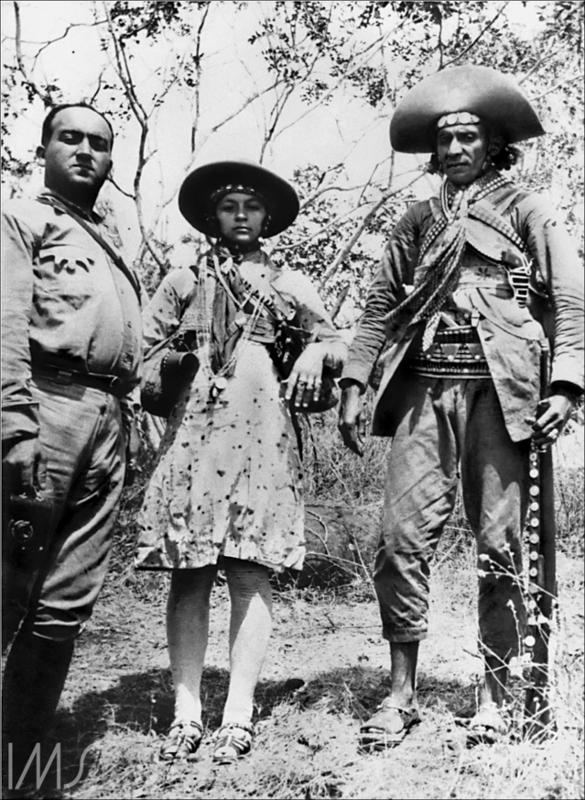
Cangaços with Lampião and Maria Bonita in the centre

The first (and most interesting) film about Lampião and his gang (‘Lampião, o Rei do Cangaço’ – ‘Lampião, the King of the Bandits’) was made in 1937 by Benjamin Abrahão. He had been born in Lebanon but later moved to Brasil. He met Lampião in 1926 via Cícero Romão Batista aka ‘Padre Cícero’, the spiritual leader to the people of the North East of Brazil. A legendary figure in his own right, Padre Cícero was highly trusted by the deeply religious Lampião who he persuaded to allow Abrahão to meet and photograph the gang. Although very cautious, Lampião was intrigued by the possibility of meeting Abrahão, being photographed and having the chance to more widely publicise his highly stylised gang. Lampião was already image concious by this time, handing out business cards and images of the gang to admirers.

Abrahão, Maria Bonita and Lampião

Abrahão initially took photographs of a suspicious Lampião and his wary band and then when trust had been established, filmed them out in the Sertão. The resulting silent film ‘O Rei do Cangaço’ was originally two hours long but only less than 15 minutes of film stock remains.


The film was a great success upon its release. in Brasil but it was soon seized under the directions of the then President Getúlio Vargas and it more or less disappeared from view until 1955 when its remaining stock was restored and released nationwide, the film being only ten minutes long. Then in 2007, Cinemateca Brasileira (the national organisation responsible for the restoration and distribution of important audio visual material) restored and re-edited the available film stock and organised the release of some 14 minutes of film. It is this version, O Rei do Cangaço by Benjamin Abrahão, which can be seen on YouTube at https://www.youtube.com/watch?v=lmqd-ijH2cQ.

At a makeshift camp in the harsh Sertão the cangaçeiros are seen resting, using a sewing machine, praying at a makeshift altar, skinning and eating a cow and undertaking a mock skirmish etc.  Lampião is clearly visible as is another key member of the gang, the cruel Corisco. Maria Bonita is filmed combing Lampião’s hair in one scene.

This image has an empty alt attribute; its file name is r.b3058b472cb7124871eec66dbcc3e2a1.jpeg
Corisco

At least two women are seen with the gang in the film including Maria Bonita, Lampãio’s girlfriend as well as Dadá, the lover of Corisco. The film maker Benjamin Abrahão is also clearly visible in some scenes, eating and drinking with the gang.

This image has an empty alt attribute; its file name is r.77e20bb60fb74e9092d96f019f4599cf.jpeg
Corisco and Dadá

The Cangaceiros are also seen dancing in the film. The dance most closely associated with the gang is the Xaxado, a popular North Eastern style which is still performed today.

Xaxado

Abrahão’s photographs and film helped fix the stylised image of Lampião and the cangaceiros in Brasilian popular culture.

Lampião and his gang

Each member is wearing leather outfits of a hat, jacket and jodhpurs/shirts tough enough to protect them from the thorns of the caatinga (dry shrubs and brushwood typical of the dry hinterland of the Sertão). Studded ammunition belts criss cross eash chest. The hats are half moon shaped and decorated with metals stars, fleur de lis, maltese crosses and other designs. The rifle slings are studded with silver coins and highly decorated cloth bags are draped from each shoulder. Long neckerchiefs tied with a silver rings are draped around each neck. Dark glasses are sometimes worn. The effect is startling and original and whilst the alleged ‘Robin Hood’ nature of the gang will no doubt have assisted in creating the Lampião myth, one cannot help but feel that its overall strong visual aesthetic contributed as great an impact to its ultimate longevity and influence in the popular imagination. We can see this in the culture of Zoot suits in Los Angeles in the 1940’s, the startling images of the Sex Pistols in 1970’s London (in clothes by the ground breaking Seditionaries) and the elevated dress sense of the Sapeurs of the Congo.

Sex Pistols and Seditionaries clothing

The strongest influences on popular culture, whether in Brasil or elsewhere, do not come from the elite. As the English writer V.S. Pritchett once commentated noted, ”the past of a place survives in its poor.” Although this comment was made by following his travels in Spain it applies elsewhere, no more so than Brasil with its reverance of the legend of Lampião.

Visit the North East of Brasil and referances to Lampião and his gang are ubiquitos. Whether in popular songs and films, the names of restaurants and bars to the classic woodcut prints of the Borges family, the cangaço and his gang are everywhere.

Severino Borges print

As a postscript to the film (which views like an epitaph), both Lampião and Maria Bonita were cornered shortly thereafter by bounty hunters and killed with nine other members of the gang. They were then decapitated, their heads were put on public display in the city of Piranhas in the North East state of Alagoas (the city had been attacked several times by Lampião and his gang) before ending up at the State Forensic Institute in Salvador, Bahia where they remained until burial in 1969. A graphic photograph of the severed  heads surround by decorated hats, weapons, bags and bandoliers, framed by two sewing machines is readily visible on the internet but it is not exhibited here. 

Two other members of the gang, Corisco and his girlfriend Dadá, were amongst those who escaped but were cornered by the authorities not long thereafter. Corisco was killed in the attack and Dadá lost a leg from her wounds. She survived until her death in 1994, the last member of the gang to die.

With the deaths of Lampião and Corisco the phenomenon of cangaço, died out.

Filmmaker Glauber Rocha who spearheaded Brazil’s Cinema Novo in the early 1960’s was inspired by the story of Corisco and Dadá and featured representations of them in his ground breaking 1964 film Deus e o Diablo na Terra do Sol (known as ‘Black God, White Devil’ in English – you can see an old print of this film here https://www.youtube.com/watch?v=RyTnX_yl1bw). Just like the much romanticised Lampião and Maria Bonita, Corisco and Dadá became Bonnie and Clyde type figures in the Brazilian  popular imagination and culture.

The filmmaker Benjamin Abrahão was brutally murdered shortly after the films initial release. His assailant was never found. The film was seized by the authorities who did not approve of the fact that the film did not condemn the gang and its activities. Lampião and his gang were public enemies No. 1 for Vargas and his presidency.

Andrew Logan, Sex Pistols and the Jubilee

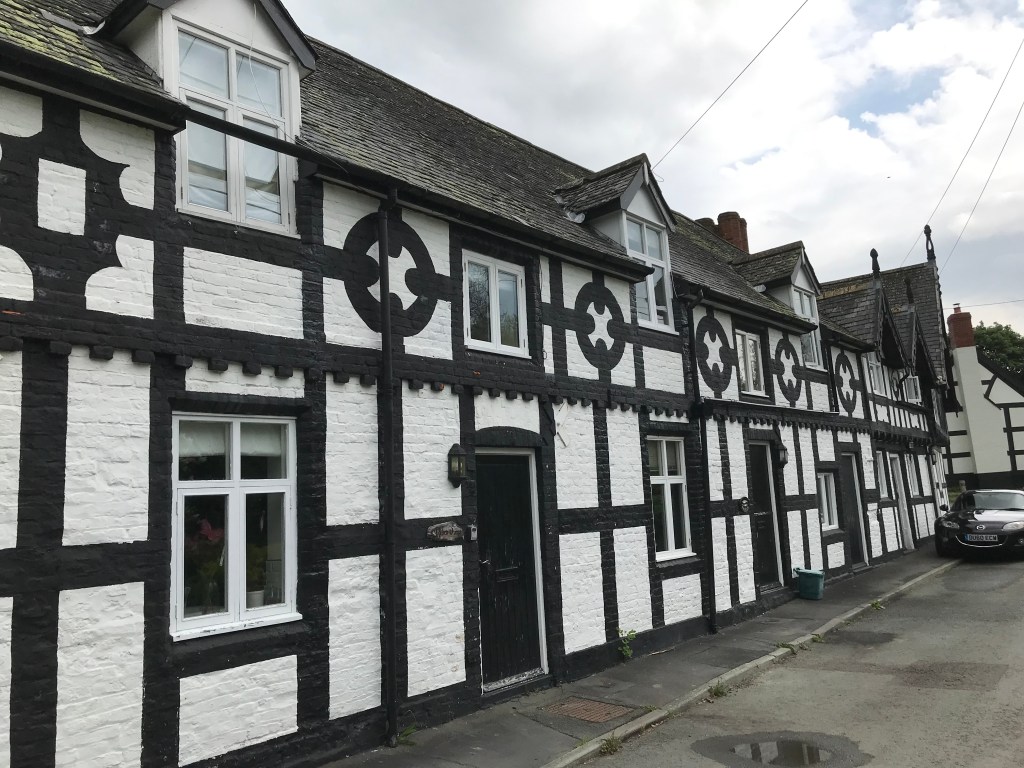
Berriew is a village in the county of Montgomeryshire in mid Wales. It is an attractive and historic settlement which is well known for its half timbered houses. The river Rhiew runs through the village.

Berriew

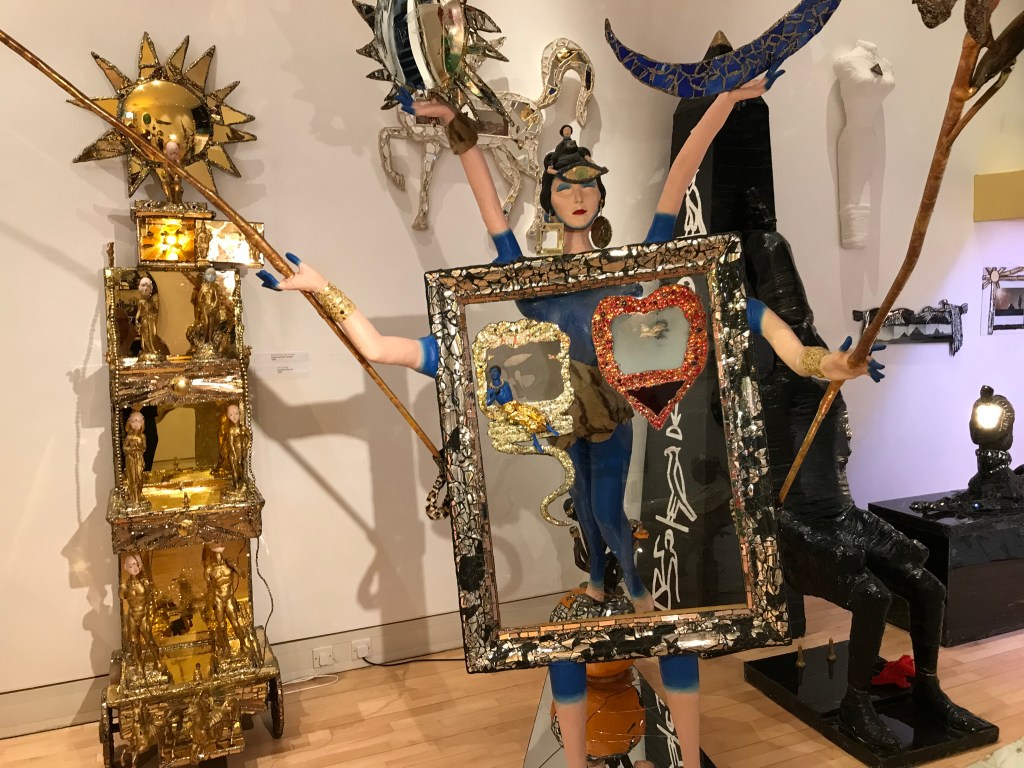
Of particular interest to visitors is the Andrew Logan Museum of Sculpture which is located just over the river from the church.

Andrew Logan Museum of Sculpture

A more dazzling and unexpected place in such a tranquil rural setting is hard to imagine.

The museum houses Logan’s breathtaking sculptures, ceramics, jewellery and paintings – all created by the artist from the 60’s onwards.

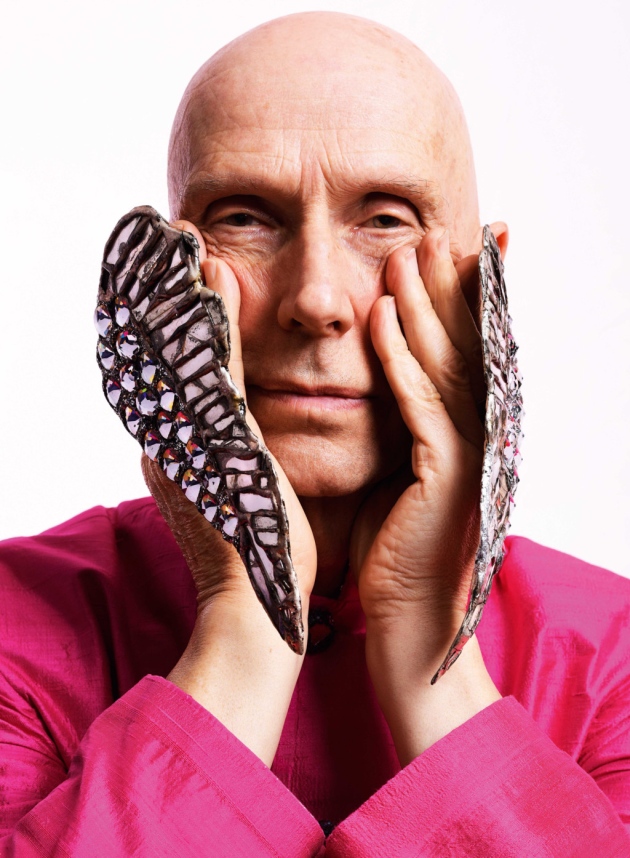
Andrew Logan

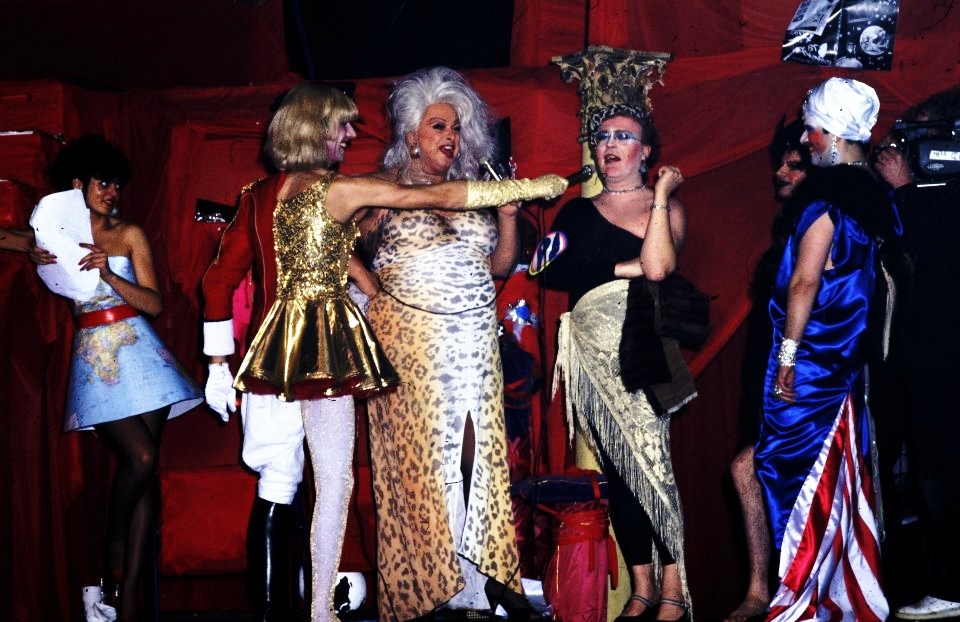
Logan is also the name behind the ‘living sculpture’ of the Alternative Miss World pageant, a raucous and glittering send up of the Miss World competition whose contestants might be drag queens, actors, celebrities and performance artists.

The contestants and their costumes are suitable outrageous. The judging panel has included artist Grayson Perry, fashion designer Zandra Rhodes and comedienne Ruby Wax. Guests have included the infamous drag queen, Divine aka actor Harris Glenn Milstead.

(Did somebody mention Cha Cha heels)?

Divine (centre) at the Alternative World in 1978
Divine in Female Trouble from 1974

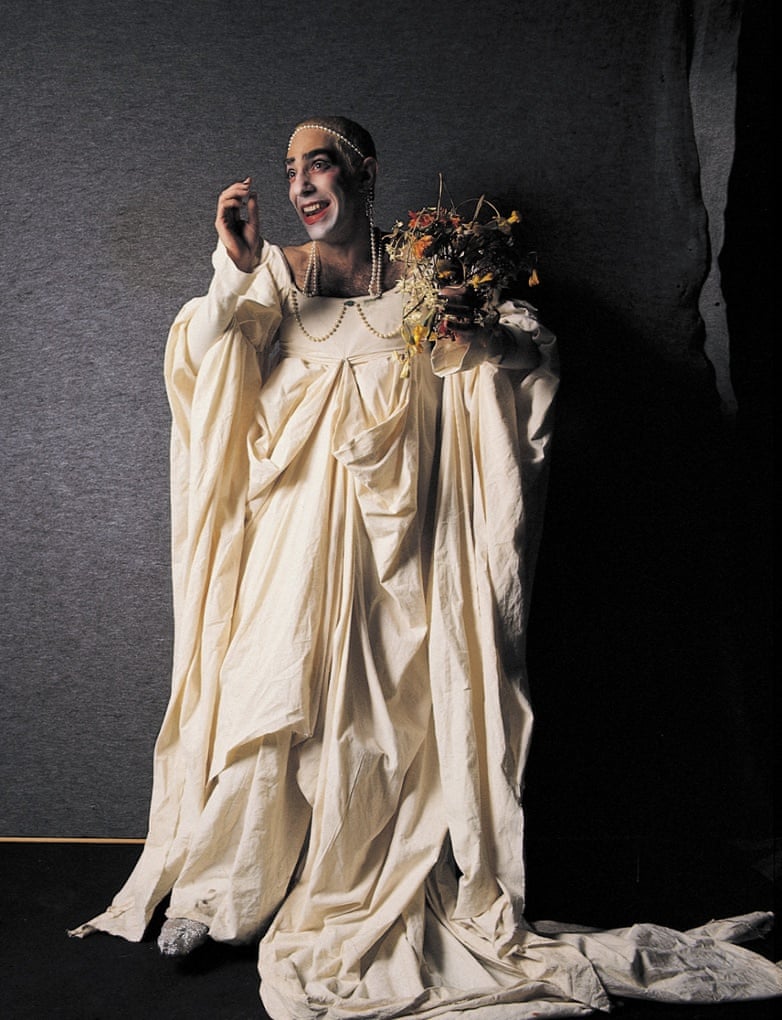
Divine was a friend of Logan’s and featured in his work. The artist was also friendly with film maker Derek Jarman who appeared as Miss Crepe Suzette in the 1975 Alternative Miss World pageant.

Derek Jarman as Crepe Suzette in 1975

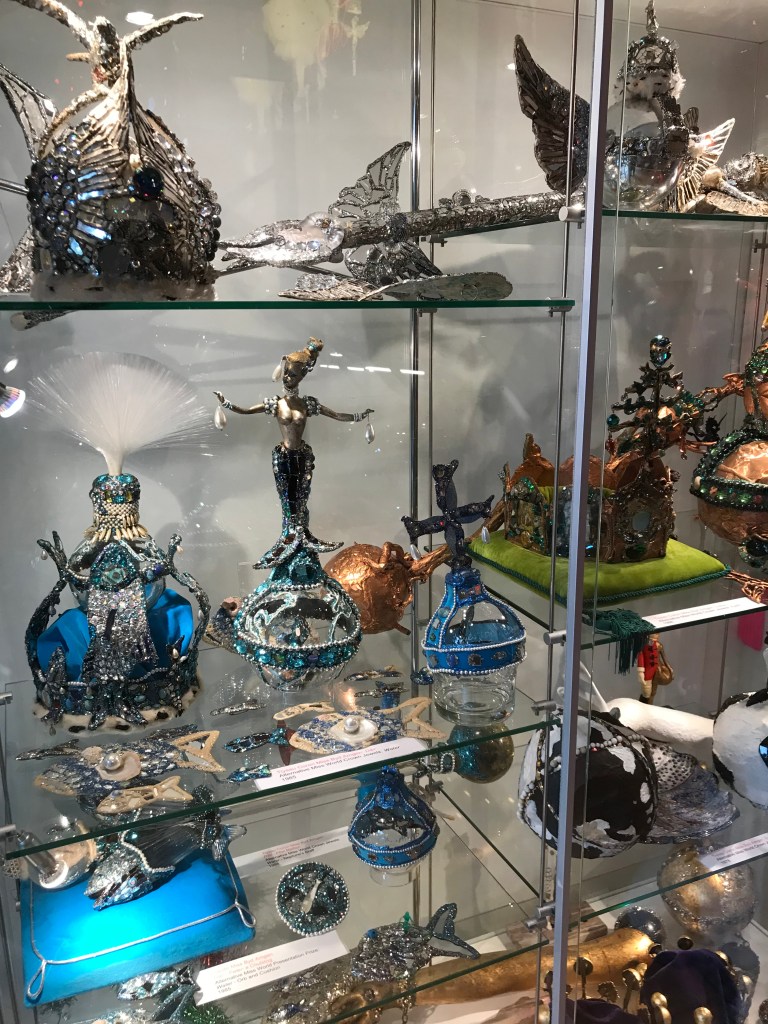
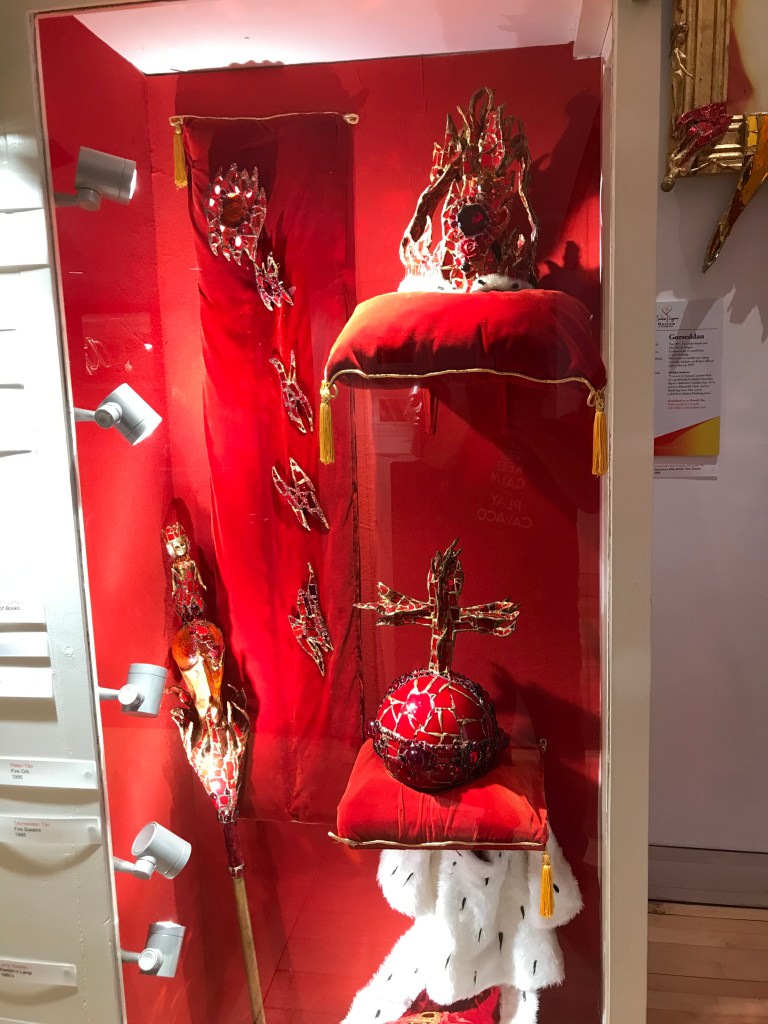
Images from the world of British monarchy feature often in Logan’s work especially Crowns, Sceptres and Orbs. Logan himself is not averse to wearing a crown.

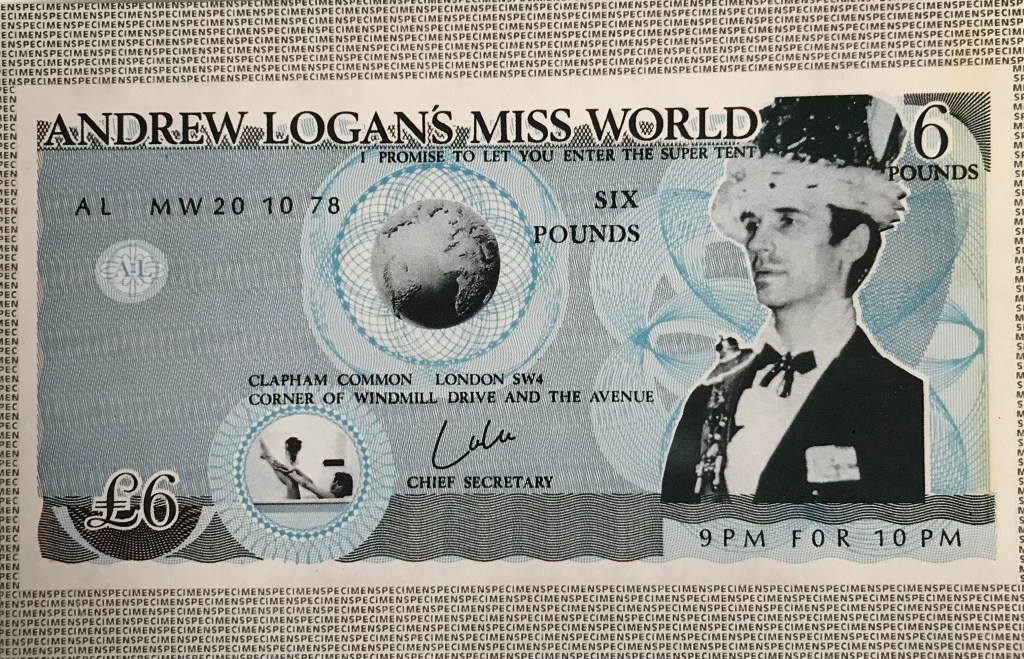
Admit ONE
Orbs an’ tings
Crown, Sceptre, Orb, Ermine an’ tings

Queen Elizabeth II is the longest serving British monarch. Her Platinum Jubilee this year marks 70 years on the throne. National celebrations will take place in the UK this year, as they did in 2002 (Golden Jubilee) and 1977 (Silver Jubilee).

The Silver Jubilee in 1977 was, as the Platinum Jubilee in 2022 will be, set in a state of parlous economic problems. ‘Hoy como ayer’ indeed but without any sense of nostalgia for those long gone days.

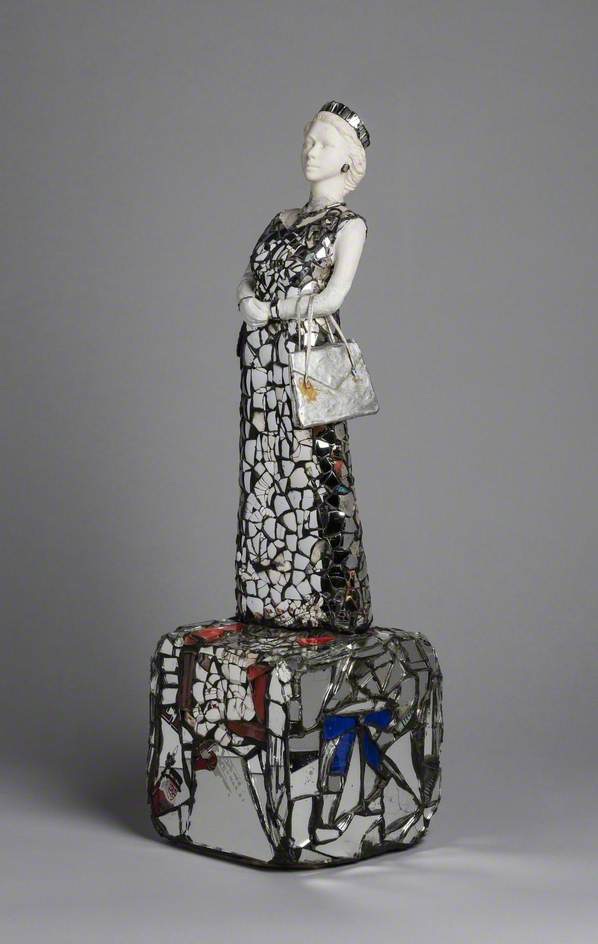
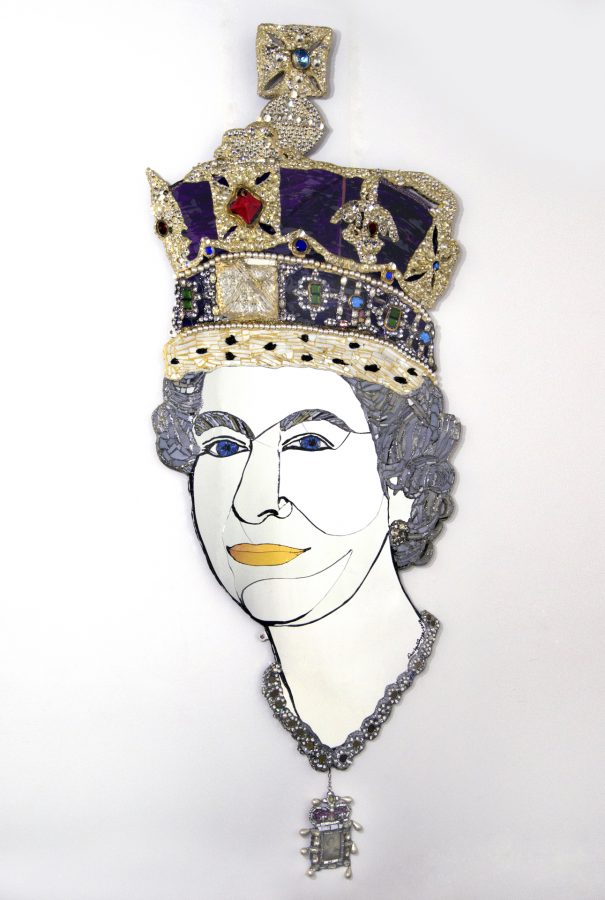
 Logan has depicted Queen Elizabeth II in his work at the time of a Jubilee.

Jubilee Offer from 1977 (the Silver Jubilee)

Yale Unversity’s British Arts  Centre celebrated the Queens ‘Diamond Jubilee’ (60 years on the throne) in 2012 with an exhibition of work by 15 artists from the UK. Logan’s portrait of the Queen was installed in the entrance court

ONE at Yale University

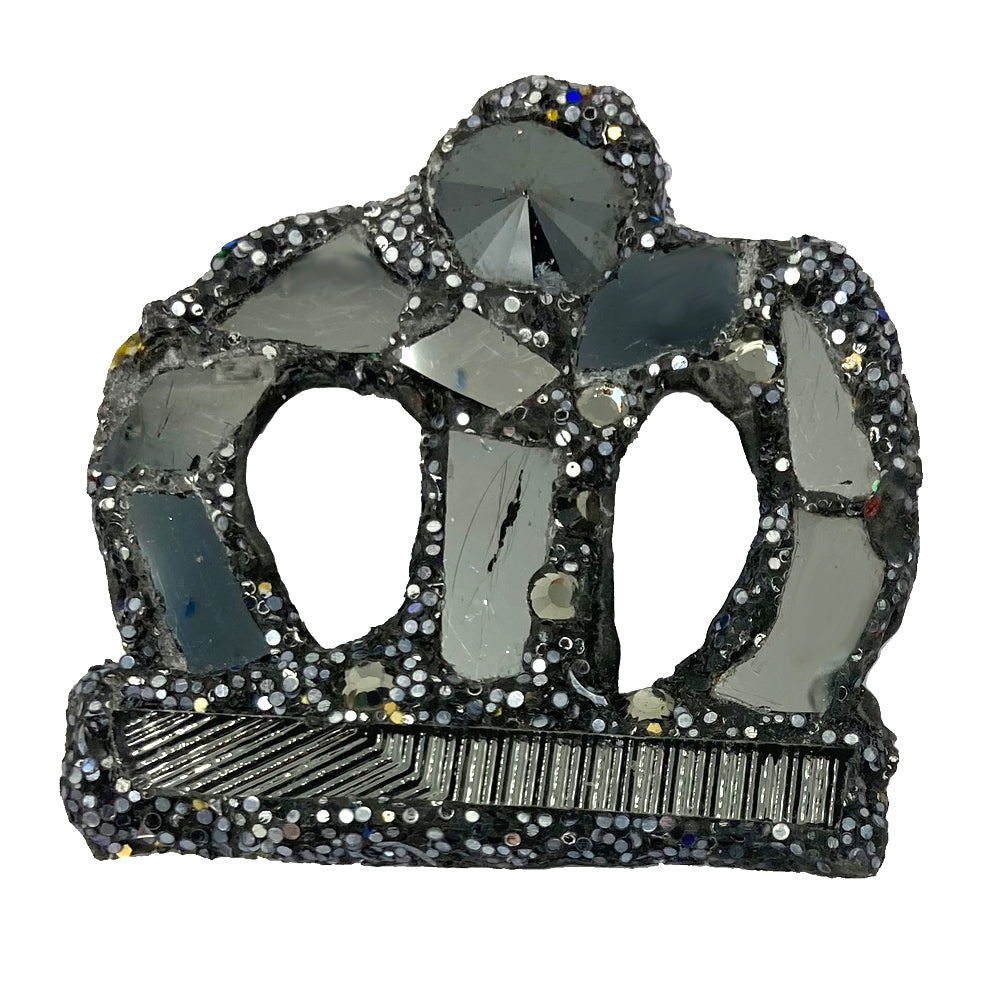
For the 2022 Platinum Jubilee, Logan has designed and made Crown broaches.

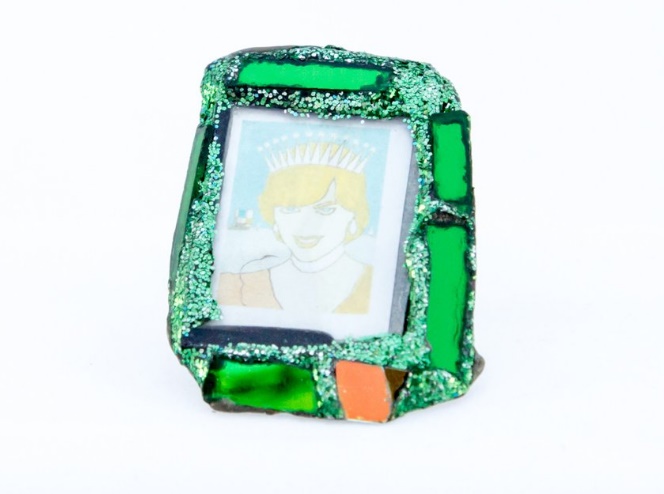
Diana, the most iconic Princess of Wales of all time was also the subject of Logan’s work.

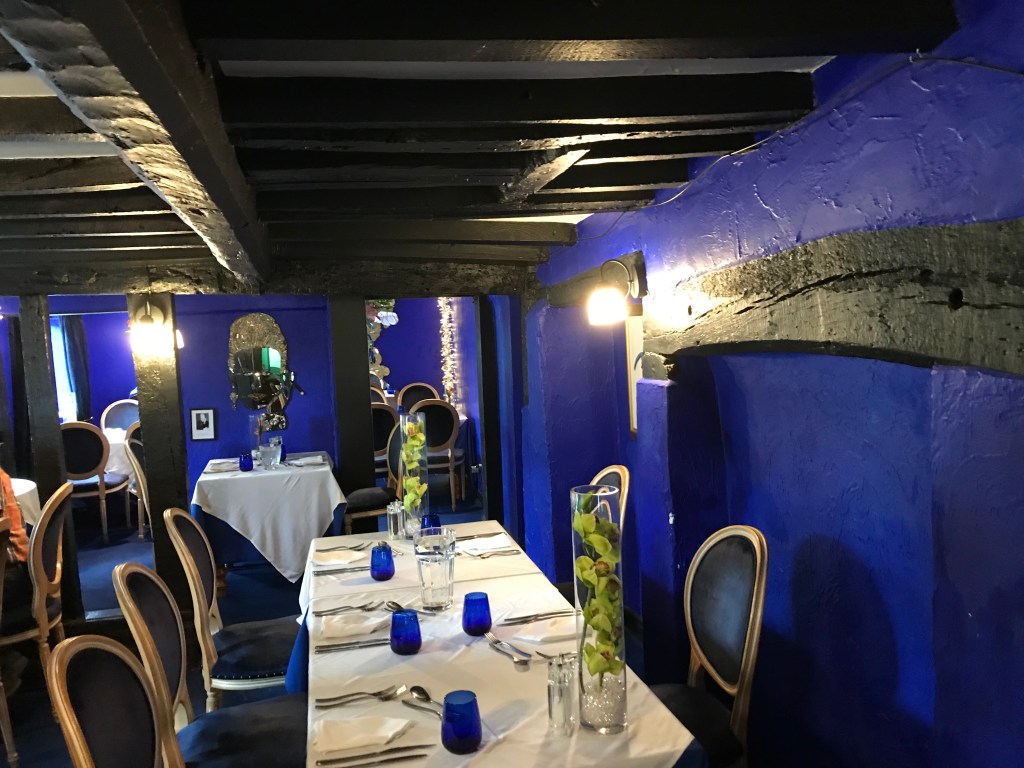
Logan also owns The Lion Art Hotel & Restaurant in the village, a short walk from the museum itself. The Lion was formerly a coaching inn. Whilst the building still looks like a pub from outside, the bar and dining areas have been totally transformed by Logan himself.

Dining room
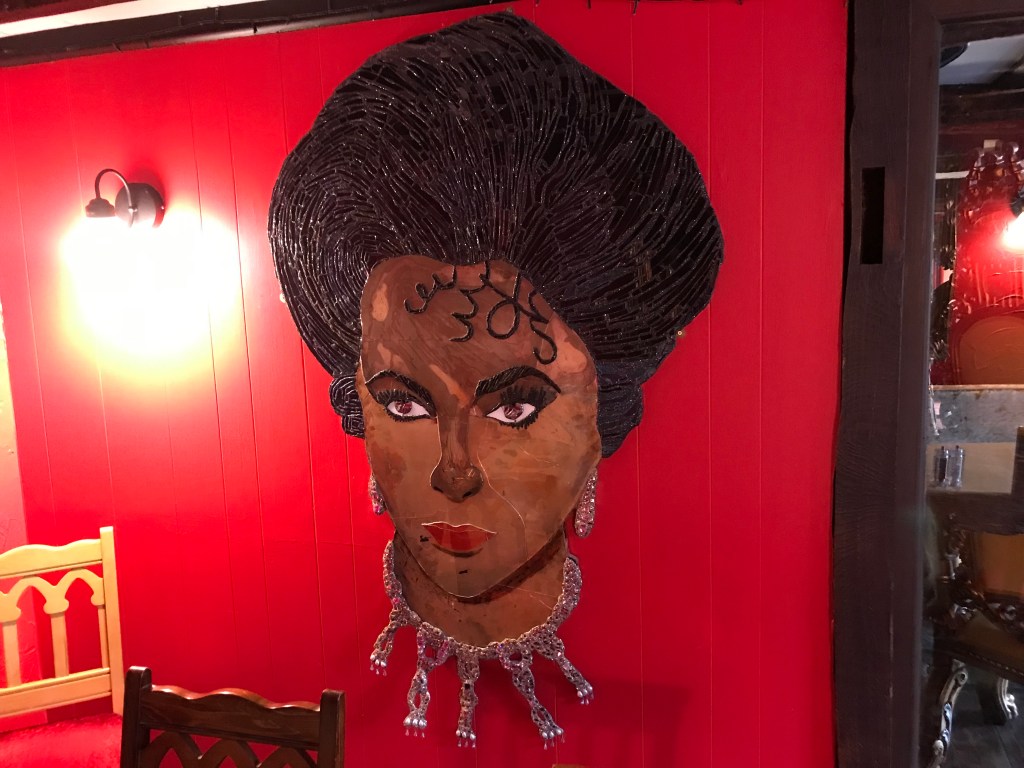
Liz
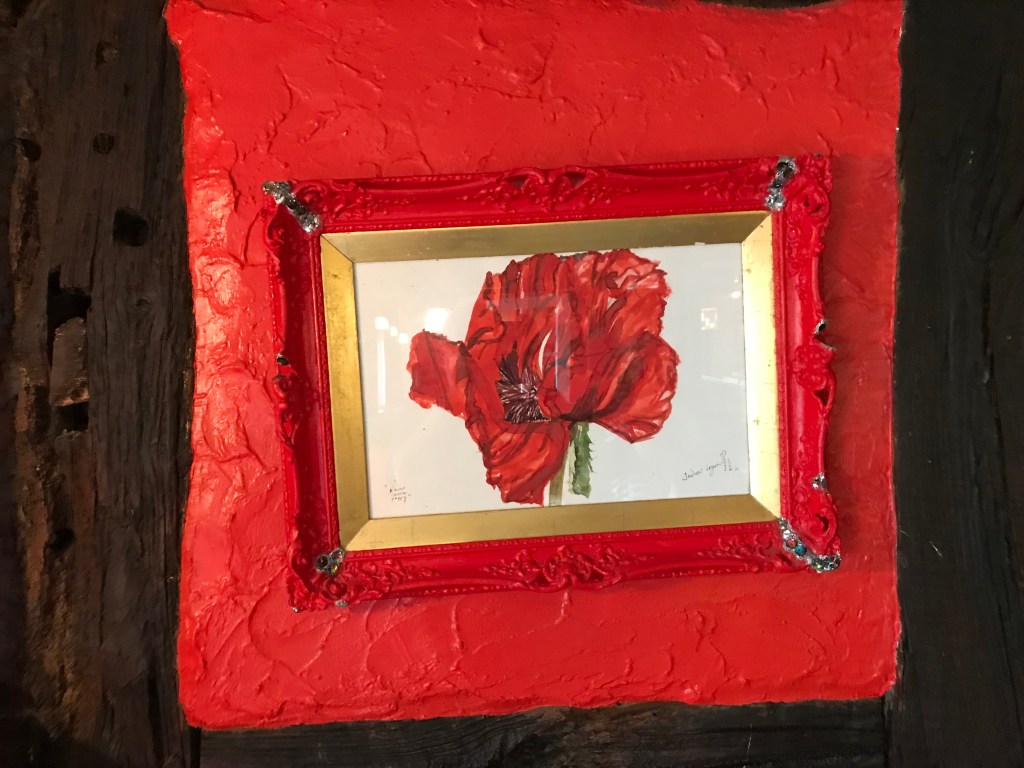
Art on the walls

The same unique transformation also applies to the 7 guest rooms themselves.

As well as drinks The Lion offers beautifully cooked food sourced from local Welsh ingredients. A truly inspired place to eat, drink and sleep.

The first time we heard of Andrew Logan was via the nascent Sex Pistols group who played at one of the artist’s parties at his Bermondsey studio in February 1976, an early gig for them.

Rare footage of the band filmed by film maker Derek Jarman playing live at this party exists although the sound ( the track ‘Satellite’) is taken from a live concert the group gave at Chelmsford Prison later in the year.

Drummer Paul Cook at Andrew Logan’s party

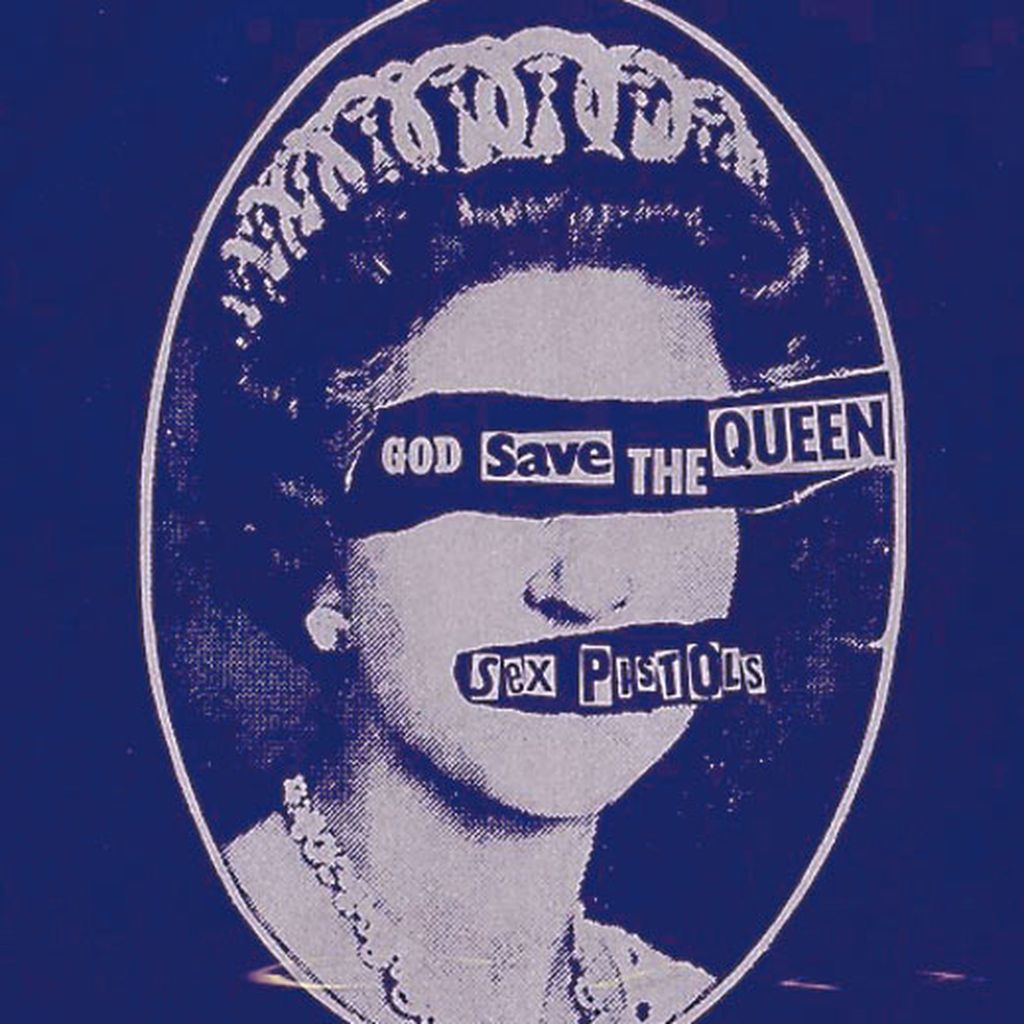
The Sex Pistol’s notoriety grew quickly. Loved by their fans, they were hated by everyone else to an extent that no other band has experienced in the UK before or since. A little later in the year and in time for the Queens Silver Jubilee, the Sex Pistols released their second single, God Save The Queen with its apt coda of ‘no future, no future for you’.

Artwork by Jamie Reid

Wrapped in a purple and silver cover ( purple is the colour associated with royalty and wealth and silver was chosen for the Silver Jubilee) together with a photograph of the Queen herself with superimposed ‘blackmail’ lettering spelling out the song’s title and the band’s name, the design was a triumph for artist Jamie Reid.

Reid was heavily associated with artwork for the Sex Pistols, designing their record sleeves, logos and posters and used images of Queen Elizabeth II again and again in his work.

Lyrics by John Lydon. Artwork by Jamie Reid

Hugely controversial to an extent unrivalled before or after in the UK, the song was not produced specifically for the Jubilee, nor was it, as assumed by many, to be an assault on the Monarchy. Nevertheless, it was hugely successful despite being banned from the airwaves with members of the band violently attacked by thugs defending the same establishment order that despised them.

The lyrics were written by the band’s vocalist John Lydon who later commentated: “It was expressing my point of view on the Monarchy in general and on anybody that begs your obligation with no thought. That’s unacceptable to me. You have to earn the right to call on my friendship and my loyalty’’.

“I was never pro them or anti them. I just think if we’re going to have a monarchy it may as well work properly. I mean, we pay for it, after all‘.

The film maker Derek Jarman directed the 1978 film Jubilee featuring established actors and a cast of ‘punks’.

The film’s title is a referance to the Silver Jubilee of Queen Elizabeth II the previous year.

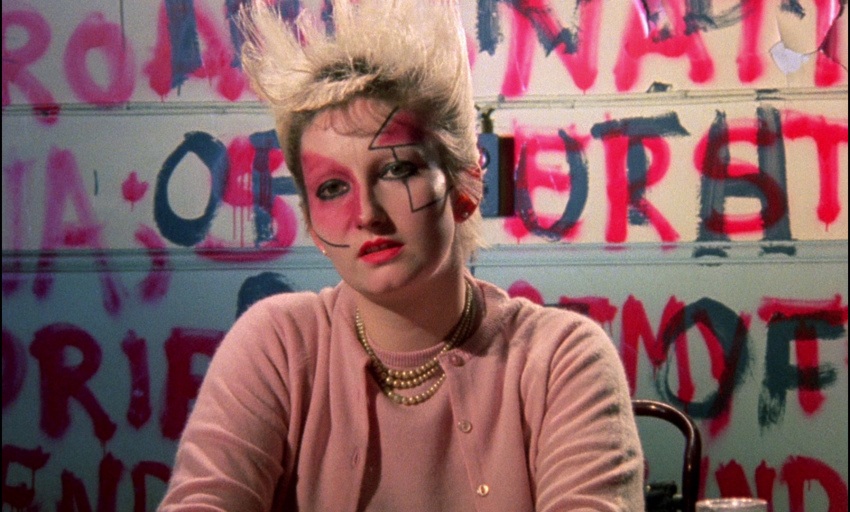
An angel in the form of Ariel (from Shakespeare’s The Tempest) transports Elizabeth I (played by the actress Jenny Runacre) to a run down, desolate London of the 1970’s where she meets a group of violent young women. She finds out that her future predecessor, Queen Elizabeth II, has been assassinated and Buckingham Palace has been turned into a recording studio. Our favourite performer in the film is the late Pamela Rooke, better known simply as ‘Jordan’, as the character ‘Amyl Nitrate’ in the film.

Jordan as Amyl Nitrate

Jordan was iconic for her unique style. She was an early friend of the Sex Pistols and worked at the Sex clothes boutique (owned by designer Vivienne Westwood and the Pistol’s manager Malcolm Mclaren) where the group hung out.

Vivienne Westwood is now Dame Vivienne Westwood OBE having the honour bestowed upon her by Queen Elizabeth II for her services to fashion.

Jordan accompanied the Sex Pistols and Vivienne Westwood to their appearance at Andrew Logan’s Bermondsey studio for his February 1976 party

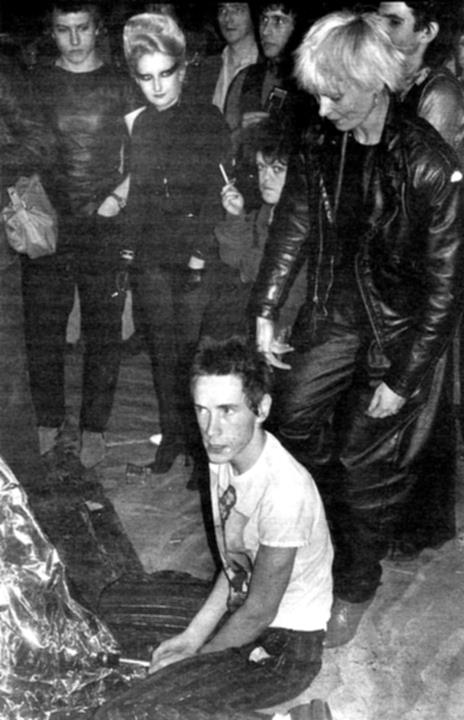
Jordan, Vivenne Westood and John Lydon at Andrew Logan’s studio in 1976.
Speaking of icons…..‘there ain’t nothing like a Dame’.

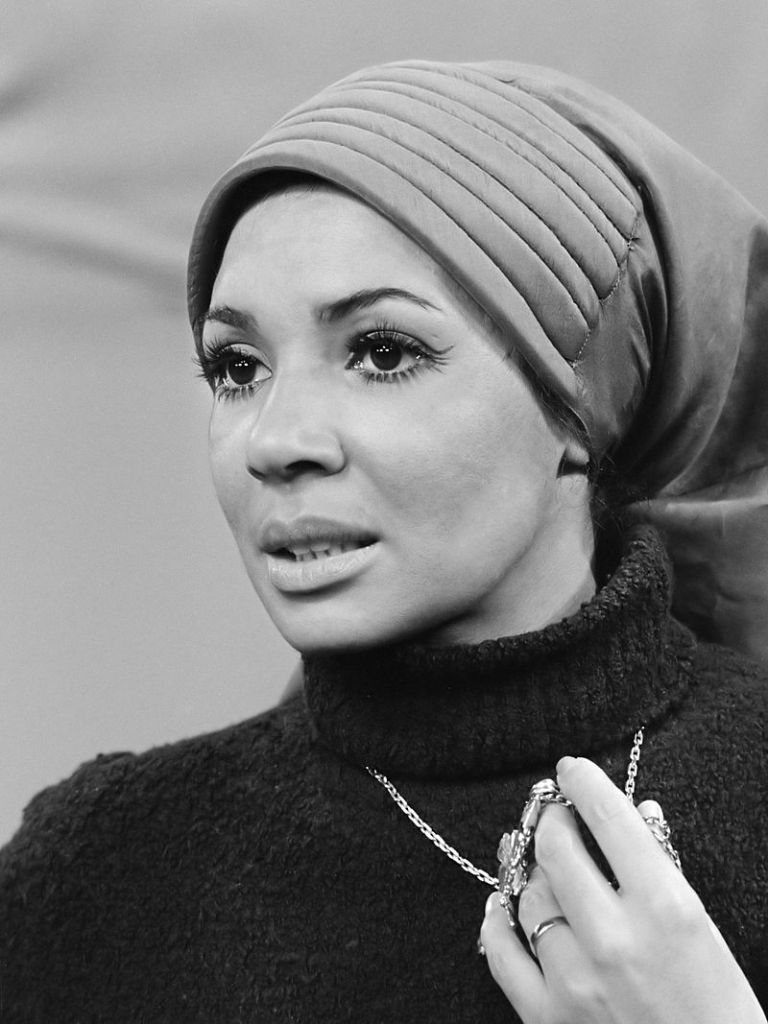
Dame Shirley Bassey DBE

Dame Shirley Veronica Bassey DBE is a Welsh legend and one of the most popular singers in Britain. She is also another artist associated with Jubilee year.

Bassey is renowned as the voice behind the Bond title songs, Goldfinger (a Grammy winner) and Diamonds Are Forever. Her performance of Goldfinger apparently influenced the Queen of Soul, Aretha Franklin. For a singer there can be no higher accolade.

Bassey was appointed a Dame Commander of the Order of the British Empire(DBE) by Queen Elizabeth II in 1999 for services to the performing arts. She was one of the line-up of artists in June 2012 who performed at the Queens 60th (Diamond) Jubilee Party at Buckingham Palace singing “Diamonds Are Forever”

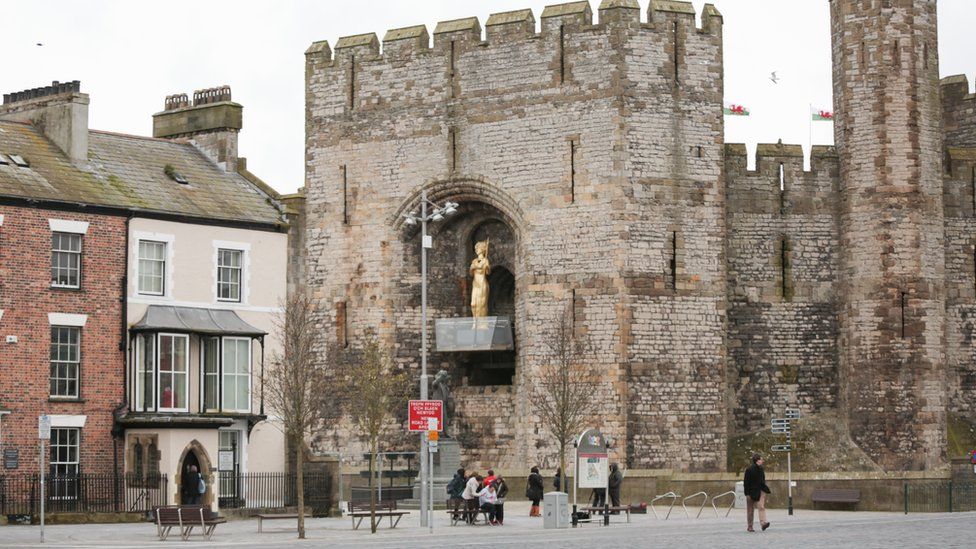
Shirley Bassey statue at Caernarfon castle

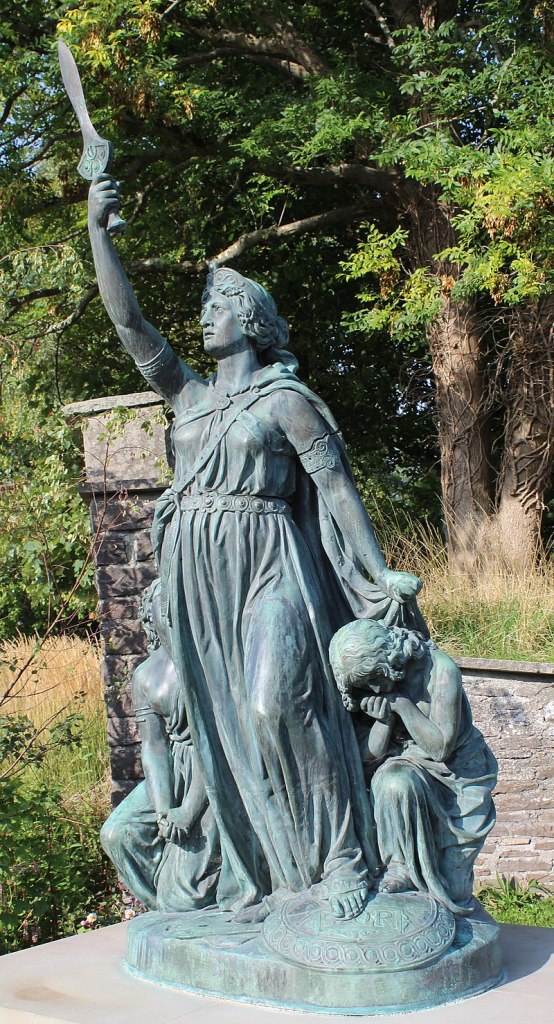
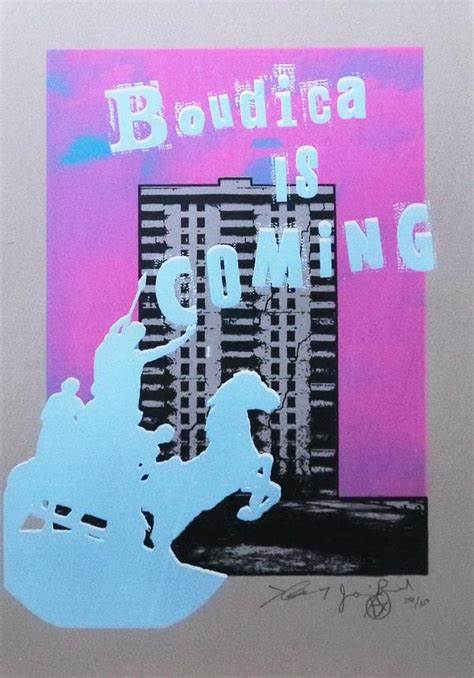
A 20 feet high golden statue of Dame Shirley was unveiled a few years ago at Caernarfon castle on the Welsh coast, the castle where Prince Charles was crowned Prince of Wales by Queen Elizabeth II. Dame Shirley was sculpted in the pose of warrior queen Boudica (‘Buddug’ in the Welsh language). Boudica was an ancient Celtic queen who led a revolt against Roman rule in ancient Britain. The Welsh are a Celtic people and many there feel an affinity with Boudica even though she hailed from England where she was the Queen of a Celtic tribe.

Statue of Boudica in Powys, Wales

Artist Jamie Reid has also referenced Boudica in his work.

ONE more….

ONE

Happy Jubilee.

Court Green, Plath, Patti and Beer

Patti Smith

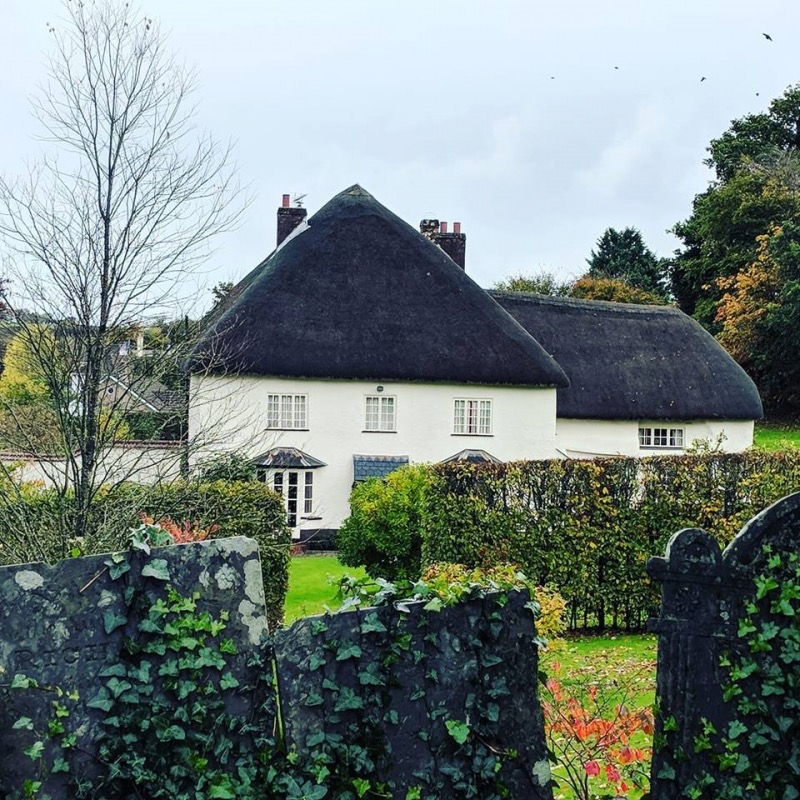
Court Green is a house in the county of Devon in the far south west of England. It was the home of poets Ted Hughes and Sylvia Plath. Plath wrote most of her celebrated Ariel collection of poems whilst living with Hughes at Court Green. When the couple separated, Plath moved to London with her two small children to the house where WB Yeats had once lived. It was here that she committed suicide in 1963.

Court Green

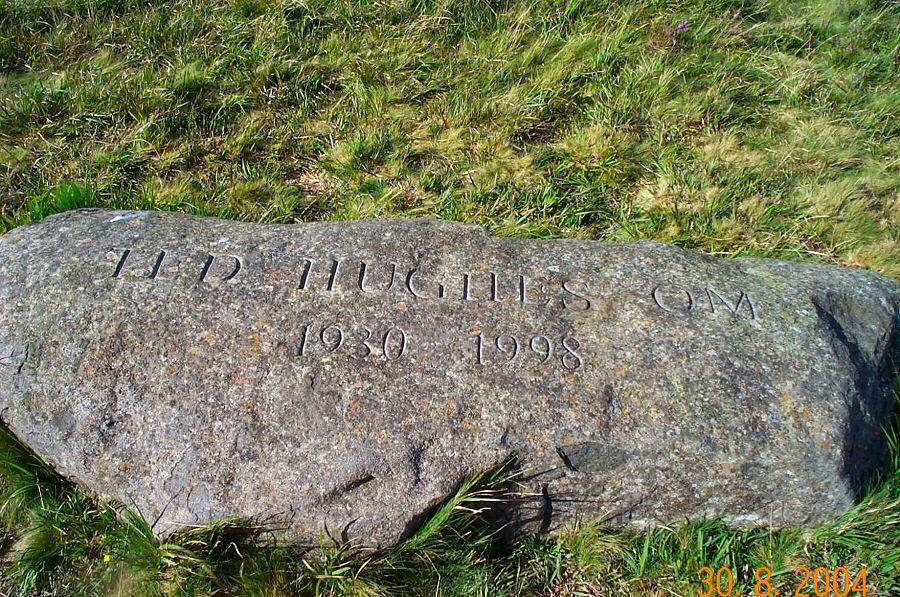
Hughes continued to live in the house until his death in 1998. A ‘secret’ stone memorial lays on a remote hillside on nearby Dartmoor. The memorial, especially requested by Hughes, lay undiscovered in its moorland location for years until it was uncovered by walkers. Although the memorial stone and its whereabouts were known to friends of Hughes, it’s exact location was kept secret to prevent it becoming a shrine to the poet.

Dartmoor memorial

By way of a contrast, the grave of the poet’s former wife, Sylvia Plath is very much a shrine to the late author, attracting visitors from across the world.

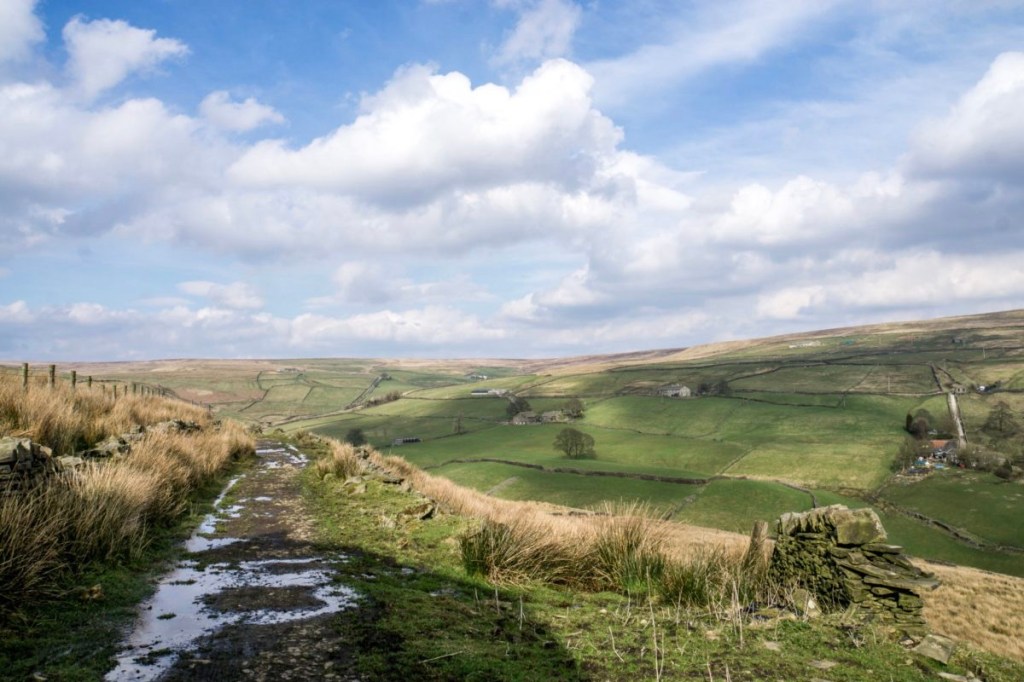
The moors around Heptonstall

Sylvia Plath is buried in St. Thomas’ Churchyard in the village of Heptonstall in West Yorkshire. The village lies above the historic town of Hebden Bridge. It is surrounded by rugged moorland. Although she had separated from Hughes at the time of her death, they were not divorced. Hughes was from the village of Mytholmroyd near to Heptonstall, and he chose the latter as the site of her burial.

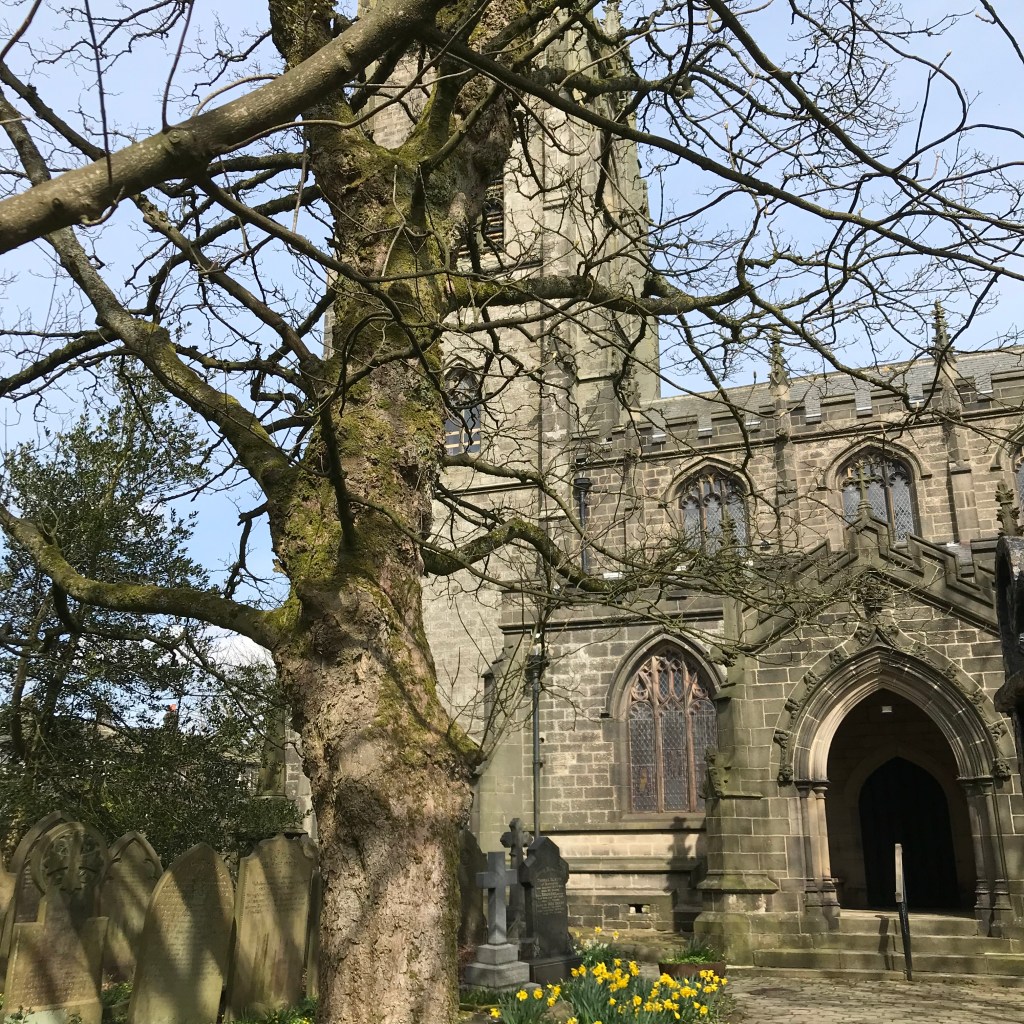
St Thomas’ church

Heptonstall is, a small, cobblestoned settlement of a couple of pubs, a post office , a gift shop and a great café for coffee and cakes. It is a mixed community made up of those from the locale and incomers to the area attracted by the village’s picturesque beauty.

Heptonstall houses

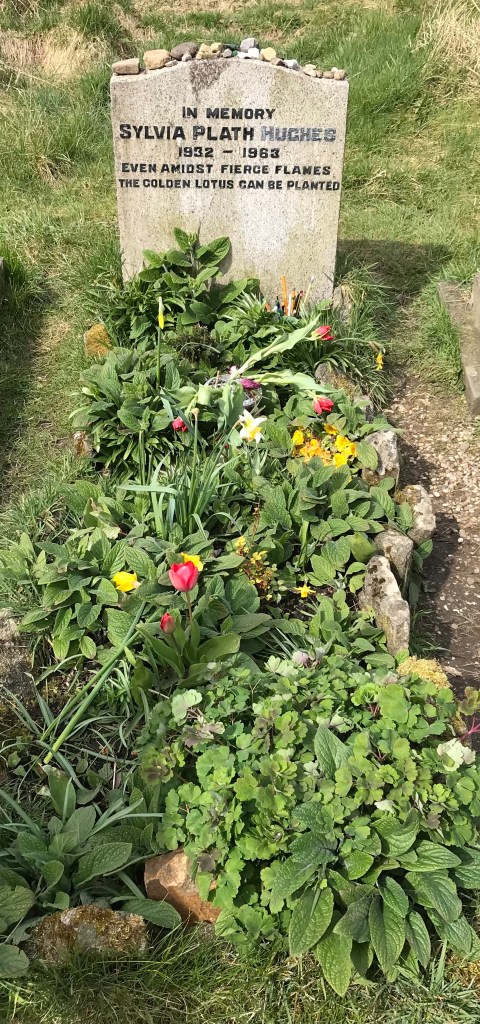
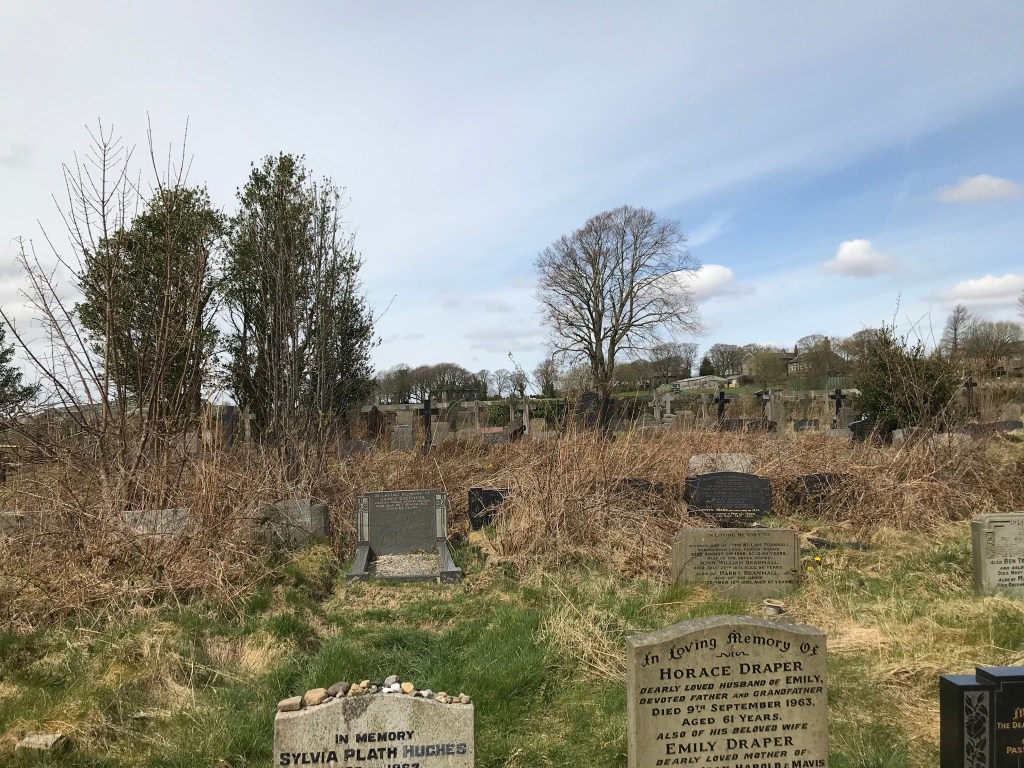
Sylvia Plath’s grave can be found in the New Cemetery which is to the left of the church. As you approach the headstones looking for her plot, an elderly gentleman called Stuart may well be waiting close by to guide you to the site. He is a charming, helpful individual who has lived in the village his whole life. He knew the Hughes family and although he did not know Sylvia Plath, his care in maintaining her grave and his assistance to the many admirers of her work who come from far and wide to visit the site, has earned him the gratitude of her surviving daughter Frieda (Plath’s son Nicolas committed suicide in Alaska in 2009). Stuart keeps a record of the number of visitors to the site and where they are from. As well as visitors from the UK, well wishers from all over the world (especially the US) make their way to the grave, many leaving a pen in a container under the headstone which has been left there for that purpose.

The jar full of pens is just about visible

When we visited, the full name Sylvia Plath Hughes was clearly visible on the headstone although the name Hughes appeared to be somewhat faded. Stuart explained that some admirers of the poet blamed Ted Hughes for her suicide and tried to deface the name Hughes on the headstone. Stuart had cleaned up their attempts and had been personally thanked by Frieda for his efforts apparently.

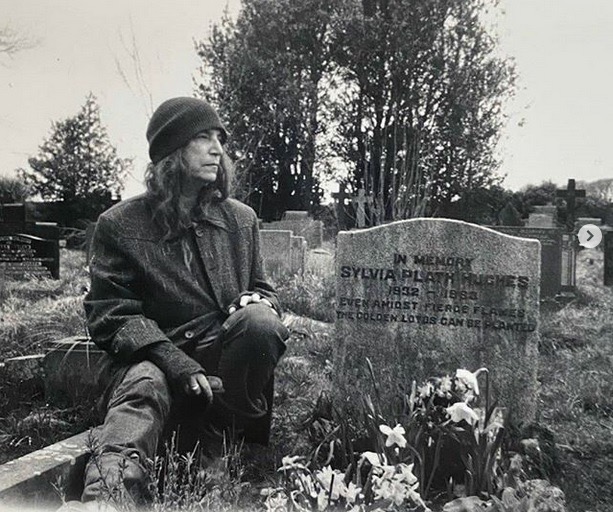
One American visitor is poet and musician Patti Smith who has made the journey to the grave several times. Her memoirs ‘M Train’ from 2015 recounts her three visits to Plath’s grave including one she made with her sister who was keen to visit nearby Brontë country, a location especially popular with Japanese visitors who are especially enamoured of the sisters.

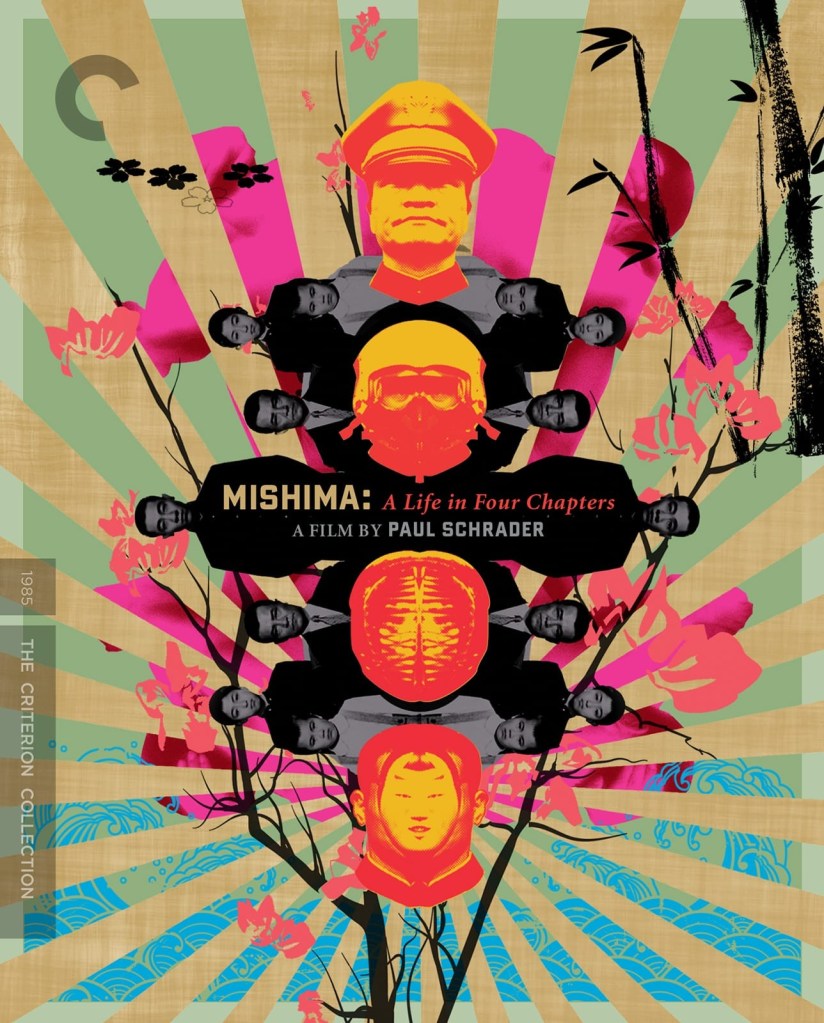
Smith is reverential towards other great artists and her M Train memoir describes her visits to the Japanese gravestones of poet and ultra nationalist Yukio Mishima, Ryūnosuke Akutugawa, father of the Japanese short story, and the revered author Osamu Dazai. All three had committed suicide.

Schrader’s outstanding ‘Mishima: A Life in Four Chapters’

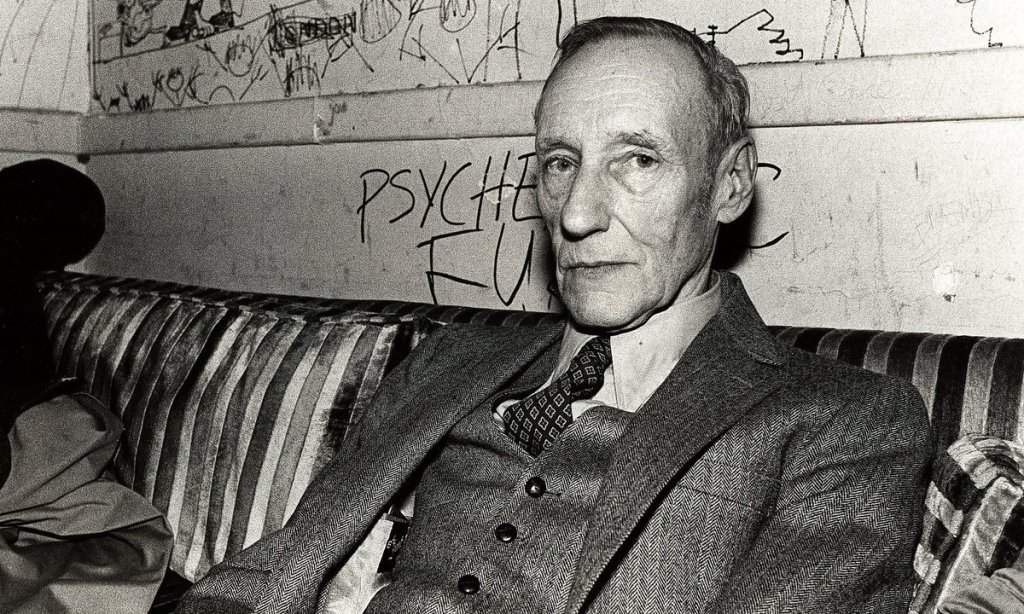
The grave of another American poet, Asa Benveniste also lies in the churchyard. His gravestone reads “Foolish Enough to Have Been a Poet”. Benveniste was not only a poet but a publisher as well. As the founder of the Trigram Press in London in 1965 he specialised in publishing the work of Beat Generation writers including William Burroughs and Gregory Corso.

William Burroughs

Patti Smith is a clear fan of the Beat writers. She told the Beatdom literary journal in 2012

‘I was very attached to William [Burroughs]. I knew Gregory, Gregory Corso, very well…

I was very privileged to know these people and I had different relationships with them all. Gregory was very, very important to me in my learning process of how to deliver poems live…and in my reading list.

But William was the one I was most attached to. I just adored him. I had sort of a crush on him when I was younger and he was very good to me.’

Asa Benveniste once ran a bookshop in the nearby town of Hebden Bridge, a cultural place in its own right. The town has an excellent venue in The Trades Club where many great performers (including Patti Smith) have played over the years.

The Trades Club

We do not know whether Patti Smith visited the grave of Asa Benveniste when she visited Heptonstall as she does not mention the poet’s grave in her writing to the best of our knowledge. 

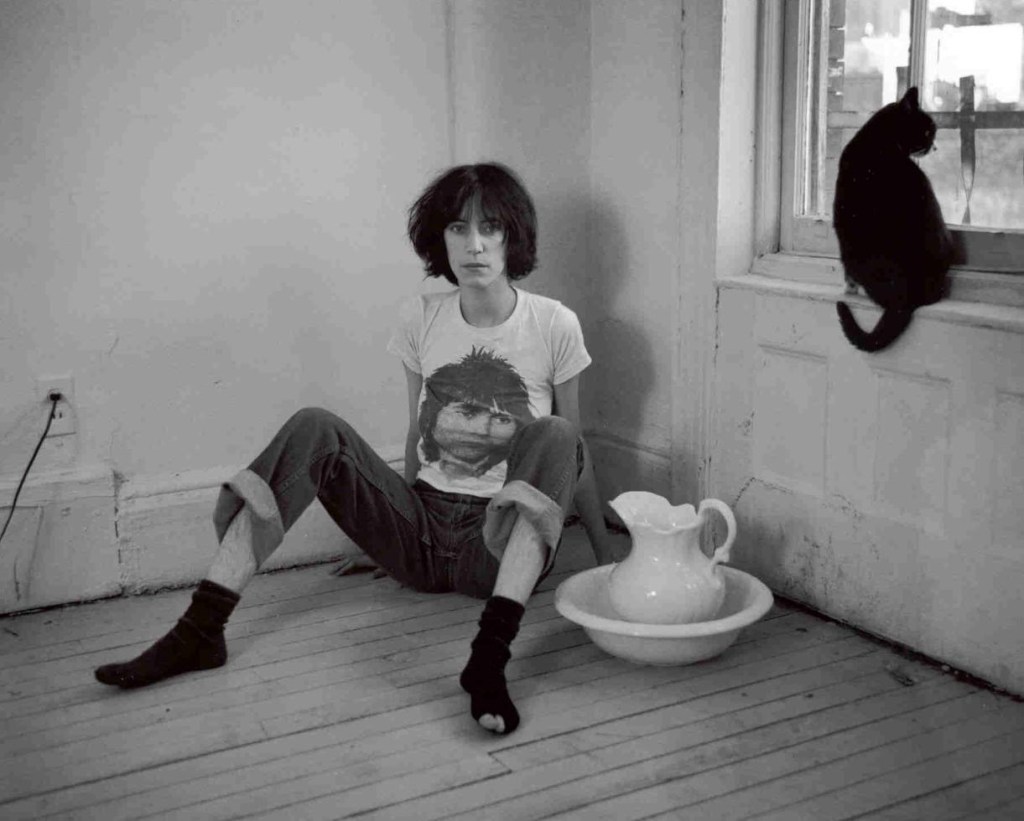
What we do know is that Patti Smith is, like us, a cat lover having kept the animals since childhood. 

Patti Smith in 1974. Photo by Robert Mapplethorpe

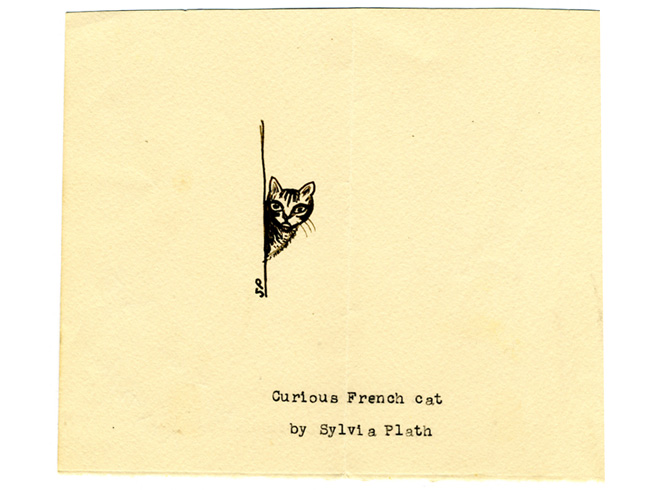
Sylvia Plath was certainly a feline admirer. As well as writing the poem ‘Ella Mason And Her Eleven Cats’ she created the following drawing in 1956.

The churchyard at St. Thomas’ is no stranger to cats. Whilst we stood before Plath’s headstone, a large black beastie who Stuart named as Otto was roaming through the graves a few feet away. When we approached him he slunk further into the brambles, his tail swishing behind him.

Otto is in this photo if you look hard

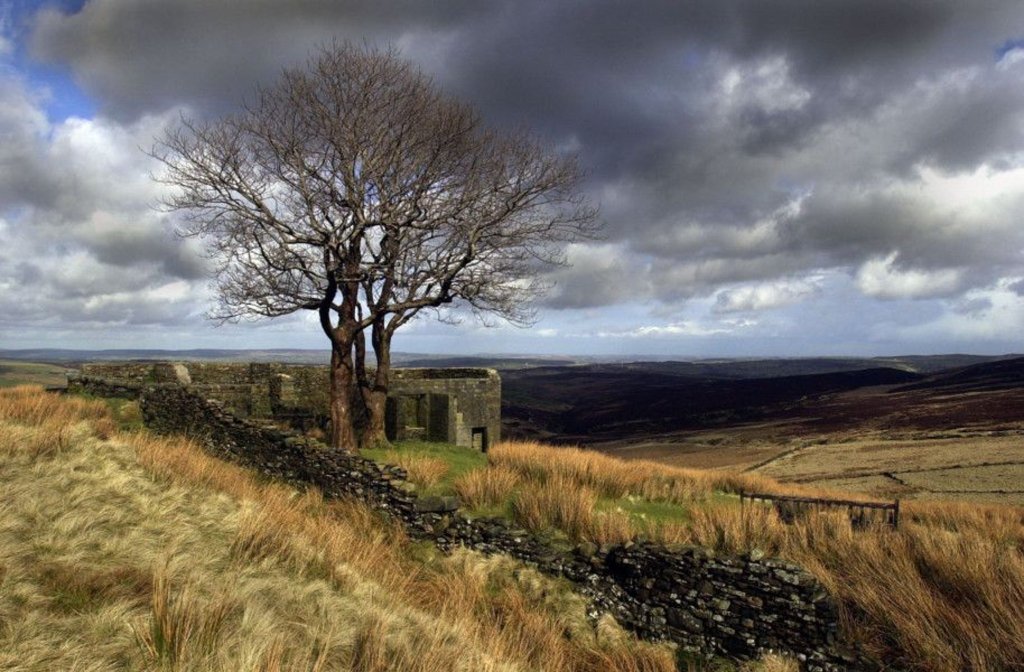
Sylvia Plath was both influenced by the wild Yorkshire moors and by the Brontë sisters and Wuthering Heights in particular. The Brontë family home was at Haworth, a few miles from Heptonstall.

Plath wrote the following in a letter to her mother in the US in 1956 after a visit to the moors and the Brontë home in Haworth in 1956.

I never thought I could like any country as well as the ocean, but these moors are really even better, with the great luminous emerald lights changing always, and the animals and wildness. Read Wuthering Heights again here and really felt it this time more than ever. 

After visiting the grave on an especially bleak winter’s day, Smith made the following comment in her excellent book M Train:

It was such a desolate place in winter, so lonely. Why had her husband buried her here? I wondered. Why not New England by the sea, where she was born, where salt winds could spiral over the name PLATH etched in her native stone?

In an extract from her Journals, Plath describes the moors in a way that only someone who loves them can:

…..across the slow heave, hill on hill from any other direction across bog down to the middle of the world, green-slimed, boots squelchy – brown peat – earth untouched except by grouse foot – bluewhite spines of gorse, the burnt-sugar bracken – all eternity, wildness, loneliness – peat-colored water – the house – small, lasting, pebbles on roof, name scrawls on rock – inhospitable two trees on the lee side of the hill where the long winds come, piece the light in a stillness. The furious ghosts nowhere but in the heads of the visitors & the yellow-eyed shag sheep.’

In 1961 Plath wrote her own poem entitled ‘Wuthering Heights’ an extract from which reads

The sky leans on me, me, the one upright

Among all horizontals.

The grass is beating its head distractedly.

It is too delicate

For a life in such company;

In 2013 Patti Smith played a small acoustic set at the Brontë schoolroom in Haworth in aid of the Brontë society. She is an enthusiastic admirer of the sisters as is her own sister, Linda who also visited at the time. She gave a ‘shout out’ to Wuthering Heights’ Heathcliff and Cathy at the gig apparently.

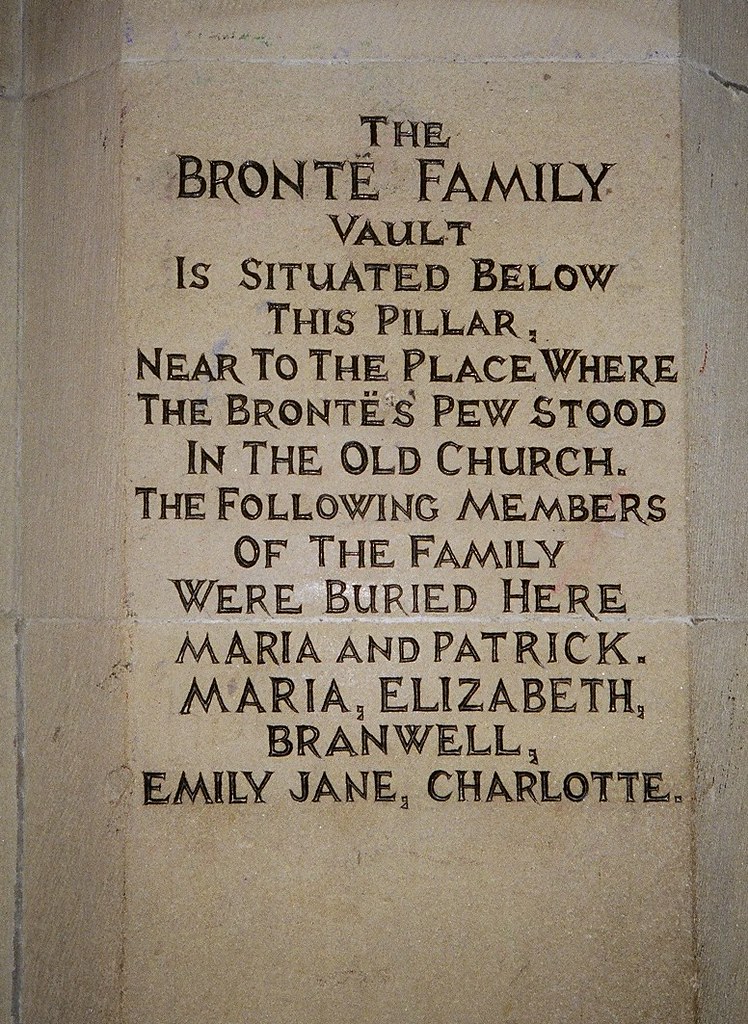
Emily Brontë is buried in the family vault at St. Michael and All Angels’ Church, Haworth.

St. Michael and All Angels’ Church, Haworth.

The village of Heptonstall and the adjacent town of Hebden Bridge are a part of the Upper Calder Valley which includes Cragg Vale which is situated high on the Pennine moorland.

Cragg Vale has two breweries, Vocation (www.vocationbrewery.com) and the Little Valley brewery (www.littlevalleybrewery.co.uk).

Our favourite brews locally are the Little Valley beers. The brewery has been around since 2005 when it was formed after a Dutch farmers son met a Geordie lady (i.e someone from Newcastle in the North East of England) whilst cycling in Kathmandu.

Their beers are 100% organic and better tasting for it in our opinion.

Little Valley beers

With all these words about poets, Japan, beer and cats, we thought we would ‘attempt’ a Haiku for you.

A Haiku

Wintry eventide

A tiny tabby cat purrs

Enjoying the beer

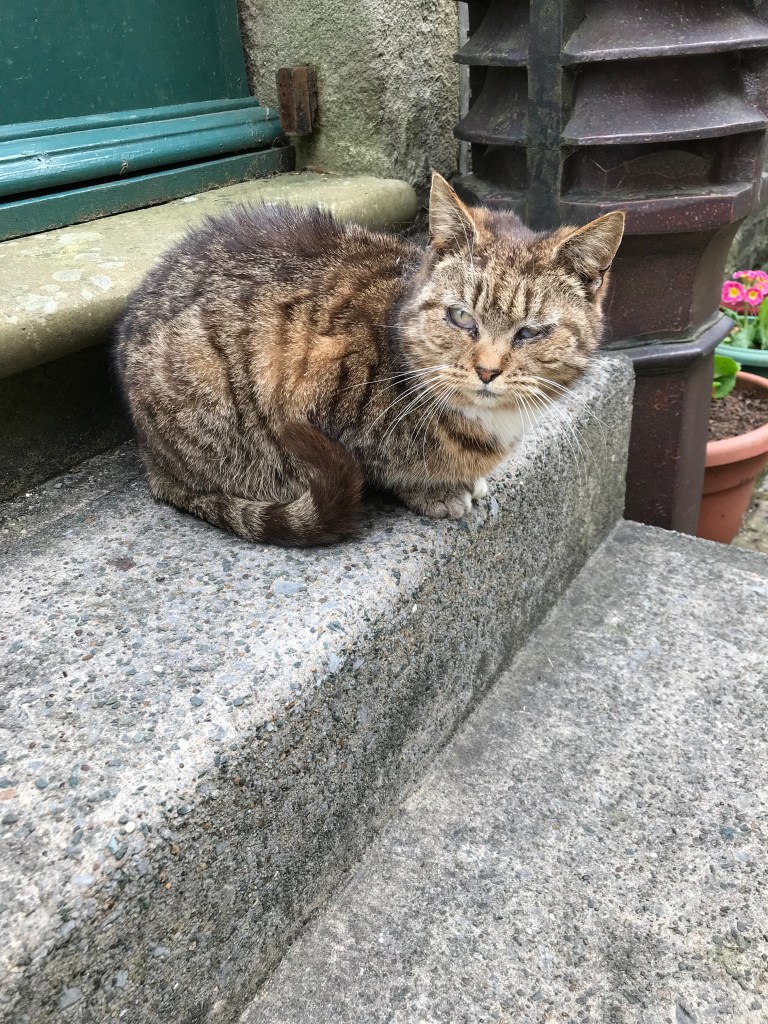
Another Heptonstall cat