Bauhaus and Kebabs

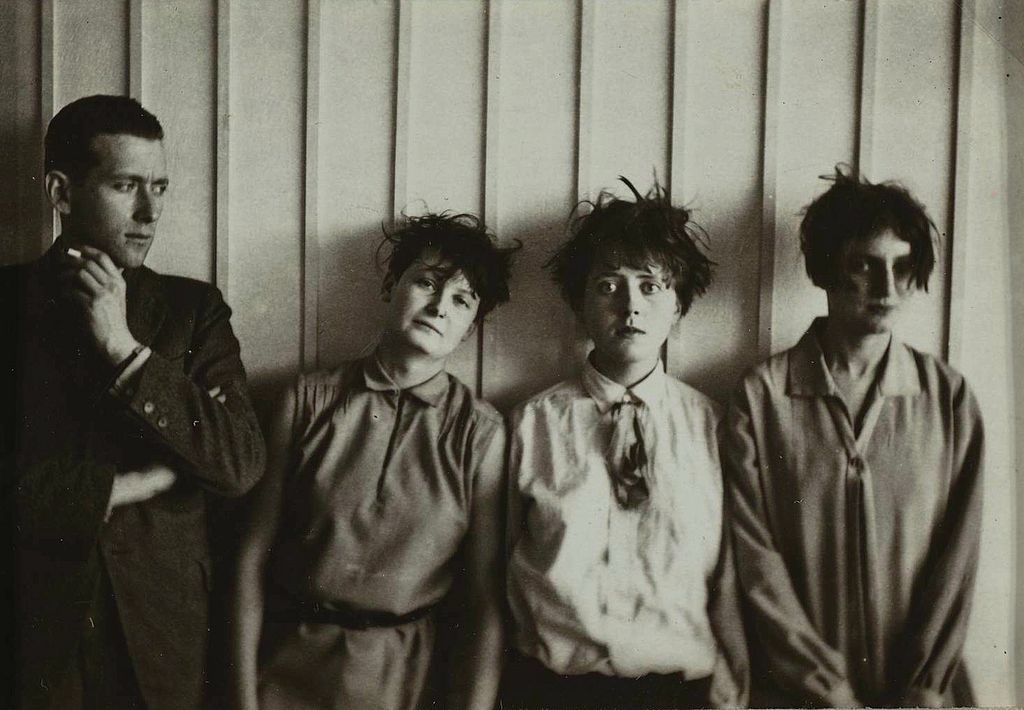
Bauhaus students, 1927*

The Bauhaus was one of the most influential movements in modern art, architecture, and design, and its brief yet dynamic history unfolded across three German cities: Weimar, Dessau, and Berlin.

*At the Bauhaus in 1927 or at a Raincoats gig upstairs at The Chippenham in London in 1979? You choose.

Bauhaus in Weimar

Weimar holds a special place in the history of modern design as the birthplace of the Bauhaus. Founded in 1919 by architect Walter Gropius, the Bauhaus began as an ambitious experiment in redefining art, architecture, and design education. It sought to merge fine art with craftsmanship, breaking down the traditional hierarchies between artist and artisan. During its formative years in Weimar, the Bauhaus laid the theoretical and artistic foundations that would later influence generations of architects, designers, and educators across the globe.

Housed in the former Grand-Ducal Saxon School of Arts and Crafts, the early Bauhaus attracted a range of pioneering artists, including Johannes Itten, Lyonel Feininger, Paul Klee, and Wassily Kandinsky. The curriculum combined workshops, theory, and experimentation, with an emphasis on unity between function and aesthetics. While the Weimar period was marked by creative innovation, it also faced political opposition from conservative forces who viewed the school as too radical. Ultimately, this tension led to the Bauhaus being forced out of Weimar in 1925, when it relocated to Dessau.
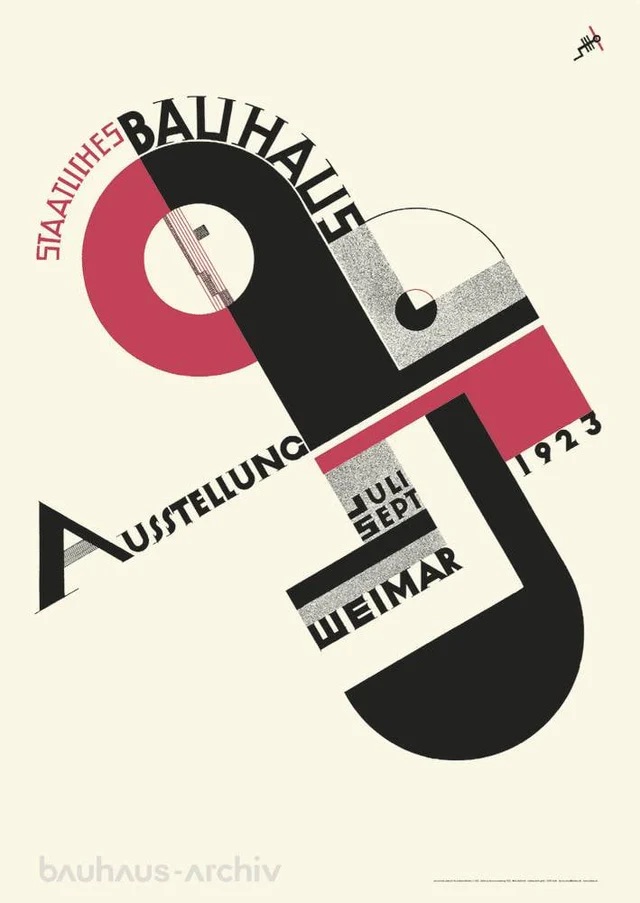
Weimar 1923

Today, the legacy of the Bauhaus remains deeply embedded in Weimar’s cultural identity. The original Bauhaus building on the campus of what is now the Bauhaus-Universität Weimar has been preserved and restored. In 1996, it was designated a UNESCO World Heritage Site, along with the Bauhaus buildings in Dessau. The university continues the school’s educational legacy, offering programs in architecture, design, media, and the arts, echoing the interdisciplinary spirit of the original Bauhaus.

In addition, the Bauhaus Museum Weimar, reopened in 2019 to mark the centenary of the school’s founding, showcases a huge collection of artifacts, furniture, documents, and artworks from the early Bauhaus period.

Whilst in Weimar, take a look at the Hotel Elephant and its Bauhaus legacy in the main square. The hotel became an informal gathering place for many Bauhaus artists and intellectuals. Though not designed by Gropius himself, the hotel’s modernist renovation in the 1930s reflected the aesthetic ideals championed by the Bauhaus, making it a symbolic extension of the movement’s presence in the city.
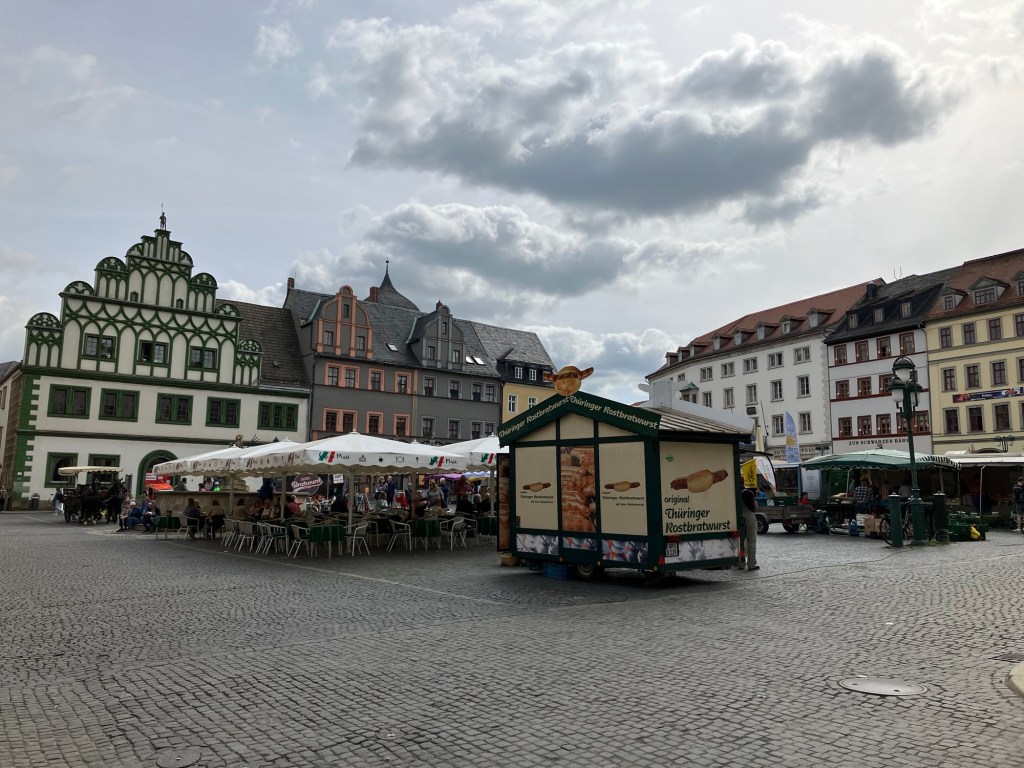
The main square in Weimar

The current incarnation of the Hotel Elephant combines modern luxury with a reverence for the city’s past. Originally established in the 17th century, the hotel has undergone several transformations, the most significant of which occurred in the early 20th century, aligning it with the radical vision of the Bauhaus. When the movement was founded by Walter Gropius in Weimar in 1919, the city became a nexus for revolutionary ideas in design and aesthetics. The Hotel Elephant, located just steps away from many of the cultural institutions that supported Bauhaus ideals, naturally became a meeting place for many of its leading figures.
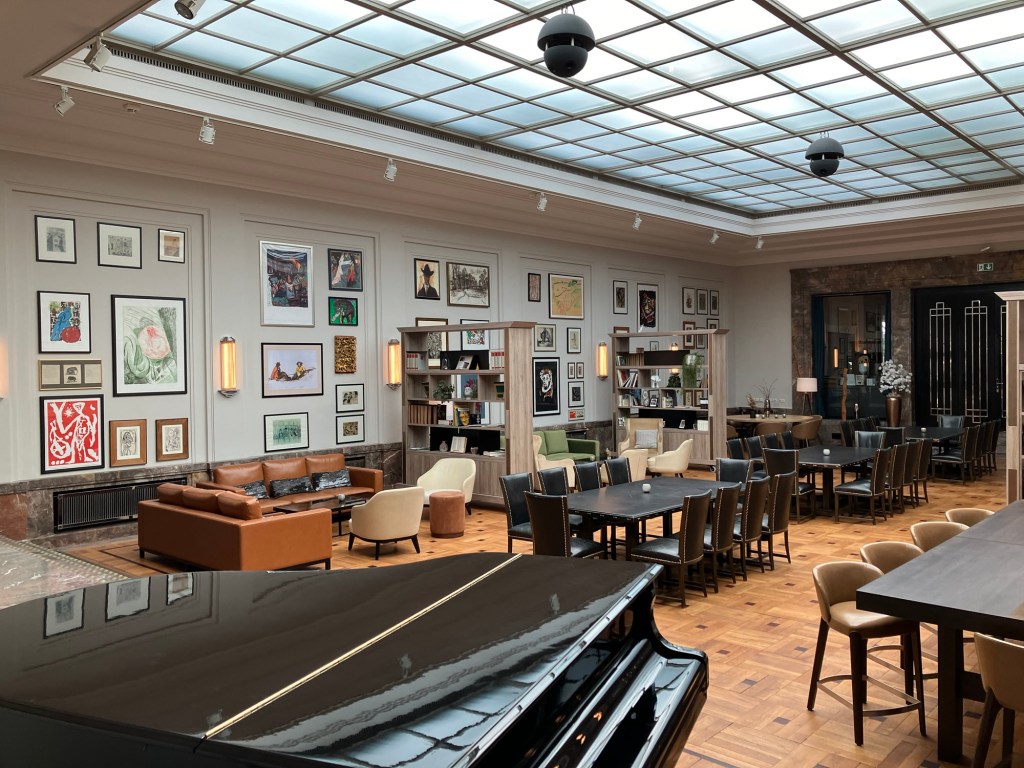
Elephant interior

What makes the Hotel Elephant’s connection to Bauhaus more than incidental is its embodiment of the movement’s principles: clarity of form, functionality, and the integration of art into everyday life. The hotel’s modernist redesign in 1938 reflected  Bauhaus-inspired sensibilities, emphasizing clean lines, geometric shapes, and a harmonious blend of materials.

Among its most famous guests was the playwright Bertolt Brecht, himself influenced by the intellectual currents of Bauhaus and modernist theory. The hotel also served as a gathering point for other avant-garde thinkers and artists who shaped the cultural fabric of the early 20th century.

The design of the ground floor of the hotel is a seamless combination of art and comfort. At its heart is the Lichtsaal, a light-filled lounge where velvet-upholstered armchairs, leather sofas, and polished parquet floors create an inviting, living-room atmosphere. The walls are adorned with a carefully curated art collection featuring works by early Modernists such as Lyonel Feininger, Max Beckmann, and Otto Dix, alongside contemporary pieces that reflect Weimar’s rich artistic legacy. Drawing inspiration from Goethe’s Theory of Colours, the interior palette fuses muted greys, deep blues, and emerald tones with Art Deco accents, evoking both intellectual depth and visual warmth.
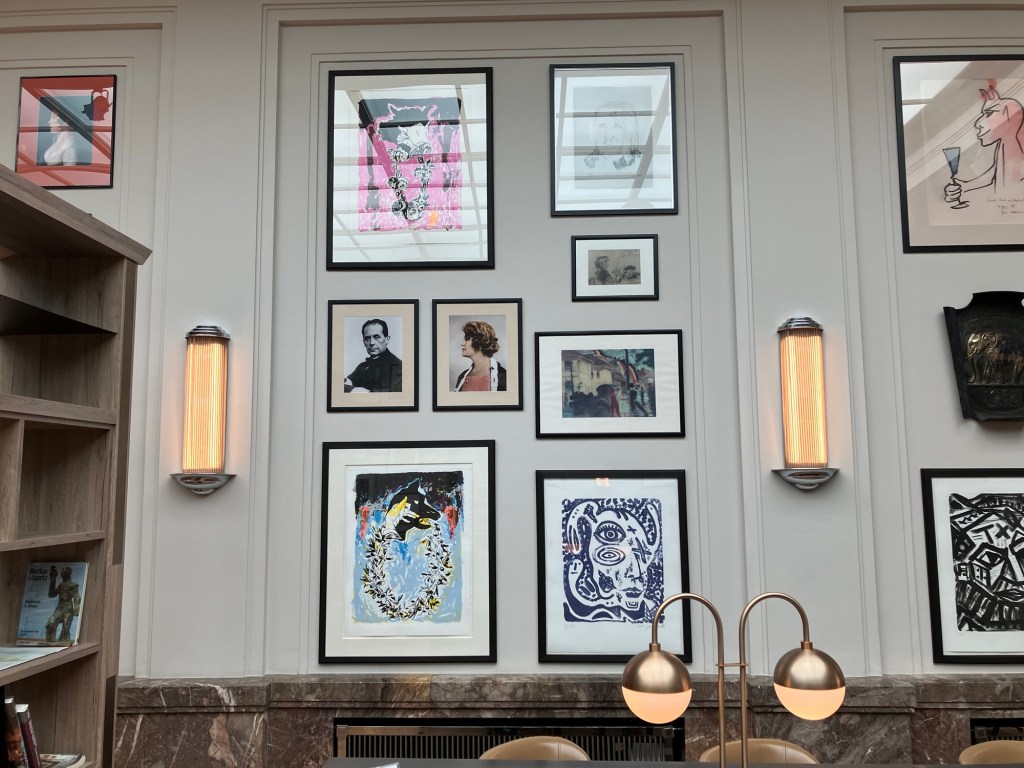
Elephant interior with photograph of Walter Gropius

The hotel is indeed a stylish tribute to the Bauhaus. 

Bauhaus in Dessau

In 1925, following political pressure in conservative Weimar, the Bauhaus relocated to the city of Dessau in Saxony, where it entered its most productive and internationally influential phase.

Contemporary Dessau is a modest-sized city with a population of just under 80,000. While it was heavily damaged during World War II, its postwar reconstruction included both modernist housing and socialist-era architecture. Today, the city is known primarily for its Bauhaus heritage, which attracts thousands of visitors and architecture students from around the world.

In Dessau, the Bauhaus found a more industrially supportive environment, aligning with the city’s aspirations to become a center of modern industry and innovation. Gropius designed the new Bauhaus building, completed in 1926, as a radical embodiment of the school’s ideals. It featured a striking glass curtain wall, asymmetrical layout, and open interiors that emphasized light, transparency, and functional design. The school operated here until 1932, when it came under increasing political pressure from the Nazi regime, leading to its move to Berlin and eventual closure in 1933.
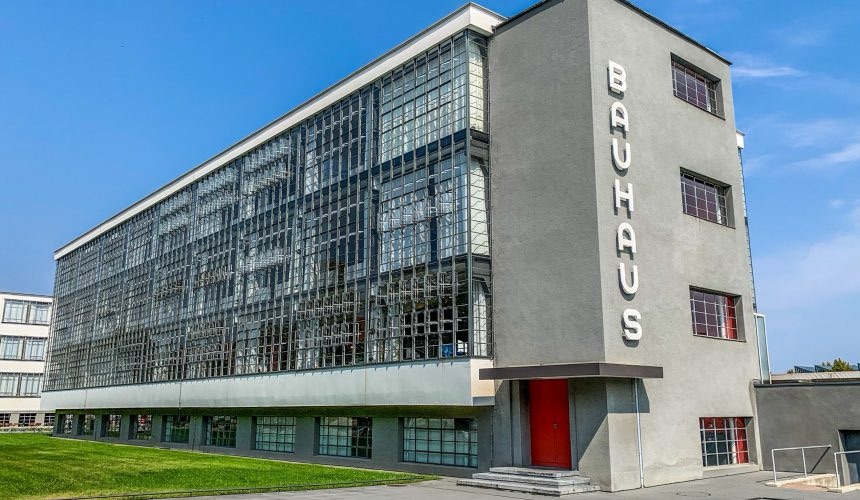
Dessau

During its time in Dessau, the Bauhaus school attracted some of the 20th century’s most important artists and designers. Among them were Paul Klee, Wassily Kandinsky, László Moholy-Nagy, and Josef Albers, who served as masters and developed experimental and interdisciplinary approaches to teaching art, architecture, typography, and product design. The Bauhaus became known for its revolutionary educational model and its efforts to integrate art with modern technology and everyday life.

In addition to the school building, Gropius designed a series of residences known as the Meisterhäuser (Masters’ Houses), built for the school’s leading faculty. Located near the school, these duplex and single-family homes exemplified Bauhaus architecture through their clean lines, flat roofs, geometric forms, and minimalist interiors. Each house was designed as a modular space that could accommodate both living and working needs, further embodying the school’s emphasis on functional design.
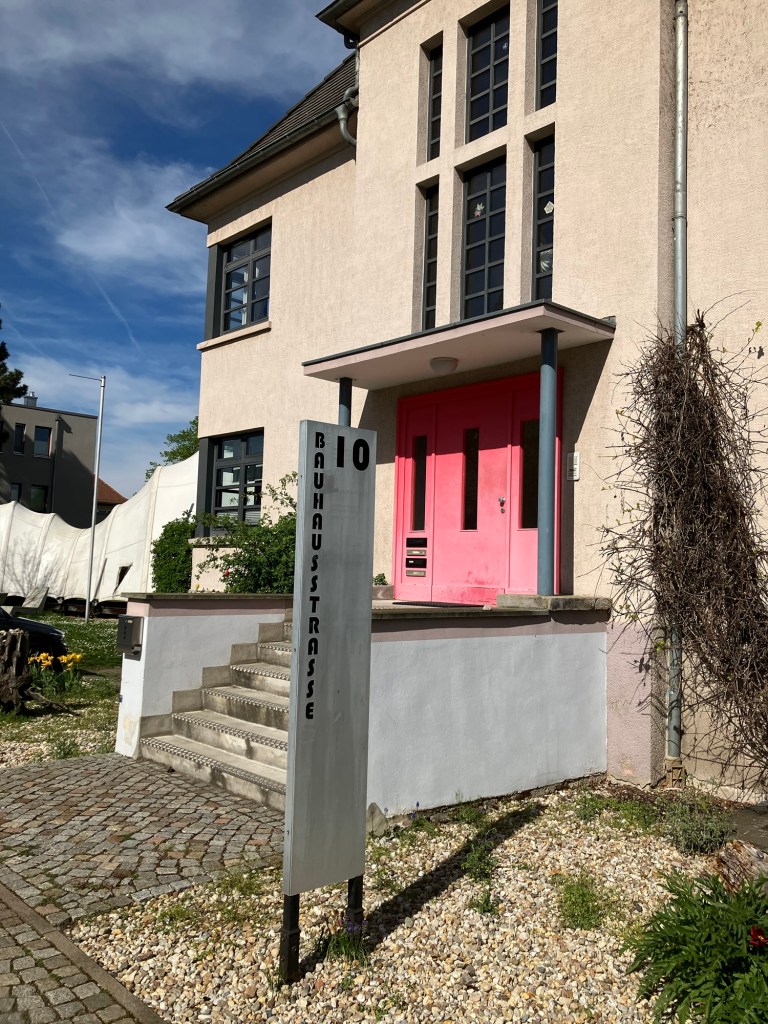
Bauhaus Straße

Despite war damage and postwar neglect, efforts to preserve and restore the Masters’ Houses began in the late 20th century. Some original buildings were reconstructed or rehabilitated using historic plans and photographs, while others, notably the Gropius and Moholy-Nagy houses, were reinterpreted as abstract volumes to reflect their destruction during WWII.

To better preserve and present the legacy of the movement, the Bauhaus Museum Dessau opened in 2019, coinciding with the Bauhaus centenary. Designed by the Spanish architecture firm addenda architects, the museum is a minimalist structure of steel and glass that reflects Bauhaus ideals while also serving as a contemporary cultural hub. The museum houses over 49,000 objects, making it one of the world’s most significant collections related to the Bauhaus. Exhibitions explore the school’s history, its pedagogical experiments, and its ongoing global influence on modern design and architecture.
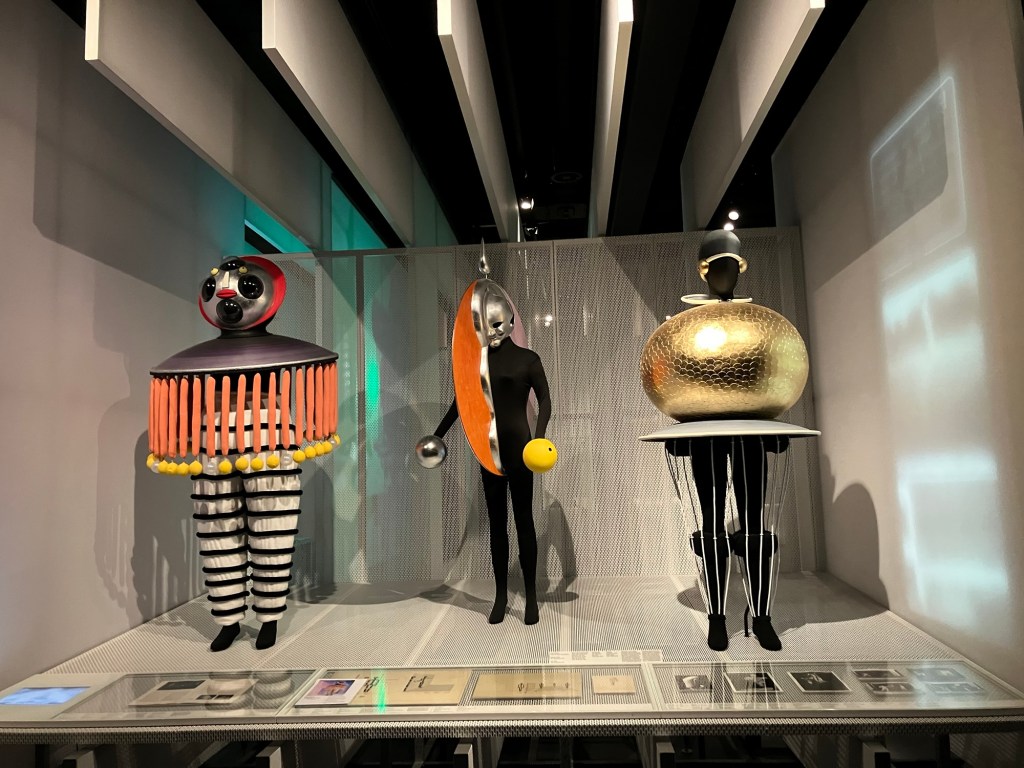
Triadic Ballet costumes by Oskar Schlemmer

Bauhaus in Berlin

The Bauhaus was forced to close in Dessau in 1932 due to increasing political pressure from the rising Nazi regime. The school moved to Berlin for what would become its final and most difficult phase.

The move to Berlin was spearheaded by architect Ludwig Mies van der Rohe, who had taken over as director of the school in Dessau in 1930. In Berlin, the Bauhaus no longer had public funding or official institutional support, so it reopened as a private school in a disused factory building in the Steglitz district. This final phase marked a shift toward a more architectural and less craft-based focus under Mies’s direction.

However, the school’s time in Berlin was short-lived. The Nazi regime viewed Bauhaus as a breeding ground for what it called “degenerate art” and a haven for leftist and internationalist ideas. In April 1933, only a few months after Hitler came to power, the Gestapo raided the Berlin school. In response to increasing harassment and pressure, Mies van der Rohe and the other faculty members voted to voluntarily dissolve the Bauhaus in July 1933.

Although the physical school ceased to exist, the Bauhaus movement continued internationally. Many of its key figures fled Nazi Germany and emigrated to countries such as the United States, the Soviet Union, and Palestine. 

The Bauhaus presence in Berlin today is in a state of transition. Whilst the main Bauhaus‑Archiv / Museum für Gestaltung is undergoing renovation and expansion, a temporary venue has been opened at Haus Hardenberg, located on Knesebeckstraße  in the Charlottenburg district.  This small, interim space serves as a pop‑up exhibition site, bauhaus‑shop, and event venue, highlighting collections related to design, architecture, and contemporary issues. 
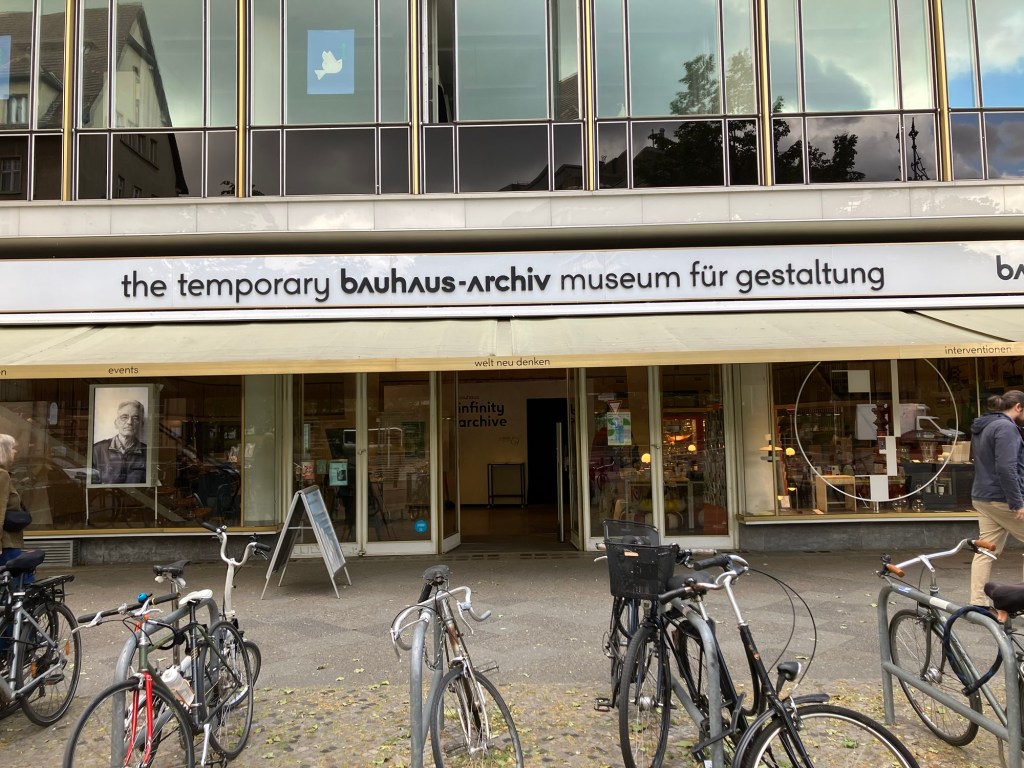
The temporary bauhaus-archiv in Berlin

After visiting the temporary bauhaus‑archiv we made our way down Hardenbergstraße, past the elegant facade of the Renaissance-Theater to the Zoologischer Garten station for lunch. Forget the regrettable Curry Wurst, a Dőner  Kebab beckoned. If the Bauhaus is one of the country’s major cultural achievements, the Dőner Kebab is undoubtably one its culinary icons. With over 1600 outlet’s citywide, Berlin is widely considered the birthplace of the modern Döner Kebab sandwich, thanks to Turkish immigrant Kadir Nurman, who began selling it in the 1970s at West Berlin’s Zoologischer Garten station.

The Döner Kebab has taken distinct forms in the UK and Germany, each reflecting the culinary habits, cultural histories, and migration patterns of their respective societies. While both serve as a popular form of fast food, their reputation and quality diverge significantly.

In the United Kingdom, the typical doner kebab is often seen as a late-night indulgence—greasy, heavily salted, and served from takeaway shops catering to post-pub crowds. The meat is frequently processed and reconstituted, shaved from a large cone of compressed lamb or beef, sometimes of uncertain provenance. It’s commonly served in pita bread with shredded lettuce, raw onions, and chili sauce, often dripping with fat and served with chips. For many in the UK, the doner is associated with hangovers rather than culinary satisfaction, and is frequently viewed as low-quality or unhealthy.
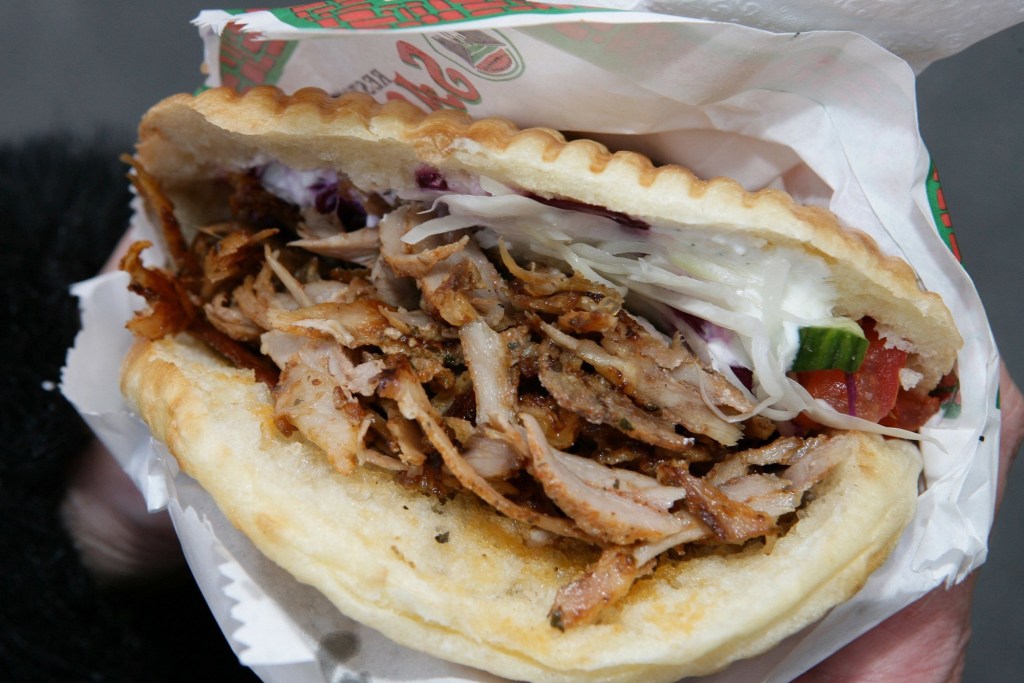
Grease is the word

By contrast, in Germany, particularly in Berlin, the Döner Kebab has developed into a national street food institution, often praised for its freshness, quality, and variety. Typically made with marinated slices of veal, chicken, or beef (rarely lamb), the German Döner includes crisp vegetables like cabbage, tomato, cucumber, and onion, along with homemade sauces—yogurt-based, garlic, herb, or spicy chili. It’s usually wrapped in fluffy Turkish flatbread or Dürüm (thin lavash) and prepared to order. The emphasis is on balance and freshness, and many shops offer vegetarian and vegan options with grilled halloumi, falafel, or seitan. In Germany, the Döner is not just a snack, but a respectable, affordable meal enjoyed across all demographics.

A far tastier option

We think that there are conceptual parallels between the Dőner Kebab in Germany and the Bauhaus. They both embody principles of modernity, functionality, and cultural synthesis, making them conceptually parallel in several striking ways.

The Bauhaus championed the idea that design should serve everyday needs. Its mantra, “form follows function,” emphasized simplicity, clarity, and usefulness. Similarly, the döner kebab—particularly as adapted in Germany—is a highly functional food. It’s designed for urban living: portable, efficient, and complete in one hand-held form. Like a Bauhaus object, it strips away unnecessary elements to focus on what works.

Both the Bauhaus and the German döner are also products of cultural fusion. Bauhaus design integrated ideas from multiple disciplines and cultures to create something universally modern. The döner kebab, created by Turkish immigrants and adapted for German tastes, is a hybrid of Middle Eastern tradition and European pragmatism—an edible symbol of cosmopolitanism.

Additionally, each reflects a commitment to mass accessibility. Bauhaus sought to democratize good design through industrial production; the döner is inexpensive and ubiquitous, serving everyone from students to workers. Both exist comfortably within the rhythms of modern, urban life.

Finally, their modular, repeatable nature underscores a shared design logic. Bauhaus structures were often modular and adaptable; the döner is constructed from standardized parts—bread, meat, salad, sauce—easily varied yet fundamentally consistent.

In essence, the German döner kebab and the Bauhaus share a conceptual foundation rooted in function, accessibility, modernism, and synthesis. One feeds the stomach, the other the senses—but both are crafted for the modern world.

Bauhaus was an essentially German creation and whilst the Dőner Kebab may have been greatly popularised and even conceived in German, it remains an essentially Turkish creation. 
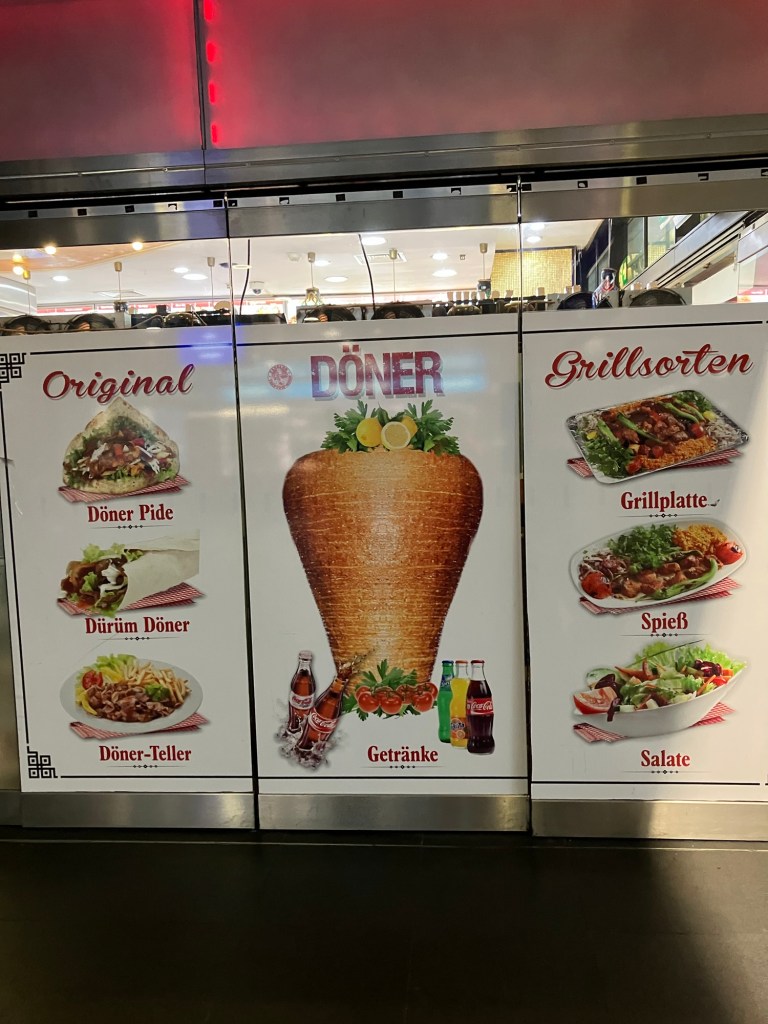
Whatever appeals

The nearest commercial food outlet to the Bauhaus campus in Dessau is the redoubtable ‘Enfes Dőner Kebab am Bauhaus’.

Japan, food and Bourdain

To some in the West, Japan can seem like a land of cliches, no more so than with preconcoeved notions of it’s food. 

Here are some of the more common misconceptions 

All Japanese food is sushi: While sushi is indeed a popular dish, Japanese cuisine is incredibly diverse and includes a wide range of dishes that have nothing to do with sushi, such as ramen, udon, soba, okonomiyaki, and more.

Japanese food is always healthy: While many Japanese dishes are indeed healthy, there are also plenty of indulgent and unhealthy dishes, like ramen with its high sodium content, or fried foods like tempura and katsu.

 All Japanese food is raw: While raw fish and seafood are popular ingredients in Japanese cuisine and sushi itself is much beloved in the country, the average Japanese person doesn’t eat sushi as often as one would think. In fact,  most Japanese people eat sushi about 2-3 times a month, although this can vary depending on personal preferences and the season and it is hardly a staple of the daily diet for most people.

Westerners often perceive Japanese food, particularly high-end sushi and sashimi, to be expensive. This perception is fueled by the high prices found at upscale Japanese restaurants in Western countries, as well as media portrayals of luxurious Japanese dining experiences. Additionally, ingredients like fresh seafood and imported Japanese products can drive up the cost of Japanese cuisine outside of Japan.

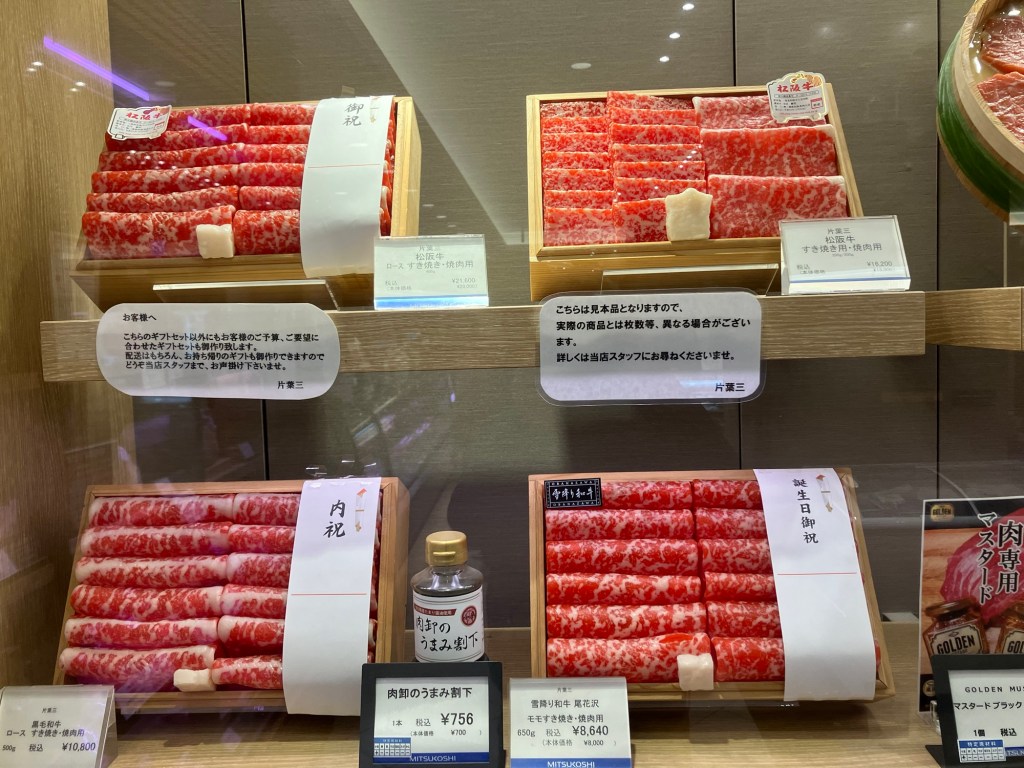
Kobe beef

However, in reality, everyday Japanese food in Japan is not necessarily expensive. In fact, many dishes like ramen, yakitori, and udon can be quite affordable, especially at local, non-touristy eateries. Street food and local markets also offer budget-friendly options for those looking to sample a variety of Japanese flavors without breaking the bank.

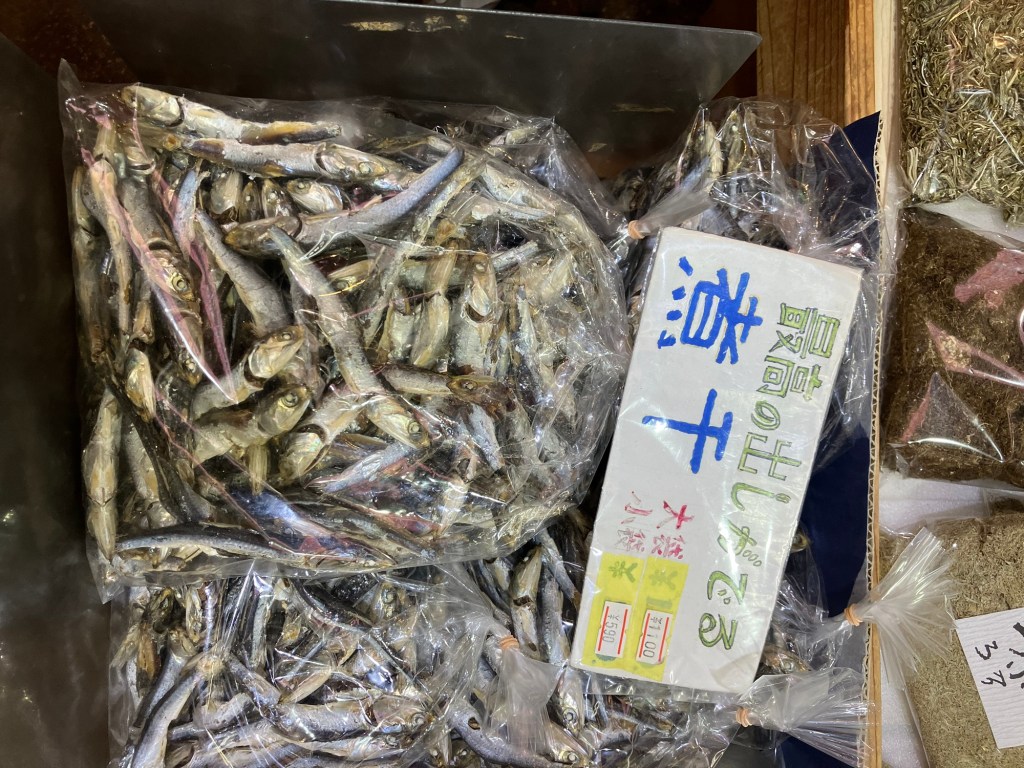
Market pickles

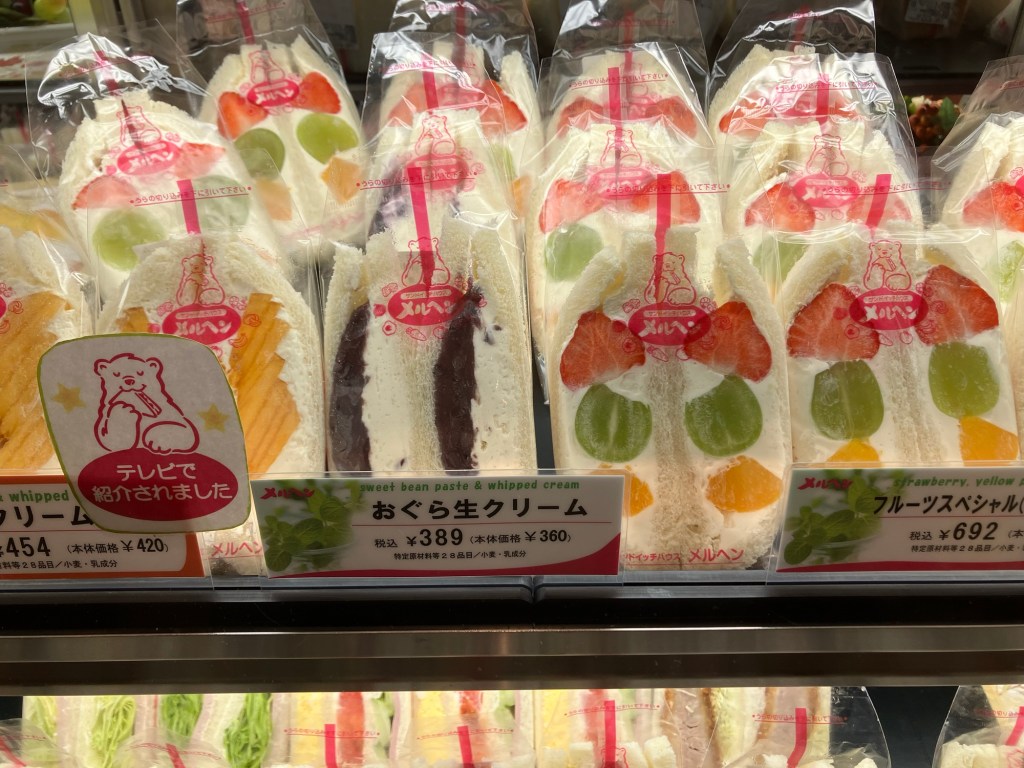
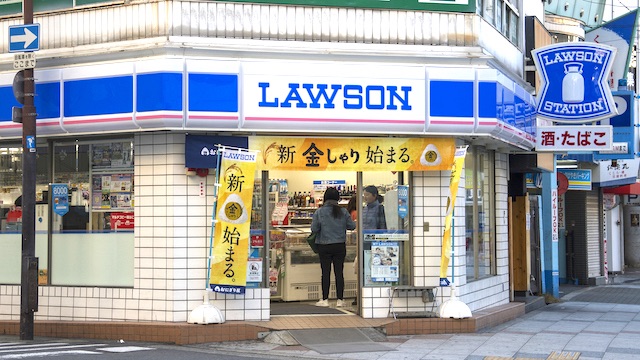
And do not forget convenience stores ( collectively ‘konbini’). Not only do they seem to sell everything you might need, they can also be a source of simple, tasty convenience food. 

The three main convenience stores in Japan are:

* 7-Eleven: The largest convenience store chain in Japan, with over 20,000 stores. It’s often referred to by its nickname “Seben.”

* FamilyMart: The second-largest convenience store chain (and our personal favourite), with around 16,000 stores. It’s commonly nicknamed “Famima.”

* Lawson: The third-largest convenience store chain, with around 14,000 stores. It’s usually called “Losson.” Idolised by the late chef/presenter Anthony Bourdain for their divine egg mayonnaise sandwiches.

Japanese convenience stores are known for their wide range of food items, including:

* Bento boxes: A variety of prepared meals, including sushi, noodles, and rice dishes. (Far better Bento boxes can be found in any decent department store food court or train station (‘Ekiben’).

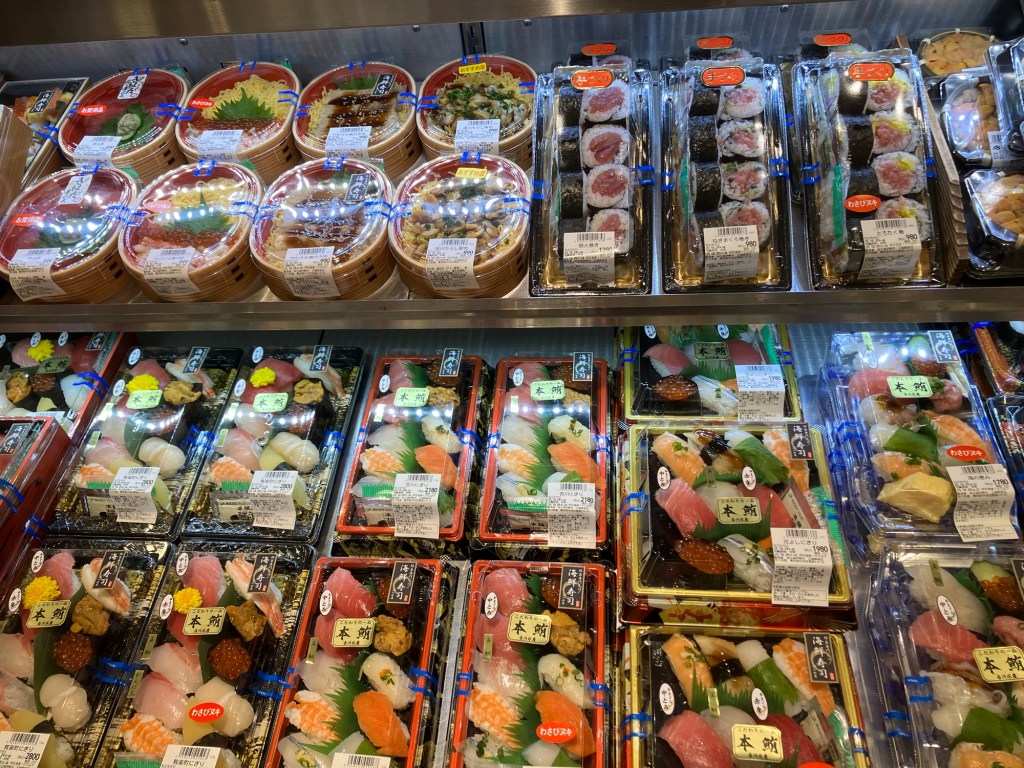
Bento boxes

* Onigiri: Triangular-shaped rice balls wrapped in seaweed.

* Sandwiches: Western-style sandwiches with fillings such as egg salad, tuna, and ham. Lawson stores were idolised by the late chef/presenter Anthony Bourdain for their egg mayonnaise sandwiches (good) although we prefer the Family Store take on this simple take out which are even better in our opinion.

Classic egg mayonnaise sandwich and Onigiri

* Oden: A type of Japanese hot pot that includes ingredients such as daikon, tofu, and fish cakes.

* Snacks: Japanese and Western snacks, such as chips, crackers, and candy.

So whilst the perception of Japanese food as expensive persists in Western countries, it’s important to remember that this is only one aspect of a diverse and multifaceted culinary landscape. 

A good place to start is with typical daily meals. Whilst they may vary depending on the individual and the region, here’s a general overview of what an average Japanese person might eat in a day:

Breakfast: A traditional Japanese breakfast often includes steamed rice, miso soup*, grilled fish, pickled vegetables, and perhaps a piece of fruit.

*Miso soup is made from a stock called dashi, which is typically made from dried kelp (kombu) and dried fish flakes (katsuobushi). Miso paste, a fermented soybean paste, is added to the broth, lending its rich, savory flavor and cloudy appearance to the soup. In addition to the broth and miso paste, miso soup usually includes cubes of soft tofu and slices of green onion. Depending on regional and seasonal variations, other ingredients such as mushrooms, carrots, daikon radish, or clams can also be added to the soup.

Miso paste

Lunch: For lunch, a Japanese person might enjoy a bento box, which is a meal consisting of rice, vegetables, and protein (like fish or meat) arranged in a compartmentalized container. Another popular option is ramen or udon noodles.

Dinner: At dinner time, families might gather together to share a meal of various dishes, such as tempura, teriyaki, or sushi.

Let’s examine these three meals in more detail.

Tempura is a dish that consists of seafood, vegetables, or sometimes meat, lightly battered and deep-fried to create a crispy, golden-brown coating. Tempura is often served with a dipping sauce made from soy sauce, mirin, and sugar, and is sometimes accompanied by grated daikon radish or ginger.

Teriyaki is a cooking technique where food, typically chicken or other proteins like beef, pork, fish, or tofu, is grilled or broiled with a sweet and savory sauce. Teriyaki sauce is made from a mixture of soy sauce, mirin (a sweet rice wine), sugar, and sometimes sake or ginger. The food is usually marinated in the teriyaki sauce before cooking, then brushed with additional sauce while grilling or broiling to create a rich, sweet-salty flavor and a beautiful shine.

Sushi features vinegared rice (sushi-meshi) combined with various ingredients, such as raw fish, seafood, vegetables etc. The word “sushi” actually refers to the seasoned rice, rather than the raw fish that is often associated with it.

There are several types of sushi, including:

– Nigiri: A small, oblong mound of sushi rice topped with a slice of raw fish, seafood, or other ingredients.

– Maki: Rice and other ingredients rolled together inside a sheet of dried seaweed (nori) and sliced into bite-sized pieces.

– Sashimi: Sliced raw fish or seafood served without rice.

– Temaki: Similar to maki, but hand-rolled into a cone shape.

– Chirashi: Sushi rice topped with a variety of ingredients, similar to a rice bowl.

Sushi is typically served with soy sauce, wasabi, and pickled ginger.

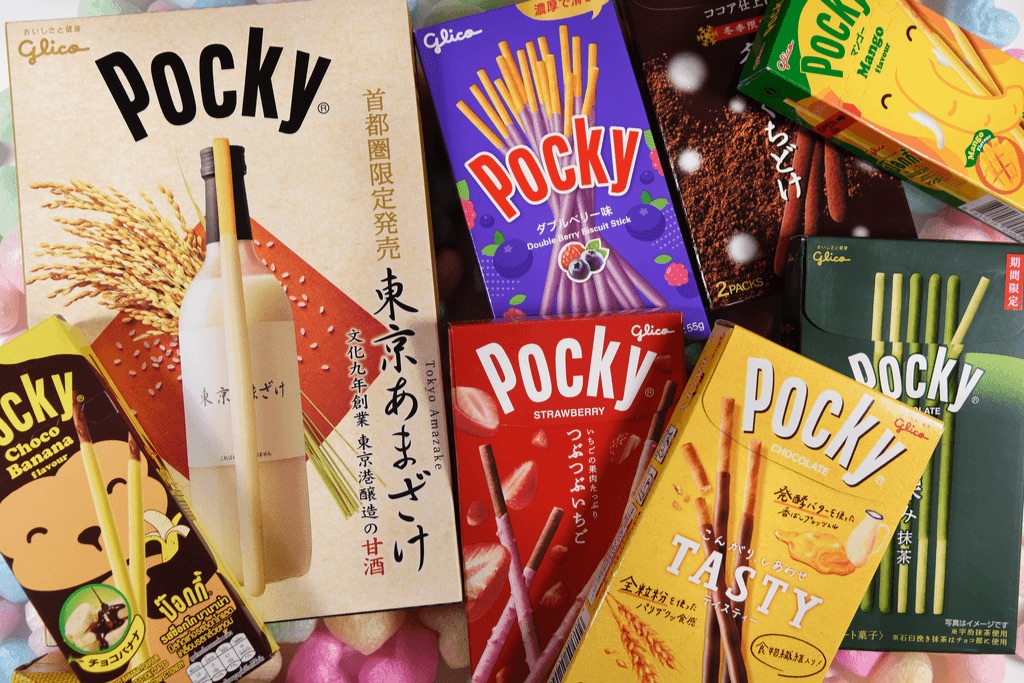
In between meals, Japanese people often enjoy snacks such as onigiri (rice balls) or pocky (chocolate-covered biscuit sticks).

Pocky sticks

(Please note that if you have not made it back home in time to sample dinner, it is maybe because you and your friends/colleagues have been drinking and eating at an izakaya. An izakaya is a type of Japanese bar that is similar to a pub or tapas bar. It’s an informal place where people can go after work to have drinks and snacks.The food served at izakayas is designed to be shared and typically goes well with beer. The menu can include a variety of dishes, such as yakitori (typically grilled chicken meat, offal and skin) gyoza, sashimi and nakazuke (fermented cucumber) and noodles.

Yakitori
Nakazuke
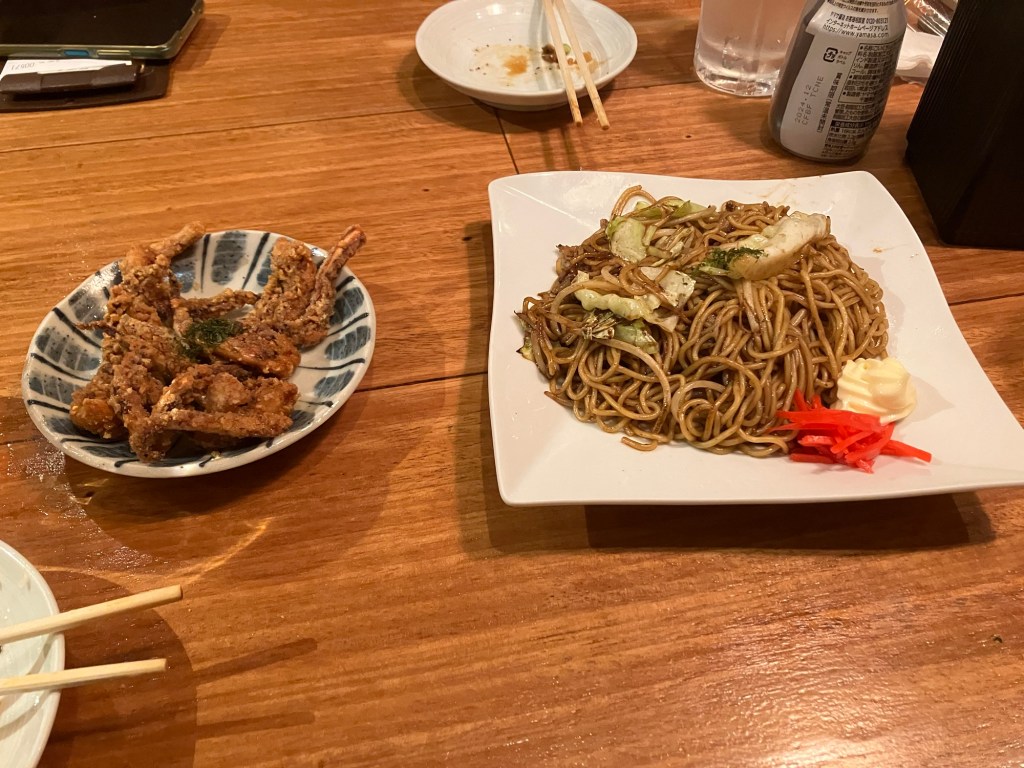
Izakaya noodles

If you are ever in Japan, visiting an izakaya is a great way to experience the local culture and cuisine in a fun and relaxed setting.

Noodles are beloved in Japan and arguably second only to rice as a staple.

Dig in or rather slurp on!

Ramen: Thin, wheat-based noodles served in a savory broth that can be made from pork, chicken, fish, or vegetables. The broth is often flavored with soy sauce, miso, or salt, and is typically topped with sliced pork, soft-boiled egg, and green onions. Ramen is famous for its rich, complex flavors and regional variations.

Udon: Thick, chewy noodles made from wheat flour that can be served hot or cold. Udon noodles are usually served in a hot broth made from fish or meat stock, topped with ingredients like tempura, green onions, and slices of fried tofu. In the summer, chilled udon noodles are often served with a soy-based dipping sauce.

Soba: Thin, delicate noodles made from buckwheat flour that can be served hot or cold. Soba noodles are usually served with a dipping sauce made from soy sauce, mirin, and dashi, and are often garnished with sliced green onions and wasabi. In the winter, hot soba noodles are served in a clear broth.

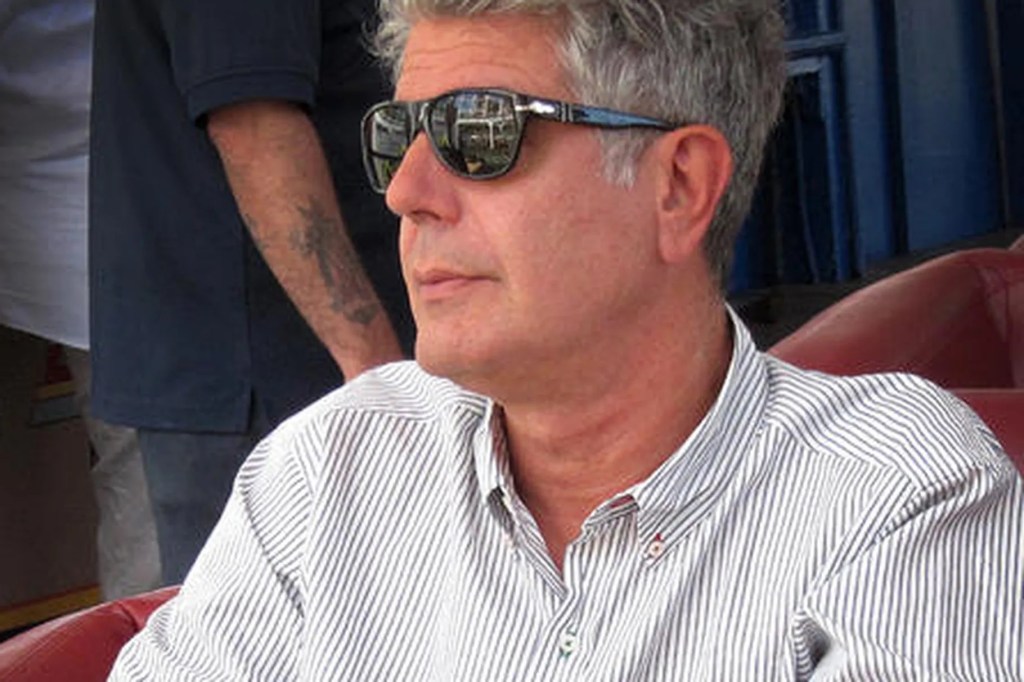
Whilst the 1985 film “Tampopo” directed by Juzo Itami introduced Western audiences to ramen and the passion for noodles in Japan, it was arguably the late TV presenter, chef and raconteur extraordinaire Anthony Bourdain whose shows include  ‘No Reservations’ and ‘Parts Unknown’ who really introduced a worldwide audience to the delights of Japanese cuisine. Bourdain was fascinated with the country and it’s food commenting:-

“I love Tokyo. If I had to eat only in one city for the rest of my life, Tokyo would be it. Most chefs I know would agree with me.”

“You can pick almost any restaurant in Japan and be almost sure you’ll get a great meal.”

Bourdain photo from The Travel Channel

Bourdain’s appreciation for Japanese cuisine was clear, and he enjoyed exploring the many different flavors and textures of the country’s street food and high-end restaurants alike.

In 2013  Bourdain introduced ‘Parts Unknown’ which  premiered on CNN. The concept behind the series was to take viewers on a journey around the world, exploring lesser-known destinations, their cultures, and their cuisines. The show was a departure from traditional travel and food shows, and it quickly gained a devoted following of fans who appreciated Bourdain’s honesty, humor, and willingness to challenge preconceived notions about different cultures. Japan and its food culture were celebrated in repeatedly in whole and part episodes of the series notably “Hokkaido” and “Masa’s Japan”. 

The “Hokkaido” episode of “Parts Unknown” aired in 2017, and it featured Bourdain exploring that northernmost island its culture and its food. This was a part of Japan valley visited by those in the West and so his show was as illuminating as it was entertaining 

The “Masa’s Japan” episode of Parts Unknown aired in 2016 and focused on Bourdain’s travels through Japan with legendary sushi chef Masayoshi “Masa” Takayama. During their journey, Bourdain and Masa explored the urban center of Kanazawa, Masa’s rural hometown of Nasushiobara, and the sushi restaurant in Tokyo where Masa began to learn his craft. The episode offered viewers a glimpse into Japan’s rich culinary history and culture, as well as the inspiring story of Masa’s journey from small-town boy to world-renowned chef. The episode reminded us of the 2011 documentary by David Gelb, “Jiro Dreams of Sushi” which follows the life and work of Jiro Ono, a master sushi chef who runs the renowned sushi restaurant Sukiyabashi Jiro in Tokyo. 

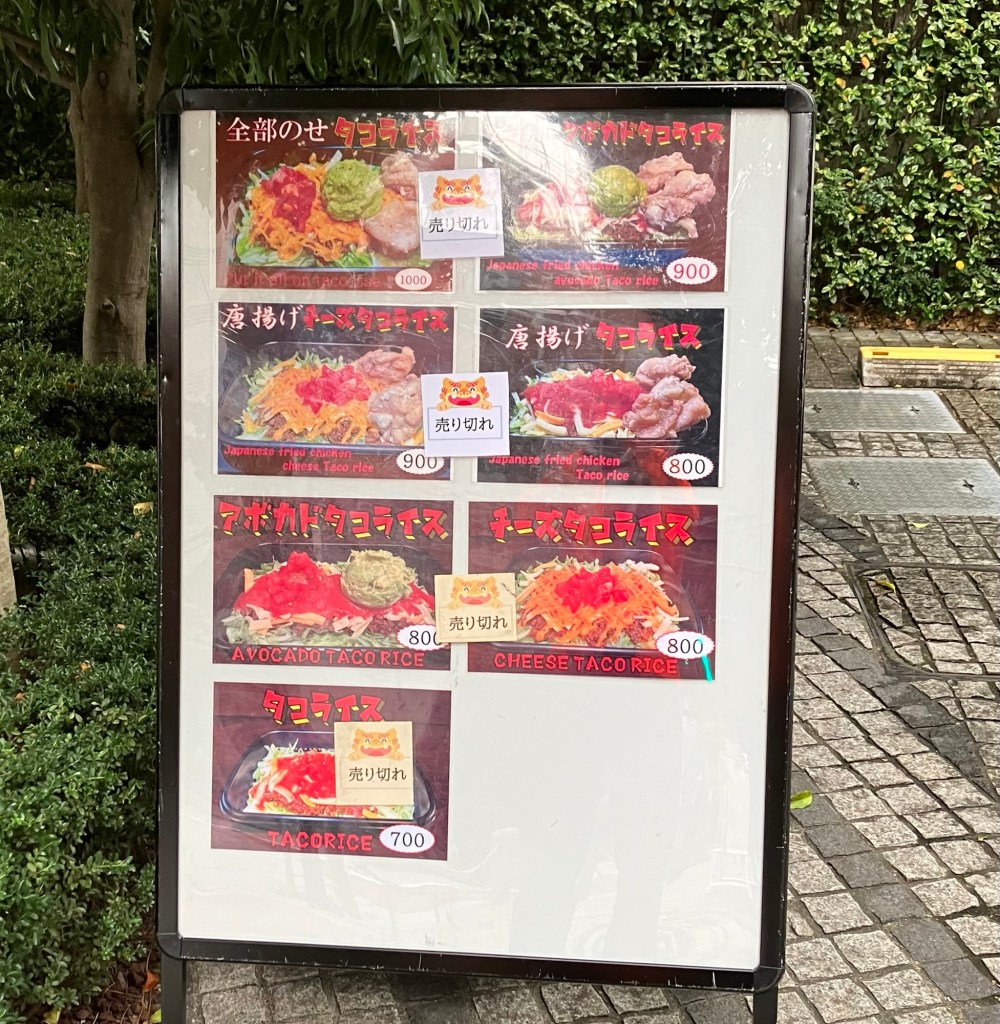
Bourdain also travelled and reported from the Japanese island of Okinawa. One particular speciality from that island caught his eye was taco rice aka Okinawa taco.

Okinawa taco

Taco rice, or “takoraisu” in Japanese, is a popular dish that originated in Okinawa, Japan. It’s a fusion of Mexican and Japanese cuisines, and it’s essentially a Tex-Mex taco served over a bed of steamed rice. 

Taco rice is made with seasoned ground beef, lettuce, cheese, tomatoes, and fresh salsa served on top of steamed rice. It was first created in 1984 by a Japanese restaurant owner who wanted to cater to the American military stationed in Okinawa. The dish became a hit not only among the American military but also among the locals.

Taco rice is now a beloved comfort food in Japan and has spread beyond Okinawa to other parts of the country.

Taco rice combos

And when it comes to street foods in Japan, these are our three favourites:-

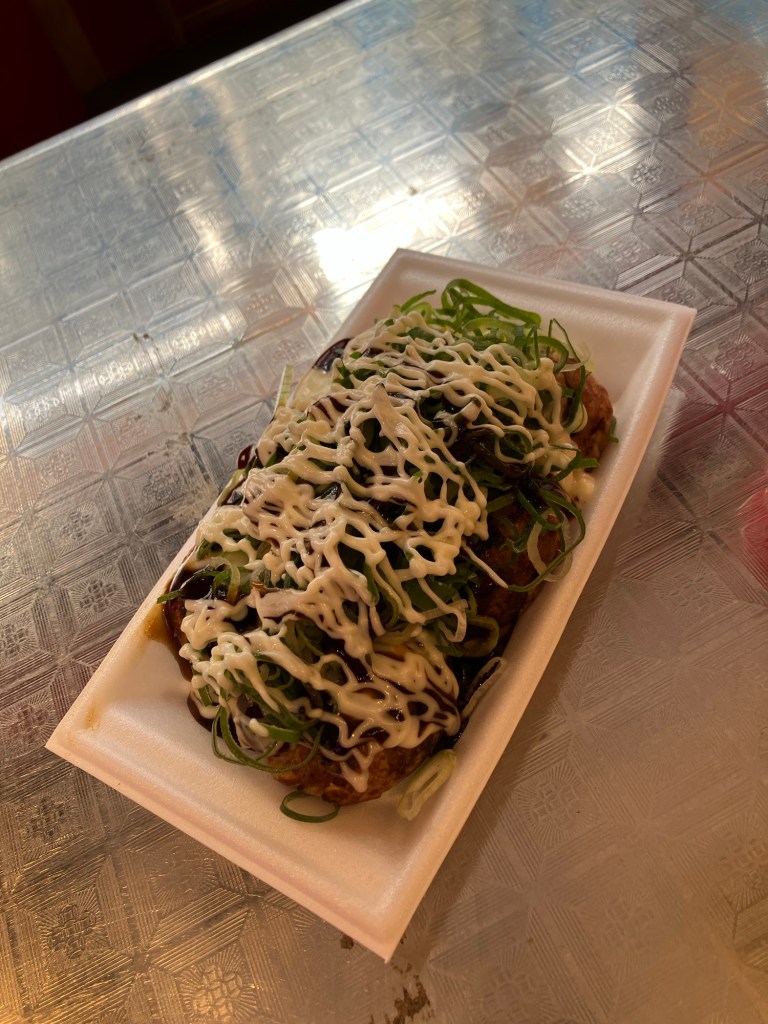
Takoyaki – fried batter balls filled with diced octopus and topped with takoyaki sauce, mayonnaise, and bonito flakes. Especially popular in Osaka.

Takoyaki in Osaka

Takoyaki sauce is a sweet and savory sauce that is made from a combination of ingredients such as Worcestershire sauce, mentsuyu (noodle soup base), ketchup, and sugar. 

Takoyaki

Okonomiyaki – a savory Japanese pancake that can be customized with a variety of ingredients, such as eggs, vegetables, seafood, and meat, and cooked on a hot griddle called a teppan.

There are several regional variations of okonomiyaki in Japan, with the most famous being the Osaka and Hiroshima styles. In Osaka, the ingredients are mixed into the batter and cooked together, while in Hiroshima, the ingredients are layered on top of a thin pancake.

Okonomiyaki is typically served with a sweet and savory sauce, mayonnaise, and bonito flakes.

Okonomiyaki

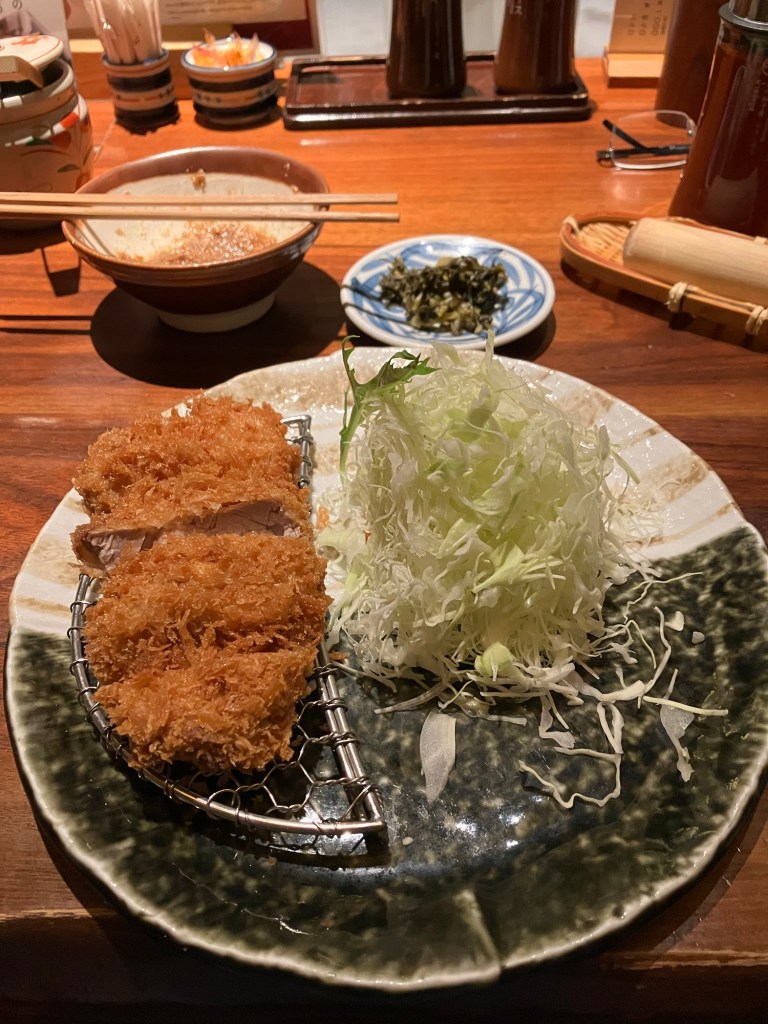
Menchi Katsu – popular throughout Japan and especially Tokyo’s Akasuka district. Menchi katsu is a Japanese ground meat cutlet that is coated in panko breadcrumbs and deep-fried until crispy and golden. It’s often served as a snack or as part of a bento box lunch. Typically served with shredded cabbage and a sweet and savoury dipping sauce.

Katsu

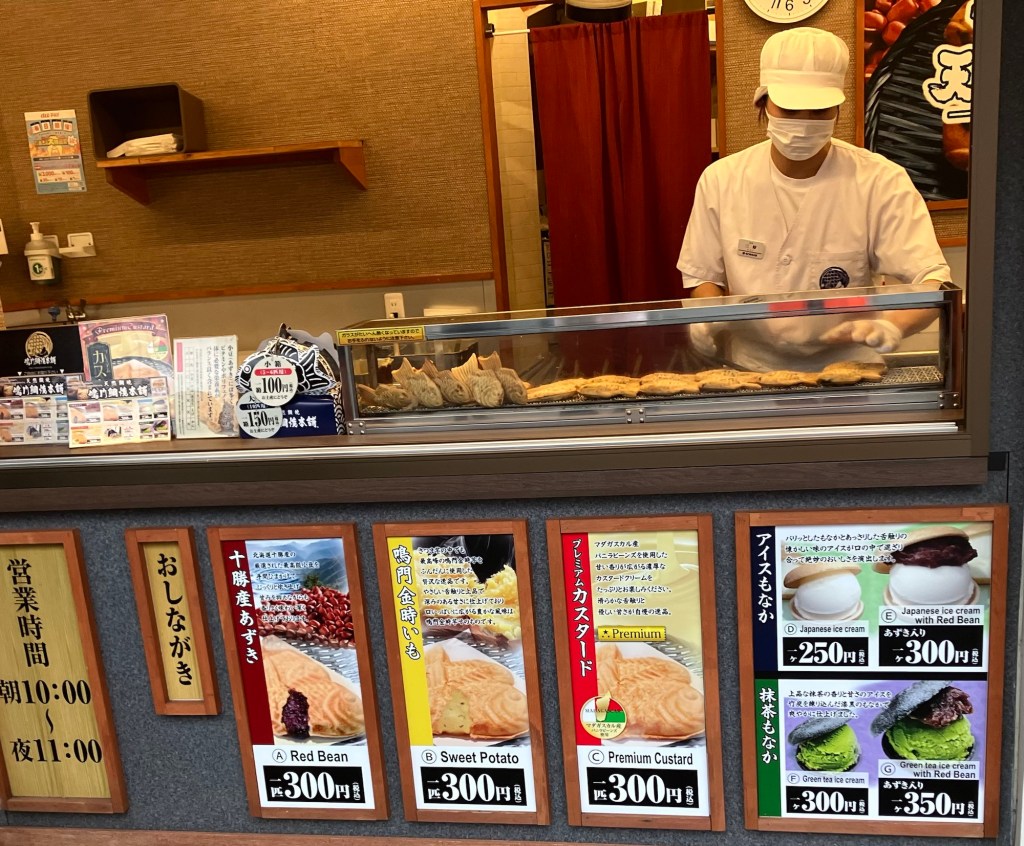
And for afters? Try Taiyaki, a fish-shaped pancake that is filled with sweet bean paste and is available anywhere and everywhere.

Taiyaki

“Meshiagare” – bon appétit!

Leipzig, Bach and Kaffee

J.S. Bach

Leipzig is a city located in the eastern part of Germany in the state of Saxony. Although badly bombed during WWW2 and unsympathetically rebuilt under Soviet rule, it is still an attractive city, popular with visitors (especially classical music aficionados) as during the 18th and 19th centuries it was a centre of learning and culture, with famous composers like Johann Sebastian Bach, Felix Mendelssohn, and Richard Wagner all working in the city.

Bach is particularly associated with the city. He spent the last 27 years of his life in Leipzig, from 1723 until his death in 1750. During this time, he held the prestigious position of Cantor, or Directore Chori Musici Lipsiensis, which meant he was responsible for directing the choir and music in the city’s churches.

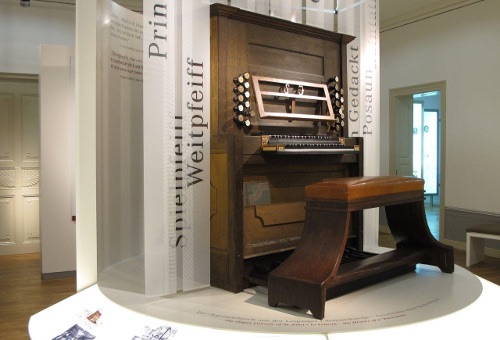
The Organ console from Johanniskirche, St. John’s Church, which Bach was known to have tested and played after its installation.

In addition to his work as Cantor, Bach was also a respected organist and harpsichordist. He was involved in the design and construction of several organs in Leipzig’s churches. In particular, St. Thomas Church (Thomaskirche) and St. Nicholas Church (Nikolaikirche) both have strong associations with Johann Sebastian Bach.

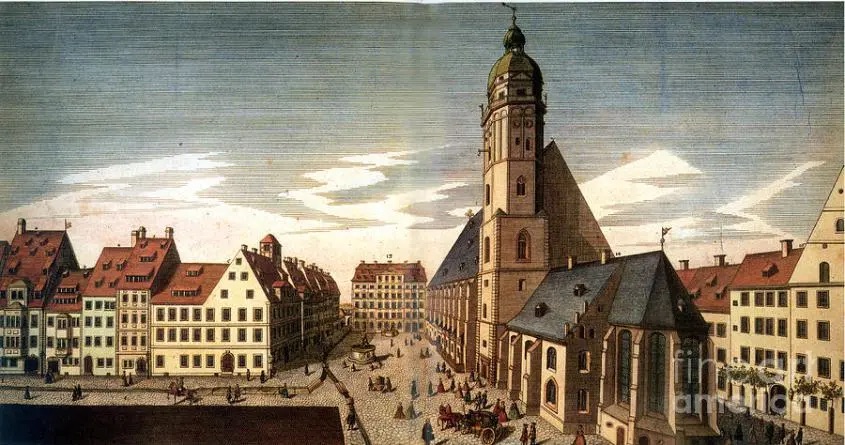
St. Thomas church

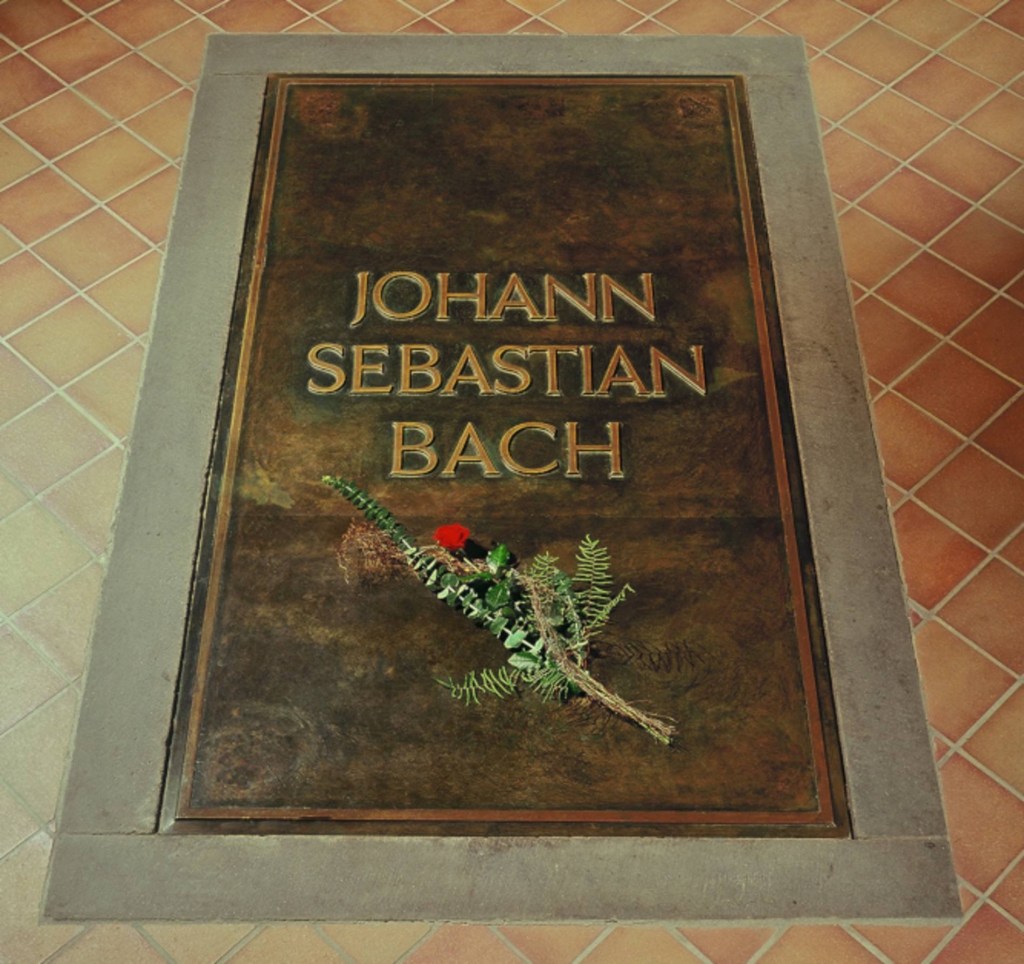
At St.Thomas Church, Bach served as the music Director (Thomascantor) from 1723 until his death in 1750. Many of his most famous works, including the St. Matthew Passion, were premiered at the church. He is buried in the church crypt and his grave is marked with his name as the sole inscription. ‘Joh. Sebast Bach’. The crypt was not the original resting place for his bones as his body was originally buried in an unmarked grave in the cemetery of St. John’s Church (Johanniskirche). The church , which was located just outside the city’s Grimma Gate, was destroyed by aerial bombing during WW2.
Over time, the exact location of Bach’s grave was lost, but in 1894, church officials decided to search for Bach’s remains during renovations at the church. According to local lore, Bach was buried “six paces from the south door of the church,” and excavators focused their search in that area. On October 22, 1894, diggers found a plot that matched the description and discovered Bach’s oak coffin, one of only twelve oak coffins buried at the church in the year of Bach’s death. The bones were transported in an open zinc casket on the back of a handcart to St.Thomas Church. The remains were later confirmed to be those of Bach through various analyses, and in 1950, 55 years after the discovery, Bach’s remains were reinterred at St. Thomas Church in Leipzig, to commemorate his role there as Cantor.

Here lies….

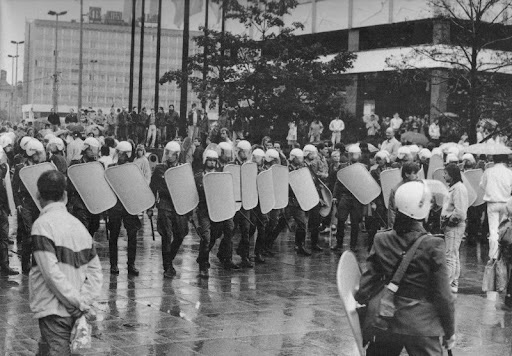
However it was St. Thomas Church which was to play a key role in the protests against the Soviet controlled German Democratic Republic (‘GDR’) in 1989. The protests began in September 1989 with a weekly prayer service at St. Nicholas Church. Protesters gathered in front of the church and marched to Augustusplatz, where they held peaceful candlelit demonstrations to demand democratic reforms and the right to travel freely. These peaceful demonstrations, known as the “Monday demonstrations,” grew in size and intensity over the following weeks, with tens of thousands of people taking to the streets to call for freedom and democracy.

Leipzig demonstration

On October 9, 1989, the largest of these demonstrations took place, with over 70,000 people marching through Leipzig’s streets. The GDR security forces did not intervene, marking a turning point in the protests. Within weeks, the Berlin Wall fell, and the East German government collapsed.

Leipzig’s role in these events is often referred to as the “Peaceful Revolution” and is considered a key moment in the broader movement for freedom and democracy in Eastern Europe.

Leipzig played a crucial role in the fall of the GDR, as it was the site of peaceful protests that eventually led to the opening of East Germany’s borders and the end of communist rule.

Despite attempts by the East German authorities to suppress the protests, they continued to grow in size and spread to other cities across East Germany, leading to the eventual reunification of Germany.

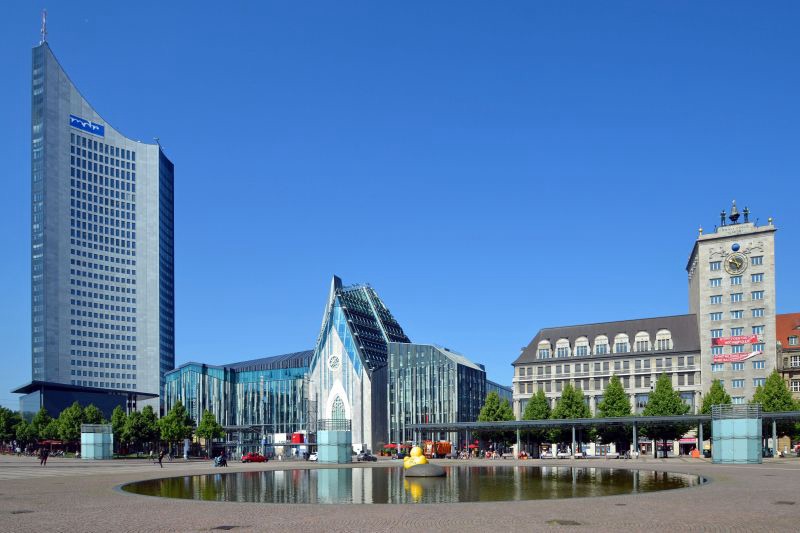
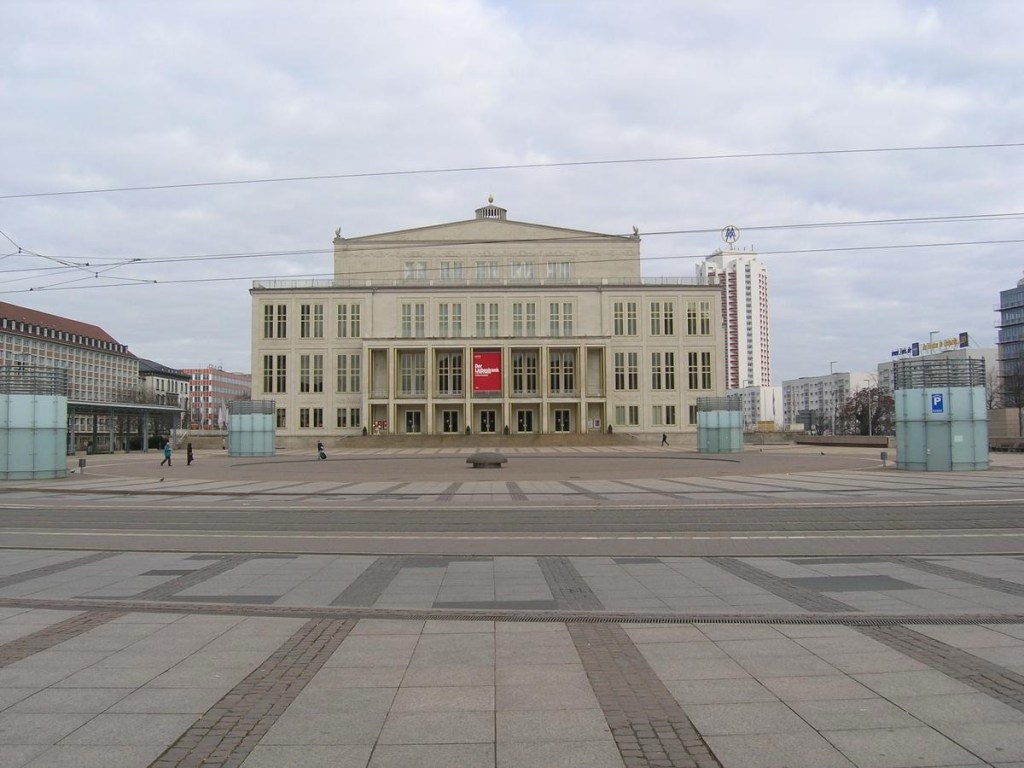
Those original protesters in September 1989 had headed away from St. Nicholas Church to Augustusplatz, the most important public space in Leipzig. The square is surrounded by a jumble of disparate architectural styles culminating in the monolithic Opera House which stands at the northern end of the square.

Augustplatz

The history of the Leipzig Opera House is one of destruction and reconstruction. The original venue, known as the Oper am Brühl, was built in 1693 and opened its doors that year. Unfortunately, this original opera house was found to be in a dangerous state in 1719, leading to its closure in 1720 and demolition in 1729. A new venue was eventually built in 1842 (‘the Semperoper’) but this was destroyed by fire in 1869.

The original Leipzig opera house, known as the Oper am Brühl, was built in 1693 and opened its doors on May 8th of that year. Unfortunately, the original opera house was found to be in a dangerous state in 1719, leading to its closure in 1720 and demolition in 1729. It took a while for a new opera house to be built in the city, the Semperoper which was constructed in 1841 but destroyed by fire in 1869. A further opera house was created, the Neues Theater which served as the city’s premier music venue until it too was destroyed during the air raids of World War II in 1943.

The Neues Theater hosted many famous musicians and performers, including Richard Wagner, who premiered his opera “Die Meistersinger von Nürnberg” at the theater in 1868. Other notable musicians who performed at the Neues Theater included Giuseppe Verdi, Pyotr Ilyich Tchaikovsky, and Johannes Brahms.

After the destruction of the Neues Theater during the war, it was not until 1960 that a new opera house, the current Leipzig Opera, was built on Augustusplatz.

The Leipzig Opera House was the only new opera building constructed in East Germany during the 41 years of the GDR regime, and it remains an important, if somewhat unsightly, cultural landmark in the city today.

The Opera House in Leipzig

The opera house was designed in the socialist modernist (aka socialist realist) style that was prevalent in East Germany and elsewhere in the Soviet controlled territories of East and Central Europe during the 1950s and 1960s. Monumentality, uniformity, a functional design and simplicity are all key characteristics of the style, one you can see embodied not only in the opera house in Leipzig but also in the Palace of the Parliament in Bucharest, the Stadthalle in Chemnitz (formerly Karl-Marx Stadt) and the Palace of Culture and Science in Warsaw.

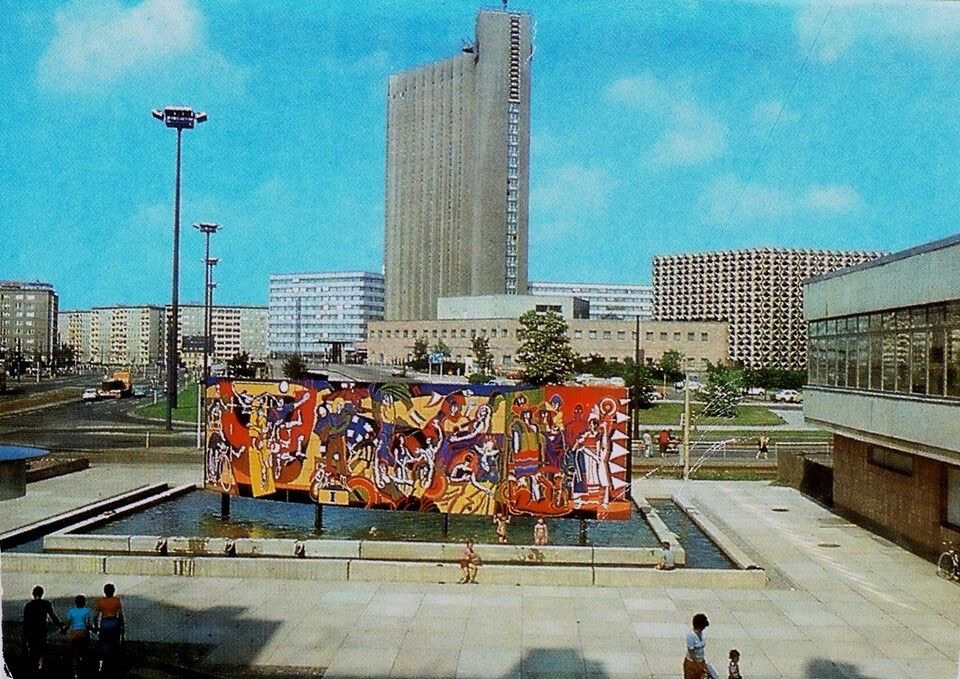
Old post card view of Chemnitz with the StadtHalle to the rear on the right

Leipzig declined as a city during the Communist years but is now very much on the up, especially with the young and creative who are flocking to a city dubbed the ‘new Berlin’ for its arts scene, cheap rents and overall ‘vibe’. To date it has avoided obvious gentrification with the negatives that process entails although how long the city can avoid the pitfalls of ‘hip’ popularity which have befallen other cities.

In particular, the city’s local authority has been especially supportive of the arts and it has helped to create an environment where creativity and innovation can flourish by providing funding and resources to help transform former industrial sites into creative hubs. It has also encouraged the development of new art galleries and exhibition spaces. As a result, the city is attracting artists from all over Germany and elsewhere in Europe with its affordable studio space. In particular, the Leipziger Baumwollspinnerei is especially noteworthy in this respect. It is a 10-hectare industrial site in the city’s Lindenau district where over 100 artists’ studios and eleven galleries and exhibition spaces, with approximately 120 independent artists creating their work on the site. Resident artists pay rent to have a studio or exhibition space at the Leipziger Baumwollspinnerei. The rents are comparatively low with some paying around 200 Euros per month for a shared studio. Other noteworthy creative spaces include the Taptenwerk, with its mix of galleries, workshops, Westwerk with its artist’s studios and Monopol, the former liqueur warehouse which now houses painters, actors, musicians with it’s pertinent motto of ‘leben, kunst and gutes karma’ (‘love, art and good culture’). Leipzig seems to be avoiding (at least for the present) the fate which has befallen other former creative hot spots such as London and New York when the onset of gentrification is so advanced, only the wealthy can afford to live in formerly bohemian neighbourhoods, where your neighbours are no longer writers per se but copywriters.

Leipziger Baumwollspinnerei

Alongside its art scene, Leipzig is home to a proud coffee house culture which, although far less vibrant than a city like Vienna, are still great places for both a kaffee and. Leipziger Lerche, a ubiquitous treat in the city of shortcrust pastry filled with crushed almonds, nuts and strawberry jam. Although Bach’s favourite coffee house in the city, Cafe Zimmermann (where several of his work including the Coffee Cantata were first performed) is no more, there are still around 11 popular cafes and coffee roasteries in the city.

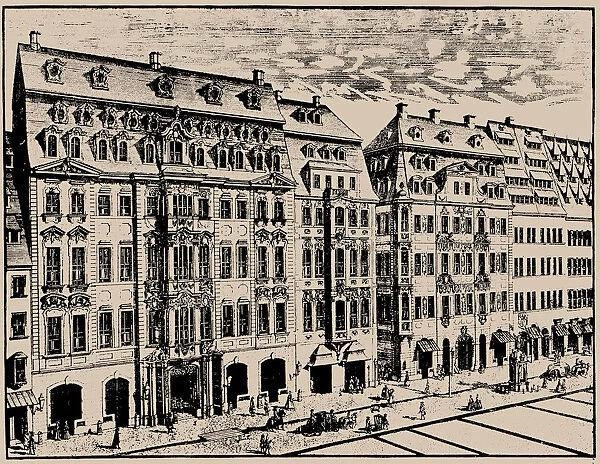
Cafe Zimmerman

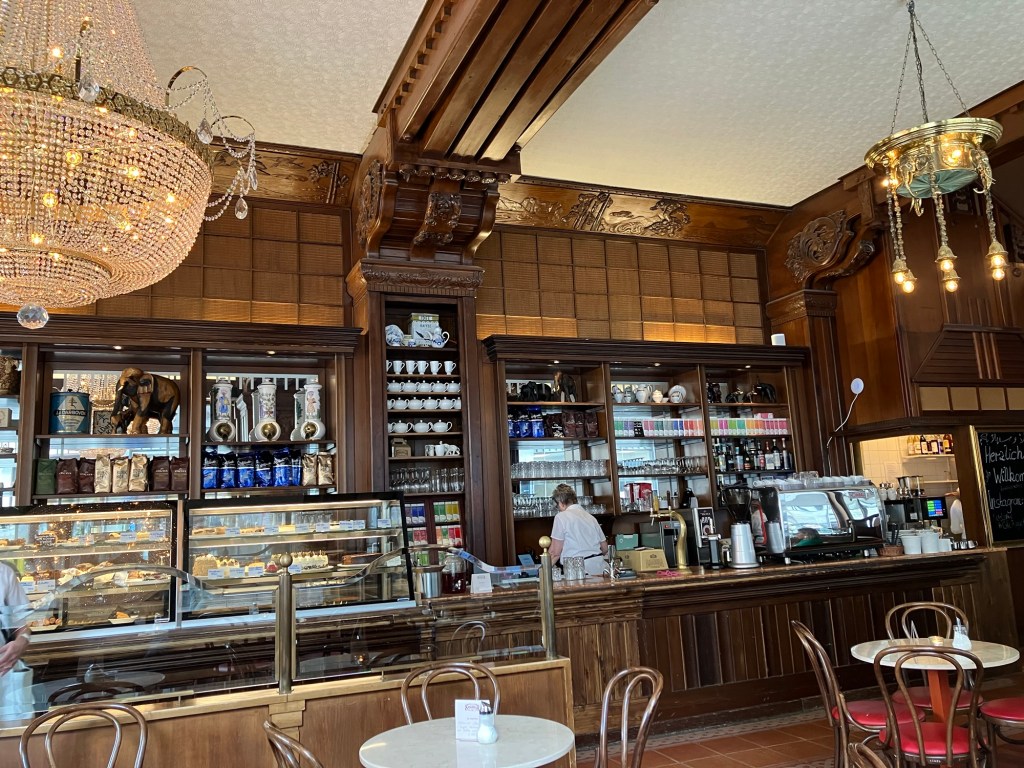
Our favourite coffee house is the Cafe Riquet in the centre of Leipzig, standing as it does between car parks. The surrounding area, like much of Leipzig, was heavily bombed during World War II. The cafe itself suffered significant damage, with large parts of the pagoda and first floor being burnt. However, the building was able to survive the war, and was eventually restored to its former glory.

Cafe Riquet

The original Cafe Riquet in Leipzig was founded in 1745 by a French Huguenot named Jean George Riquet. He established Riquet & Co, a company that specialized in importing exotic items like tea, coffee, and chocolate. The owner later included a public coffee dispenser and the cafe grew from that. The current building, with its two elephant sculpture heads flanking the entrance, was built in 1908. The interior features ornate wooden carvings, vintage furniture and wooden panels that create a warm atmosphere and a place to linger, especially on a cold day.

The interior

The café is known for its speciality coffee (variously Kaffee Riquet, Elefantenkaffee, and Pharisäer) and cakes, including, of course the Leipziger Lerche.

Food wise, whilst you can eat well in Leipzig (and the city has no shortage of Munich style beer halls), overall other German cities we have visited recently (e.g. Kőln, Hamburg and Munich) have a far more diverse restaurant scene in our opinion.

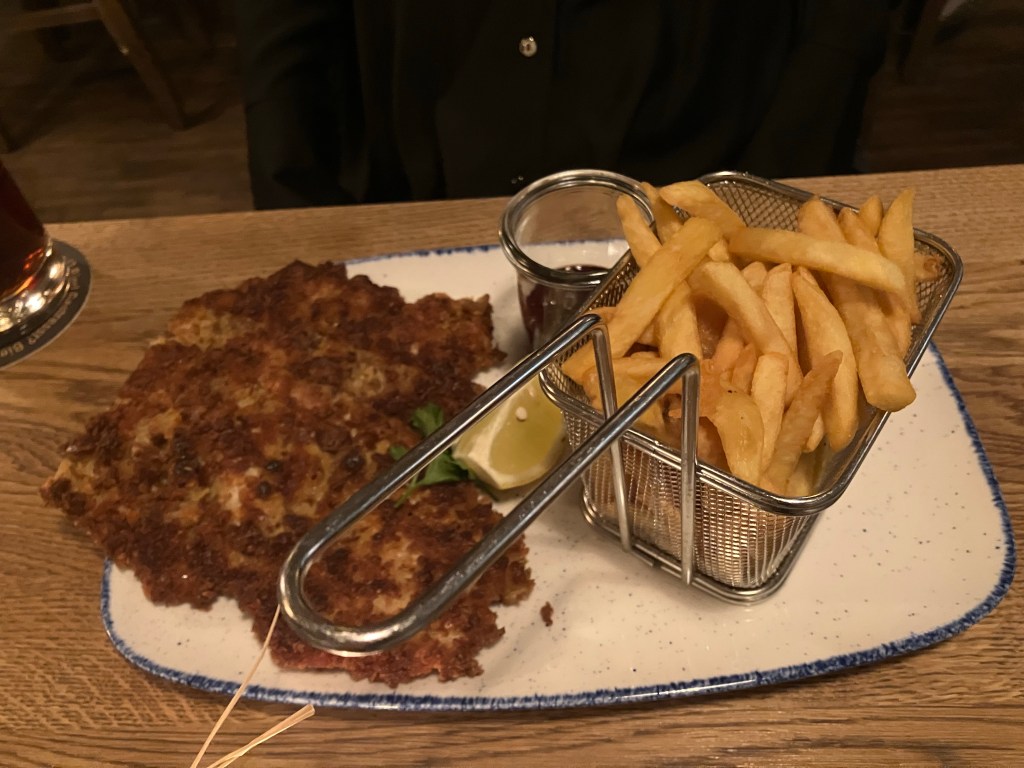
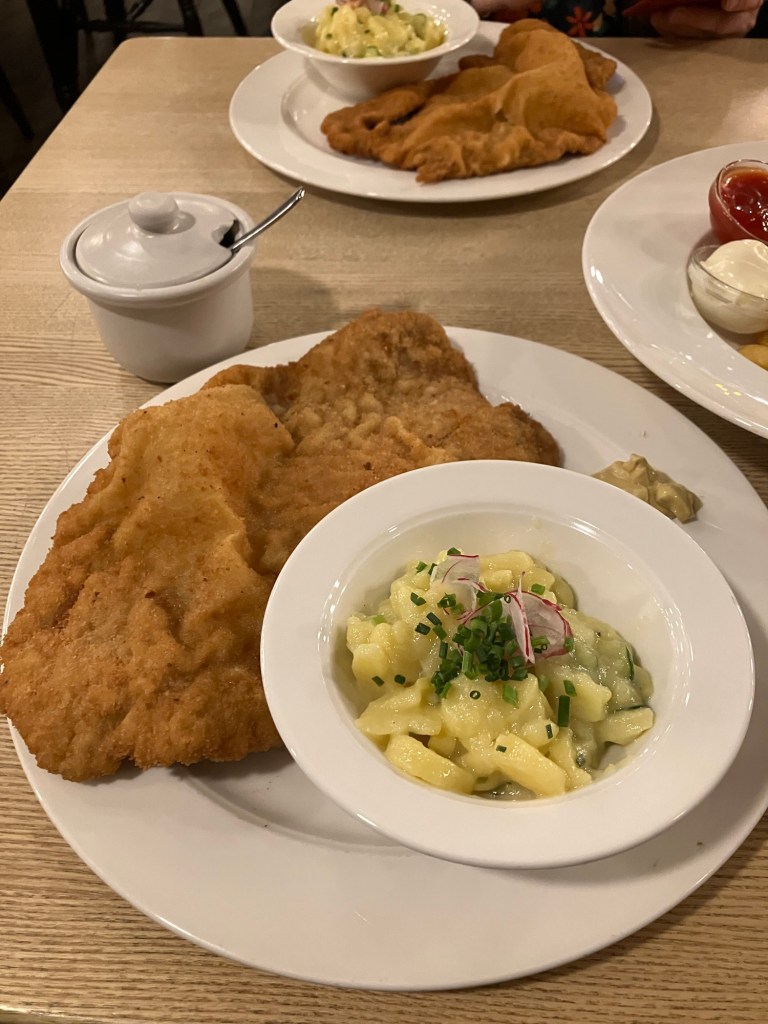
Still, if you want a schnitzel and a beer…..

Schnitzel and potato salad
Prost!

Munich, Art and Beer

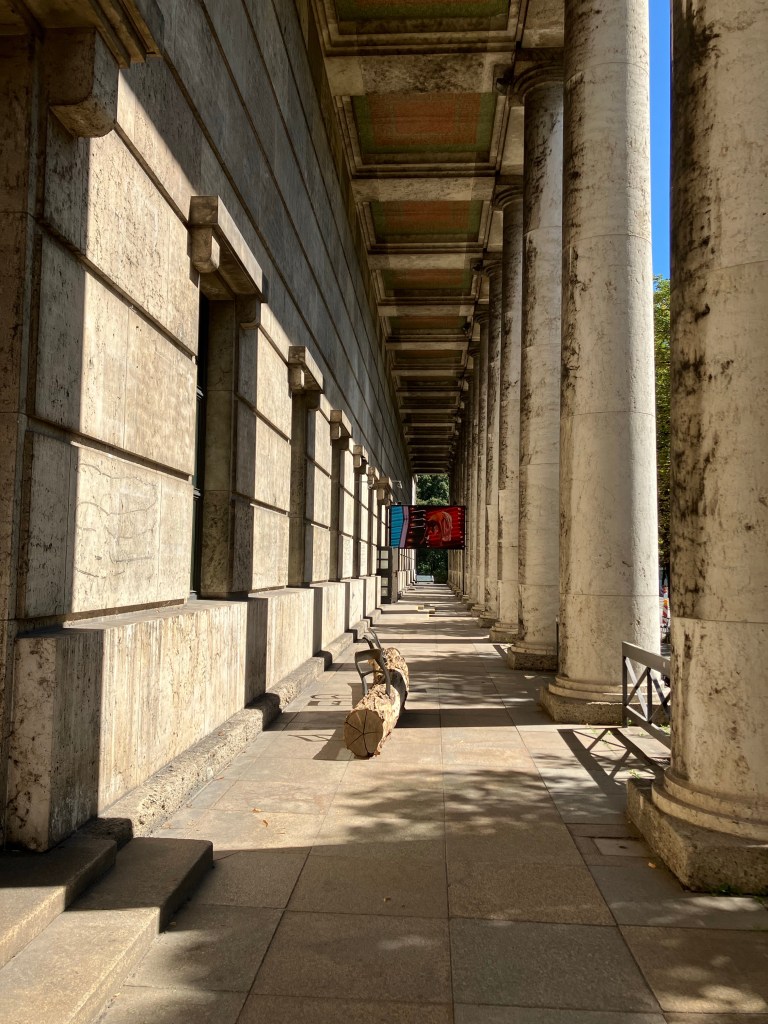
The Haus der Kunst (‘House of Art’) is a contemporary art museum located on the corner of an intersection where Von-der-Tan Straße becomes Prinzregentenstraße in the city of Munich. Whilst the museum exhibits art of the present, the museum building itself dates from 1937 being originally built under the Nazi’s to house work that regime considered true ‘German Art’. Hubert Wim, a pro-Nazi artist explained at the time that the latter exhibition was about the “representation of the perfect beauty of a race steeled in battle and sport, inspired not by antiquity or classicism but by the pulsing life of our present-day events”.

Haus der Kunst

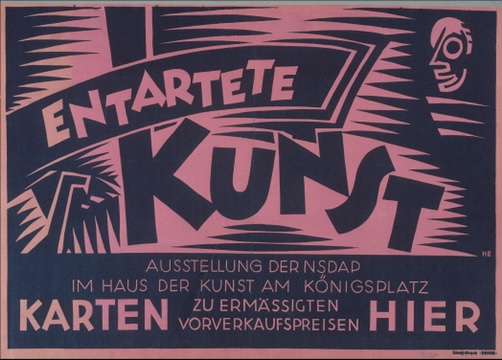
In reality the Exhibition staged the kind of pompous, sterile rubbish beloved of fascists everywhere. Meanwhile across town at the Institute of Archeology in the nearby Hofgarden, the Nazi’s staged a counter presentation of work the regime hated, work which they felt evinced the ‘moral decay’ of the Weimar era. That exhibition was of ‘Entartete Kunst’ (‘Degenerate Art’) and it featured work drawn from the modernist spheres of Dada and Surrealism. The Exhibition’s raison d’être was the mockery and denigration of the avant-garde by linking it’s concepts with an alleged Jewish-Bolshevik plot to undermine the ‘wholesome family values’ of the Nazi state.

The exhibits at that exhibition were a small portion of the 16,000 art works seized at the time which the State deemed ‘degenerate’. Many of these works were then sold by the State overseas for “hard“ cash“ whilst some 5000 were burned in Berlin, mirroring the ritual destruction of thousands of literary works in book burnings across Germany a few years previously.

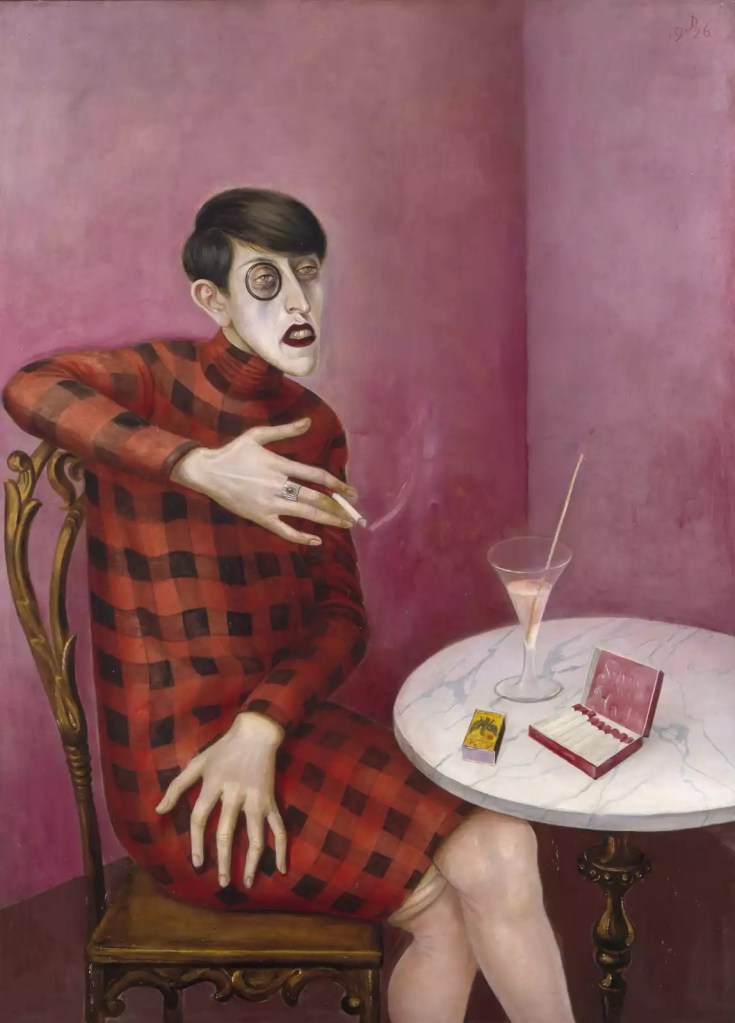
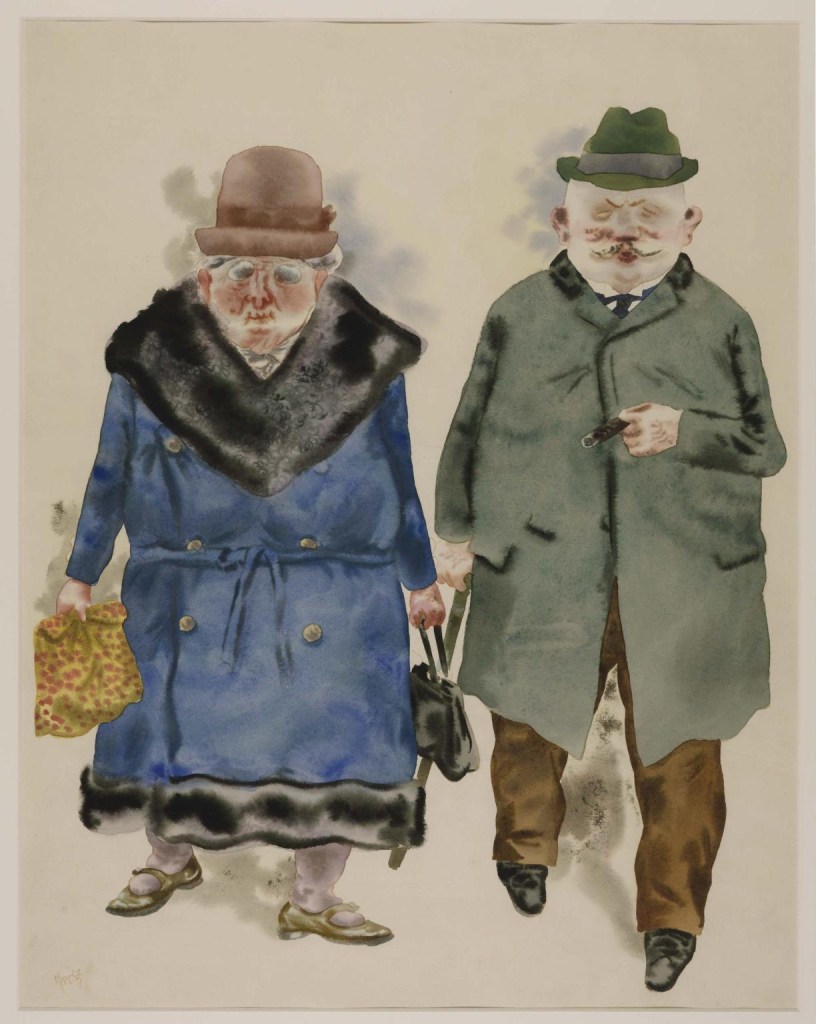
Paintings by artists of the calibre of Otto Dix, Marc Chagall, Wassily Kandinsky, Paul Klee, Emil Nolde, George Grosz went on show at the exhibition. The works were deliberately hung askew on the walls with adjacent graffiti mocking the artists and the subject matter of the paintings. The idea was to rubbish the art by presenting the paintings as morally and artistically worthless.

Portrait of the journalist Sylvia von Harden, 1926 by Otto Dix
‘A married couple’ 1930 by George Grosz

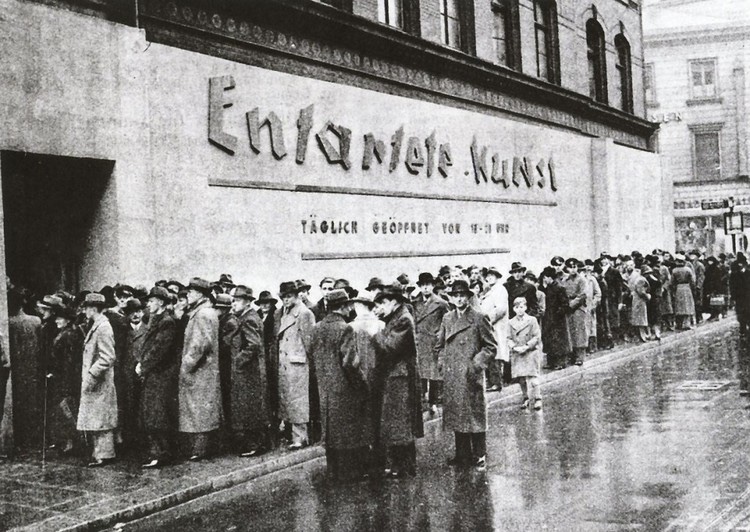
Unsurprisingly, given the quality of the artists whose work was on involuntary display, the Exhibition of Degenerate Art attracted significant crowds of visitors whilst across town the dismal counter event of the Nazi approved Great German Art Exhibition drew a far smaller crowd

Queue for Entartete Kunst

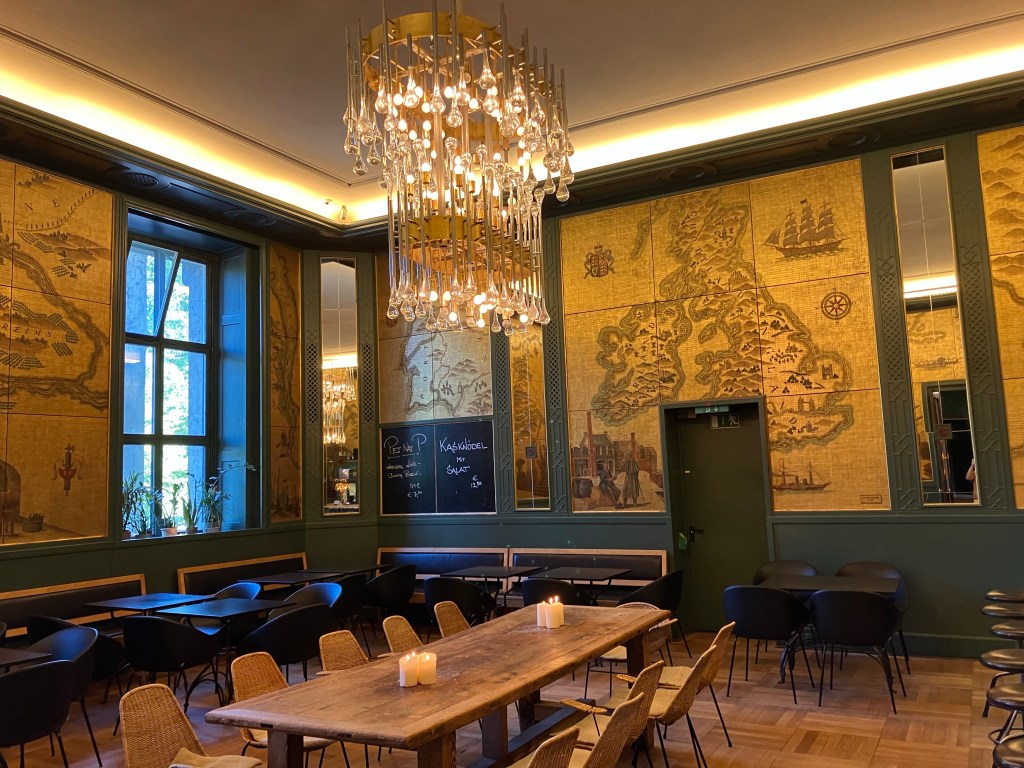
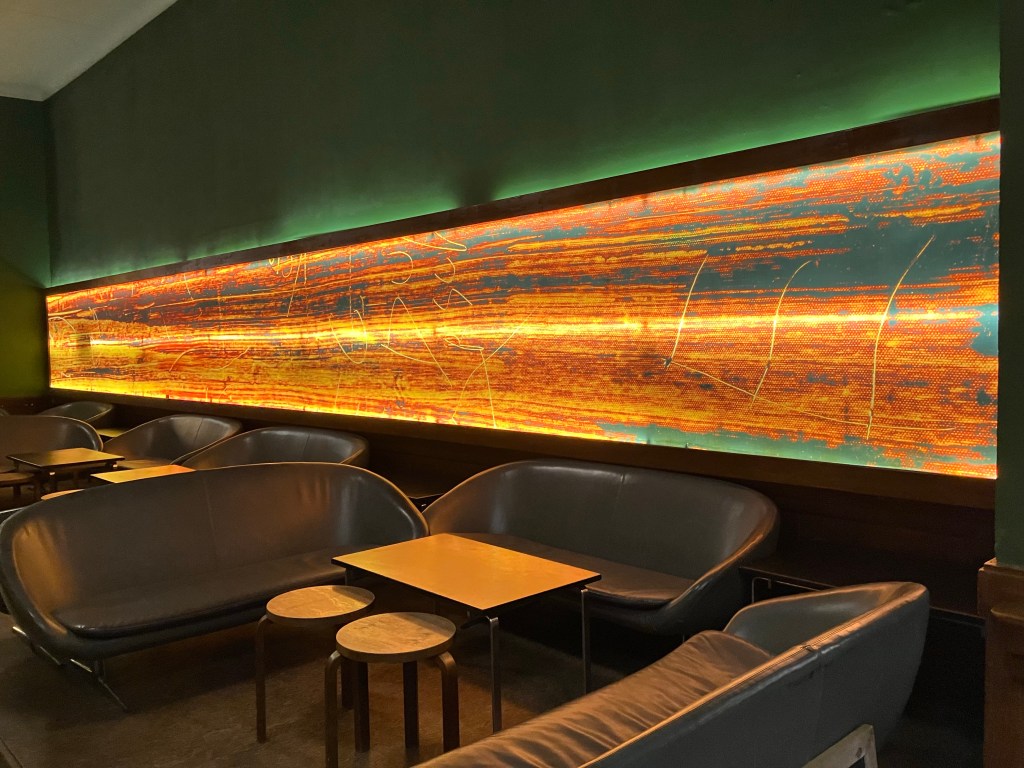
Today, the Haus der Kunst looms somewhat forlorn and sullen on the Prinzregentenstraße in the centre of the city where it stands as a space for contemporary modern art, the exact opposite of it’s original function. In its interior it’s cool, spectral rooms and corridors eventually end up at the surprisingly elegant and atmospheric Golden Bar. The murals in the Golden Bar date from 1937 and it’s centrepiece chandelier came from the Hotel Savoy in Zurich.

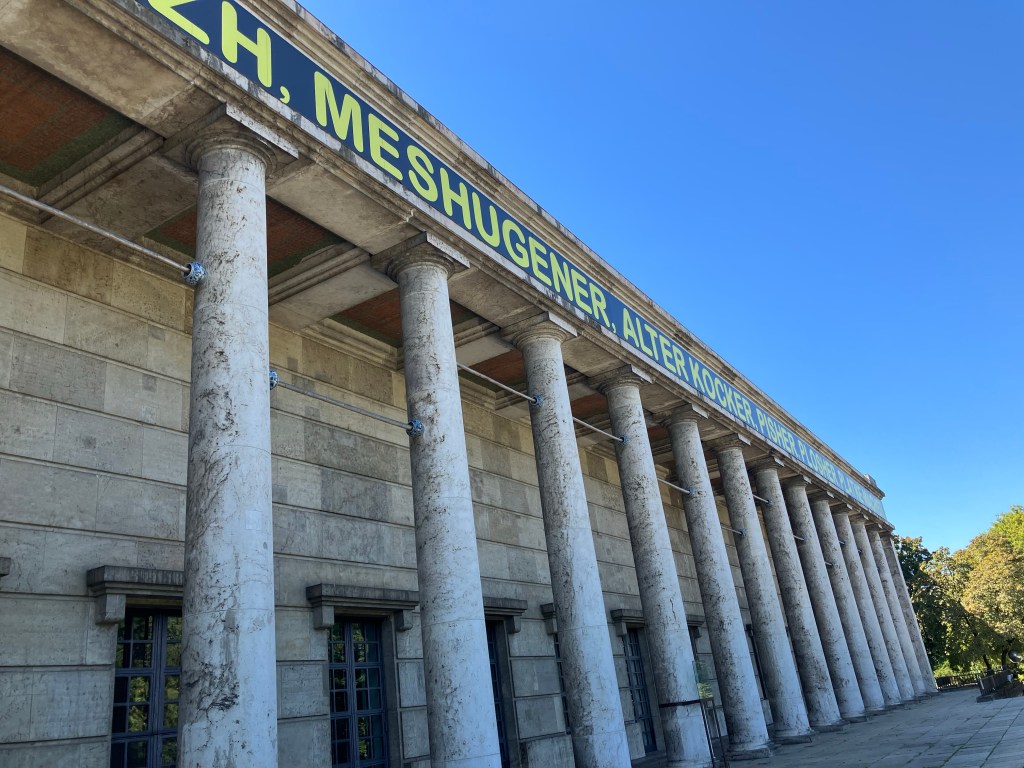
Beautifully renovated in 2010, the Golden Bar opens out on to a terrace whose columns are crowned with a lengthy banner of Yiddish slang, Meshugener, Alter Kocker, Pisher, Plosher….The banner is an art work named ‘The Joys of Yiddish’ by the American artist, Mel Bochner and it is now a permanent fixture, having originally been exhibited in 2013 and then reinstalled in 2021. The banner’s text is rendered in yellow letters on a black background, the same colours used for the ‘Star of David’ patches and armbands worn to identify and denigrate Jewish citizens.

‘The Joys of Yiddish’

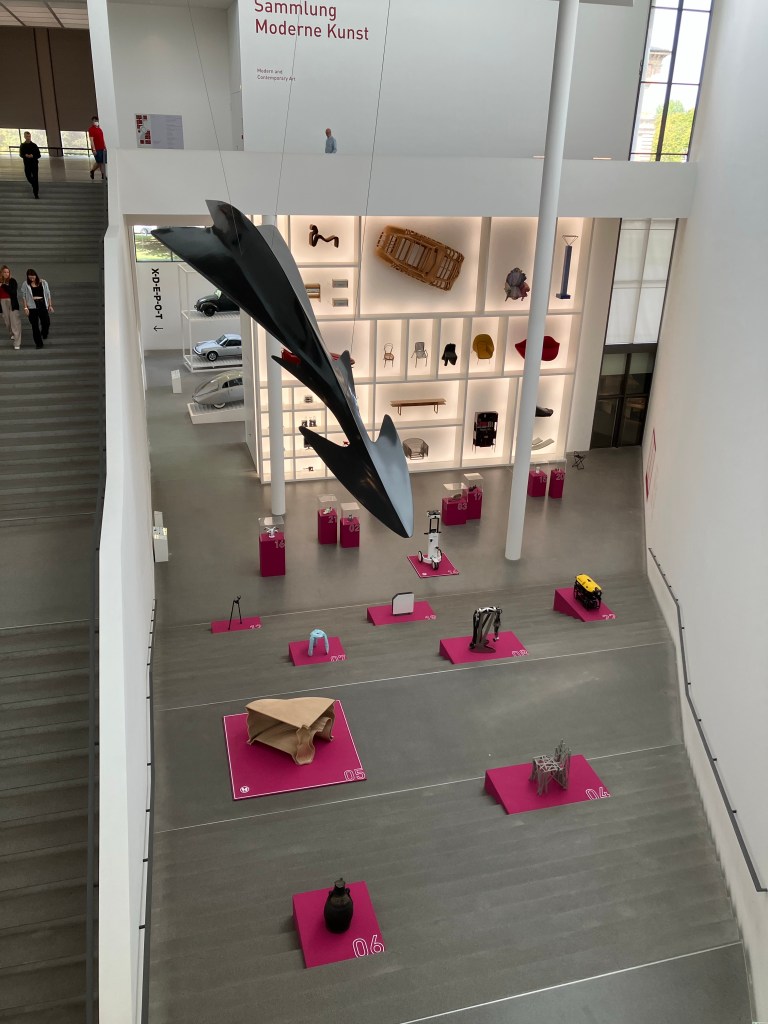
Modern Art survives in splendour in Munich and of the city’s many galleries a special mention should be made of the Pinakothek der Moderne, one of Europe’s largest collections of contemporary design, architectural and artistic installations.

Classic designs at the Pinakothek der Moderne

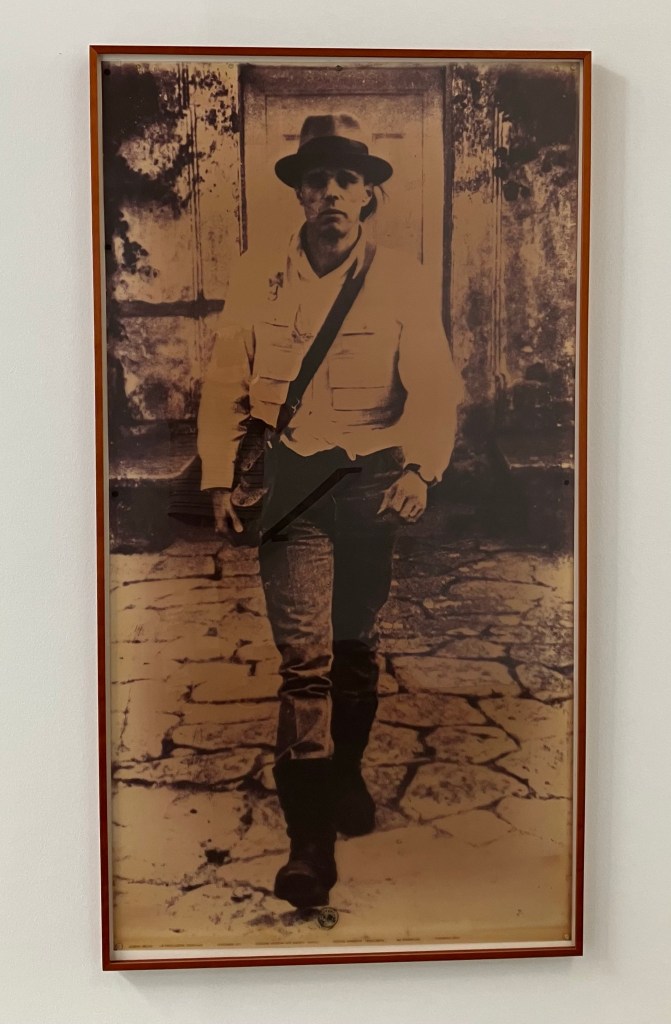
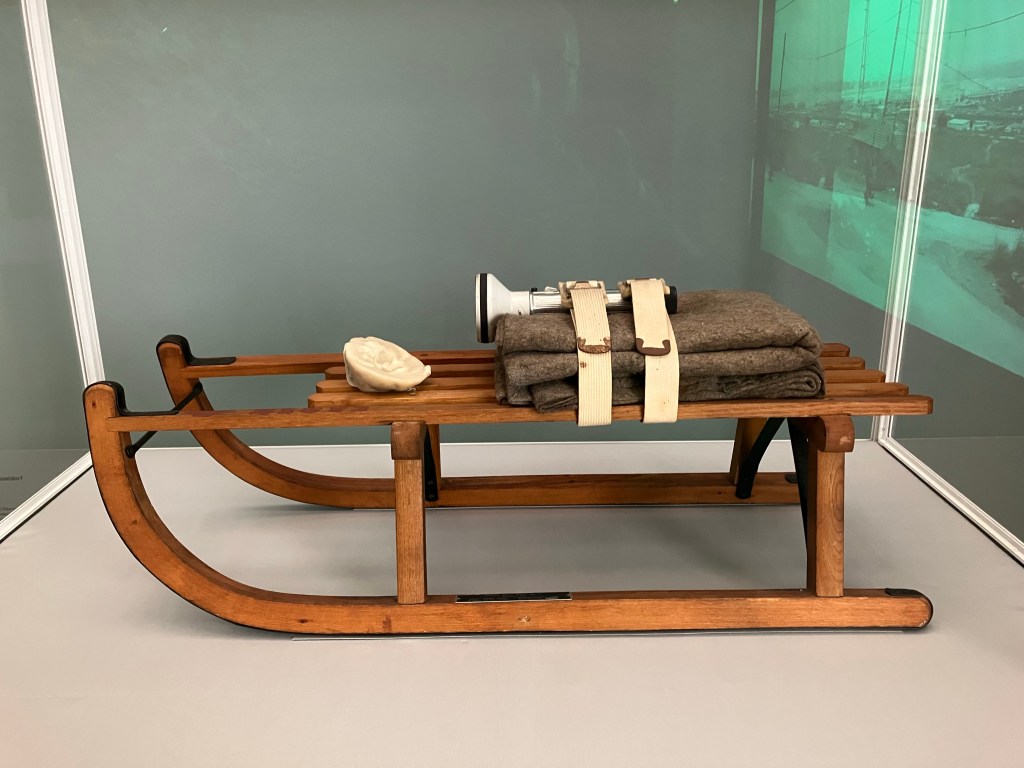
The museum exhibits include a favourite of ours ‘Sledge’ by the artist Joseph Beuys as well as a reproduction of the iconic image of that artist titled ‘La rivoluzione siamo Noi’ (The Revolution is Us) produced for an exhibition in Naples 1971 featuring Beuys striding towards the camera in his trade mark fedora and fishing vest.

‘The Revolution is Us’

According to Beuys, his art was shaped by his experience as a Luftwaffe pilot during WW2 when the plane he was flying was attacked and shot down and he crashed into a Crimean landscape peopled by nomadic Tartars who saved him from freezing by wrapping his body in a heat retaining mix of felt and fat before taking him to safety on a sledge pulled by dogs. A wonderful story indeed and one upon which Beuys built his mythology. Nevertheless, as influential on Beuys though it may well have been, the story is probably little more than fiction.

‘Sledge’ by Joseph Beuys

‘Patti Smith 1’, a large scale painting by the Swiss born artist Franz Gertsch also hangs at the Pinakothek der Moderne. The work is the first in a series of five paintings of the American poet/musician by Gertsch dating from 1977. Four of the five paintings in the series were created by Gertsch from a poetry reading Smith gave at Galerie Veith Turske in Cologne in 1977 on the anniversary of the death of Arthur Rimbaud. An illicit recording was made of the performance and later released on a cassette tape. An article Smith wrote for ‘Hit Parader’ magazine about her visit to the city at the time can be found here http://www.up-to-date.com/bowie/heroes/smith.html.

Patti Smith 1 by Franz Gertsch

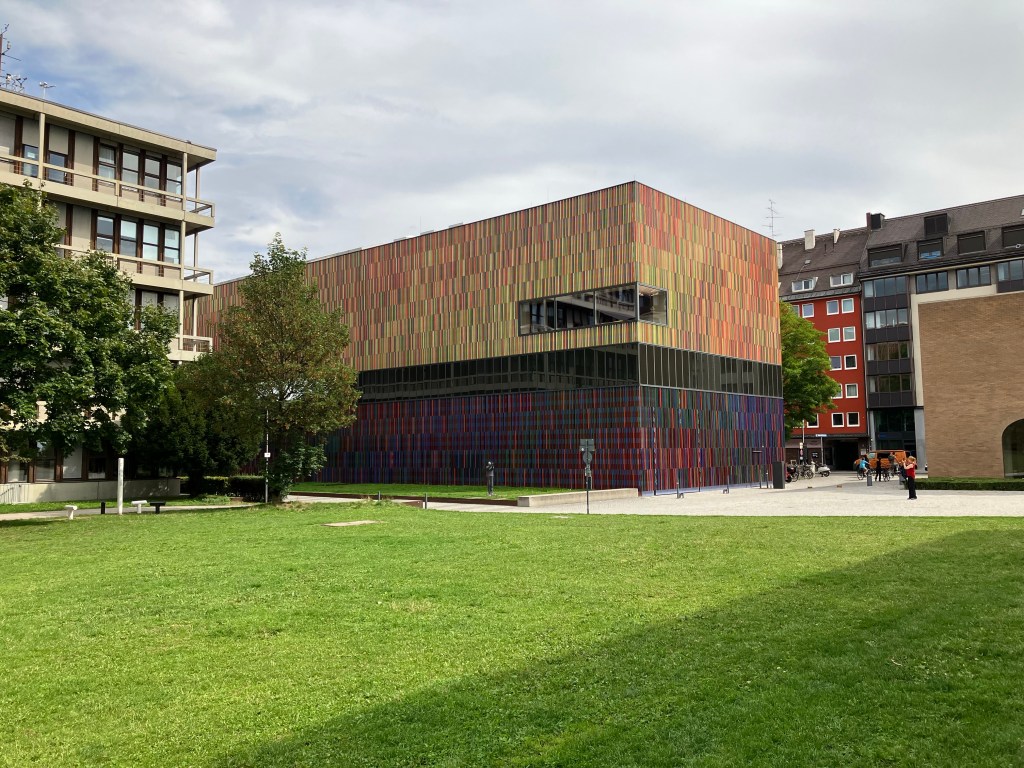
Around the corner from the Pinakothek der Moderne is another modern art gallery, Museum Brandhorst with it’s distinctive ceramic exterior.

Museum Brandhorst

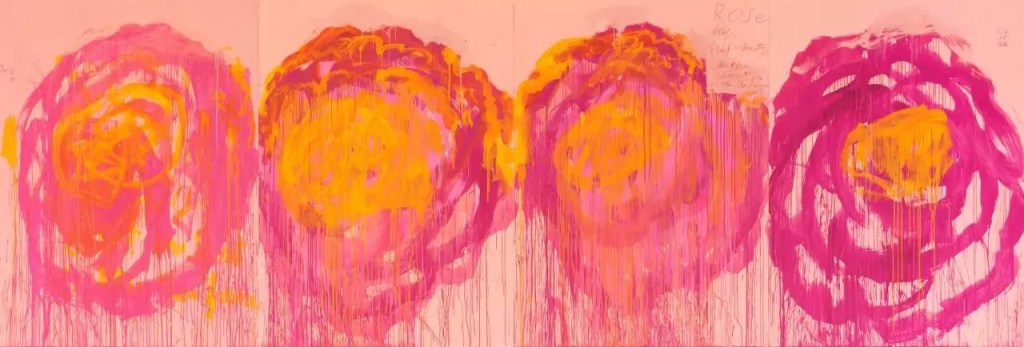
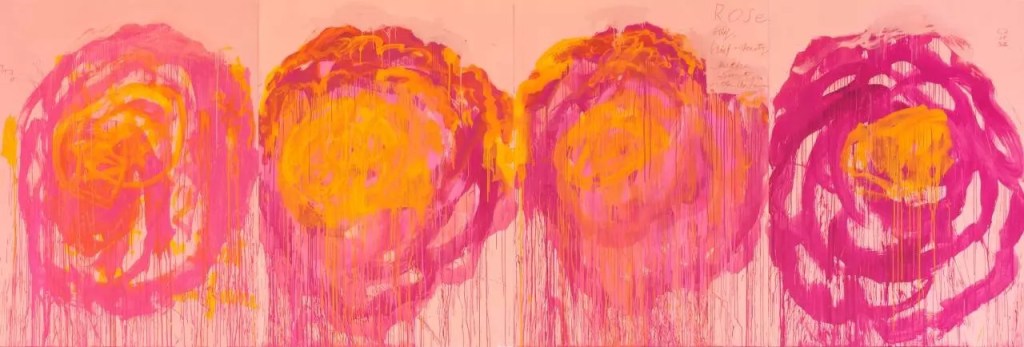
The museum has a permanent exhibition of the work of the late American artist, Cy Twombly, one of the largest collections of work by the artist in the world. In fact, the entire first floor of the museum is dedicated to his work. This is not so surprising as Twombly had a special relationship with Munich, a city where he exhibited frequently and of which he was exceptionally fond.

Untitled [Roses] by Cy Twombley

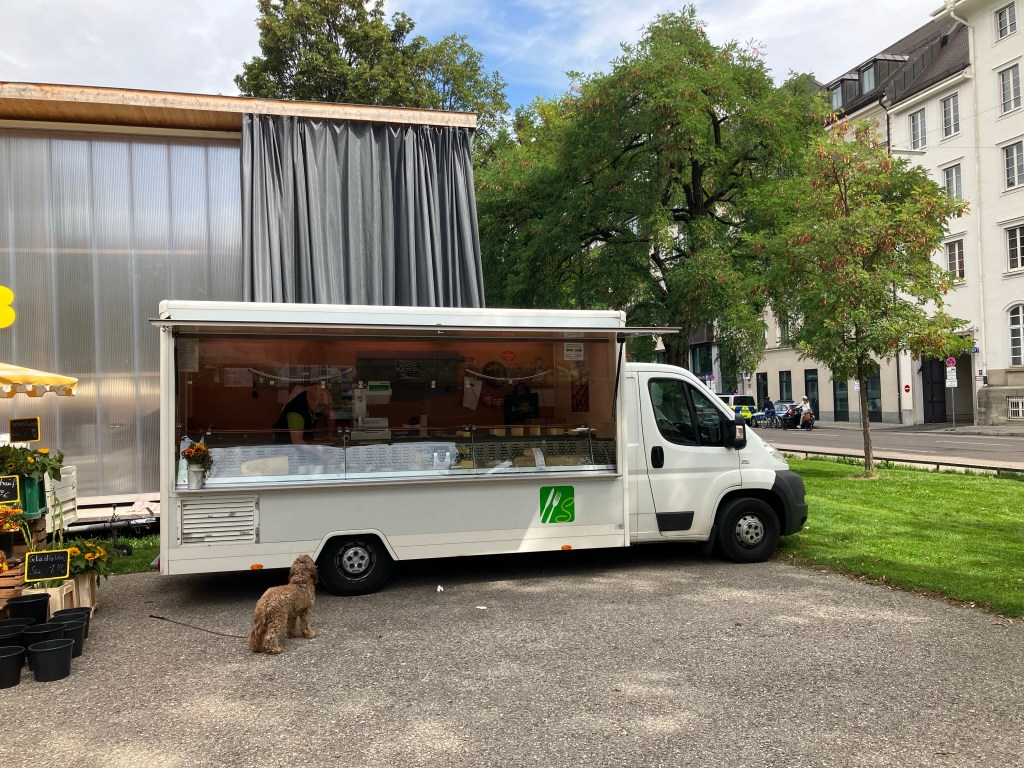
Behind the Brandhorst and back to the grounds of the Pinakothek der Moderne we found a welcome collection of food trucks and a hopeful dog at a cheese stall.

Cheese truck and hopeful dog

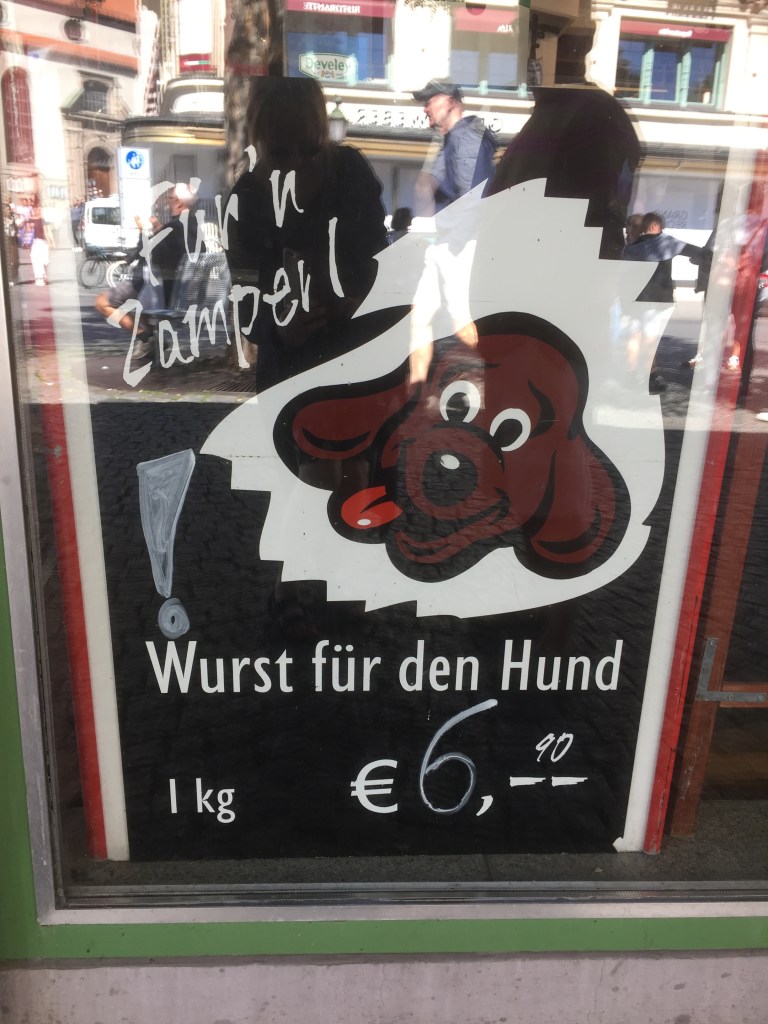
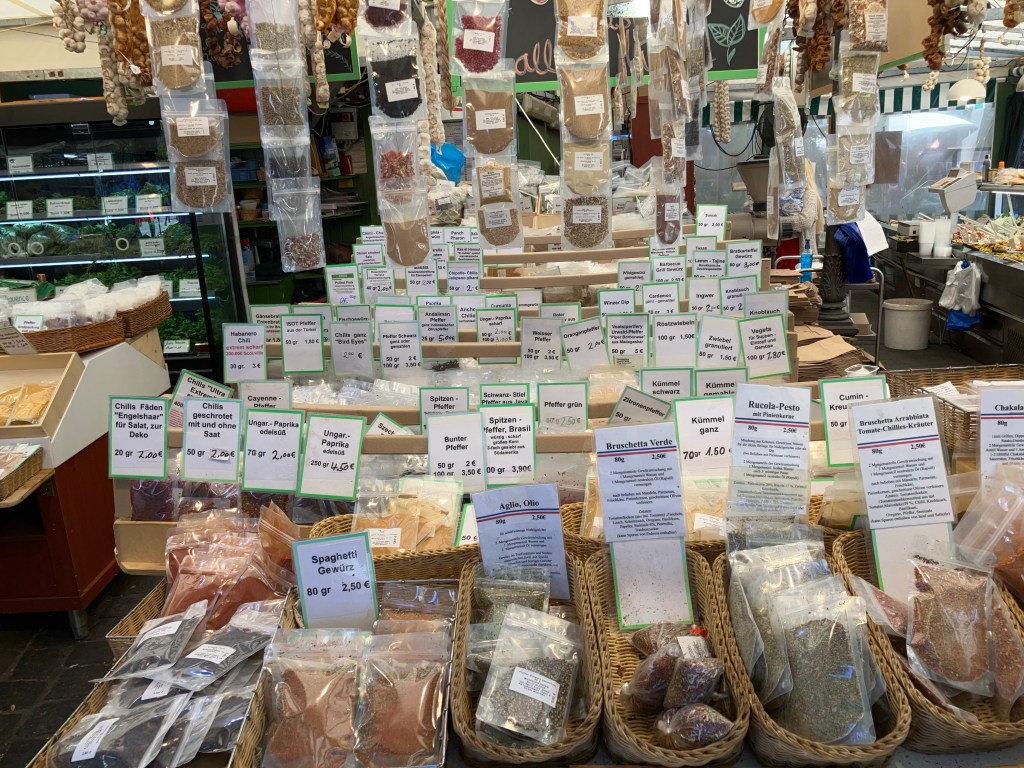
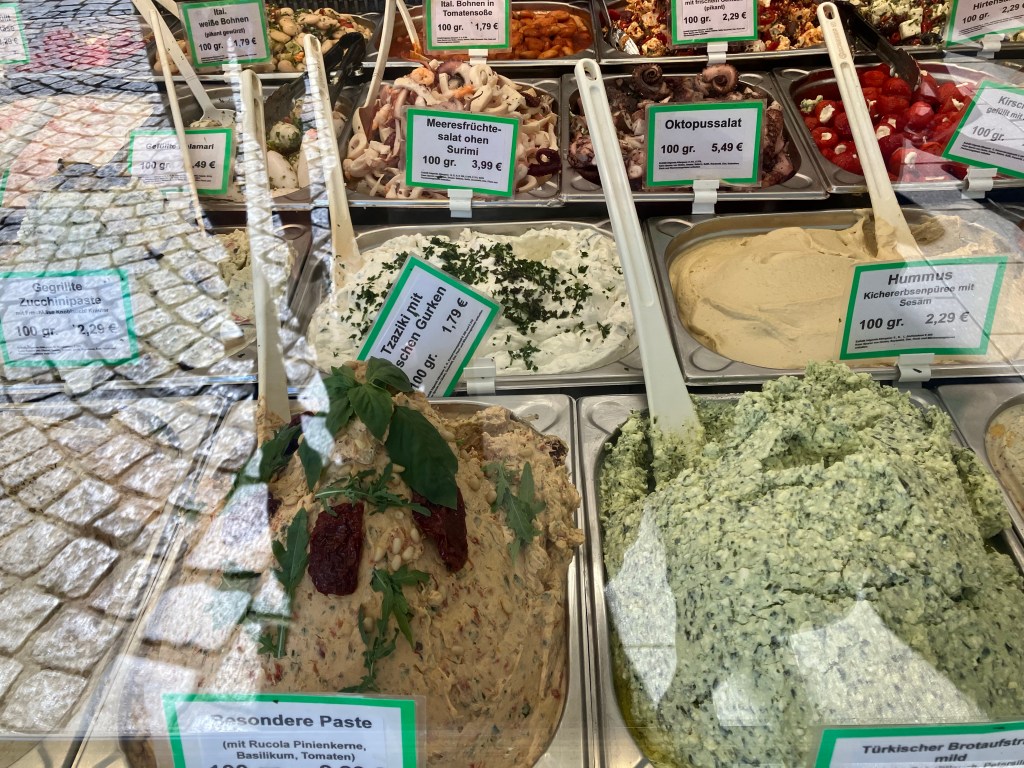
The dog should have made it’s way to the Viktualienmarkt a daily food market in the center of Munich near the St Peter’s church! Dating from the early 1800’s the market has over a 100 food and craft stalls as well as the city’s most central beer garden.

Sausage for the dog

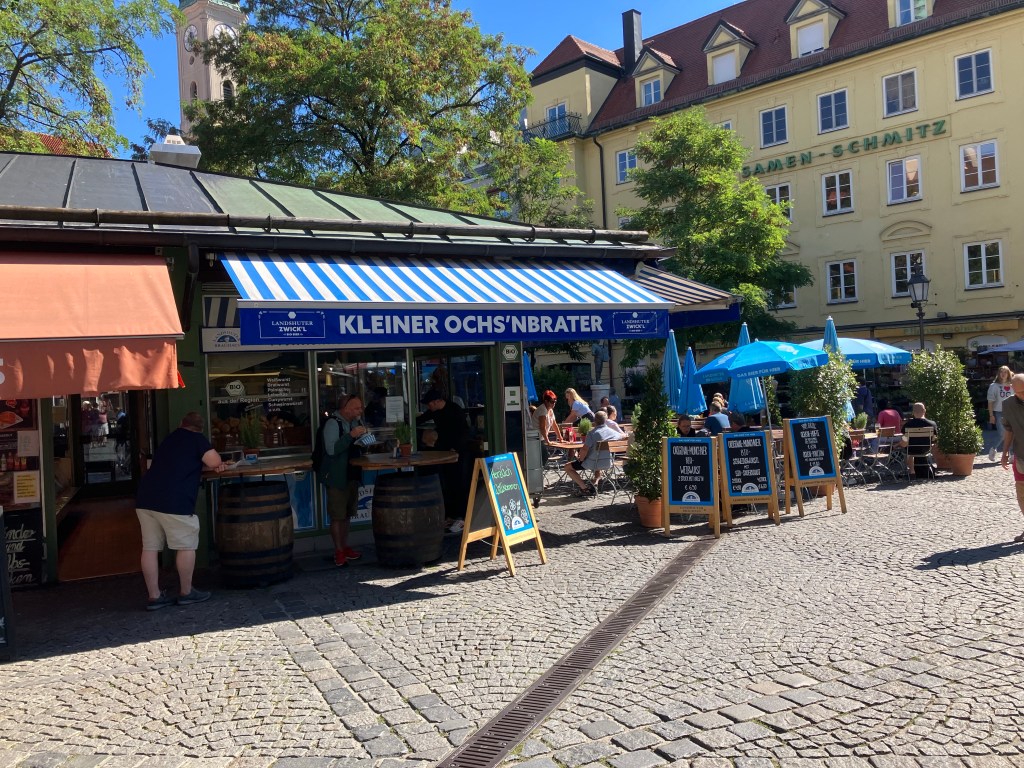
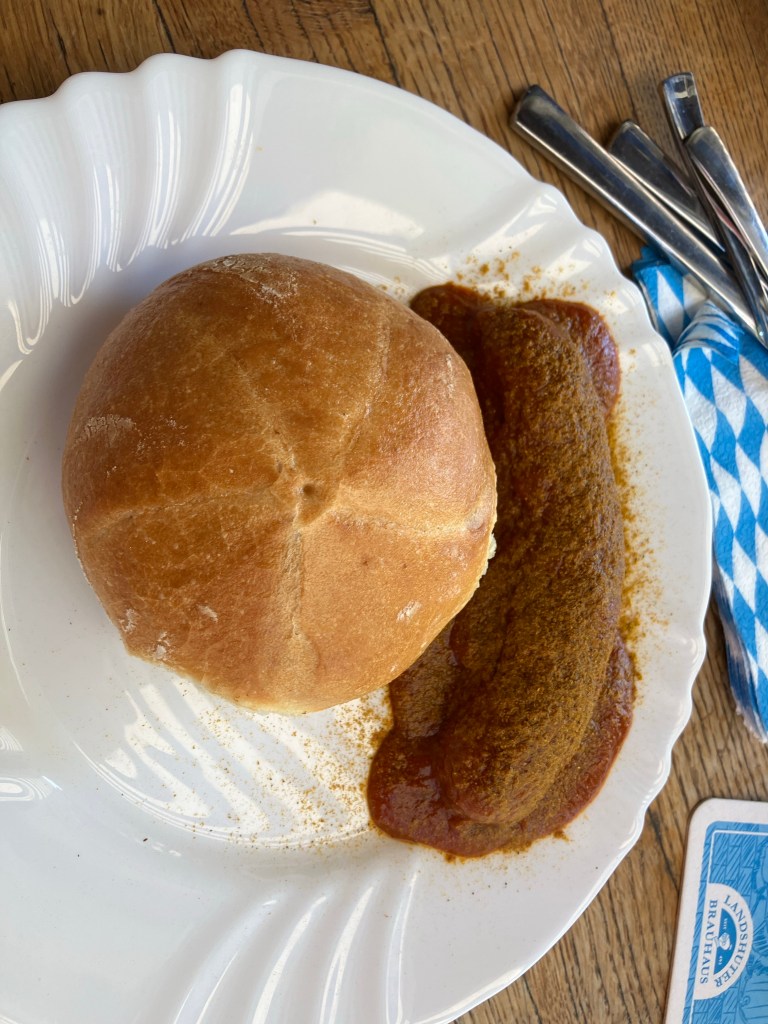
There is also a smaller beer garden at the ever popular Kleine Ochs’nbrater with its organic sausages, pretzels, fried potatoes, cabbage and, of course, wheat beer from the local Landshut brewery. Much as we loved the food, beer and busy ambience at this café, we felt that overall, the curry wurst in Berlin is generally better than the same dish in Munich.

Kleine Ochs’nbrater
Curry Wurst

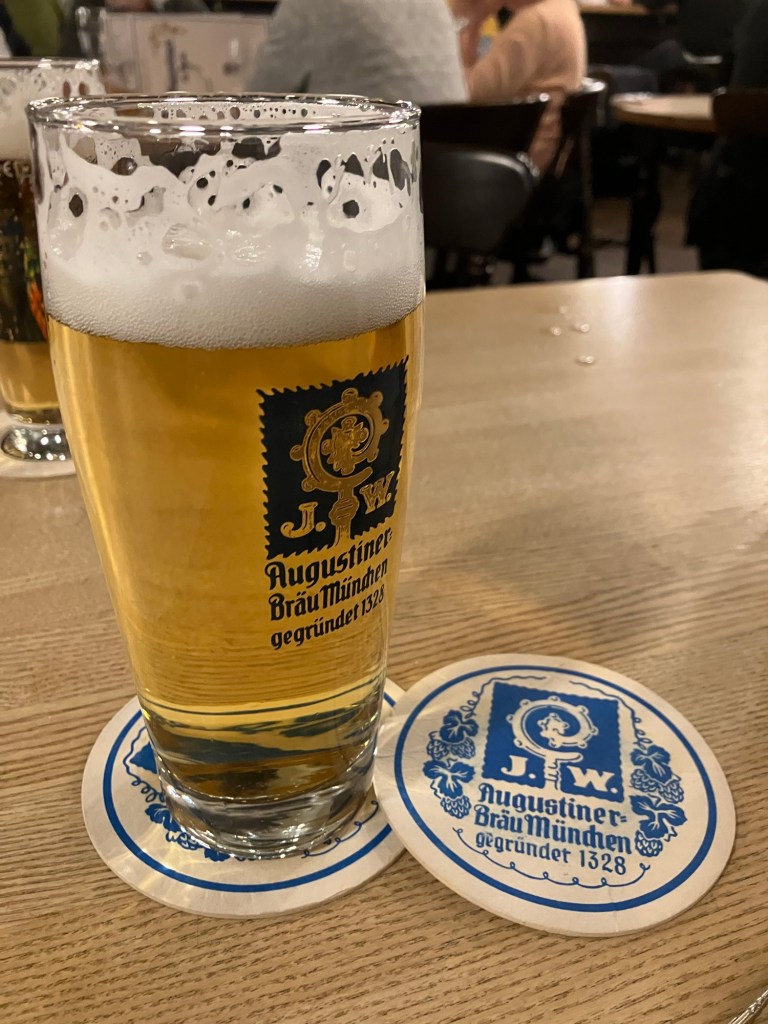
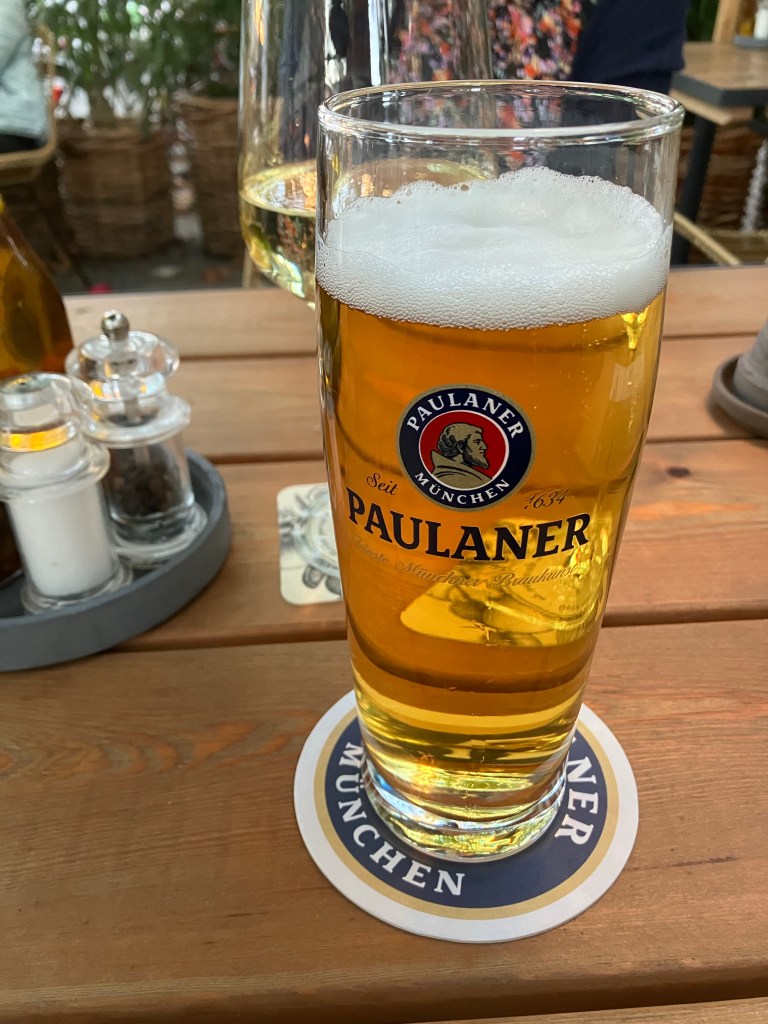
….but if beer is your drink of choice, you have come to the right place. Munich is indeed a beer drinkers paradise with some of the best breweries in the world within its environs. Our favourite ‘staple’ is the Paulaner Münchner Hell, a classic light beer dating from a brewery first established in 1684.

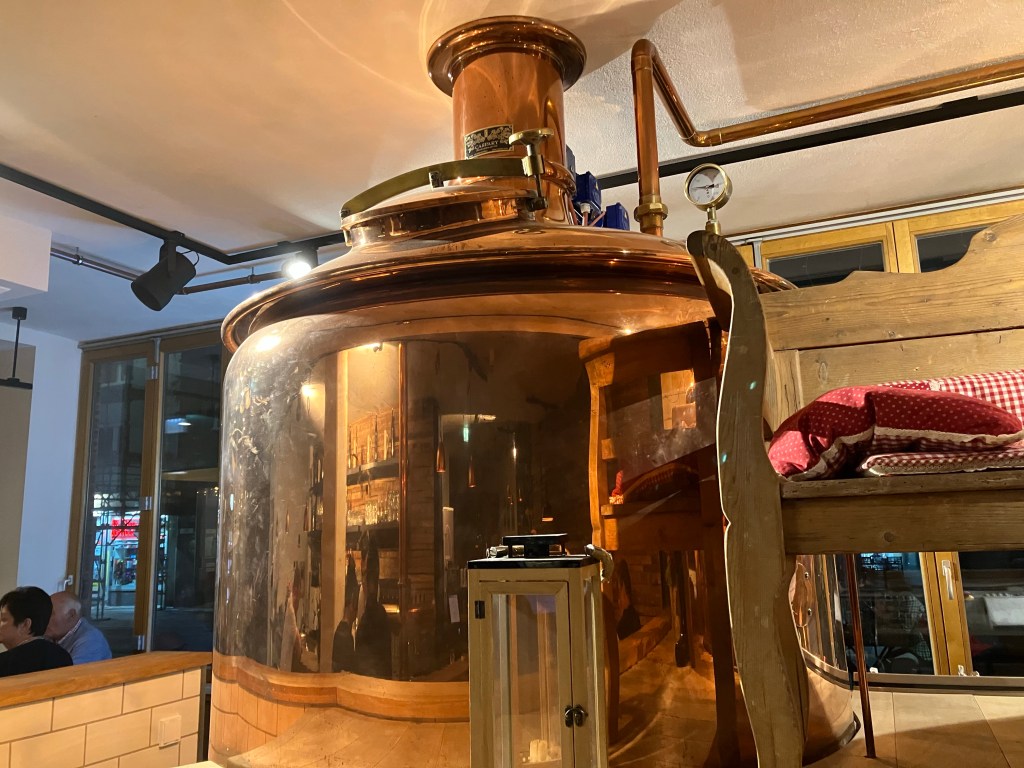
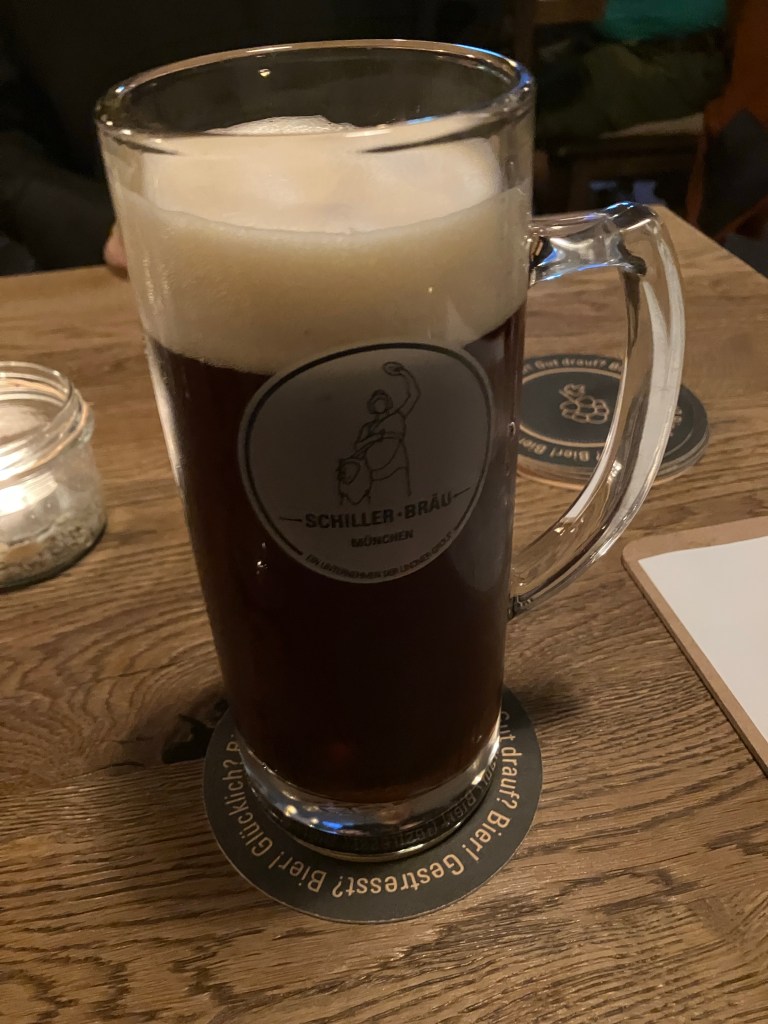
Modern craft breweries are also making their mark on the Munich beer scene with the Schiller brewery particularly noteworthy. The brewery is housed on their premises on the Scillerstraße which is near city’s main railway station. Their copper mash and brewing tuns are housed at the front of their premises whilst their beer is served with very traditional local food in the restaurant behind. Their beers range from light and dark brews to a classic wheat beer. Food includes sour vinegar dumplings, schnitzels, pork and potatoes.

Schiller brewery

Finally, we will let another poet , T.S.Eliot, an influence on both Patti Smith and whose poem ‘The Waste Land’ was of particular interest to Cy Twombly. Elliot mentions two Munich locations in the extract from the poem below.

“April is the cruellest month, breeding
Lilacs out of the dead land, mixing
Memory and desire
Summer surprised us, coming over the Starnbergersee
With a shower of rain; we stopped in the colonnade,
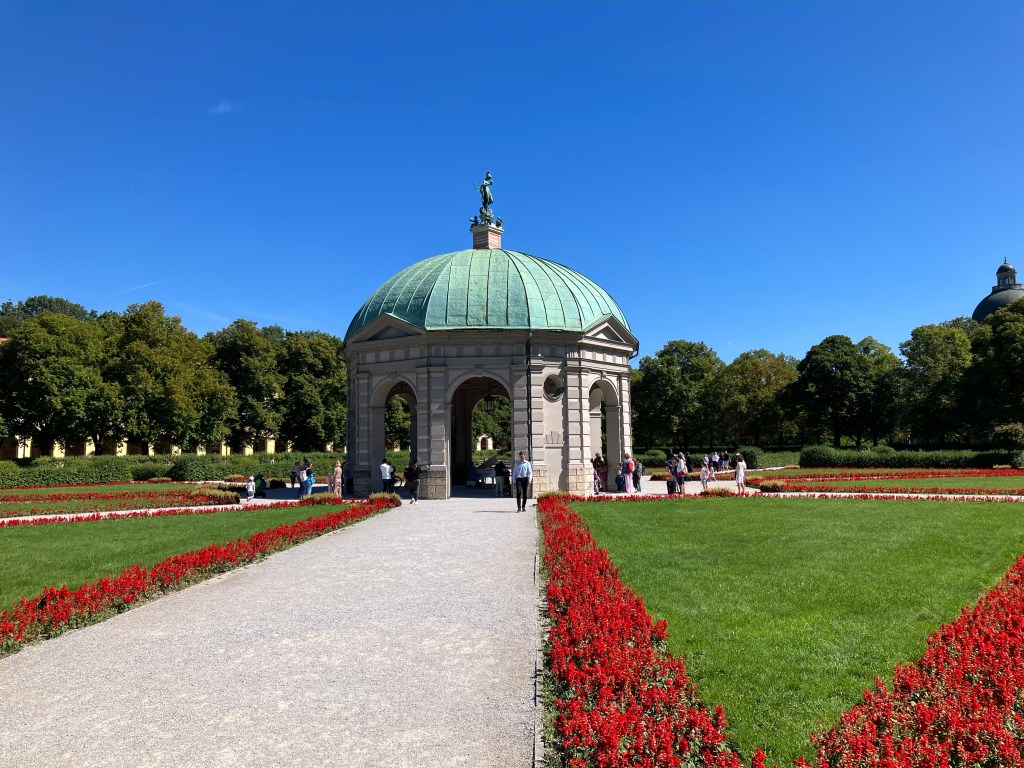
And went on in sunlight, into the Hofgarten,
And drank coffee, and talked for an hour. “

T. S. Elliot, “The Waste Land,” 1922

The Hofgarten in Munich

High Peak to Wolf Hall

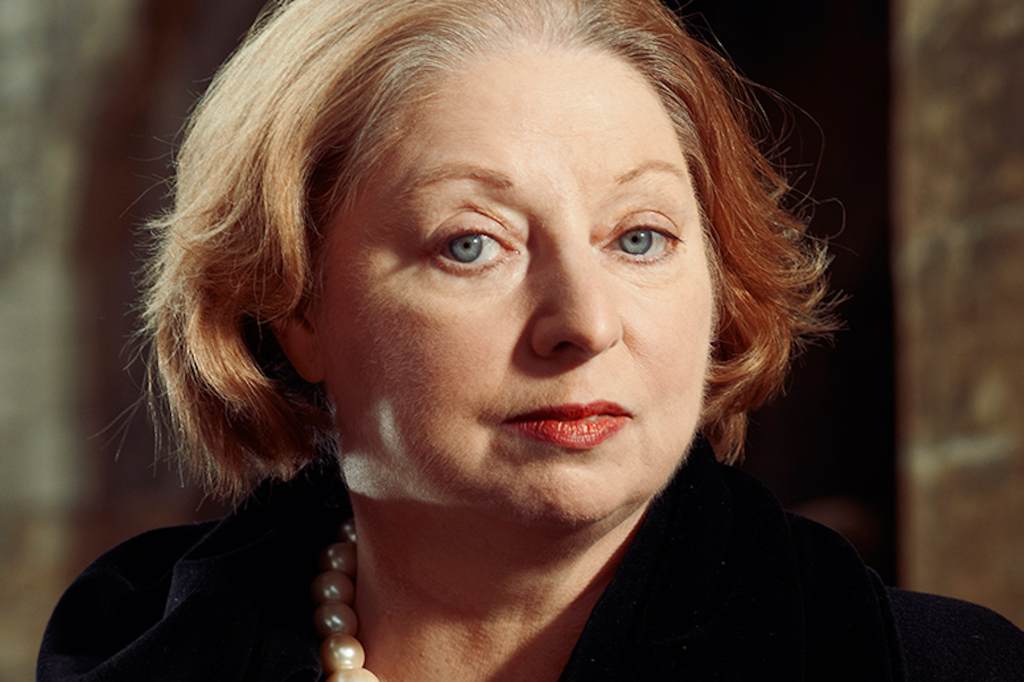
Hilary Mantel

A short walk from the house where Vivienne Westwood* grew up is the Derbyshire village of Hadfield.

The village lies on the edge of the moors in the High Peak district of Derbyshire. The town of Glossop lies to the south.

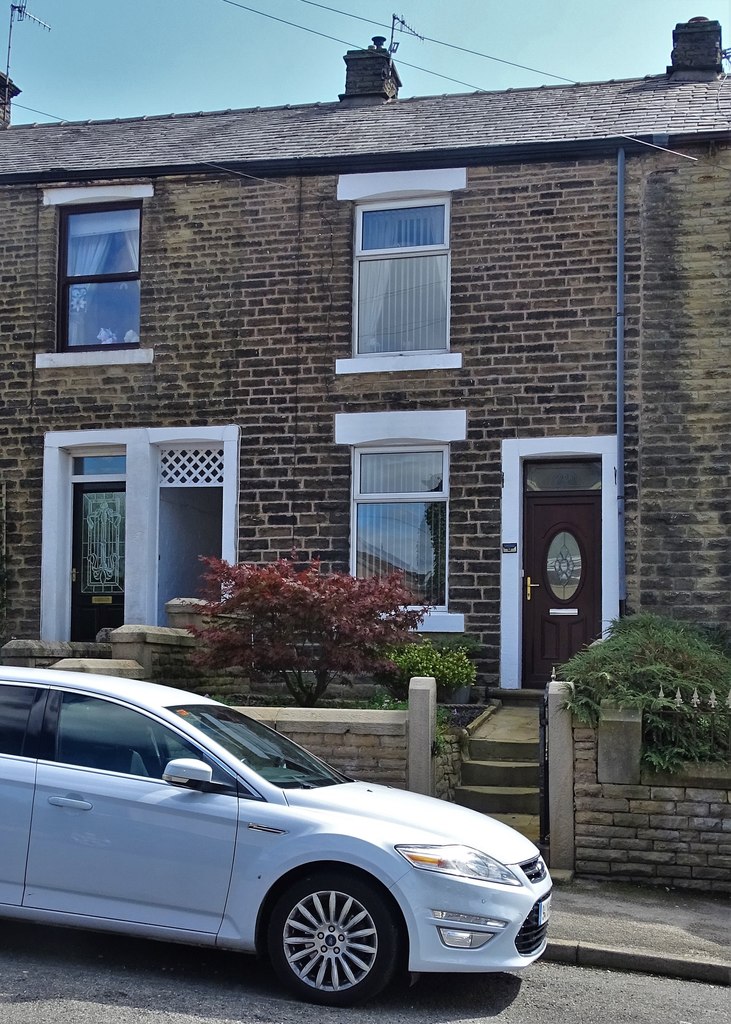
Hadfield was the childhood home of celebrated author Hillary Mantel.

(*for Westwood see the previous post ‘High Peak to the World’s End’)

Mantel’s childhood home

Mantel passed away recently leaving behind a stunning legacy of work including her multi-million selling Wolf Hall trilogy.

Thomas Cromwell whom readers of Wolf Hall will know

Mantel’s autobiography Giving Up The Ghost provides a sharp recollection of her childhood locale.

“…..the area where I grew up is on the fringes of the Peak District, a place of complex geology and inventive forms of human deprivation, of inhospitable uplands and steep-sided valleys. Tiny fields, bordered by drystone walls, lie like a worn blanket on a pauper: sharp angles of limestone protrude like bony spurs through a token covering of green. On high ground, in the deep winters of my early life, snow lasted till April. At the fringes of the Peak, where limestone gives way to sandstone, icy streams tumble over brown boulders. There are miles of moorland, flat, featureless, sodden—trackless, or traversed by ancient, faded bridleways.”

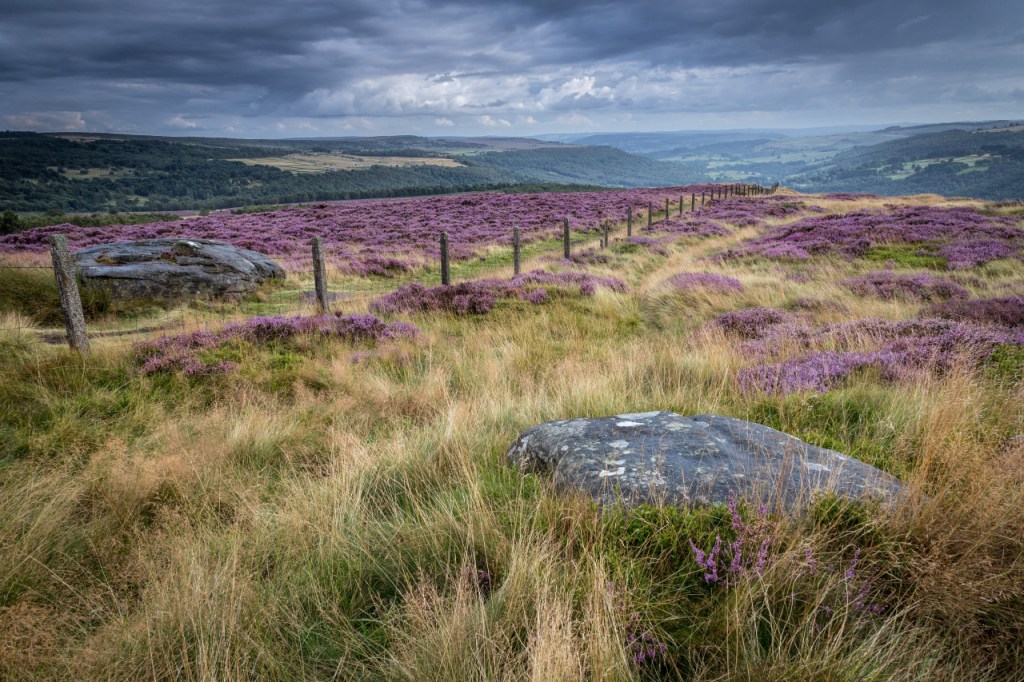
The High Peak

Another local, fashion designer Vivienne Westwood, was also cautious of the moors. She recollects:-

“As I grew up I was free to wander in a countryside which was beautiful and intimate until you got to the moors. After that it was wild and a little frightening. ”

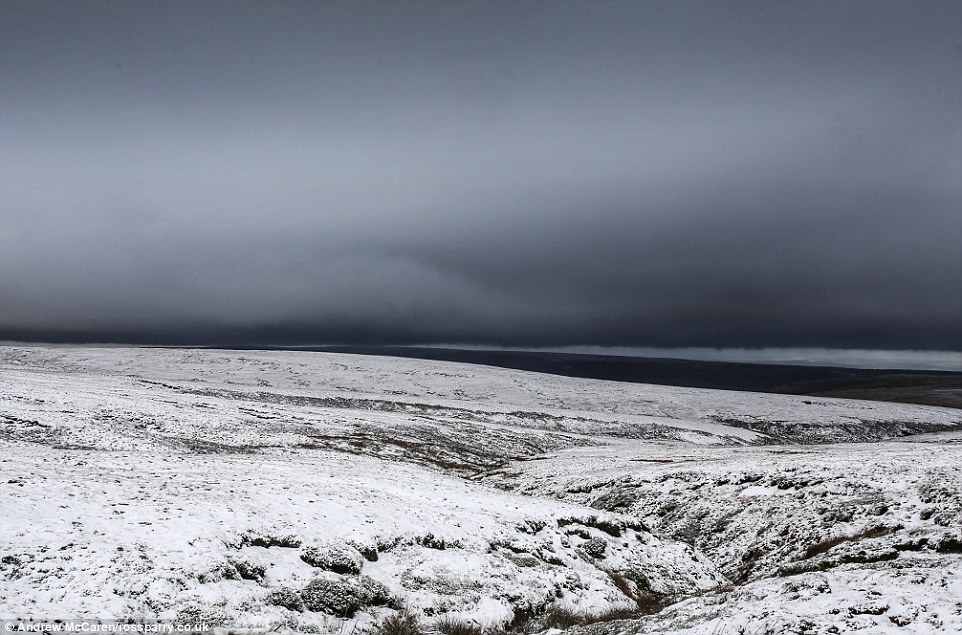
The moors in Winter

Mantel’s most famous work, the Wolf Hall trilogy are largely set in and around the court of King Henry VIII.

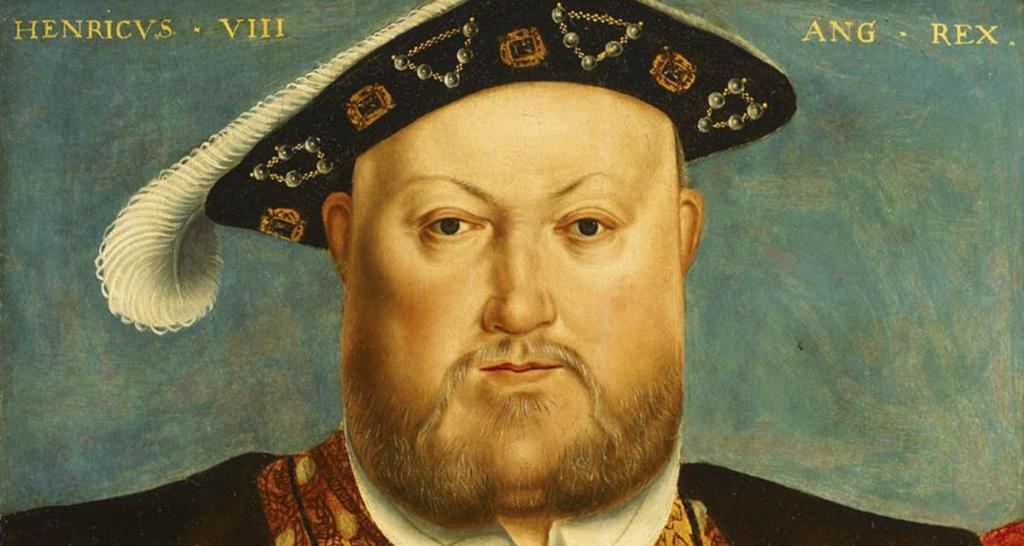
Henry VIII of the six wives

The first and most famous novel in the trilogy was named after the family seat of the Seymour family, Wolf Hall in Wiltshire. Jane Seymour, who became Henry VIII’s third wife, lived there with her family.

Henry and his then queen, Anne Boleyn, visited the Seymour family at Wolf Hall in the county of Wiltshire in 1535. Within 6 months of the visit Henry would marry Jane Seymour and Anne Boleyn  would be dead, executed for alleged adultery and incest. 

Anne Boleyn. A (very) distant relative

The original structure of Wolf Hall is largely gone and the remains were  incorporated into the current building.

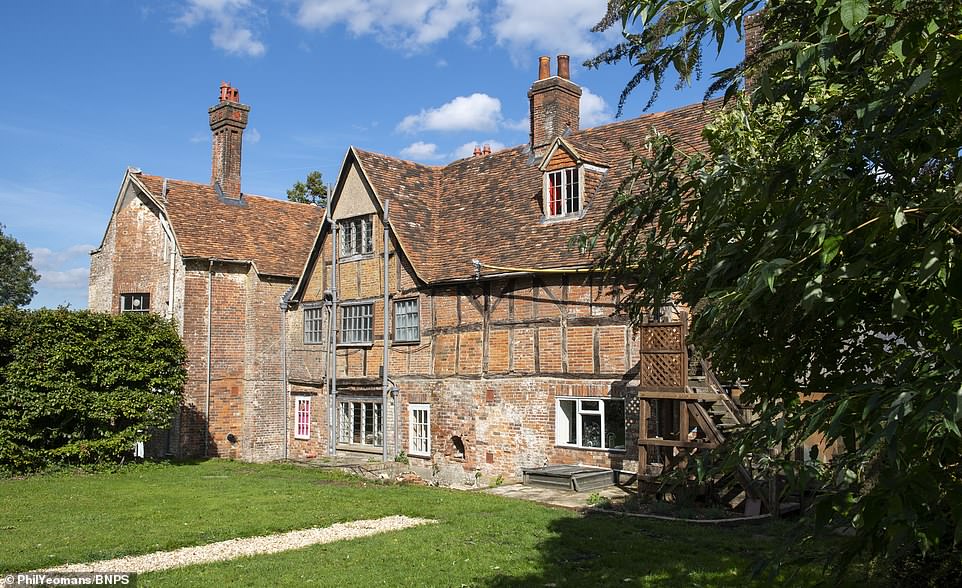
Site of Wolf Hall in Wiltshire

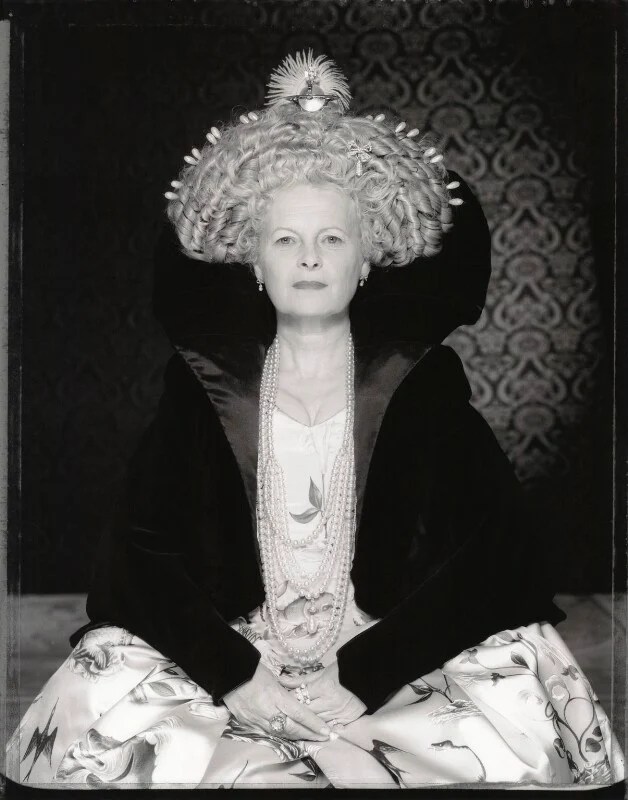
Westwood was once the subject of media inspired hatred after using an adapted image of Queen Elizabeth II in her fashion designs. She was roundly critised at the time for what were percieved as anti-monarchist sentiments. It is clear however from her later comments that she has great affection and respect for Elizabeth II.

England’s dreaming

Mantel was also respectful of the monarchy. Nevertheless she thought that the institution was now in its endgame and would not last too much longer. She was a fan of Meghan Markle whom she thought had been especially badly treated by the English media in particular.

Mantel and Markle

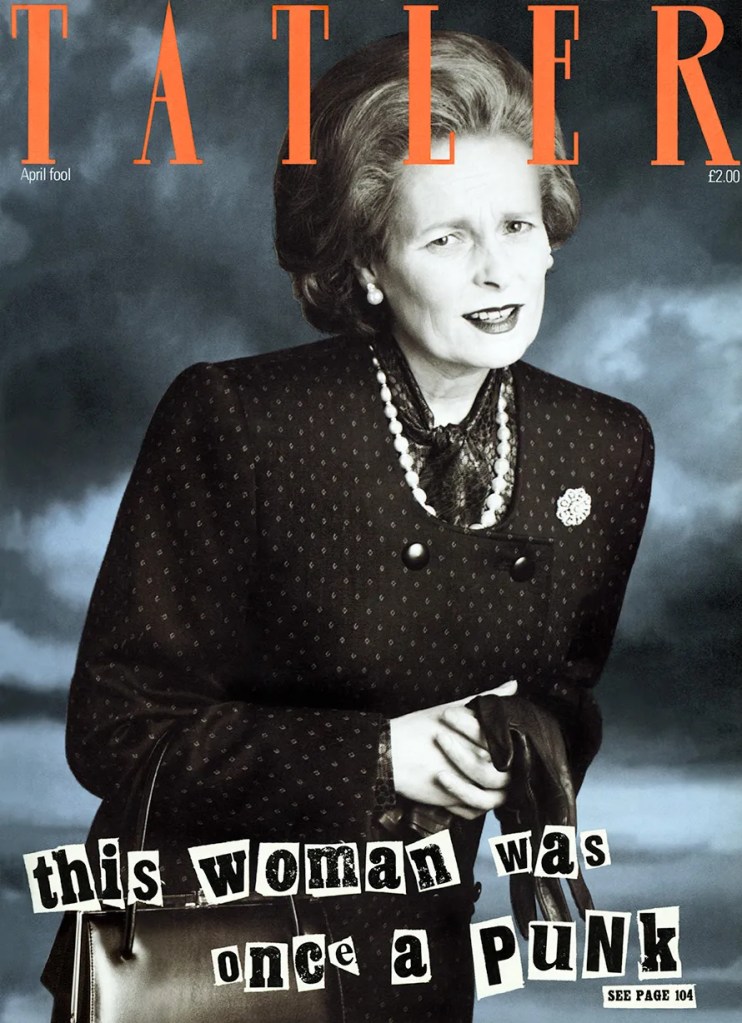
Neither Westwood nor Mantel were admirers of the late Prime Minister, Margaret Thatcher. Thatcher was apparently disliked by Queen Elizabeth II as well. Westwood imitated Thatcher on the cover of Tatler magazine as an ‘April fool’ in 1989.

‘I am an Antichrist’

Mantel was even more open in her dislike of the politician. ‘I can still feel that boiling detestation’ she once said of Thatcher. Her short story The Assassination of Margaret Thatcher was sparked by a coincidence in her own life when she spotted Thatcher from the window of her London flat as the latter walked in the garden of the grounds of the adjacent private hospital after undergoing an eye operation.

Twenty years later and another iconic cover for Tatler.

Markle on the cover of Tatler

Both Westwood and Mantel were made Dames by Queen Elizabeth II and Prince (now King) Charles respectively.