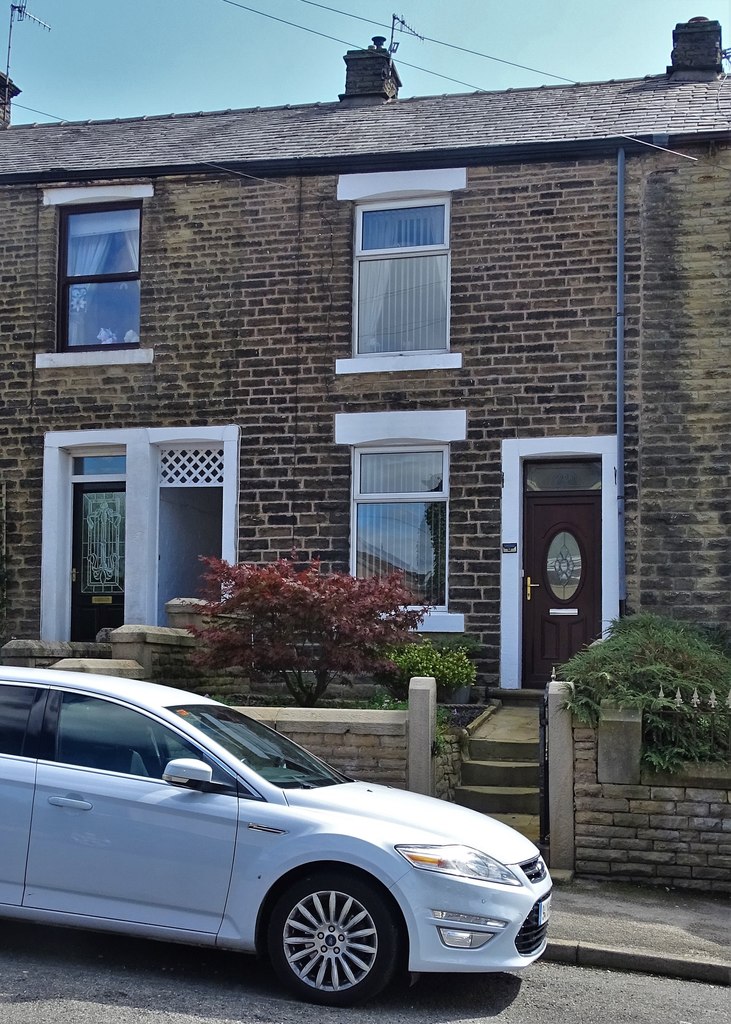
A short walk from the house where Vivienne Westwood* grew up is the Derbyshire village of Hadfield.
The village lies on the edge of the moors in the High Peak district of Derbyshire. The town of Glossop lies to the south.
Hadfield was the childhood home of celebrated author Hillary Mantel.
(*for Westwood see the previous post ‘High Peak to the World’s End’)
Mantel’s childhood home
Mantel passed away recently leaving behind a stunning legacy of work including her multi-million selling Wolf Hall trilogy.
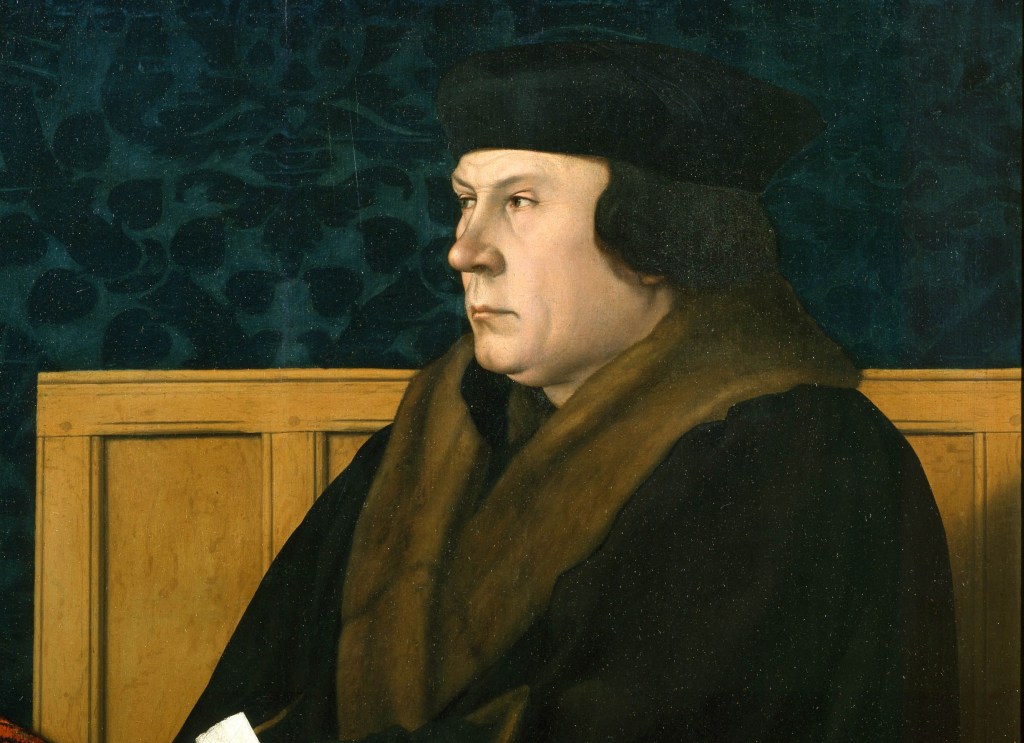
Thomas Cromwell whom readers of Wolf Hall will know
Mantel’s autobiography Giving Up The Ghost provides a sharp recollection of her childhood locale.
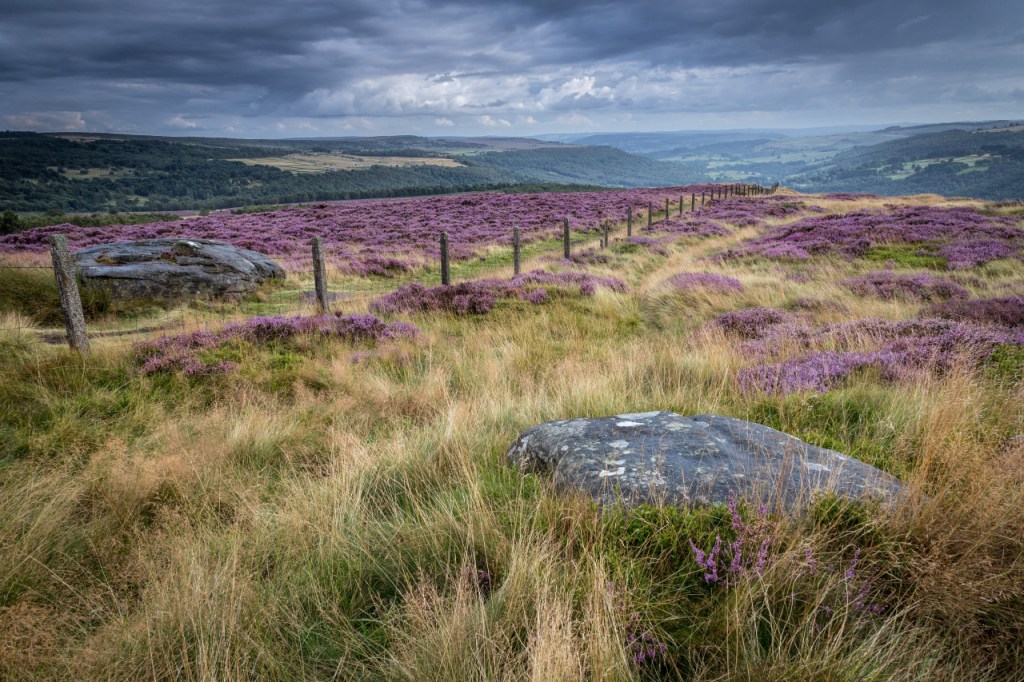
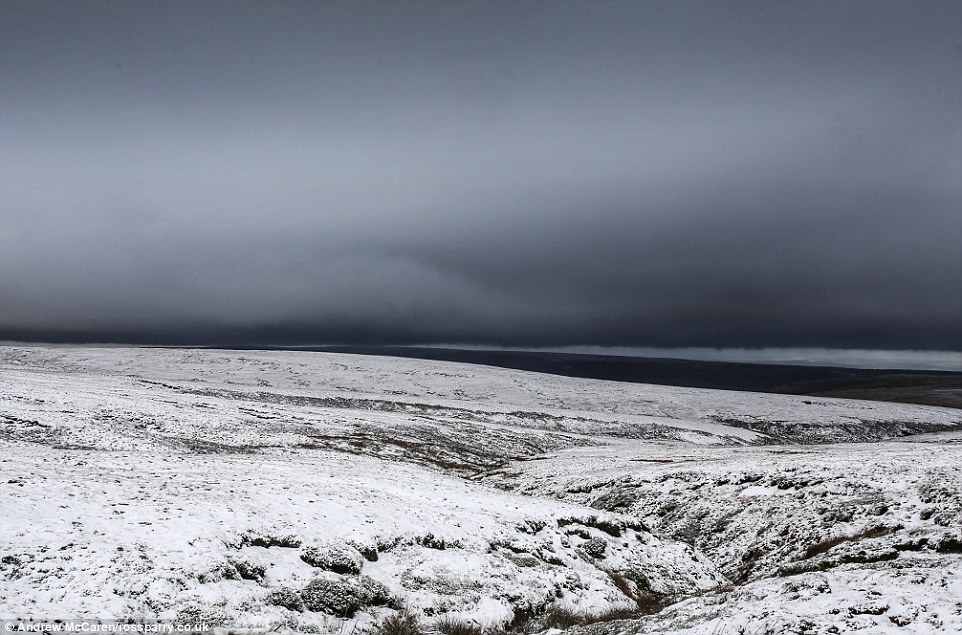
“…..the area where I grew up is on the fringes of the Peak District, a place of complex geology and inventive forms of human deprivation, of inhospitable uplands and steep-sided valleys. Tiny fields, bordered by drystone walls, lie like a worn blanket on a pauper: sharp angles of limestone protrude like bony spurs through a token covering of green. On high ground, in the deep winters of my early life, snow lasted till April. At the fringes of the Peak, where limestone gives way to sandstone, icy streams tumble over brown boulders. There are miles of moorland, flat, featureless, sodden—trackless, or traversed by ancient, faded bridleways.”
The High Peak
Another local, fashion designer Vivienne Westwood, was also cautious of the moors. She recollects:-
“As I grew up I was free to wander in a countryside which was beautiful and intimate until you got to the moors. After that it was wild and a little frightening. ”
The moors in Winter
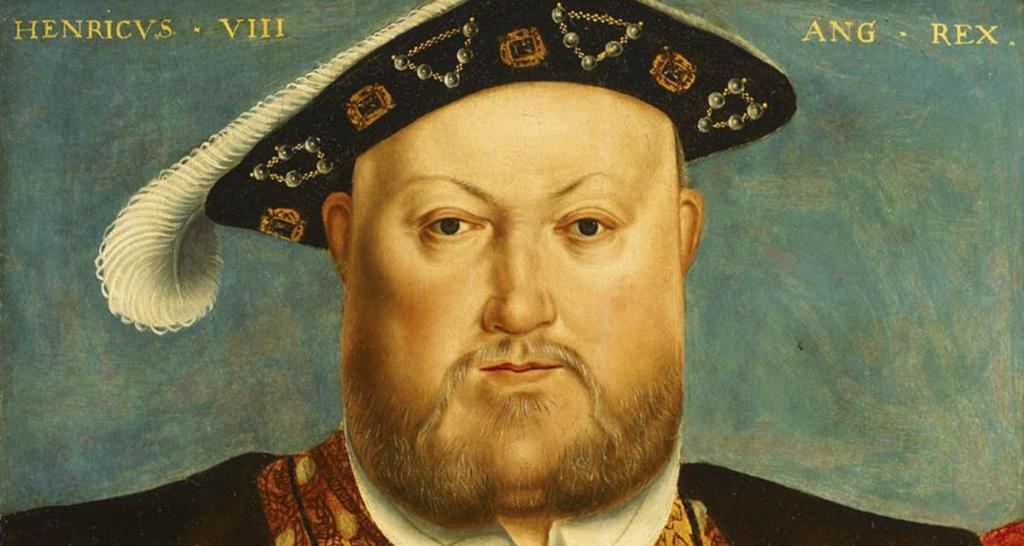
Mantel’s most famous work, the Wolf Hall trilogy are largely set in and around the court of King Henry VIII.
Henry VIII of the six wives
The first and most famous novel in the trilogy was named after the family seat of the Seymour family, Wolf Hall in Wiltshire. Jane Seymour, who became Henry VIII’s third wife, lived there with her family.
Henry and his then queen, Anne Boleyn, visited the Seymour family at Wolf Hall in the county of Wiltshire in 1535. Within 6 months of the visit Henry would marry Jane Seymour and Anne Boleyn would be dead, executed for alleged adultery and incest.
Anne Boleyn. A (very) distant relative
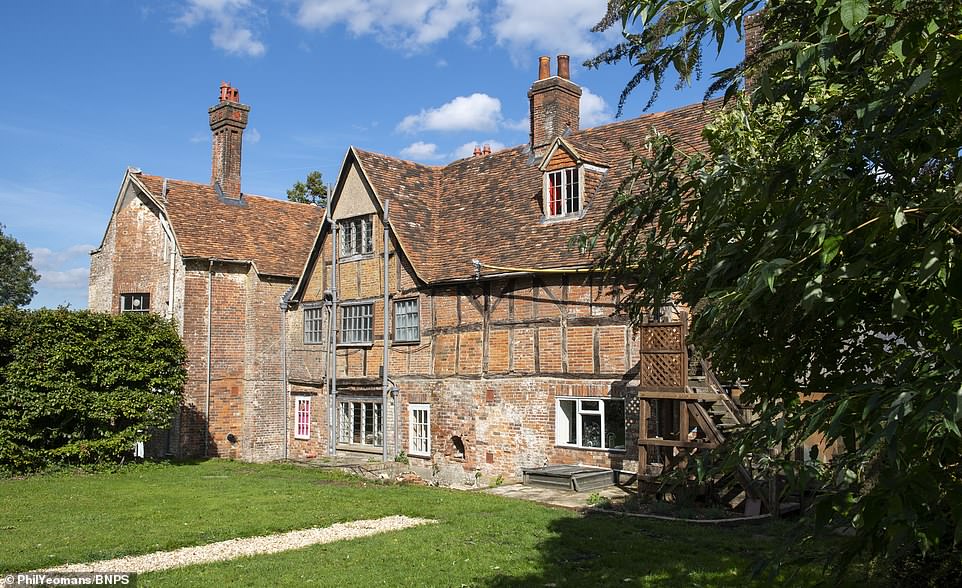
The original structure of Wolf Hall is largely gone and the remains were incorporated into the current building.
Site of Wolf Hall in Wiltshire
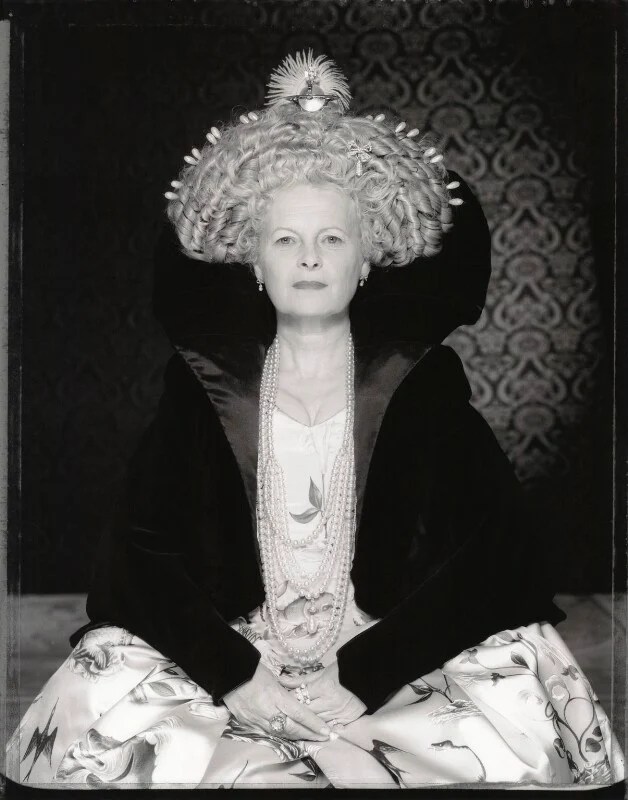
Westwood was once the subject of media inspired hatred after using an adapted image of Queen Elizabeth II in her fashion designs. She was roundly critised at the time for what were percieved as anti-monarchist sentiments. It is clear however from her later comments that she has great affection and respect for Elizabeth II.
England’s dreaming
Mantel was also respectful of the monarchy. Nevertheless she thought that the institution was now in its endgame and would not last too much longer. She was a fan of Meghan Markle whom she thought had been especially badly treated by the English media in particular.
Mantel and Markle
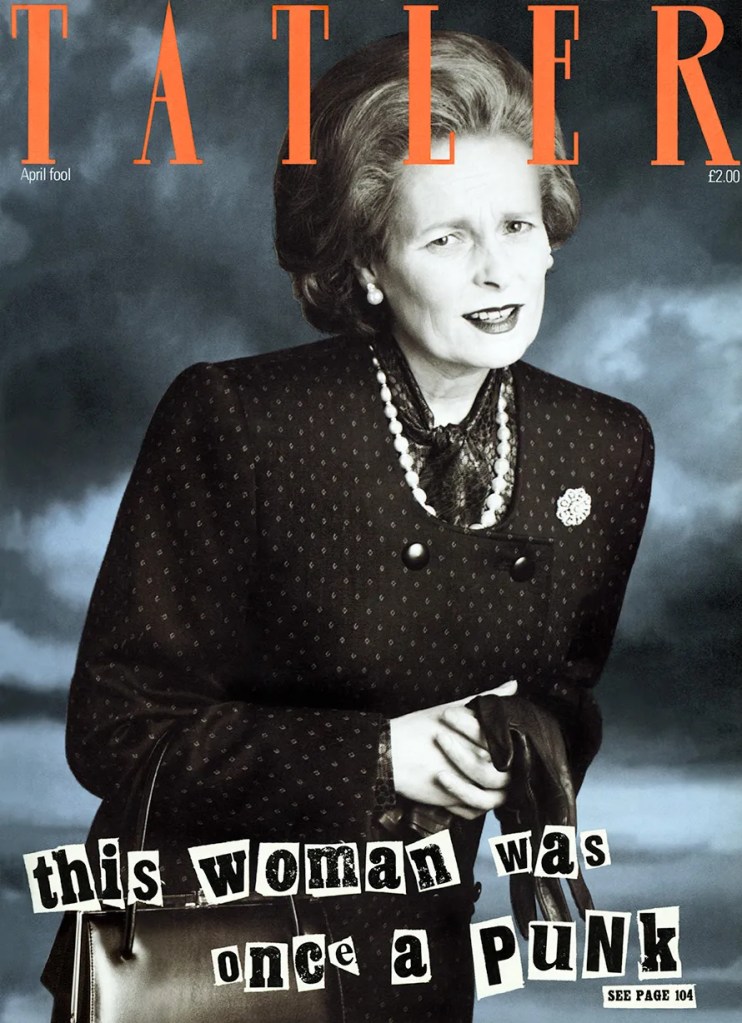
Neither Westwood nor Mantel were admirers of the late Prime Minister, Margaret Thatcher. Thatcher was apparently disliked by Queen Elizabeth II as well. Westwood imitated Thatcher on the cover of Tatler magazine as an ‘April fool’ in 1989.
‘I am an Antichrist’
Mantel was even more open in her dislike of the politician. ‘I can still feel that boiling detestation’ she once said of Thatcher. Her short story The Assassination of Margaret Thatcher was sparked by a coincidence in her own life when she spotted Thatcher from the window of her London flat as the latter walked in the garden of the grounds of the adjacent private hospital after undergoing an eye operation.
Twenty years later and another iconic cover for Tatler.
Markle on the cover of Tatler
Both Westwood and Mantel were made Dames by Queen Elizabeth II and Prince (now King) Charles respectively.
The Sertão is the name given to the vast arid hinterland of the North East of Brasil. Notable for its semi-arid conditions, poverty, cactus and scrub, the North East in general has had a vivid and important impact on Brasilian popular history and culture including of course the legend of Lampião, ‘O Rei do Cangaço’.
The backlands of North East Brasil
The Sertão was home to the ‘cangaços’, gangs of bandits who roamed the backlands of the North East in the earlier part of the last century attacking landowners and stealing from the wealthy in particular. They were known for their ferocity towards those they robbed and plundered as well as their apparent generosity towards the poor, despite widespread torture and murder of their victims. It is this role as ‘social bandits’ rather than as wild outlaws that the cangaçeiros are best remembered in modern day Brazil. The best known of the cangaceiros was Virgulino Ferreira da Silva, known to everyone as ‘Lampião’. Together with his girlfriend and fellow gang member Maria Déia aka ‘Maria Bonita’ (‘Pretty Maria’) they roamed the Brazilian backlands with the gang from the 1920’s until their deaths in 1938, four years after the deaths of their counterparts in the US, Bonnie Parker and Clyde Barrow, ‘Bonnie and Clyde’. Just like that Texan couple, Lampião and Maria would be eulogised in film and song across the ages.
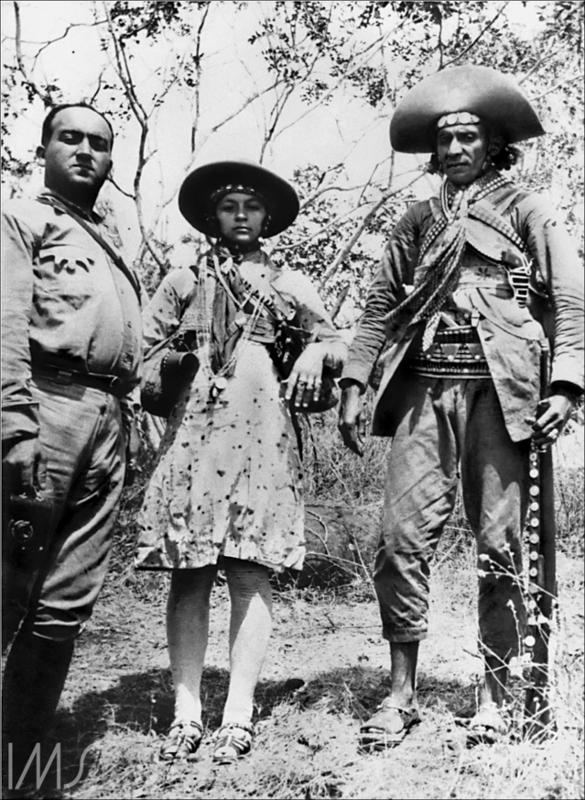
Cangaços with Lampião and Maria Bonita in the centre
The first (and most interesting) film about Lampião and his gang (‘Lampião, o Rei do Cangaço’ – ‘Lampião, the King of the Bandits’) was made in 1937 by Benjamin Abrahão. He had been born in Lebanon but later moved to Brasil. He met Lampião in 1926 via Cícero Romão Batista aka ‘Padre Cícero’, the spiritual leader to the people of the North East of Brazil. A legendary figure in his own right, Padre Cícero was highly trusted by the deeply religious Lampião who he persuaded to allow Abrahão to meet and photograph the gang. Although very cautious, Lampião was intrigued by the possibility of meeting Abrahão, being photographed and having the chance to more widely publicise his highly stylised gang. Lampião was already image concious by this time, handing out business cards and images of the gang to admirers.
Abrahão, Maria Bonita and Lampião
Abrahão initially took photographs of a suspicious Lampião and his wary band and then when trust had been established, filmed them out in the Sertão. The resulting silent film ‘O Rei do Cangaço’ was originally two hours long but only less than 15 minutes of film stock remains.
The film was a great success upon its release. in Brasil but it was soon seized under the directions of the then President Getúlio Vargas and it more or less disappeared from view until 1955 when its remaining stock was restored and released nationwide, the film being only ten minutes long. Then in 2007, Cinemateca Brasileira (the national organisation responsible for the restoration and distribution of important audio visual material) restored and re-edited the available film stock and organised the release of some 14 minutes of film. It is this version, O Rei do Cangaço by Benjamin Abrahão, which can be seen on YouTube at https://www.youtube.com/watch?v=lmqd-ijH2cQ.
At a makeshift camp in the harsh Sertão the cangaçeiros are seen resting, using a sewing machine, praying at a makeshift altar, skinning and eating a cow and undertaking a mock skirmish etc. Lampião is clearly visible as is another key member of the gang, the cruel Corisco. Maria Bonita is filmed combing Lampião’s hair in one scene.
Corisco
At least two women are seen with the gang in the film including Maria Bonita, Lampãio’s girlfriend as well as Dadá, the lover of Corisco. The film maker Benjamin Abrahão is also clearly visible in some scenes, eating and drinking with the gang.
Corisco and Dadá
The Cangaceiros are also seen dancing in the film. The dance most closely associated with the gang is the Xaxado, a popular North Eastern style which is still performed today.
Xaxado
Abrahão’s photographs and film helped fix the stylised image of Lampião and the cangaceiros in Brasilian popular culture.
Lampião and his gang
Each member is wearing leather outfits of a hat, jacket and jodhpurs/shirts tough enough to protect them from the thorns of the caatinga (dry shrubs and brushwood typical of the dry hinterland of the Sertão). Studded ammunition belts criss cross eash chest. The hats are half moon shaped and decorated with metals stars, fleur de lis, maltese crosses and other designs. The rifle slings are studded with silver coins and highly decorated cloth bags are draped from each shoulder. Long neckerchiefs tied with a silver rings are draped around each neck. Dark glasses are sometimes worn. The effect is startling and original and whilst the alleged ‘Robin Hood’ nature of the gang will no doubt have assisted in creating the Lampião myth, one cannot help but feel that its overall strong visual aesthetic contributed as great an impact to its ultimate longevity and influence in the popular imagination. We can see this in the culture of Zoot suits in Los Angeles in the 1940’s, the startling images of the Sex Pistols in 1970’s London (in clothes by the ground breaking Seditionaries) and the elevated dress sense of the Sapeurs of the Congo.
Sex Pistols and Seditionaries clothing
The strongest influences on popular culture, whether in Brasil or elsewhere, do not come from the elite. As the English writer V.S. Pritchett once commentated noted, ”the past of a place survives in its poor.” Although this comment was made by following his travels in Spain it applies elsewhere, no more so than Brasil with its reverance of the legend of Lampião.
Visit the North East of Brasil and referances to Lampião and his gang are ubiquitos. Whether in popular songs and films, the names of restaurants and bars to the classic woodcut prints of the Borges family, the cangaço and his gang are everywhere.
Severino Borges print
As a postscript to the film (which views like an epitaph), both Lampião and Maria Bonita were cornered shortly thereafter by bounty hunters and killed with nine other members of the gang. They were then decapitated, their heads were put on public display in the city of Piranhas in the North East state of Alagoas (the city had been attacked several times by Lampião and his gang) before ending up at the State Forensic Institute in Salvador, Bahia where they remained until burial in 1969. A graphic photograph of the severed heads surround by decorated hats, weapons, bags and bandoliers, framed by two sewing machines is readily visible on the internet but it is not exhibited here.
Two other members of the gang, Corisco and his girlfriend Dadá, were amongst those who escaped but were cornered by the authorities not long thereafter. Corisco was killed in the attack and Dadá lost a leg from her wounds. She survived until her death in 1994, the last member of the gang to die.
With the deaths of Lampião and Corisco the phenomenon of cangaço, died out.
Filmmaker Glauber Rocha who spearheaded Brazil’s Cinema Novo in the early 1960’s was inspired by the story of Corisco and Dadá and featured representations of them in his ground breaking 1964 film Deus e o Diablo na Terra do Sol (known as ‘Black God, White Devil’ in English – you can see an old print of this film here https://www.youtube.com/watch?v=RyTnX_yl1bw). Just like the much romanticised Lampião and Maria Bonita, Corisco and Dadá became Bonnie and Clyde type figures in the Brazilian popular imagination and culture.
The filmmaker Benjamin Abrahão was brutally murdered shortly after the films initial release. His assailant was never found. The film was seized by the authorities who did not approve of the fact that the film did not condemn the gang and its activities. Lampião and his gang were public enemies No. 1 for Vargas and his presidency.
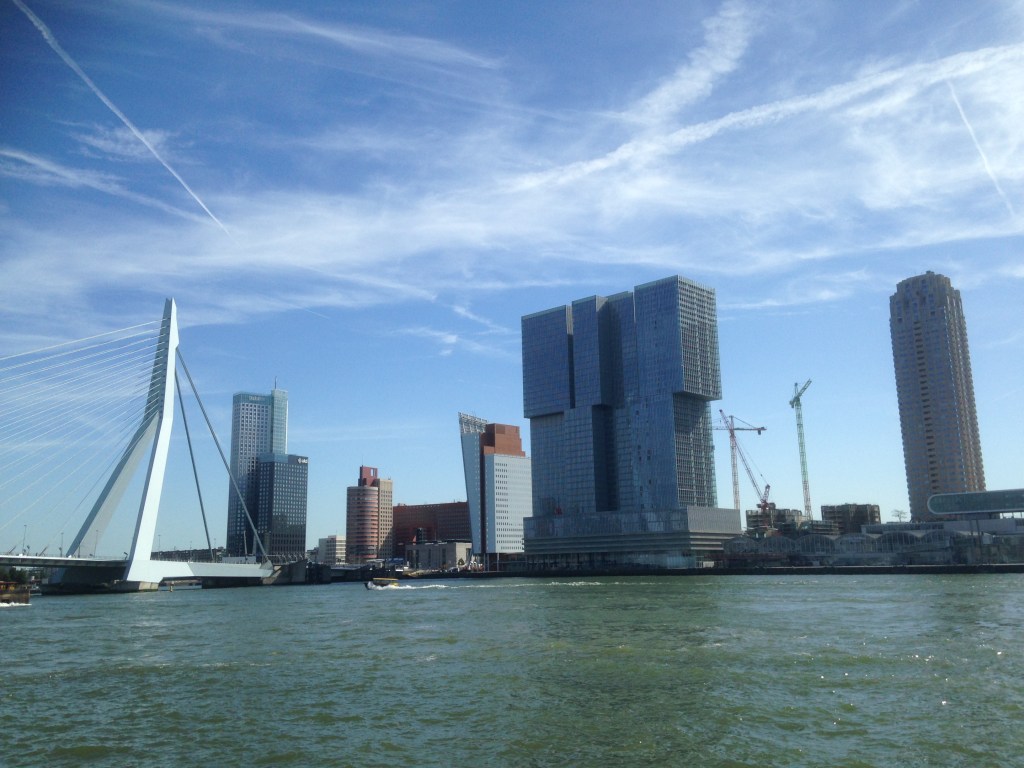
Rotterdam is the second city of the Netherlands and Europe’s biggest seaport. Like other European port cities such as Liverpool and Hamburg, Rotterdam was badly damaged by aerial bombing during the Second World War. Much of its old medieval centre was destroyed and unlike its big sister, Amsterdam, the city is very much a modern construct in its centre and in its awesome shipping zone.
Central
Seaport
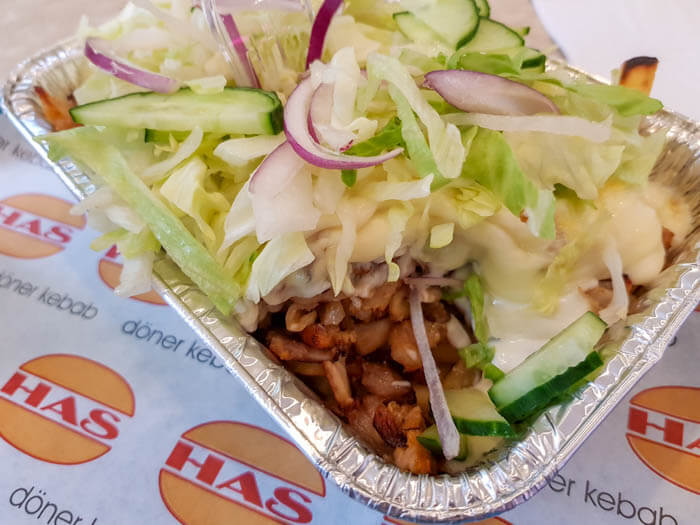
Modern Dutch architecture is superb. Futuristic design greets you as you arrive at the city’s Centraal station. Known locally as the ‘kapsalonbak’, the station is named after the late night post ‘kapsalon’, a snack of meat kebab, chips, and melted cheese with them roof of the station apparently resembling the takeaway’s metal tray.
Centraal Station
Kapsalonbak – hopefully with extra chilli sauce!
Not the best cuisine on offer in the city but after over indulgence at the local bar, it is just what the doctor ordered!
Genever, sometimes known as Dutch gin (although it tastes nothing like a ‘London dry’), is a malt grain-based spirit distilled in Holland or Belgium. Botanicals such as juniper are added resulting in a punchy, nutty drink with a pretty powerful kick. It is the origin of the phrase ‘Dutch courage’ after all.
Traditionally served in a tulip shaped glass, the spirit is either ‘old’ (‘oude’) or ‘young’ (jonge’). These terms do not refer to the ageing process itself but rather to the distillation procedure used in its manufacture. The distillation of the young genever results in a lighter, cheaper product with the ‘old’ better suited to slower imbibing. Young genever is the sort of drink you would have with a chaser of beer at the bar (known as a ‘kopstoot’ or ‘headbutt’) with your rowdy friends!
Kopstoot
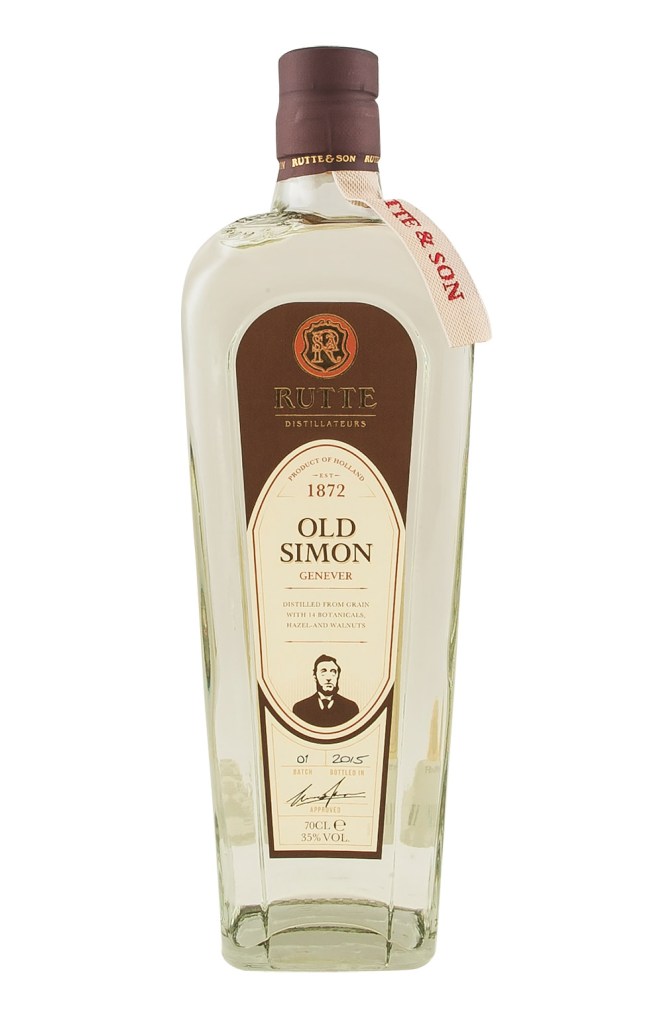
We think that an oude genever is best enjoyed when it is mixed into a cocktail such as a ‘Martinez’ with sweet vermouth, orange Curaçao or cherry liqueur, bitters, a twist of lemon and plenty of ice. We recommend ‘Oude Simon’, a genever made by the Rutte family distillers in Dordrecht, just outside of Rotterdam. The spirit is named after Simon Rutte who founded the distillery in the town some 150 years ago.
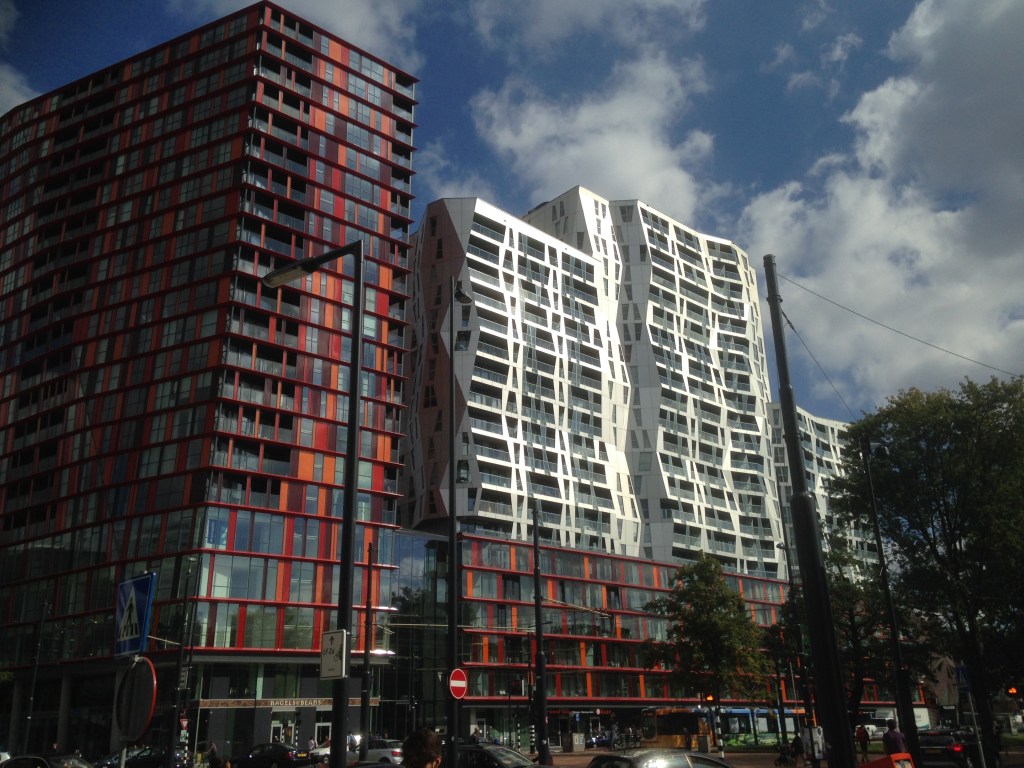
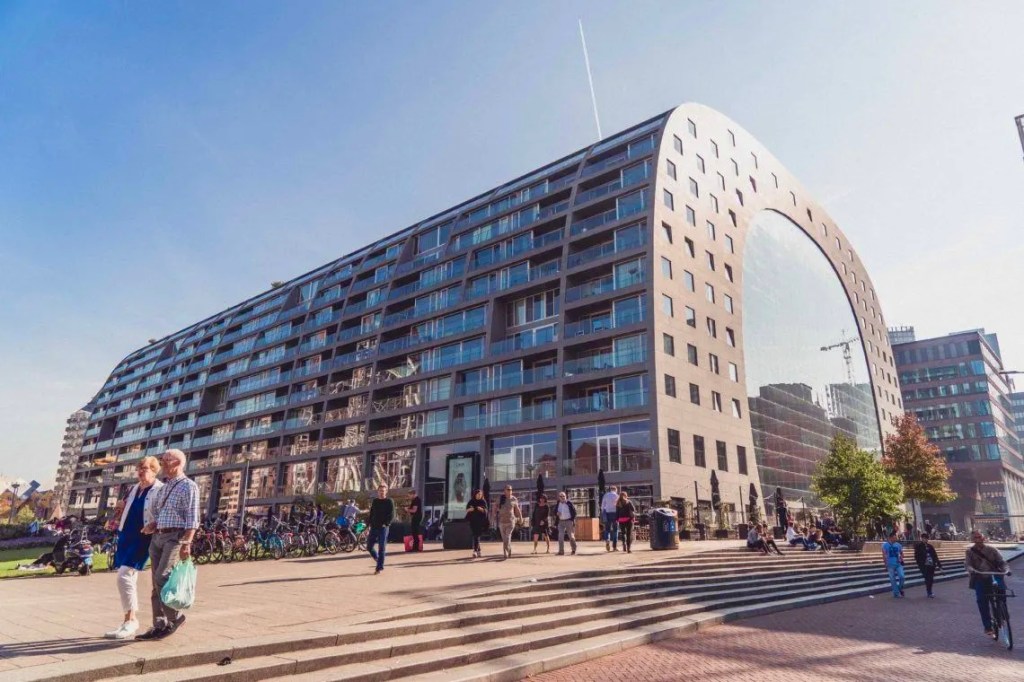
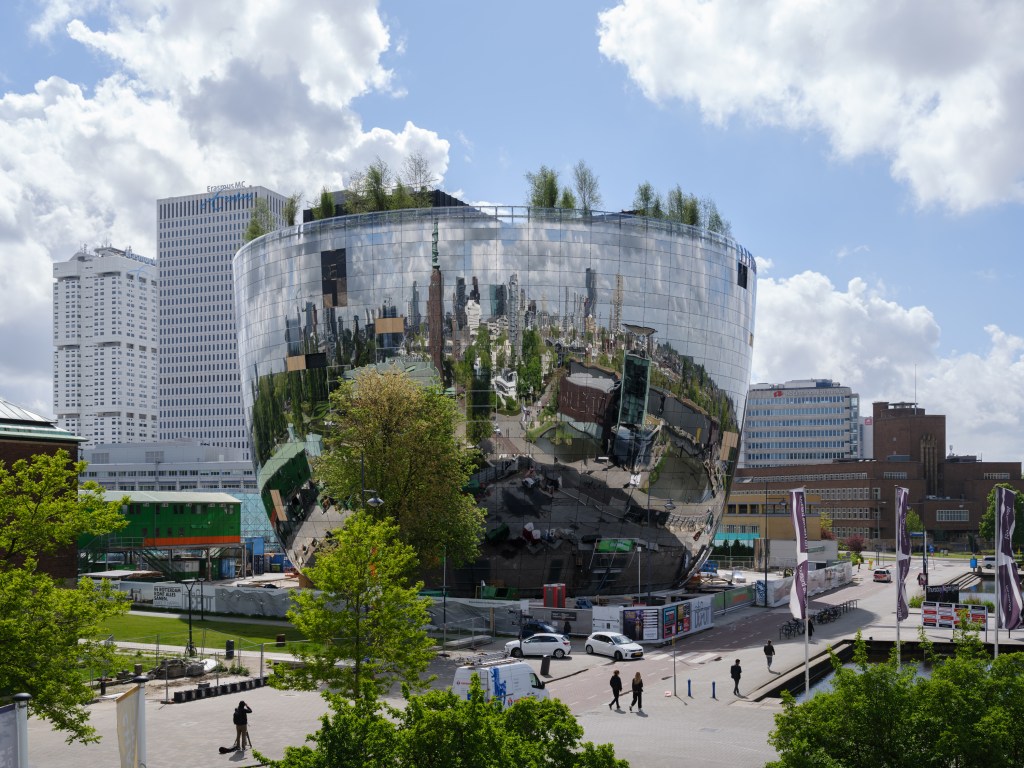
There are two especially beautiful modern constructs in Rotterdam, both designed by local architects MVRDV see https://www.mvrdv.nl/ These two buildings are the recent Depot Boijimans van Beuningen and the iconic Markthal.
Markthal
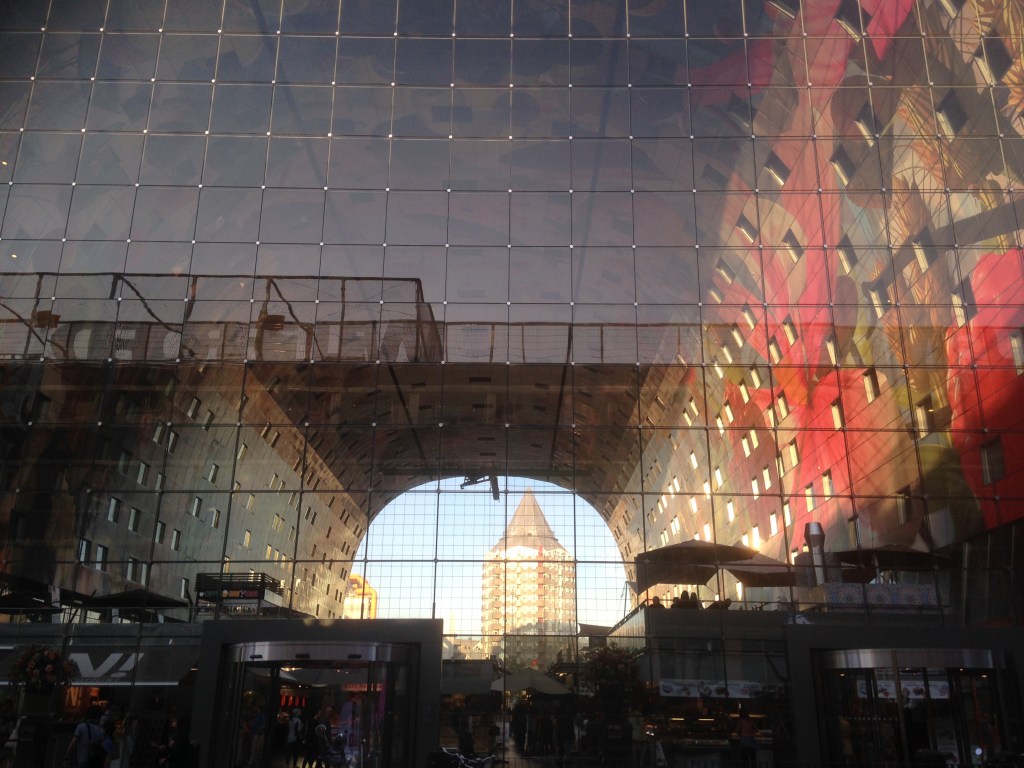
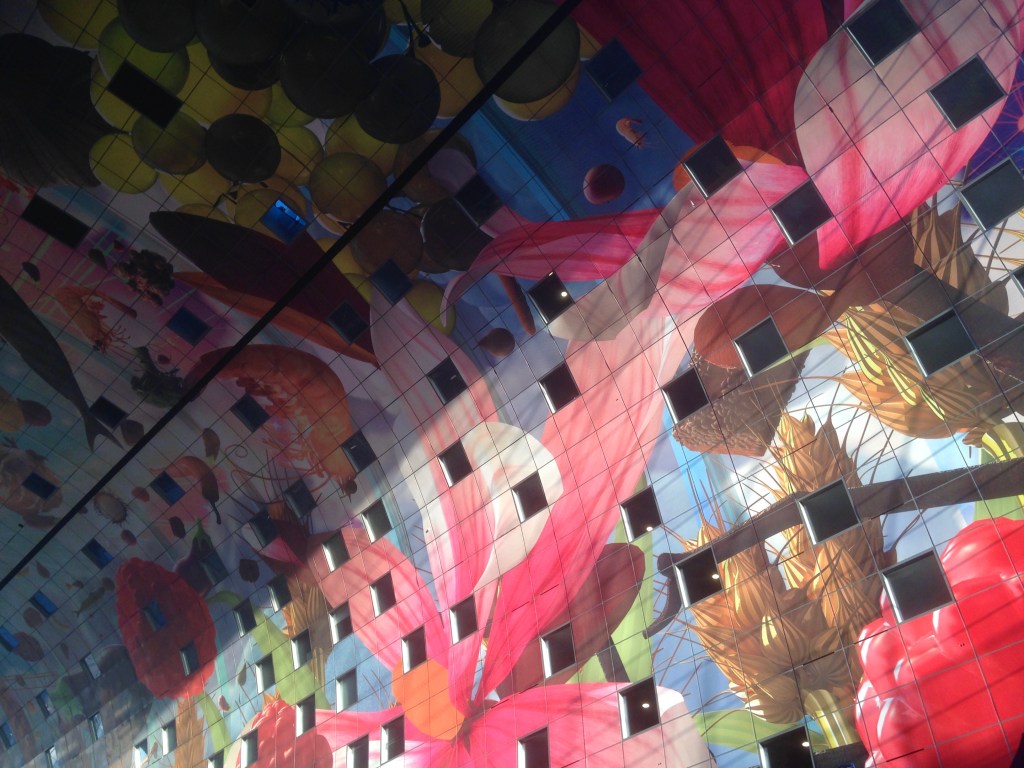
Dominating a central Rotterdam space the size of Tiananmen Square, the Markthal (‘Market Hall’) is a giant ground floor court surrounded by restaurants and bars with apartments and offices on the upper levels. The building’s inner arch is covered in an 11, 000 sq metre mural called ‘The Horn of Plenty’ which depicts typical produce to be found in the food hall. The mural was produced by Dutch artists Arno Coenen and Iris Roskam.
Through the central entrance
Interior mural
Interior mural
The second MVRDV building we would like to mention is the Depot Boijimans van Beuningen. The building is the world’s first publicly assessable arts storage facility. It is located next to the museum of the same name in the city’s Museumpark, an urban parkland area. Visitors to the Depot will find more than 150,000 art works housed together arranged in different storage compartments. Information on the preservation and management of this huge and diverse collection is freely available to visitors. Usually these works would be hidden from view in storage in the bowels of the museum metaphorically ‘gathering dust’.
Depot Boijimans van Beuningen
A great port city should have a great football club. Liverpool has two and Hamburg’s best loved team are FC St. Pauli. Rotterdam has the legendary Feynoord, arch rivals to Amsterdam’s Ajax.
Feynoord fans are known for their pyrotechinics
Next time you visit the Netherlands, make sure you visit Rotterdam.
The following is a brief update to the post ‘Liqueur, Witches and Black Cats’.
The village of Newchurch in the Lancashire district of Pendle was mentioned in that post in connection with the story of the Pendle Witches whose trial and execution took place in 1612.
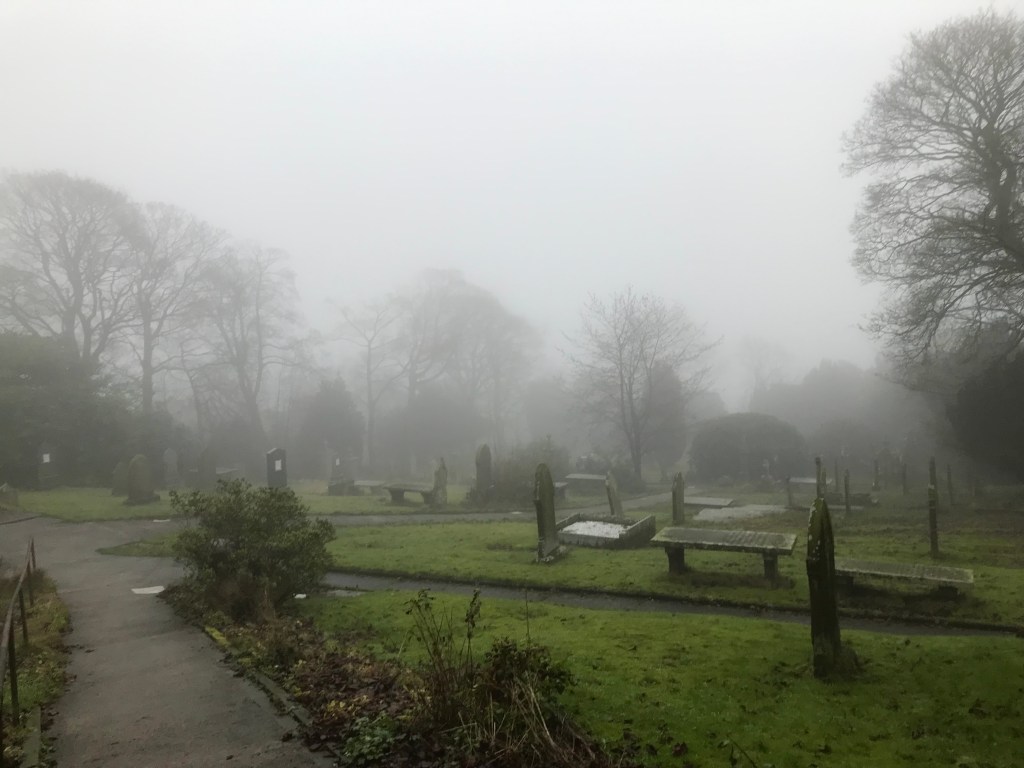
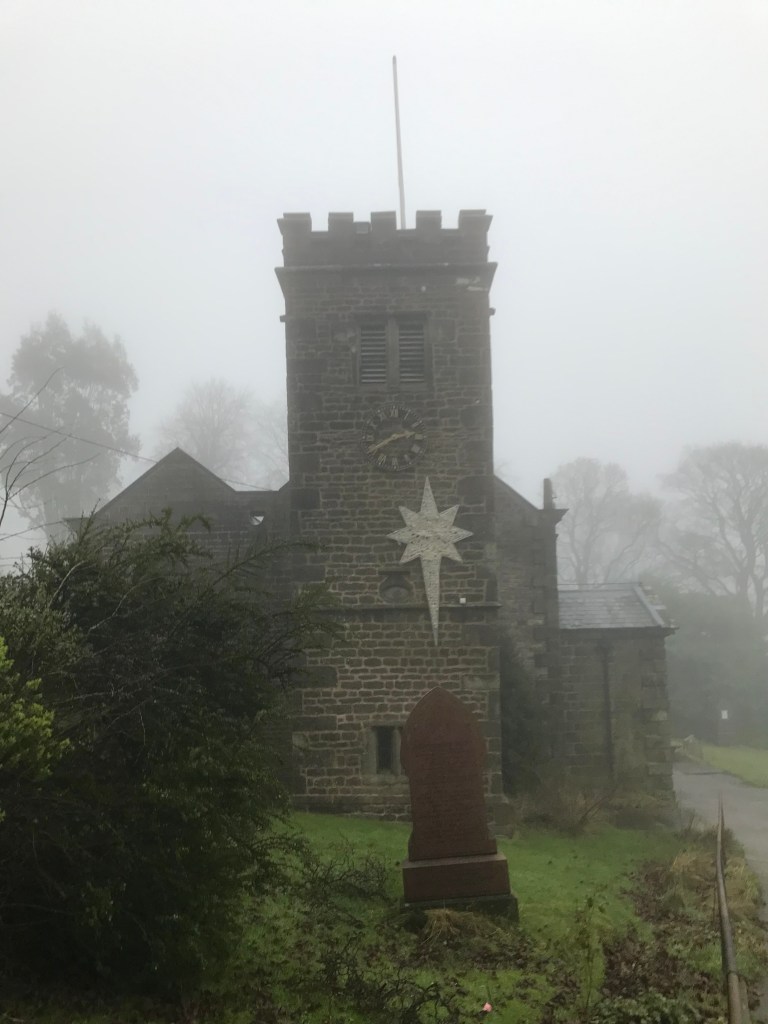
The village sits below Pendle Hill. The hill was not visible to the eye when we visited the area a couple of days ago and found it smothered in a dense fog. We did, however, manage to visit St. Mary’s church in the village for a short time. We left for home before darkness fell as the road had disappeared completely!
St Mary’s church
St Mary’s church dates from around 1544 although a small chapel already existed on the site from the 1200s onwards. The church tower is particularly notable for the ‘Eye of God’ device to the bottom left of the Star of Bethlehem pictured above.
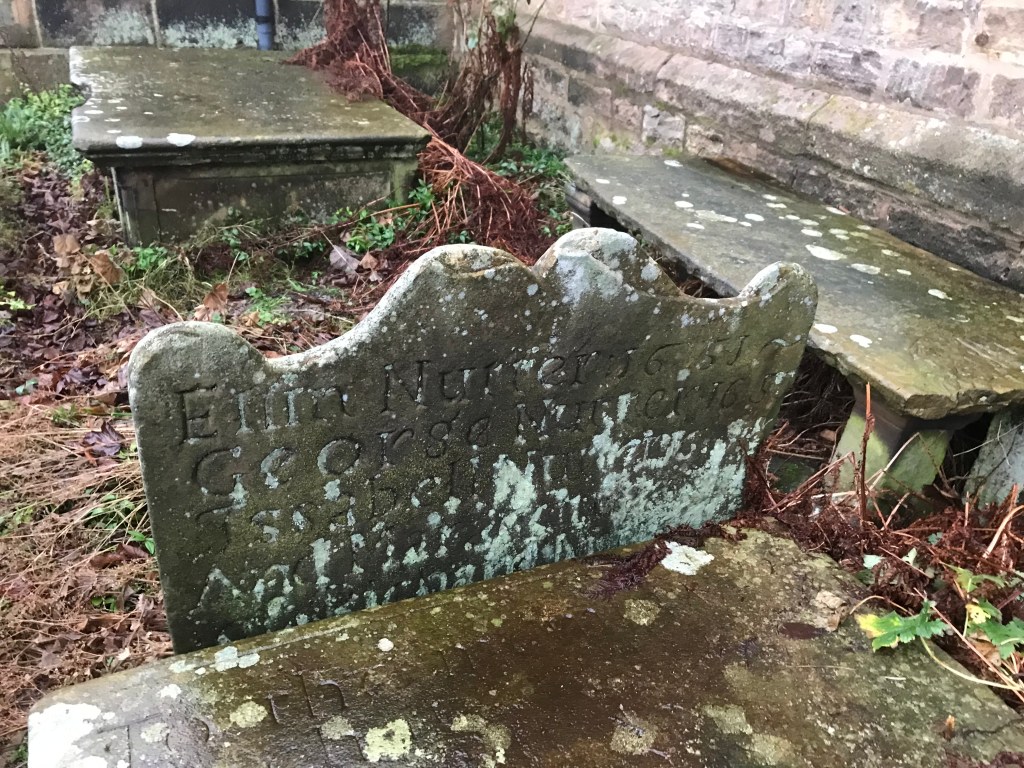
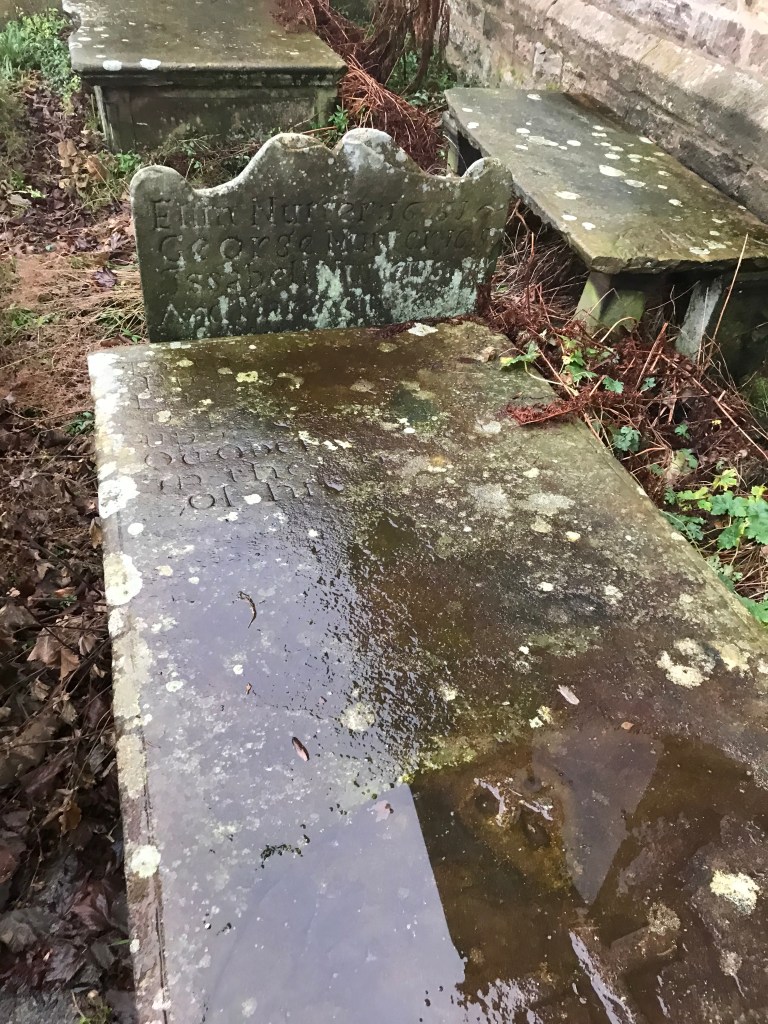
The church has a strong connection to the Pendle Witches. Many of them lived within the parish. The church is also notable for the grave of the Nutter family which is situated to the right of the main entrance. Members of the Nutter family were interred in the grave several hundred years ago.
The grave is also alleged to be the final resting place of family member, Alice Nutter who had been tried and executed as an alleged Pendle Witch. However, witches were not knowingly buried on consecrated ground.
Headstone
Nutter family vault
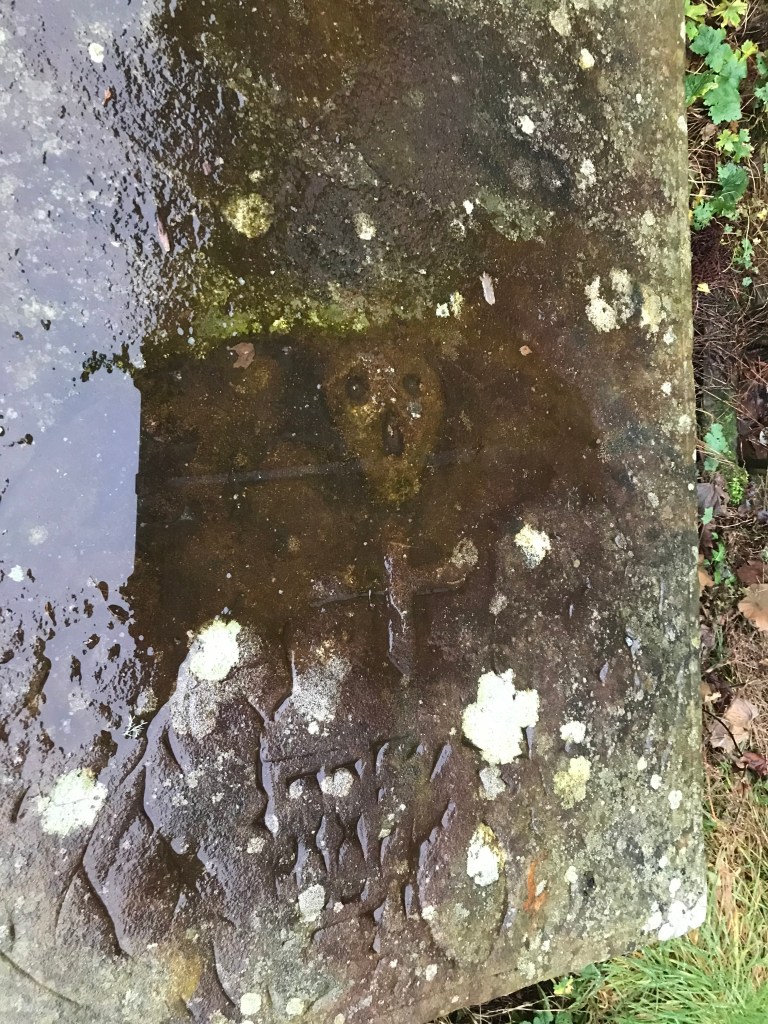
Skull motif
Alice Nutter is commemorated by a small statue in the nearby village of Roughlee where she lived.
The villain Grimalkin
First, Second and Third Witch together:-
‘Fair is foul, and foul is fair. Hover through the fog and filthy air’.
Malton is an attractive market town some 18 miles north east of York. An ancient place, the first established building in the town dates from the 1st century AD.
The town is located in the beautiful North Yorkshire countryside. It is the undisputed culinary champion of the region. With its superlative range of local food and drink producers, a monthly food market and an annual food festival, the town is a gastronome’s delight.
Malton’s rise to prominence as a great place for food and drink started in 2009 with the ‘We love Malton’ initiative, a concerted campaign to raise awareness of the town for the benefit of both locals and visitors. We have seen similar initiatives work in places like Altrincham (in South Manchester) where an old and somewhat run down market area is now a splendid combination of craft and produce vendors, a food hall, an independent cinema and several wonderful bars and restaurants.
Areas that are in decline can reinvent themselves into destinations to visit rather than to avoid as Altrincham has proved.
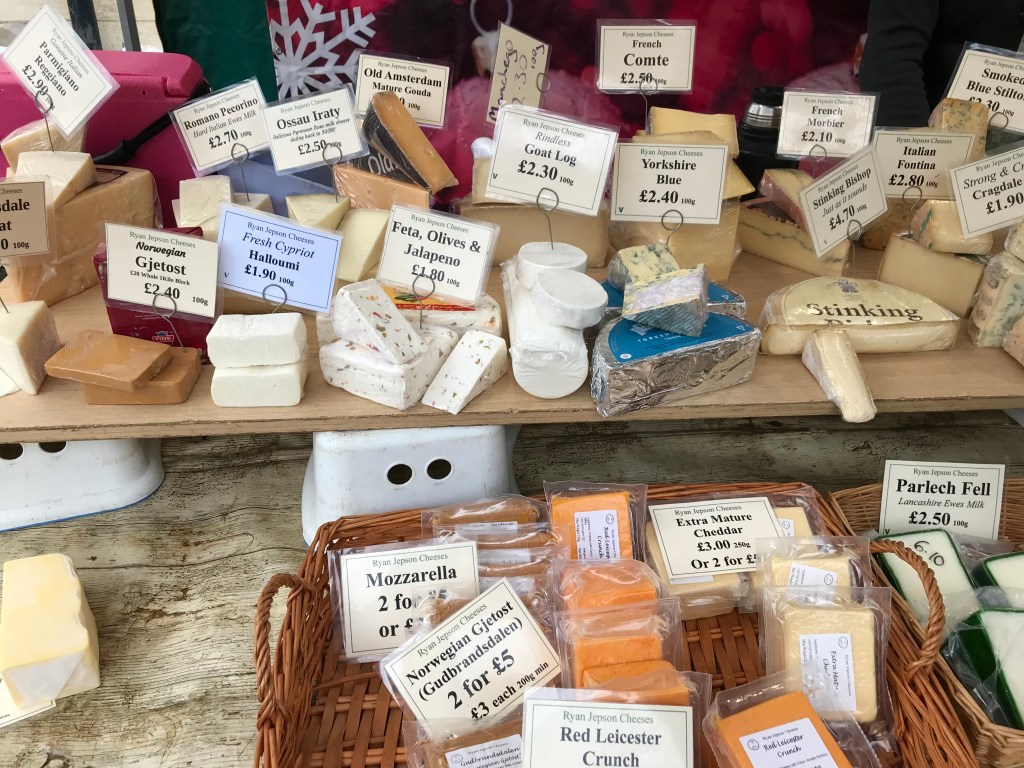
Malton is indeed a destination to visit. We visited the town on the day the monthly food market was taking place and we had a great time chatting to the stall holders and buying as much produce as we could carry home.
Market stalls
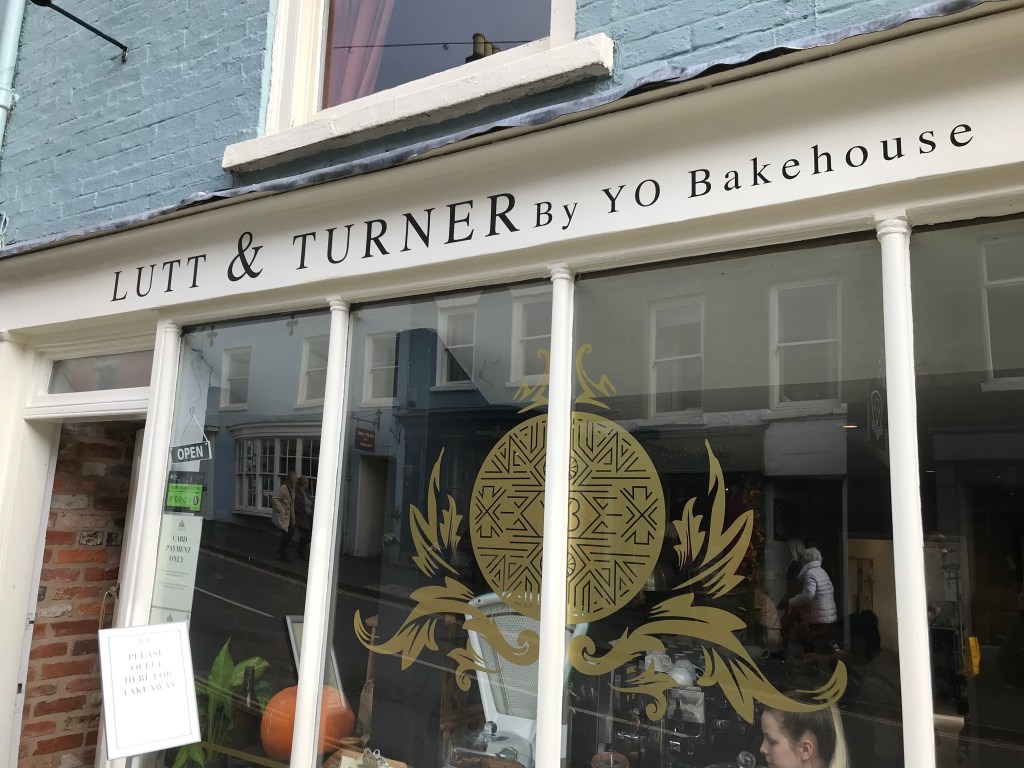
There are plenty of great food and drink shops in Malton.
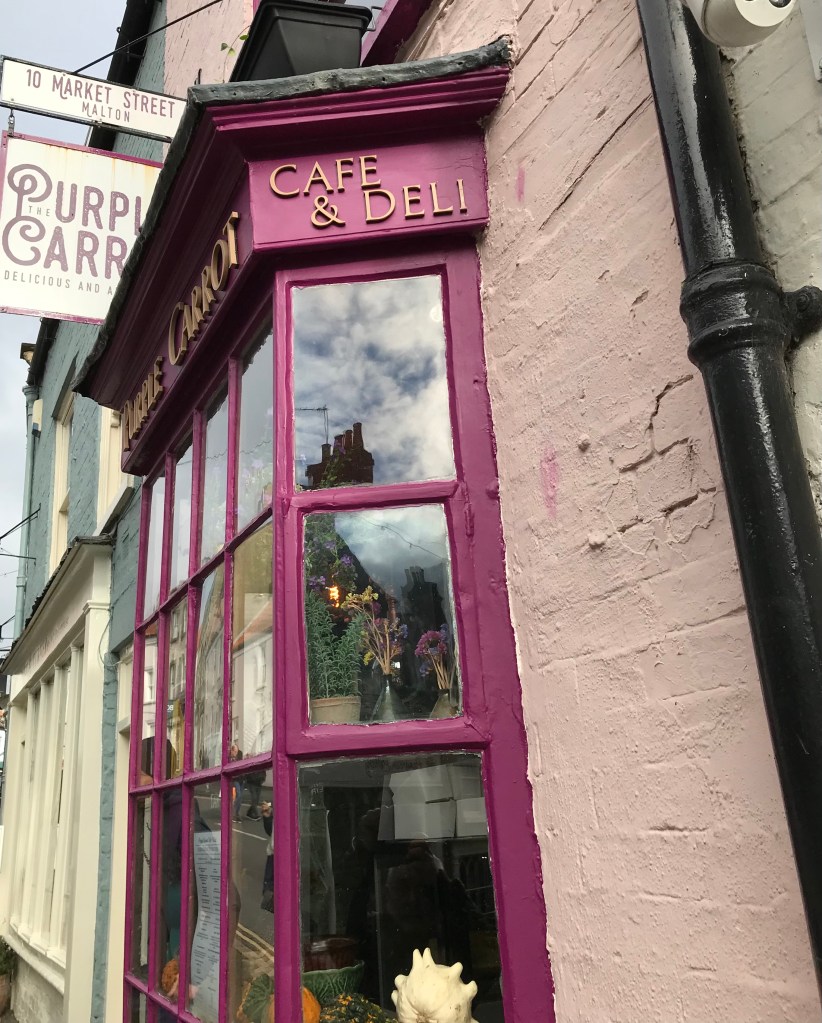
Yo Bakehouse and the Purple Carrot
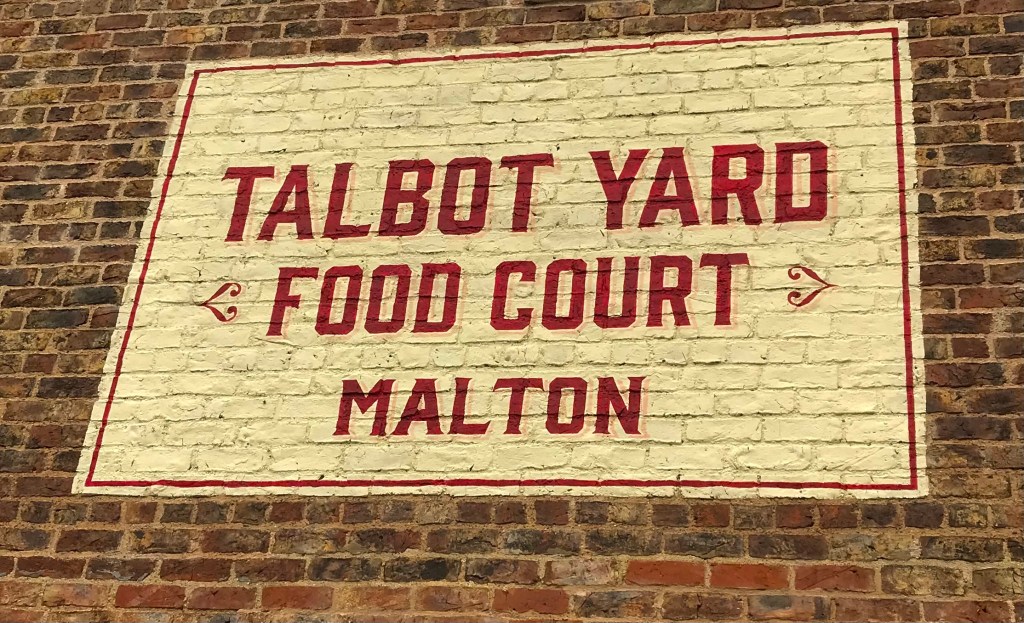
Talbot Yard Food Court near the market place is a group of six independent food and drink producers gathered together in the restored courtyard of an old coaching inn.
Of particular interest are the macarons of Master Patisser Florian Poiret. Rightly popular, a queue of eager customers had already formed outside his shop early in the morning of our visit.
Macarons
The hand made ice cream at Groovy Moo in the yard was especially well received!
Amazing ice cream
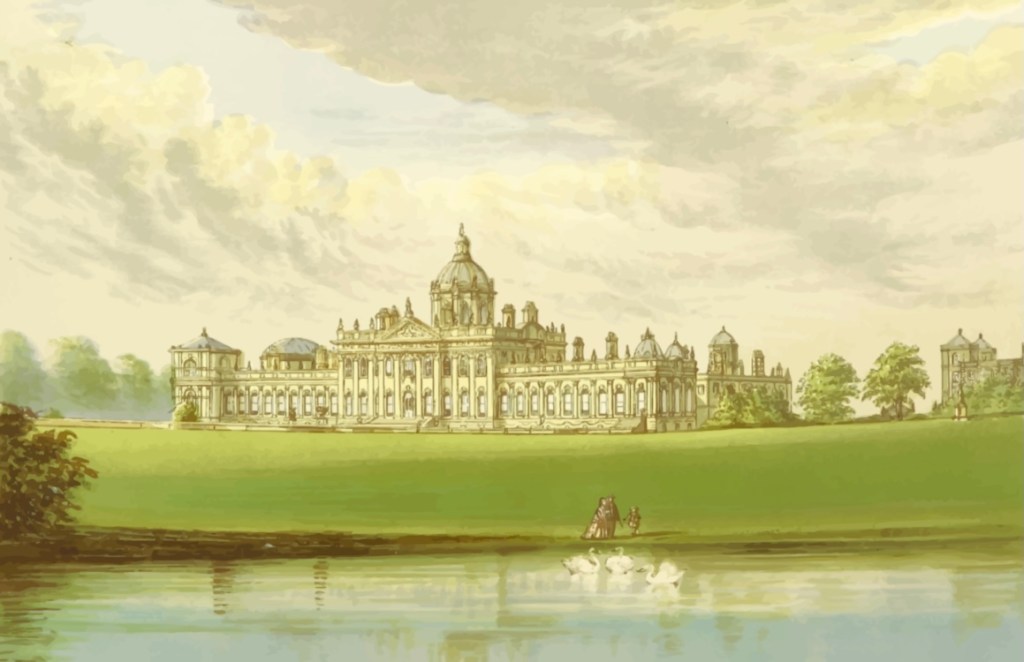
If you are visiting the area, Malton is fairly close to historic York and it can easily be visited on a day trip. Castle Howard is also nearby. Fans of Bridgerton will recognise the Castle’s facade as the fictional Clyvedon House in that series. Older fans will recognise Castle Howard as the fictional home of the Marchmain family in the 1981 adaptation of Evelyn Waugh’s Brideshead Revisited. Notwithstanding the worldwide success of Bridgerton, Castle Howard will always be associated with the Waugh novel in the minds of many.
Castle Howard
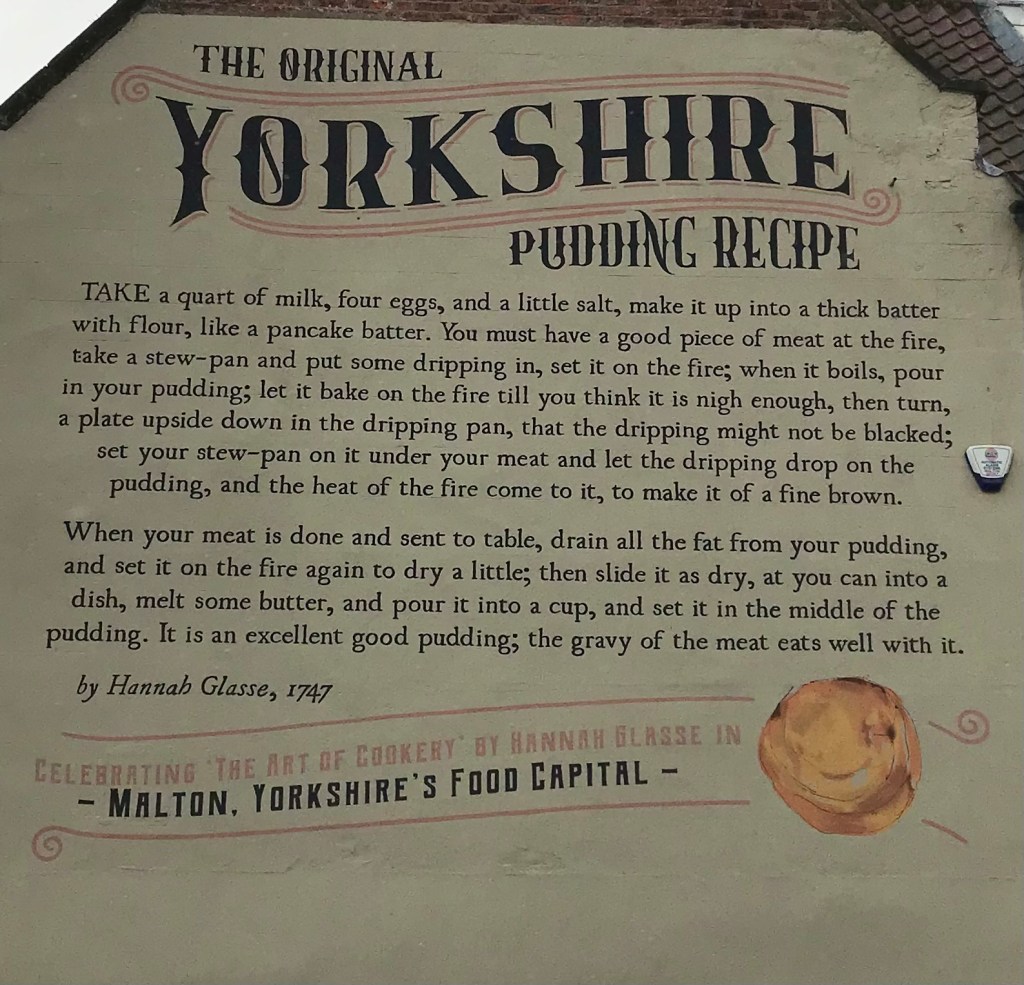
But as the article is about a Yorkshire town we thought it more appropriate to leave you with a recipe for Yorkshire Puddings.




















 FOOD, FILMS 'N' TINGS